
Cute softball hairstyles need to work as hard as you do, staying secure through every sprint, slide, and swing. These 25 softball hairstyles are playful, practical, and totally game-day ready, giving you styles that look adorable under a helmet and hold up from warm-ups to the final inning.
1. High Ponytail with Braided Wrap
The high ponytail with a braided wrap is the classic game-day look, elevated with one pretty detail: a thin braid wound around the base of the ponytail to hide the elastic. The shape is high and lifted, sitting at the crown so hair stays off the neck and out of the face during sprints and slides. The finish is smooth through the lengths with a slightly textured, sporty edge, and the wrapped braid adds a polished, intentional touch that makes a simple ponytail look styled rather than thrown together. It reads cute and confident from the bleachers and photographs beautifully after the game. In motion, the style keeps its shape beautifully, whether you are sprinting to first base, sliding into home, or chasing a ball into the outfield. Under a batting helmet, it sits flat where it needs to and never creates uncomfortable pressure points or awkward bulges. From the bleachers, the silhouette reads clean and intentional, and it photographs just as well in candid dugout shots as in formal team pictures.
This style suits most face shapes, especially oval and heart-shaped faces, and works best on straight to wavy hair of medium length or longer, though extensions can add length if needed. It is ideal for outfielders and runners who need hair completely contained. To style, brush hair up smoothly, secure it with a strong elastic, then braid a small section from underneath and wrap it around the base, pinning it in place. A light-hold hairspray and a smoothing serum keep flyaways down without stiffness. Trim every eight to ten weeks to keep ends healthy, and the grow-out is seamless since the style is all about placement. Try it when you want a reliable, cute staple that never fails on game day. For game day, pack a small kit with extra elastics, bobby pins, and a travel-size hairspray so you can fix any loosening between innings in seconds. On humid days, a light anti-frizz serum applied before styling goes a long way, while a stronger gel helps on particularly windy tournament afternoons.

2. Double Dutch Braids
Double Dutch braids are the ultimate softball hairstyle, with two raised braids running from the hairline to the nape for a look that is both sporty and sweet. The appearance is neat, symmetrical, and full of texture, with the braids sitting proud of the scalp and tapering into tidy ends that can be left loose, tied off, or tucked under. The finish is sleek at the front and dimensional down the back, and the style fits perfectly under a helmet without creating bumps or pressure points. It is the style teammates ask about most, because it looks intricate while being completely practical. Under a batting helmet, it sits flat where it needs to and never creates uncomfortable pressure points or awkward bulges. From the bleachers, the silhouette reads clean and intentional, and it photographs just as well in candid dugout shots as in formal team pictures. Small variations make it your own: swap the elastic color, add a team ribbon, or loosen a few pieces for a softer finish on less intense days.
Double Dutch braids suit every face shape and work beautifully on straight, wavy, and curly hair, especially medium to thick textures that hold a braid well. They are perfect for pitchers and infielders who cannot afford stray hair in their eyes. To style, part hair down the middle, braid each side using the Dutch underhand technique, and secure with small elastics, adding a drop of gel along the part for a clean finish. Maintenance is minimal: the style lasts one to two days, and a trim every eight to twelve weeks keeps the ends neat. Choose double Dutch braids when you want a cute, locked-in look that survives diving catches and helmet changes alike. On humid days, a light anti-frizz serum applied before styling goes a long way, while a stronger gel helps on particularly windy tournament afternoons. If you play multiple games in one day, the style refreshes quickly: smooth the edges, re-pin one or two sections, and mist with water or dry shampoo.

3. Bubble Braids
Bubble braids turn a simple ponytail into something instantly fun, with a series of puffed sections that look like a string of soft bubbles down the back. The appearance is playful and voluminous, with each bubble gently pulled out for fullness and the overall shape staying light and bouncy rather than heavy. The finish is textured and youthful, and the style photographs adorably, which is why it has become a dugout favorite for team photos and social media. Despite the whimsical look, it is genuinely secure, since every bubble is anchored by its own elastic. From the bleachers, the silhouette reads clean and intentional, and it photographs just as well in candid dugout shots as in formal team pictures. Small variations make it your own: swap the elastic color, add a team ribbon, or loosen a few pieces for a softer finish on less intense days. The style also handles sweat and humidity better than loose hair, since the secured sections keep damp strands from sticking to the neck and face.
Bubble braids suit oval, round, and heart-shaped faces and work on straight, wavy, and lightly curly hair of medium length or longer. They are a great choice for players with fine hair, because the pulling-out technique creates instant volume. To style, make a high or low ponytail, add elastics every two inches, and gently tug each section outward, finishing with a light mist of flexible hairspray. The style holds for a full game and refreshes easily the next day. Trims every eight to ten weeks keep the ends full-looking. Try bubble braids when you want a cute style with real personality that still stays put through every inning. If you play multiple games in one day, the style refreshes quickly: smooth the edges, re-pin one or two sections, and mist with water or dry shampoo. It works for practices just as well as games, so you can wear the same reliable style all week and perfect your technique over time. Players with layers should pin the shorter pieces first, since those are the strands most likely to escape during sprints and slides.
4. French Braid Ponytail
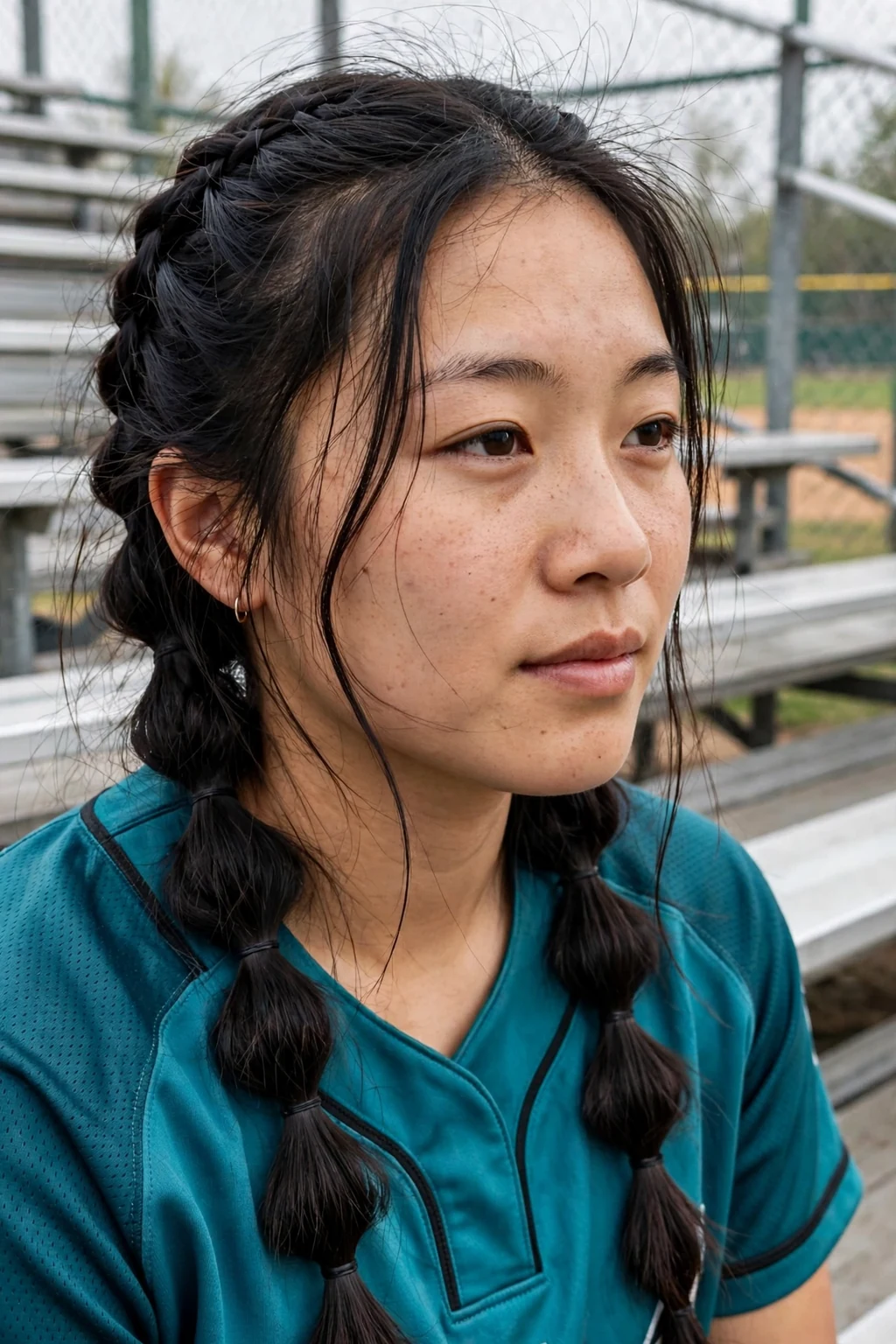
The French braid ponytail combines the security of a braid with the swing of a ponytail, braiding from the forehead back and then releasing the remaining hair into a high or mid ponytail. The appearance is sleek and athletic at the front, with a smooth, controlled crown, and lively movement through the ponytail itself. The finish is polished without being stiff, and the braid keeps the front sections completely contained, which is exactly what you want when you are tracking a fly ball in the sun. It is a classic for a reason: it looks put-together from every angle. Small variations make it your own: swap the elastic color, add a team ribbon, or loosen a few pieces for a softer finish on less intense days. The style also handles sweat and humidity better than loose hair, since the secured sections keep damp strands from sticking to the neck and face. It transitions easily from the field to the rest of your day, still looking neat at a team dinner or in post-game photos hours later.
This style flatters oval, square, and heart-shaped faces and suits straight, wavy, and curly hair, particularly medium to thick textures. It works for every position, but especially for catchers and shortstops who move constantly. To style, French braid from the hairline to the crown, secure the braid into a ponytail with a strong elastic, and smooth the lengths with a light serum. A small amount of gel at the hairline prevents fuzz. Trim every eight to ten weeks, and grow-out is forgiving since the braid disguises new growth. Choose this style when you want one dependable, cute look that works for practice, games, and everything after. It works for practices just as well as games, so you can wear the same reliable style all week and perfect your technique over time. Players with layers should pin the shorter pieces first, since those are the strands most likely to escape during sprints and slides. To protect hair health, avoid pulling the style too tight every single day, and alternate with a looser style on rest days when possible.
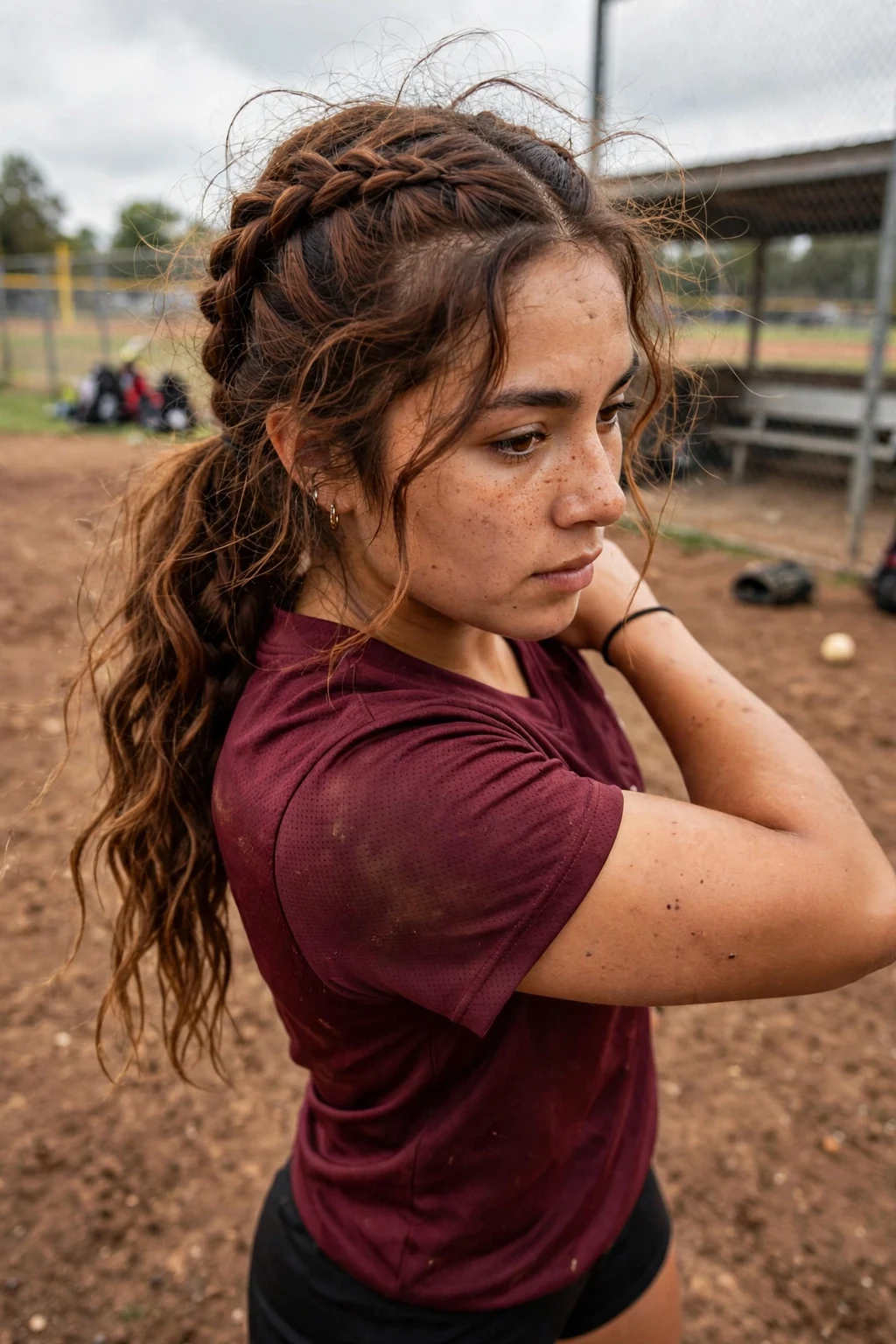
5. Messy Bun with Headband
The messy bun with a headband is the effortless dugout classic: hair gathered into a loose, textured bun at the crown or nape, with a wide headband holding back the front layers. The appearance is relaxed and cute, with soft face-framing pieces, gentle volume at the crown, and a bun that looks intentionally undone rather than sloppy. The finish is matte and touchable, and the headband adds a pop of team color while doing serious work keeping sweat and stray hairs out of the eyes. It is the fastest route to looking game-ready on a busy morning. The style also handles sweat and humidity better than loose hair, since the secured sections keep damp strands from sticking to the neck and face. It transitions easily from the field to the rest of your day, still looking neat at a team dinner or in post-game photos hours later. Younger players love how approachable it is, while older teens appreciate that it looks polished without feeling childish or overdone.
This style suits all face shapes, especially round and square faces softened by the loose front pieces, and works on wavy, curly, and textured hair that naturally holds a bun. It is ideal for players who prefer hair fully off the neck in the heat. To style, pull hair into a high ponytail, twist it loosely into a bun, pin it in place, and pull out a few face-framing strands before adding the headband. Texturizing spray gives grip, and dry shampoo refreshes second-day hair. Trim every ten weeks to keep the ends from splitting. Try it when you want cute, quick, and comfortable, with a headband doing the hard work for you. Players with layers should pin the shorter pieces first, since those are the strands most likely to escape during sprints and slides. To protect hair health, avoid pulling the style too tight every single day, and alternate with a looser style on rest days when possible. A silk or satin scrunchie reduces breakage compared with plain elastics, which matters when you wear your hair up for nearly every practice.
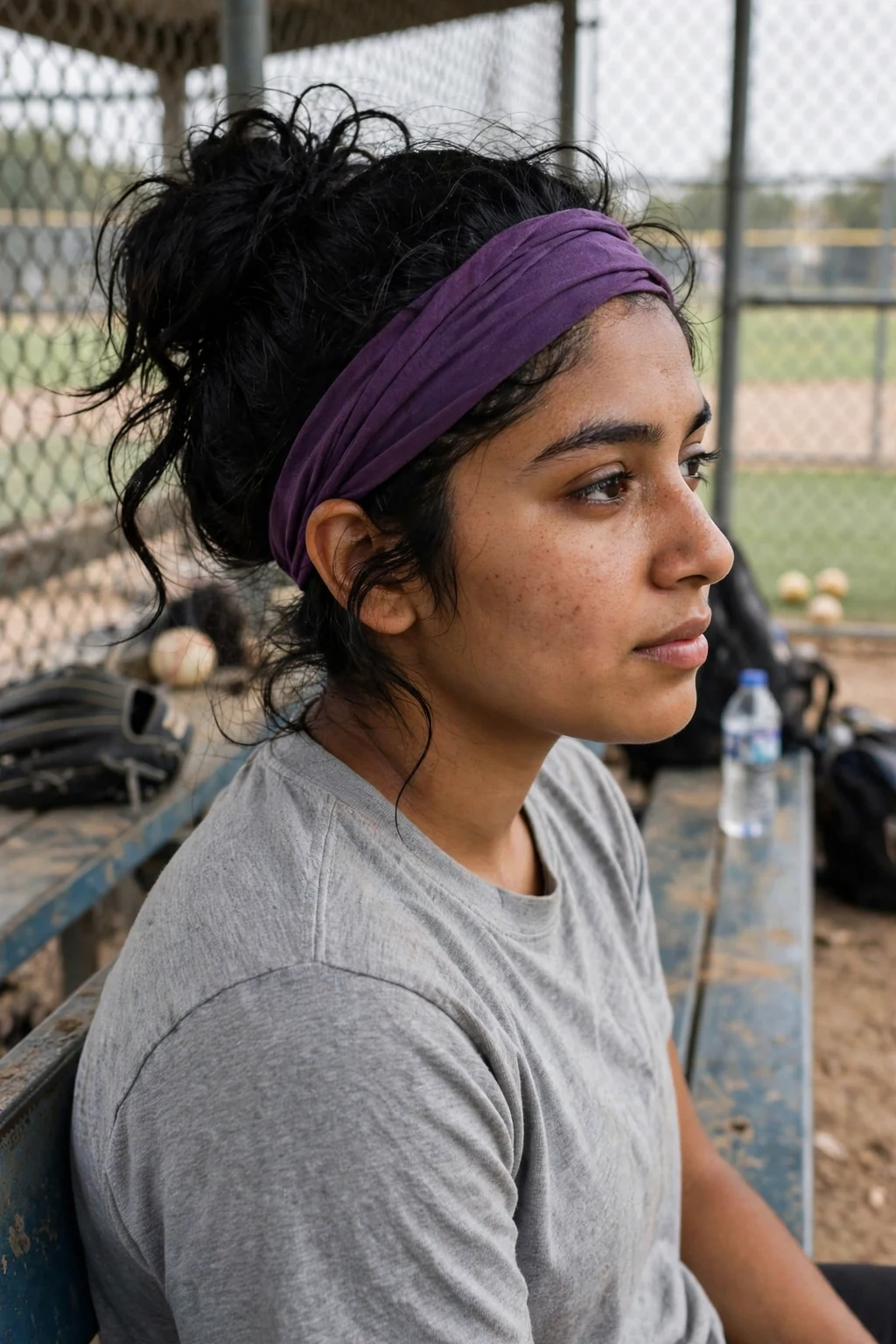
6. Low Sleek Ponytail
The low sleek ponytail is understated, elegant, and brilliantly practical, with hair smoothed back and secured at the nape for a clean silhouette. The appearance is glossy and controlled, with no bumps at the crown and a ponytail that falls neatly down the back without swinging wildly during play. The finish is smooth and polished, giving off a focused, professional energy that suits team captains and players who like a no-fuss look. It also sits beautifully under a helmet, since the low placement creates no bulk at the crown where the helmet needs to fit snugly. It transitions easily from the field to the rest of your day, still looking neat at a team dinner or in post-game photos hours later. Younger players love how approachable it is, while older teens appreciate that it looks polished without feeling childish or overdone. The overall effect is sporty first and cute second, which is exactly the balance a great softball hairstyle should strike. Because the weight is distributed evenly, it stays comfortable through doubleheaders and long tournament days without causing headaches.
This style suits oval, oblong, and diamond-shaped faces and works best on straight or lightly wavy hair that can be smoothed easily, though a flat iron helps on curlier textures. It is perfect for pitchers who need a distraction-free style and for players with fine hair that looks fuller when pulled smooth. To style, apply smoothing cream to damp hair, brush it back with a boar-bristle brush, secure at the nape with a snag-free elastic, and finish with a shine spray. Trims every eight weeks keep the ponytail ends blunt and healthy. Choose the low sleek ponytail when you want a clean, grown-up game-day look that stays flawless from first pitch to last. To protect hair health, avoid pulling the style too tight every single day, and alternate with a looser style on rest days when possible. A silk or satin scrunchie reduces breakage compared with plain elastics, which matters when you wear your hair up for nearly every practice. Ask your stylist to shape the cut with this style in mind, since well-placed layers make the updo easier and the grow-out more forgiving.

7. Side Braid Ponytail
The side braid ponytail sweeps a braid along one side of the head before joining a ponytail, creating an asymmetric look that is both sporty and romantic. The appearance is dynamic, with the braid adding texture and visual interest on one side while the ponytail keeps everything practical and contained. The finish is soft at the edges and secure at the core, and the side placement means the braid never interferes with a batting helmet or a catcher's mask. It is a lovely choice for players who want their game-day hair to feel a little more special than a plain ponytail. Younger players love how approachable it is, while older teens appreciate that it looks polished without feeling childish or overdone. The overall effect is sporty first and cute second, which is exactly the balance a great softball hairstyle should strike. Because the weight is distributed evenly, it stays comfortable through doubleheaders and long tournament days without causing headaches. It pairs well with visors, caps, and headbands, so you can layer on sun protection or team gear without rebuilding the whole style.
This style flatters round, heart, and oval faces, with the side braid drawing the eye diagonally across the face in a very flattering way. It suits straight, wavy, and curly hair of medium length or longer. To style, part hair to one side, braid along the hairline toward the back, gather everything into a mid ponytail, and loosen the braid slightly for softness. A flexible-hold spray keeps it in place without crunch. Trim every eight to ten weeks, and grow-out blends easily into the braid. Try the side braid ponytail when you want a cute twist on a classic that still performs under pressure. A silk or satin scrunchie reduces breakage compared with plain elastics, which matters when you wear your hair up for nearly every practice. Ask your stylist to shape the cut with this style in mind, since well-placed layers make the updo easier and the grow-out more forgiving. Between seasons, the same technique adapts to other sports and workouts, making it a versatile skill worth learning properly once.
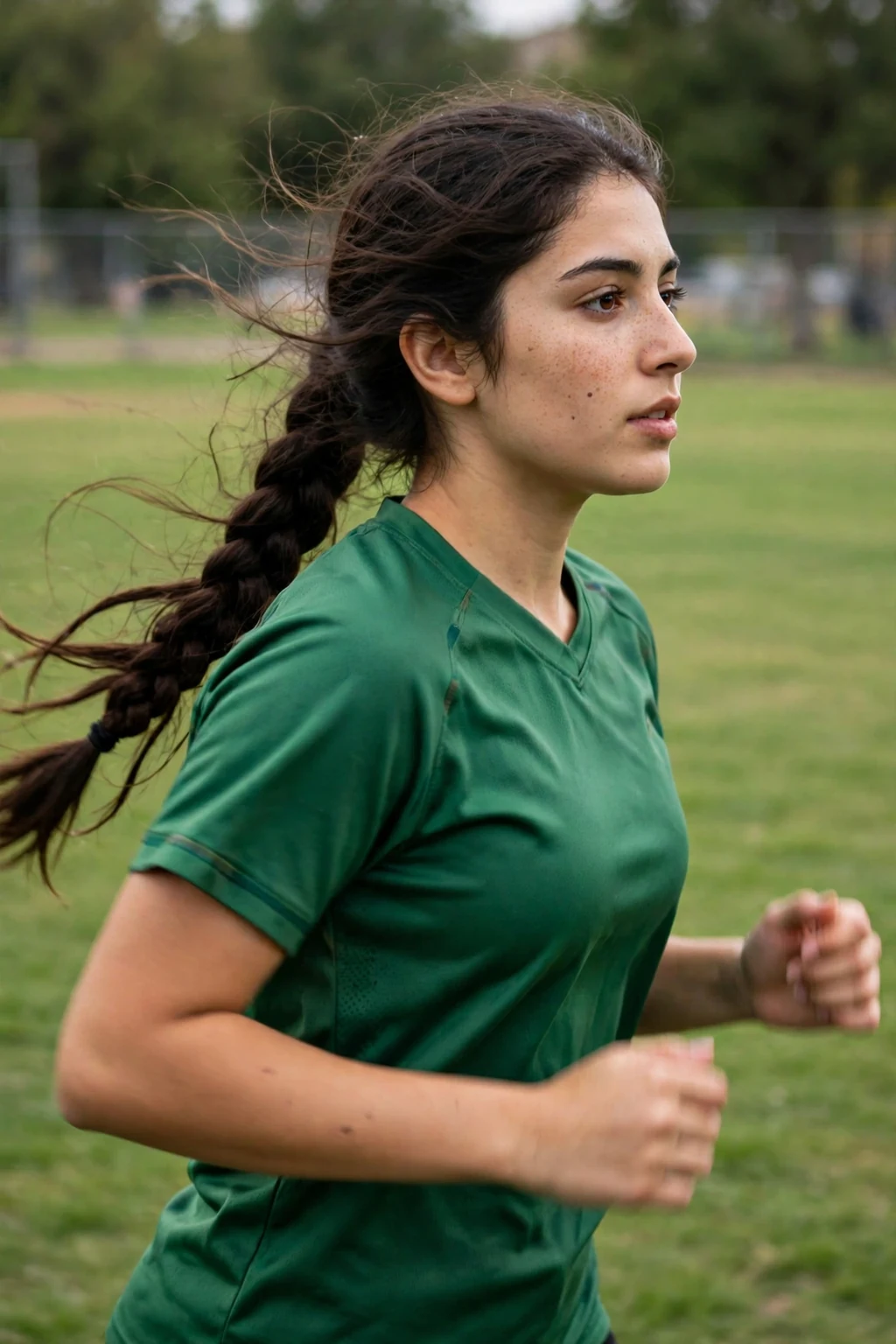
8. Space Buns
Space buns are pure dugout joy: two high buns sitting on either side of the crown, giving a playful, energetic look that stands out in team photos. The appearance is symmetrical and fun, with the buns adding height and personality while keeping every strand off the neck and face. The finish can be sleek or messy depending on your mood, and the style works surprisingly well under a helmet if the buns are placed slightly lower and flatter. It is the style for players who bring the energy, on and off the field, and it pairs perfectly with colorful scrunchies or team ribbons. The overall effect is sporty first and cute second, which is exactly the balance a great softball hairstyle should strike. Because the weight is distributed evenly, it stays comfortable through doubleheaders and long tournament days without causing headaches. It pairs well with visors, caps, and headbands, so you can layer on sun protection or team gear without rebuilding the whole style.
Space buns suit oval, round, and heart-shaped faces and work on straight, wavy, and curly hair, especially medium to thick textures that fill out a bun nicely. They are ideal for younger players and for spirit days, tournaments, and warm-up sessions. To style, part hair down the middle, make two high ponytails, twist each into a bun, and pin securely, using texturizing spray for grip on slippery hair. The style holds all game with enough pins. Trims every ten weeks keep the ends tidy. Choose space buns when you want maximum cuteness and a style that makes the whole team smile. Ask your stylist to shape the cut with this style in mind, since well-placed layers make the updo easier and the grow-out more forgiving. Between seasons, the same technique adapts to other sports and workouts, making it a versatile skill worth learning properly once. For picture day, add a ribbon or a small bow in your team colors to elevate the look without changing the secure foundation underneath.

9. Fishtail Braid Ponytail
The fishtail braid ponytail looks far more intricate than it is, with a finely woven fishtail pattern running down the ponytail for a textured, almost bohemian effect. The appearance is detailed and eye-catching, with the small, interlaced sections creating a beautiful herringbone texture that catches the light as you move. The finish is soft and slightly undone, which suits the relaxed energy of a softball game, while the ponytail base keeps the whole style anchored and secure. It is a wonderful option for players who love braids but want something different from the usual three-strand look. Because the weight is distributed evenly, it stays comfortable through doubleheaders and long tournament days without causing headaches. It pairs well with visors, caps, and headbands, so you can layer on sun protection or team gear without rebuilding the whole style. Teammates often copy it once they see how well it holds up, which makes it a natural choice for matching team looks on spirit days.
This style suits oval, square, and heart-shaped faces and works best on straight or wavy hair of medium length or longer, since the fishtail pattern shows up most clearly on smoother textures. It is a great pick for outfielders with time to style before the game. To style, secure a high ponytail, divide it into two sections, and alternately cross small pieces from each side, securing the end with a clear elastic. A light texturizing spray beforehand adds grip. Trim every eight to ten weeks to prevent the fishtail from looking frayed. Try it when you want a braid that earns compliments in the dugout. Between seasons, the same technique adapts to other sports and workouts, making it a versatile skill worth learning properly once. For picture day, add a ribbon or a small bow in your team colors to elevate the look without changing the secure foundation underneath. Sleeping with the style loosely braided the night before can add helpful texture and grip, especially for very smooth or fine hair.
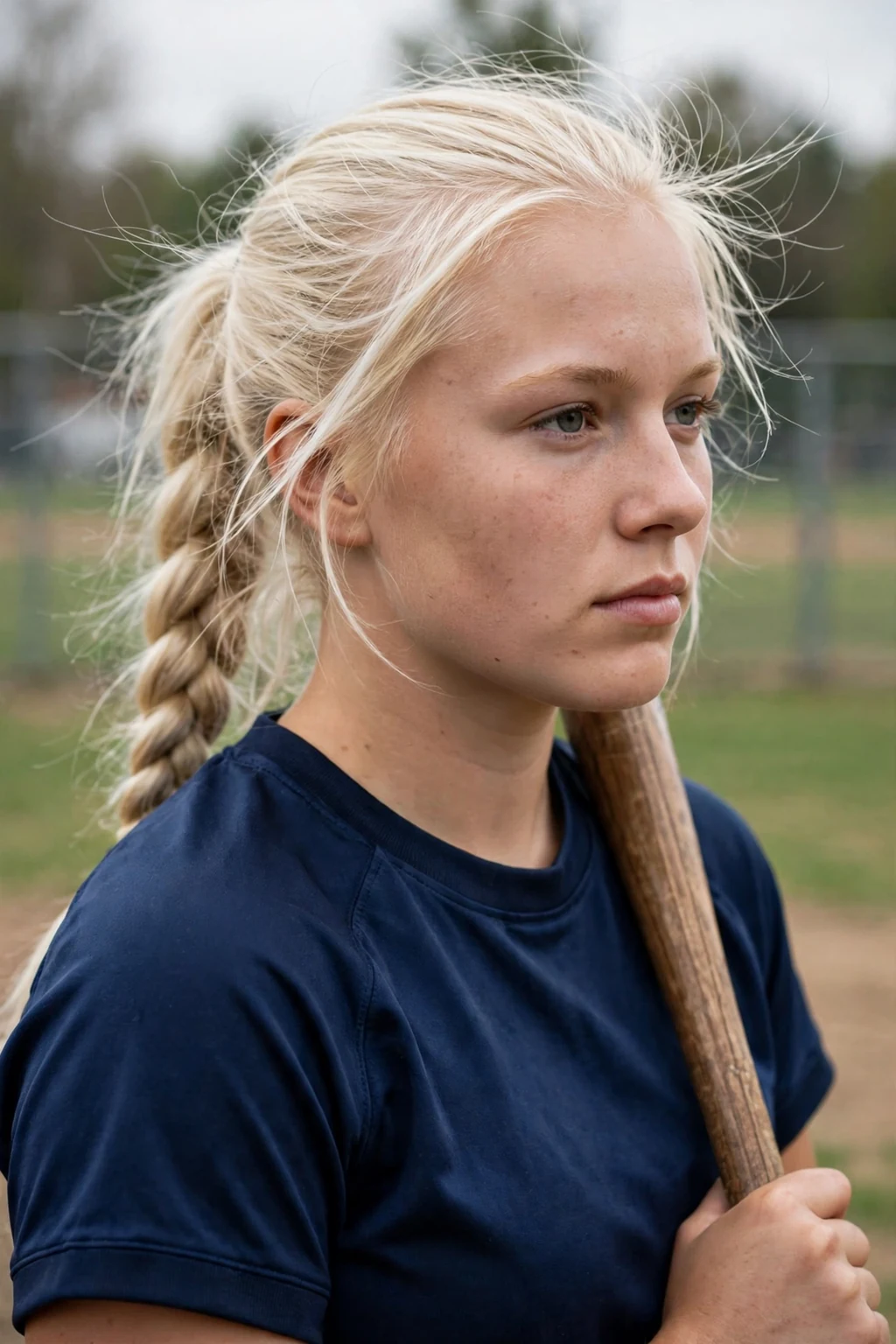
10. Curly High Puff Ponytail
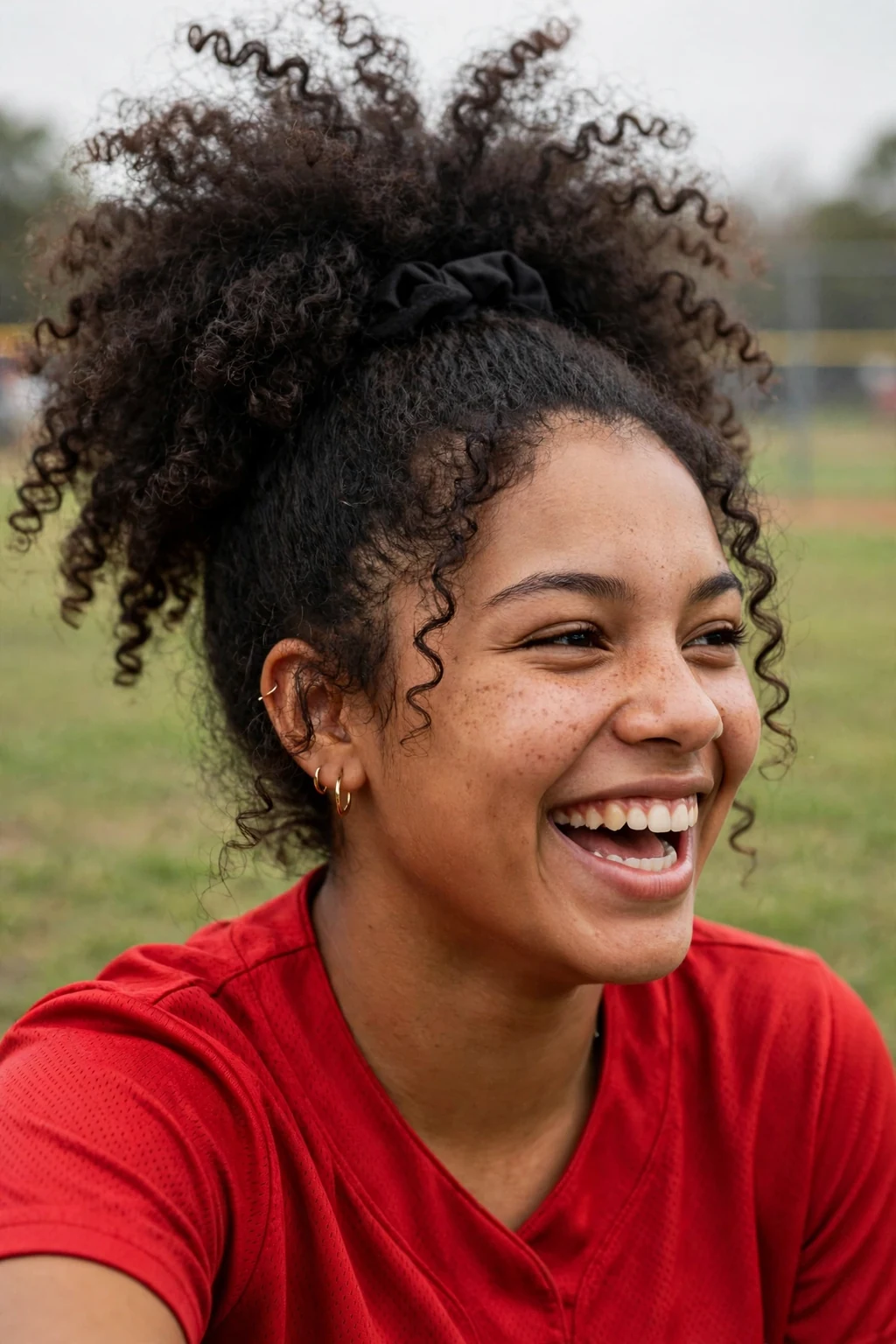
The curly high puff ponytail celebrates natural curls, gathering them into a full, rounded puff at the crown that bounces with every step. The appearance is joyful and voluminous, with defined curls forming a soft halo shape and the face left completely open and free. The finish is textured and touchable, with curls piled high rather than pulled flat, which gives the style its signature energy and confidence. It is a beautiful way to wear curls on game day without fighting them into a braid or a bun, and it looks fantastic in action shots. It pairs well with visors, caps, and headbands, so you can layer on sun protection or team gear without rebuilding the whole style. Teammates often copy it once they see how well it holds up, which makes it a natural choice for matching team looks on spirit days. Even in windy conditions, the anchored sections keep the style intact, so you spend the game playing rather than pushing hair out of your eyes.
This style is made for naturally curly and coily hair of all densities, flattering round, oval, and heart-shaped faces with its height and volume. It suits players who want their texture front and center. To style, moisturize curls with a leave-in conditioner and curl cream, gather hair loosely at the crown with a wide elastic or puff cuff, and fluff the curls into shape, smoothing the edges with a light gel. Refresh with a water and conditioner mist between games. Trim every ten to twelve weeks to maintain the curl shape. Choose the curly high puff when you want your natural texture to be the star of game day. For picture day, add a ribbon or a small bow in your team colors to elevate the look without changing the secure foundation underneath. Sleeping with the style loosely braided the night before can add helpful texture and grip, especially for very smooth or fine hair. With regular trims and gentle detangling after games, the style keeps looking fresh all season and never turns into a tangled end-of-day mess.
11. Braided Crown Bun
The braided crown bun wraps a braid around the head like a crown before tucking the remaining hair into a neat bun, creating a look that is both elegant and totally game-proof. The appearance is regal and tidy, with the braid framing the face beautifully and the bun sitting low or high depending on your helmet fit. The finish is smooth and controlled, with no loose pieces to escape during a sprint, and the crown braid distributes tension evenly so the style stays comfortable for hours. It is a lovely choice for senior nights, playoffs, and any game where you want to feel extra polished. Teammates often copy it once they see how well it holds up, which makes it a natural choice for matching team looks on spirit days. Even in windy conditions, the anchored sections keep the style intact, so you spend the game playing rather than pushing hair out of your eyes. In motion, the style keeps its shape beautifully, whether you are sprinting to first base, sliding into home, or chasing a ball into the outfield.
This style suits oval, heart, and diamond faces and works on straight, wavy, and curly hair of medium length or longer. It is especially good for players with thick hair that needs serious containment. To style, braid a section along the hairline from one side to the other, pin it across the crown, gather the rest into a bun, and secure everything with bobby pins and a light-hold spray. Practice the braid once before game day to get the placement right. Trim every eight to ten weeks. Choose the braided crown bun when you want a style that feels special yet holds up through nine innings. Sleeping with the style loosely braided the night before can add helpful texture and grip, especially for very smooth or fine hair. With regular trims and gentle detangling after games, the style keeps looking fresh all season and never turns into a tangled end-of-day mess. For game day, pack a small kit with extra elastics, bobby pins, and a travel-size hairspray so you can fix any loosening between innings in seconds.

12. Half-Up Top Knot
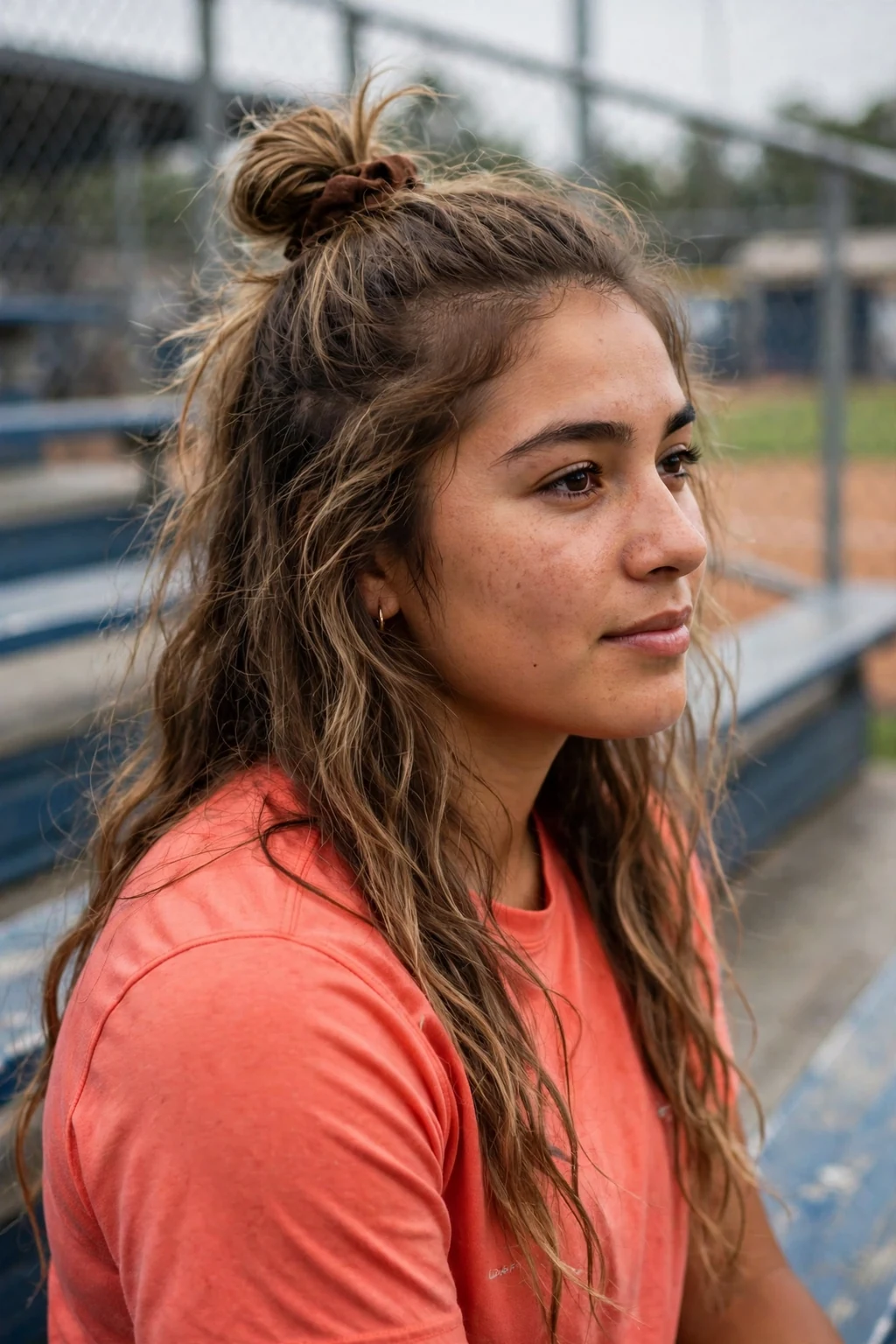
The half-up top knot pulls just the top section of hair into a small bun while leaving the rest flowing, giving you the best of both worlds on game day. The appearance is cute and casual, with the top knot adding height and keeping the front layers out of your eyes while the loose lengths add softness and movement. The finish is relaxed and slightly textured, and the style works well for practices and casual games where a full updo feels like too much. It is also a great transition style for players growing out bangs or layers. Even in windy conditions, the anchored sections keep the style intact, so you spend the game playing rather than pushing hair out of your eyes. In motion, the style keeps its shape beautifully, whether you are sprinting to first base, sliding into home, or chasing a ball into the outfield. Under a batting helmet, it sits flat where it needs to and never creates uncomfortable pressure points or awkward bulges.
This style flatters oval, round, and heart-shaped faces and suits wavy and straight hair of medium to long length. It is ideal for players who love wearing their hair down but need the front contained. To style, section off the top third of hair, twist it into a small knot at the crown, pin it securely, and leave the rest loose with a touch of texturizing spray. Keep a spare elastic handy in case the knot loosens mid-game. Trim every eight to ten weeks to keep the loose lengths healthy. Try the half-up top knot for practices, warm-ups, and low-key game days when you want cute and easy. With regular trims and gentle detangling after games, the style keeps looking fresh all season and never turns into a tangled end-of-day mess. For game day, pack a small kit with extra elastics, bobby pins, and a travel-size hairspray so you can fix any loosening between innings in seconds. On humid days, a light anti-frizz serum applied before styling goes a long way, while a stronger gel helps on particularly windy tournament afternoons.
13. Twisted Rope Ponytail
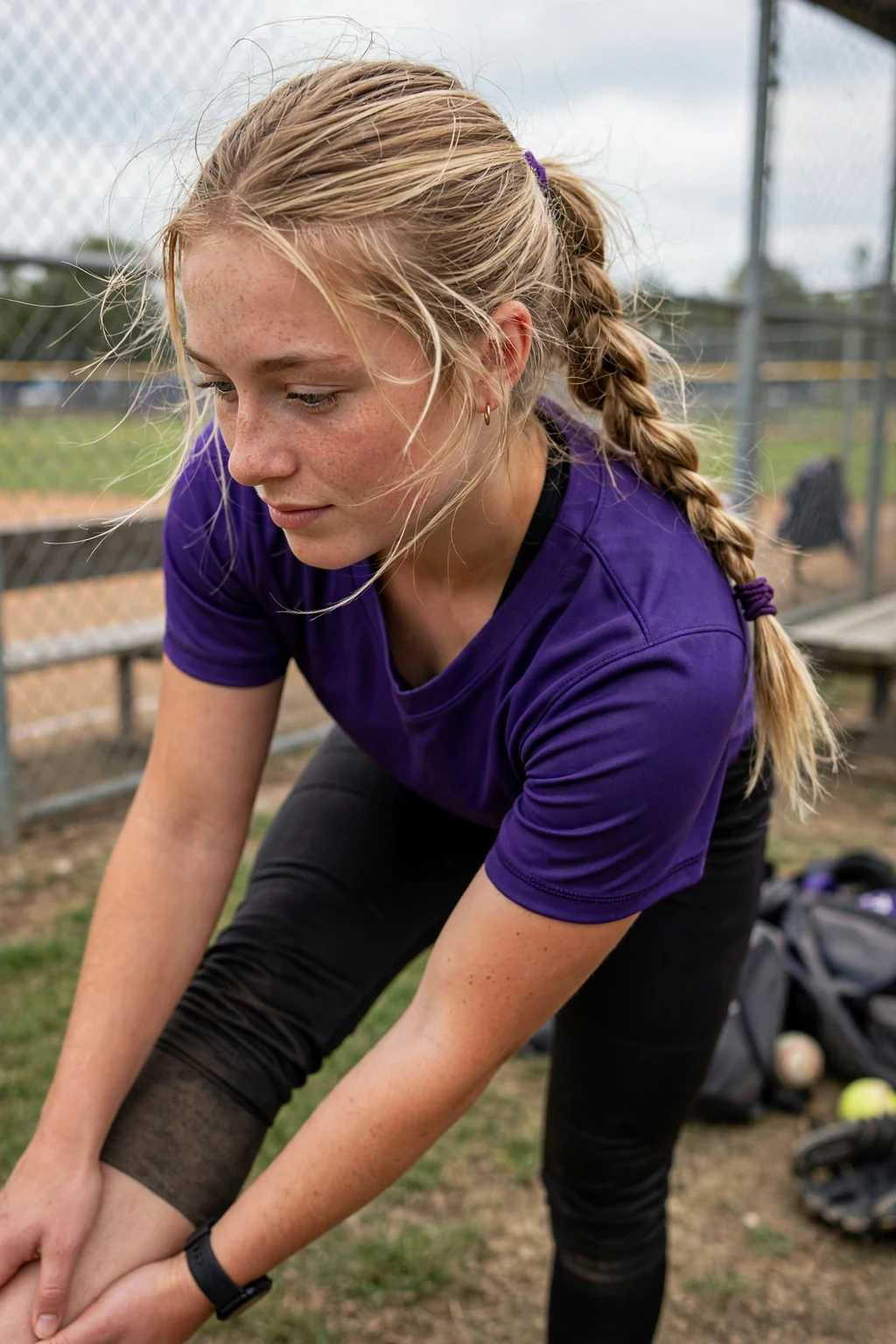
The twisted rope ponytail twists two sections of hair around each other into a rope-like pattern, creating a sleek, sculptural ponytail that holds its shape beautifully. The appearance is smooth and defined, with the twist pattern adding visual interest that a plain ponytail lacks, and the overall shape staying compact and controlled during play. The finish is polished with a subtle sheen, and the rope twist is naturally secure, resisting the loosening that can happen with regular ponytails during slides and dives. It is an elegant yet sporty option that looks far more difficult than it actually is. In motion, the style keeps its shape beautifully, whether you are sprinting to first base, sliding into home, or chasing a ball into the outfield. Under a batting helmet, it sits flat where it needs to and never creates uncomfortable pressure points or awkward bulges. From the bleachers, the silhouette reads clean and intentional, and it photographs just as well in candid dugout shots as in formal team pictures.
This style suits oval, square, and oblong faces and works best on straight or wavy hair of medium length or longer, though it also looks gorgeous on smoothed curly hair. It is a strong choice for infielders who need a compact style. To style, make a high or mid ponytail, divide it into two sections, twist each section in the same direction, then twist them around each other in the opposite direction and secure the end. A smoothing serum prevents frizz along the twist. Trim every eight weeks. Choose the twisted rope ponytail when you want a sleek, distinctive style that stays locked in all game. For game day, pack a small kit with extra elastics, bobby pins, and a travel-size hairspray so you can fix any loosening between innings in seconds. On humid days, a light anti-frizz serum applied before styling goes a long way, while a stronger gel helps on particularly windy tournament afternoons. If you play multiple games in one day, the style refreshes quickly: smooth the edges, re-pin one or two sections, and mist with water or dry shampoo.
14. Pigtail Braids with Ribbons
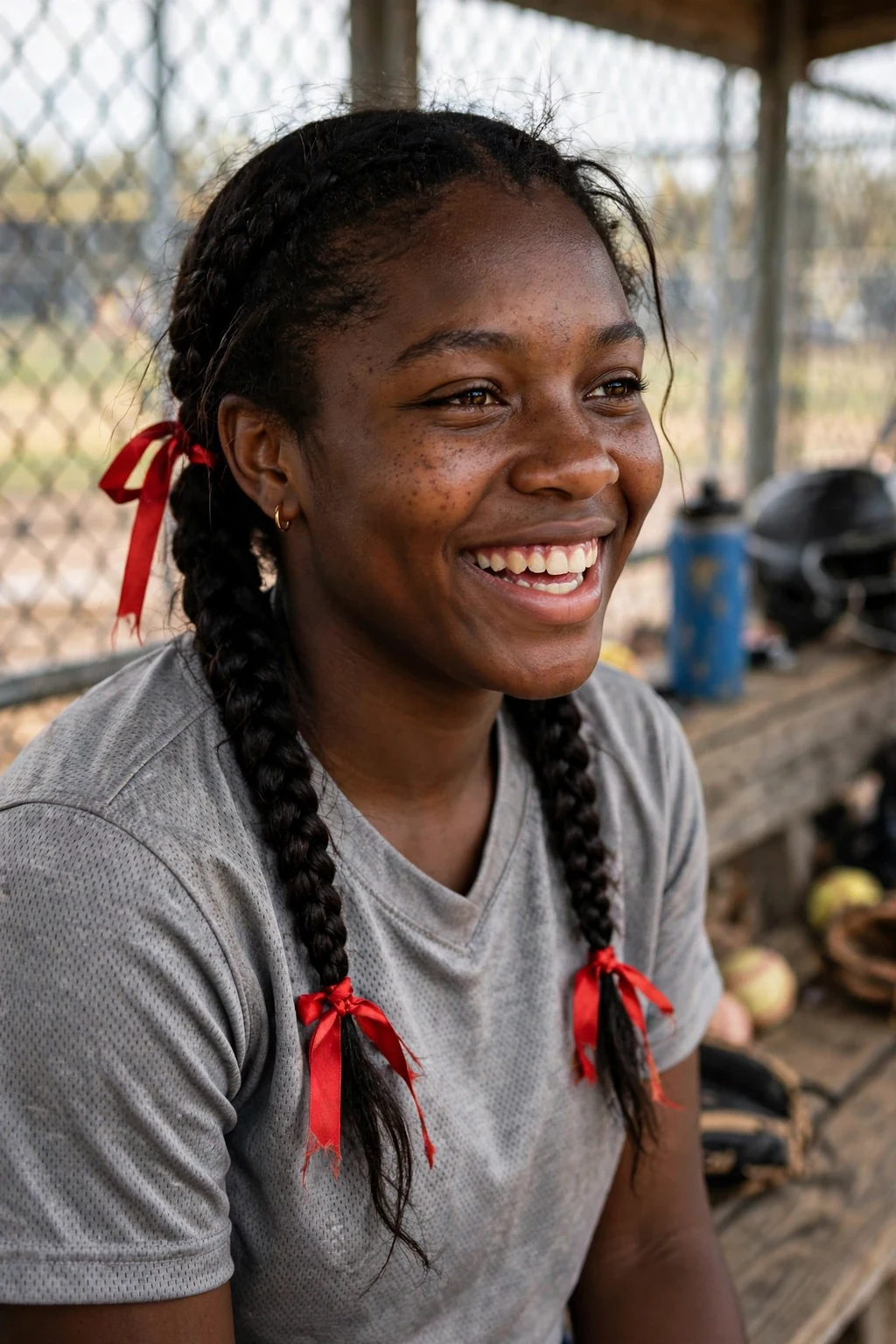
Pigtail braids with ribbons are the sweetest throwback on this list, with two braids tied off in team-colored ribbons for a look that is pure team spirit. The appearance is youthful and cheerful, with the braids framing the face symmetrically and the ribbons adding a playful pop of color that ties the whole uniform together. The finish is neat and bouncy, and the style is wonderfully secure, since each braid is anchored independently and sits flat enough to fit under a helmet. It is a tournament favorite and a guaranteed hit in team photos. Under a batting helmet, it sits flat where it needs to and never creates uncomfortable pressure points or awkward bulges. From the bleachers, the silhouette reads clean and intentional, and it photographs just as well in candid dugout shots as in formal team pictures. Small variations make it your own: swap the elastic color, add a team ribbon, or loosen a few pieces for a softer finish on less intense days.
This style suits round, oval, and heart-shaped faces and works on straight, wavy, and curly hair of medium length or longer. It is perfect for spirit days, tournaments, and younger players on the team. To style, part hair down the middle, braid each side in a classic three-strand braid, tie the ends with ribbon in your team colors, and add a touch of gel along the part for neatness. The ribbons double as a quick identifier on the field. Trim every eight to ten weeks. Choose pigtail braids with ribbons when you want to show team pride in the cutest way possible. On humid days, a light anti-frizz serum applied before styling goes a long way, while a stronger gel helps on particularly windy tournament afternoons. If you play multiple games in one day, the style refreshes quickly: smooth the edges, re-pin one or two sections, and mist with water or dry shampoo. It works for practices just as well as games, so you can wear the same reliable style all week and perfect your technique over time.
15. Slicked-Back Low Bun
The slicked-back low bun is the definition of game-day focus: every strand smoothed back into a tight, low bun that will not budge no matter how intense the game gets. The appearance is sleek and severe in the best way, with a glossy, controlled crown and a compact bun at the nape that fits perfectly under any helmet. The finish is high-shine and polished, giving a professional, all-business energy that suits players who want zero distractions. It is also the most weather-proof style on this list, holding up in wind, heat, and humidity alike. From the bleachers, the silhouette reads clean and intentional, and it photographs just as well in candid dugout shots as in formal team pictures. Small variations make it your own: swap the elastic color, add a team ribbon, or loosen a few pieces for a softer finish on less intense days. The style also handles sweat and humidity better than loose hair, since the secured sections keep damp strands from sticking to the neck and face.
This style flatters oval, diamond, and heart-shaped faces and works on straight, wavy, and curly hair, especially when smoothed with gel. It is ideal for catchers and pitchers who wear masks and helmets for long stretches. To style, apply a strong-hold gel to damp hair, brush it back tightly, twist into a low bun, pin it flat, and finish with a shine spray and a fine mist of hairspray. Keep edge control handy for touch-ups. Trim every eight weeks to keep the bun compact. Choose the slicked-back low bun when you want the most secure, polished style possible. If you play multiple games in one day, the style refreshes quickly: smooth the edges, re-pin one or two sections, and mist with water or dry shampoo. It works for practices just as well as games, so you can wear the same reliable style all week and perfect your technique over time. Players with layers should pin the shorter pieces first, since those are the strands most likely to escape during sprints and slides.
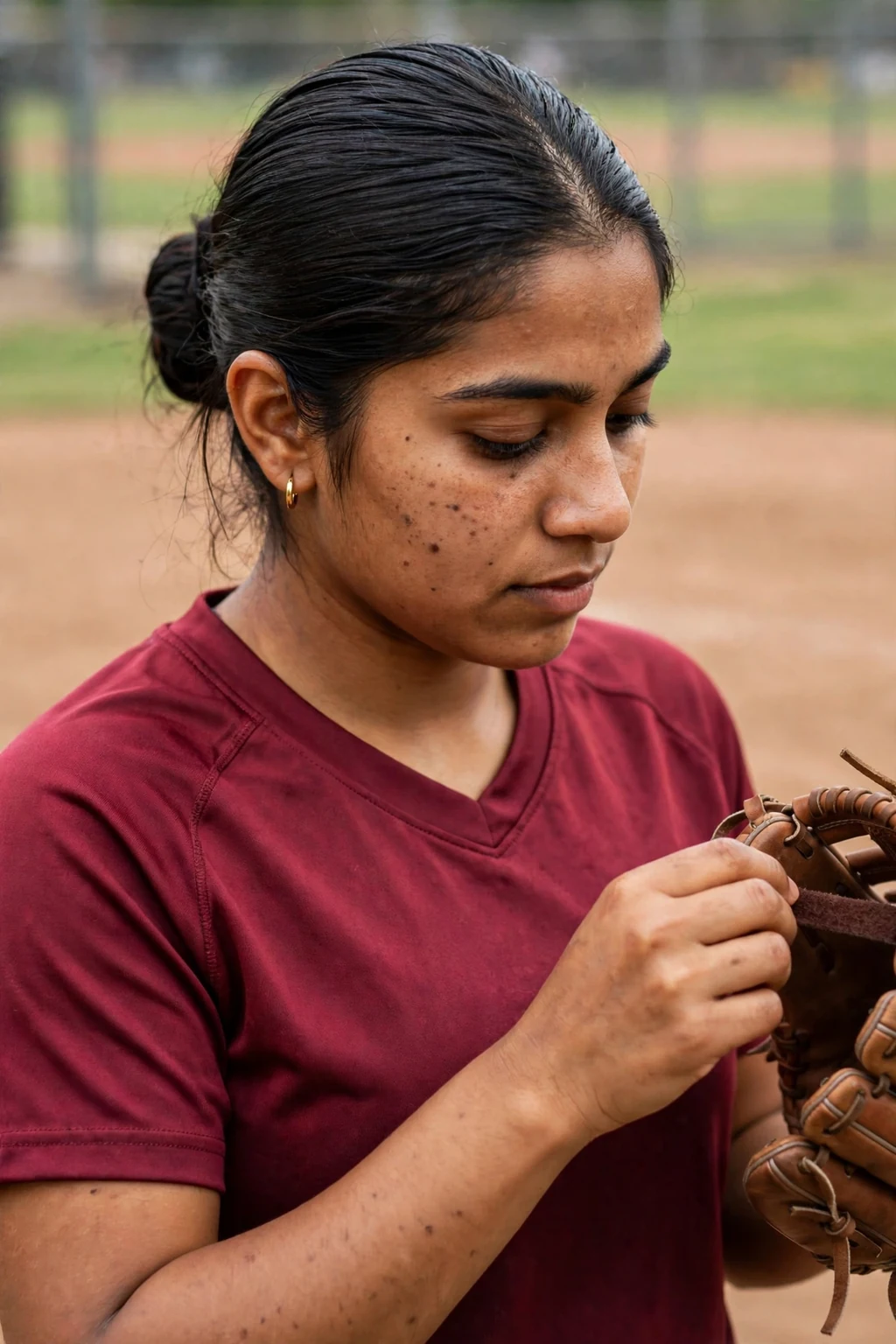
16. Voluminous Curly Ponytail
The voluminous curly ponytail gathers curls into a high, full ponytail that shows off natural texture while keeping hair out of the way. The appearance is big, bold, and beautiful, with defined curls cascading from a high base and framing the face with soft, springy pieces. The finish is textured and lively, with the curls providing natural volume that straight hair can only dream of, and the high placement keeps the neck cool during hot tournament days. It is a confident, joyful style that looks incredible in motion, whether you are rounding bases or celebrating a win. Small variations make it your own: swap the elastic color, add a team ribbon, or loosen a few pieces for a softer finish on less intense days. The style also handles sweat and humidity better than loose hair, since the secured sections keep damp strands from sticking to the neck and face. It transitions easily from the field to the rest of your day, still looking neat at a team dinner or in post-game photos hours later.
This style is perfect for naturally curly and wavy hair of medium to thick density, flattering oval, round, and square faces with its height and fullness. It suits outfielders and players who love volume. To style, apply curl cream and a light gel to damp curls, diffuse or air-dry for definition, gather hair at the crown without pulling the curls flat, and secure with a scrunchie or wide elastic. A pick at the roots adds extra lift. Trim every ten to twelve weeks to maintain the curl pattern. Choose the voluminous curly ponytail when you want your curls to shine on game day. It works for practices just as well as games, so you can wear the same reliable style all week and perfect your technique over time. Players with layers should pin the shorter pieces first, since those are the strands most likely to escape during sprints and slides. To protect hair health, avoid pulling the style too tight every single day, and alternate with a looser style on rest days when possible.
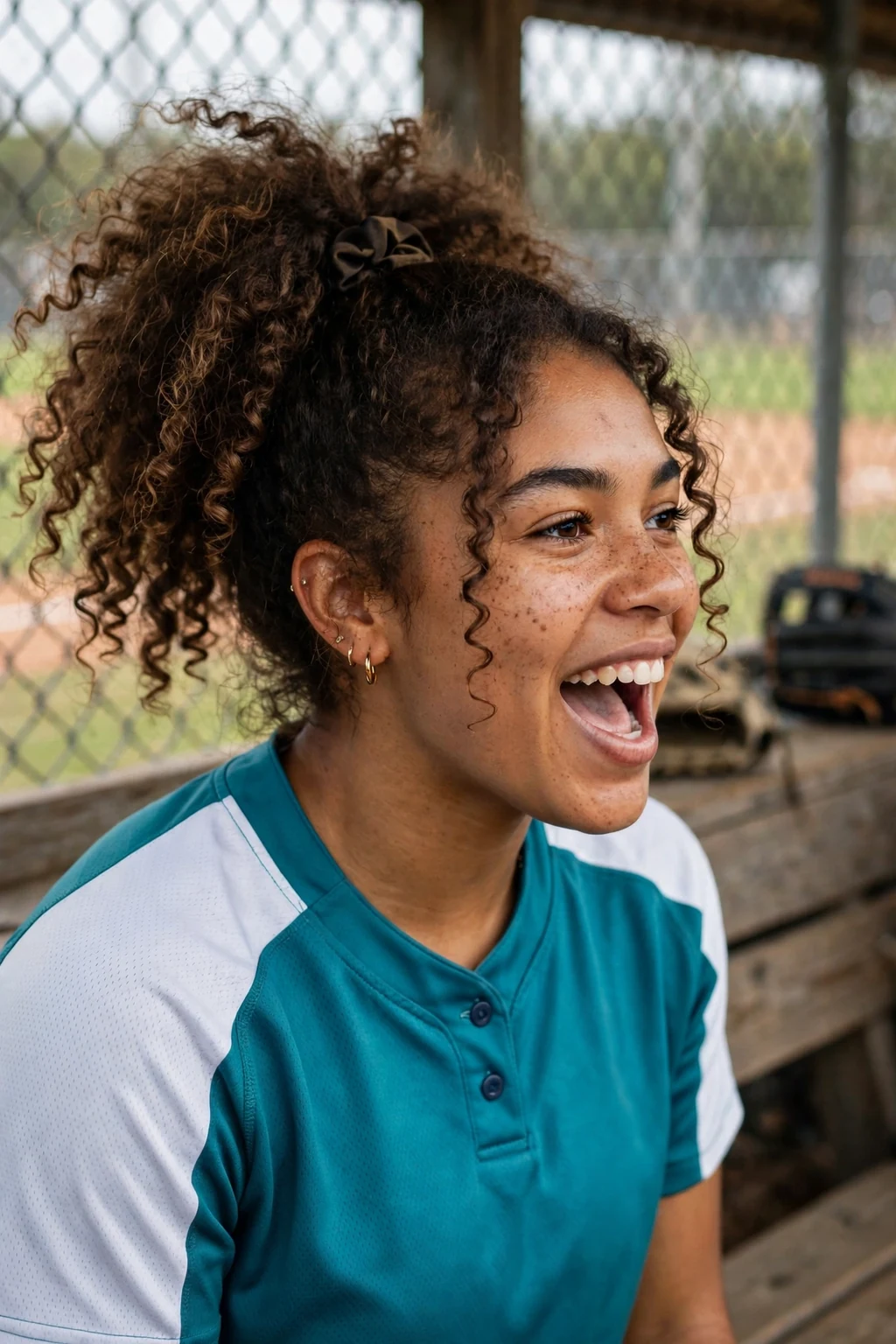
17. Side-Swept Dutch Braid
The side-swept Dutch braid runs diagonally across the head, starting at one temple and sweeping down to the opposite shoulder for a dramatic, romantic effect. The appearance is striking and dimensional, with the raised braid creating a beautiful ridge of texture that draws the eye across the face. The finish is sleek at the roots and softly textured through the braid itself, and the diagonal placement keeps hair completely off the face while adding a touch of elegance to a sporty uniform. It is a gorgeous choice for picture day and for games when you want to feel a little extra. The style also handles sweat and humidity better than loose hair, since the secured sections keep damp strands from sticking to the neck and face. It transitions easily from the field to the rest of your day, still looking neat at a team dinner or in post-game photos hours later. Younger players love how approachable it is, while older teens appreciate that it looks polished without feeling childish or overdone.
This style suits oval, heart, and square faces and works on straight, wavy, and lightly curly hair of medium length or longer. It is especially flattering for players with long hair that needs containing. To style, part hair deeply to one side, Dutch braid diagonally across the back of the head, and secure the end over one shoulder, loosening the braid slightly for softness. Gel along the hairline keeps the front neat. Trim every eight to ten weeks. Choose the side-swept Dutch braid when you want a braid with drama and a style that looks stunning from the stands. Players with layers should pin the shorter pieces first, since those are the strands most likely to escape during sprints and slides. To protect hair health, avoid pulling the style too tight every single day, and alternate with a looser style on rest days when possible. A silk or satin scrunchie reduces breakage compared with plain elastics, which matters when you wear your hair up for nearly every practice.
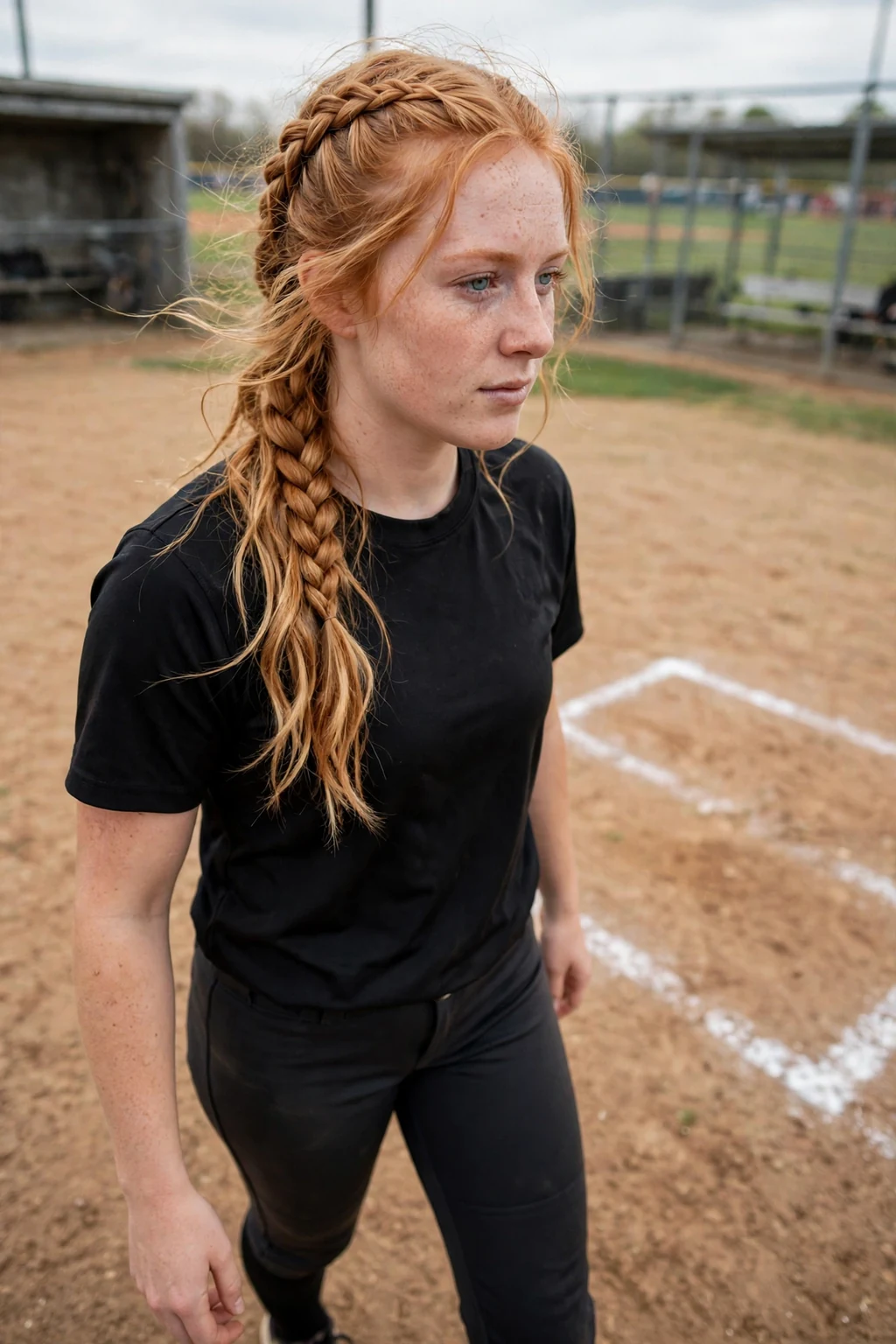
18. Double Bubble Ponytails
Double bubble ponytails split the hair into two pigtail ponytails, each puffed into bubbles, for a look that is double the fun. The appearance is symmetrical, bouncy, and irresistibly cute, with the bubbles adding volume and texture on both sides and the overall shape staying light and playful. The finish is soft and slightly tousled, and the twin placement keeps hair balanced and contained, which is surprisingly practical for a style that looks so whimsical. It is a favorite for younger players, spirit weeks, and any game where the team wants to match. It transitions easily from the field to the rest of your day, still looking neat at a team dinner or in post-game photos hours later. Younger players love how approachable it is, while older teens appreciate that it looks polished without feeling childish or overdone. The overall effect is sporty first and cute second, which is exactly the balance a great softball hairstyle should strike. Because the weight is distributed evenly, it stays comfortable through doubleheaders and long tournament days without causing headaches.
This style suits round, oval, and heart-shaped faces and works on straight and wavy hair of medium length or longer, especially fine hair that benefits from the bubble volume trick. It is ideal for players who want a matched, team-friendly look. To style, part hair down the middle, make two ponytails, add elastics every couple of inches down each one, and gently pull each section out into bubbles, finishing with flexible hairspray. The style refreshes easily the next day. Trim every eight to ten weeks. Choose double bubble ponytails when you want a fun, symmetrical style that the whole team can wear together. To protect hair health, avoid pulling the style too tight every single day, and alternate with a looser style on rest days when possible. A silk or satin scrunchie reduces breakage compared with plain elastics, which matters when you wear your hair up for nearly every practice. Ask your stylist to shape the cut with this style in mind, since well-placed layers make the updo easier and the grow-out more forgiving.

19. Braided Headband with Ponytail
The braided headband with a ponytail uses your own hair as the headband, braiding a front section across the hairline and gathering the rest into a ponytail. The appearance is charming and clever, with the braid acting as a natural, pretty frame for the face while the ponytail handles the practical work behind it. The finish is soft and romantic at the front and sporty at the back, and because the headband is made of hair, it never slips, slides, or needs adjusting mid-game the way fabric headbands sometimes do. It is a beautiful hybrid of cute and functional. Younger players love how approachable it is, while older teens appreciate that it looks polished without feeling childish or overdone. The overall effect is sporty first and cute second, which is exactly the balance a great softball hairstyle should strike. Because the weight is distributed evenly, it stays comfortable through doubleheaders and long tournament days without causing headaches. It pairs well with visors, caps, and headbands, so you can layer on sun protection or team gear without rebuilding the whole style.
This style suits oval, round, and heart-shaped faces and works on straight, wavy, and curly hair of medium length or longer. It is a great option for players with bangs or layers that keep falling forward. To style, braid a section from behind one ear across the forehead to the other side, pin it in place, gather the remaining hair into a mid or high ponytail, and finish with a light spray. Practice the headband braid once to get the tension right. Trim every eight to ten weeks. Choose this style when you want a built-in headband that looks adorable and never slips. A silk or satin scrunchie reduces breakage compared with plain elastics, which matters when you wear your hair up for nearly every practice. Ask your stylist to shape the cut with this style in mind, since well-placed layers make the updo easier and the grow-out more forgiving. Between seasons, the same technique adapts to other sports and workouts, making it a versatile skill worth learning properly once.
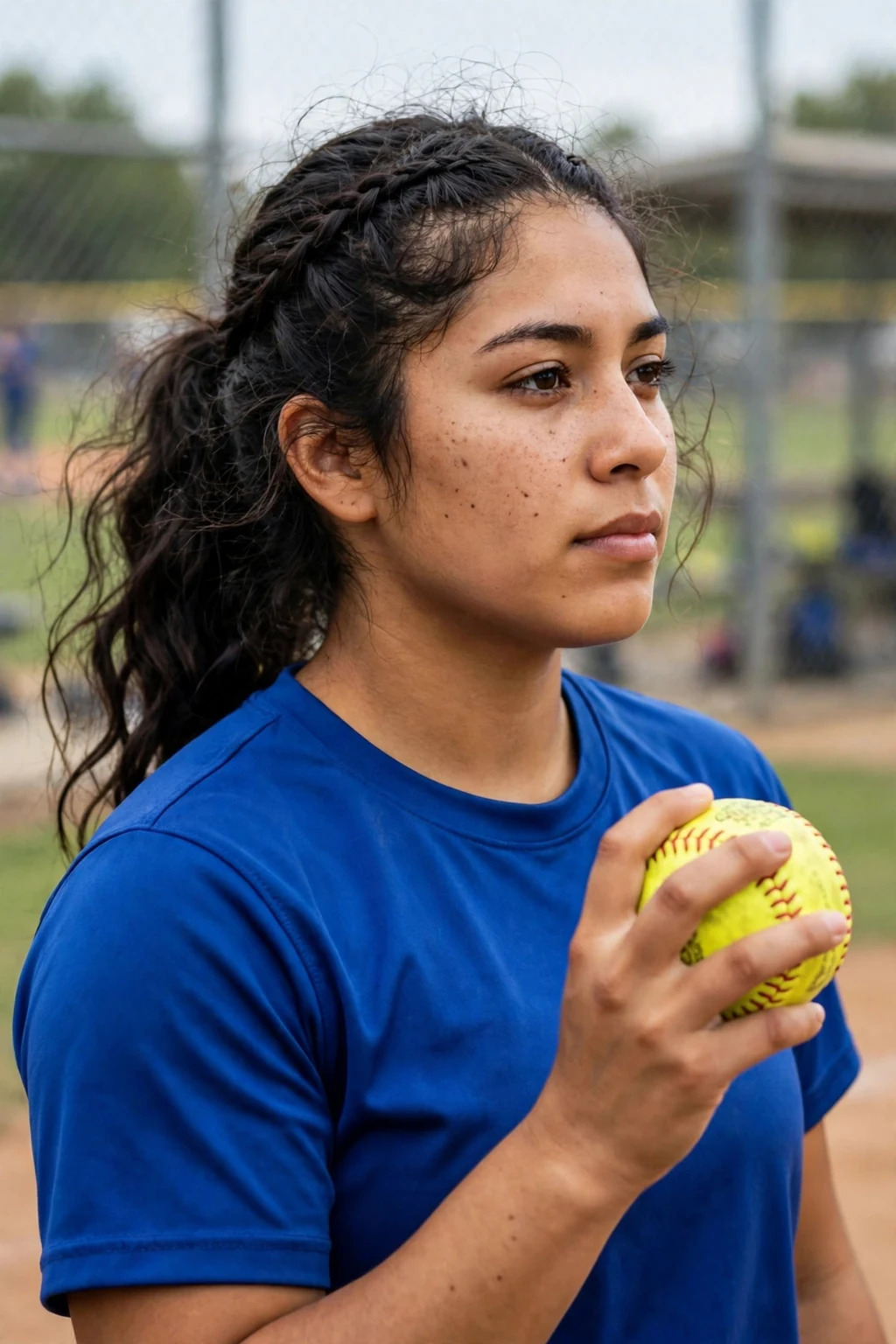
20. Messy Side Bun
The messy side bun gathers hair into a loose, textured bun sitting just behind one ear, giving an off-center, effortlessly cute silhouette. The appearance is relaxed and romantic, with soft pieces falling around the face and the bun itself looking intentionally undone rather than messy. The finish is matte and touchable, and the side placement adds a touch of asymmetry that photographs beautifully and feels less severe than a centered bun. It is a lovely post-game or practice style, and it transitions perfectly from the field to dinner with the team afterward. The overall effect is sporty first and cute second, which is exactly the balance a great softball hairstyle should strike. Because the weight is distributed evenly, it stays comfortable through doubleheaders and long tournament days without causing headaches. It pairs well with visors, caps, and headbands, so you can layer on sun protection or team gear without rebuilding the whole style. Teammates often copy it once they see how well it holds up, which makes it a natural choice for matching team looks on spirit days.
This style flatters oval, square, and heart-shaped faces and suits wavy, curly, and textured hair that naturally holds a loose bun. It is ideal for players who want hair off the neck without a tight, pulled-back feel. To style, sweep hair to one side, twist it loosely into a bun, pin it securely with several bobby pins, and pull out soft face-framing pieces, finishing with texturizing spray for grip. Keep extra pins in your bag for touch-ups. Trim every ten weeks. Choose the messy side bun when you want a soft, cute style that works as well off the field as on it. Ask your stylist to shape the cut with this style in mind, since well-placed layers make the updo easier and the grow-out more forgiving. Between seasons, the same technique adapts to other sports and workouts, making it a versatile skill worth learning properly once. For picture day, add a ribbon or a small bow in your team colors to elevate the look without changing the secure foundation underneath.
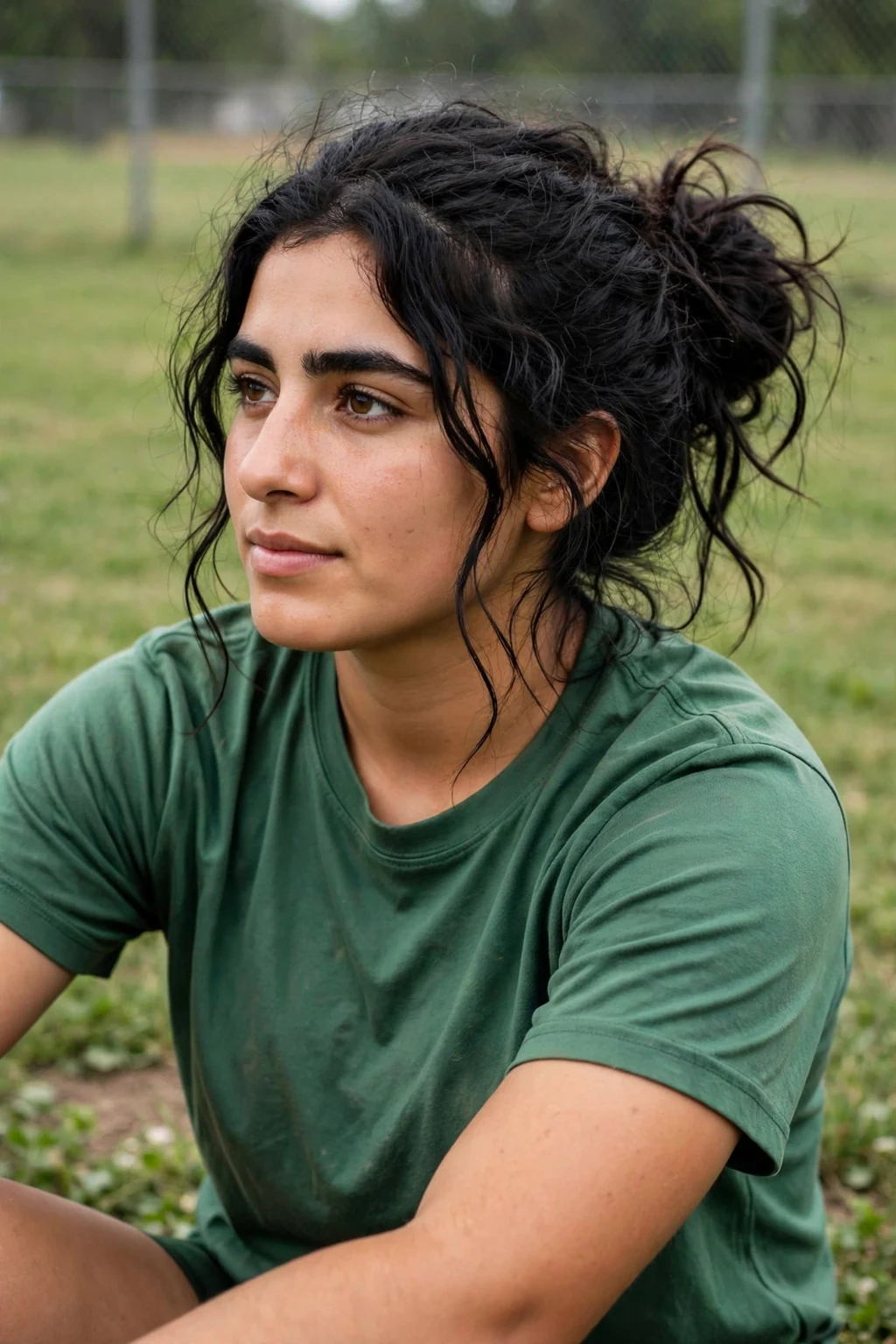
21. High Bun with Braided Base
The high bun with a braided base starts with a braid at the nape that feeds upward into a high bun, combining two secure styles into one seriously locked-in look. The appearance is sleek and sculptural, with the braid adding texture and grip along the back of the head and the bun sitting high and proud at the crown. The finish is polished and athletic, and the braided base is the secret to its staying power: it anchors the bun so firmly that even the most intense diving play will not loosen it. It is the style for players who never want to think about their hair mid-game. Because the weight is distributed evenly, it stays comfortable through doubleheaders and long tournament days without causing headaches. It pairs well with visors, caps, and headbands, so you can layer on sun protection or team gear without rebuilding the whole style. Teammates often copy it once they see how well it holds up, which makes it a natural choice for matching team looks on spirit days.
This style suits oval, heart, and diamond faces and works on straight, wavy, and curly hair of medium length or longer, especially thick hair that needs extra anchoring. It is perfect for tournament days with multiple games back to back. To style, braid the lower section of hair upward, gather everything into a high ponytail, twist into a bun, and pin thoroughly, finishing with a strong-hold spray. A donut bun form can add shape on thinner hair. Trim every eight to ten weeks. Choose the high bun with a braided base when you want the most secure bun possible with a pretty braided detail. Between seasons, the same technique adapts to other sports and workouts, making it a versatile skill worth learning properly once. For picture day, add a ribbon or a small bow in your team colors to elevate the look without changing the secure foundation underneath. Sleeping with the style loosely braided the night before can add helpful texture and grip, especially for very smooth or fine hair.
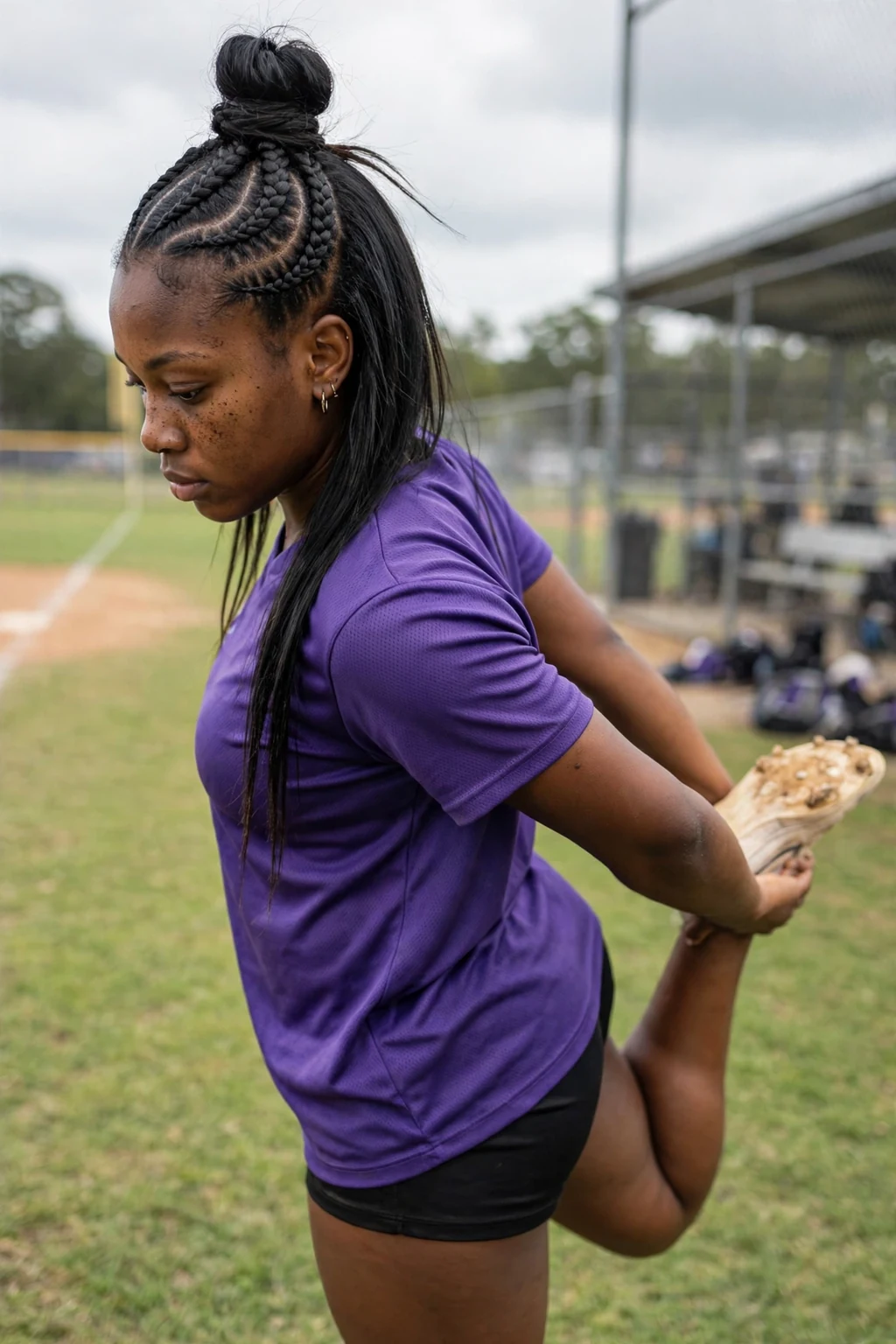
22. Wavy Half-Up Ponytail
The wavy half-up ponytail pulls the top half of wavy hair into a ponytail while leaving the bottom half loose and flowing, giving a soft, feminine game-day look. The appearance is relaxed and pretty, with the half-up section keeping the front layers and bangs out of the eyes while the loose waves add movement and texture down the back. The finish is natural and slightly tousled, and the style feels less formal than a full updo, making it perfect for practices, scrimmages, and casual games. It is also a wonderful way to show off natural waves without letting them take over. It pairs well with visors, caps, and headbands, so you can layer on sun protection or team gear without rebuilding the whole style. Teammates often copy it once they see how well it holds up, which makes it a natural choice for matching team looks on spirit days. Even in windy conditions, the anchored sections keep the style intact, so you spend the game playing rather than pushing hair out of your eyes.
This style flatters oval, round, and square faces and suits naturally wavy and lightly curly hair of medium to long length. It is ideal for players who love their waves but need the front contained. To style, section off the top half of hair, secure it into a mid ponytail with a strong elastic, enhance the loose waves with a wave spray, and finish with a flexible-hold mist. Keep a spare elastic handy in case the ponytail loosens. Trim every ten weeks to keep the waves bouncy. Choose the wavy half-up ponytail for relaxed game days when you want soft, pretty, and practical. For picture day, add a ribbon or a small bow in your team colors to elevate the look without changing the secure foundation underneath. Sleeping with the style loosely braided the night before can add helpful texture and grip, especially for very smooth or fine hair. With regular trims and gentle detangling after games, the style keeps looking fresh all season and never turns into a tangled end-of-day mess.
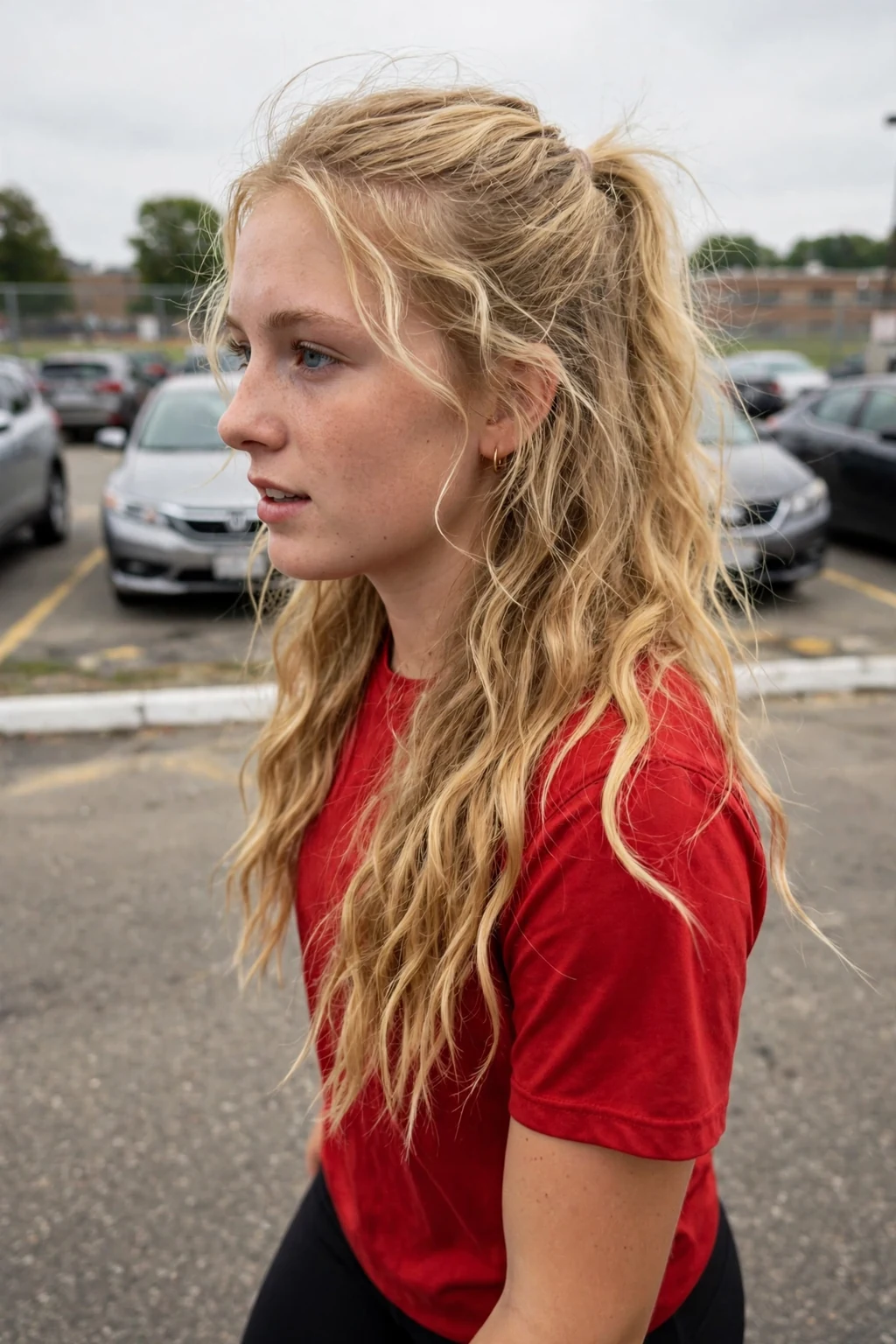
23. Cornrow Ponytail
The cornrow ponytail braids the hair flat against the scalp in neat rows that converge into a high or low ponytail, creating a style that is sleek, protective, and incredibly long-lasting. The appearance is precise and beautiful, with the cornrow pattern adding geometric texture at the front and the ponytail providing swing and movement at the back. The finish is smooth and controlled, and the style is one of the most durable on this list, easily lasting through a full tournament weekend with minimal touch-ups. It is also a protective style that keeps natural hair safe from friction and tangling. Teammates often copy it once they see how well it holds up, which makes it a natural choice for matching team looks on spirit days. Even in windy conditions, the anchored sections keep the style intact, so you spend the game playing rather than pushing hair out of your eyes. In motion, the style keeps its shape beautifully, whether you are sprinting to first base, sliding into home, or chasing a ball into the outfield.
This style is ideal for Black and textured hair of all lengths, flattering oval, round, and heart-shaped faces with its clean, sculpted lines. It suits players who want a style that lasts for days, not just one game. To style, cornrow the front and side sections toward a central point, gather the remaining hair and the braid ends into a ponytail, and finish with edge control and a light oil for shine. A silk scarf at night preserves the style. Trim every ten to twelve weeks. Choose the cornrow ponytail when you want a protective, polished style that goes the distance. Sleeping with the style loosely braided the night before can add helpful texture and grip, especially for very smooth or fine hair. With regular trims and gentle detangling after games, the style keeps looking fresh all season and never turns into a tangled end-of-day mess. For game day, pack a small kit with extra elastics, bobby pins, and a travel-size hairspray so you can fix any loosening between innings in seconds.
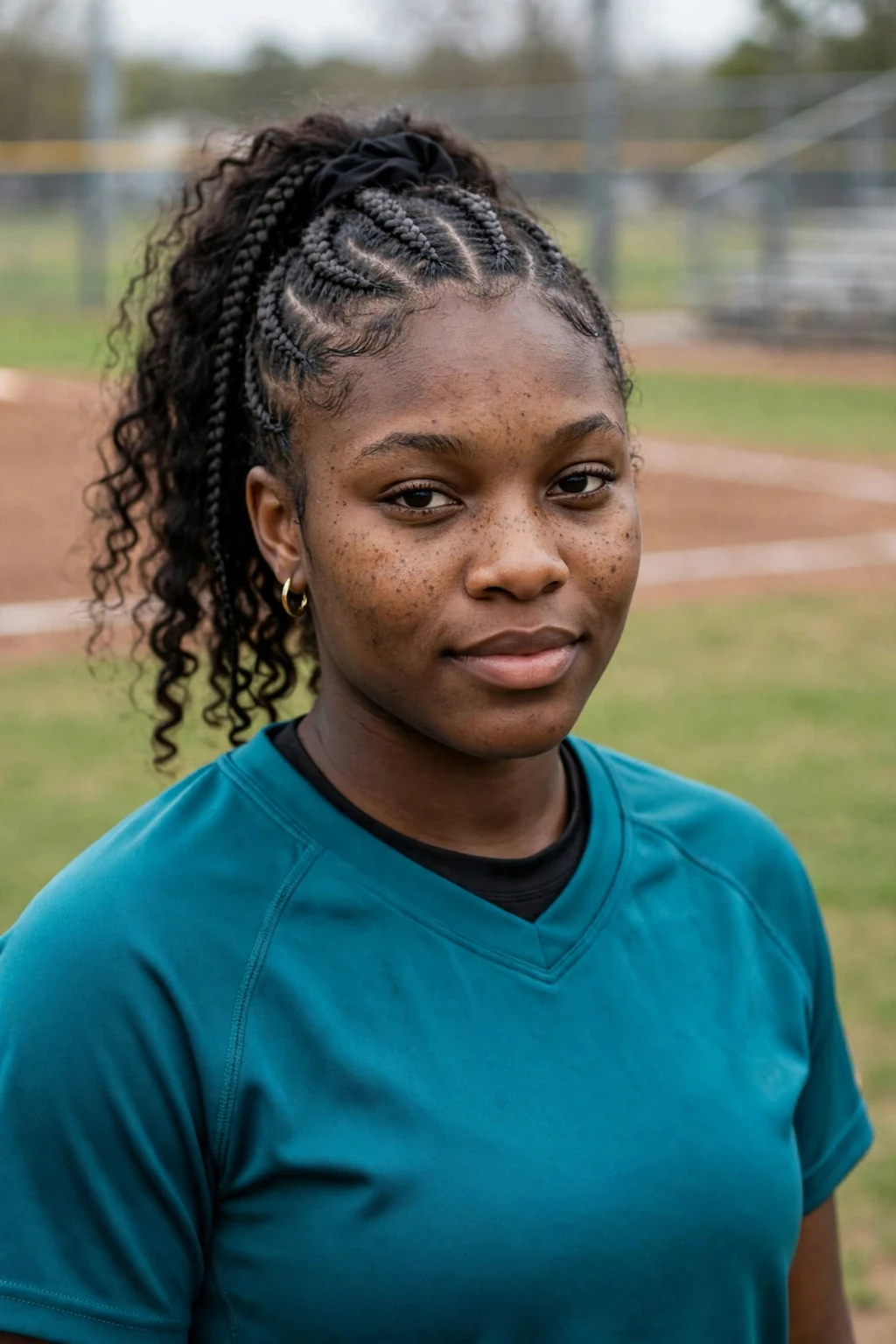
24. Twisted Crown with Low Ponytail
The twisted crown with a low ponytail twists two front sections back along the hairline like a crown, then gathers everything into a low, elegant ponytail. The appearance is soft and romantic, with the twists framing the face like a headband and the low ponytail keeping the overall look grounded and practical. The finish is smooth at the crown and gently textured through the twists, and the style sits beautifully under a helmet since the low placement avoids crown bulk. It is a lovely choice for players who want a braided look without the time a full braid requires. Even in windy conditions, the anchored sections keep the style intact, so you spend the game playing rather than pushing hair out of your eyes. In motion, the style keeps its shape beautifully, whether you are sprinting to first base, sliding into home, or chasing a ball into the outfield. Under a batting helmet, it sits flat where it needs to and never creates uncomfortable pressure points or awkward bulges.
This style suits oval, heart, and round faces and works on straight, wavy, and lightly curly hair of medium length or longer. It is perfect for players with layers that need taming at the front. To style, twist a section from each temple back along the hairline, pin the twists where they meet, gather the rest into a low ponytail, and finish with a light-hold spray. The twists take only minutes once you have practiced them. Trim every eight to ten weeks. Choose the twisted crown with a low ponytail when you want a quick, romantic style that still performs on the field. With regular trims and gentle detangling after games, the style keeps looking fresh all season and never turns into a tangled end-of-day mess. For game day, pack a small kit with extra elastics, bobby pins, and a travel-size hairspray so you can fix any loosening between innings in seconds. On humid days, a light anti-frizz serum applied before styling goes a long way, while a stronger gel helps on particularly windy tournament afternoons.
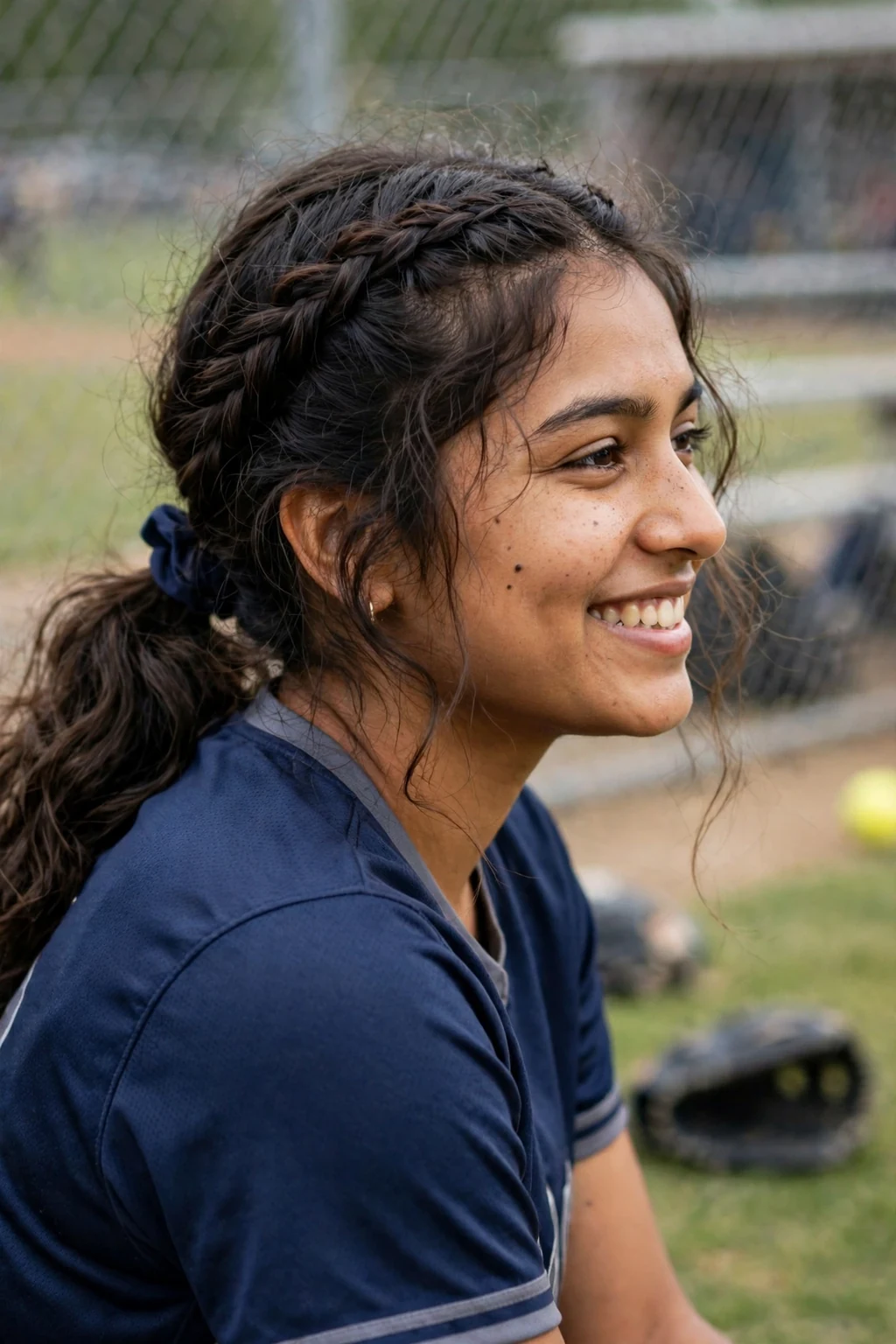
25. Boxer Braids into Low Buns
Boxer braids into low buns take the classic boxer braid and finish each braid in a small bun at the nape, creating a style that is sporty, symmetrical, and completely immovable. The appearance is tight and athletic, with the braids lying flat against the scalp and the twin buns adding a cute, balanced finish at the back. The finish is sleek and controlled, and the style is a favorite among serious athletes for good reason: nothing comes loose, nothing falls in the face, and the low buns fit perfectly under any helmet or cap. It is the ultimate competition-day style. In motion, the style keeps its shape beautifully, whether you are sprinting to first base, sliding into home, or chasing a ball into the outfield. Under a batting helmet, it sits flat where it needs to and never creates uncomfortable pressure points or awkward bulges. From the bleachers, the silhouette reads clean and intentional, and it photographs just as well in candid dugout shots as in formal team pictures.
This style suits every face shape and works on straight, wavy, and curly hair, especially medium to thick textures that braid neatly. It is ideal for championship games, tournaments, and any day when performance matters most. To style, part hair down the middle, Dutch braid each side down to the nape, coil each braid end into a small bun, and pin securely, finishing with gel along the part and a strong-hold spray. The style lasts one to two days. Trim every eight to ten weeks. Choose boxer braids into low buns when you want the toughest, cutest style in the dugout. For game day, pack a small kit with extra elastics, bobby pins, and a travel-size hairspray so you can fix any loosening between innings in seconds. On humid days, a light anti-frizz serum applied before styling goes a long way, while a stronger gel helps on particularly windy tournament afternoons. If you play multiple games in one day, the style refreshes quickly: smooth the edges, re-pin one or two sections, and mist with water or dry shampoo.

How to Choose the Right Softball Hairstyle
The best softball hairstyle is the one that stays put through every inning and still makes you feel like yourself. Think about your hair texture first, then your position and your helmet: thick or curly hair needs braids or a high bun to stay contained, while fine hair benefits from texturizing spray and tight elastics that grip without slipping. Pick a style you can redo quickly in the dugout, and always test it with your helmet on before game day so nothing pulls, bulges, or comes loose mid-play.
Softball hairstyles work hardest when they balance cuteness with practicality, so choose secure braids, buns, or ponytails over loose styles that tangle in the wind. Keep a small game-day kit in your bag with extra elastics, bobby pins, a headband, and dry shampoo, and refresh your style between games rather than starting from scratch. The right hairstyle should let you forget about your hair completely and focus on the game, while still looking photo-ready when the team picture is taken.
Conclusion
From classic Dutch braids to playful bubble ponytails, these 25 cute softball hairstyles prove you never have to choose between looking great and playing hard. Pick a style that fits your hair type and your position, practice it before game day, and step onto the field feeling confident, comfortable, and completely ready to play.