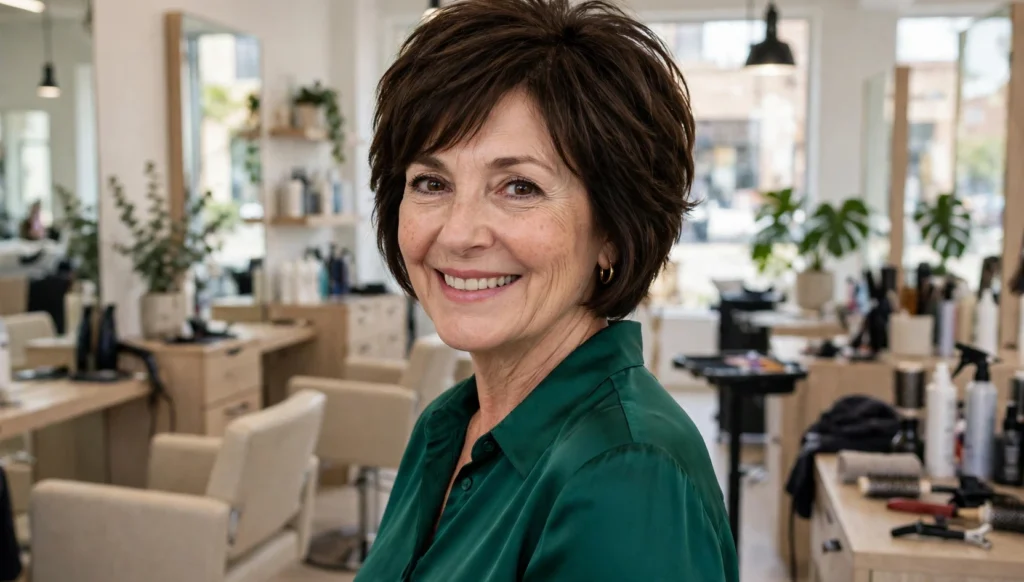
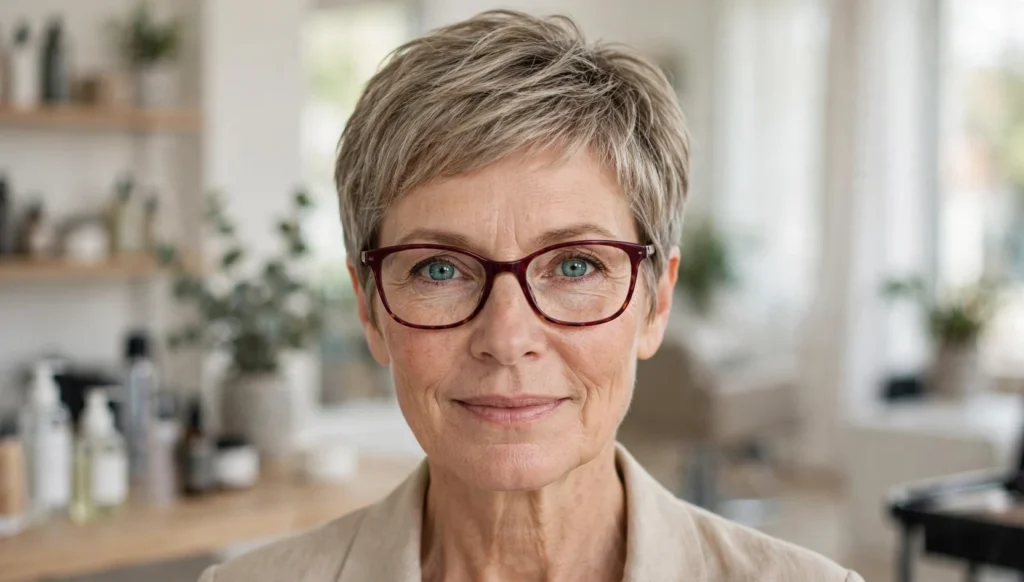
Fifty, fine hair, and glasses — the pixie is a chic, easy combination. These 26 pixie hairstyles for women over 50 with glasses and fine hair are soft, flattering, and frame your face beautifully.
1. Classic Pixie Cut
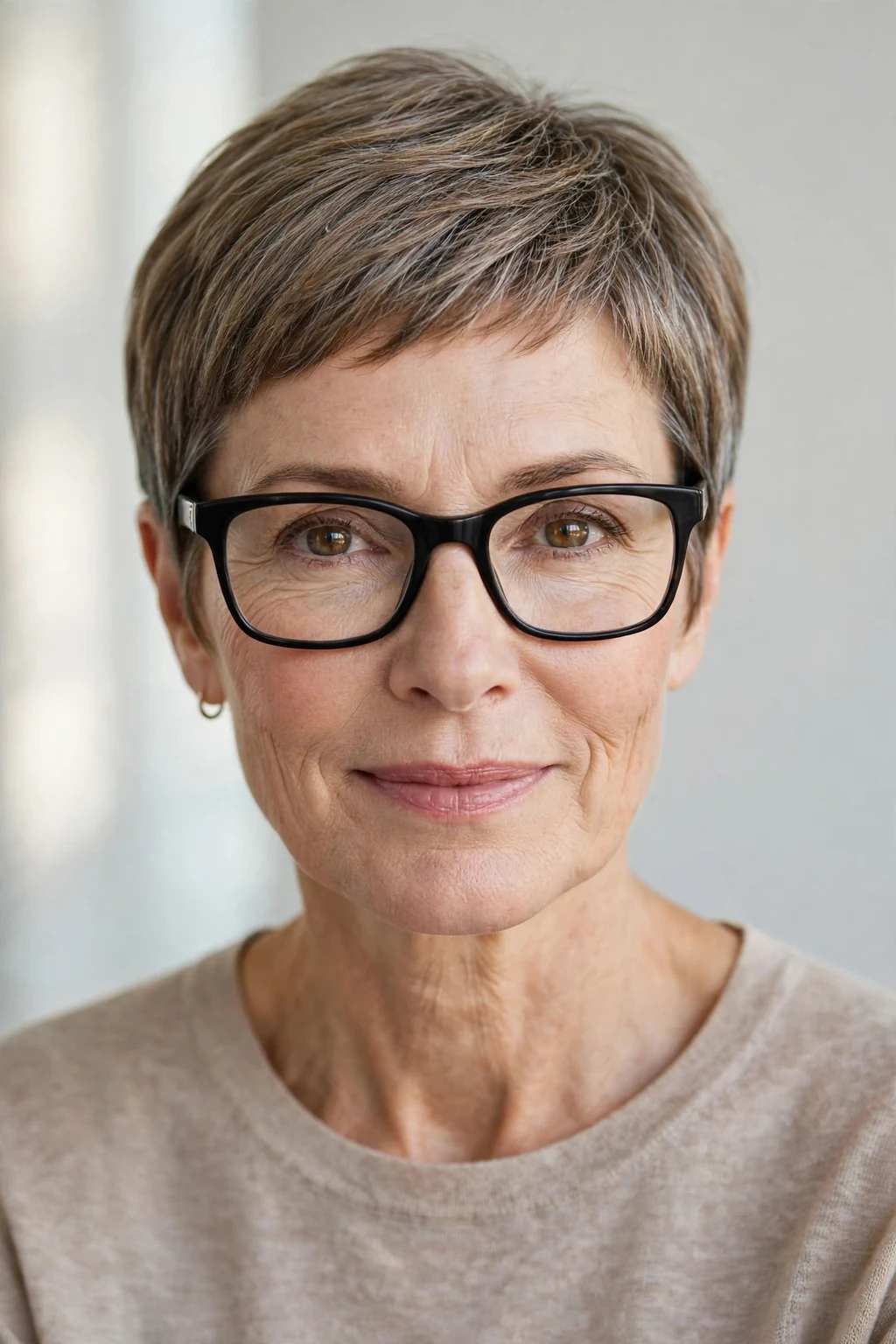
The classic pixie cut is a revelation for fine hair — a beautifully balanced crop whose blunt, even perimeter creates an immediate illusion of thickness and density. Where longer fine hair can look straggly, the pixie's clean lines make every strand count, and the neat shape keeps the face open so your glasses become the star. The silhouette is timeless: tidy sides, a softly shaped crown, and an outline that always looks intentional and polished. The blunt perimeter is the key technical detail — sharp, even ends create maximum density appearance. Layered or razored ends would only make fine hair look thinner.
For fine hair specifically, this cut works because short, blunt ends appear fuller than longer, layered ones — it is the single most effective haircut for maximizing the look of density. It flatters oval, heart, and square faces and pairs with every frame style since the hair never crowds the temples. Style with volumizing mousse at the roots on damp hair, blow-dried with fingers for lift, avoiding heavy products that would flatten fine hair. Trim every four to six weeks. Choose the classic pixie for the ultimate fine-hair solution — fuller-looking hair, beautiful frames, zero fuss. Fine hair also dries quickly, so your morning routine becomes remarkably fast. Many women are styled and out the door in under ten minutes.
2. Silver Pixie
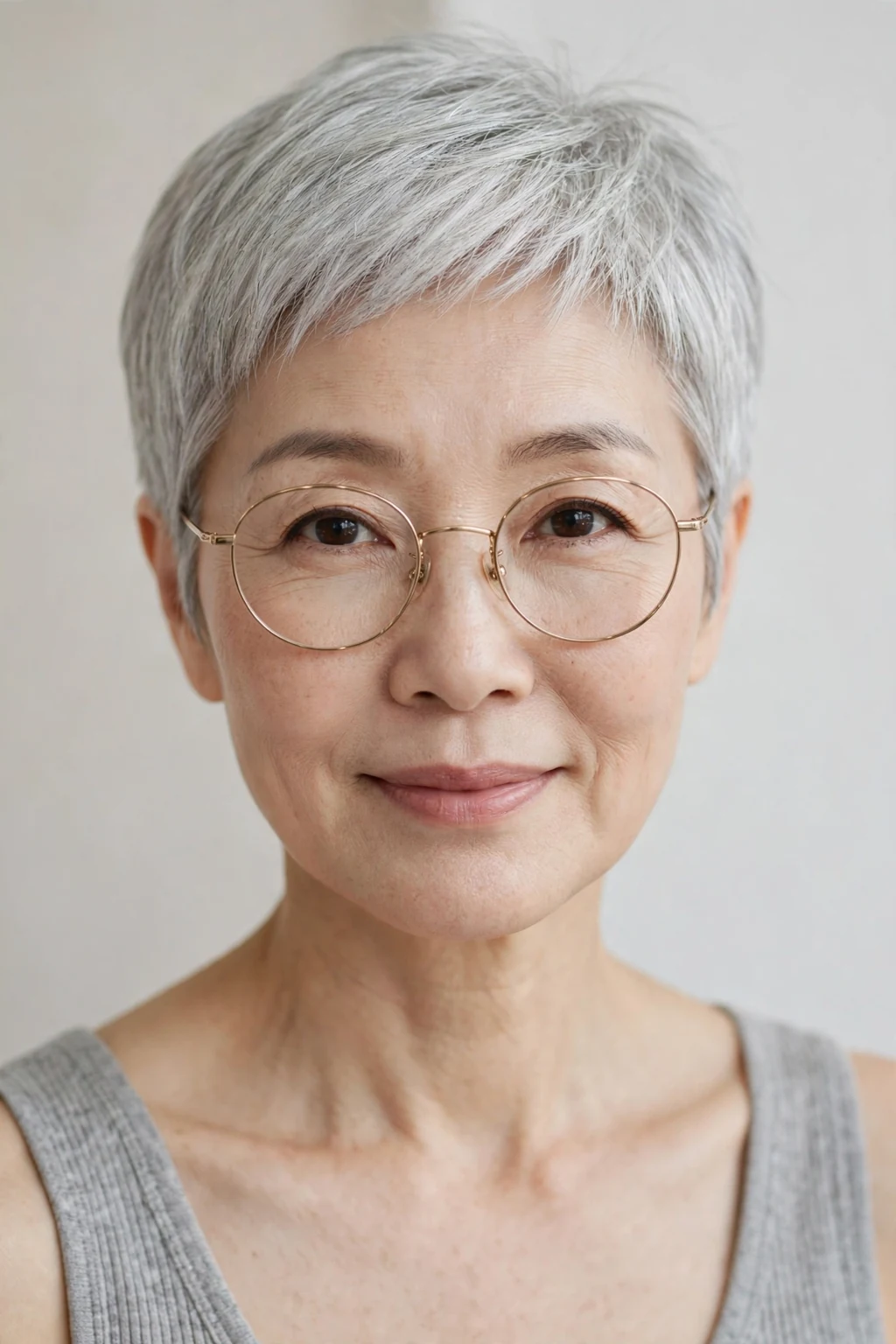
The silver pixie turns fine gray hair into luminous jewelry — a shining crop where light-reflecting silver tones create an impression of fullness that darker fine hair cannot match. Light colors naturally look denser than dark ones, so silver is secretly a volume trick. The cut is typically soft and textured to showcase the dimension in gray hair, from bright white to smoky pewter, and the brightness illuminates the face gorgeously behind your glasses. Light-colored hair reflects more light, which the eye interprets as thickness and health. This optical effect is genuinely useful for fine hair.
Fine silver hair benefits enormously from the pixie length, which prevents the wispy, see-through look longer silver hair can develop. The coarser texture of gray hair also holds pixie shapes well, adding natural body. With glasses, silver hair and bold frames are a stunning combination. Maintain with purple shampoo weekly to prevent yellowing, condition well, and style with volumizing mousse for lift plus a shine serum for glow. Embrace the silver pixie — it makes fine hair look fuller, brighter, and more luxurious. Silver pixies also require less frequent washing, as the light color shows less oil than darker shades. This is gentler on fine hair.
3. Textured Pixie
The textured pixie is fine hair's best friend — choppy, piece-y layers engineered to manufacture the appearance of thickness and body. The point-cut ends separate and flick, creating dimension and movement that tricks the eye into seeing fullness. The matte, touchable finish keeps it modern, and the piece-y fringe can be arranged to sit above glasses frames, adding softness without interference. The matte texture absorbs light rather than reflecting it, which helps fine hair look denser. Shiny, flat hair can look thinner by comparison.
Here is the honest truth about fine hair: texture creates volume illusion better than any product. The shattered layers in this cut do exactly that. It suits oval, heart, and long faces with playful energy. Style with texturizing powder or spray at the roots for grip, then piece through dry hair with a tiny amount of matte paste — fine hair needs lightweight products only. A rough blow-dry builds lift. Trim every five to six weeks. Choose the textured pixie for maximum fullness effect — it is the volumizing haircut. Texturizing products with grit or fiber are ideal for fine hair, giving strands something to grip for lasting separation.

4. Layered Pixie
The layered pixie builds body through clever cutting — seamlessly blended layers that stack to create volume and dimension. For fine hair, the magic is in the stacking: shorter layers sitting over longer ones create the impression of density that a one-length cut cannot. The rounded shape has gentle crown lift and a clean taper, moving naturally with an airy, feminine feel. The key is strategic layering — shorter pieces on top to create volume, with enough length beneath for coverage. Random layers would thin the ends.
Layers must be done thoughtfully on fine hair — too many wispy layers can make ends look thinner, but well-placed, stacked layers build fullness. This cut flatters round, square, and heart-shaped faces, and the soft layers frame glasses without harsh temple lines. Style with volumizing mousse on damp roots, blow-drying upward with a small round brush. Avoid heavy conditioners that flatten fine hair. Trim every five to six weeks. Pick the layered pixie for engineered, believable volume. A good stylist will also texturize the interior rather than the ends, building body without sacrificing the blunt perimeter.
5. Pixie with Wispy Fringe
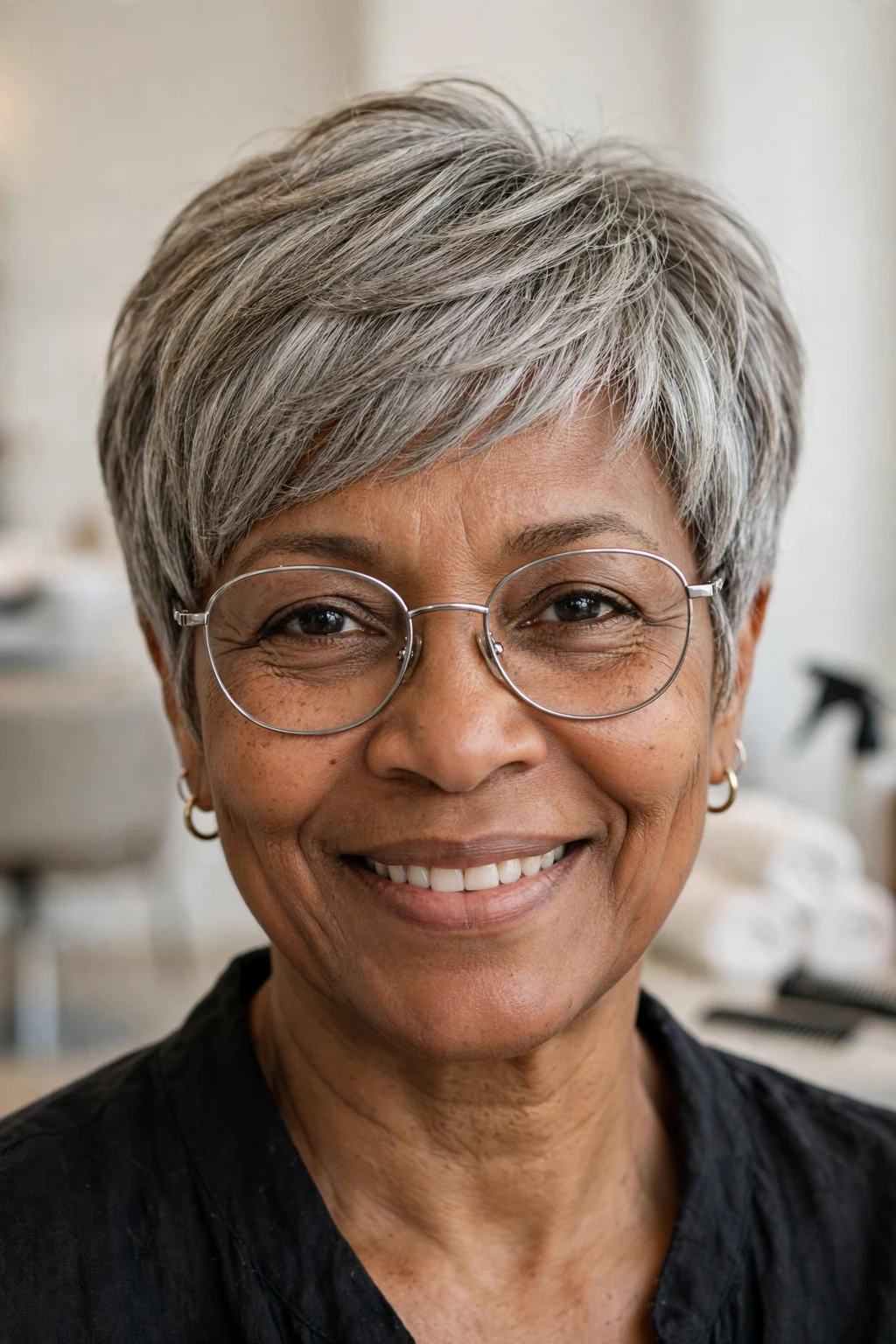
A wispy fringe brings delicate softness to the pixie — sheer, feathered bangs that veil the forehead with translucent lightness. For fine hair, this fringe is ideal because it requires so little hair to make an impact; the wispiness is the point, not a compromise. The tapered ends create a soft-focus effect, and the light fringe can be trimmed to sit precisely above glasses frames, staying clear while softening beautifully. Fine hair often struggles with heavy bangs that separate and look sparse. Wispy fringe sidesteps this entirely by making sheerness intentional.
This fringe flatters higher foreheads and suits oval, long, and heart-shaped faces. Because fine hair is naturally light, it takes to wispy cutting perfectly. Style by drying the fringe forward with fingers — fine hair dries quickly — and separate tips with the tiniest touch of wax. Keep it trimmed every three to four weeks so it never touches lenses. Choose the wispy fringe for featherlight softness that loves both fine hair and glasses. The fringe can also be blow-dried with a small round brush for extra lift, giving fine hair more presence across the forehead.

6. Sleek Pixie
The sleek pixie proves fine hair can look incredibly luxurious — smoothed to a glossy, controlled finish where the hair's natural silkiness becomes the star. On fine hair, sleekness works beautifully because there is less bulk to fight; the hair lies smooth and gleaming with minimal effort. The clean lines create a striking backdrop that makes glasses pop with gallery-like impact. Fine hair achieves sleekness more easily than thick hair, as there is less bulk to smooth. The result often looks more polished with less effort.
Sleek styles suit fine hair better than thick hair in many ways — less weight means the smooth finish lasts longer. It flatters oval and heart-shaped faces, emphasizing elegant bone structure. To style, apply a lightweight smoothing cream to damp hair (heavy serums will flatten fine hair), blow-dry with a flat brush, and finish with a shine spray rather than heavy serum. Trim every three to four weeks. Wear the sleek pixie for polished, powerful elegance — fine hair at its most refined. Lightweight shine sprays work better than heavy serums on fine hair, adding gloss without weighing it down.
7. Curly Pixie
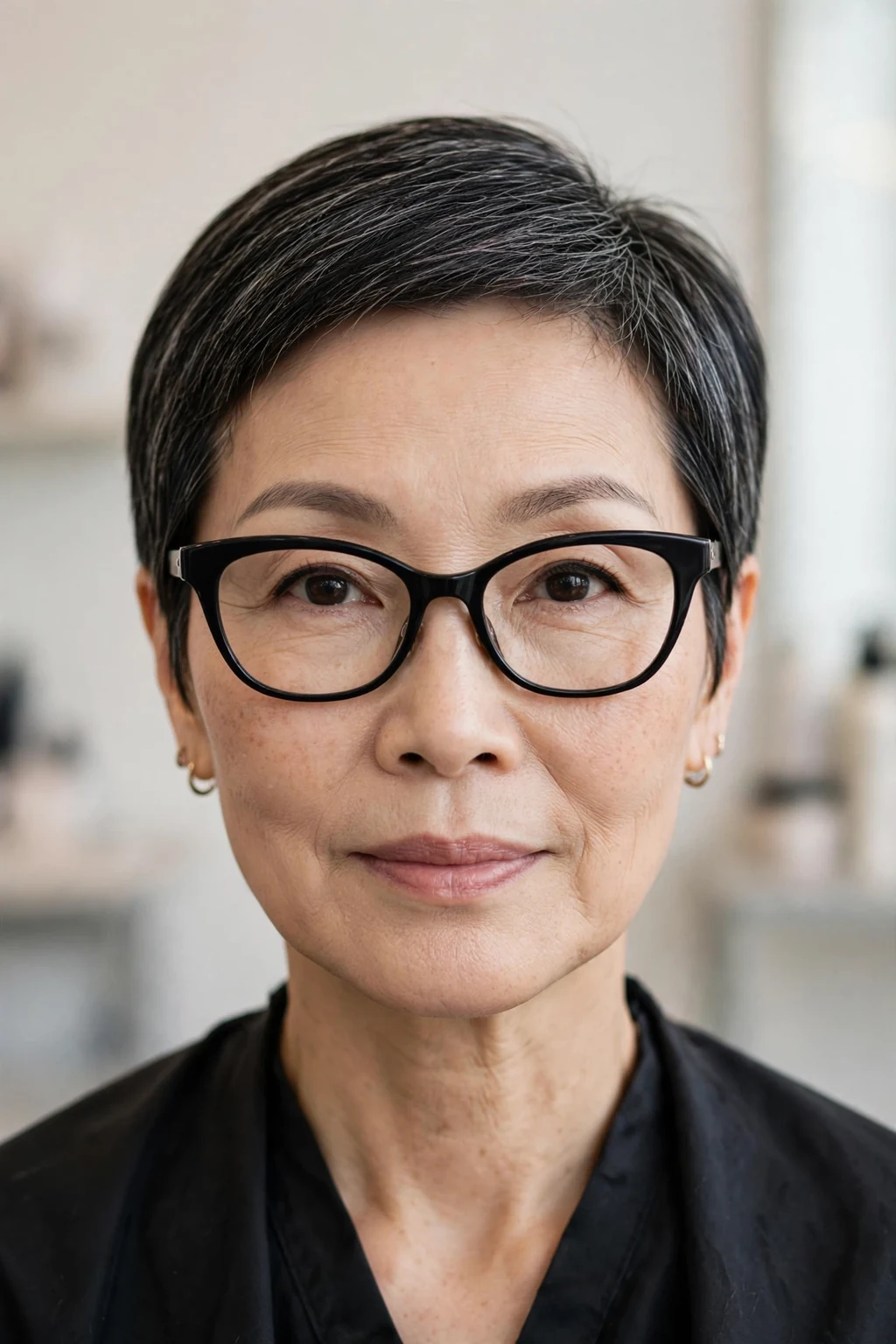
The curly pixie celebrates texture in its most joyful form — soft, bouncy curls shaped into a rounded crop. Here is wonderful news for fine-haired women: curls and waves create natural volume that straight fine hair cannot, so encouraging your natural texture is a brilliant volume strategy. The layers let each curl spring freely, creating a halo of texture with beautiful dimension that frames glasses playfully. Fine curly hair should avoid heavy creams that pull curls straight. Lightweight curl lotions preserve bounce and definition.
Short curly cuts make curls more defined and manageable with less weight pulling them down. This suits round and square faces with its flattering height. Keep curls hydrated — fine curls need lightweight moisture that won't weigh them down. Style on wet hair with curl cream, scrunching upward, then diffuse gently. Trim every six to eight weeks. Choose the curly pixie to turn your texture into your volume secret. Diffusing on low heat gives fine curls more volume than air-drying, which can leave them flat at the roots.
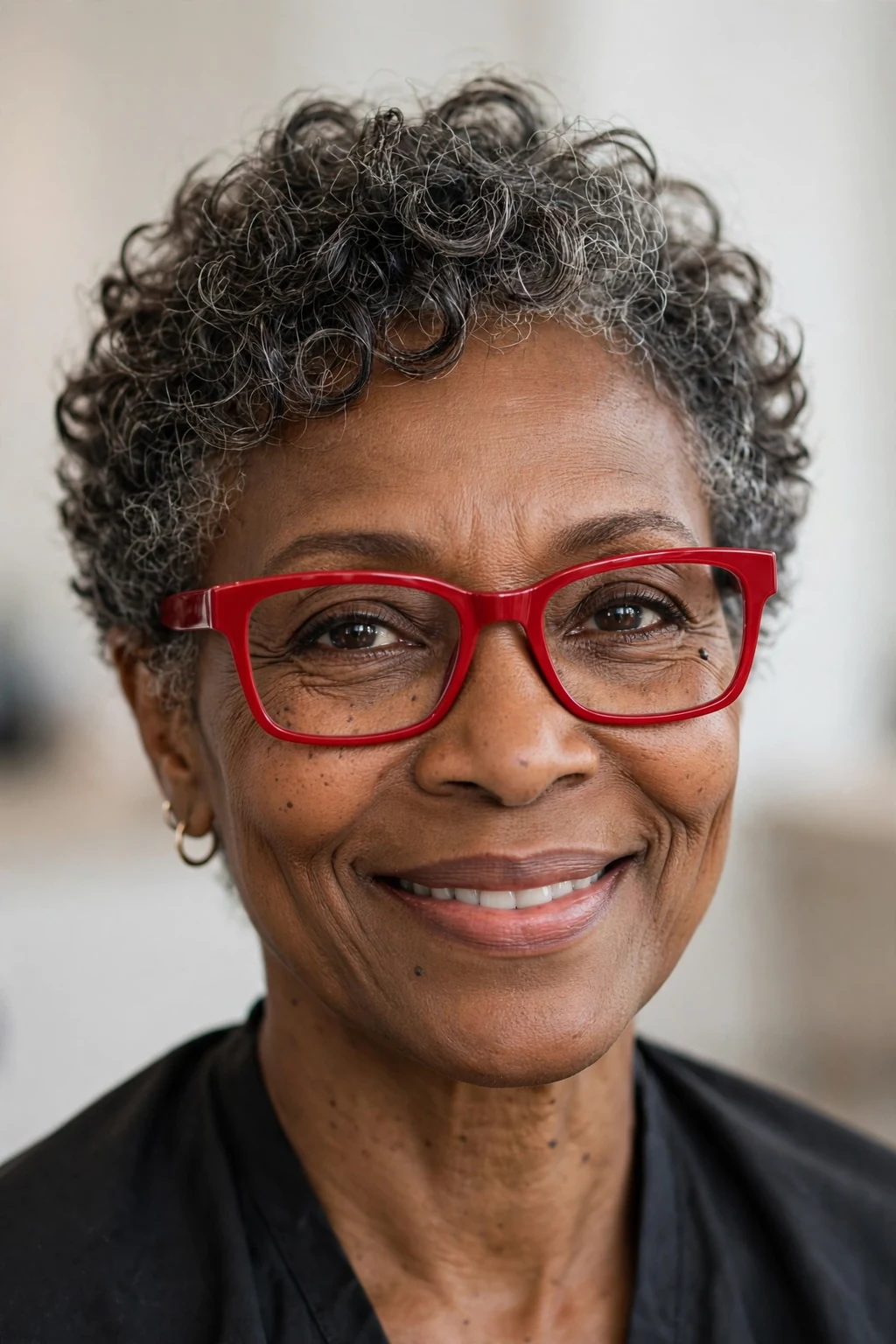
8. Tapered Pixie
The tapered pixie delivers crisp, architectural neatness — graduated from fuller length on top to a close taper at the nape and ears. For fine hair, the taper is flattering because it removes wispy, thin ends at the neckline where fine hair looks sparsest, concentrating fullness where it shows. The clean temples also mean glasses sit comfortably with no hair competing at the sides. The close taper eliminates the thin, wispy neckline hair that can make fine hair look sparse. Every visible strand looks intentional.
This cut suits women who love looking polished with minimal effort, flattering oval, round, and heart-shaped faces. All fine hair types work well. Styling is quick: volumizing mousse at the crown on damp hair, smoothed with fingers, keeping the tapered areas neat. Book trims every three to four weeks as precision shows growth. Choose the tapered pixie for sharp, clean fullness — every strand in its place. Tapered cuts also grow out neatly, as the graduated shape maintains its structure longer than blunt perimeters.
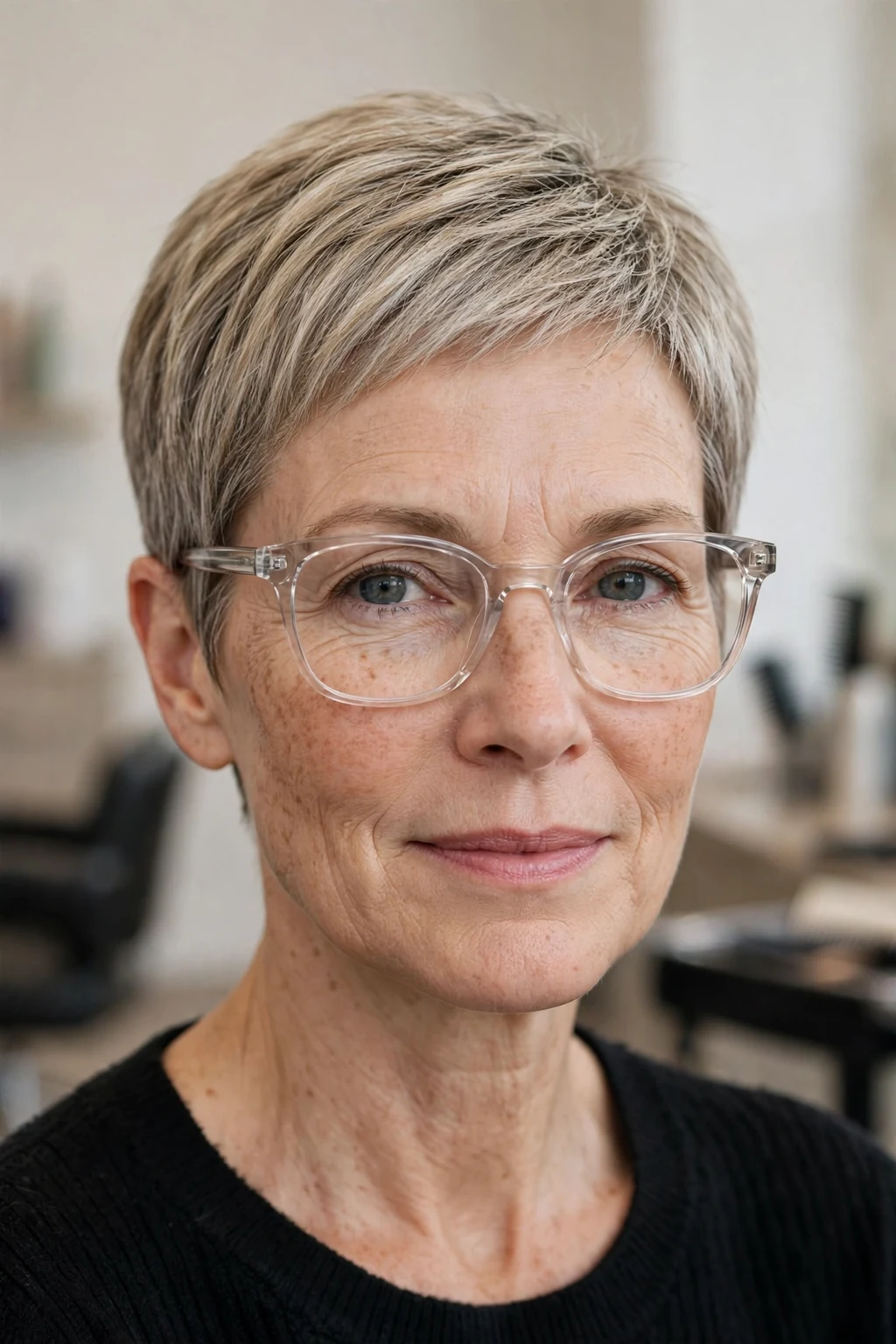
9. Feathered Pixie
The feathered pixie is airy grace — fine layers razor-cut so ends taper and flutter with weightless movement. For fine hair, feathering is a natural match: the technique was practically designed for lighter hair densities, creating movement and the illusion of fullness without harsh lines. The feathered temple pieces can be directed to frame glasses softly, harmonizing beautifully with eyewear. Feathering is particularly kind to fine hair because it never creates harsh lines that would expose thinness. The soft transitions are forgiving.
Feathering flatters oval, long, and heart-shaped faces, softening angles with diffused edges. Style by blow-drying with a round brush, flicking ends outward, finishing with a featherweight volumizing mist — fine hair needs the lightest products to preserve airiness. Trim every five to six weeks. Choose the feathered pixie for romantic movement that makes fine hair look abundant. This technique also works beautifully with fine hair's natural lightness, enhancing rather than fighting its character.

10. Pixie with Volume Crown
A volume crown is the ultimate fine-hair trick — deliberate lift through the pixie's top where shorter layers create natural fullness in a rounded, elevated profile. For fine hair that falls flat, crown volume is transformative, manufacturing height and body exactly where it counts. With glasses, the height above the frames creates beautiful, balanced proportion. Backcombing is unnecessary and damaging for fine hair — the cut itself should create the lift through layering. Proper cutting does the heavy lifting.
This is the most effective volumizing pixie variation for fine hair. It suits round and square faces by elongating and works best with volumizing products. Style with mousse at damp roots, blow-drying upward with a round brush, and set with root-lift spray — fine hair holds this lift well when properly prepped. Avoid heavy conditioners at the crown. Trim every five weeks. Try the volume crown for maximum lift — fine hair's secret weapon. Root-lifting sprays applied to damp hair give fine strands the grip they need to hold volume throughout the day.
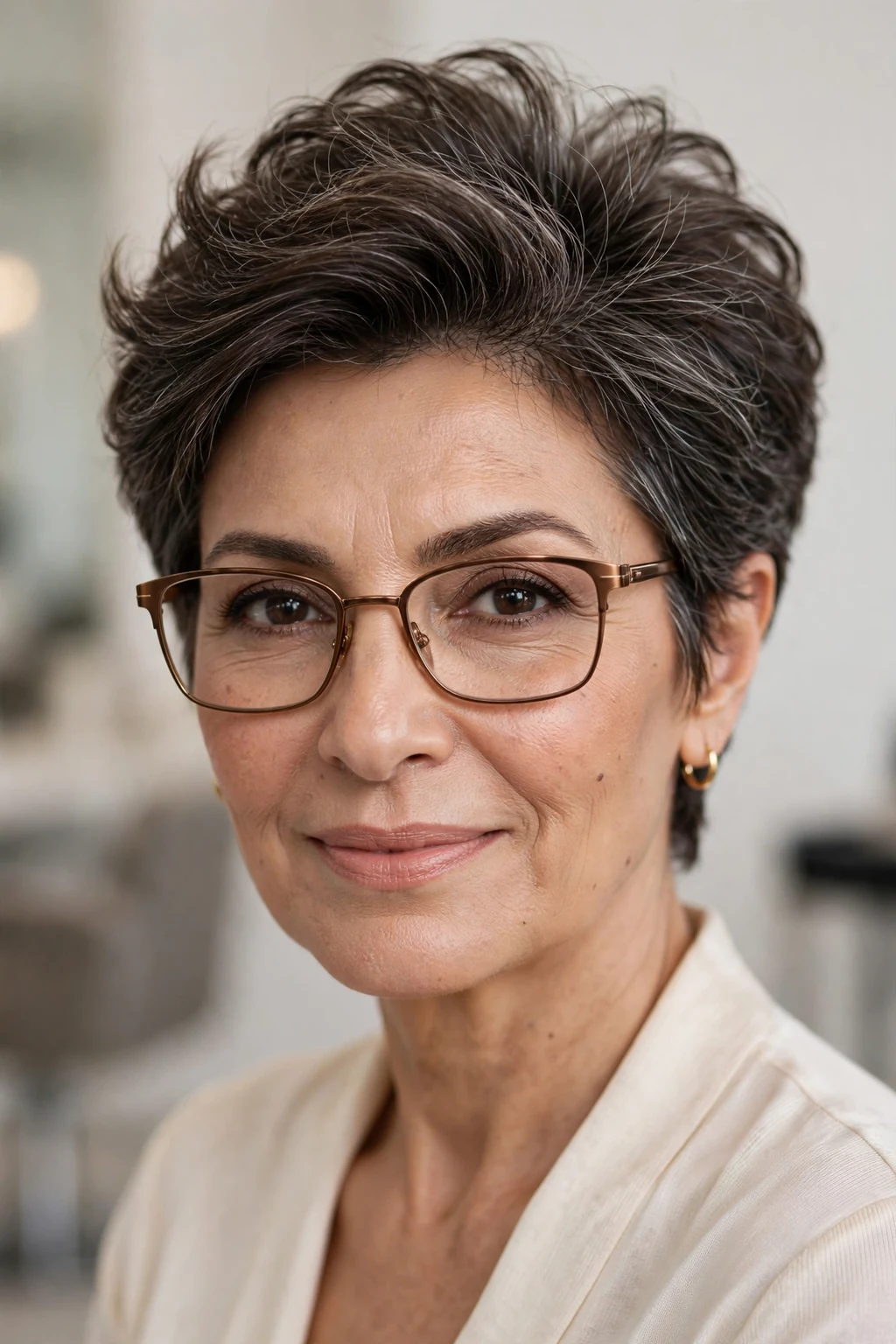
11. Pixie Bob Mix
The pixie-bob mix, or bixie, offers fine hair the best of both worlds — more length than a pixie for softness and versatility, but short enough to avoid the stringy look longer fine hair can develop. The interior layers build body while the slightly longer perimeter keeps it feminine. With glasses, the longer temple pieces frame the face softly, creating a graceful transition between hair and frames. The bixie's interior layers are the volume engine, while the longer outer length provides styling flexibility. Both elements serve fine hair well.
This hybrid flatters every face shape and is ideal for fine hair that needs body but wants more styling options than a pixie allows. Style with volumizing mousse, using a round brush for smoothness or fingers for texture, with light cream. The extra length means trims can stretch to six weeks. Choose the pixie-bob for versatile fullness — length and body in perfect balance. This cut is also excellent for fine hair that is growing out, as the shape remains flattering at various lengths.
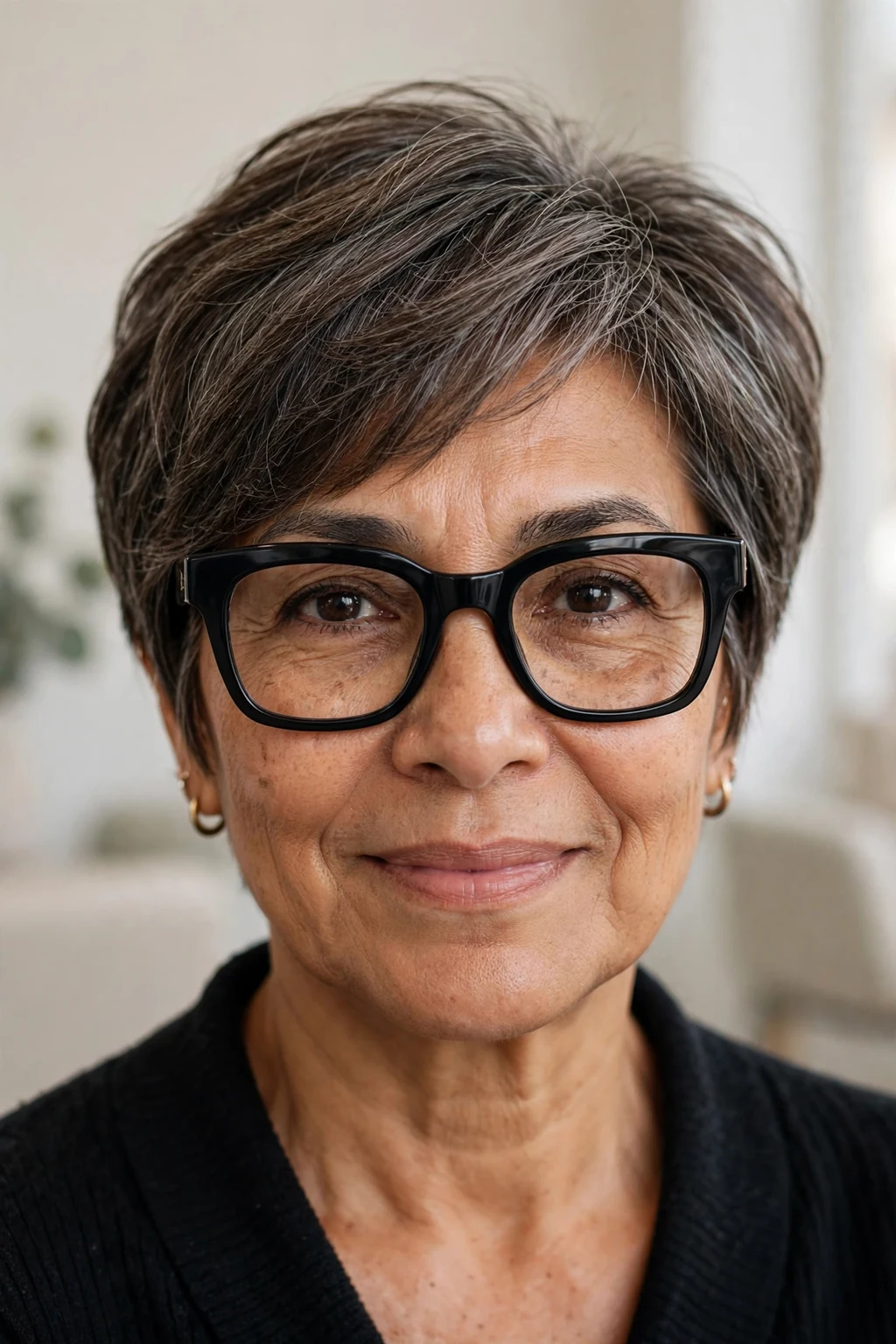
12. Pixie with Highlights
Highlights are transformative for fine hair — dimensional color that creates an undeniable illusion of thickness. The contrast between lighter ribbons and the base makes hair look denser and more textured, while the brightness around the face illuminates beautifully behind glasses. On a pixie, fine babylights through the top deliver maximum impact. Fine hair shows color dimension beautifully because light penetrates the lighter strands easily. The effect is more pronounced than on thick hair.
This is the most effective color trick for fine hair: dimension equals perceived density. Choose tones for your skin — warm honeys for warm complexions, cool ashes for cool ones. Maintain with sulfate-free shampoo and gloss refreshes every six to eight weeks. Style with volumizing products as usual; the color multiplies the effect. Add highlights when fine hair needs new life — dimension brings the illusion of abundance. Highlights also camouflage any scalp show-through, as the varied tones break up the solid color that reveals sparseness.
13. Tousled Pixie
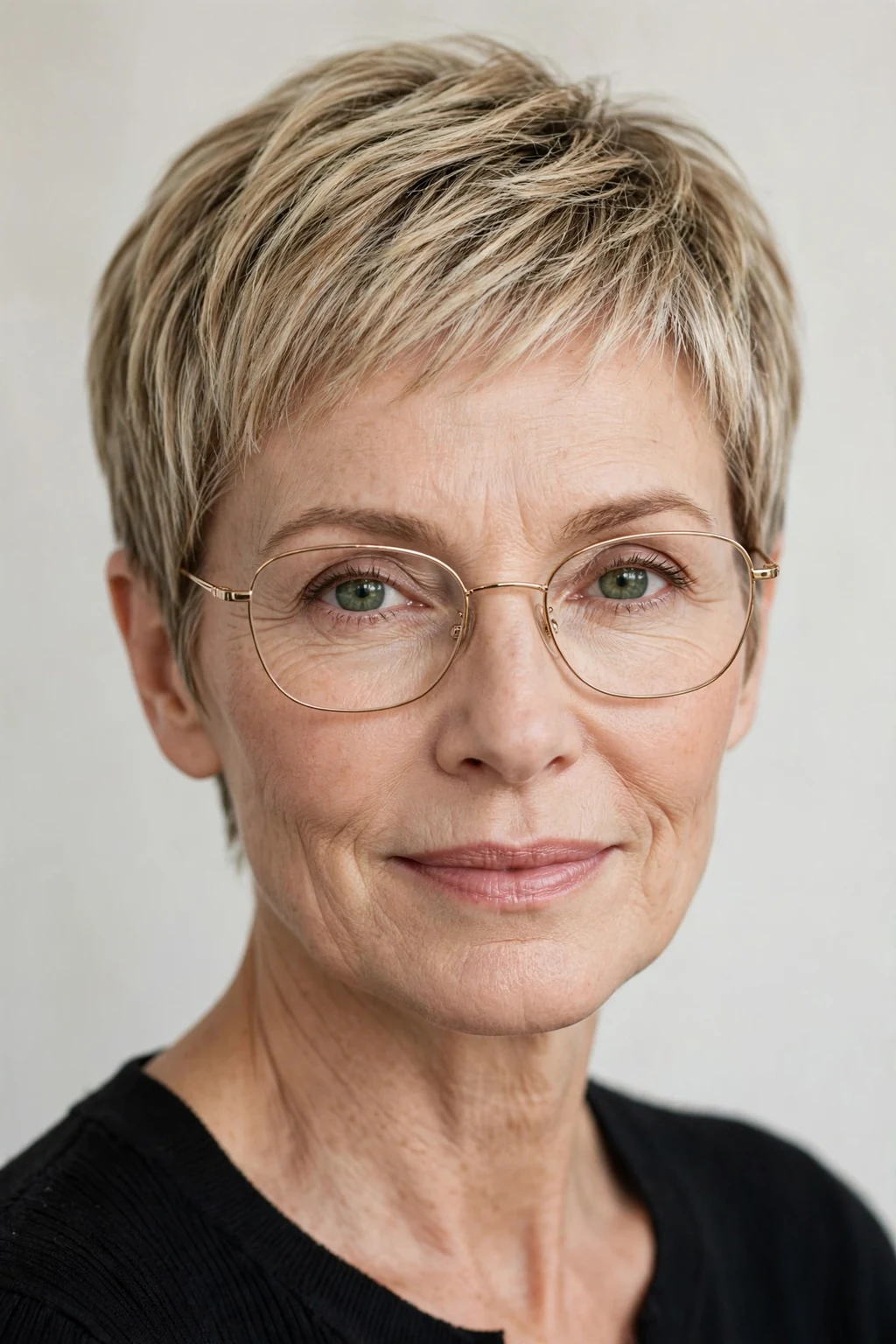
The tousled pixie is carefree volume — deliberately undone texture with piece-y separation that makes fine hair look thicker through artful disarray. The shattered ends and matte finish create the impression of fullness, and the relaxed texture is lovely with glasses, keeping the look friendly and modern. The piece-y definition gives fine hair visible texture and separation, suggesting thickness. Flat, one-length fine hair is the enemy — texture is the solution.
Tousled texture is ideal for fine hair because the piece-y separation suggests density. It embraces natural wave, flattering oval, heart, and square faces. Style with texturizing spray on damp hair — fine hair responds quickly — scrunch, air-dry or diffuse. Pinch a tiny amount of pomade into dry ends. Trim every six weeks. Choose the tousled pixie for effortless, fuller-looking hair. Salt sprays are excellent for fine hair, adding gritty volume without heaviness.
14. Pixie with Deep Side Part
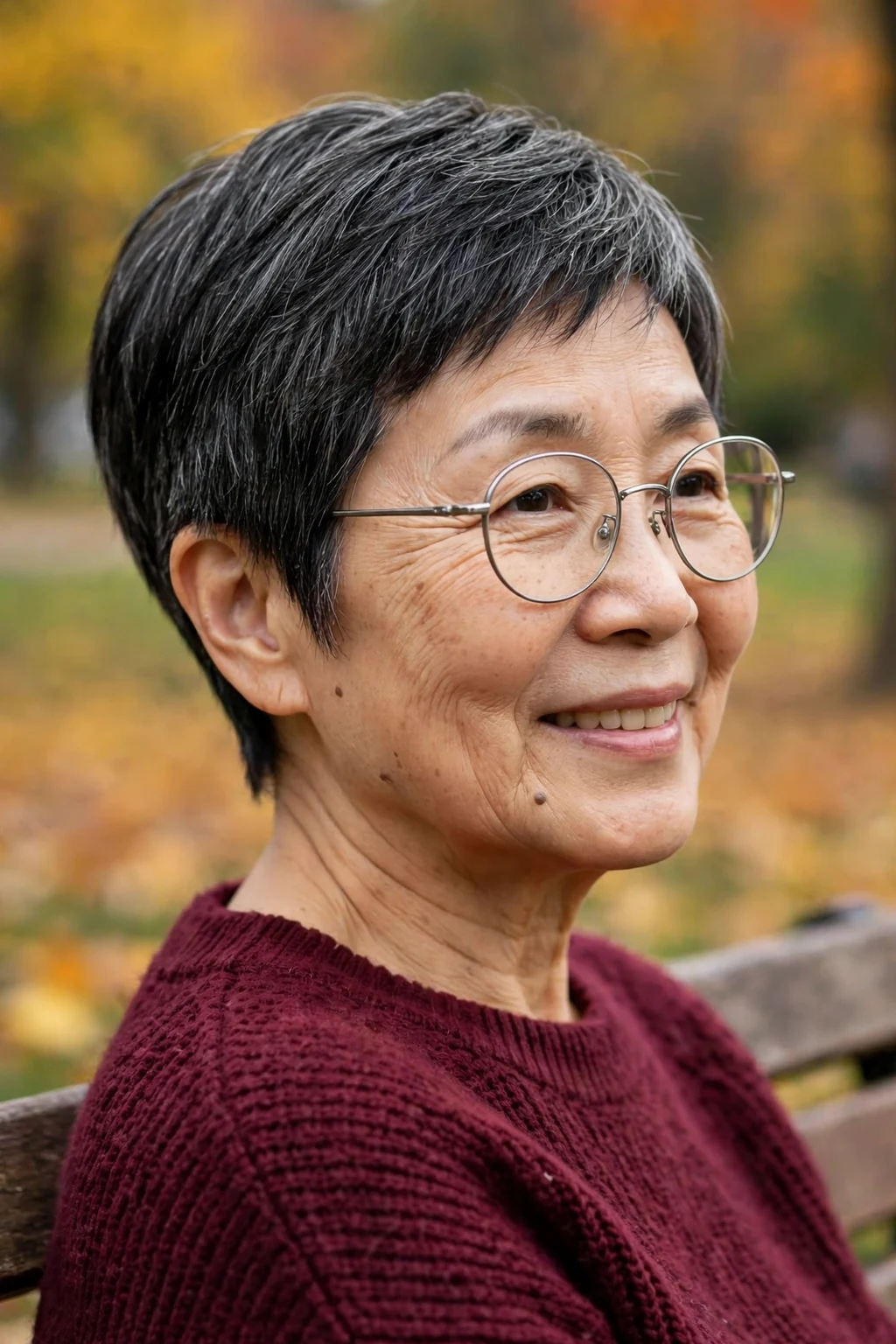
A deep side part brings elegant drama to the pixie, sweeping the top from a low part in a long diagonal. For fine hair, the deep part is a clever volume tool: directing hair from a deep side creates natural lift and fullness at the crown that a center part cannot. With glasses, sweep the length to clear the frames for a sophisticated frame-within-frame effect. Fine hair takes a side part beautifully, as the lighter density sweeps easily without resistance. The deep part stays in place with minimal product.
The diagonal flatters round and square faces by adding an illusion of length. Fine hair achieves this beautifully with volumizing mousse concentrated at the part. Style by parting damp hair deeply, blow-drying the long side across with a round brush for a smooth bend. Trim every four to five weeks. Wear the deep side part for polished volume with drama. Switching your part occasionally also prevents the hair from lying too flat in one direction, maintaining natural lift.
15. Natural Gray Pixie
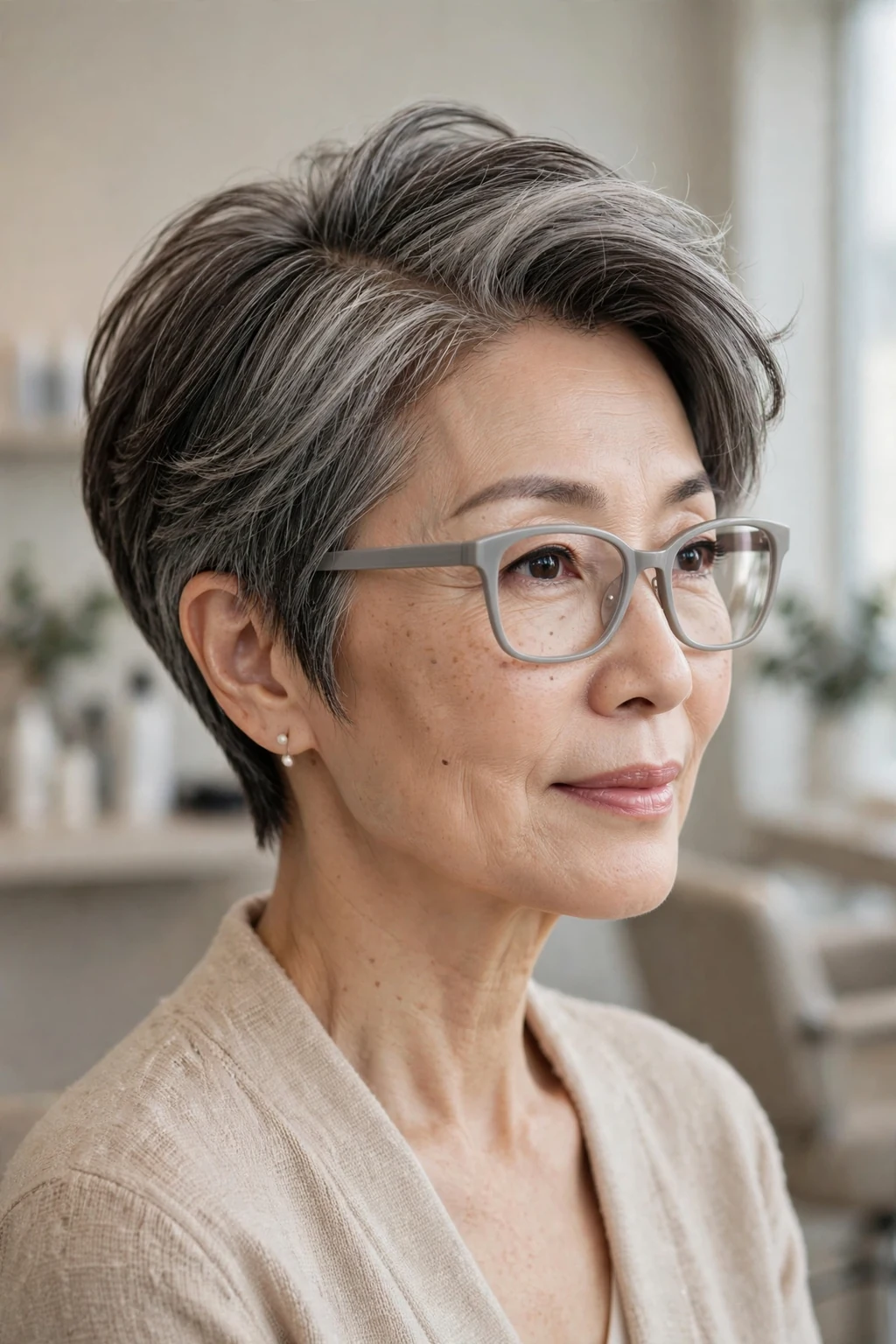
The natural gray pixie celebrates authenticity — your own silver, white, or salt-and-pepper in a flattering crop. For fine hair, going natural gray has a hidden benefit: light silver tones look denser than dark dyed hair, so natural gray often appears fuller. The cut showcases gray's beautiful variation, and the texture holds pixie shapes with natural body. Natural gray is often lighter in tone, which as noted makes fine hair appear fuller. Embracing gray can actually improve the look of thin hair.
Embracing gray ends the color cycle and often improves hair health, as coloring can stress fine hair. The brightness flatters mature skin, and with glasses, silver hair and bold frames are stunning together. Care with purple shampoo weekly, deep conditioning, and shine serum. Style with volumizing mousse for lift. Choose natural gray for honest, fuller-looking beauty. Gray hair's coarser texture also gives fine strands more body and styling memory than pigmented hair had.
16. Pixie with Undercut
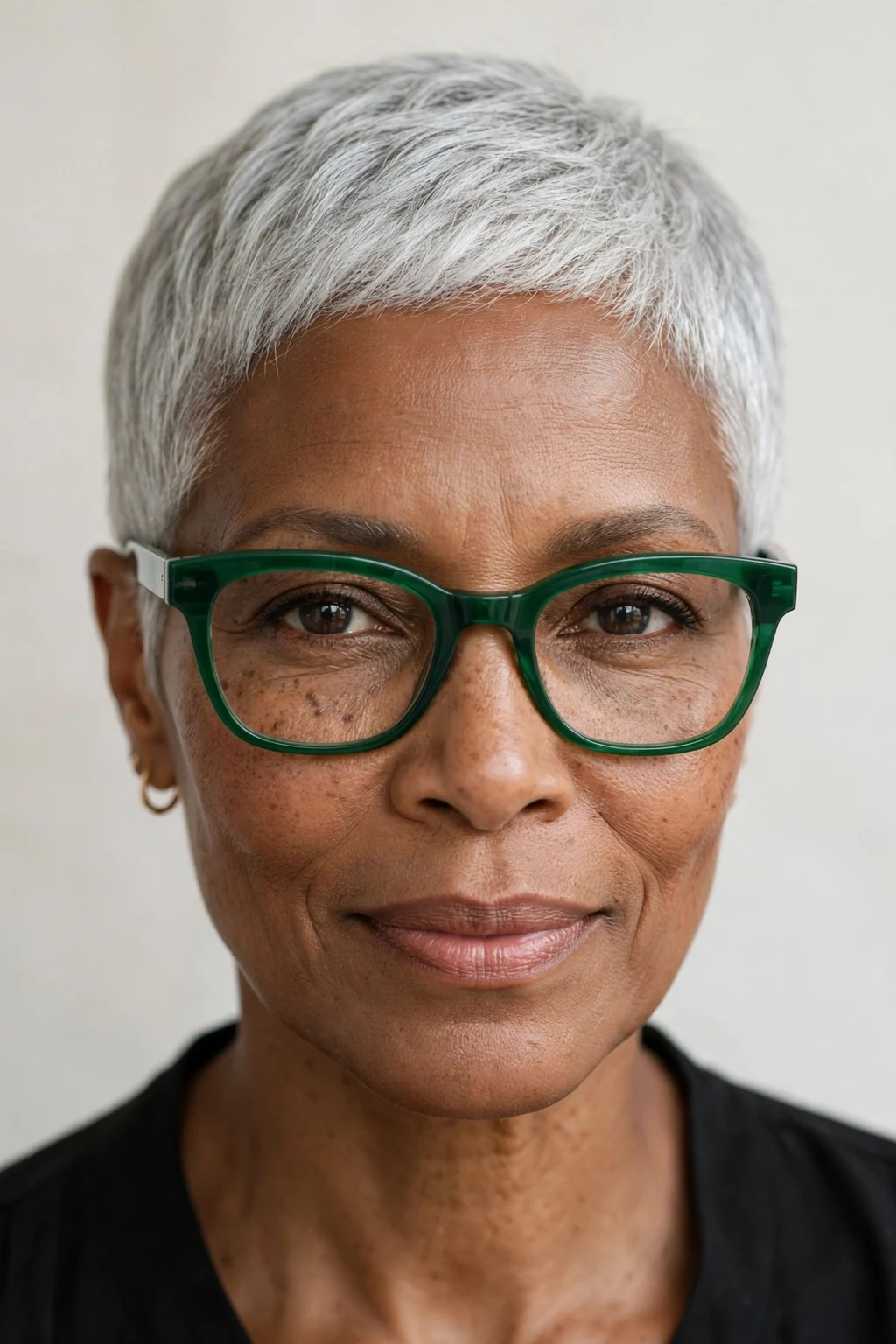
The pixie with an undercut pairs soft femininity with modern edge — the nape or sides clipped close beneath longer top layers. For fine hair, the undercut is strategically brilliant: it removes the thinnest, wispiest hair at the neckline, concentrating all visible fullness on top where it counts. The clean sides also keep temples uncluttered for comfortable glasses wear. Removing the undercut section means all remaining hair is the thicker top hair — no thin ends dragging down the impression of fullness.
Undercuts suit oval and heart-shaped faces and straight to wavy fine hair. Style the top with volumizing products — texture, sweep, or smooth it — while the undercut stays tidy. Refresh every two to three weeks. Try the undercut for a bold solution to fine hair's challenges — edgy, practical, and modern. The undercut also makes fine hair easier to style, as there is less hair competing for volume products.
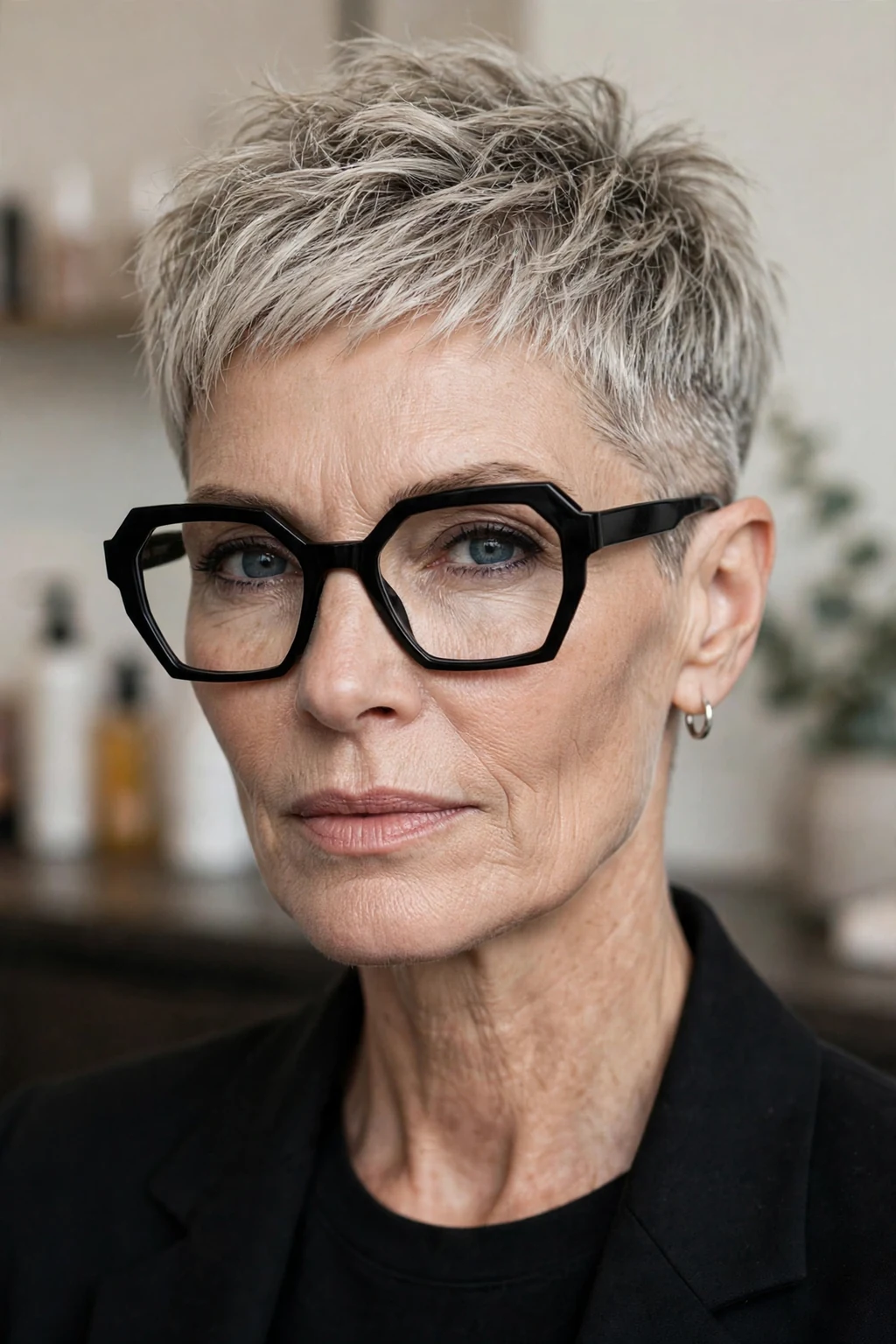
17. Neat Pixie Crop
The neat pixie crop is refined simplicity — a close, precise cut that makes fine hair look intentional and chic. Short all over with a tapered perimeter, it eliminates the thin, wispy ends that betray fine hair at longer lengths. Every strand looks deliberate. With glasses, the minimal hair makes frames the undisputed focal point — striking and sophisticated. Very short hair eliminates the weight that pulls fine hair flat. Without length dragging it down, fine hair can achieve its maximum natural lift.
This crop is wonderfully liberating for fine hair: no more worrying about flatness or sparseness, just clean, neat hair. It suits oval, heart, and petite faces. Styling is minimal — volumizing mousse or a touch of pomade, finger-styled in seconds. Trims every three weeks. Choose the neat crop for confident simplicity — fine hair at its most polished. The crop also makes any thinning less noticeable, as there are no long strands to contrast against sparse areas.

18. Pixie with Curtain Bangs
Curtain bangs bring soft romance to the pixie — a center-parted fringe framing the forehead, blending into the top layers. For fine hair, curtain bangs work beautifully because the parted style needs less density than a full fringe; the sweeping pieces create an impression of fullness across the front. With glasses, keep the pieces long enough to clear the frames, sweeping outward to the sides. The sweeping curtain pieces create diagonal lines that suggest fullness across the forehead. Straight-across bangs on fine hair can look thin; curtains do not.
Curtain bangs flatter nearly everyone with gentle symmetry, suiting straight to wavy fine hair. Style by blow-drying forward, parting center, sweeping each side outward with a round brush — fine hair takes the shape easily. They grow out gracefully. Trim every four to six weeks. Choose curtain bangs for soft, face-framing fullness. Curtain bangs also blend seamlessly as they grow, avoiding the blunt regrowth line that reveals fine hair's sparseness.

19. Bouncy Pixie
The bouncy pixie radiates vitality — springy layers stacked for lift and joyful movement. For fine hair, bounce is everything: the stacked layering encourages hair to spring up rather than lie flat, creating volume through cutting rather than products alone. The lively texture is cheerful with glasses, keeping the look fresh and spirited. Stacked layers are the structural solution to flat fine hair — each layer supports the one above, creating self-sustaining volume.
Bounce flatters round and square faces with its height. Style with volumizing mousse on damp hair, blow-drying with head tipped forward or diffusing while scrunching — fine hair lifts readily with the right technique. A texturizing spray adds lasting body. Trim every five to six weeks. Choose the bouncy pixie for vibrant, voluminous energy. Fine hair responds excellently to mousse, which should be applied to damp roots before blow-drying for maximum lift.

20. Pixie with Money Piece
The money piece bathes the pixie in light — brighter ribbons through the front creating a glowing frame. For fine hair, the money piece does double duty: the brightness draws the eye to the face, and the dimensional contrast makes hair look thicker. With glasses, the luminosity around the frames is magical, creating radiance exactly where attention naturally falls. The brightness contrast is especially effective on fine hair, where tonal variation creates the strongest illusion of density.
Face-framing brightness flatters mature skin, counteracting dullness over any base color. Fine hair looks denser through tonal contrast. Maintain with color-safe products and gloss refreshes every six to eight weeks. Style with volumizing products as usual. Add a money piece for glow and the illusion of fullness in one stroke. Money pieces also draw attention to the face rather than the hair's density, a flattering redirection.
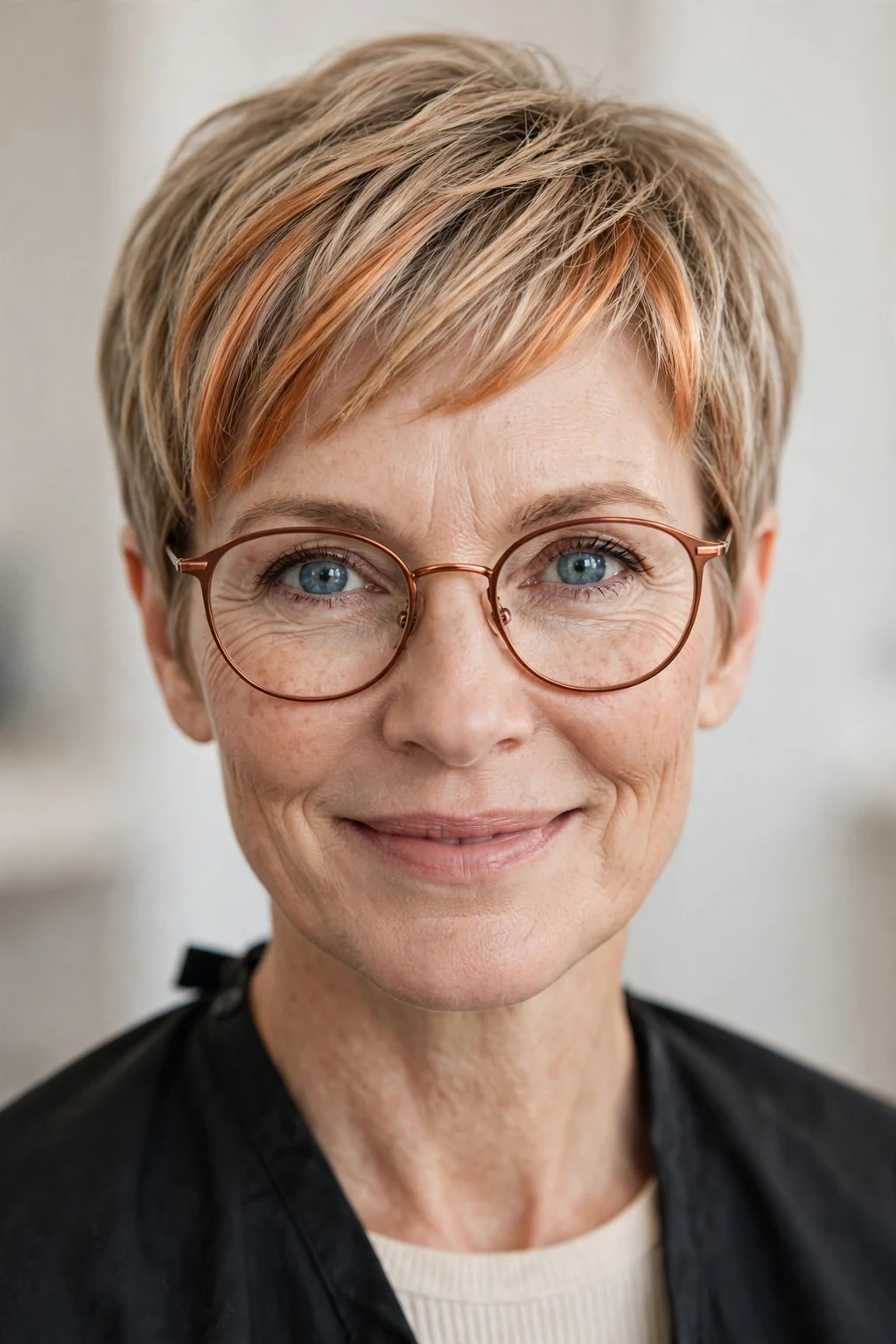
21. Asymmetric Pixie
The asymmetric pixie is bold modern art — one side longer in a deliberate diagonal, creating dynamic movement. For fine hair, asymmetry is flattering because the eye follows the dramatic line rather than assessing density; it is styling as illusion. With glasses, the angle creates captivating interplay — choose frames that deliberately echo or contrast it. The strong diagonal line commands attention, ensuring the eye appreciates the style rather than scrutinizing thickness.
The diagonal slims round faces and softens jawlines. Fine, straight to wavy hair holds the definition well. Style each side by its length — smooth the long side with volumizing mousse and a brush, texture the short side with fingers — define with light pomade. Trim every four weeks. Choose asymmetry for artistic confidence that outshines any hair concern. Asymmetric cuts on fine hair should keep the longer side texturized to avoid a thin, straggly appearance.
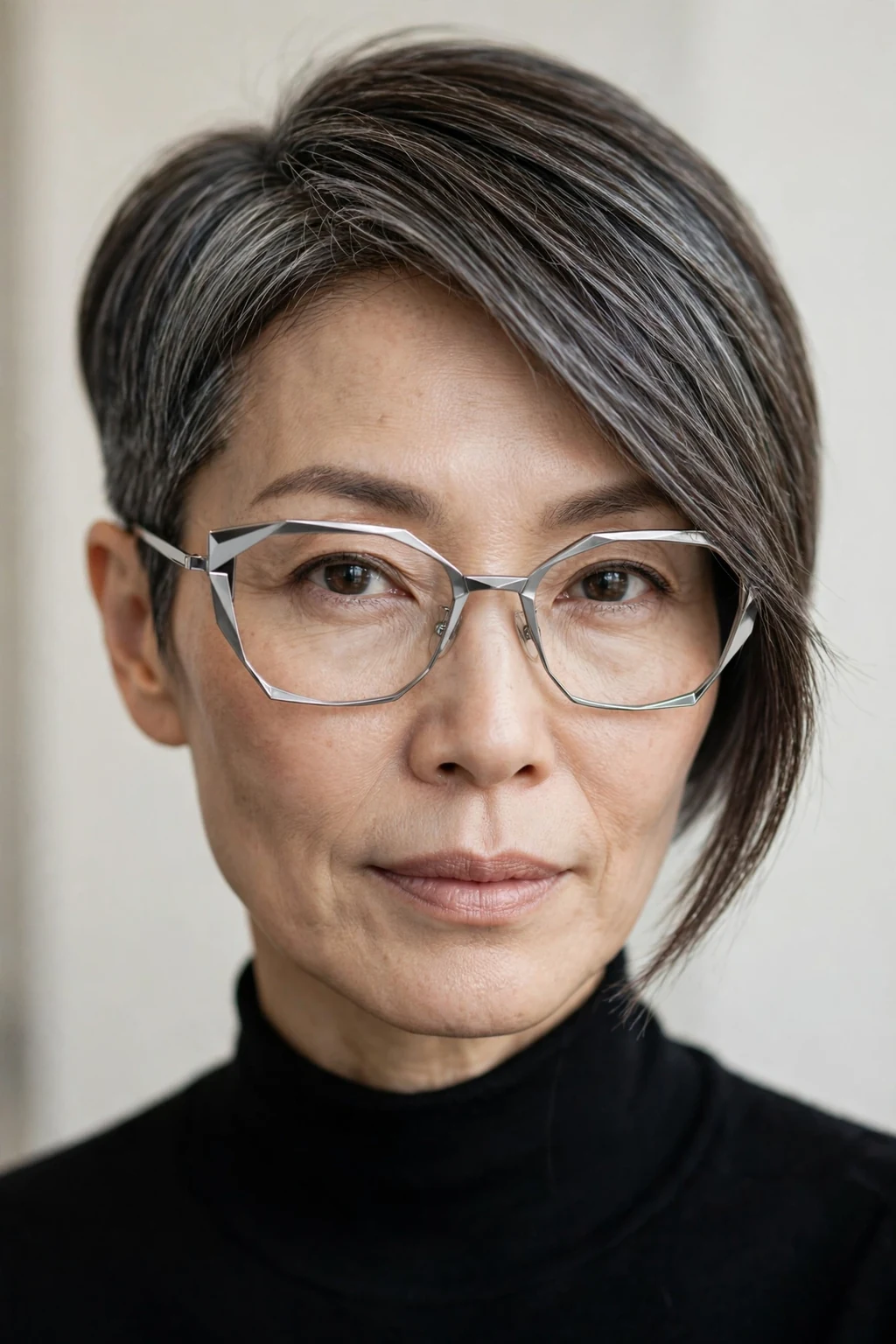
22. Airy Pixie
The airy pixie is weightless grace — feather-light layers that move freely, never heavy. For fine hair, this cut works with your hair's nature instead of against it: rather than fighting for volume, it creates a beautiful, intentional lightness. The diffused outline never competes with glasses, forming a gentle halo that lets eyewear shine. Rather than fighting fine hair's lightness, this cut celebrates it as an aesthetic choice. The philosophy is liberating.
Airiness prevents the flat, sparse look by making lightness a style choice. It flatters long, oval, and heart-shaped faces. Style with the lightest products: volumizing foam at roots, finger-dried, minimal product on ends. Trim every six weeks. Choose the airy pixie for beautiful lightness — fine hair's most honest, graceful expression. Airy cuts also need minimal product, which is ideal since heavy products are fine hair's worst enemy.
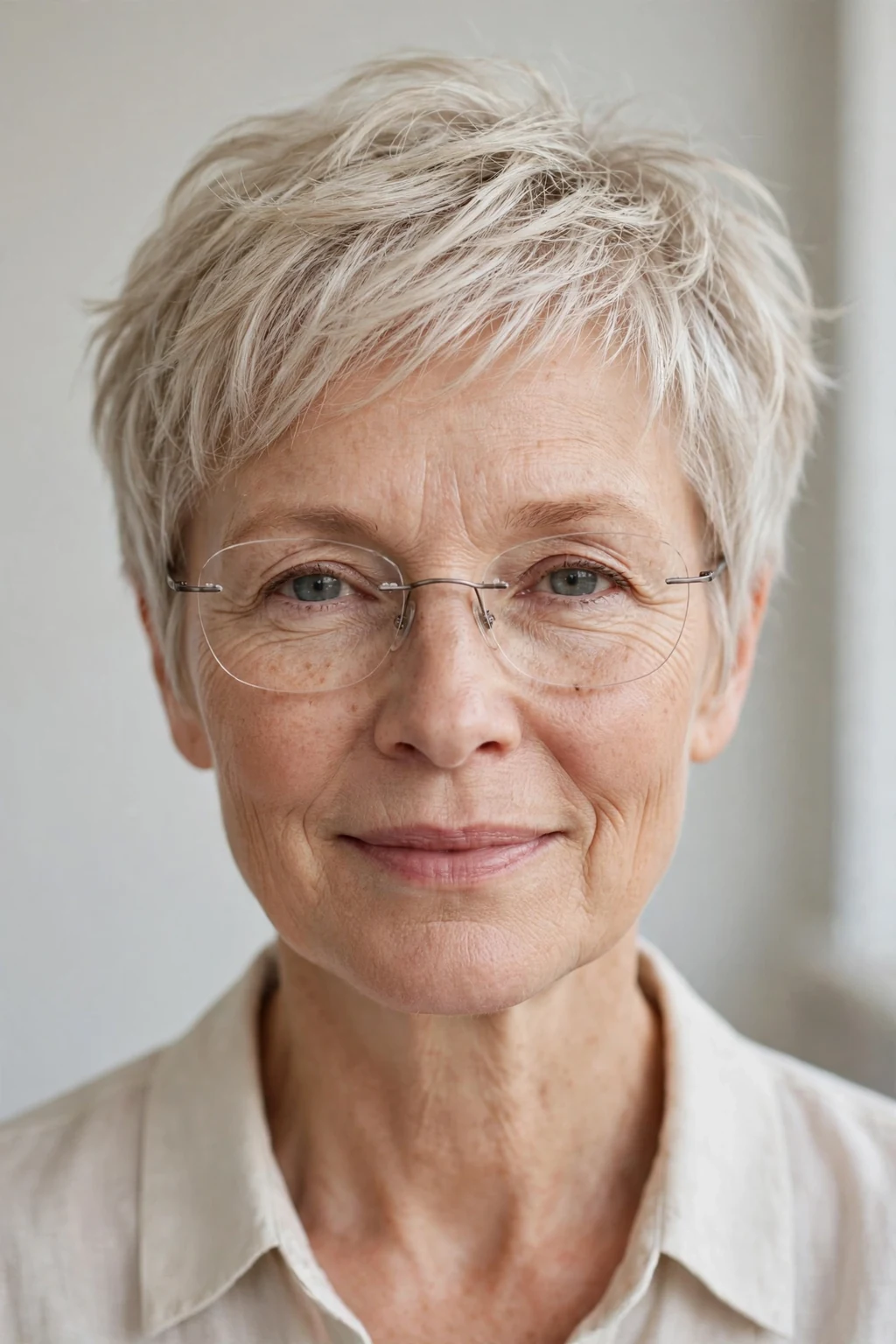
23. Elegant Cropped Pixie
The elegant cropped pixie is quiet luxury — a close, sculptural cut with immaculate lines. For fine hair, the clean, blunt perimeter is the key: short, even ends look dramatically fuller than longer fine hair. The precision makes thin hair look deliberate and chic rather than sparse. Against this pristine backdrop, glasses become jewelry. The sharp, geometric lines make fine hair look precise and intentional rather than thin. Precision reads as luxury.
This cut suits women who value refined grooming, flattering oval and heart-shaped faces. Style with lightweight smoothing cream and a soft brush — avoid heavy products that flatten fine hair. Trims every three to four weeks keep it exact. Choose the elegant crop for sophisticated fullness — fine hair at its most polished. This cut also grows out with clean lines, maintaining its shape longer than textured cuts.

24. Pixie Shag
The pixie shag brings relaxed, modern texture — shattered layers with a lived-in, effortless attitude. For fine hair, the shag's separated, piece-y texture is a volume illusion powerhouse, suggesting density through deliberate disarray. The matte finish keeps it contemporary, and the soft irregularity is charming with glasses. The shag's many layers create maximum texture from minimum hair — ideal for fine densities. Each layer adds visible separation.
Shaggy texture manufactures fullness in fine hair better than almost any other cut. It suits oval, heart, and long faces with playful width. Style with texturizing spray on damp hair, scrunching for separation — fine hair responds fast — finishing with a touch of matte paste. Trim every six weeks. Choose the pixie shag for cool, voluminous ease. Matte products are essential for fine shaggy hair, as shine would reveal flatness while texture suggests fullness.

25. Timeless Pixie Cut
The timeless pixie cut needs no trends — the perfected classic that flatters across generations. For fine hair with glasses at fifty-plus, it is the surest choice: the blunt ends maximize the appearance of thickness, the open shape showcases your frames, and the easy styling respects your time. Soft through the top, gently tapered, beautiful in its simplicity. No other cut does more for fine hair with less effort. The blunt pixie is the efficiency expert of hairstyling.
This cut flatters nearly every face shape and makes fine hair look its fullest with minimal effort. Style with volumizing mousse and fingers in under two minutes. Trim every five weeks. Choose the timeless pixie for dependable beauty — the fine-hair, glasses-wearing woman's most trustworthy cut. This dependable shape also means consistent good hair days — the cut's structure guarantees a baseline of polish.
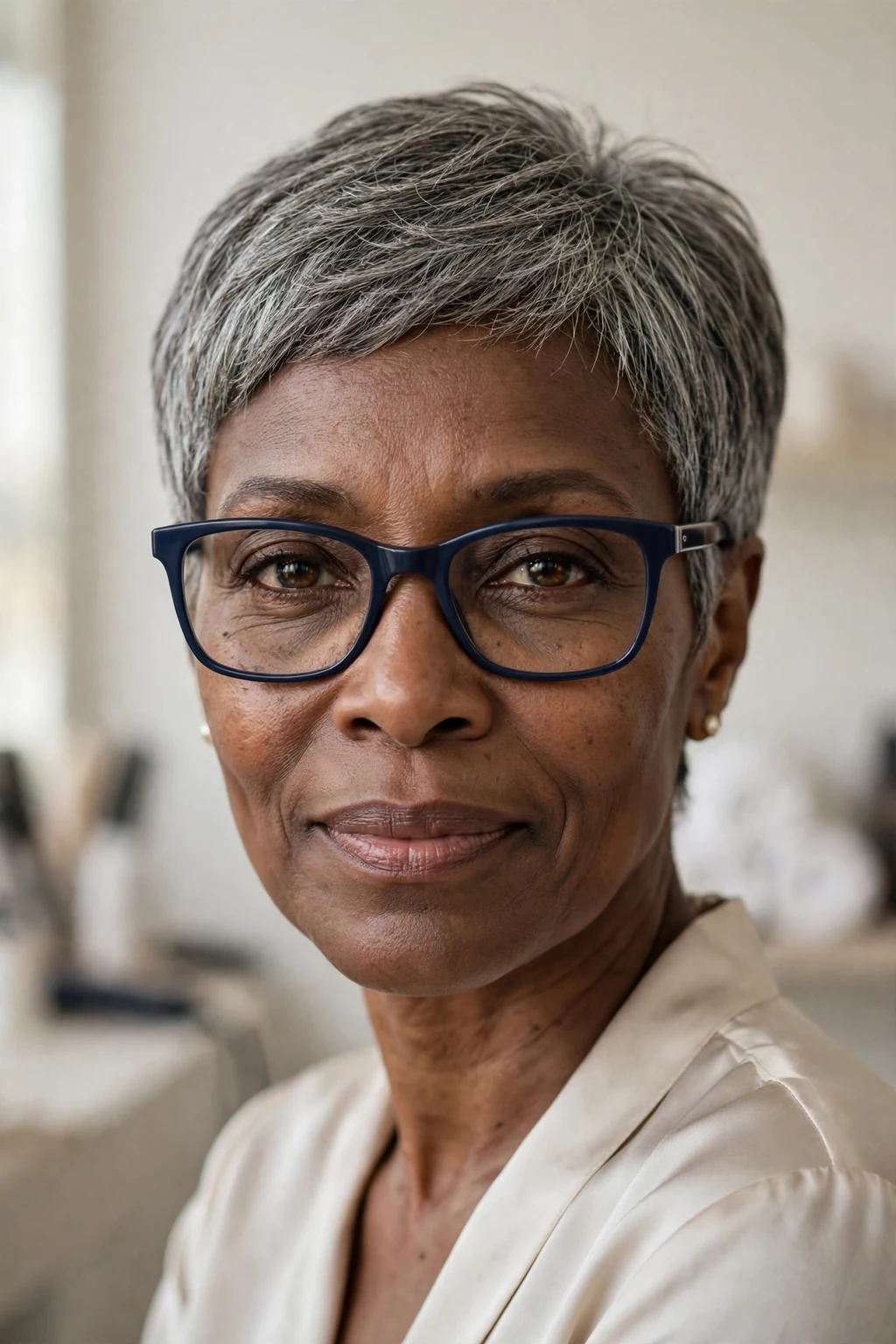
26. Chic Pixie
The chic pixie is modern sophistication distilled — a refined shape with beautiful ease and contemporary polish. For fine hair, the cut is designed to maximize what you have: clean lines for density, subtle texture for movement, and a shape that keeps the face open for your glasses. It is current without being trendy, polished without being fussy. The considered proportions ensure fine hair looks its best from every angle. Nothing is left to chance.
This cut flatters with its balanced proportions, suiting most face shapes. Fine hair looks fuller through the precise cutting. Style with lightweight products — volumizing mousse, a quick finger-dry, done. Trim every four to five weeks. Choose the chic pixie for effortless, modern confidence — fine hair, beautiful frames, perfect harmony. Modern pixie cutting techniques are specifically designed to maximize fine hair, making this an ideal era for thin-haired women.
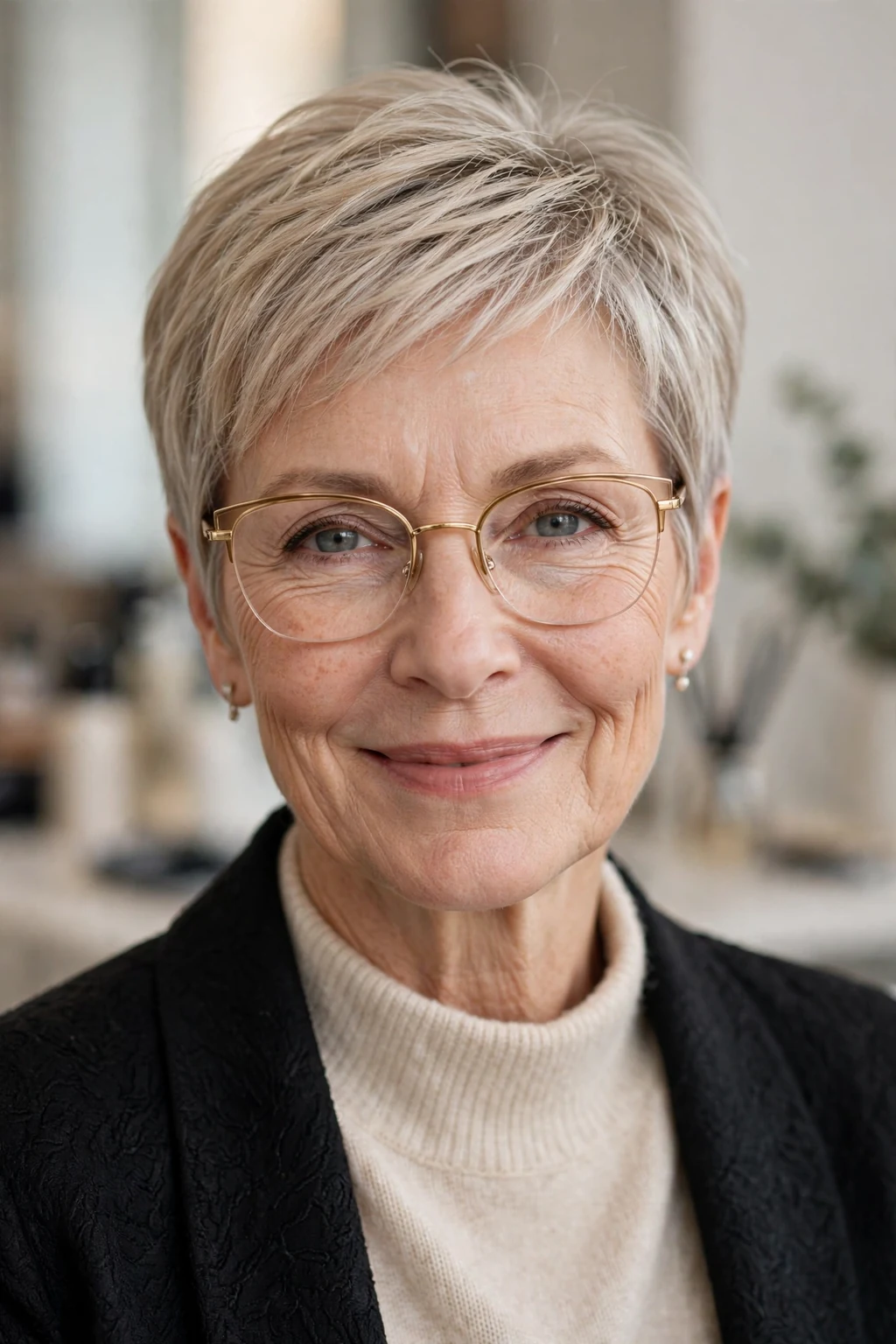
How to Choose the Right Pixie Hairstyle with Glasses After 50 for Fine Hair
The most flattering pixie hairstyles with glasses after 50 for fine hair are soft, shaped, and easy — gentle texture, a wispy fringe that frames your frames, and a cut that works with your natural hair will always look fresh and elegant. Choose the shape that makes you feel wonderful, and your pixie and glasses will always look beautiful.
The pixie is wonderfully freeing: wash, add a little product, and go. Trims every four to six weeks keep the shape neat. Choose the pixie hairstyle that makes you feel confident — that is always the most flattering choice.
Conclusion
From silver classics to soft modern texture, these 26 pixie hairstyles prove fine hair, fifty, and glasses are gorgeous. Choose the shape and finish that make you feel wonderful, keep up with regular trims, and wear your pixie and frames with total confidence.