Fade and taper haircuts have become some of the most versatile and sought-after men’s hairstyles, offering a clean, polished appearance without sacrificing personal style. From subtle low tapers to sharp high fades, these haircuts can be customized to complement different hair textures, face shapes, and styling preferences. The gradual transition from shorter sides and back to longer hair creates a fresh, well-defined finish that works equally well for casual and professional settings.
Whether you prefer a classic, understated look or a modern textured style with plenty of contrast, there is a fade or taper to suit your personality. In this guide, we’re showcasing 15 Fade & Taper Haircuts you’ll want to show your barber, including popular variations such as low fades, mid fades, high fades, skin fades, and clean taper styles. Save your favorite look and take it to your next barber appointment for inspiration.
1. Low Taper Fade
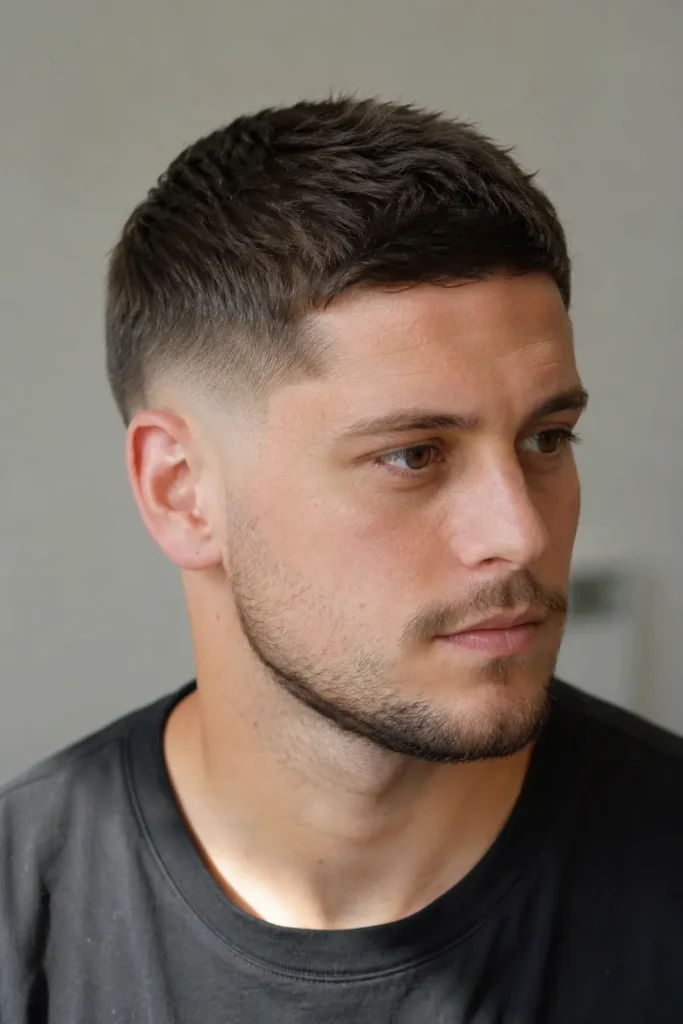
A low taper fade is an excellent choice for men who want a clean haircut without an aggressively short appearance around the sides. The taper begins close to the ears and gradually blends upward toward the sideburns and neckline, leaving more natural length around the temples and upper sides. This creates a subtle transition that works particularly well with short textured hair, a classic crew cut, a messy fringe, or a neatly styled top. Because the fade stays relatively low, the haircut maintains a balanced silhouette while still looking fresh and professionally groomed.
This style is especially appealing when you want a haircut that can move between casual and polished settings. Ask your barber for a low taper that follows the natural shape of your head rather than taking the fade too high. The neckline can be tapered for an understated finish, while the top can remain longer enough for texture, volume, or a simple side part. A low taper fade can also complement a beard by creating a gradual visual connection between the haircut, sideburns, and facial hair.
2. Mid Fade with Textured Top
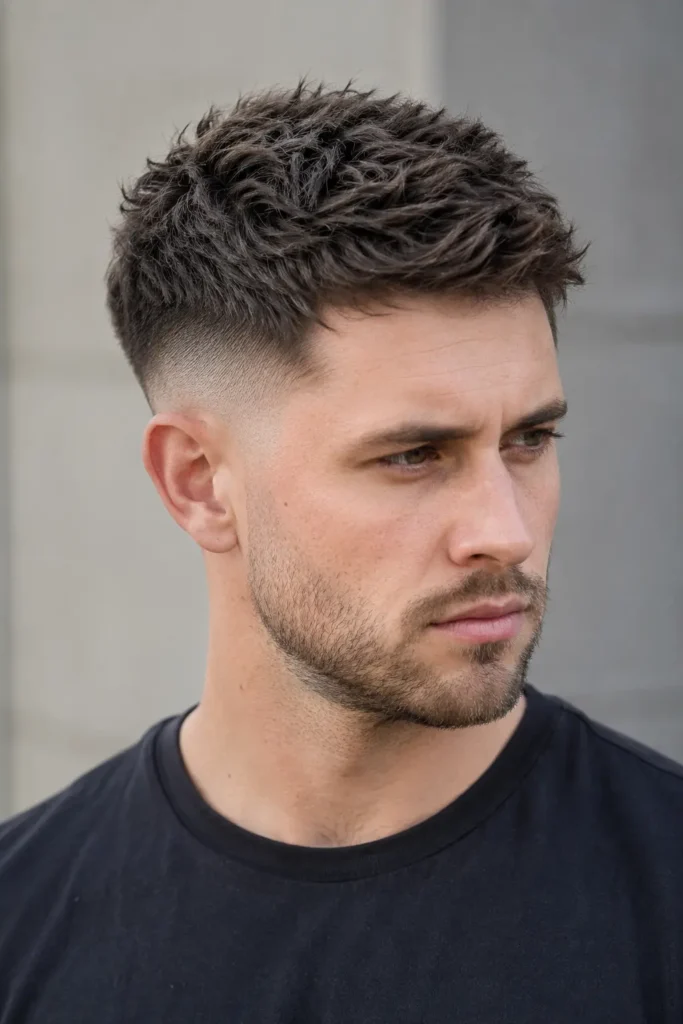
A mid fade haircut provides a more noticeable transition than a low taper while remaining versatile enough for everyday styling. The fade typically begins around the middle of the sides of the head and gradually blends down toward the skin or very short length. Pairing this clean foundation with a textured top creates contrast between the closely faded sides and the fuller hair above. A matte styling product can emphasize separation and movement, making this haircut particularly effective for straight, slightly wavy, or naturally coarse hair.
The textured top can be cut with point-cutting or other texturizing techniques to prevent the hairstyle from looking overly uniform. You can keep the top moderately short for a low-maintenance finish or leave additional length for a messy crop or lifted quiff. When talking to your barber, mention whether you want the mid fade to reach skin level or remain slightly longer. That distinction changes the overall sharpness and maintenance requirements while preserving the recognizable mid-fade silhouette.
3. High Skin Fade
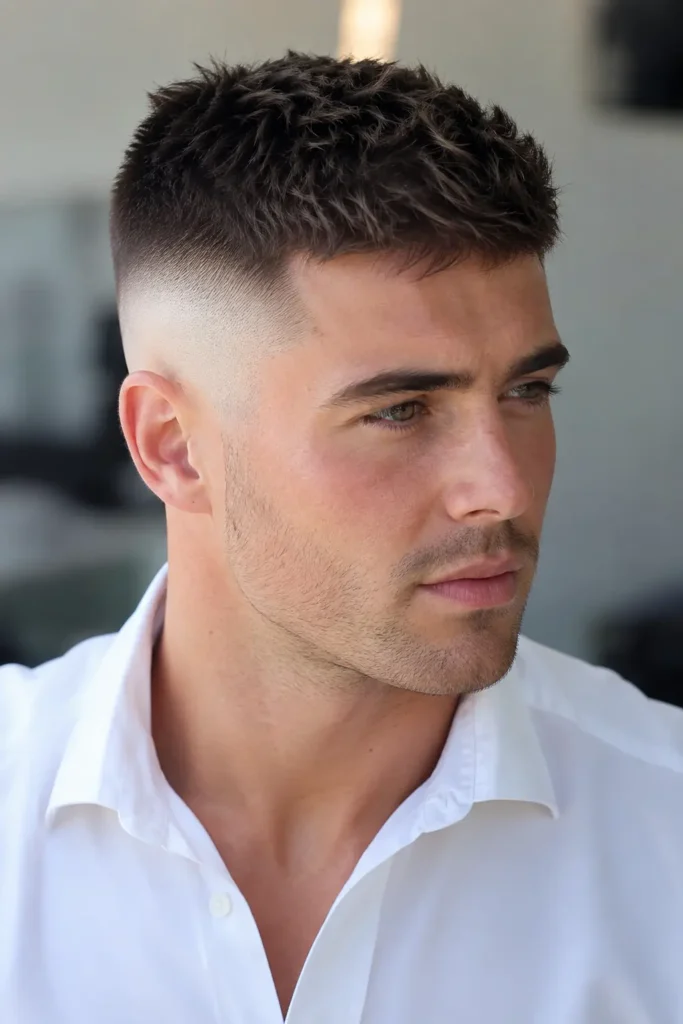
The high skin fade is one of the boldest fade variations because the short transition rises significantly on the sides before blending into longer hair near the top. The lowest portion of the sides is shaved extremely close, sometimes down to the skin, producing a crisp contrast that makes the hairstyle immediately noticeable. This dramatic structure works well with a variety of tops, including a short crop, textured quiff, pompadour, curly top, or comb-over. The result is sharp, contemporary, and distinctly barbered.
Because the fade sits high, it can visually change the proportions of the haircut and emphasize the shape of the head and face. It is therefore useful to show your barber a reference photo and specify how high you want the fade to rise. A clean line around the ears and neckline can make the haircut look especially precise. Men who prefer an extremely fresh appearance should also consider the maintenance schedule because a skin fade becomes visibly grown out more quickly than a longer taper.
4. Taper Fade with Side Part
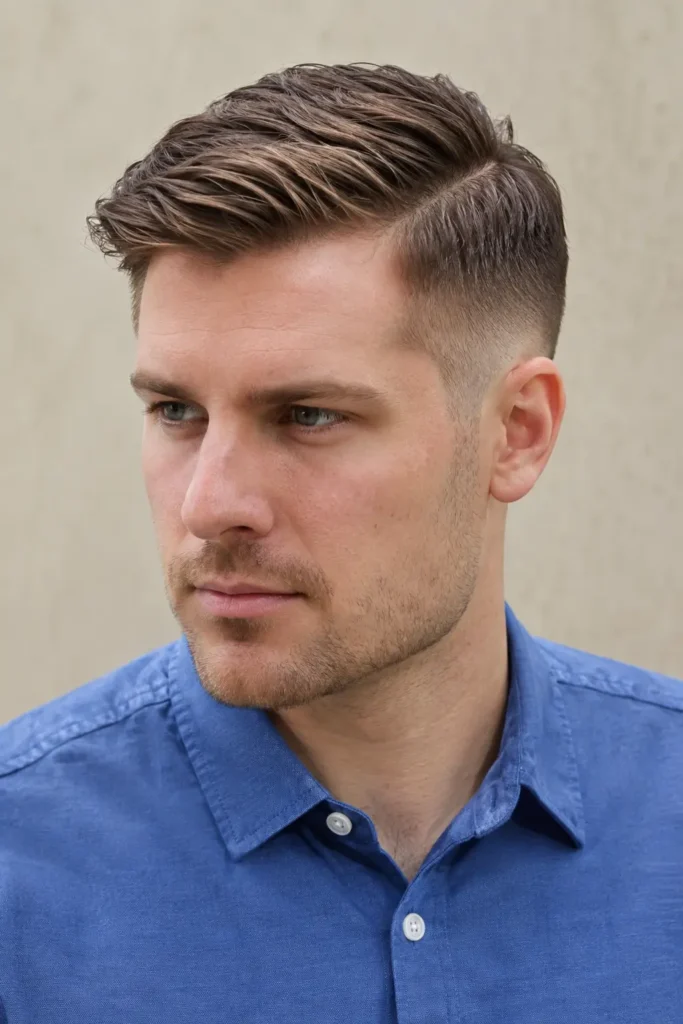
A taper fade with a side part combines traditional men’s grooming with contemporary barbering. The sides and neckline are gradually tapered rather than completely disconnected from the longer hair, while a defined or natural side part creates structure through the top. This haircut can look especially refined when the top is long enough to comb neatly across the head. Depending on the styling product, the finish can range from a classic polished appearance to a softer modern look with natural movement and a matte texture.
The side part also offers flexibility because it does not require an extremely short fade to look clean. Ask your barber to maintain enough length on top to establish the part naturally and to blend the sides without creating excessive contrast. A subtle taper around the temples and neckline can keep the haircut sophisticated. For everyday styling, a lightweight pomade or styling cream can provide control without making the hair appear stiff, allowing the natural direction and texture to remain visible.
5. Burst Fade
The burst fade is recognizable for its curved fade pattern around the ears, creating a rounded transition that leaves more length toward the back of the head. Unlike a conventional fade that travels horizontally around the entire head, the burst fade concentrates the shortest section around the ear. This makes it an interesting option for men who want something more distinctive without completely removing the hair from the back and sides. It pairs particularly well with textured tops, curly hair, faux hawks, mohawks, and modern spiky styles.
The shape of the burst fade is important, so barbering precision makes a significant difference. Ask your barber to keep the curve around the ear clean and gradual while preserving the desired amount of length behind it. The top can be customized according to hair density and texture, while the back can remain longer for a more pronounced silhouette. For men seeking a haircut that looks recognizable from multiple angles, the burst fade offers an appealing combination of clean edges and creative structure.
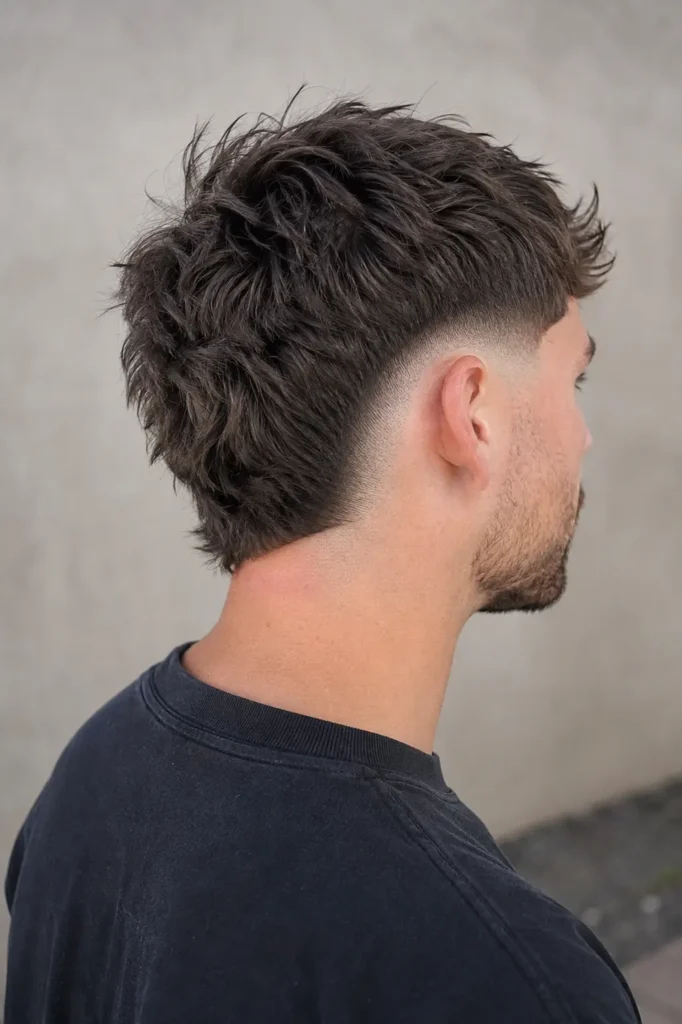
6. Low Skin Fade with Textured Crop
A low skin fade with a textured crop offers a clean, contemporary haircut while keeping the overall shape relatively compact. The skin fade remains concentrated around the lower sides and neckline, while the textured crop creates visual interest across the top. Instead of relying on heavy shine, this hairstyle typically looks best with a matte or natural finish that highlights choppy texture and directional movement. It can be especially effective for straight or slightly wavy hair where individual sections can be separated easily.
The crop can be cut with a slightly uneven fringe, a short forward direction, or a softly broken edge depending on your preference. Tell your barber how much texture you want and whether you prefer a blunt or irregular fringe. Keeping the fade low prevents the sides from overwhelming the top, producing a proportionate haircut that feels modern without being excessively dramatic. Regular trimming around the fade and neckline helps preserve the crisp contrast.
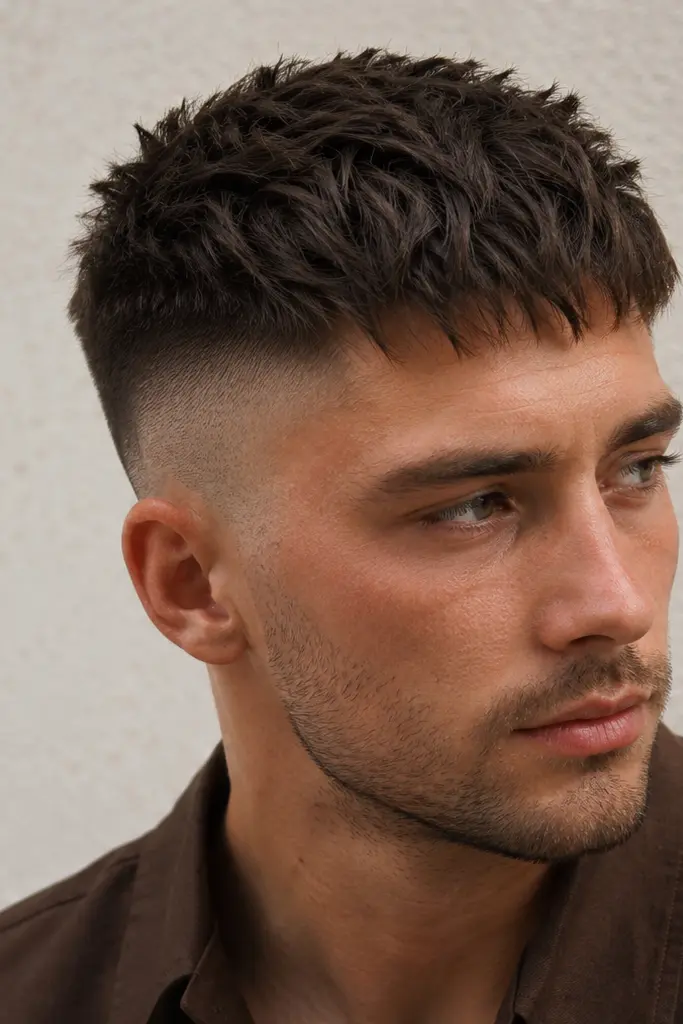
7. Mid Taper with Quiff
A mid taper with a quiff is a strong option for men who want visible volume without committing to an extremely high fade. The taper gradually reduces the hair around the sides and back while the top remains substantially longer. That extra length allows the front section to be lifted and swept backward into a quiff. The result combines a structured silhouette with natural movement, making it appropriate for both everyday wear and more polished occasions.
The quiff can be adapted to different hair densities and textures. Thick hair may require strategic weight removal so the front does not become excessively heavy, while finer hair can benefit from volumizing products and blow-drying techniques. Ask your barber to preserve enough length at the front for the quiff while creating a smooth transition through the sides. A medium-hold styling product can maintain volume while keeping the hairstyle flexible rather than rigid.
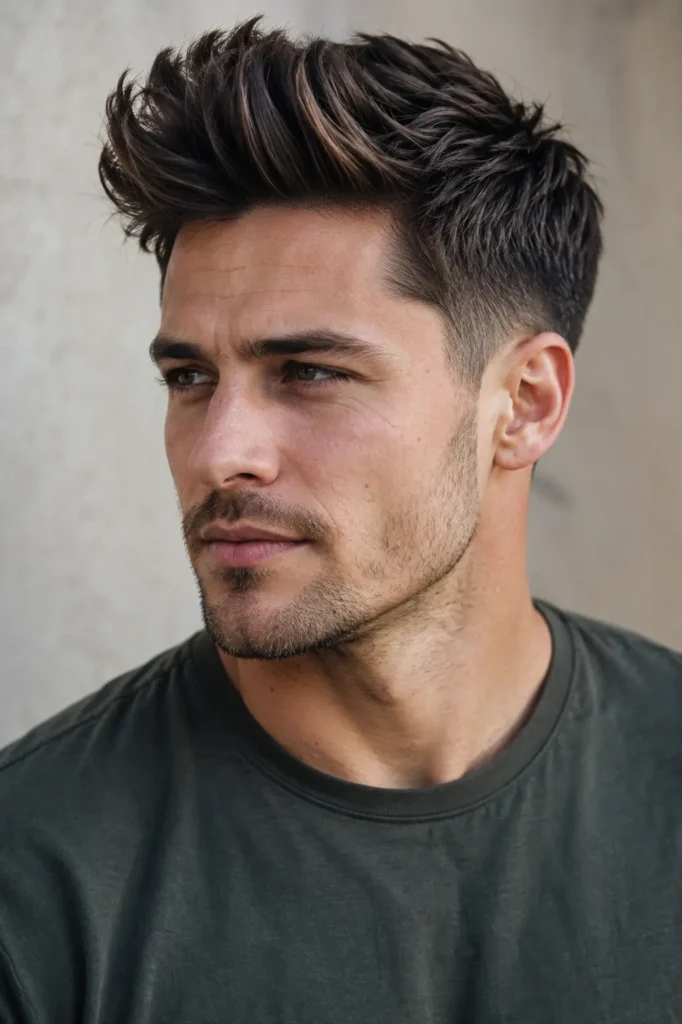
8. Drop Fade
A drop fade follows the natural curvature of the head, dropping lower toward the back instead of maintaining a uniform horizontal fade line. This creates a distinctive contoured shape that can make the haircut look more customized to the wearer’s head structure. The fade may be low, medium, or high in intensity, but its defining characteristic is the way the transition curves downward behind the ears. This makes it a useful option for men who want a modern fade with more visual dimension than a standard straight fade.
The top can be styled in numerous ways, including a textured crop, curly top, comb-over, slick-back, or messy fringe. When requesting a drop fade, make sure your barber understands that you want the fade to follow the head shape rather than remain at a fixed height. The neckline can be tapered or finished cleanly depending on the desired aesthetic. Because the curved fade is an important feature, a clear reference image showing the side and back can help achieve the intended result.
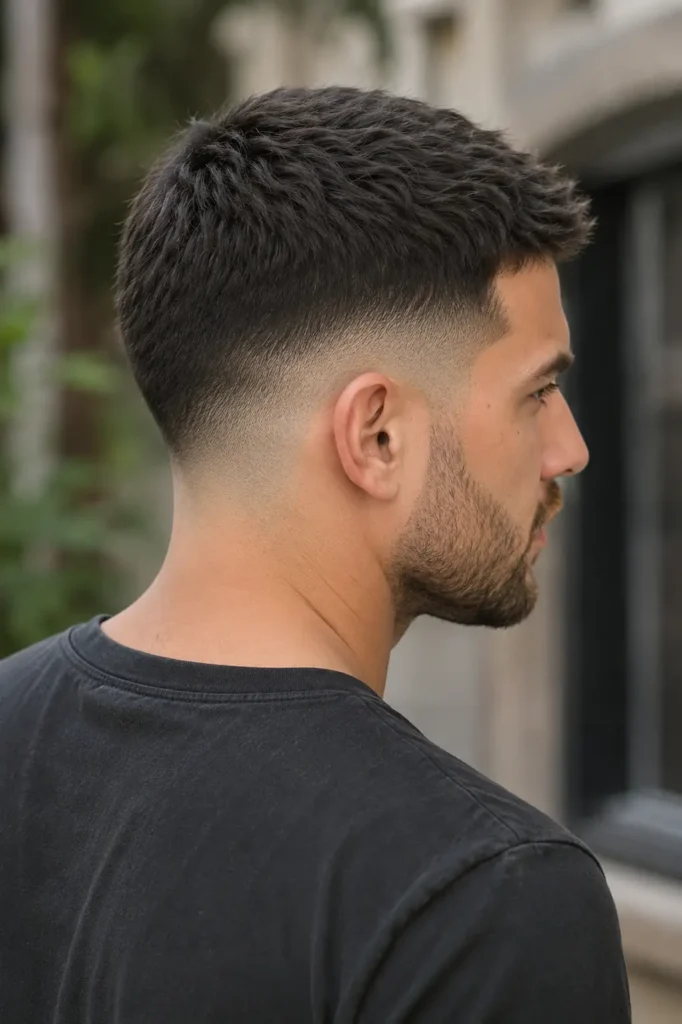
9. Taper Fade with French Crop
The taper fade with French crop blends a short, textured top with carefully controlled sides and a neat fringe. Rather than creating an extremely bare fade, the taper keeps the overall haircut visually balanced, making it suitable for men who want a modern style without an overly aggressive contrast. The French crop generally features a forward-combed top and a short fringe that can be blunt, textured, or slightly irregular. Texture is especially useful for giving the haircut dimension despite its relatively compact length.
This hairstyle is also practical because the top does not require complicated styling. A small amount of matte clay or paste can enhance separation while maintaining the natural direction of the crop. Ask your barber to personalize the fringe according to your hairline and forehead proportions instead of copying a generic shape. The taper around the temples and neckline should remain gradual so the haircut transitions naturally into the head rather than appearing disconnected.
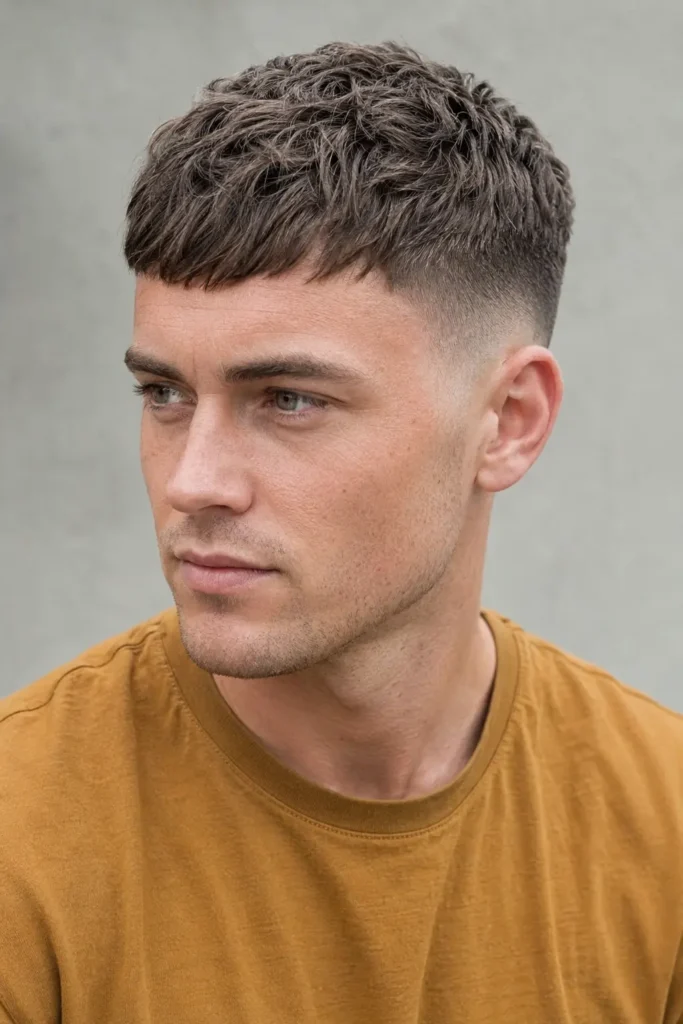
10. Skin Taper with Textured Spikes
A skin taper with textured spikes gives a sharp haircut a slightly more energetic finish without relying on a full high fade. The shortest sections are concentrated around the temples, sideburns, and neckline, while the top retains enough length to create separated, upward-pointing texture. Rather than creating rigid spikes with excessive gel, modern styling generally uses matte clay or paste to produce irregular pieces that look deliberately textured. This approach makes the haircut feel contemporary while preserving natural movement.
The barber can create the spiked effect through point-cutting and strategic texturizing, particularly when the hair is thick enough to hold shape. Explain whether you prefer subtle separation or a more dramatic spiky top. The skin taper should remain clean but controlled, preventing the sides from competing with the textured crown. This style is particularly useful for men who want a short haircut with noticeable personality and a stronger vertical shape.
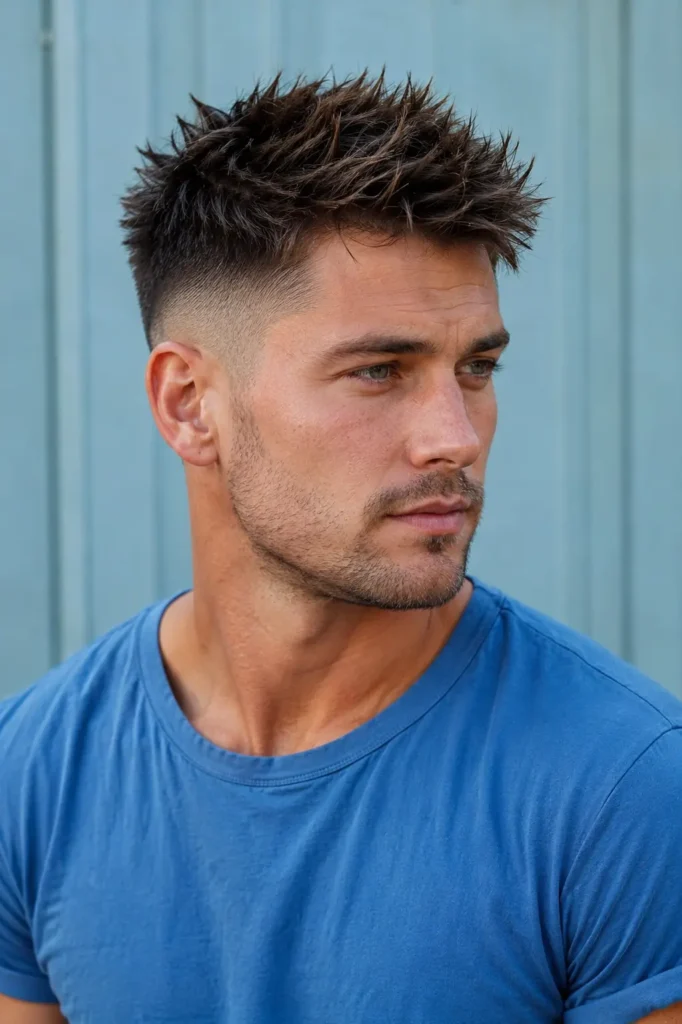
11. Taper Fade with Slick Back
A taper fade with slick-back styling brings together classic grooming and modern barber techniques. The sides are gradually tapered while the top remains long enough to sweep backward from the forehead. Depending on the product, the slick-back can appear glossy and formal or textured and natural. A softer matte finish often creates a more contemporary appearance, especially when a few natural strands remain visible instead of forcing every hair into a perfectly uniform direction.
The haircut works best when the top has sufficient length and density to travel backward comfortably. Your barber can remove excess weight without shortening the top too dramatically, allowing the hair to move naturally. Ask for a taper that remains subtle around the ears and neckline if you prefer a sophisticated appearance. Regular maintenance around the perimeter keeps the style neat while allowing the longer top to grow into an increasingly relaxed slick-back.
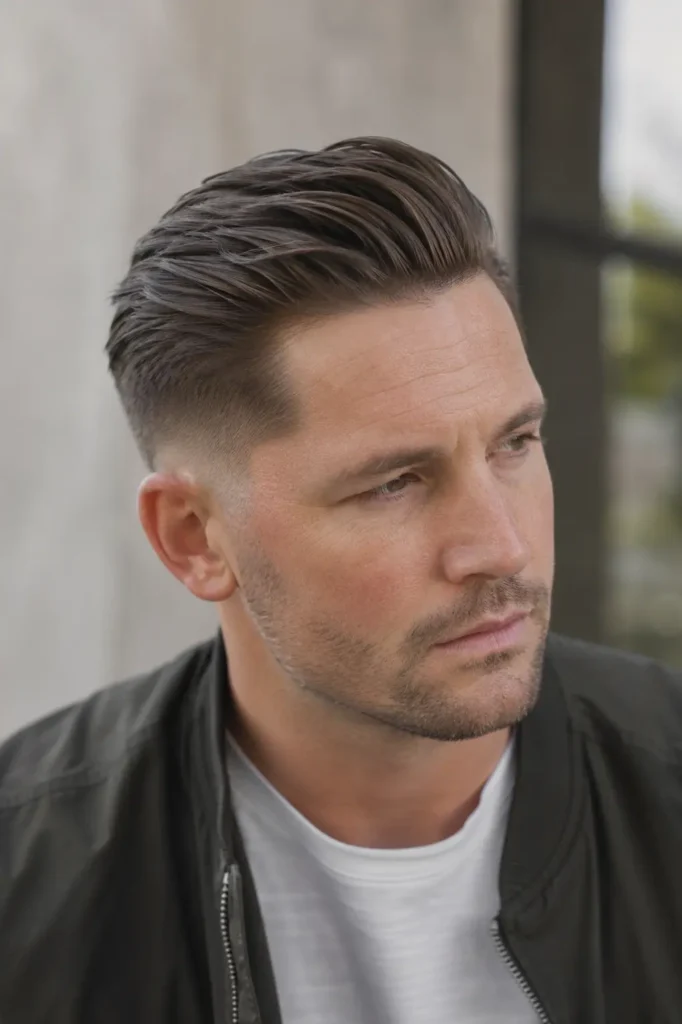
12. High Taper Fade with Curly Top
A high taper fade with a curly top creates strong contrast between closely controlled sides and natural texture above. Instead of cutting away the curls, the barber preserves enough length to let the natural curl pattern remain visible. The high taper can clean up the temples, sideburns, and neckline while keeping the curly volume concentrated toward the upper portion of the hairstyle. This approach works especially well for men with naturally curly or coiled hair who want a defined barbered shape.
Curl definition is important for maintaining the character of this haircut. A lightweight curl cream or styling product can help reduce frizz while keeping the curls flexible. Tell your barber whether you want the curls left relatively full or trimmed into a more compact shape. The transition around the temples should be carefully blended so the taper looks intentional rather than disconnected from the textured top.
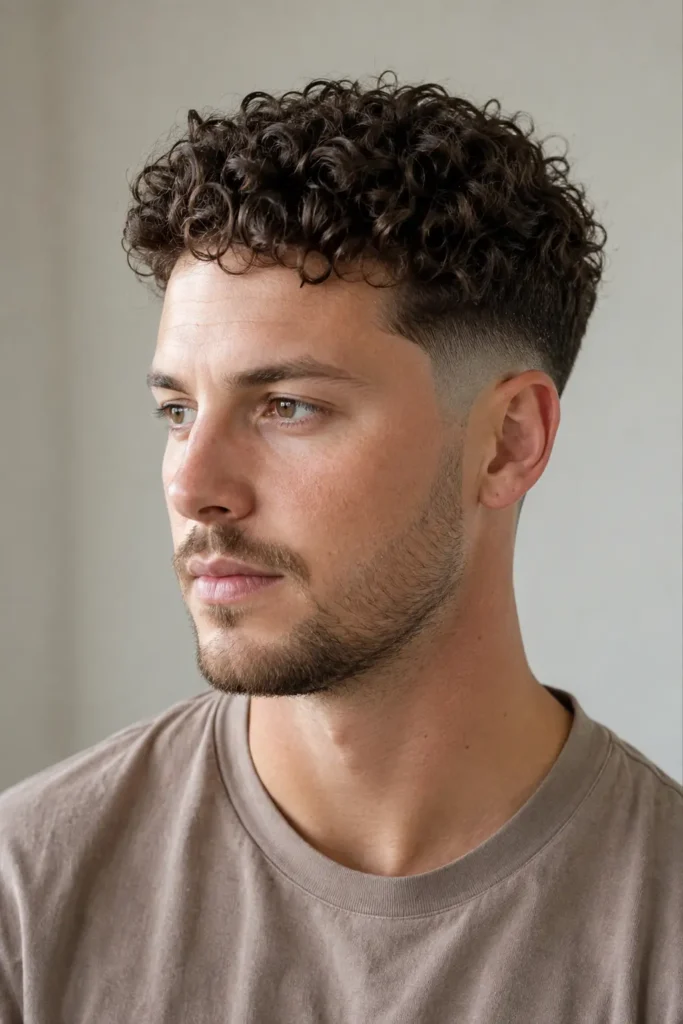
13. Mid Fade with Comb Over
A mid fade with comb-over offers a clean contrast between faded sides and a longer, directional top. The mid fade removes bulk around the sides while leaving enough hair above the transition to maintain a balanced profile. The comb-over can be styled with a clearly defined part or allowed to fall naturally for a softer finish. This makes the haircut adaptable for men who want something professional enough for work but versatile enough for casual styling.
The top should retain sufficient length to move comfortably across the head without looking forced. Ask your barber to blend the upper sides into the longer top rather than creating an excessively disconnected effect unless that is specifically what you want. A small amount of pomade or styling cream can provide control and definition. For a more modern result, avoid excessive shine and preserve some natural texture throughout the comb-over.
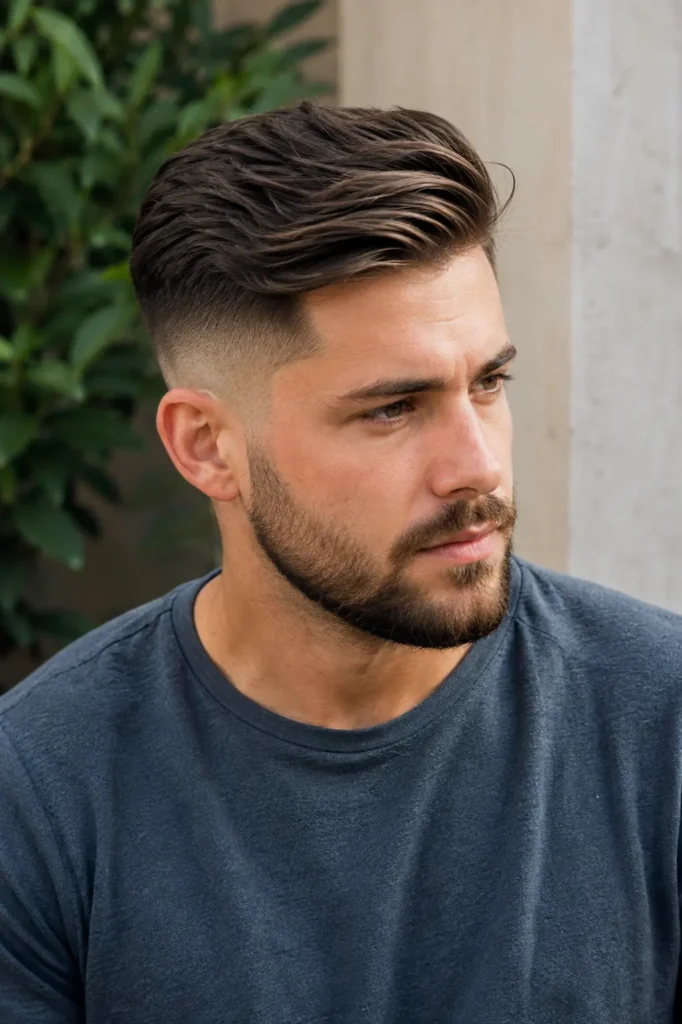
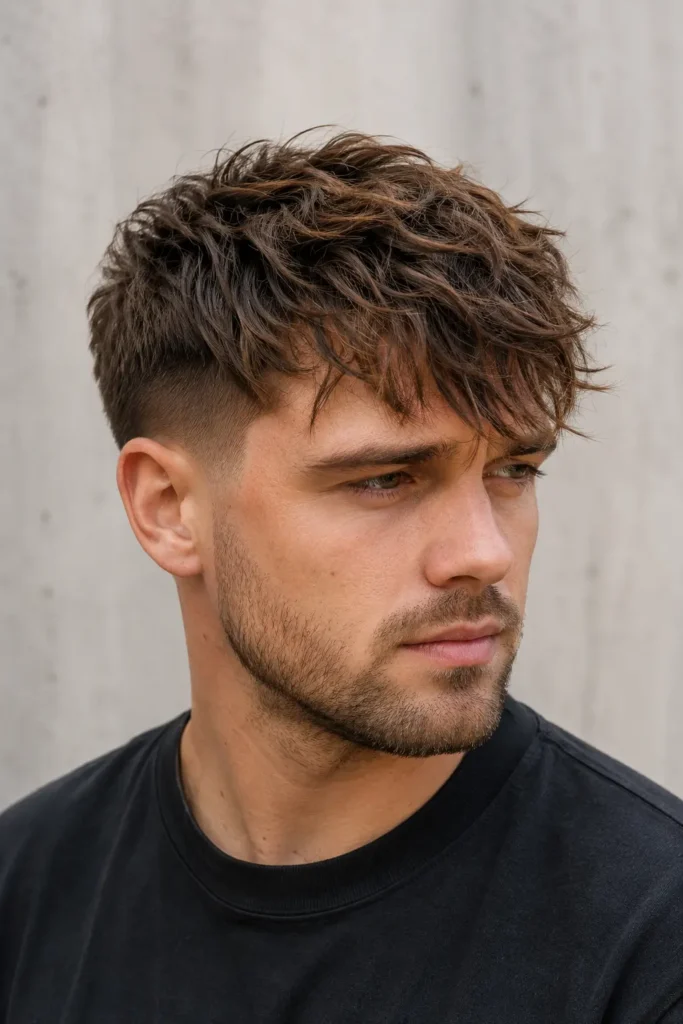
14. Taper Fade with Messy Fringe
A taper fade with messy fringe is ideal for men who prefer a relaxed hairstyle with deliberate texture. The taper keeps the sides and neckline clean while the top remains long enough to create a forward-moving fringe. Instead of styling the fringe into a perfectly straight line, the hair is separated into irregular pieces that create a casual, slightly tousled effect. This gives the haircut a youthful appearance while maintaining enough structure to look intentionally groomed.
Texture is the key element, so your barber may use point-cutting or other techniques to prevent the fringe from appearing too heavy. The taper should remain subtle enough to preserve the messy top as the focal point. For styling, work a small amount of matte paste through dry or slightly damp hair and use your fingers to create separation. The final result should look effortless rather than overly sculpted.
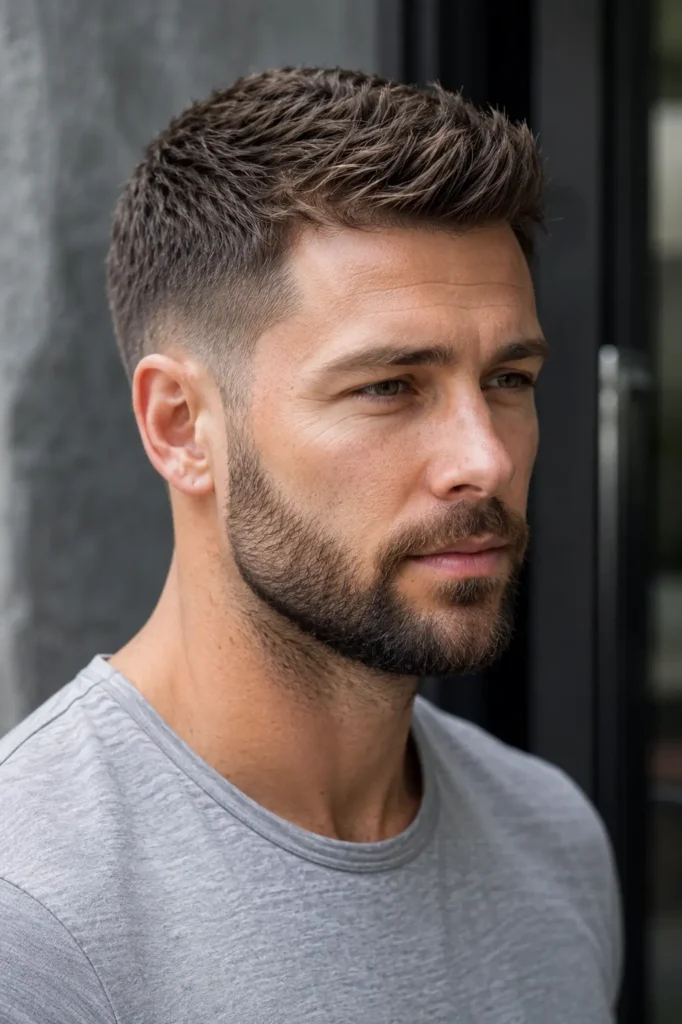
15. Classic Taper with Beard Blend
A classic taper with beard blend is a timeless option for men who want clean grooming without an extremely short fade. The hair gradually decreases in length around the temples, sideburns, and neckline while the upper sides maintain a natural amount of fullness. The beard can then be blended into the sideburn area, creating a continuous transition from scalp hair to facial hair. This approach produces a polished silhouette without the stark contrast associated with some skin fades.
The barber should pay close attention to the connection between the haircut and beard because an abrupt transition can make the overall appearance look uneven. A soft taper through the sideburns helps create visual continuity, while the beard itself can remain short, medium, or fuller depending on personal preference. This haircut is particularly useful for men who appreciate classic barbering, natural proportions, and a style that can grow out gracefully between appointments.
Final Thoughts
Choosing between a fade and taper haircut ultimately depends on how much contrast, maintenance, and styling flexibility you want. A skin fade creates a sharper and more dramatic appearance, while a low taper or classic taper offers a softer transition that grows out more naturally. Your hair texture, density, face shape, hairline, beard, and preferred styling routine can all influence which variation looks most balanced. Bringing a reference image to your barber is useful, but explaining the desired fade height, top length, texture, neckline, and level of contrast will make the consultation even more precise.
Before your appointment, consider how often you are willing to maintain the haircut. High and skin fades usually require more frequent barber visits to preserve their crisp appearance, while tapers can remain presentable for longer as they grow. Whether you prefer a low taper fade, mid fade, high skin fade, burst fade, drop fade, textured crop, quiff, comb-over, curly top, or classic taper, the best haircut is one that works with your natural hair characteristics rather than against them. Save your favorite reference and show your barber exactly what you want.