
The crew cut is one of the most recognizable short hairstyles for men, combining a neat silhouette with practical length and masculine definition. From the classic Ivy League-inspired crew cut to modern textured, faded, tapered, and longer variations, this haircut can be adapted to different hair textures, face shapes, and personal styles. Its short sides, controlled top, and low-maintenance structure make it suitable for everyday wear while still offering enough variation to create a distinctly modern appearance.
Modern crew cut haircuts can incorporate a skin fade, low fade, mid fade, high fade, taper fade, textured top, side part, hard part, line-up, or subtle fringe. Hair density and texture also influence the final result, with straight, wavy, and slightly curly hair each producing a different finish. Whether you prefer a polished professional haircut or a relaxed textured crop, these crew cut Haircuts for Men ideas provide versatile inspiration for a clean, timeless look.
1. Classic Crew Cut
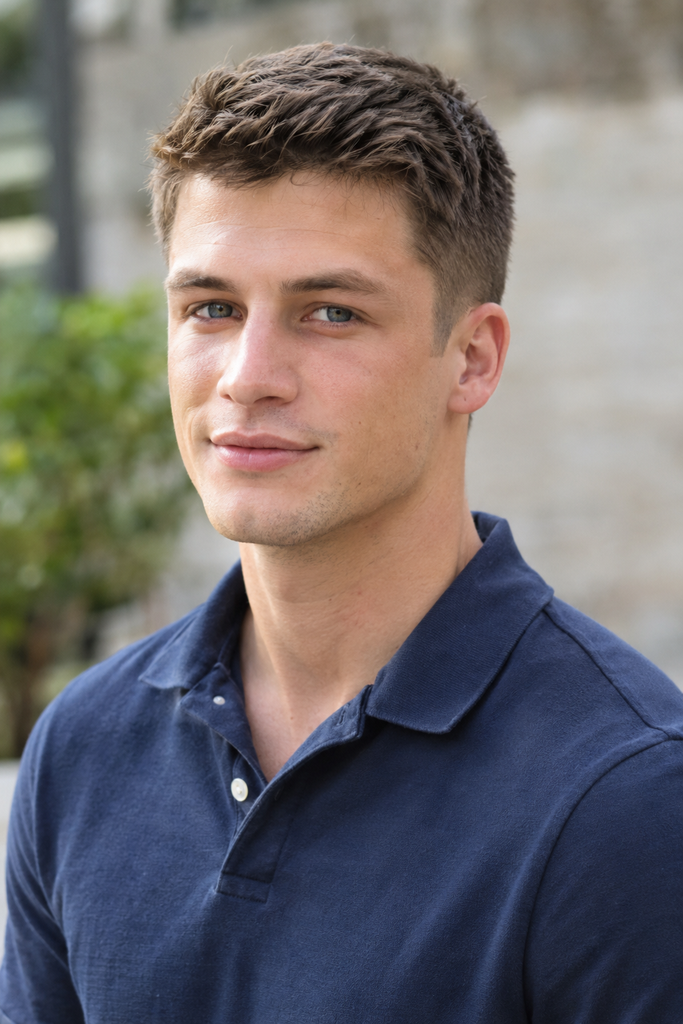
The classic crew cut keeps the hair on top slightly longer than the sides, creating the balanced proportions that define this timeless men’s haircut. The top is usually scissor-cut into a controlled shape, while the sides and back are kept short without requiring an extremely close skin fade. This traditional structure works particularly well for men who appreciate a neat appearance without excessive styling. A small amount of matte styling product can add definition while preserving the naturally masculine character of the haircut.
This version is especially versatile because it can transition easily between professional and casual settings. The slightly longer crown provides enough length to create subtle texture, while the clean sides maintain a sharp overall outline. Barbers can adjust the top length according to hair density and face shape, making the classic crew cut suitable for straight, slightly wavy, or coarse hair. Regular trimming around the neckline and sideburns helps preserve its tidy silhouette.
2. Crew Cut with Low Fade
A crew cut with a low fade adds a contemporary finish while preserving the recognizable short structure of the traditional haircut. The fade begins close to the ears and gradually transitions into longer hair toward the upper sides, creating a subtle contrast without making the haircut appear overly aggressive. The top remains moderately short and can be styled with a light matte product for natural separation. This combination is particularly effective for men who want a clean haircut that looks modern without sacrificing its classic foundation.
The low fade also creates a smooth transition around the temples and neckline, helping the haircut maintain a polished appearance as it grows out. Depending on the barber’s technique, the fade can be very subtle or slightly more pronounced. A textured top can introduce movement, while a smoother finish gives the style a more professional character. This crew cut variation works especially well with straight and slightly wavy hair.

3. Mid Fade Crew Cut
The mid fade crew cut places the fade higher on the sides, producing a stronger contrast between the short lower section and the slightly longer hair on top. This creates a crisp and contemporary silhouette while keeping the top short enough to remain easy to manage. The transition should be gradual rather than abrupt, allowing the haircut to maintain a refined barbered appearance. A textured finish on top can make the hair look fuller and more dimensional, particularly when individual strands are separated naturally.
Men with dense straight or slightly wavy hair can benefit from this structure because the fade removes unnecessary bulk around the sides while preserving enough top length for styling. The mid fade can also complement a defined hairline and neatly shaped temples. Unlike a very high fade, it retains some visual weight around the upper sides, giving the crew cut a balanced relationship between the top, sides, and back.
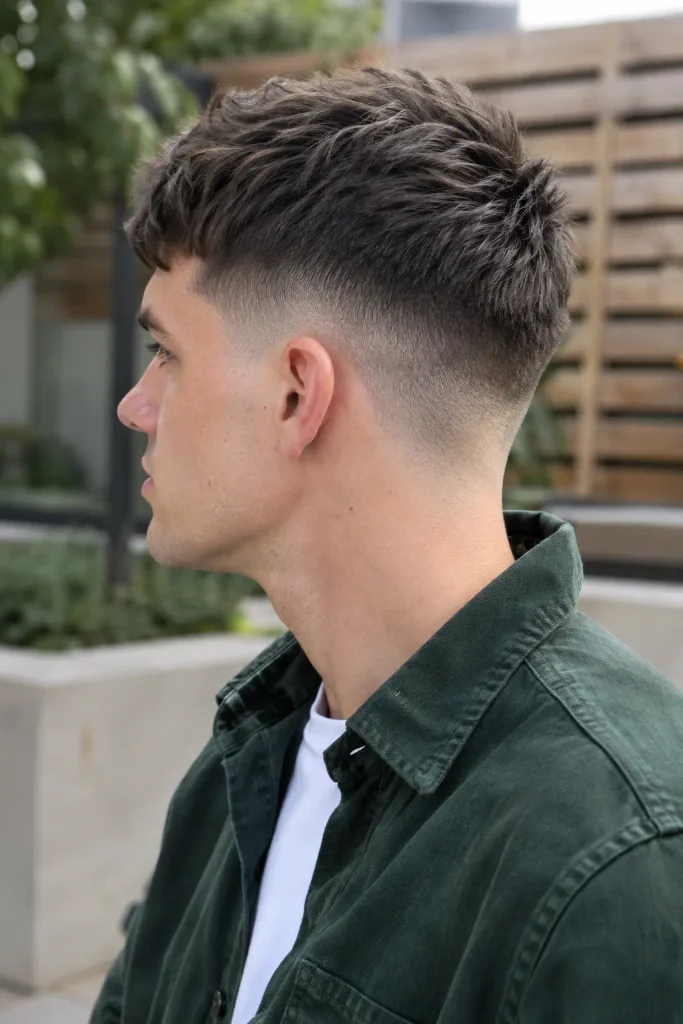
4. High Fade Crew Cut
A high fade crew cut creates a noticeably sharper contrast by taking the sides very short up toward the temples while leaving a compact amount of hair on top. This version has a strong, athletic appearance and produces a distinctly clean outline around the head. The top can be left slightly textured rather than completely flat, allowing the haircut to retain visual depth. A matte clay or lightweight paste can help control the top without making it look excessively styled or glossy.
Because the sides are significantly shorter, the high fade crew cut places most of the visual attention on the top and facial structure. Barbers can modify the exact height of the fade to suit the individual’s proportions and hairline. A clean line around the temples and neckline gives the haircut its finished appearance. This variation is especially suitable for men who prefer a bold short haircut with very little daily maintenance.
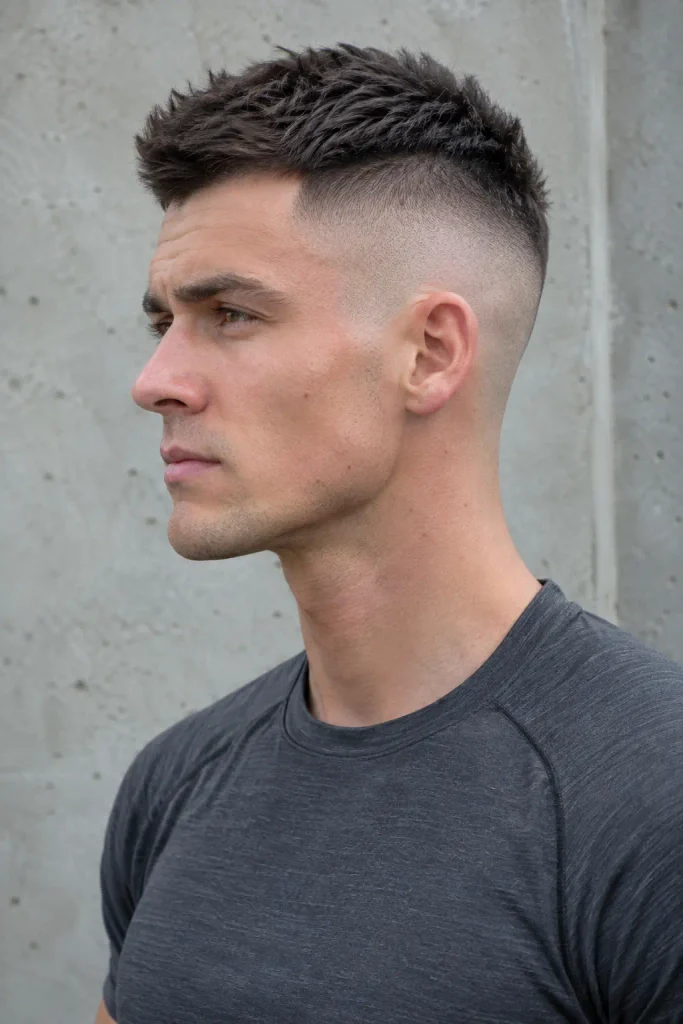
5. Textured Crew Cut
A textured crew cut introduces separation and movement into the traditionally controlled haircut. Instead of leaving the top uniformly smooth, the barber uses scissors or point-cutting techniques to create varied lengths throughout the upper section. The result is a naturally rugged texture that can be emphasized with a small amount of matte paste. The sides remain short and controlled, ensuring that the texture on top does not make the overall haircut look untidy or overly voluminous.
This variation works particularly well for men with naturally thick hair because texturizing removes excess weight while creating definition. Straight hair can appear more dimensional with carefully placed texture, while slightly wavy hair can produce an effortlessly tousled finish. The textured crew cut also photographs well because the individual pieces of hair create visible depth and contrast. Keeping the neckline and sideburns clean maintains the sharpness of the overall silhouette.

6. Crew Cut with Tapered Sides
A tapered crew cut uses gradual shortening around the sideburns, ears, and neckline rather than creating a pronounced fade. This produces a softer and more traditional appearance while maintaining the compact structure of the crew cut. The hair gradually becomes shorter as it approaches the edges, creating a natural transition that looks especially refined when the top is neatly scissor-cut. This approach is ideal for men who want a classic haircut without the highly contrasted appearance associated with skin fades.
The tapered sides also allow more hair to remain around the upper sides, which can create a fuller silhouette. This can be useful for men who prefer a slightly conservative hairstyle or want to maintain more natural proportions around the head. The top can be styled forward, slightly upward, or simply left with its natural direction. Regular barber maintenance keeps the taper clean while allowing the haircut to grow out gracefully.
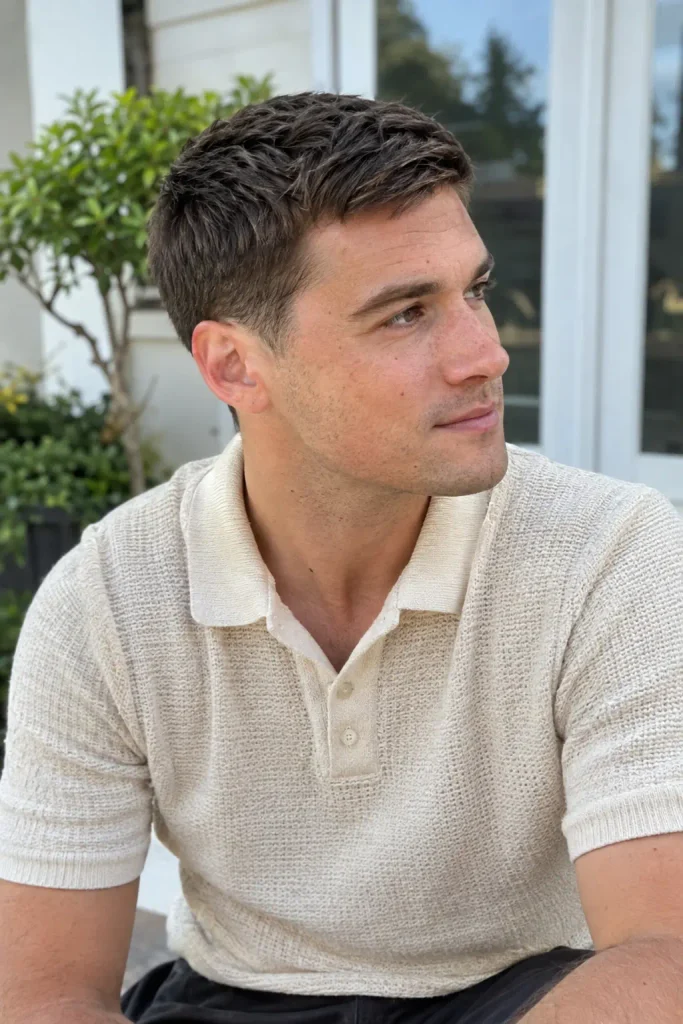
7. Ivy League Crew Cut
The Ivy League crew cut sits between a traditional crew cut and a short side-part hairstyle, leaving slightly more length on top for styling. The extra length allows the hair to be brushed neatly to one side while retaining the clean proportions of a short haircut. The sides are tapered rather than dramatically faded, giving the style a sophisticated and collegiate character. A small amount of lightweight styling cream can provide control while keeping the finish natural rather than overly shiny.
This version is particularly versatile for professional environments because it can look polished without appearing overly formal. The longer top can also be adjusted according to hair density, allowing barbers to create a flatter or more lifted silhouette. A natural side part adds definition without requiring a shaved hard line. The Ivy League-inspired crew cut works well with straight and slightly wavy hair and can be maintained with relatively simple daily styling.
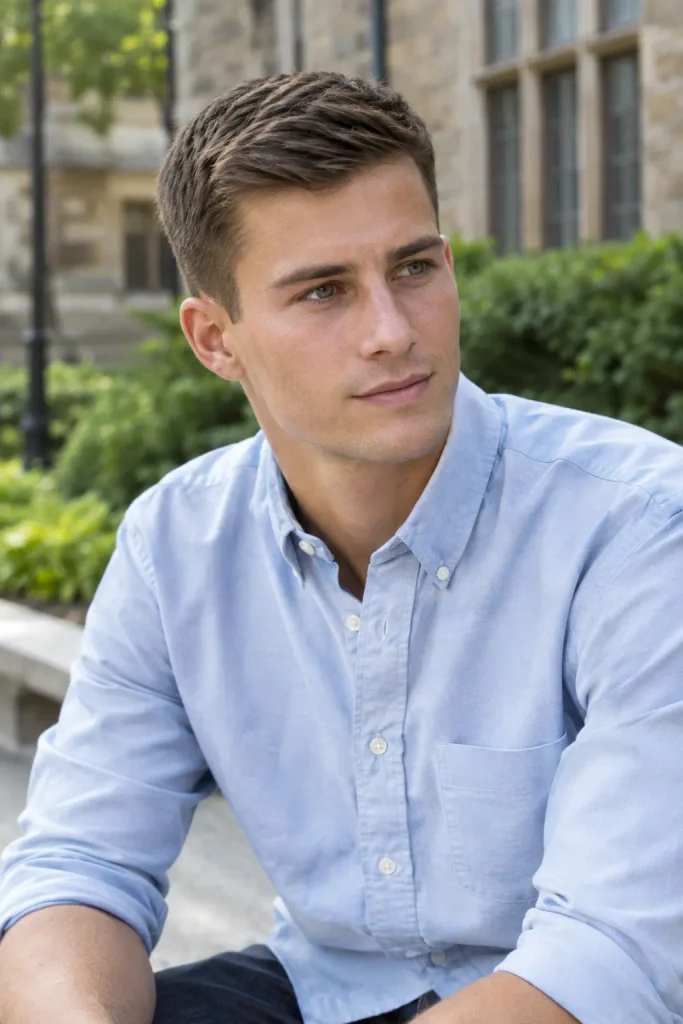
8. Crew Cut with Skin Fade
The skin fade crew cut creates one of the sharpest versions of this classic hairstyle. The sides are gradually reduced until they reach nearly bare skin near the lowest portion, creating a dramatic transition into the short hair above. Keeping the top compact prevents the haircut from becoming visually unbalanced. A slightly textured top provides enough contrast to make the fade stand out while maintaining the clean, disciplined character associated with crew cuts.
This style requires precise barbering because the fade must transition smoothly without visible steps or harsh lines. The neckline and temple areas should remain crisp, while the top can be finished with matte styling paste for subtle separation. Although the skin fade creates a modern appearance, the short top keeps the haircut practical. It is particularly suitable for men who appreciate very clean edges and minimal styling time.
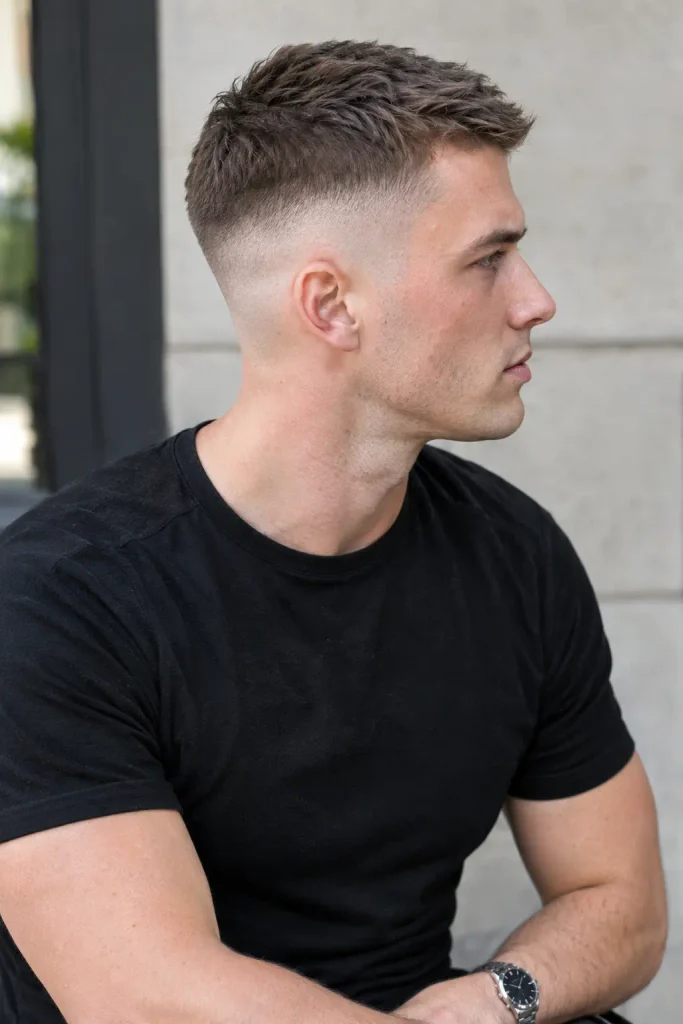
9. Short Crew Cut
The short crew cut reduces the top length for an especially practical and low-maintenance finish. The hair remains slightly longer than the sides, preserving the fundamental crew cut shape while creating a compact overall silhouette. This version is ideal for men who prefer not to spend much time styling their hair in the morning. A small amount of matte product can be used if desired, but the haircut should remain effective even when worn naturally.
Because the top is kept short, this variation can emphasize the natural shape of the head and the facial features. The barber can use either a taper or subtle fade around the sides depending on the desired level of contrast. A neatly finished neckline helps the short haircut remain polished. Straight, coarse, and slightly wavy hair can all work with this style when the top length is adjusted appropriately.

10. Long Crew Cut
A long crew cut keeps more length through the top while maintaining shorter sides and back. This creates a softer and more flexible version of the traditional style, giving the wearer additional options for texture and direction. The top can be brushed upward, slightly backward, or forward depending on the hair’s natural growth pattern. Unlike a longer textured crop, the shape remains distinctly crew-cut because the sides and back stay controlled and noticeably shorter.
This variation is particularly useful for men who want a short hairstyle but do not want their hair extremely close to the scalp. The additional top length can create a fuller appearance for medium or thick hair and provides more styling flexibility. A matte cream or lightweight paste can enhance separation without making the hairstyle look stiff. Regular trimming keeps the sides proportional to the longer top.

11. Crew Cut with Side Part
Adding a side part gives the crew cut a more structured and polished character. The top remains short enough to preserve the traditional proportions, but the hair is deliberately directed toward one side to create a defined separation. The part can be natural or slightly emphasized by the barber without turning it into a dramatic hard part. This variation works particularly well for men who prefer orderly hairstyles that can transition easily from professional environments to casual occasions.
The side-parted crew cut can be styled with matte pomade, cream, or lightweight clay depending on the desired finish. A subtle taper around the sides keeps the hairstyle sophisticated, while a fade can introduce a more contemporary edge. Hair texture affects the final result, with straight hair producing a crisp separation and slightly wavy hair creating a softer, more natural part. The key is maintaining controlled proportions rather than excessive volume.
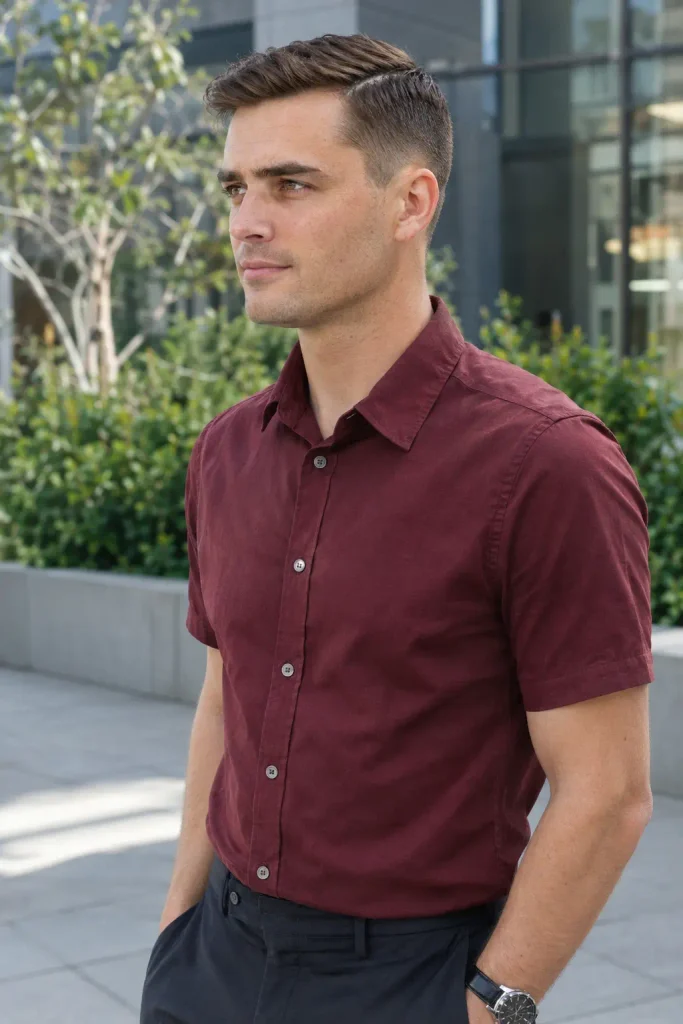
12. Messy Textured Crew Cut
The messy textured crew cut deliberately introduces an effortless finish while keeping the haircut structurally neat. The top is cut into uneven textured sections that can be pushed in slightly different directions, creating natural movement rather than a perfectly uniform surface. The sides remain short and controlled, which prevents the relaxed texture from looking unkempt. A small amount of matte clay rubbed through the fingertips can emphasize individual strands without producing shine.
This style is a useful option for men who like short hair but dislike overly polished styling. Natural movement can be particularly attractive with thick or slightly wavy hair because the texture appears more organic. The barber should preserve enough variation in the top to prevent it from becoming flat. Despite its intentionally casual finish, the neckline, sideburns, and temple areas should remain clean to maintain the recognizable crew cut silhouette.
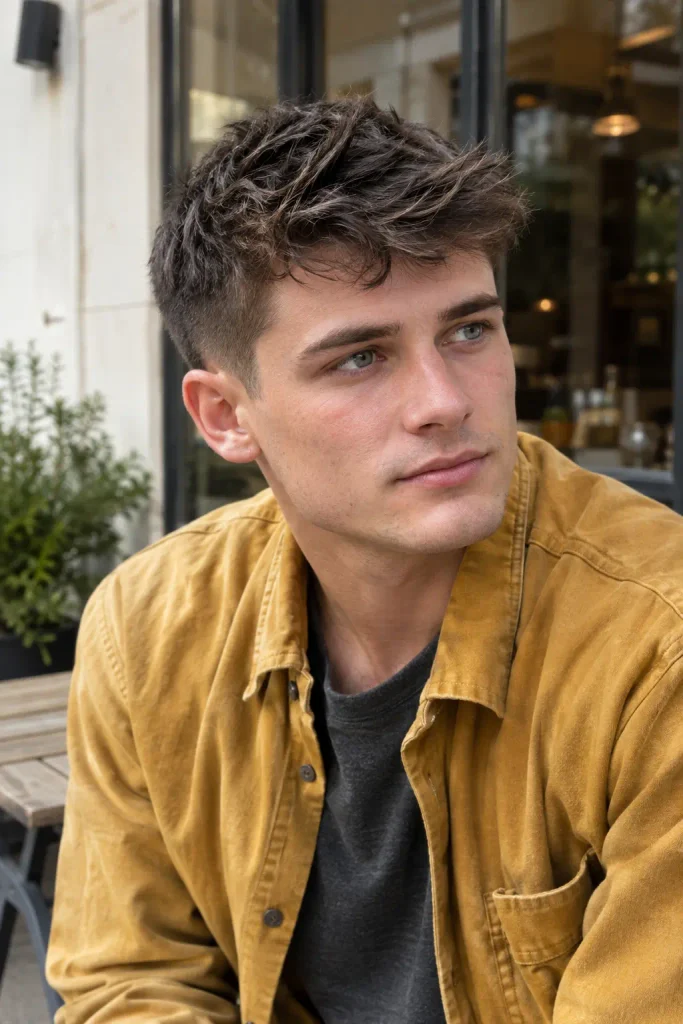
13. Crew Cut with Hard Part
A hard-part crew cut adds a precise shaved line to the side of the hairstyle, creating a stronger visual division between the top and sides. The remaining top is kept compact and controlled, while the sides can be tapered or faded depending on the desired level of contrast. The hard part introduces a modern barbering detail that makes the haircut look more deliberate. Because the line is highly visible, precision and symmetry are important to the overall result.
This variation is particularly suited to men who enjoy clearly defined hairstyles and crisp barber details. The top can be brushed toward the side or slightly upward, while the hard part provides a permanent guide for styling. A matte product usually works well because it maintains definition without making the hair appear greasy. Regular barber visits are useful because the shaved line becomes less distinct as the hair grows.
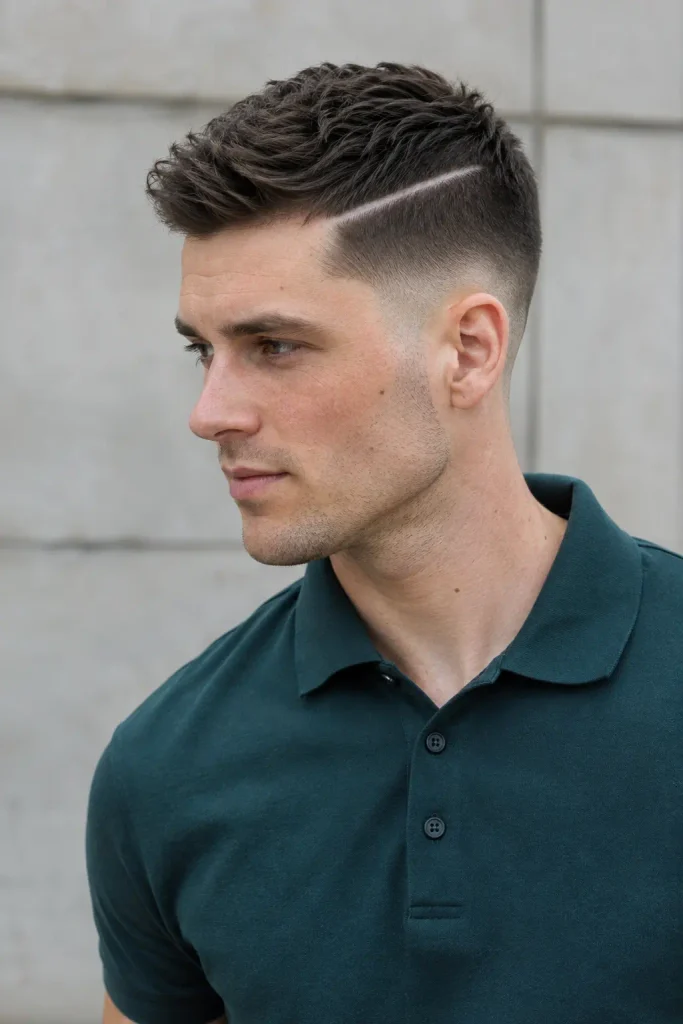
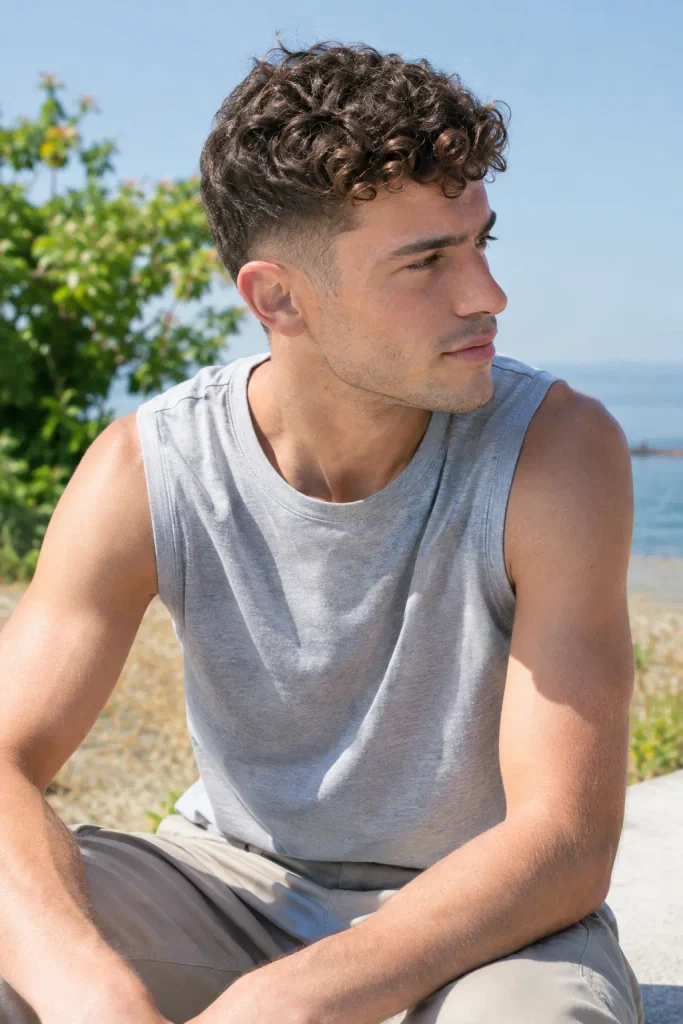
14. Curly Crew Cut
A curly crew cut adapts the classic short shape to naturally curly hair. The top is left slightly longer so the curls remain visible, while the sides are shortened to create a controlled outline. Rather than forcing the curls completely flat, the haircut allows their natural pattern to contribute texture and character. The result is compact but dimensional, with the curl pattern providing movement across the crown and top.
Curly hair benefits from careful length management because removing too much from the top can make the curls appear uneven or overly compressed. A skilled barber can use scissor techniques to preserve consistent curl formation while tapering the sides and neckline. Lightweight curl cream can enhance definition without creating stiffness. This crew cut is especially effective for men who want their natural texture to remain visible while maintaining a short, tidy silhouette.
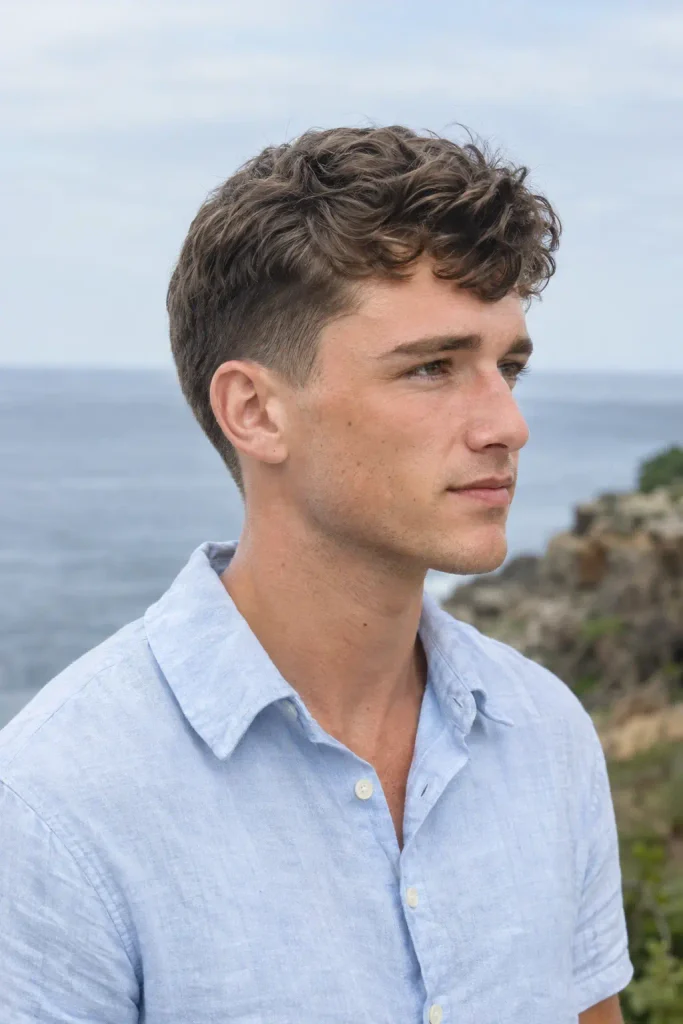
15. Wavy Crew Cut
A wavy crew cut uses natural wave patterns to create texture across the top while keeping the sides short and disciplined. The waves add subtle volume and movement without requiring the length associated with medium hairstyles. The barber can use scissors to follow the natural direction of the hair, creating a compact shape that feels effortless rather than overly sculpted. A lightweight styling cream can enhance the wave pattern while preserving natural softness.
This version can be especially effective for men whose hair tends to develop natural movement when cut short. Keeping the sides tapered or faded prevents the waves from spreading too far outward. The top should retain enough length to allow the wave pattern to remain visible, particularly around the front and crown. A natural matte finish usually complements this haircut better than a glossy pomade.
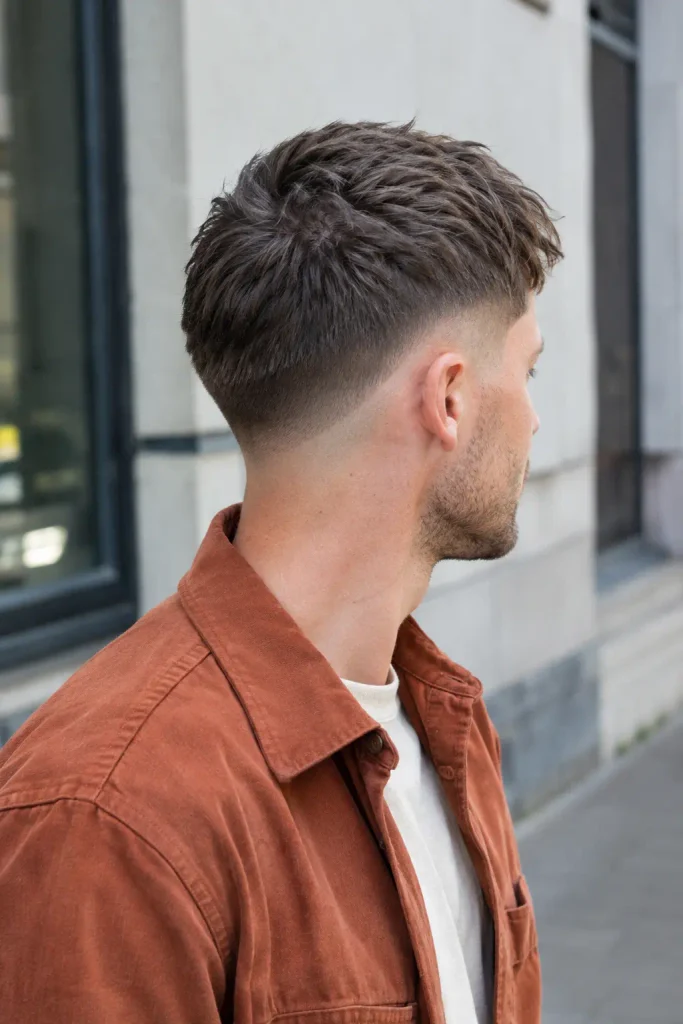
16. Crew Cut with Drop Fade
A drop fade follows the natural curve of the head, gradually descending behind the ears and toward the neckline. Combined with a crew cut, this creates a more sculpted silhouette than a standard taper while maintaining the haircut’s short and practical character. The top can remain textured and compact, allowing the curved fade to provide the primary visual detail. The drop shape can also make the back of the haircut appear more intentionally designed.
This variation works well for men who want a fade that follows the head rather than ending at a uniform horizontal level. The barber must blend the transition carefully around the occipital area and neckline to avoid harsh steps. The top can be styled forward or slightly upward depending on the hairline. A matte finish keeps the haircut contemporary and prevents the styling product from competing with the clean fade.
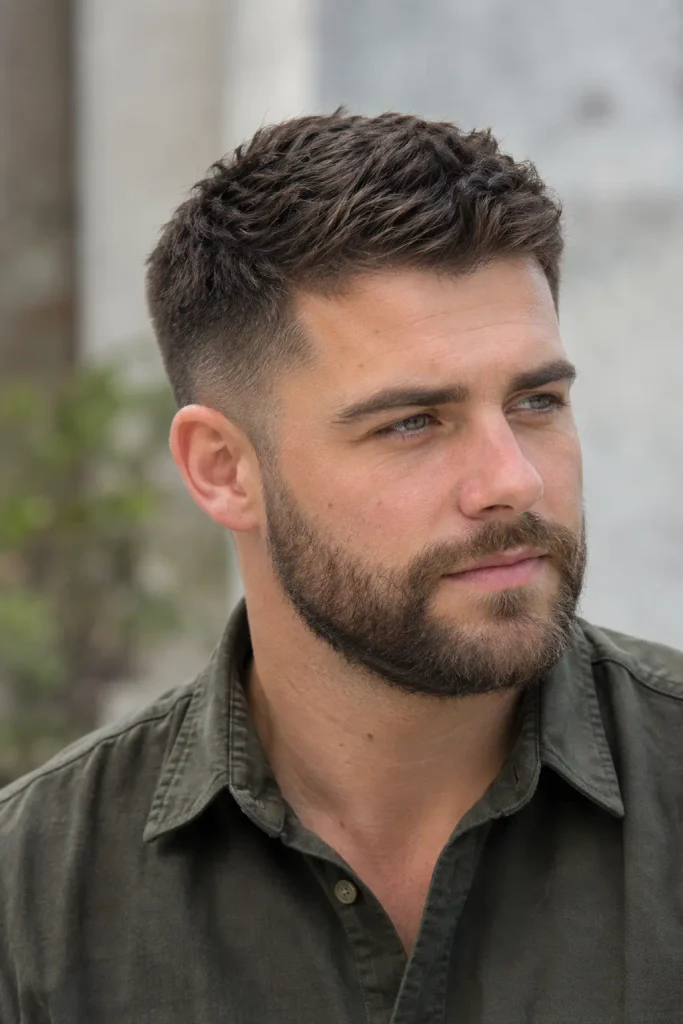
17. Crew Cut with Beard
A crew cut paired with a neatly maintained beard creates a balanced combination of short hair and facial hair. Keeping the hairstyle compact prevents the overall appearance from becoming visually heavy, while the beard adds definition around the jaw and lower face. The sides can be tapered or faded so the transition between the haircut and beard looks deliberate. This combination works particularly well when the beard is shaped cleanly rather than left excessively long.
The contrast between a short crew cut and facial hair also provides opportunities to adjust proportions. A fuller beard can complement a very short haircut, while light stubble can create a more understated appearance. The haircut itself should remain the visual foundation, with the beard serving as a supporting element. Clean temple transitions, a neat neckline, and controlled top texture help maintain a polished overall appearance.
18. Blonde Crew Cut
A blonde crew cut highlights the contrast between light-colored hair and the clean geometric shape of a short haircut. Depending on the natural blonde shade, the hairstyle can range from warm golden tones to cooler ash blonde. Keeping the top slightly textured helps individual strands remain visible, particularly in bright natural lighting. Short tapered sides create a smooth transition while allowing the lighter color to remain the main visual feature.
Blonde hair can sometimes appear less dense visually because individual strands reflect more light, so thoughtful layering and texturing can help create dimension. A matte styling product can provide definition without making the hair appear darker or greasy. The overall haircut remains practical and low maintenance, while the natural color gives the classic crew cut a fresh contemporary character.

19. Dark Crew Cut
A dark crew cut emphasizes the definition and compact geometry of the hairstyle because darker hair naturally creates stronger visual contrast against the skin. The top can be left slightly textured to prevent the short hair from appearing flat, while the sides are tapered or faded for a crisp outline. Deep brown or near-black natural hair can both work effectively with this haircut, depending on density and texture.
The key to maintaining dimension with very dark hair is thoughtful cutting rather than excessive styling. Subtle point-cutting can create visible separation between sections, while a clean temple and neckline provide definition. A matte product can emphasize texture without adding artificial shine. The result is a sharp but natural short haircut that retains the timeless character of a traditional crew cut.
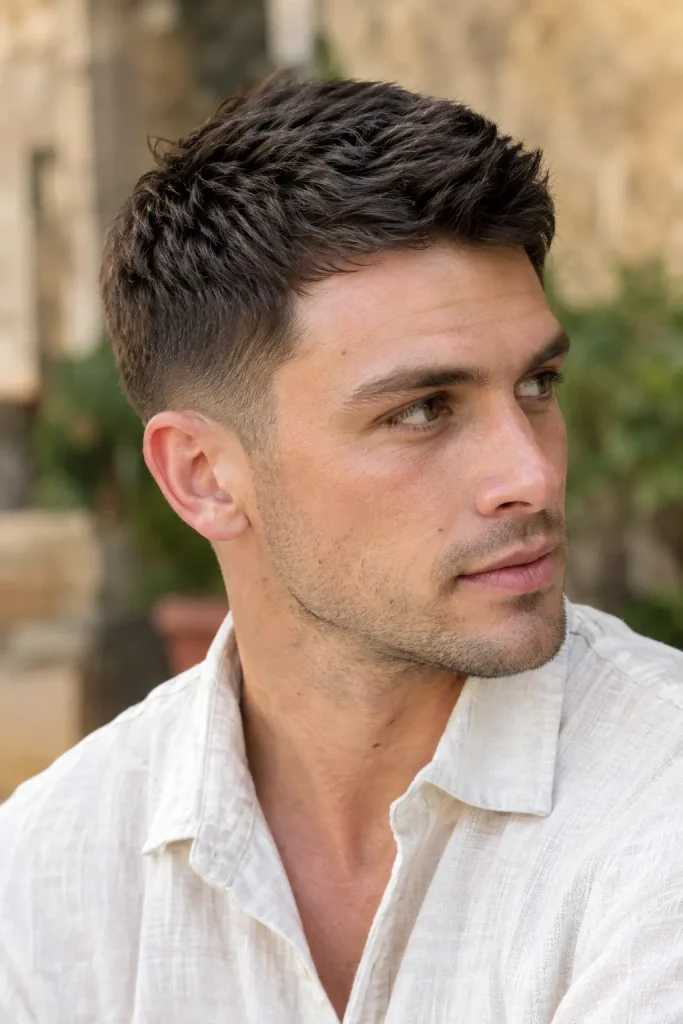
20. Crew Cut with Temple Fade
A temple fade focuses the tapering process around the temples while leaving more length through the sides and back. When combined with a crew cut, it creates a subtle modern detail without dramatically changing the traditional silhouette. The top remains short and controlled, while the temple area receives a precise fade that cleans the hairline around the forehead and sideburns.
This approach is useful for men who want a contemporary barbered appearance without committing to a full fade. The additional hair around the sides keeps the haircut relatively conservative, while the temple fade adds definition. It can work particularly well with straight and slightly wavy hair. Maintaining the temple area regularly keeps the haircut crisp, especially as the short fade begins to grow out.
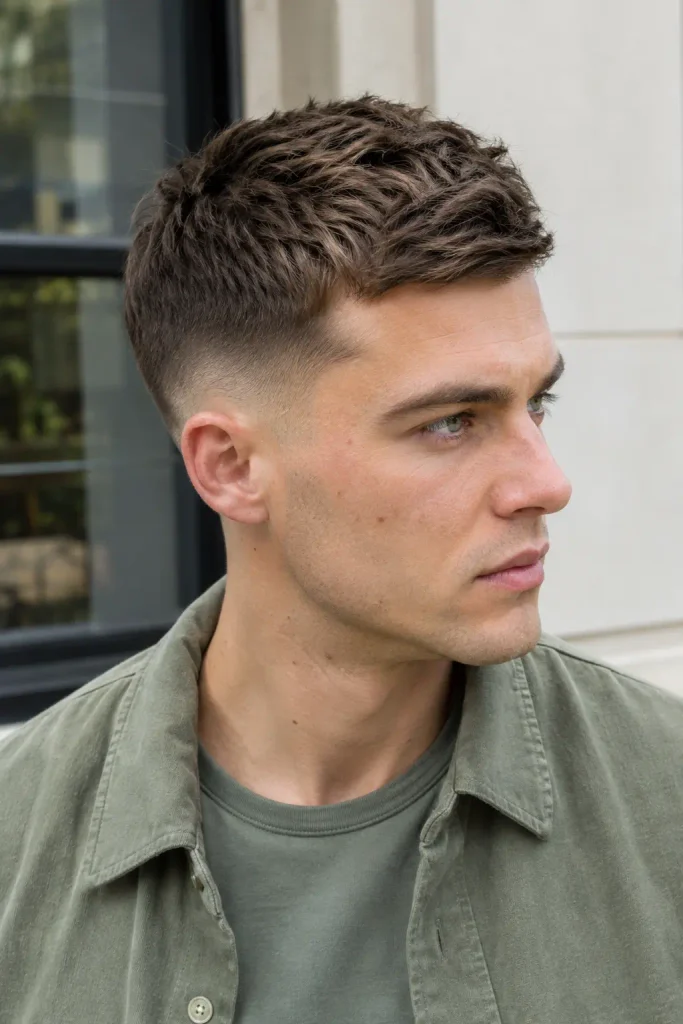
21. Crew Cut with Fringe
A crew cut with a subtle fringe allows the front section to fall slightly forward rather than being brushed upward or backward. The fringe remains short and controlled, preserving the compact nature of the haircut while adding a different visual direction. This can soften the forehead area and provide a more casual appearance. Texturing the front prevents the fringe from becoming a single heavy block of hair.
The sides can be tapered or faded according to preference, while the top should retain enough length to form the front section naturally. This variation can work particularly well with straight or slightly wavy hair. A small amount of matte paste can separate the fringe into individual pieces. The finished style should look naturally textured rather than heavily sculpted, making it suitable for relaxed everyday styling.

22. Crew Cut for Thick Hair
Thick hair can give a crew cut substantial natural density and structure. The main challenge is controlling excess weight without removing so much length that the top loses its recognizable shape. Strategic texturizing through the crown and upper sides can reduce bulk while preserving a full appearance. The sides can be tapered or faded to create a clean contrast with the dense top.
This variation is especially effective when the natural thickness of the hair is allowed to provide volume instead of being flattened with heavy styling products. A lightweight matte clay can separate the top and add definition while maintaining a natural finish. Regular trims help prevent the sides and crown from becoming too bulky. The result is a strong, structured crew cut that looks substantial without appearing overly long.
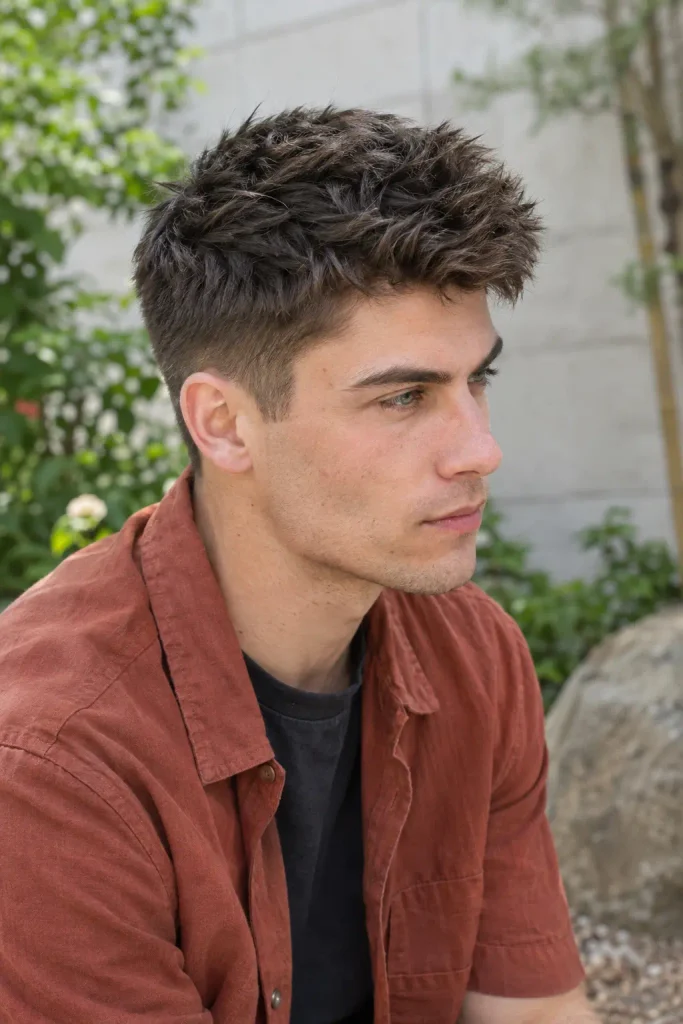
23. Crew Cut for Receding Hairline
A carefully tailored crew cut can work well with a receding hairline because the short structure avoids drawing unnecessary attention to differences in hair length. Keeping the top relatively compact and styling it in its natural direction can create a cohesive silhouette. Rather than attempting to conceal the hairline with excessive length, the haircut embraces a clean, controlled appearance. A subtle taper around the temples can further integrate the hairline with the sides.
The exact top length should depend on density and the shape of the hairline. Texturing can prevent the front from appearing too heavy, while a matte product can provide gentle control without creating separation that exposes the scalp excessively. A skilled barber can adapt the crew cut around the individual’s natural growth pattern. The result is a practical short haircut that prioritizes proportion, texture, and clean grooming.
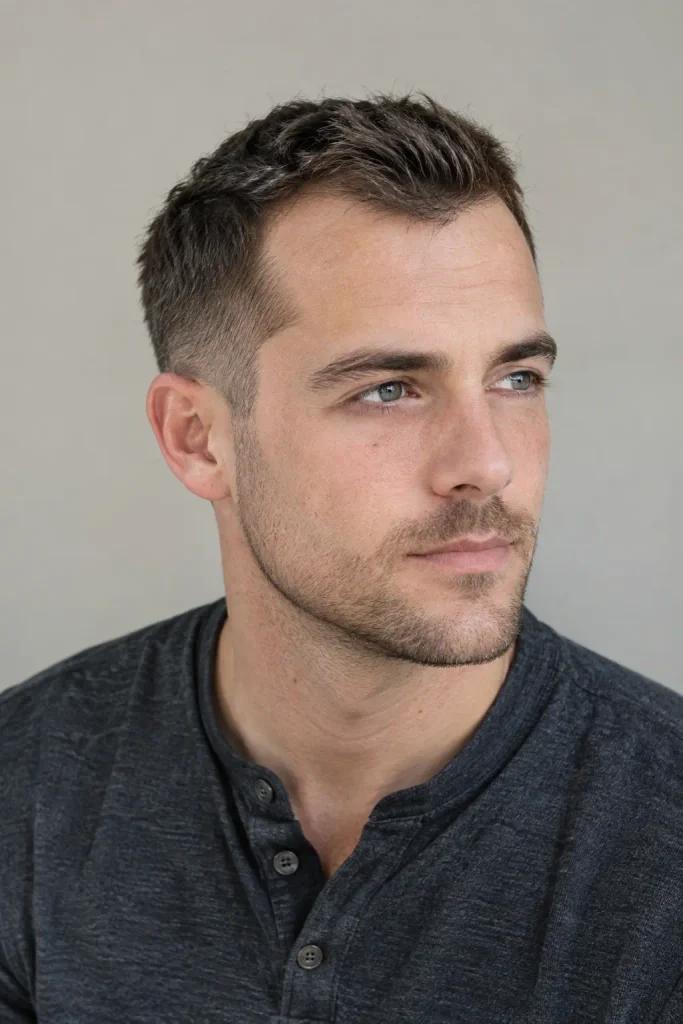
24. Crew Cut with Burst Fade
A burst fade crew cut creates a curved fade concentrated around the ears, leaving more length through the upper sides and back. This gives the classic crew cut a distinctive modern silhouette without removing as much hair from the entire side panel as a conventional high fade. The top remains compact and textured, while the curved fade provides visual detail around the ear and temple area.
This variation is particularly useful for men who want a more creative barbering detail while keeping the haircut short. The fade should follow the natural shape around the ear and blend smoothly into the surrounding hair. A textured top adds contrast and prevents the style from looking overly uniform. The neckline can be tapered or cleaned according to the desired finish, completing the contemporary shape.
25. Crew Cut with Clean Line-Up
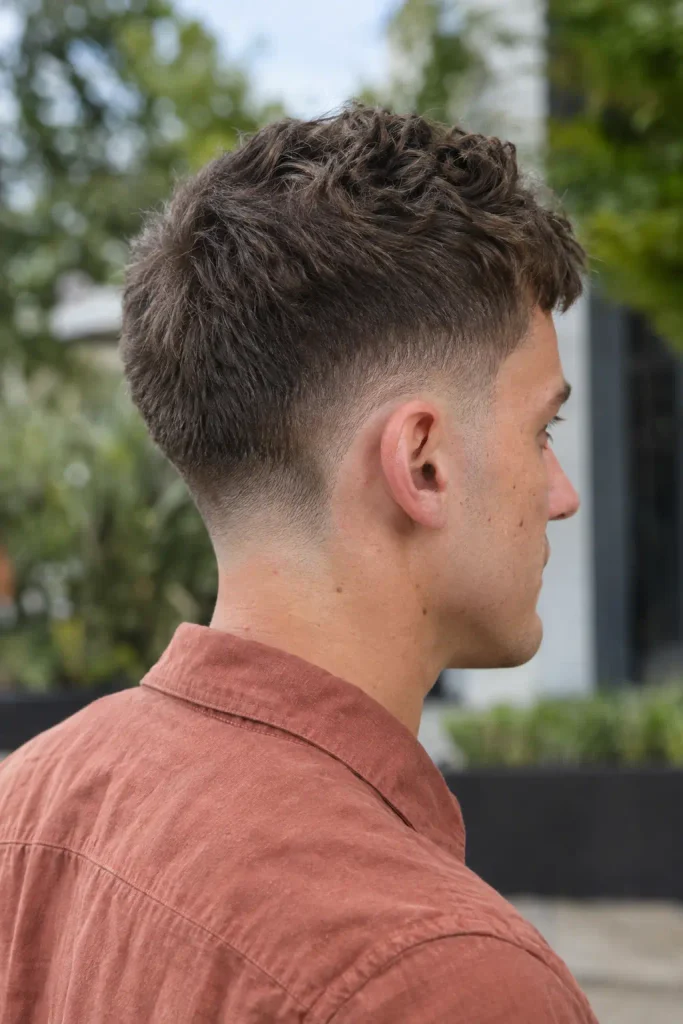
A clean line-up adds precise definition around the forehead, temples, and sideburns of a traditional crew cut. The top remains short and textured, while the front hairline is carefully shaped to create a crisp geometric appearance. This detail can make an otherwise simple crew cut look more deliberate and freshly barbered. The sides may be tapered or faded depending on how much contrast is desired.
The line-up should complement the individual’s natural hairline rather than creating an exaggerated artificial shape. A skilled barber can sharpen the existing contours while keeping the haircut believable. This style is especially effective for men with dense straight or coarse hair because the stronger hairline creates clear visual boundaries. Minimal styling is usually required once the haircut has been professionally shaped.

26. Modern Textured Crew Cut
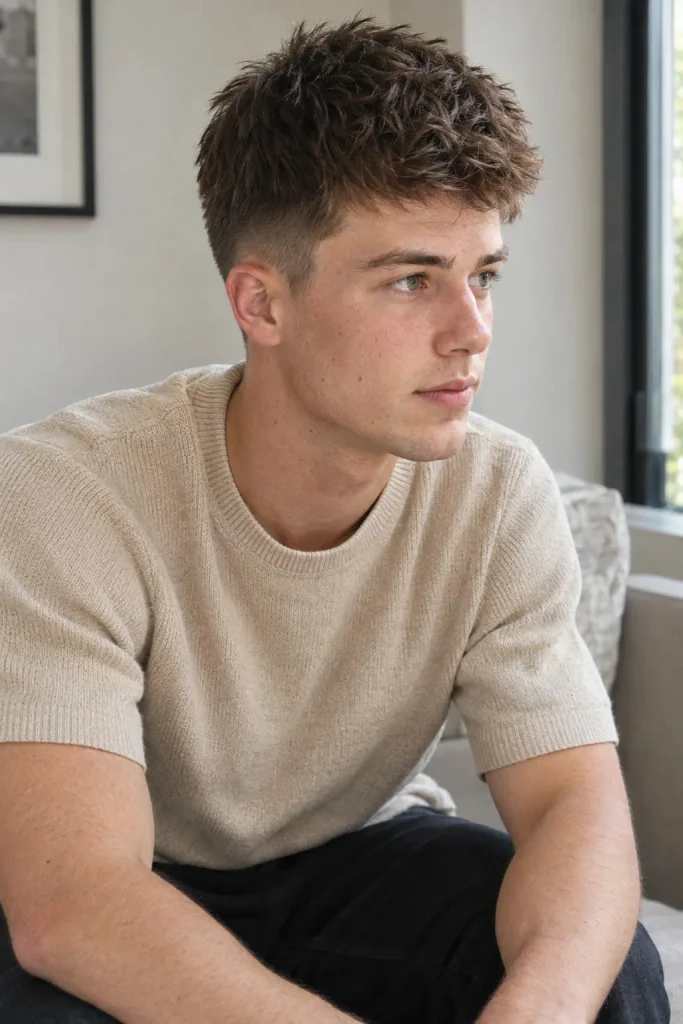
The modern textured crew cut combines the traditional proportions of a crew cut with contemporary scissor work and a more dimensional top. The hair is cut into varied lengths that create separation and movement, while the sides remain short enough to preserve the recognizable silhouette. Unlike a highly polished traditional version, the modern variation often has a relaxed matte finish and slightly irregular texture.
This haircut works across several hair types because the texture can be adjusted to suit natural density and movement. Straight hair can gain visual dimension through point-cutting, while slightly wavy hair can use its natural pattern to create additional movement. A lightweight matte paste is usually sufficient for styling. The overall goal is controlled texture rather than excessive volume, keeping the haircut clean, practical, and contemporary.
27. Classic Tapered Crew Cut
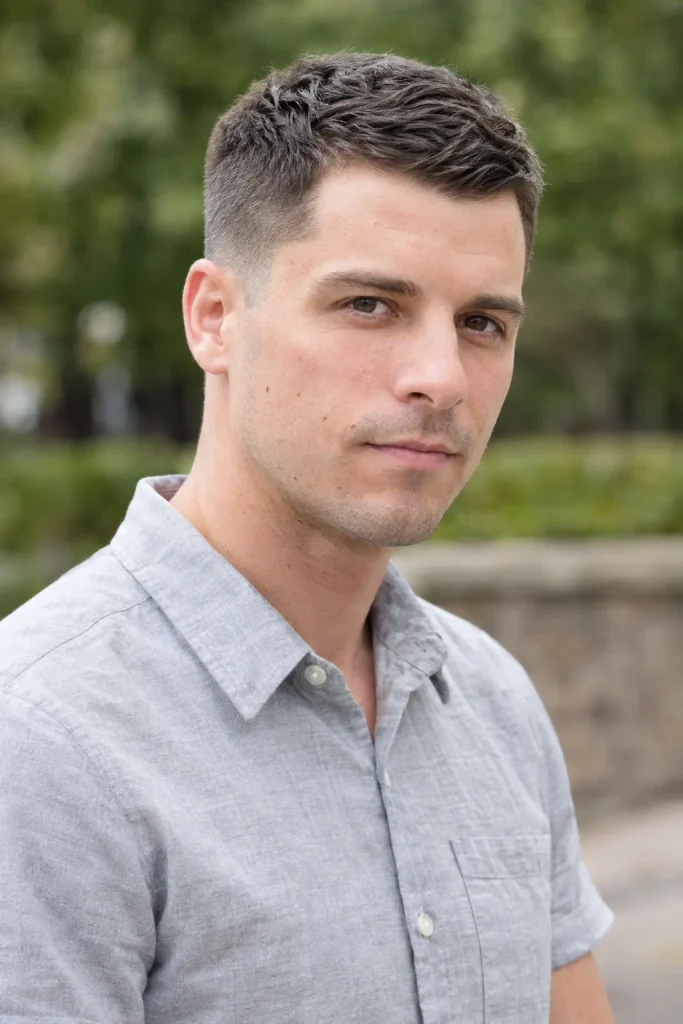
The classic tapered crew cut brings the article full circle with a refined interpretation of the traditional men’s haircut. The top is kept short but not excessively close, while the sides gradually become shorter toward the ears and neckline. There is no dramatic skin fade or hard part; instead, the haircut relies on balanced proportions and careful scissor work. This creates a timeless appearance that can remain appropriate across changing hairstyle trends.
Its versatility makes it easy to adapt to different hair textures and personal preferences. Straight hair can be combed neatly, slightly wavy hair can retain natural movement, and thicker hair can be texturized to reduce unnecessary weight. A small amount of matte styling cream can provide control without making the haircut look overly groomed. Regular trims around the ears, neckline, and sideburns preserve the clean silhouette.
Conclusion
Crew cut haircuts remain popular because they combine short hair, clean proportions, practical maintenance, and timeless men’s grooming in a single adaptable style. The difference between individual versions often comes down to the details: a low or high fade, traditional taper, textured top, side part, hard part, curly texture, natural wave, or carefully shaped hairline. These small changes can completely alter the character of the haircut while keeping the recognizable crew cut foundation.
When choosing a crew cut, consider your hair texture, density, natural hairline, face shape, preferred maintenance level, and personal style. A traditional tapered crew cut offers a conservative finish, while textured tops and modern fades create a more contemporary appearance. Working with a skilled barber also allows the length and transition to be customized to your natural hair growth pattern, resulting in a clean haircut that remains easy to maintain.