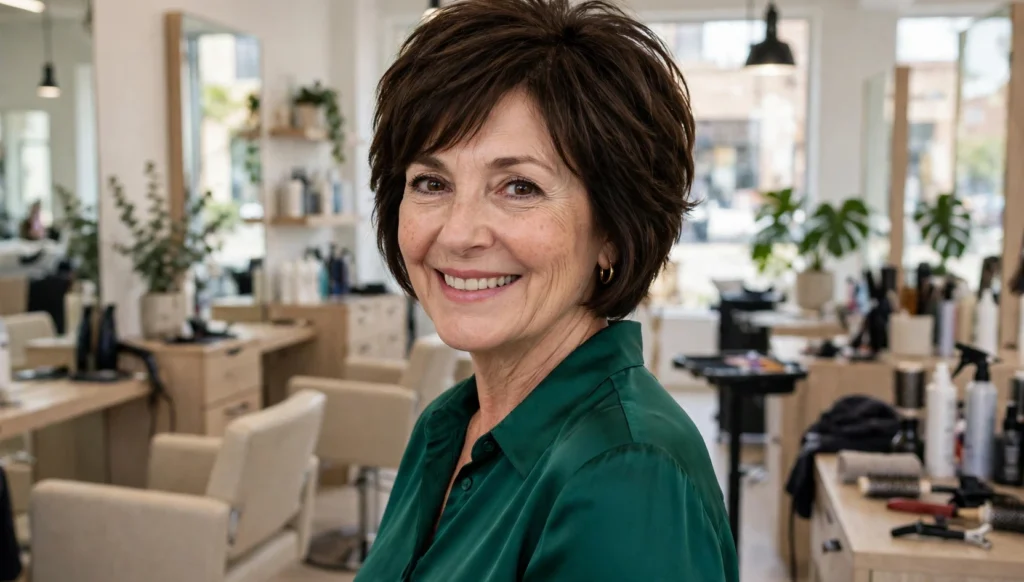

Fine hair and pixie cuts are a perfect match — short layers create lift, texture, and the illusion of thickness. These 27 pixie haircuts for fine hair are all about adding gorgeous volume, so your hair looks fuller from every angle.
1. Textured Pixie for Fine Hair
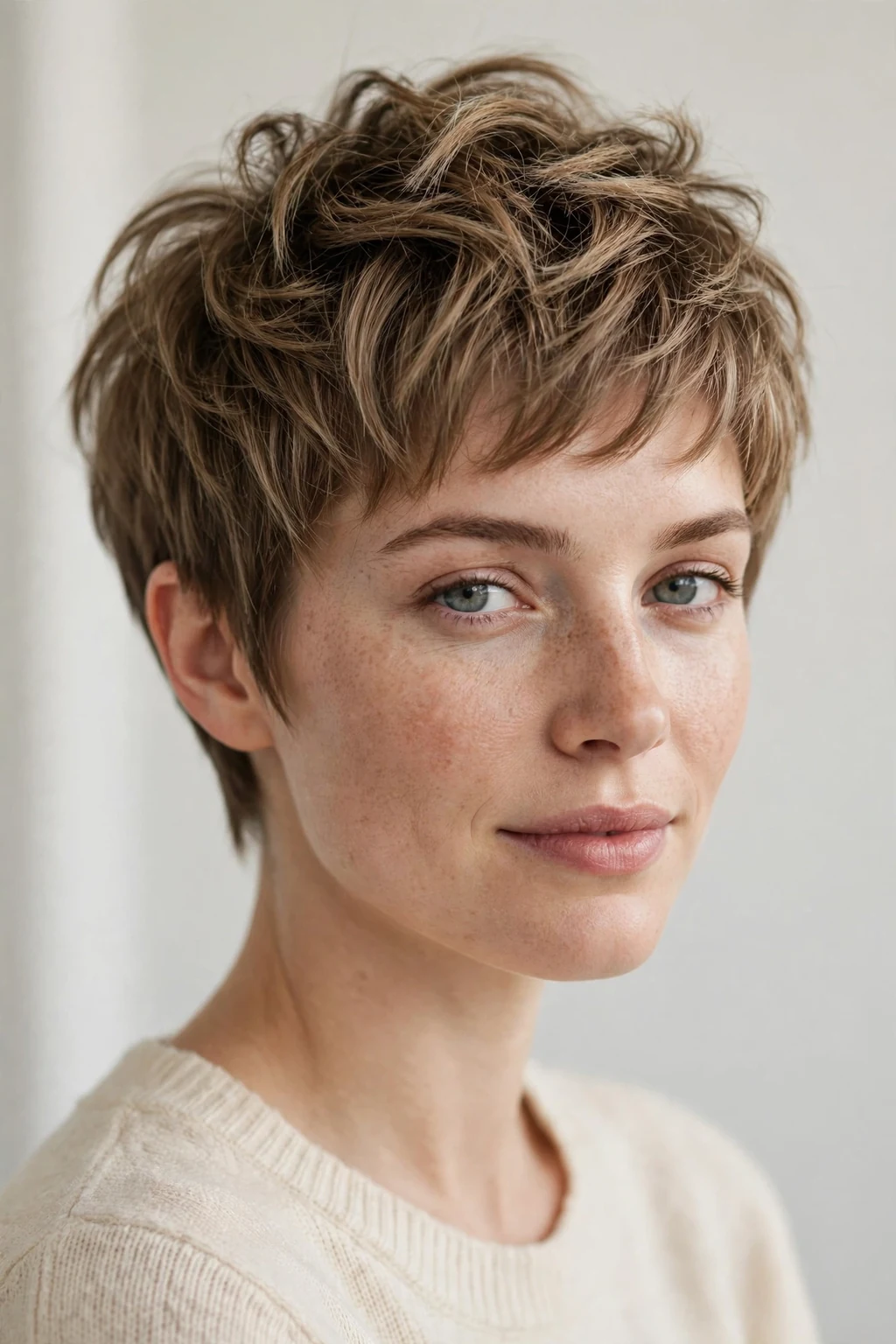
Texture is the single most powerful tool for making fine hair look thicker, and the textured pixie puts it to work everywhere: a pixie cut with piece-y, point-cut layers throughout that separate into defined bits rather than falling in one flat sheet. The texture creates shadows and highlights across the hair's surface, and that visual complexity is what the eye reads as fullness. Each separated piece catches light differently, multiplying the appearance of density in a way that smooth, one-length fine hair never can.
This cut suits every face shape because the texture can be directed wherever it flatters most — forward for high foreheads, up for round faces, to the side for asymmetry. It works on straight to wavy fine hair; very curly fine hair needs a curl-specialist approach. Ask your stylist specifically for point-cutting and texturizing shears rather than blunt cutting, and keep the layers interior rather than just at the ends. To style, scrunch a pea-sized amount of matte texturizing paste through dry hair, pinching small sections to emphasize separation. A root-lifting powder at the crown adds extra height. Avoid heavy oils and serums that collapse texture. Trims every four to six weeks keep the piece-y edges fresh. Choose the textured pixie when your fine hair falls flat by noon — this cut builds in the body that products alone cannot sustain.
2. Layered Pixie with Volume
The layered pixie with volume uses architecture to create fullness: shorter layers cut underneath to act as scaffolding, supporting longer pieces on top that then appear dramatically thicker. It is the haircut equivalent of a well-constructed garment — the structure is hidden, but the effect is unmistakable. The crown layers are kept just long enough to stand away from the scalp, creating lift and body exactly where fine hair needs it most, while the overall silhouette stays soft and wearable.
Round and square faces benefit from the crown height, which elongates, while the layered fullness adds flattering width to long faces. This is the workhorse pixie for genuinely fine, limp hair that resists styling — the cut does the heavy lifting so your morning routine does not have to. To style, apply a volumizing mousse to damp roots and blow-dry the crown upward with a small round brush, lifting each section straight up from the scalp. A light backcomb at the crown, smoothed over, adds lasting height. Finish with a flexible-hold spray rather than anything heavy. Trims every five weeks maintain the interior scaffolding. Choose this pixie when you want reliable, built-in volume — it is the most dependable path to fine hair that looks full all day.
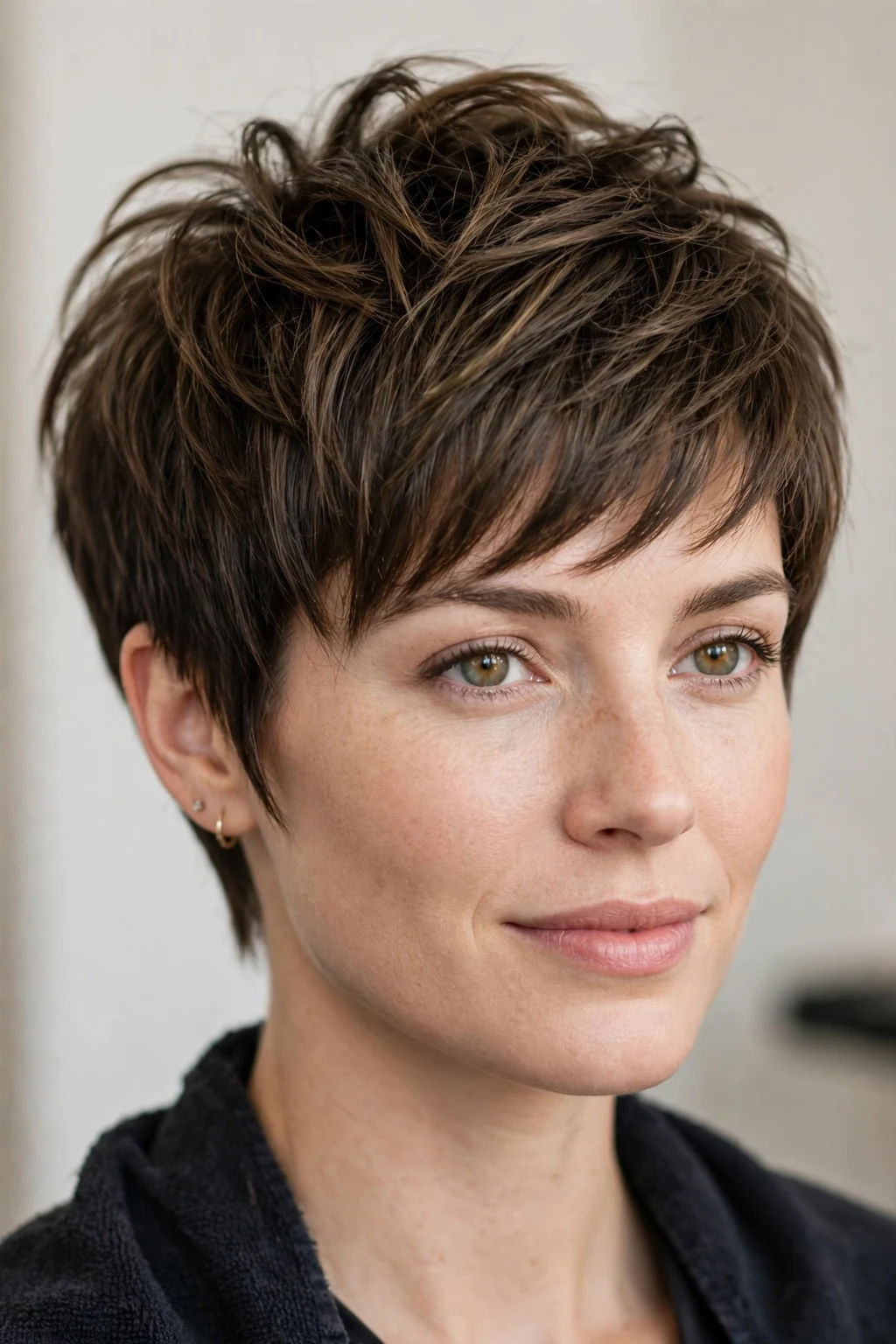
3. Pixie with Long Top Layers
Keeping length on top while the sides and back stay short is one of the smartest strategies for fine hair: longer pieces always read as thicker than cropped ones, and the contrast between the neat sides and the fuller top creates beautiful dimension. The pixie with long top layers gives you the best of both worlds — the ease and edge of a pixie with enough length up top to style in multiple ways and enough visual weight to look abundant. The top layers are cut with texture to encourage separation and movement.
This cut is wonderfully versatile for oval, round, and heart-shaped faces, since the longer top can be directed to flatter any feature — swept across for asymmetry, tousled up for height, or smoothed for polish. It is ideal for fine hair that is long enough to show scalp when cut too short; the preserved length protects coverage. To style, work a texturizing cream through the top and direct it where you want it: side-swept for classic elegance, piece-y and forward for modern edge, or lifted at the roots for volume. A flat iron can add bends for extra dimension. The sides need tidying every four weeks; the top can go six. Choose the long-top pixie when you want options — it is the most styling-flexible pixie for fine hair.
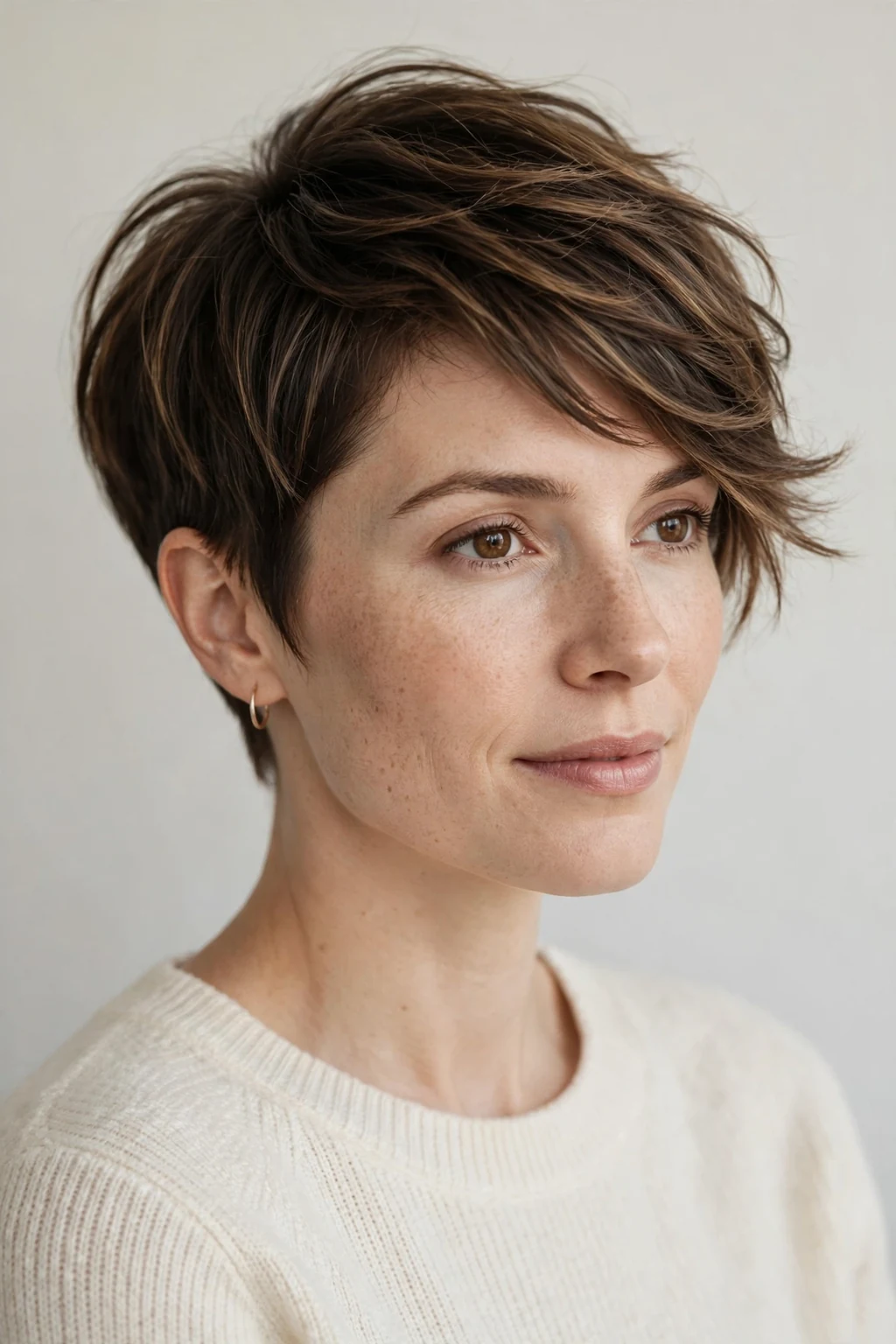
4. Choppy Pixie for Thin Hair
Choppy ends are nothing short of miraculous for thin hair: jagged, point-cut texture that breaks up the hair's surface so light hits it unevenly, creating instant visual depth and the powerful illusion of thickness. Where blunt ends on thin hair expose sparseness, choppy ends disguise it — the eye cannot find a thin spot in all that deliberate texture. This is the most transformative cutting technique for truly thin hair, delivering a visible difference the moment you leave the salon.
The shattered texture suits oval, heart, and diamond faces beautifully, and the edgy finish skews youthful and modern. It works on straight to wavy fine hair; the choppiness needs smooth-ish texture to read as intentional. Be honest with your stylist about density — the choppiness should concentrate through the mid-lengths and ends rather than at the roots, where thinning would expose scalp. To style, pinch matte paste through dry ends to emphasize the jagged separation, and use a flat iron to add a few kinked bends. Avoid over-conditioning the ends, which softens the chop. Trims every five weeks keep the edges shattered. Choose the choppy pixie when your thin hair needs a miracle — this is the cut most likely to make strangers ask if your hair has always been this thick.
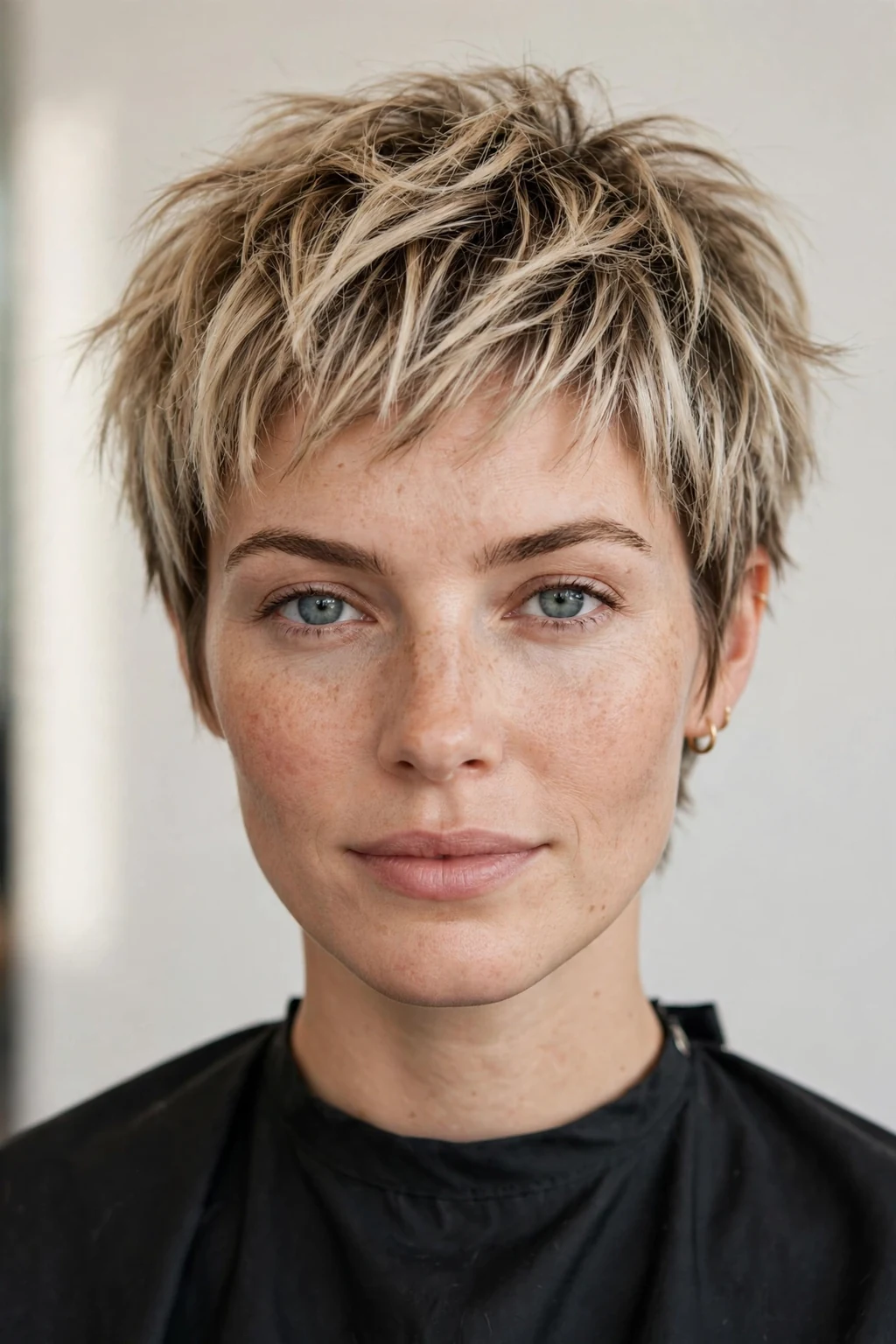
5. Pixie with Side-Swept Bangs
Side-swept bangs are fine hair's secret weapon: a diagonal fringe swept across the forehead that instantly creates the impression of fullness and movement. The diagonal line draws the eye across rather than down, and the overlapping layers of the sweep stack visually to look denser than they are. Blended into a pixie's top layers, the bangs become part of a seamless, voluminous whole — the fringe and the cut working together to multiply the appearance of hair.
The sweep flatters nearly every face shape, softening square jaws, balancing long faces, and adding asymmetry that slims round faces. It is especially kind to high foreheads. For fine hair, the bangs should be cut with texture rather than blunt — wispy, piece-y ends look fuller than a solid line that reveals sparseness. To style, blow-dry the bangs across with a small round brush for smoothness and direction, or let them air-dry with a touch of cream for a softer finish. A root-lift spray at the bang roots prevents them from falling flat. Bang trims every three weeks keep the sweep perfect. Choose side-swept bangs when you want maximum impact from minimum hair — the diagonal fringe is the hardest-working element in short hairdressing.
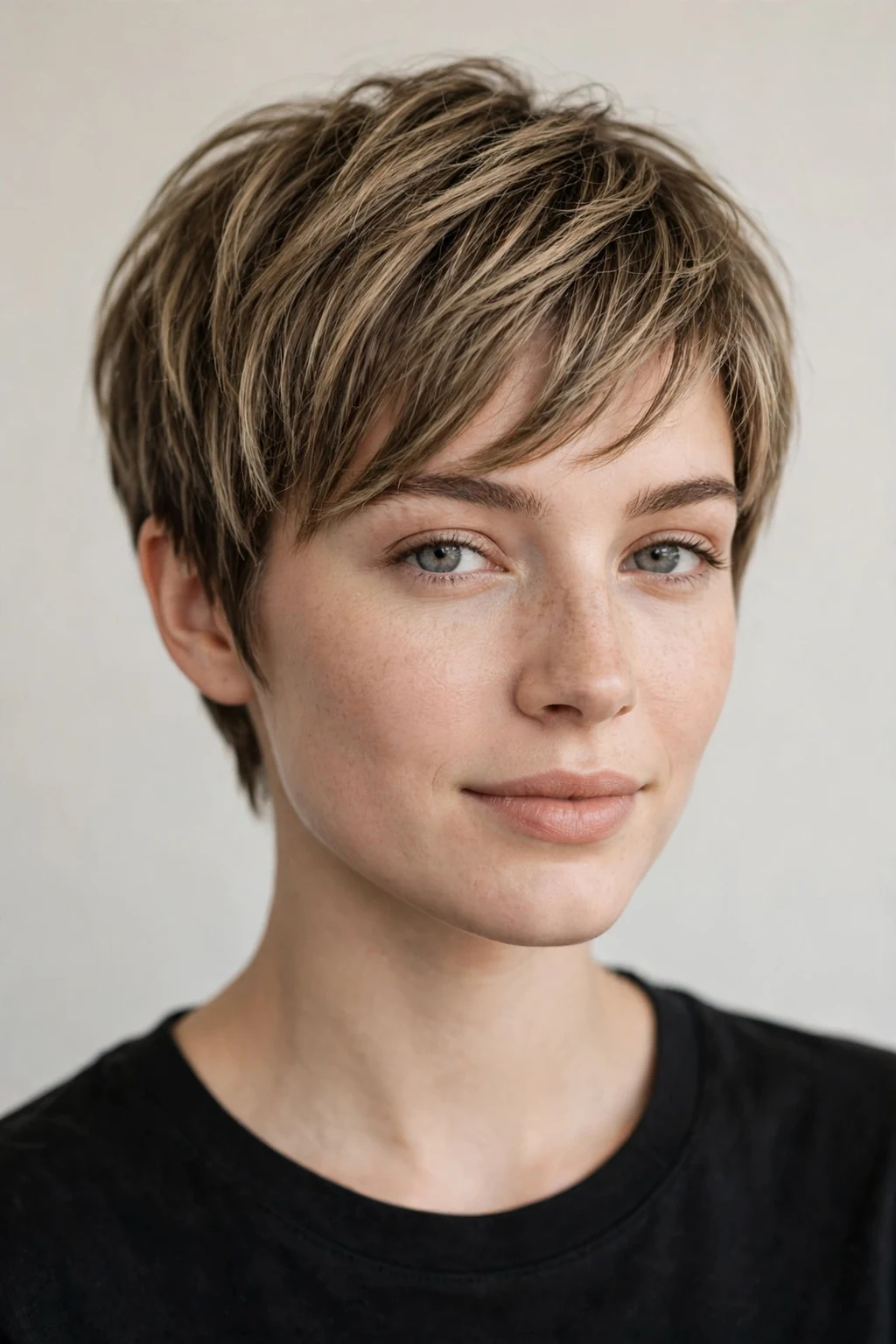
6. Tousled Pixie
The tousled pixie turns fine hair's natural lightness into an advantage: deliberately undone texture that creates volume out of thin air. Because fine hair is light, it tousles beautifully — the piece-y, separated finish that heavier hair struggles to achieve comes naturally here. The cut has enough layering to support the tousled look, with ends that flick and separate rather than lying flat, giving the impression of abundant, touchable hair.
This is the lowest-effort high-reward pixie for fine hair: the messier the finish, the thicker it looks, which means bad hair days essentially do not exist. It suits every face shape and skews youthful and carefree. To style, mist salt spray or texture spray through damp hair, scrunch upward, and air-dry or diffuse — then deliberately mess it up with your fingers. A matte paste on dry hair adds lasting separation. The golden rule: never over-smooth a tousled pixie, since sleekness on fine hair reveals thinness. Dry shampoo on day two adds even more grit and volume. Trims every six weeks. Choose the tousled pixie when you want to stop fighting your fine hair — it is the cut that finally works with your texture instead of against it.

7. Pixie with Tapered Nape
The pixie with tapered nape uses contrast as a volumizing strategy: the back and sides are graduated down to a clean, close finish at the neckline, which pushes all the visual weight — and all the volume — up top where it counts. The eye compares the neat nape to the fuller crown and reads the crown as dramatically thicker by comparison. It is optical illusion as haircut, and it is remarkably effective on fine hair that needs every visual advantage.
The clean taper elongates the neck beautifully and gives the cut a tailored, bespoke quality that looks polished from every angle. It suits oval and heart-shaped faces especially well. The tapered nape requires a stylist skilled in clipper and scissor-over-comb work for a seamless graduation. To style, focus all effort on the crown: volumizing mousse at the roots, blow-dried upward with a round brush, and a light backcomb for lasting height. The nape needs nothing — its neatness is the point. Nape cleanups every three to four weeks keep the contrast sharp. Choose the tapered pixie when you want fine hair to look its absolute fullest — the contrast effect makes the top look twice as thick.
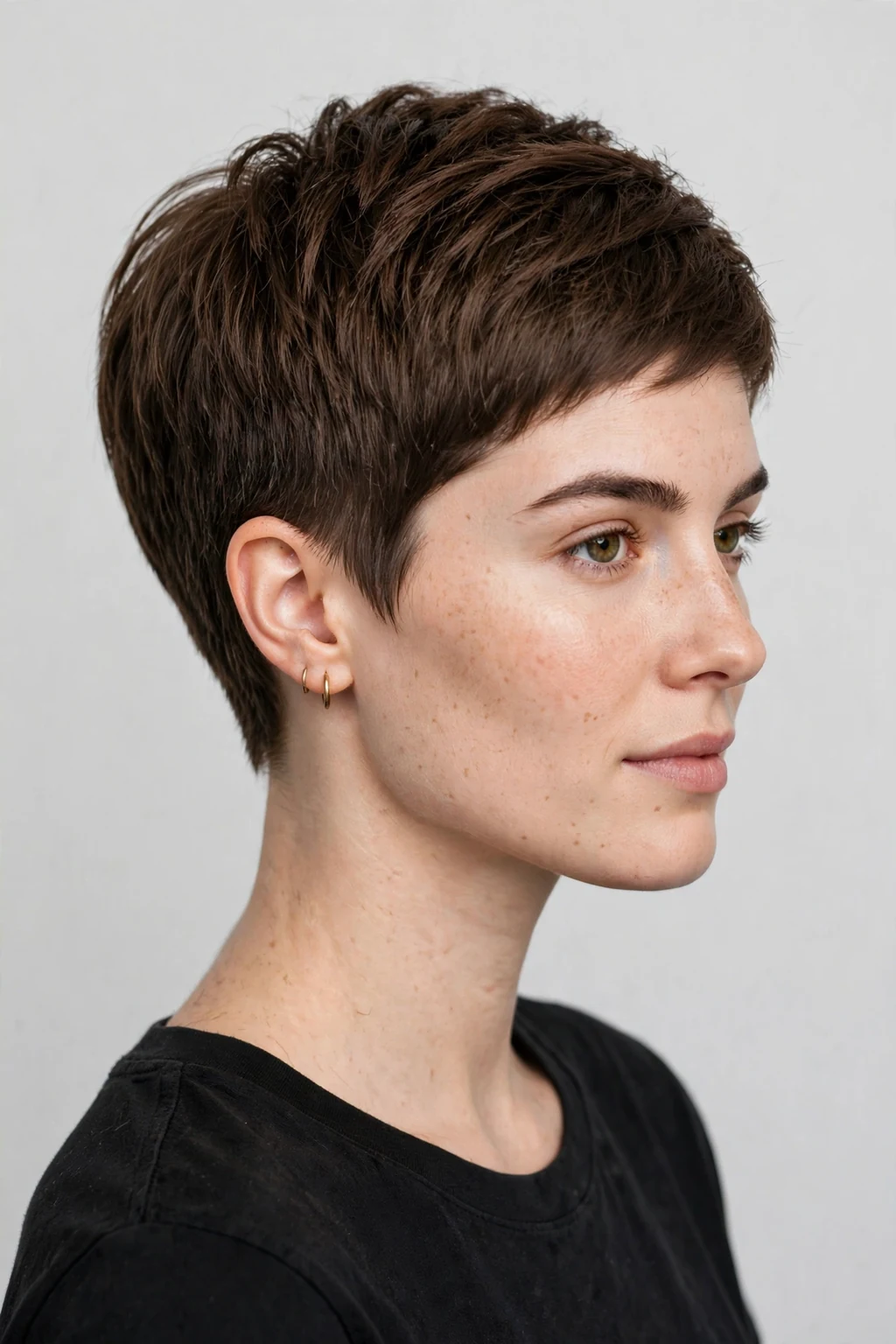
8. Voluminous Crown Pixie
The voluminous crown pixie is engineered for one purpose: maximum height and body on top. Extra length and concentrated layering through the crown create a full, lifted silhouette that stands away from the scalp with glorious fullness. This is the pixie for women whose fine hair has never held volume — the cut builds in the architecture that makes lift inevitable rather than aspirational. The crown becomes a beautiful dome of textured hair that draws the eye upward and outward.
Round faces are elongated by the crown height, petite women gain flattering proportion, and anyone with fine, flat hair gets the volume they have always wanted. The key is keeping the sides neat so all attention goes to the magnificent top. To style, apply root-lifting mousse or spray to damp crown hair and blow-dry upward with a round brush, over-directing each section for maximum lift. A gentle backcomb at the roots, smoothed over on top, creates lasting height; velcro rollers set while cooling lock it in. Finish with flexible-hold spray. Trims every five weeks maintain the crown architecture. Choose the voluminous crown pixie when you are done with flat hair forever — this cut delivers the big, beautiful hair of your dreams.
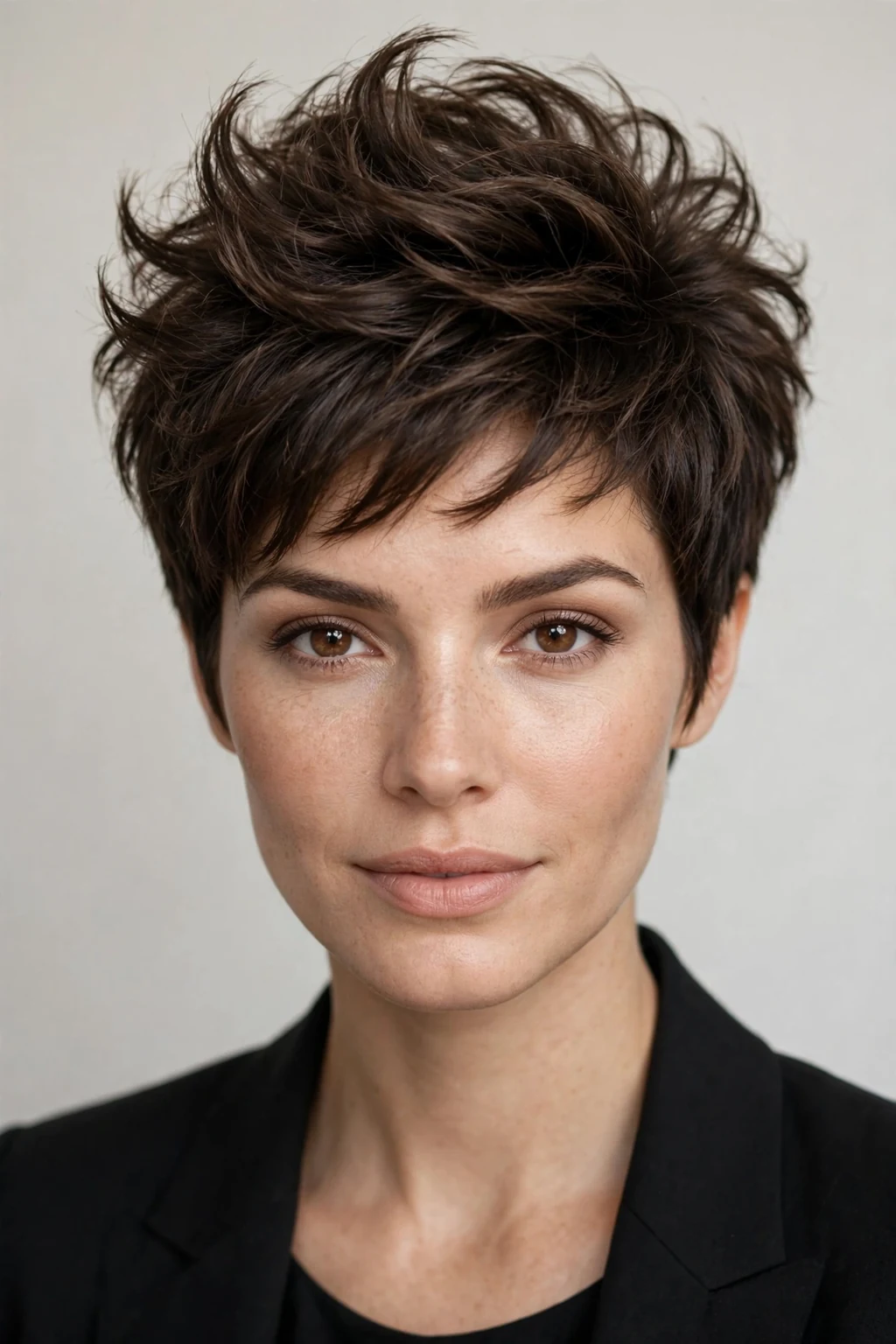
9. Pixie with Wispy Fringe
The pixie with wispy fringe keeps everything light and airy: a delicate, feathered fringe across the forehead that adds softness without weight. On fine hair, heavy blunt bangs can look sparse and stringy — but wispy fringe, with its separated, feathery ends, looks intentionally delicate and never exposes thinness. The wispiness blends softly into the pixie's top layers, creating a cohesive, feminine shape with a gentle, romantic feel.
This is the most low-maintenance fringe for fine hair: the separated texture means grow-out is graceful and trims can stretch to four weeks. It suits oval, long, and heart-shaped faces, softening features with its gentle presence. The airy fringe is also wonderful for mature women who want bangs without severity. To style, blow-dry the fringe forward with fingers or a small round brush for soft direction, or let it fall naturally for the most effortless finish. A tiny amount of lightweight cream tames flyaways without heaviness. Avoid heavy styling products on the fringe. Choose the wispy fringe when you want bangs that whisper rather than shout — delicate, flattering, and perfectly suited to fine hair's nature.
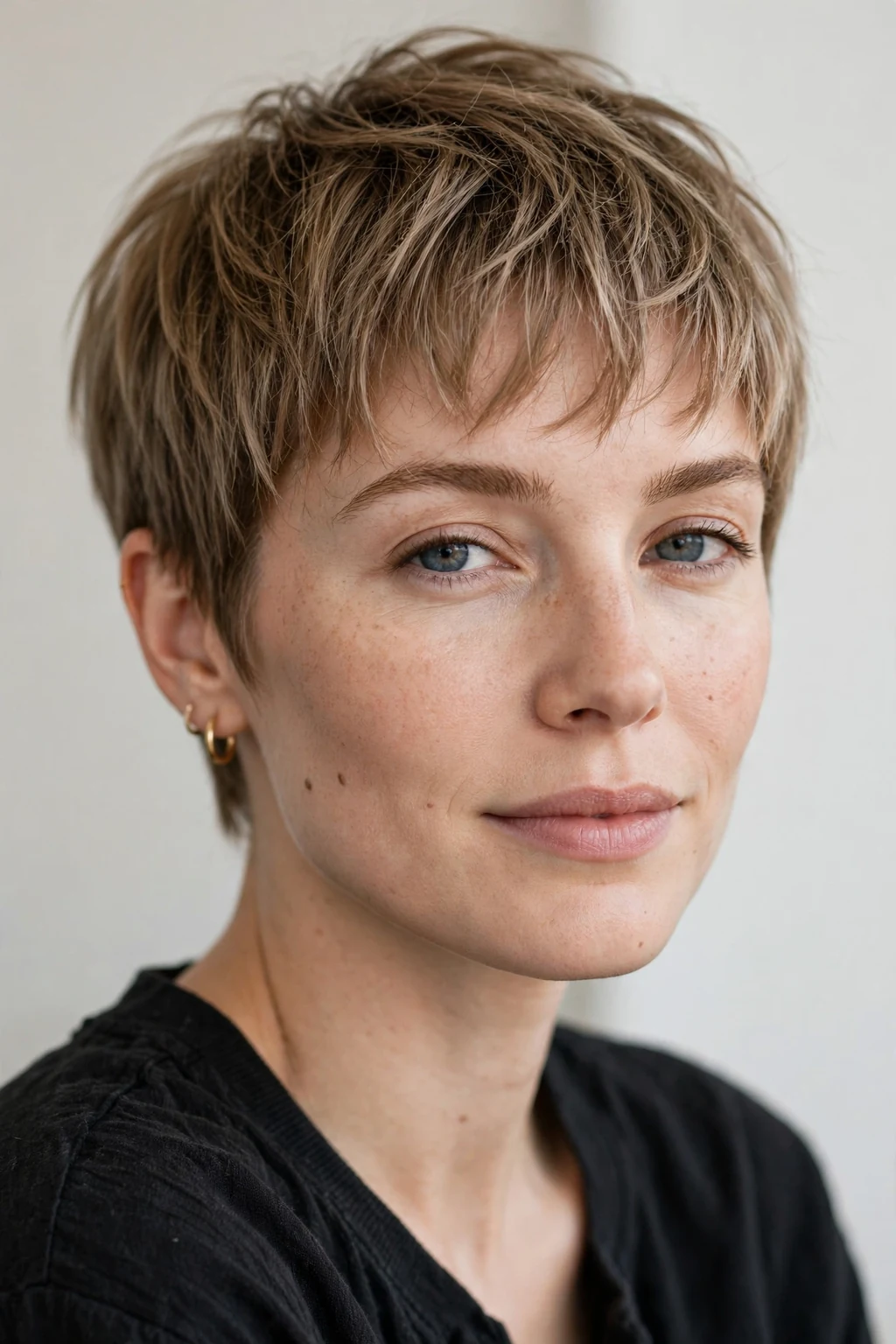
10. Short Stacked Pixie
The short stacked pixie builds volume through pure geometry: layers stacked at the back and nape, each slightly shorter than the one above, creating a beautifully rounded silhouette with built-in density. The stacking technique was literally designed to make fine hair look thicker — the graduated layers push the hair outward and upward, creating a full, inflated shape that reads as abundant from every angle. It is architecture you can wear.
The rounded back adds gorgeous fullness that fine hair rarely achieves naturally, and the shape is wonderfully flattering on long and narrow faces. Round faces should ensure enough crown height to balance the rounded back. This cut demands a skilled stylist — precise stacking is technical work. To style, blow-dry the back with a round brush, lifting each stacked layer for maximum roundness, and smooth the top for contrast. A volumizing mousse throughout supports the architecture. The shape holds for days with dry shampoo at the roots. Trims every five to six weeks keep the stack exact. Choose the short stacked pixie for engineered fullness — it is the closest thing to a volume guarantee in haircutting.
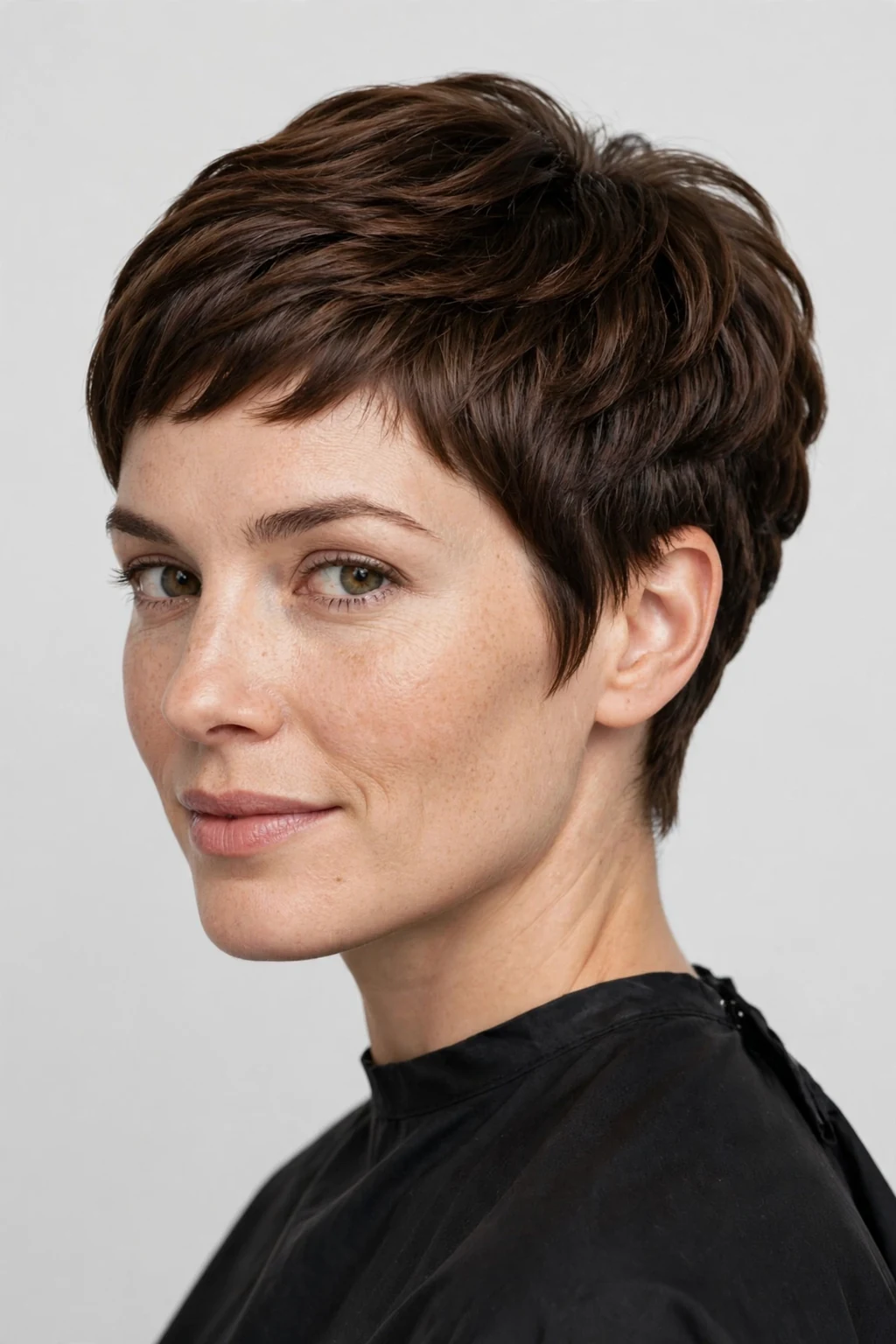
11. Pixie with Highlights for Depth
Strategic highlights are one of the easiest ways to fake fullness on fine hair, and this pixie is cut to maximize their effect: textured layers that give the color dimension to play across, with lightness concentrated where it creates the most illusion of depth. The highlights catch light differently on each layer, and that interplay of light and shadow is what the eye interprets as thickness. It is color contouring for hair — brightness where you want fullness, depth underneath for contrast.
Fine hair of any face shape benefits, and the brightness around the face is flattering at every age, illuminating the complexion. Babylights offer the most natural dimension; slightly bolder pieces make a stronger statement. The cut should have enough texture for the highlights to show — smooth, one-length pixies waste dimensional color. Maintain with purple shampoo to prevent brassiness and gloss treatments every six to eight weeks. Color appointments every eight to twelve weeks depending on technique. Choose the highlighted pixie when you want the fastest visual thickening available — great color on the right cut can genuinely make fine hair look twice as full.
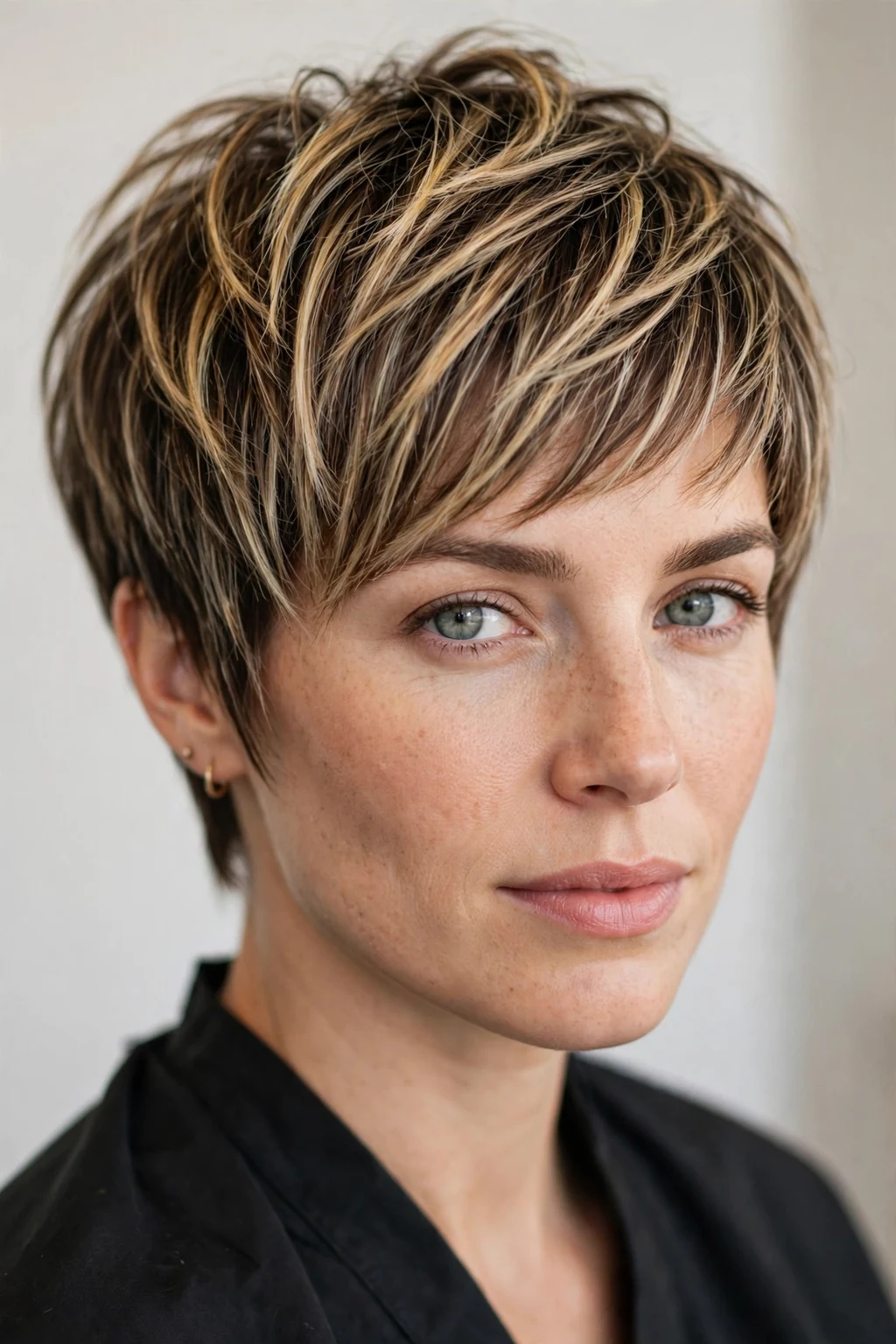
12. Asymmetrical Pixie
Asymmetry is a brilliant illusion for fine hair: a pixie cut dramatically longer on one side creates the impression of more hair through pure visual interest. The longer side carries weight and movement that draws the eye, while the shorter side keeps the cut modern and edgy. The uneven lengths make fine hair look deliberately styled and fashion-forward rather than simply thin — asymmetry reads as choice, and choice reads as confidence.
The diagonal line slims round and full faces beautifully, and the longer side offers face-framing that flatters every feature. It suits straight to wavy fine hair that holds the precise shape. This is a high-impact, high-maintenance pairing — the asymmetry must stay exact with trims every four weeks or it loses its power. To style, smooth the longer side with a flat iron for maximum drama or add texture for a softer take; keep the short side neat and close. A shine serum emphasizes the sleek contrast. Choose the asymmetrical pixie when you want fine hair with drama — it turns a limitation into a style statement.

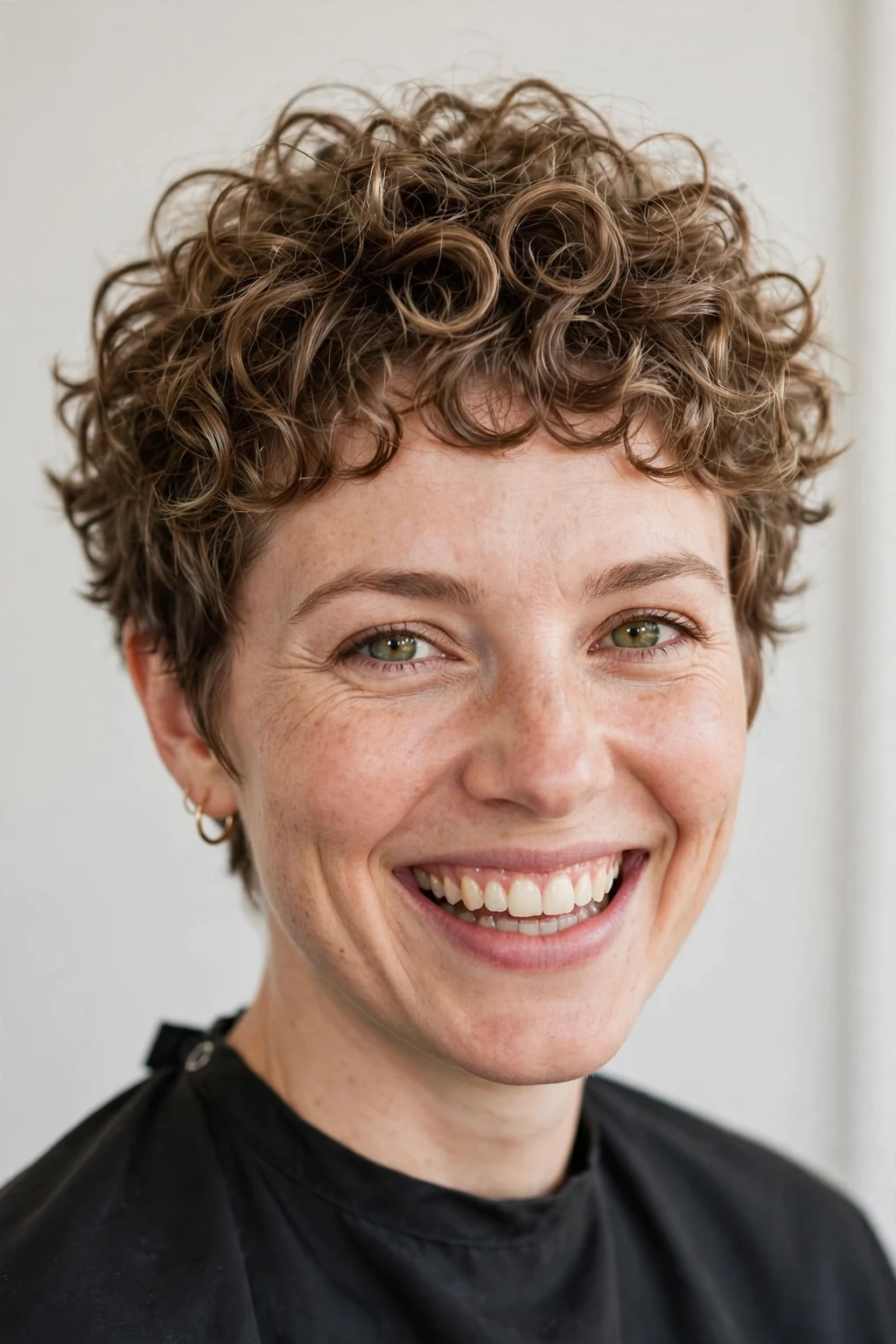
13. Curly Pixie for Fine Curls
Fine curls are a gift that many women do not recognize: each curl is a natural volume-builder, and the curly pixie lets them spring free with a beautifully rounded shape. Short layers encourage every curl to form perfectly, and the overall effect is bouncy, touchable, and far fuller-looking than straight fine hair could ever be. The key is cutting to the curl pattern — ideally dry, by a curl specialist — so each curl lands exactly where it flatters most.
The rounded curly shape flatters every face shape with its joyful volume. To keep fine curls defined rather than frizzy, apply a lightweight curl cream and a touch of gel to soaking wet hair, scrunch upward, and diffuse or air-dry without touching. Heavy butters and oils will weigh fine curls down — lightness is everything. Pineapple the hair at night and refresh with a water-based mist in the morning. Trims every eight to ten weeks with a curl specialist maintain the shape. Choose the curly pixie when you are ready to stop fighting your texture — fine curls in a pixie are naturally voluminous, and this cut finally lets them shine.
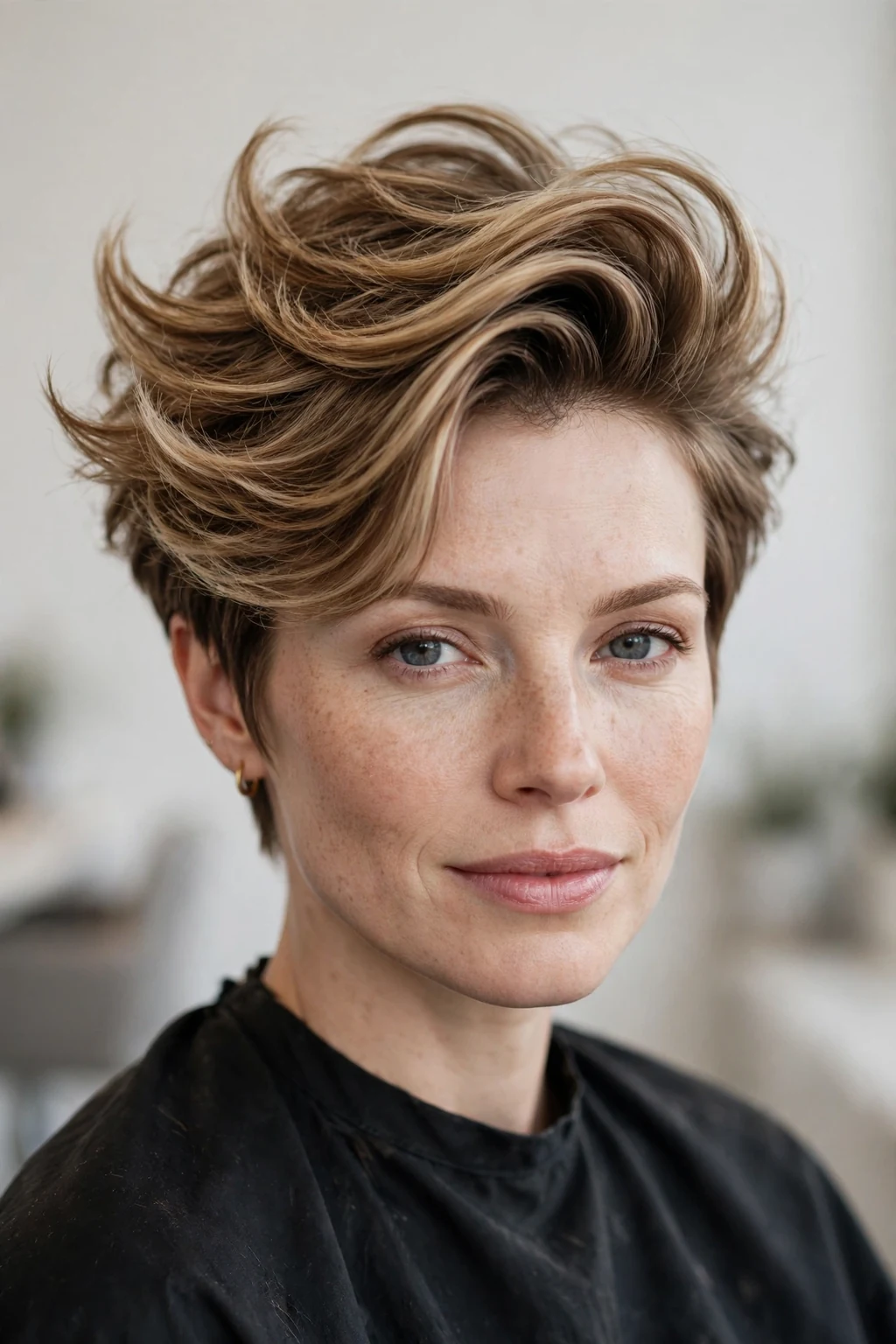
14. Pixie with Deep Side Part
The deep side part is the oldest volume trick in hairdressing, and on a fine-hair pixie it works like magic: sweeping the hair dramatically to one side creates instant lift at the roots, since hair directed against its natural fall stands taller. The deep part also creates gorgeous asymmetry and a flattering diagonal line across the forehead. It takes ten seconds and transforms the entire cut — the highest return on the smallest effort in all of hairstyling.
The deep sweep slims round faces, adds drama to oval faces, and the root lift benefits every fine-haired woman regardless of face shape. To create it, part damp hair deeply to one side and blow-dry the top across with a round brush for smoothness and direction, or simply flip your part and let the roots lift naturally. A root-lifting spray at the part makes the volume last all day. The part can be refreshed in seconds throughout the day. Pair with trims every five weeks. Choose the deep side part when you want instant volume with zero commitment — it is a styling choice, not a cut, which means you can wear it whenever you need that extra lift.
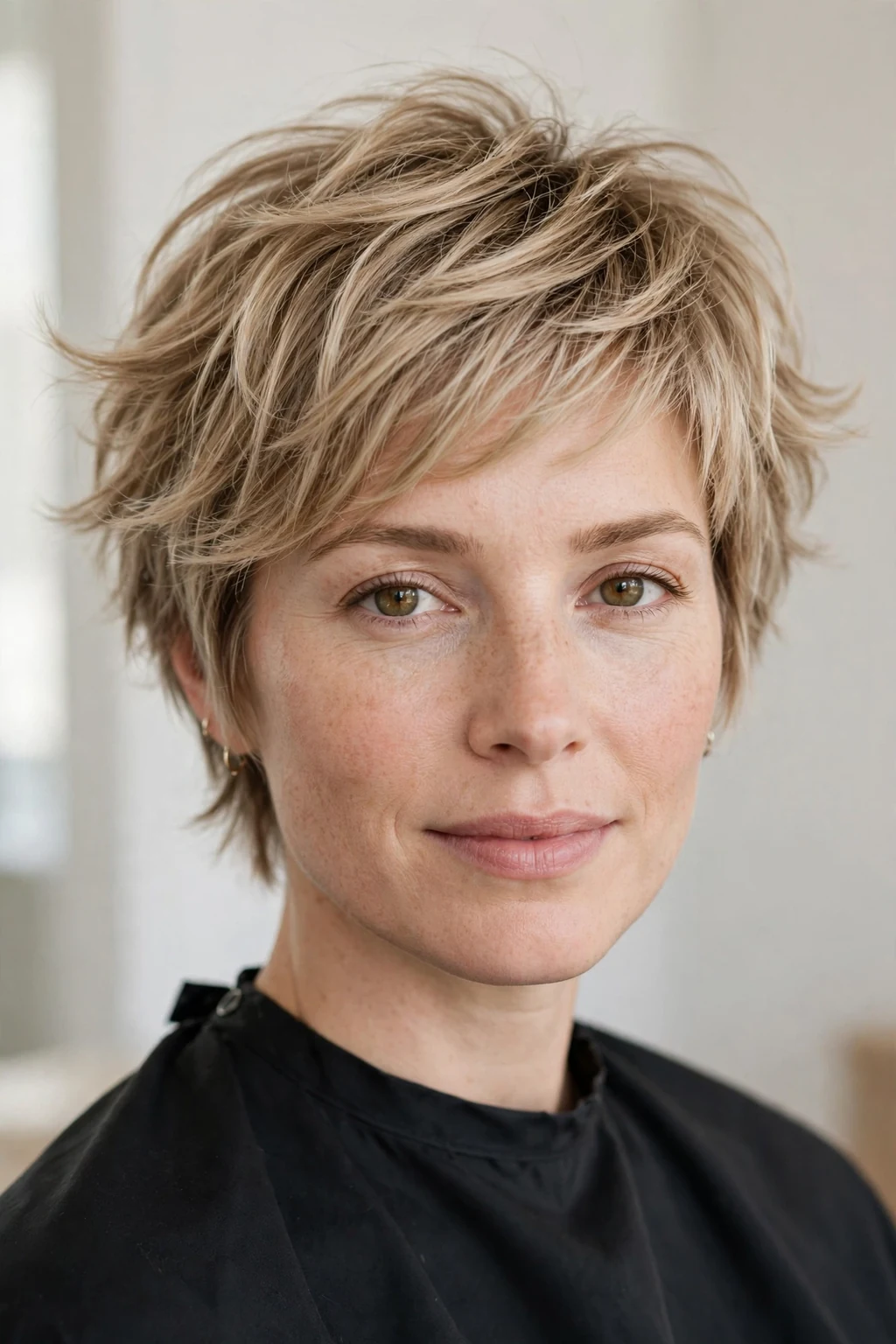
15. Feathered Pixie
The feathered pixie brings 1970s lightness to fine hair: soft, flicked-out layers with feathered ends that move like air. The feathering technique removes just enough weight for beautiful movement while keeping enough length to protect coverage — the perfect balance for thin hair that needs both lightness and the appearance of fullness. Each feathered piece floats over the next, creating a soft, romantic silhouette with gorgeous kinetic energy.
Feathering suits oval, heart, and long faces beautifully, with the flicked ends adding flattering width. It works on straight to wavy fine hair; the feathered finish needs relatively smooth texture to read clearly. To style, blow-dry with a small round brush, flicking the ends outward for the signature feathered curve, and set with a cool shot. A lightweight mousse gives the lift this style loves; avoid heavy creams that collapse the feathers. A flexible-hold spray maintains movement without stiffness. Trims every six weeks keep the feathered edges fresh. Choose the feathered pixie when you want fine hair with romance and motion — it is soft, feminine, and full of life.
16. Pixie with Undercut Volume
The pixie with undercut volume uses hidden engineering for fullness: the underneath sections are closely buzzed, removing weight and bulk from below, which allows the top layers to puff up with surprising, gravity-defying volume. The contrast is the trick — with the bottom compact and the top full, the top reads as dramatically thicker than it is. It is the most counterintuitive volume strategy here, and one of the most effective.
Thick-feeling fine hair (fine strands, lots of them) benefits most from the weight removal, but even sparse fine hair gains from the contrast effect. The undercut is hidden when the top falls naturally, so this works in conservative settings — only you know the secret. It suits oval and heart-shaped faces well. To style, focus all volume efforts on top: root-lifting mousse, upward blow-drying, and texture paste for piece-y fullness. The undercut needs buzzing every three to four weeks to stay clean. Growing it out involves an awkward phase, so commit consciously. Choose the undercut pixie when you want maximum volume with a hidden edge — it is clever, effective, and quietly rebellious.

17. Messy Textured Pixie
The messy textured pixie weaponizes imperfection for fine hair: tousled, separated pieces with deliberately undone texture that make thin hair look abundant. The philosophy is simple — perfectly smooth fine hair reveals every thin spot, but textured, piece-y hair hides them all in beautiful chaos. The cut has enough choppy layering to support the messy finish, with ends that separate naturally and a silhouette that improves the less you fuss over it.
This is the most forgiving pixie for fine hair as it grows out, since the undone texture disguises every awkward phase. It suits every face shape and skews youthful and carefree. The critical rule: texture products, never heavy ones. Work a matte paste or texturizing powder through dry hair, pinching and twisting for separation. Salt spray on damp hair before air-drying builds the perfect undone base. Dry shampoo is a styling product here, not just a cleanser — it adds the grit that makes fine hair hold texture. Trims every six weeks. Choose the messy textured pixie when you are tired of fighting for smoothness — controlled mess is fine hair's greatest ally.

18. Sleek Side Pixie
The sleek side pixie proves that polished does not have to mean flat: a pixie swept smoothly to one side with controlled, glossy finish and strategic volume at the roots. The sleekness gives it boardroom-ready refinement while the root lift and side sweep keep it from ever looking limp — it is fullness expressed through polish rather than texture. The result is sophisticated, modern, and quietly powerful.
Straight fine hair achieves this look most naturally, and the polished finish is ideal for professional settings. The side sweep flatters round and square faces with its diagonal line. To style, apply a smoothing cream and a root-lifting spray to damp hair, blow-dry smooth with lift at the crown using a paddle brush, then polish the lengths with a flat iron if needed. A shine serum finishes the sleek lengths while the roots stay lifted — that contrast is the whole style. Avoid over-smoothing the crown. Trims every five weeks keep the shape precise. Choose the sleek side pixie when you need fine hair to look powerful — it is the most professional pixie here, delivering authority with elegance.
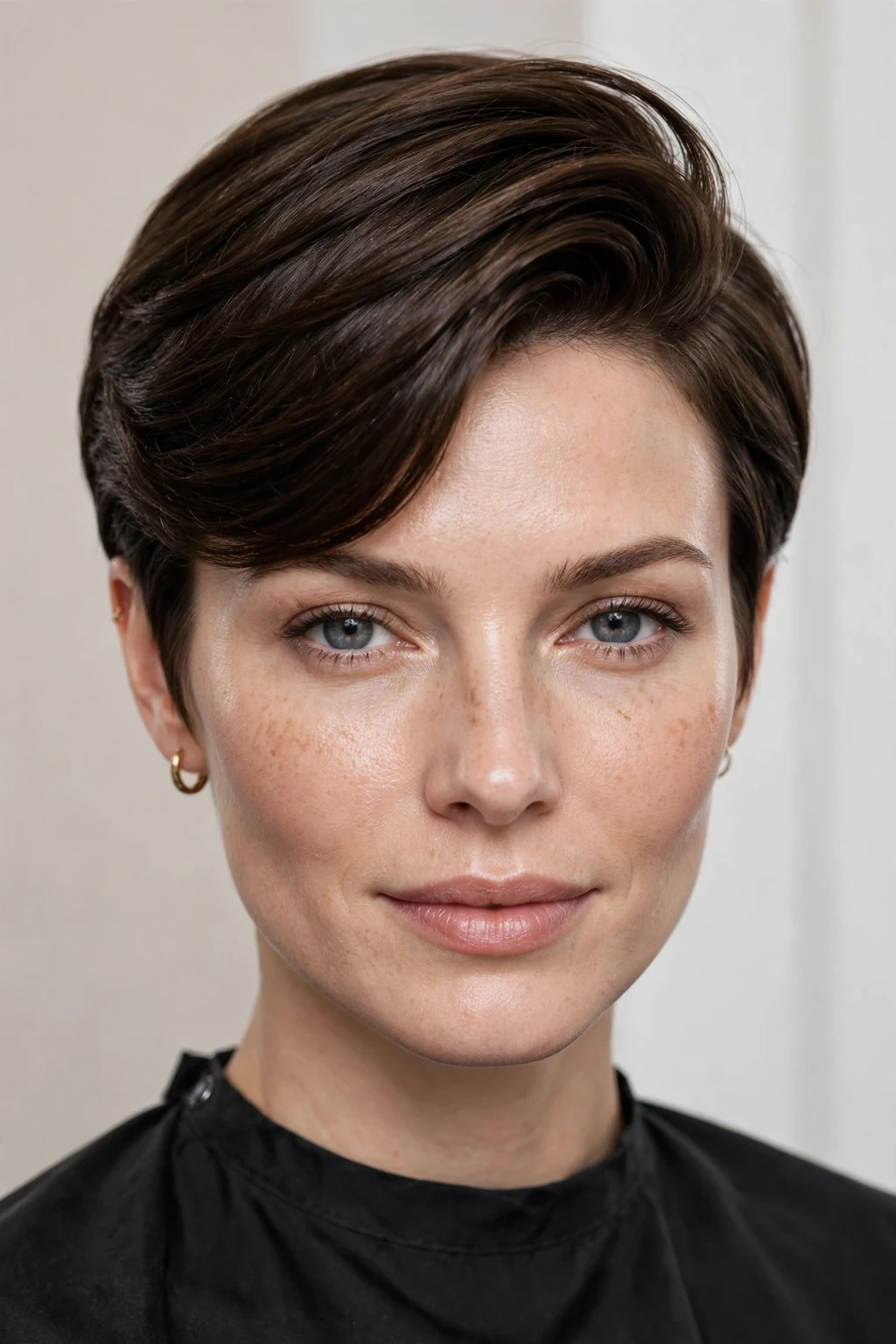
19. Pixie with Balayage Dimension
Balayage on a fine-hair pixie is dimensional sorcery: hand-painted lightness swept through the layers that makes every piece visible and the whole head of hair look significantly thicker. The painted highlights catch light across the textured cut, creating depth and movement that flat, single-process color cannot achieve. On short hair, balayage placement is everything — brightness concentrated at the crown and around the face, depth underneath for contrast, mimicking the way light naturally hits fuller hair.
The dimensional color does half the volumizing work before styling even begins, making this ideal for fine hair that needs all the help it can get. It flatters every face shape and the brightness is youthful at any age. Ask your colorist for a rooty, lived-in application that grows out softly — harsh regrowth lines defeat the purpose. Maintain with purple shampoo for blonde tones and gloss treatments every six to eight weeks. The soft grow-out stretches color appointments to ten or twelve weeks. Choose balayage on a pixie when you want color that works as hard as your cut — it is the most impactful single addition to fine short hair.
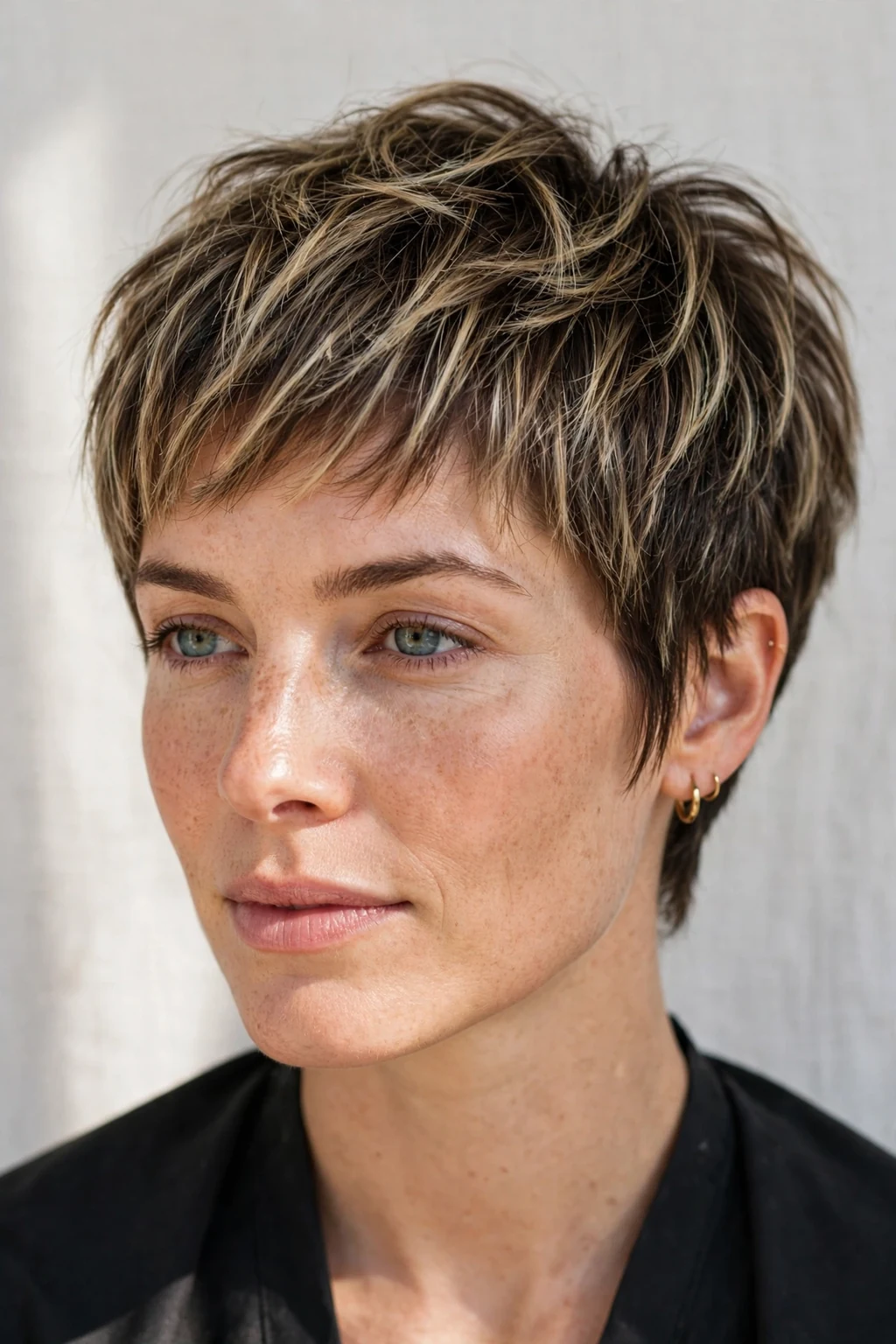
20. Boyish Pixie
The boyish pixie is gamine chic at its purest: a short, neat pixie with clean lines and minimal fuss, worn with the insouciant confidence of an Audrey Hepburn or Mia Farrow. On fine hair, the boyish cut's simplicity is a strength — the neat, close shape looks intentional and stylish rather than thin, and a little texture through the top adds just enough interest. It is proof that the chicest hair is often the simplest.
Petite women and those with delicate features wear the boyish pixie beautifully, and the short length showcases the eyes, cheekbones, and jawline spectacularly. Oval and heart-shaped faces are the natural home. The cut needs to be precise — simplicity exposes flaws — so find a skilled short-hair specialist. To style, work a small amount of wax or pomade through the top for piece-y definition; the sides and back need nothing. The whole routine takes two minutes. Trims every four weeks keep the neatness. Choose the boyish pixie when you want timeless, effortless chic — it is the least fussy pixie here and somehow always looks like a deliberate style choice.
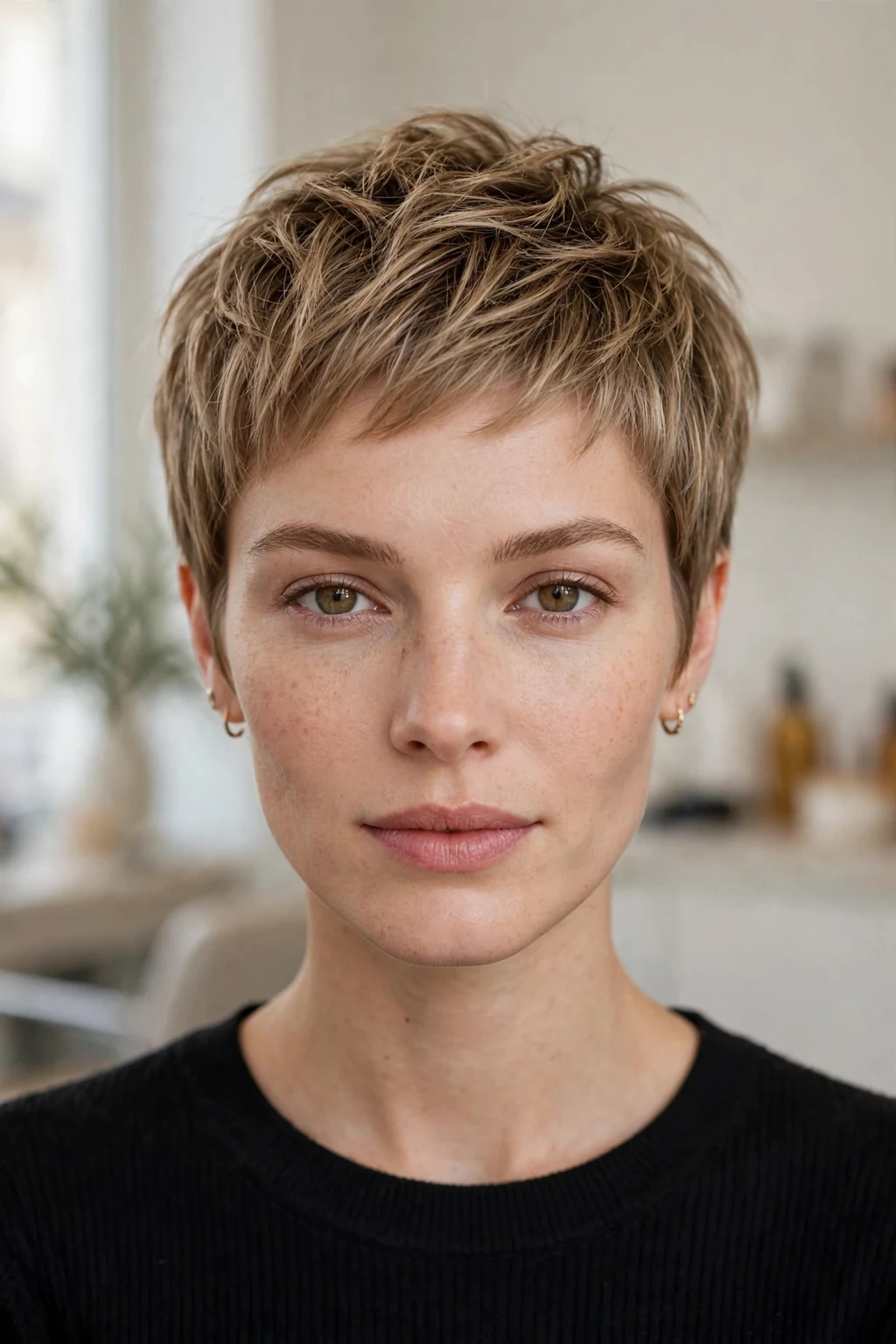
21. Pixie with Long Side Bangs
Long side bangs bring drama and fullness to the fine-hair pixie: a sweeping fringe that falls to cheekbone length or longer, adding weight, movement, and a beautiful curtain of hair across the front. The length creates a gorgeous face-framing effect — the bangs become a feature rather than an afterthought, drawing the eye and adding the impression of abundance. Paired with a neat pixie back and sides, the long bangs create a striking contrast between tailored and flowing.
The sweeping length flatters high foreheads, long faces, and strong jawlines, softening and balancing with its diagonal drape. It suits straight to wavy fine hair that can be directed across the forehead. To style, blow-dry the bangs across with a round brush for a smooth, polished sweep, or let them fall naturally with a touch of cream for softness. A root-lift spray at the bang roots prevents the length from falling flat. Bang trims every three to four weeks maintain the perfect length. Choose long side bangs when you want your pixie to feel more feminine and versatile — the sweeping fringe transforms the entire character of the cut.
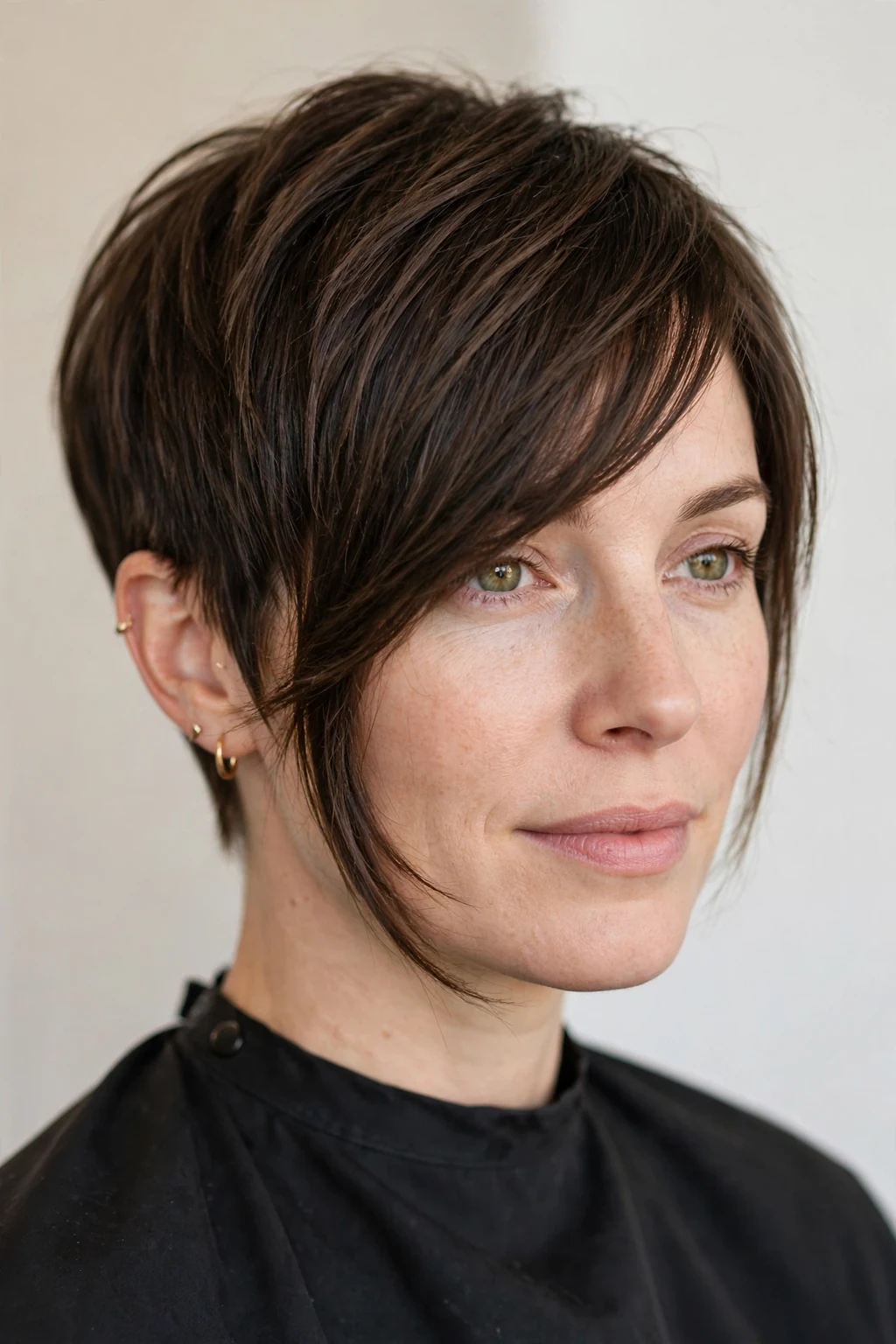
22. Shaggy Pixie
The shaggy pixie brings rock-and-roll texture to fine hair: heavy layering, piece-y ends, and an undone, rebellious finish that gives thin hair wild, touchable body. The shag's signature — lots of layers cut at different lengths — is naturally volumizing, since the varied lengths stack and separate to create the illusion of density. It thrives on imperfection: the shaggier it gets, the better it looks, which makes it wonderfully low-pressure.
This cut suits the style-bold: oval and heart-shaped faces wear it well, and it skews youthful and cool. Fine hair needs the shaggy layering balanced carefully — enough to create texture, not so much that it removes needed weight — so communicate your density honestly to your stylist. To style, scrunch texture spray into damp hair and let it air-dry or diffuse for maximum shaggy separation. Matte paste on dry hair defines the piece-y ends. The golden rule: never brush a shaggy pixie smooth. Trims every six to eight weeks. Choose the shaggy pixie when you want fine hair with attitude — it is fun, modern, and the rare cut that looks better slightly grown out.

23. Pixie with Razored Texture
Razor-cutting creates the softest, most shattered texture achievable on fine hair: feathered, wispy ends that move like air and catch light in a hundred directions. Unlike scissor point-cutting, which creates defined notches, the razor feathers each strand to a soft point, producing an ethereal, diffused texture that is incredibly flattering on thin hair. The razor removes bulk while preserving length — the exact combination fine hair needs for body without sacrifice.
The diffused texture suits oval, heart, and long faces, with the soft ends adding gentle width where wanted. It works on straight to wavy fine hair; the razor finish needs relatively smooth texture to read clearly. Note: razors are not for every head — very fragile or damaged fine hair can fray, so ensure your hair is healthy enough. To style, blow-dry with a round brush for soft movement and finish with a lightweight texture cream scrunched through the ends. Avoid heavy oils that collapse the feathering. Trims every six weeks keep the razor work fresh. Choose the razored pixie when you want the softest possible texture — it is fine hair at its most ethereal and touchable.

24. Cropped Pixie with Height
The cropped pixie with height uses bold proportions to maximize fine hair: super-short, neat sides and back paired with a longer, lifted top that stands tall. The contrast is the volumizing mechanism — the eye compares the close sides to the full top and reads the top as dramatically thicker. Keeping the top longer relative to the sides also preserves the coverage that very short all-over cuts can compromise on fine hair. It is confident, striking, and architecturally brilliant.
Petite women and those with strong features wear these bold proportions beautifully; the height elongates round faces and adds presence to smaller frames. The cut requires precision clipper work on the sides, so find a barber or short-hair specialist. To style, apply a strong root-lifting product to the damp top and blow-dry upward, then define with a matte clay or paste for lasting height and separation. The sides need nothing but regular clipper cleanups every three weeks. Choose the cropped pixie with height when you want to make a bold statement — it is the most fashion-forward option here, turning fine hair into a deliberate style asset.
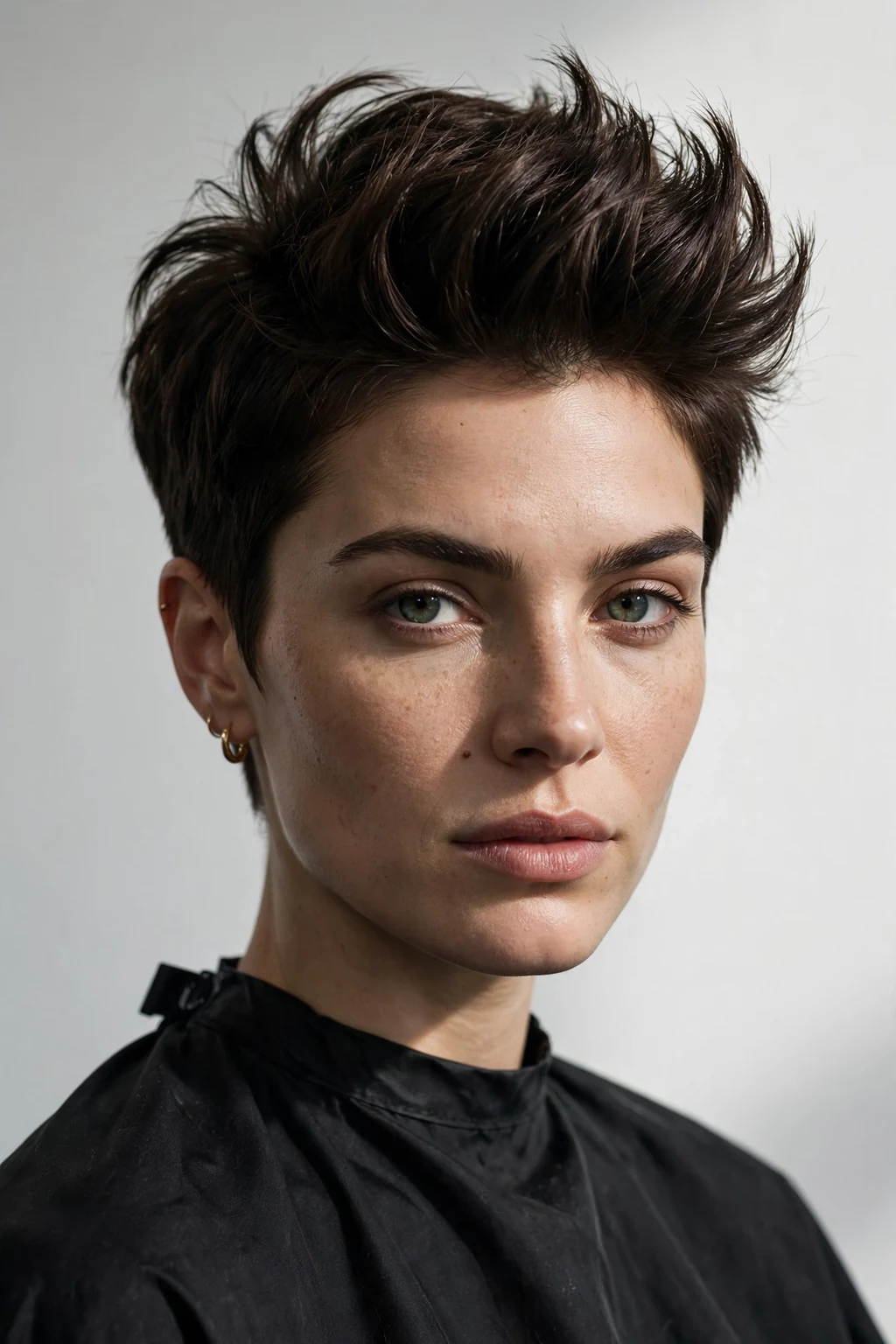
25. Soft Layered Pixie
The soft layered pixie is the gentle all-rounder: subtle graduation and soft layers that add body without any harshness, edge, or drama. The layering is blended and seamless rather than choppy or shattered, creating a smooth, feminine shape with natural-looking fullness. It is the pixie for women who want the benefits of short hair — ease, lightness, modernity — expressed in the softest possible way.
This approachable cut suits every face shape and every age, and it is the safest recommendation for fine-haired women trying a pixie for the first time. The softness flatters mature faces beautifully and never reads as severe. To style, apply a lightweight volumizing mousse to damp hair and blow-dry with a small round brush for soft lift, finishing with a touch of smoothing cream. It air-dries gracefully for the most natural finish. The gentle shape grows out beautifully with minimal awkward phases. Trims every six weeks. Choose the soft layered pixie when you want pretty without pretension — it is feminine, easy, and quietly confident, the cashmere sweater of pixie cuts.
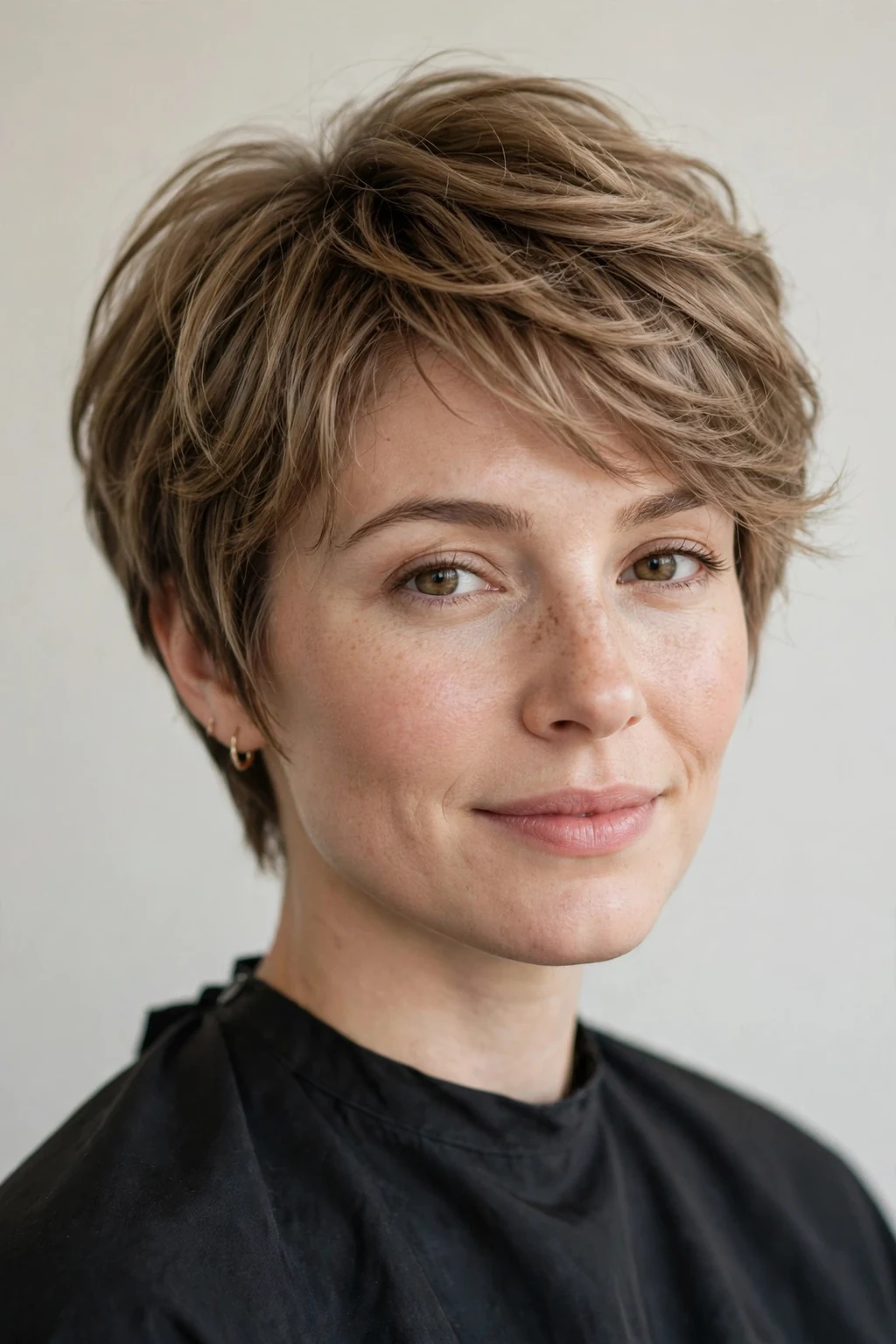
26. Pixie with Money Piece
The pixie with money piece uses color as contouring: bright, face-framing lightness through the front that spotlights the face and makes the whole cut glow. The eye goes straight to the brightness — and brightness reads as fullness, drawing attention to the face rather than to any thinness elsewhere. It is the most strategic color placement for fine hair: maximum impact from minimal lightening, since only the front sections carry the brightness.
The face-framing lightness flatters every complexion, illuminating the skin and drawing attention to the eyes. It suits all face shapes and is especially lovely on mature women, where the brightness is youthful without being trendy. The money piece needs the pixie to have enough front length to show it off — very cropped fronts waste the effect. Maintain with purple shampoo to keep the brightness clean and gloss treatments every six to eight weeks. Touch-ups every eight to ten weeks keep the face-frame vivid. Choose the money piece when you want instant radiance — it is like a ring light for your face, built into your haircut.
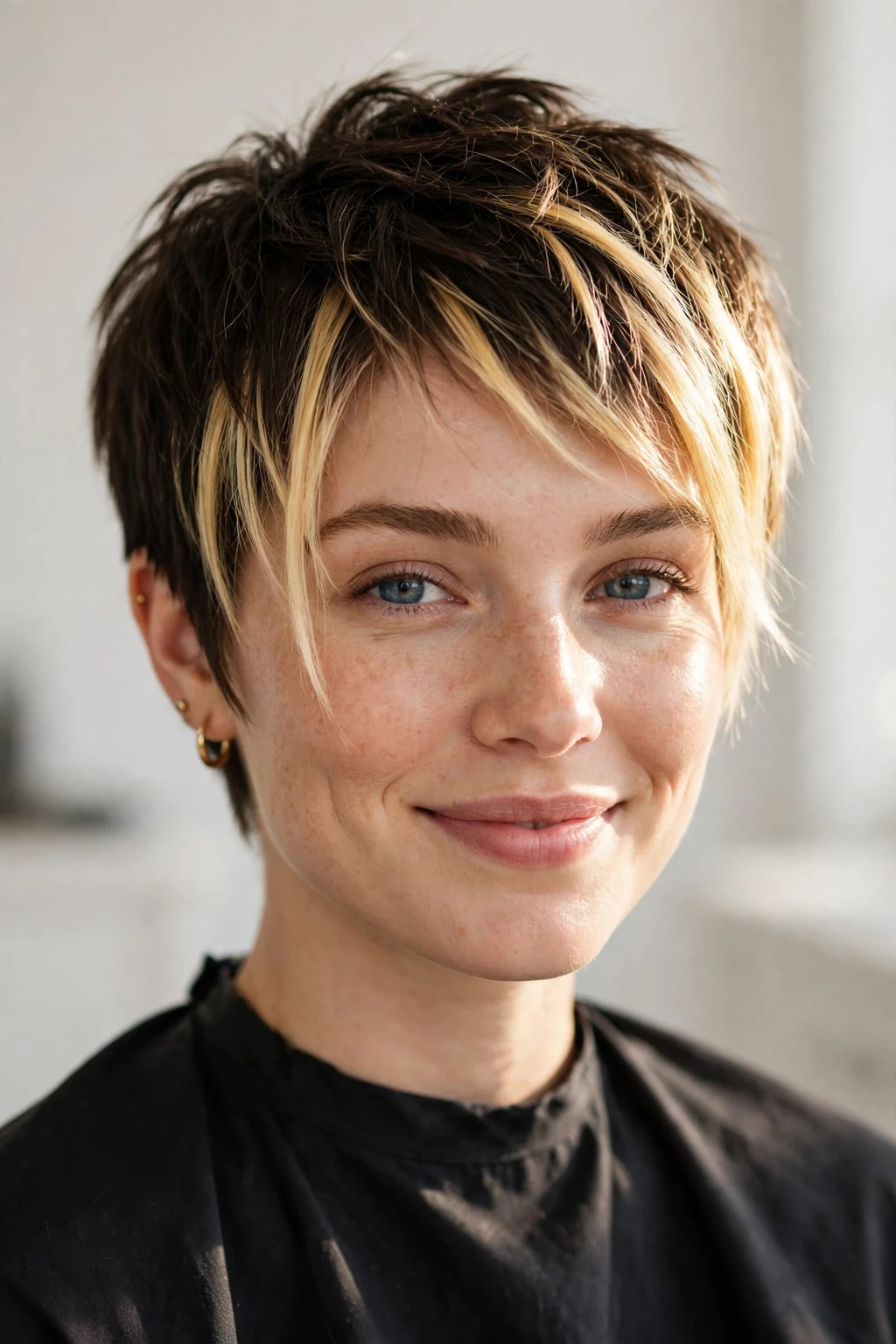
27. Modern Bixie for Fine Hair
The modern bixie — bob meets pixie — gives fine hair the best of both lengths: more hair to work with than a true pixie, short enough to keep the volume and bounce that longer bobs lose. The hybrid silhouette keeps pixie-like texture and piece-y layers through the crown with a slightly longer, bob-ish perimeter that offers more styling options and more visual weight. For fine hair, that extra length is precious — it provides coverage and styling versatility while the pixie proportions keep everything light and lifted.
This is the ideal compromise cut for women torn between pixie and bob: the bixie suits oval, round, and heart-shaped faces, with the added length offering face-framing that true pixies lack. It works on straight to wavy fine hair. To style, treat it like a pixie with benefits — texture paste for piece-y definition, root-lifting spray for crown volume, and the option to tuck, sweep, or wave the longer perimeter. The versatility is the point: it can read edgy or soft depending on styling. Trims every six weeks maintain the hybrid balance. Choose the bixie when you cannot decide — it is the perfect middle ground, giving fine hair length, volume, and endless options.
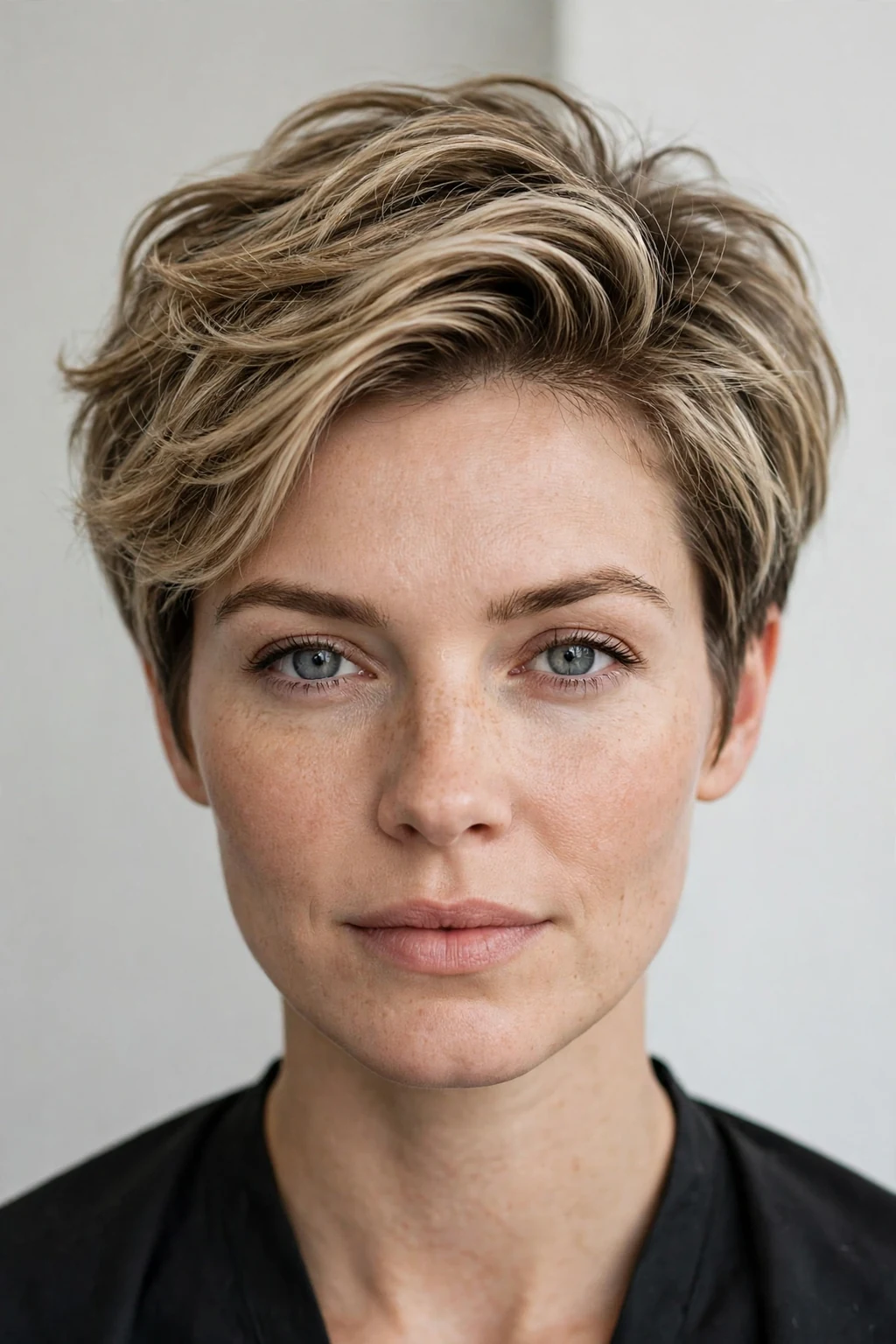
How to Choose the Right Pixie for Fine Hair
The secret to a great pixie on fine hair is strategic texture. Choppy layers, point-cutting, and razored ends all create the illusion of thickness — avoid blunt, one-length cuts that can fall flat. Ask your stylist to keep weight at the crown where you want lift.
Fine hair also loves root lift: blow-dry upward with a small round brush and use lightweight volumizing products that won't weigh strands down. Regular trims every four to six weeks keep the shape full and bouncy.
Conclusion
From textured and tousled to sleek and voluminous, these 27 pixie haircuts prove fine hair can look incredibly full with the right cut. Choose layers that build body where you need it, style with lightweight volumizers, and enjoy a pixie that looks thicker than ever.