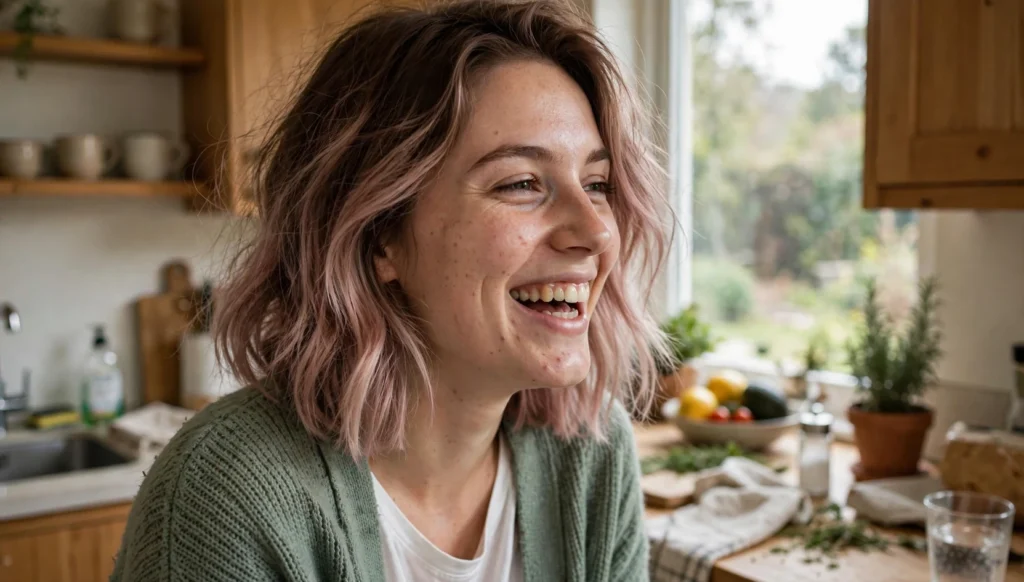
Subtle colored hair is the art of whispering instead of shouting: soft washes of pink, lavender, copper, and blue that catch the light beautifully without overwhelming your look. These 55 subtle hair color ideas prove that gentle color can be just as striking as bold dye, with easy grow-out and endless versatility. Whether you want a delicate tint or hidden pops of pastel, there is a subtle hair dye approach here for every hair type and lifestyle.
1. Soft Rose-Gold Balayage
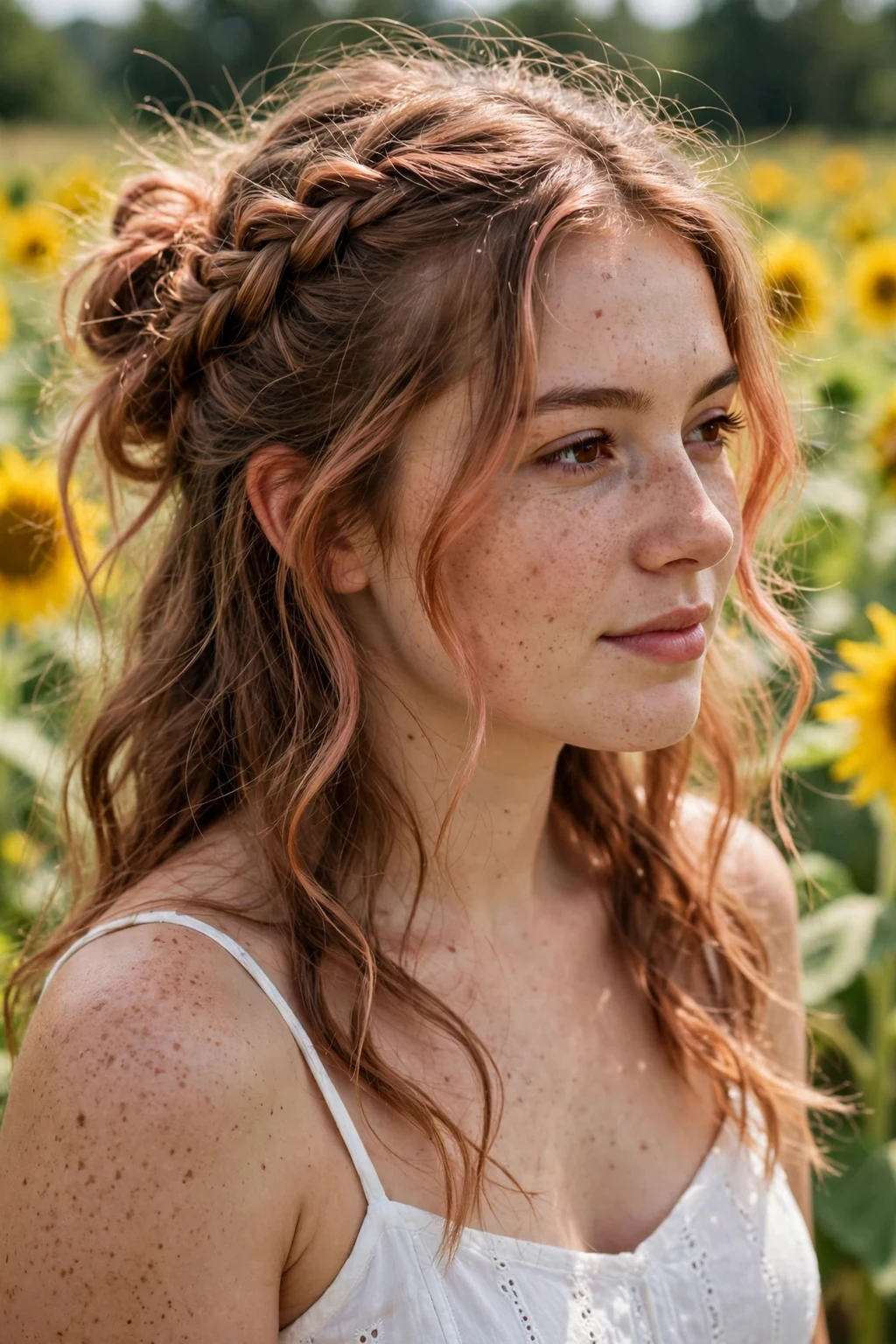
Soft rose-gold balayage is the gateway version of subtle colored hair: a whisper of blush pink melted into warm golden blonde through hand-painted highlights that begin mid-length and brighten toward the ends. The finish is luminous rather than loud, with the pink reading as a warm glow in sunlight and settling into a champagne shimmer indoors. It flatters straight and loosely waved textures best, since smooth surfaces let the gradient blend seamlessly without harsh lines. This is one of the most universally flattering subtle hair ideas because the warmth complements fair, medium, and olive skin tones alike, and the face-framing brightness lifts features without the commitment of all-over color. It suits oval, heart, and long face shapes especially well, as the lighter ends draw the eye downward and balance proportions. Women from their twenties through their fifties wear it beautifully, and it works on fine to medium density hair where the color creates a convincing illusion of fullness.
To get it, ask your colorist for a lived-in balayage finished with a rose-gold toner rather than permanent pink dye, which keeps grow-out soft and maintenance low. At home, style with a large-barrel curling iron, wrapping one-inch sections away from the face for loose, touchable waves that catch the light. A color-depositing rose-gold conditioner used once a week keeps the blush tone fresh between salon visits, while a sulfate-free shampoo slows fading. Heat protectant is essential before hot tools, and a lightweight shine serum on the ends amplifies the metallic glow. Plan a toner refresh every eight to ten weeks and a trim every ten to twelve weeks to keep ends healthy. Grow-out is graceful because the color starts away from the root, so there is never a harsh line. Try it if you want color that feels romantic and modern at once: it photographs beautifully, suits conservative workplaces, and is the easiest possible entry point into playful hair color.
2. Subtle Pink Highlights on Brunette
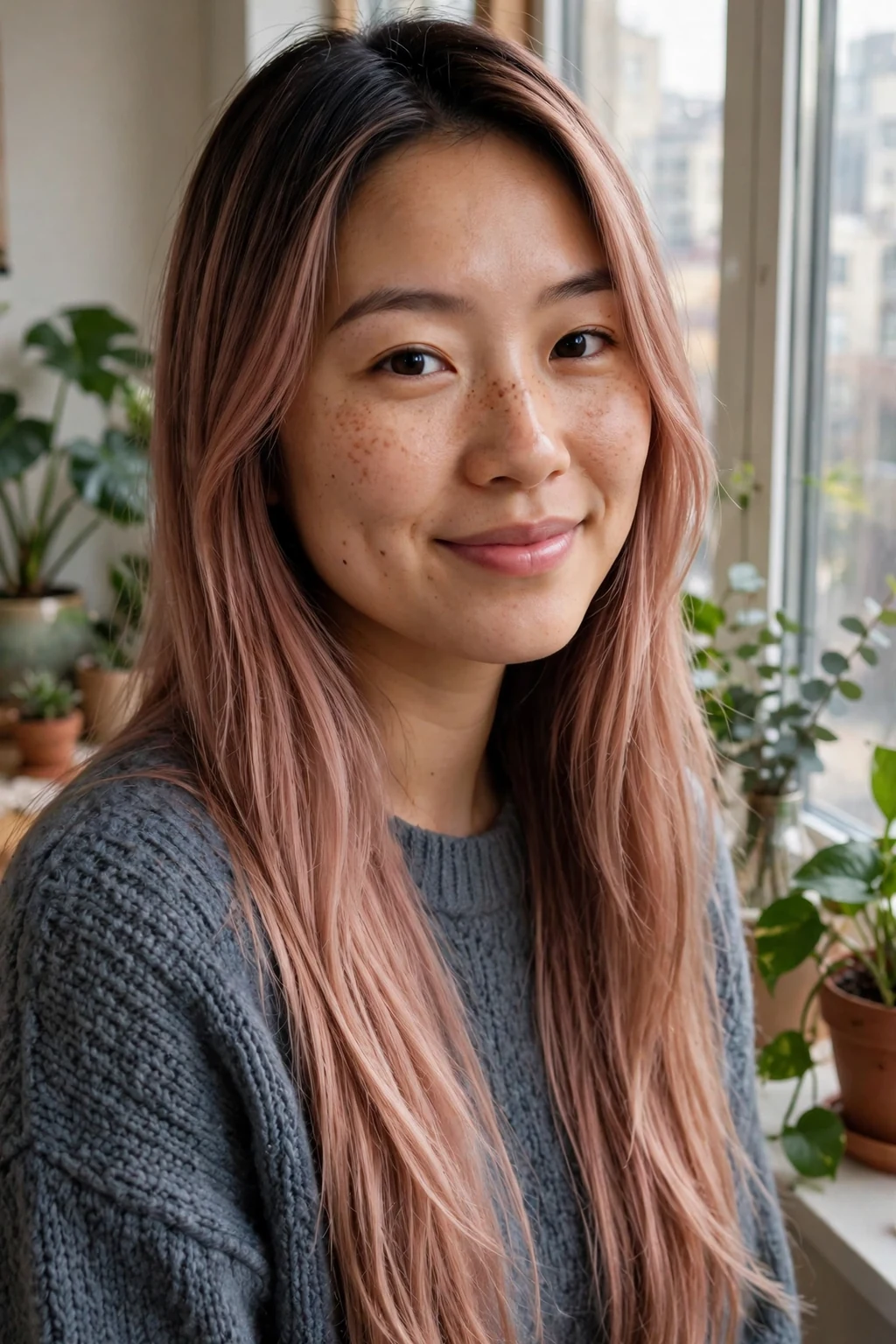
Subtle pink highlights on brunette hair deliver contrast without clash: fine ribbons of dusty rose woven through a rich chocolate-brown base, visible as a rosy shimmer when the hair moves. The placement is deliberately delicate, with highlights concentrated through the mid-lengths and ends so the natural root stays untouched and the overall effect reads as dimensional brunette with a secret. The finish is soft and blended, never stripy, because the pink is toned down to a muted mauve-pink that harmonizes with brown rather than fighting it. This subtle pink hair approach flatters medium to thick hair with natural wave or curl, since texture breaks up the color and makes it look sun-kissed rather than salon-striped. It suits warm and neutral skin tones beautifully, and the pink reflects flattering warmth onto the face. Oval, round, and square faces all benefit, as the vertical ribbons of lighter color elongate the silhouette. The technique also works beautifully on layered cuts, where shorter pieces around the crown catch the pink and create a halo effect. Because the highlights are fine rather than chunky, the result looks expensive and deliberate, never streaky or dated.
Ask your colorist for fine babylights or teasylights in a dusty rose tone, keeping the sections thin so the brunette base remains dominant. Style by scrunching a curl-enhancing cream into damp hair and diffusing for defined, touchable waves that show off the dimension. A pink color-depositing mask every ten days keeps the rose tone from washing out to beige, and a sulfate-free shampoo is non-negotiable for longevity. Sleep on a silk pillowcase to reduce friction and fading. Maintenance is refreshingly simple: the untouched root means you can stretch salon visits to ten or twelve weeks, with just a toner gloss in between if the pink dulls. Trims every eight to ten weeks keep the ends from looking thin. Choose this if you love your dark hair but crave a playful edge: it is office-friendly, grows out invisibly, and the pink catches candlelight and sunshine in the prettiest way. For extra polish, finish with a lightweight shine spray that makes the rose ribbons gleam. The look pairs beautifully with both casual denim and evening wear, proving subtle color is the most versatile kind.

3. Dusty Lavender Underlights
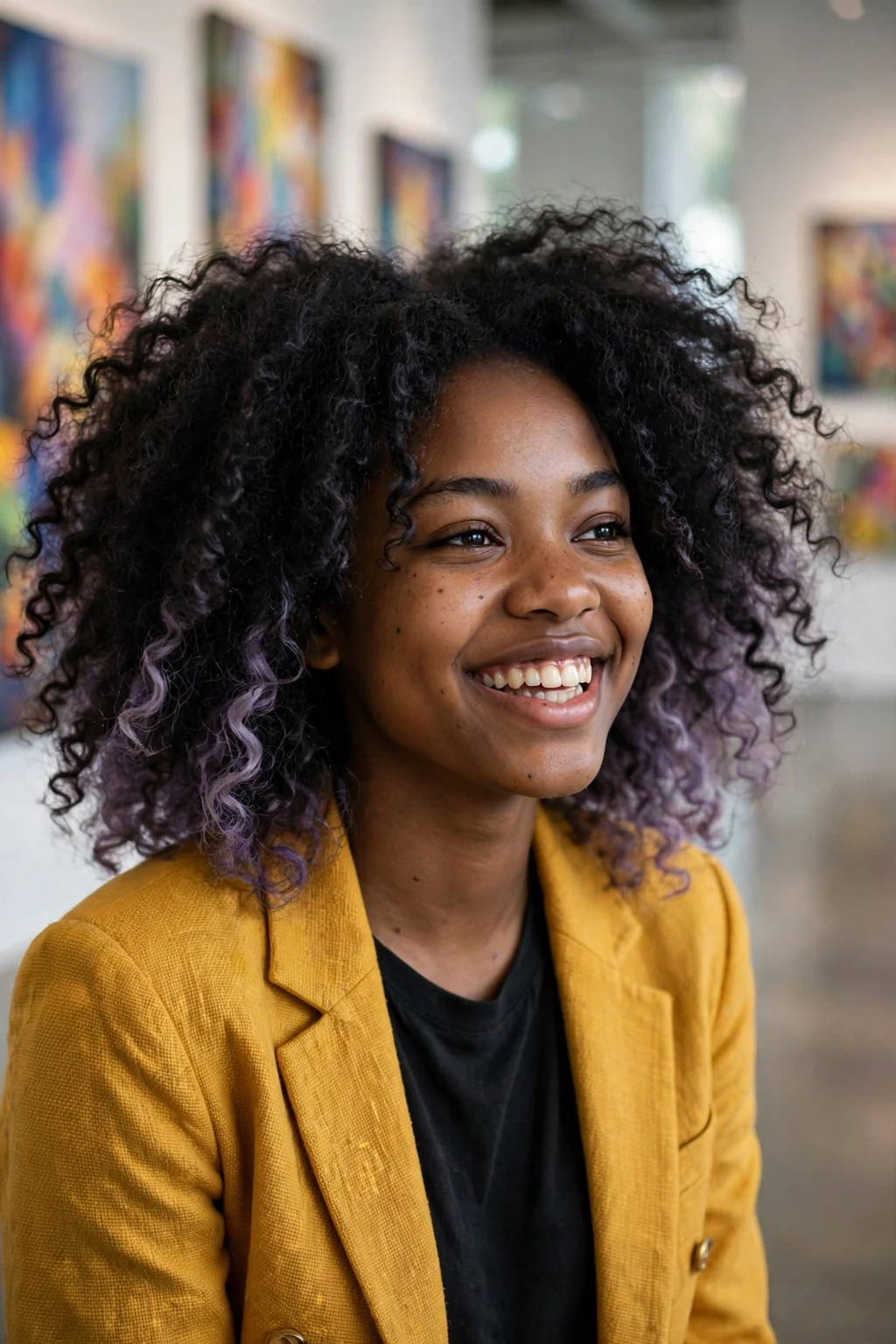
Dusty lavender underlights hide a dreamy secret beneath the surface: the top layer of hair stays its natural dark shade while the underneath is painted a muted, smoky purple that peeks through with every movement. The effect is wonderfully subtle because the lavender only reveals itself in flashes, when curls bounce or hair is swept up, reading as an iridescent shadow rather than an obvious dye job. On curly and coily textures the color looks especially magical, since each curl catches the light differently and the purple shifts between lilac and slate depending on the angle. This subtle purple placement flatters deep skin tones strikingly, as the cool violet contrasts beautifully with warm complexions. It suits all face shapes because the color lives underneath and does not alter the silhouette, and it works for teens through forties who want self-expression that can be hidden for professional settings simply by wearing hair down.
The technique requires lightening only the underlayer, so ask your colorist for a demi-permanent dusty lavender that will fade gracefully without harsh regrowth. Style curls with a leave-in conditioner and a defining cream, then diffuse or air-dry to maximize the peekaboo effect. Because the underneath is pre-lightened, weekly deep-conditioning masks keep it supple, and a purple shampoo used sparingly prevents the lavender from turning brassy. Refresh the tone every six to eight weeks; the top layer camouflages fading, so regrowth is never obvious. Trim every eight to twelve weeks depending on your curl goals. Try underlights if you want color with a double life: conservative on the surface, creative underneath, and endlessly fun to reveal with an updo when the occasion calls for it. To maximize the reveal, style a high ponytail or topknot that exposes the colored underlayer fully. A light-hold hairspray keeps flyaways smooth so the lavender reads cleanly against the dark top layer. The contrast photographs strikingly, making this a favorite for anyone who loves a dramatic before-and-after moment.
4. Muted Copper Gloss
Muted copper gloss is autumn in hair form: a sheer wash of burnished copper layered over natural brown or dark blonde, adding warmth and shine without the intensity of a full red dye. The finish is glassy and reflective, with the copper reading as a rich glow in daylight and deepening to a sophisticated auburn indoors. Because it is a gloss rather than an opaque color, your natural dimension shows through, which keeps the result believable and soft. This subtle red hair approach flatters fair to medium skin with warm or neutral undertones especially well, as the copper echoes the warmth in the complexion and makes green and hazel eyes look striking. It suits straight to wavy textures and fine to medium density, where the reflective finish creates an illusion of thickness. Oval and heart-shaped faces wear it beautifully, and it is a wonderful choice for women in their thirties through fifties who want richness without drama.
In the salon, ask for a demi-permanent copper gloss rather than permanent color; it deposits tone and shine while fading gradually over six to eight weeks. At home, style with a round brush and blow dryer for a polished bob with curved-under ends that maximize reflectivity. A copper color-depositing conditioner every other week keeps the tone vibrant, and a glossing serum on dry ends adds mirror shine. Avoid clarifying shampoos, which strip the gloss quickly. Maintenance is minimal: refresh the gloss every six to eight weeks and trim every eight weeks to keep the bob shape crisp. Grow-out is seamless since the gloss fades on tone. Choose this if your hair looks dull or flat: the copper lightens your whole appearance, photographs like candlelight, and requires less commitment than any permanent red. For special occasions, curl the ends under with a flat iron to create a bouncy, reflective curve that shows off the gloss. The copper tone also layers beautifully under hats and scarves in colder months, peeking out with warm richness.
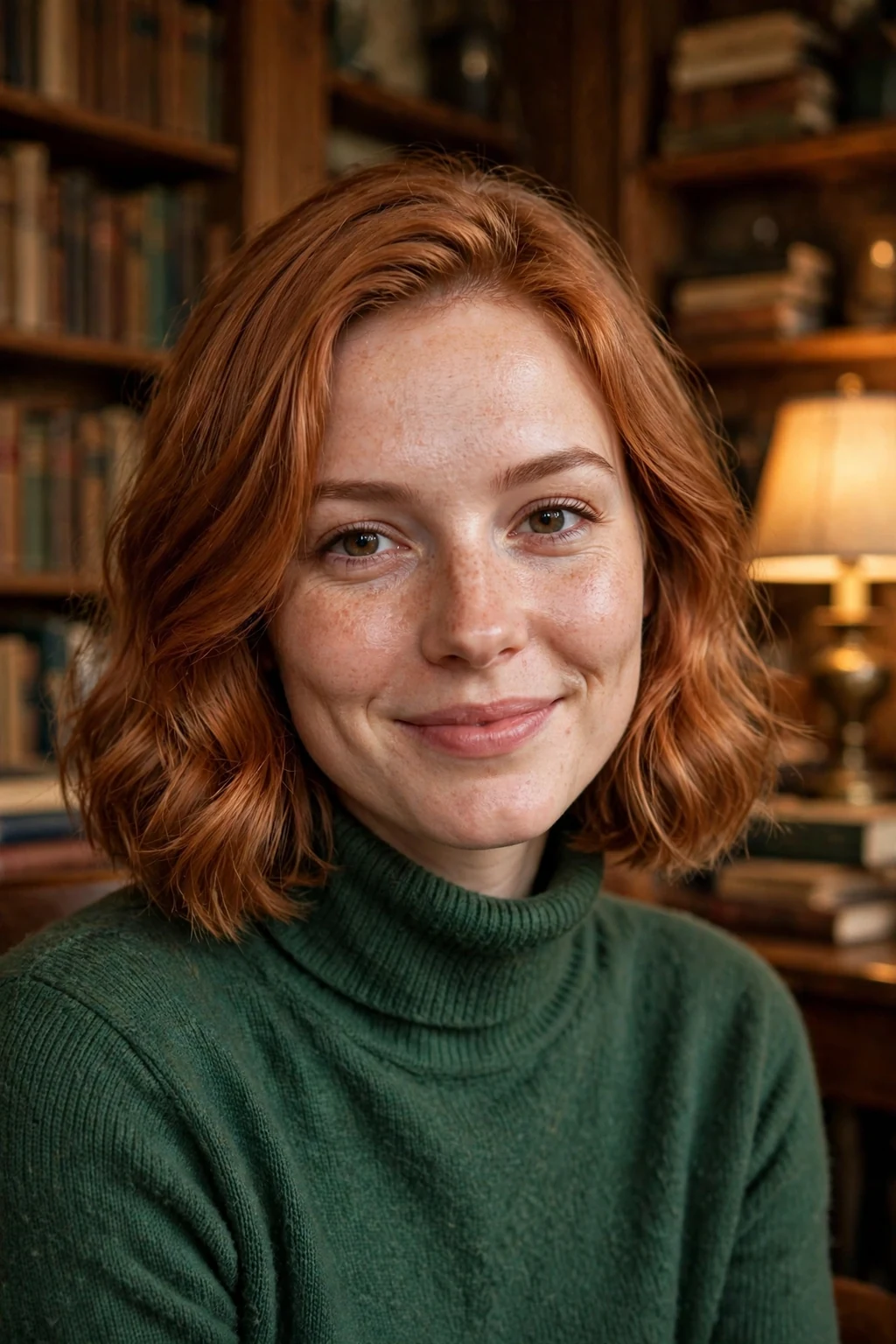
5. Smoky Blue Peekaboo Panels
Smoky blue peekaboo panels place ribbons of slate-blue beneath the crown so they flash like hidden jewelry whenever the hair parts or moves. The shade is deliberately desaturated, more stormy denim than electric blue, which keeps the effect moody and sophisticated rather than cartoonish. Against dark brown or black hair the contrast is striking yet tasteful, and the blue takes on an almost metallic quality in sunlight. This subtle blue hair technique flatters long, straight to wavy hair best, where the panels have length to travel and reveal themselves dramatically. It suits cool and neutral skin tones, and the blue makes brown eyes look deeper by contrast. All face shapes can wear it since the color sits underneath the silhouette, and it is ideal for twenties and thirties who want an edge that disappears completely when hair is worn down and parted normally. The panels can be placed asymmetrically for extra drama or kept symmetrical for a balanced look. Either way, the smoky tone keeps the blue feeling grown-up and intentional rather than rebellious.
Ask your colorist to lighten select interior panels and tone them with a smoky blue demi-permanent shade, keeping the sections hidden beneath the top layer. Style straight with a flat iron for maximum contrast, or in loose waves for a softer reveal. Blue tones fade faster than most colors, so wash in cool water with sulfate-free shampoo and use a blue color-depositing conditioner weekly. A weekly protein-moisture balance mask keeps the lightened panels healthy. Refresh the tone every five to seven weeks; because the panels are hidden, fading is discreet and regrowth never shows at the part. Trim every ten weeks to maintain length. Try peekaboo blue if you want a secret alter ego: it is invisible in professional settings, thrilling in motion, and one of the most complimented hidden-color techniques in the salon. For nights out, wear the hair in a half-up style that exposes the blue panels deliberately. A dab of shine serum on the panels makes the slate tone gleam like polished stone under evening lights.
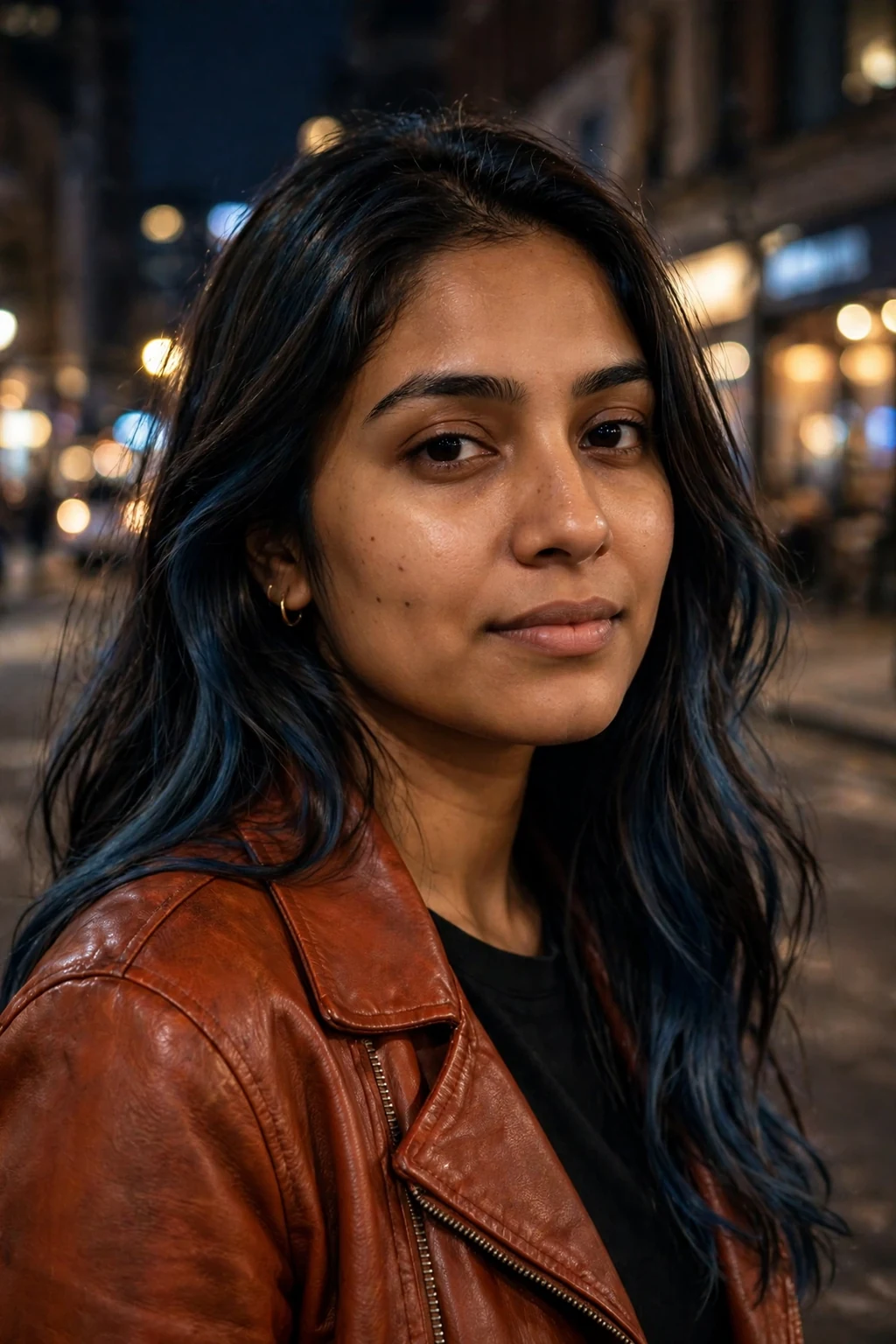
6. Champagne Blonde with a Pink Tint
Champagne blonde with a pink tint is effervescence made wearable: a pale, golden blonde lifted to a high shine, then toned with the faintest blush so the pink reads as warmth rather than color. In bright light the tint glows like the inside of a seashell; in shade it settles into an expensive-looking creamy blonde. The finish is polished and reflective, best on smooth, straightened or gently waved textures where light travels uninterrupted. This subtle pink hair idea flatters fair to light-medium skin tones beautifully, softening the complexion and blurring the look of fine lines, which makes it a favorite for women in their forties through sixties. It suits fine to medium hair density, where the pale tone creates an airy fullness, and flatters oval, heart, and diamond face shapes with its face-brightening effect. It is also a graceful way to blend early gray, since the pale blonde camouflages silver regrowth.
Achieve it by lifting to a level nine or ten blonde, then applying a sheer pink toner rather than a pink dye, so the result stays whisper-soft. Style with a smoothing blowout using a paddle brush, finishing with a flat iron on the ends for a glassy bob. Purple shampoo once a week keeps the blonde from turning yellow, while a pink gloss treatment monthly revives the blush tone. Deep condition weekly, since pale blonde is fragile, and always use heat protectant. Book a toner refresh every six to eight weeks and a trim every six to eight weeks to keep the bob sharp. Grow-out stays soft because the pink is tonal, not opaque. Choose this if you want blonde with a personality: it is luminous, age-defying, and reads as expensive rather than experimental in any setting. A silk pillowcase helps preserve both the toner and the smooth blowout overnight. The pink tint also photographs beautifully in natural light, giving selfies a soft, flattering warmth.
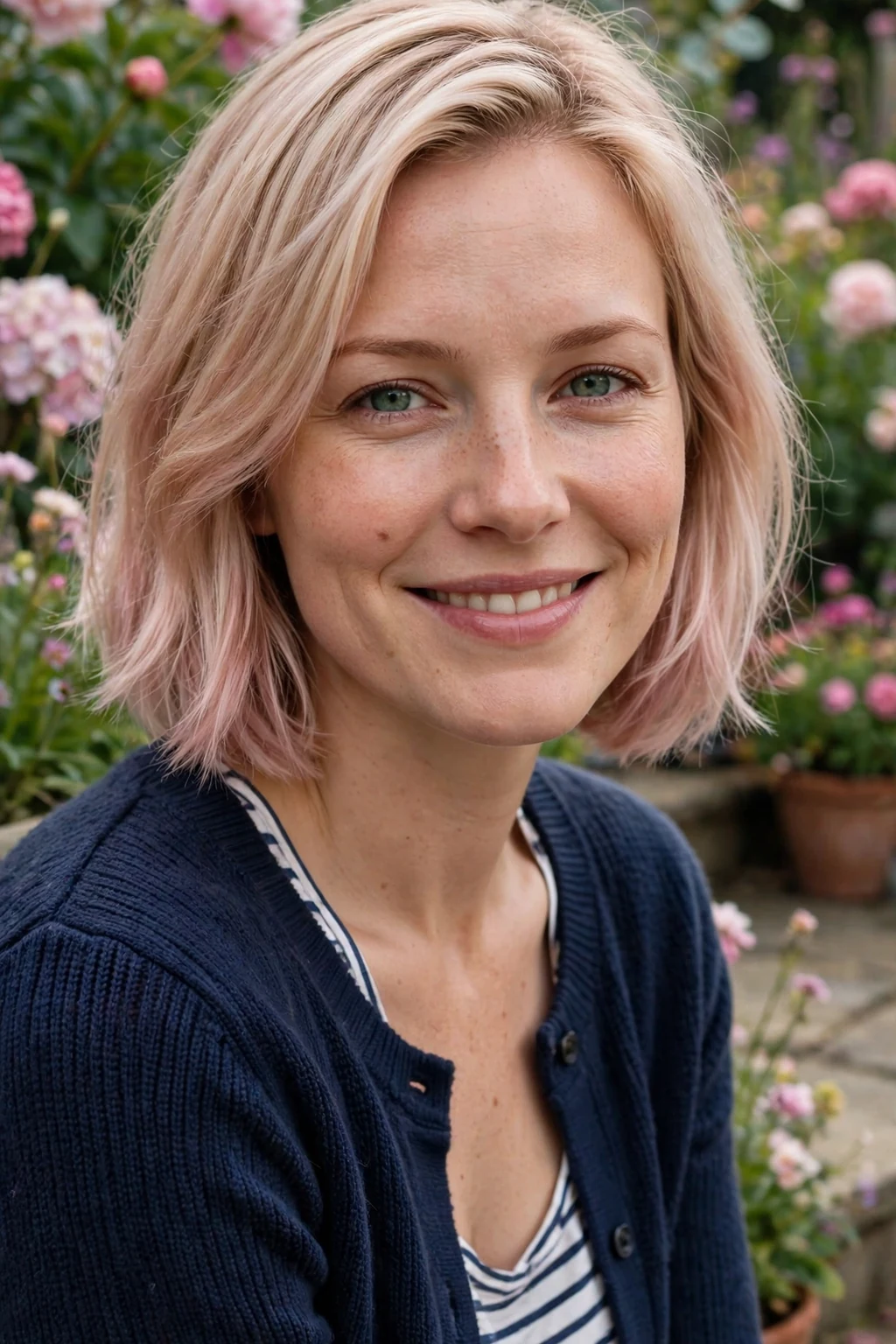
7. Mauve Ombre Melt
Mauve ombre melt transitions from a natural brunette root into dusty rose-mauve ends with a seamless, watercolor blend that has no visible line where one shade becomes the other. The mauve itself is a sophisticated hybrid, equal parts pink and purple grayed down to a smoky softness that looks modern rather than sweet. The finish is dimensional and fluid, especially on long layered hair where the gradient has room to unfold. This placement flatters medium to thick hair with wave or curl, since texture diffuses the transition beautifully. It suits neutral to cool skin tones and makes brown and hazel eyes glow by contrast. Oval, long, and heart-shaped faces wear it well, as the lighter ends add width and balance at the jawline. It is a beloved choice for twenties through forties because the dark root keeps it grounded and wearable while the ends deliver the fantasy. The dark root also means the style works with your natural regrowth instead of against it. Layers cut into the mid-lengths help the mauve blend even more seamlessly, creating that coveted lived-in finish.
Ask your colorist for a lived-in ombre with the mauve starting at mid-length, melted with a color-melting technique so the transition is invisible. Style with a one-and-a-quarter-inch curling wand, alternating curl directions for undone waves that show off the gradient. A color-safe leave-in cream defines the waves while protecting the tone, and a mauve color-depositing conditioner every two weeks keeps the ends from fading to beige. Wash in lukewarm water and limit washing to two or three times weekly. Refresh the mauve every eight to ten weeks; the dark root means regrowth is never an issue. Trim every ten to twelve weeks to keep the ends thick. Try it if you want maximum impact with minimum upkeep: the ombre grows out like a dream and the mauve flatters nearly every wardrobe palette. Sleep with hair in a loose braid to preserve the waves and reduce fading from friction. A weekly glossing treatment at home keeps the mauve ends looking freshly melted between salon visits.
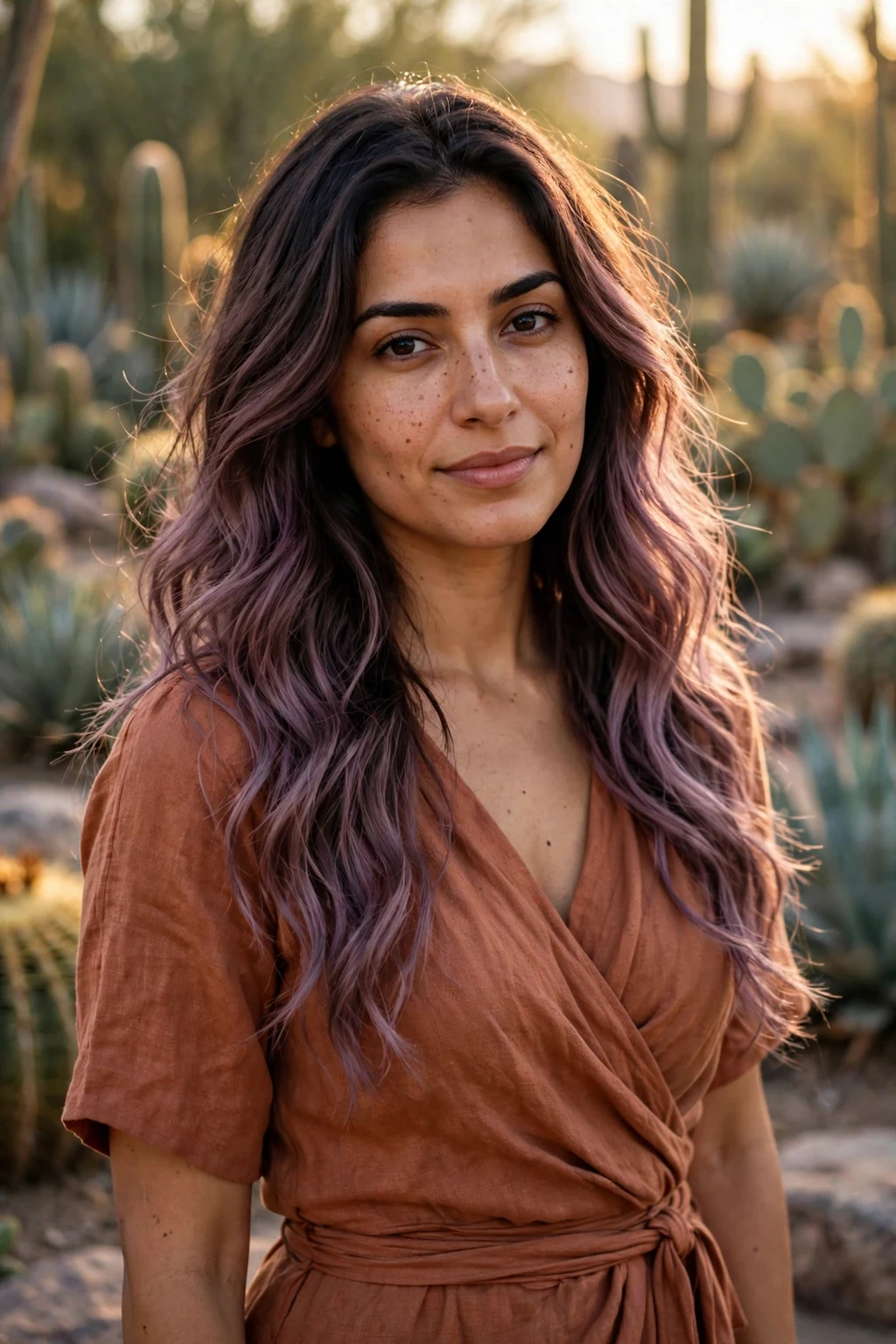
8. Pastel Lilac Ends
Pastel lilac ends dip just the last few inches of hair into a powdery, ethereal purple that looks like the edge of a watercolor painting. The placement is deliberately restrained, keeping the roots and mid-lengths completely natural so the color reads as an accessory rather than a transformation. On straight hair the line of color is crisp and graphic; on waves it softens into a dreamy haze. This is one of the most low-risk ways to wear fantasy color, because the dyed portion can simply be trimmed away when you are done. It flatters cool and neutral skin tones, and the lilac makes dark eyes look luminous by contrast. All face shapes suit it since the color sits at the perimeter, and it is especially popular with teens through late twenties, though anyone with a playful streak can wear it. Fine to medium hair shows the color most cleanly, as the ends stay translucent rather than bulky.
Have your colorist pre-lighten only the bottom two to three inches, then apply a pastel lilac demi-permanent shade. Style straight with a flat iron for a sharp color block, or add loose bends with a straightener for softness. Pastels fade fastest of all colors, so use dry shampoo to stretch washes, rinse in cold water, and apply a lilac color-depositing conditioner weekly. A bond-building treatment monthly keeps the lightened ends from snapping. Refresh the lilac every four to six weeks, or let it fade to a silvery whisper, which is pretty in its own right. Trim every eight weeks. Choose this if you are color-curious but commitment-shy: it is the smallest possible step into fantasy hair, endlessly photographable, and gone with a single haircut whenever you wish. For a bolder moment, style the lilac ends with a crimper to create texture that catches the pastel tone. The color also looks stunning in braids, where the lilac weaves through like ribbon.
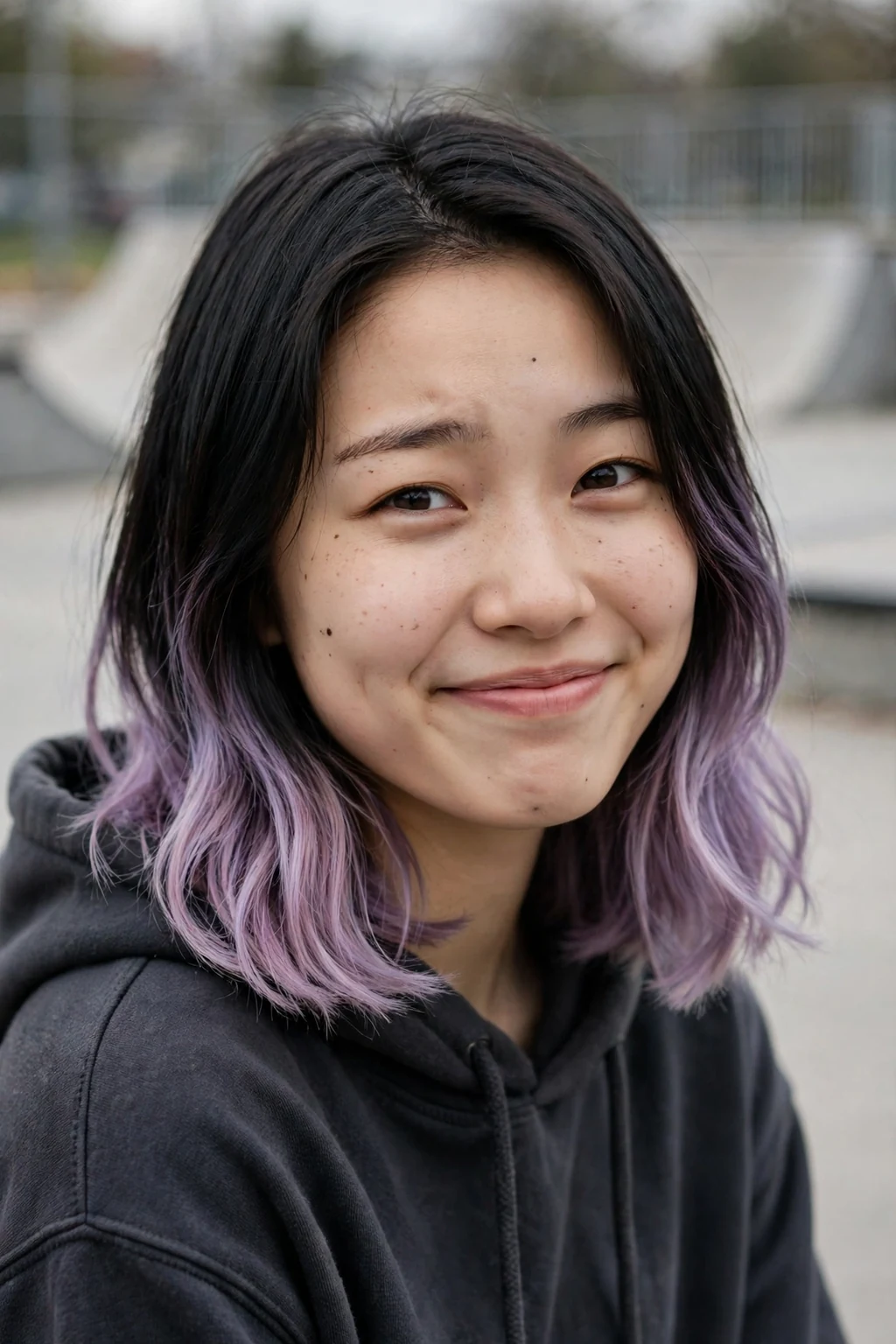
9. Strawberry-Blonde Wash
Strawberry-blonde wash layers a sheer golden-pink veil over natural blonde or light brown hair, creating the sun-kissed warmth of a childhood summer that never quite fades. The color is translucent rather than opaque, so your underlying dimension glows through and the result looks entirely natural, as if your hair simply turns strawberry in the sun. The finish is warm and radiant, especially on wavy textures where each bend catches a different facet of the gold-pink blend. This flatters fair to medium skin with warm or neutral undertones beautifully, and the golden warmth makes blue and green eyes appear brighter. It suits straight to wavy textures and fine to medium density, where the sheer color builds visual thickness. Oval and round faces glow with it, and it is a natural-looking choice for twenties through fifties who want warmth without the maintenance of copper red. The wash technique means no two heads look exactly alike, since the sheer color interacts with your unique base shade. It also blends early grays gracefully, as the golden-pink tone camouflages silver strands.
Ask for a demi-permanent strawberry-blonde gloss over your natural base, which adds tone without lifting and fades gracefully. Style with sea-salt spray scrunched into damp hair for effortless beachy waves, or blow out smooth with a round brush for polish. A color-depositing strawberry conditioner every ten days keeps the warmth from fading to plain blonde, and a UV-protectant spray prevents sun from bleaching the tone unevenly. Deep condition every other week to keep the golden reflectivity. Refresh the gloss every eight weeks and trim every eight to ten weeks. Grow-out is invisible because the wash is tonal. Try it if your blonde feels flat or your brown feels dull: the strawberry warmth revives everything, suits every season, and draws compliments for looking naturally sunlit rather than dyed. A boar-bristle brush distributes natural oils and enhances the golden reflectivity between washes. The strawberry tone deepens beautifully in autumn light, making it a year-round shade rather than just a summer one.
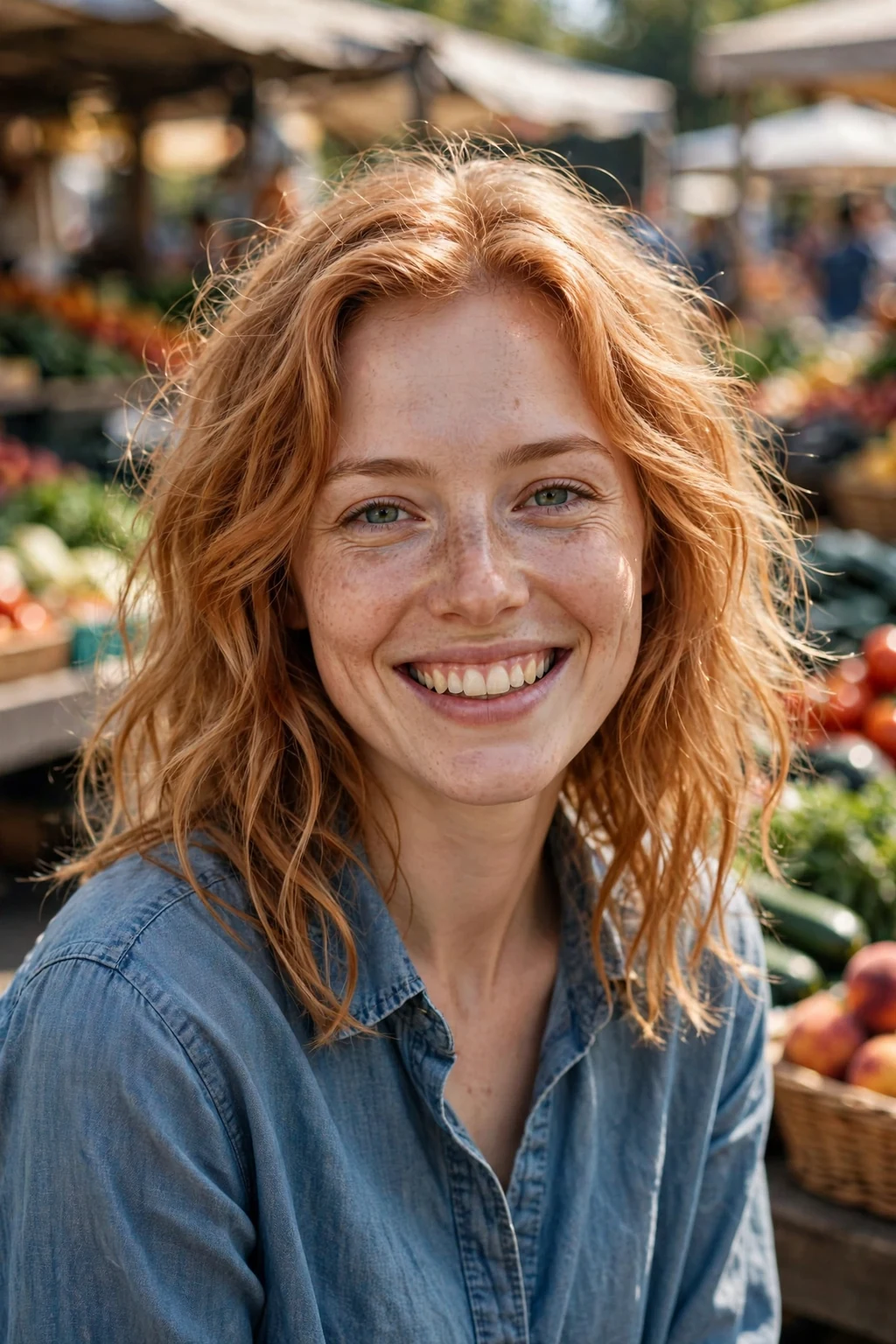
10. Ash Brown with Violet Lowlights
Ash brown with violet lowlights weaves ribbons of cool, smoky purple through a matte ash-brown base, creating depth that shifts between brunette and violet depending on the light. The lowlights sit underneath the top layer of color, so the violet appears as shadowy dimension rather than surface brightness, giving the hair a mysterious, multidimensional quality. The finish is cool and sophisticated, best on straight to loosely waved hair where the ribbons read as clean stripes of tone. This subtle hair color flatters cool and neutral skin tones especially well, and the violet undertone makes the whites of the eyes look brighter. It suits medium to thick hair where there is enough density for the lowlights to hide and reveal, and flatters oval, square, and heart-shaped faces with its slimming vertical dimension. Women in their thirties through fifties love it as a refined way to wear purple without a single obvious streak.
Ask your colorist for violet lowlights in a demi-permanent formula, placed in fine weaves through the interior so they peek through the ash brown. Style sleek with a blowout and flat iron for maximum ribbon definition, or in a low ponytail that lets the violet flash at the nape. A sulfate-free shampoo preserves the cool tone, and a violet gloss every six weeks keeps the purple from fading to gray. Because lowlights add depth without lightening, damage is minimal, but a weekly mask keeps the hair silky. Refresh every eight to ten weeks and trim every eight weeks. Choose this if you want purple with polish: it reads as expensive brunette in the office and reveals its violet soul in sunlight, the best of both worlds. For evening, a sleek high ponytail exposes the violet lowlights at the nape dramatically. The cool palette pairs strikingly with silver jewelry and berry lipstick, completing the sophisticated effect.
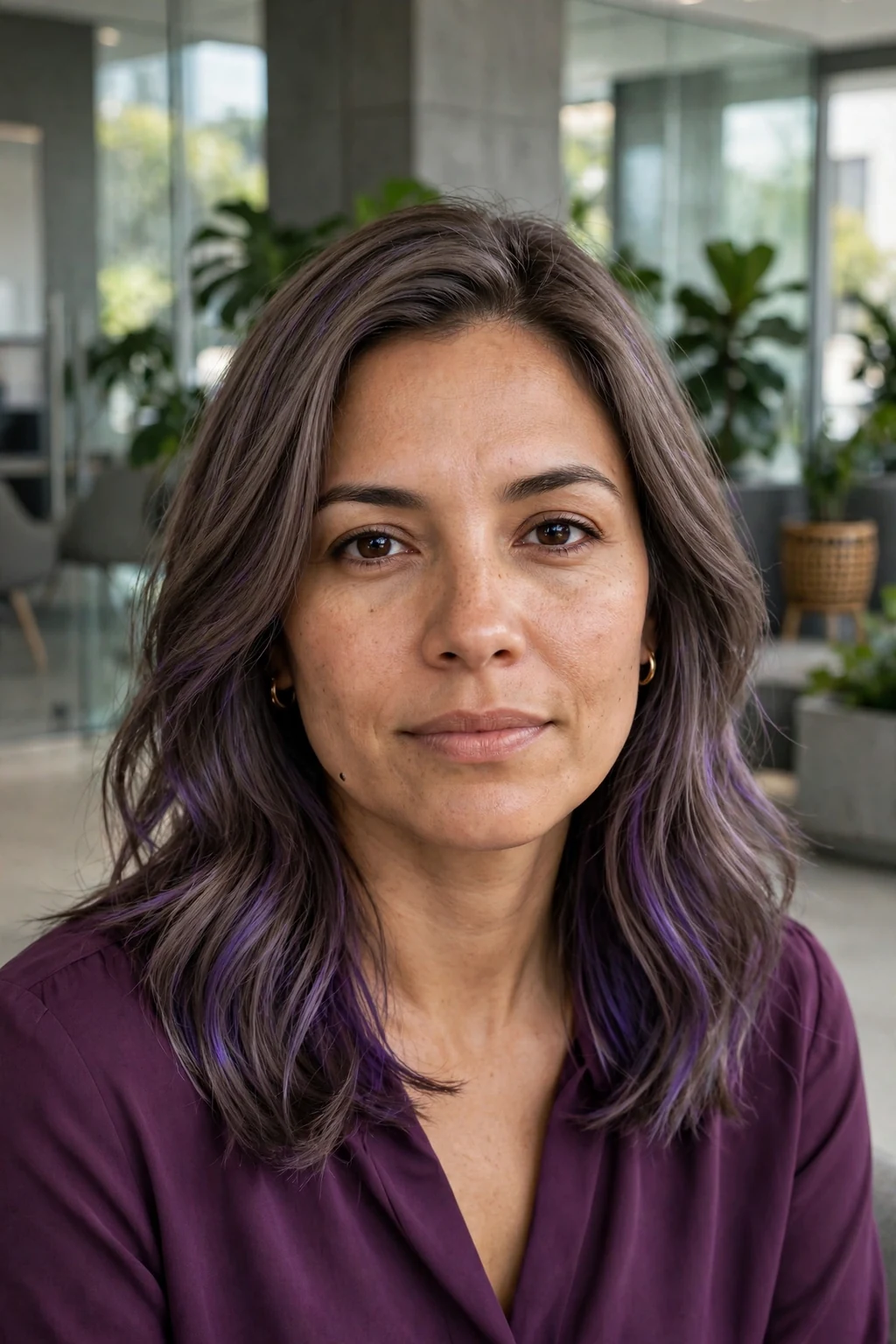
11. Subtle Peach Toner
Subtle peach toner kisses dark or medium hair with the softest apricot warmth, like the glow of golden hour captured in the strands. The tone is sheer and warm, lifting the complexion and adding a luminous halo effect around the face without reading as an unnatural color. On coily and curly textures it looks especially stunning, since each curl catches the peach differently and the overall effect is a radiant, multidimensional warmth. The finish is soft and diffused rather than metallic, which keeps it believable on deeper base shades where bolder pastels would look chalky. This flatters warm and neutral skin tones beautifully, and the peach reflects a flattering light onto the face that mimics a lit-from-within glow. It suits short cuts like pixies and tapered naturals wonderfully, where the color crowns the head like a halo, and works for all ages. Round and heart-shaped faces benefit from the brightness concentrated at the crown.
Ask your colorist for a demi-permanent peach gloss, which deposits sheer warmth without lifting your natural base. On short natural hair, style with a curl-defining cream and a pick for volume, letting the peach catch the light at the crown. A color-depositing peach conditioner every two weeks maintains the warmth, and a lightweight oil seals the cuticle for maximum reflectivity. Because the toner is sheer, fading is gradual and graceful over six to eight weeks. Refresh the gloss every six to eight weeks and shape up the cut every four to six weeks to keep the silhouette crisp. Try this if your dark hair needs light without bleach: the peach warmth is universally flattering, fades beautifully, and makes every photo look sun-drenched. Refresh the style between wash days with a light mist of water and leave-in conditioner to reactivate the curls. The peach tone glows especially beautifully in golden-hour photos, making it a favorite for outdoor events.
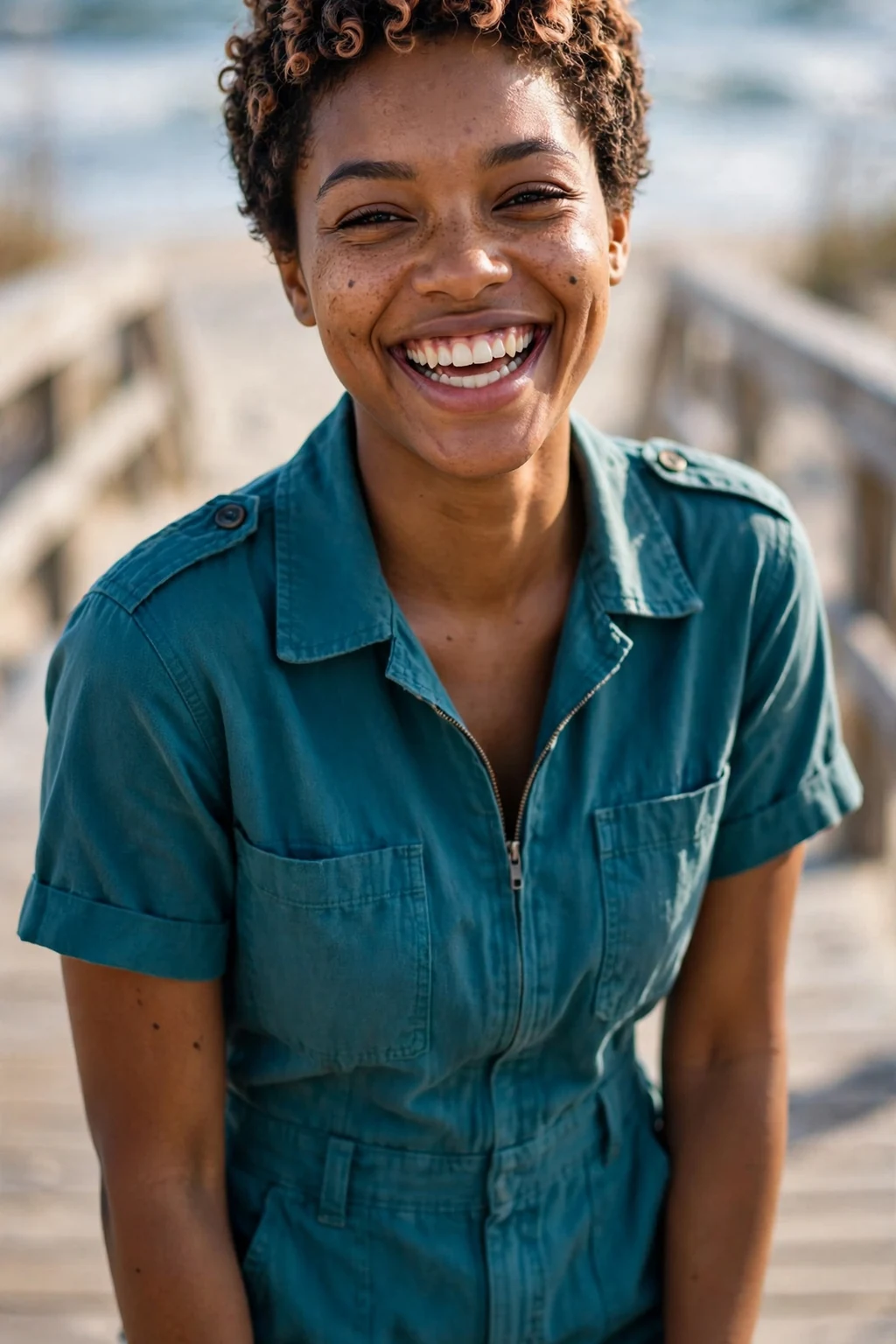
12. Rose-Brown Color Melt
Rose-brown color melt, sometimes called rose brunette, infuses deep brown hair with a rosy warmth that sits exactly between natural and fantasy. The melt technique blends the rose tone seamlessly from roots to ends, so there is no line of demarcation, only a gradual blooming of pink-brown richness. The finish is velvety and dimensional, with the rose reading as warmth in indoor light and revealing its pink soul in sunshine. This flatters medium to deep skin tones exquisitely, as the rosy warmth harmonizes with golden and olive undertones. It suits thick, long hair best, where the melt has length to develop, and works on straight, wavy, and loosely curled textures. Oval, round, and square faces all glow with it, since the all-over warmth softens angular features. It is a favorite for twenties through forties who want brunette with a romantic twist. The melt technique grows out so softly that many wearers stretch appointments to twelve weeks without a visible root line. It also adds perceived thickness, as the dimensional rose tones create an illusion of density.
Have your colorist formulate a demi-permanent rose-brown that lifts slightly and deposits rose tone in one step, melted from a deeper root. Style with large loose waves from a curling wand to show the dimensional melt, finishing with a shine spray that amplifies the rosy reflectivity. A rose-brown color-depositing mask every ten days keeps the pink from fading to plain brown, and sulfate-free shampoo is essential. Deep condition weekly to maintain the velvety finish. Refresh the melt every eight to ten weeks; because it is root-melted, regrowth blends invisibly. Trim every ten weeks to keep long layers healthy. Choose rose-brown if you love your dark hair but want it to feel special: it is romantic, flattering in every light, and professional enough for any workplace. For definition, twist large sections around a curling wand and shake them out for effortless waves. A silk scrunchie at night prevents creasing and keeps the rose tone vibrant longer.
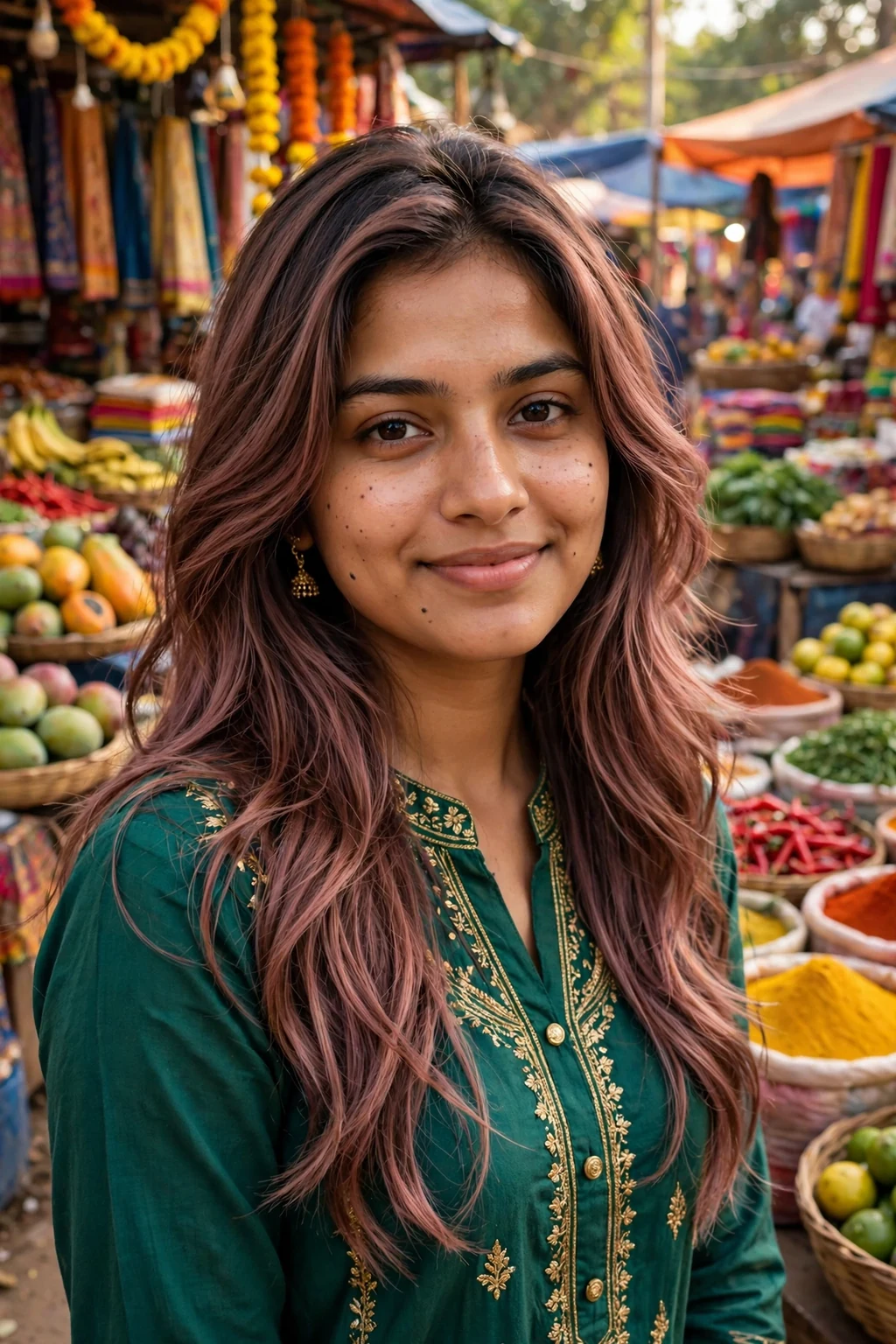
13. Faded Denim Blue Tips
Faded denim blue tips wash the ends of a short crop or bob in a soft, worn-in blue that looks like your favorite jeans translated to hair. The shade is deliberately muted, a powdery slate blue with gray undertones that keeps it sophisticated rather than punk. On a short textured crop the colored tips create a striking frame around the face, drawing attention to the eyes and cheekbones. The finish is matte and modern, best on straight to slightly wavy textures where the blunt ends display the color cleanly. This flatters cool and neutral skin tones, and the blue makes every eye color pop by complementary contrast. It suits oval, heart, and diamond faces, where the short silhouette and colored perimeter emphasize bone structure. Teens through thirties wear it with edge, though the faded quality keeps it wearable well beyond. The faded quality means it never looks harsh against the skin, unlike saturated blues. It also pairs effortlessly with monochrome wardrobes, acting as the single playful element in a minimalist look.
Ask your colorist to lighten just the ends and tone with a denim-blue demi-permanent shade, keeping the root natural for easy grow-out. Style with a matte texture paste, piece-ing out the ends so the blue tips separate and show. Blue fades quickly, so wash in cold water, use sulfate-free shampoo, and apply a blue color-depositing conditioner weekly. A bond repair treatment monthly protects the lightened ends. Refresh the blue every five to six weeks, or let it fade to a silvery gray-blue that is equally chic. Trim every six to eight weeks to keep the crop shape sharp. Try this if you want edge without commitment: the color lives only at the ends, grows out invisibly, and a single trim removes it entirely whenever you are ready for a change. Between appointments, a tinted dry shampoo at the roots keeps the crop looking fresh. The blue tips also look striking with an undercut, where the shaved section contrasts with the colored length.
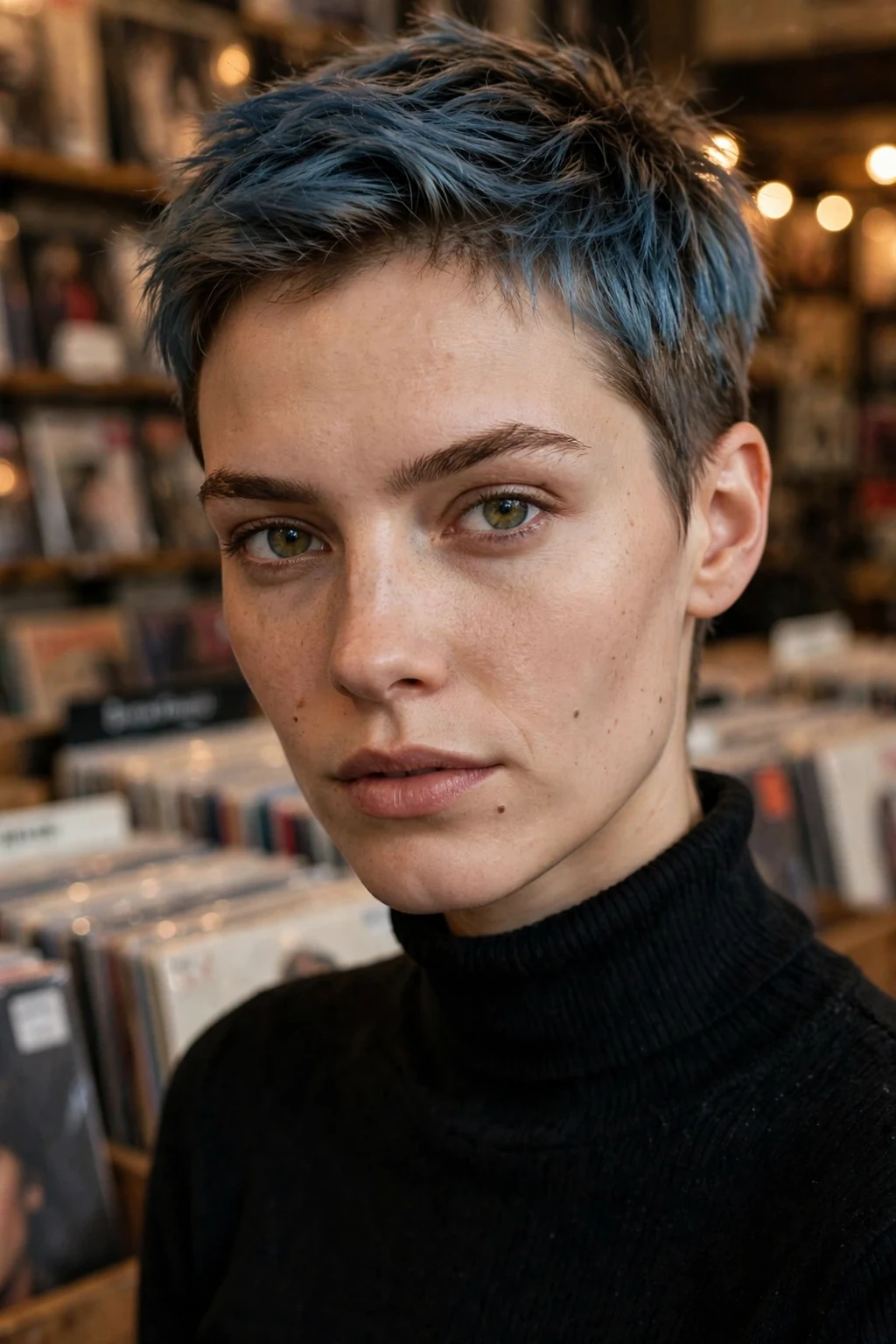
14. Subtle Burgundy-Red Gloss
Subtle burgundy-red gloss deepens dark hair with a wash of black-cherry richness that reveals itself in the light like wine held up to a candle. The color is sheer rather than opaque, so the hair reads as a deeper, more expensive brunette indoors and flashes its red soul in sunshine. The finish is glossy and liquid, with light sliding off the surface in a way that makes hair look impossibly healthy. This subtle red hair approach flatters fair to medium skin tones with cool or neutral undertones, and the red brings out warmth in brown eyes. It suits straight to wavy textures where the smooth surface maximizes the liquid shine, and works beautifully on bobs and lobs where the shape shows off the reflective finish. Women in their thirties through fifties adore it as a sophisticated way to wear red without the maintenance of a true copper or scarlet. The burgundy depth also minimizes the appearance of thinning, as the rich tone creates an illusion of density. It is particularly stunning on blunt bobs, where the sharp ends display the wine-dark shine.
Ask for a demi-permanent burgundy gloss over your natural dark base, which adds tone and extraordinary shine while fading gradually. Style sleek with a blowout and a flat iron pass, finishing with a glossing serum for the liquid effect. A red color-depositing conditioner every two weeks keeps the burgundy from fading to plain brown, and cool-water rinses lock in the tone. Because gloss is deposit-only, damage is negligible, but weekly masks maintain the mirror finish. Refresh every six to eight weeks and trim every eight weeks to keep the bob precise. Grow-out is seamless since the gloss fades on tone. Choose this if you want red with restraint: it is boardroom-appropriate, endlessly shiny, and the wine-dark richness flatters nearly everyone. For extra drama, add a deep side part that lets the burgundy catch light asymmetrically. The shade deepens gorgeously in winter, making it a perfect cold-weather color choice that feels rich against dark coats and scarves.
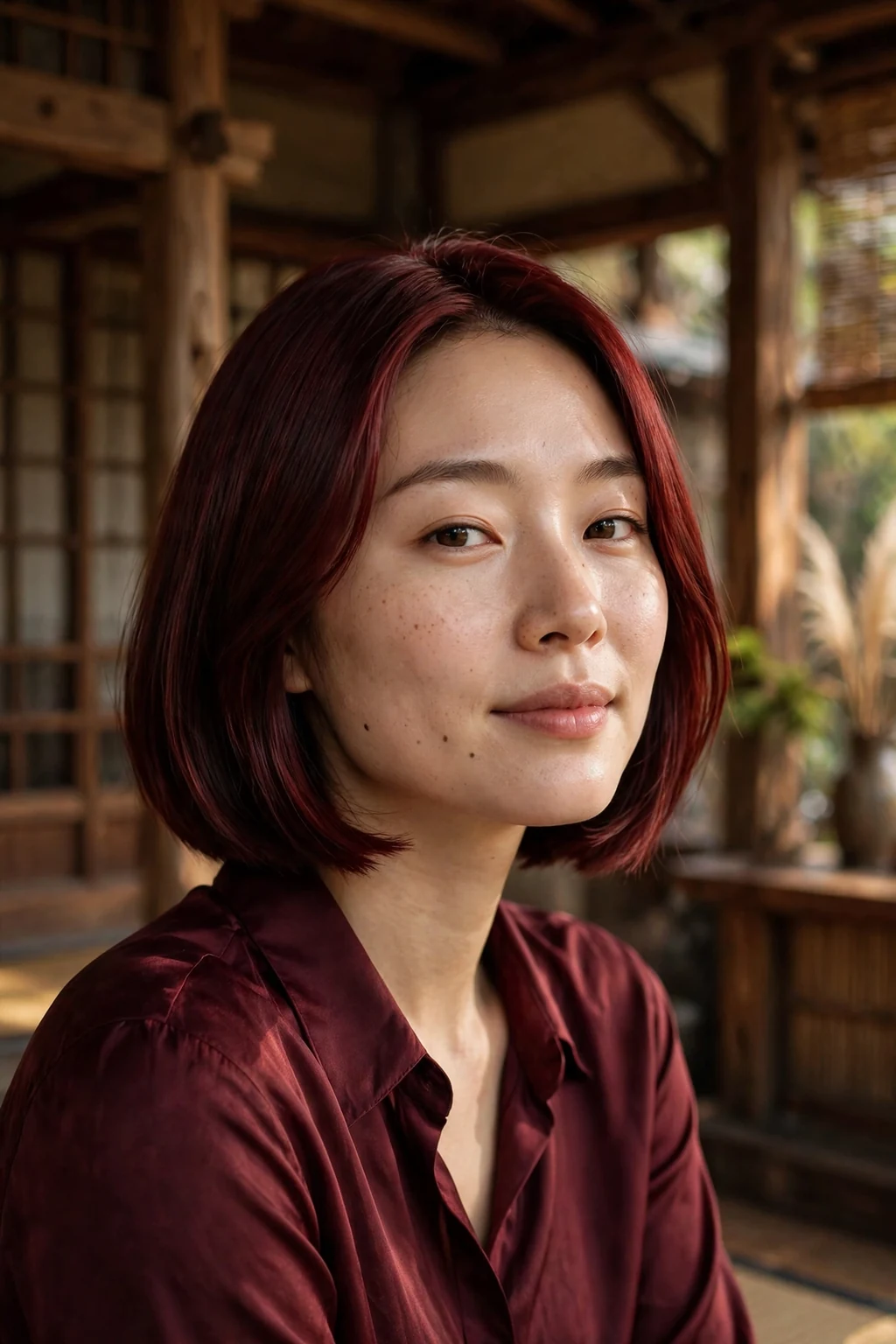
15. Pearl Blonde with Lavender Shadow Root
Pearl blonde with a lavender shadow root pairs an iridescent, almost-white blonde with a whisper of purple melted into the roots, creating depth that keeps pale blonde from looking flat or wig-like. The lavender is smoky and sheer, visible mainly at the part and root area where it adds a shadowy coolness that makes the pearl lengths glow brighter by contrast. The finish is luminous and high-fashion, best on straight or gently waved hair where the root-to-end gradient reads cleanly. This subtle purple hair idea flatters fair to light skin tones with cool undertones, and the icy palette makes blue and gray eyes look piercing. It suits fine to medium hair where the pale tone builds an ethereal fullness, and flatters oval and heart-shaped faces with its brightening effect around the hairline. Twenties through forties wear it as the ultimate cool-girl blonde. The shadow root also adds the illusion of thickness at the crown, a welcome bonus for fine hair. It photographs like moonlight, giving an ethereal quality that plain platinum lacks.
Achieve it by lifting to a near-white blonde, then applying a lavender shadow root melt with a pearl toner on the lengths. Style sleek and straight for maximum iridescence, or in polished waves for softness. Purple shampoo twice weekly keeps the blonde icy, and a lavender color-depositing conditioner monthly revives the root shadow. Pale blonde is fragile, so weekly bond-building treatments and heat protectant are mandatory. Refresh the shadow root every six to eight weeks and trim every eight weeks to keep the fragile ends healthy. Grow-out is forgiving because the root is already shadowed. Try this if platinum feels too stark: the lavender root adds artistry and depth, making the blonde look intentional, expensive, and unmistakably modern. A shower filter helps prevent minerals from dulling the icy tone between appointments. For special events, a clear gloss treatment amplifies the pearl reflectivity to a mirror finish that catches every light in the room.
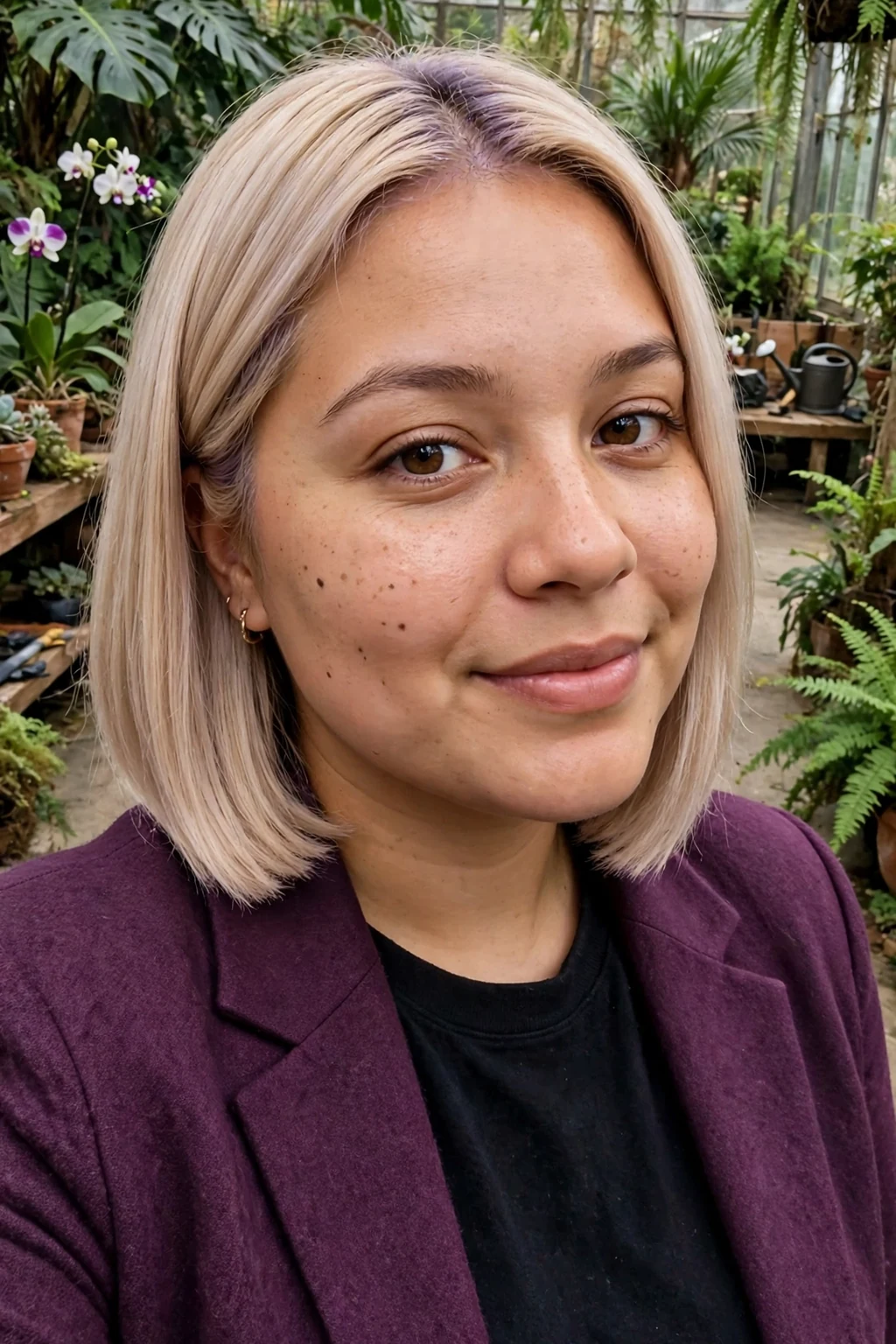
16. Honey Blonde with Copper Babylights
Honey blonde with copper babylights weaves superfine threads of warm copper through a golden blonde base, creating a sunlit tapestry that glows from within. The babylights are so fine they read as shimmer rather than stripes, giving the hair a lit-from-within quality that flat, single-process blonde can never achieve. The finish is warm and radiant, especially on wavy textures where the copper threads catch light at every turn. This flatters warm and neutral skin tones beautifully, bringing a healthy glow to the complexion and making brown and hazel eyes look richer. It suits medium to thick hair where the fine highlights have density to play against, and flatters oval, round, and long faces with its all-over brightness. Women in their forties through sixties love it because the warmth is youthful without trying too hard, and the dimension camouflages grays far better than solid color. The fine weave of the babylights means regrowth is diffused rather than striped. Sunlight brings out the copper threads most dramatically, making summer the season this color truly shines.
Ask your colorist for fine copper babylights woven throughout a honey blonde base, keeping the regrowth area soft with a root smudge. Style with loose waves from a large-barrel iron to show the dimensional shimmer, finishing with a shine oil that amplifies the copper glow. A copper-gold color-depositing conditioner every two weeks keeps the warmth from fading brassy or dull, and sulfate-free shampoo preserves the tone. Weekly deep conditioning keeps the highlighted hair supple. Refresh the babylights every ten to twelve weeks; the smudged root stretches grow-out gracefully. Trim every eight to ten weeks. Choose this if your blonde feels one-dimensional: the copper babylights add life, warmth, and movement, and the result looks like expensive, sun-drenched hair in every season. A weekly scalp scrub keeps the smudged root area fresh and prevents buildup from dulling the blonde. For second-day hair, a light dry shampoo at the roots revives volume without disturbing the tone.
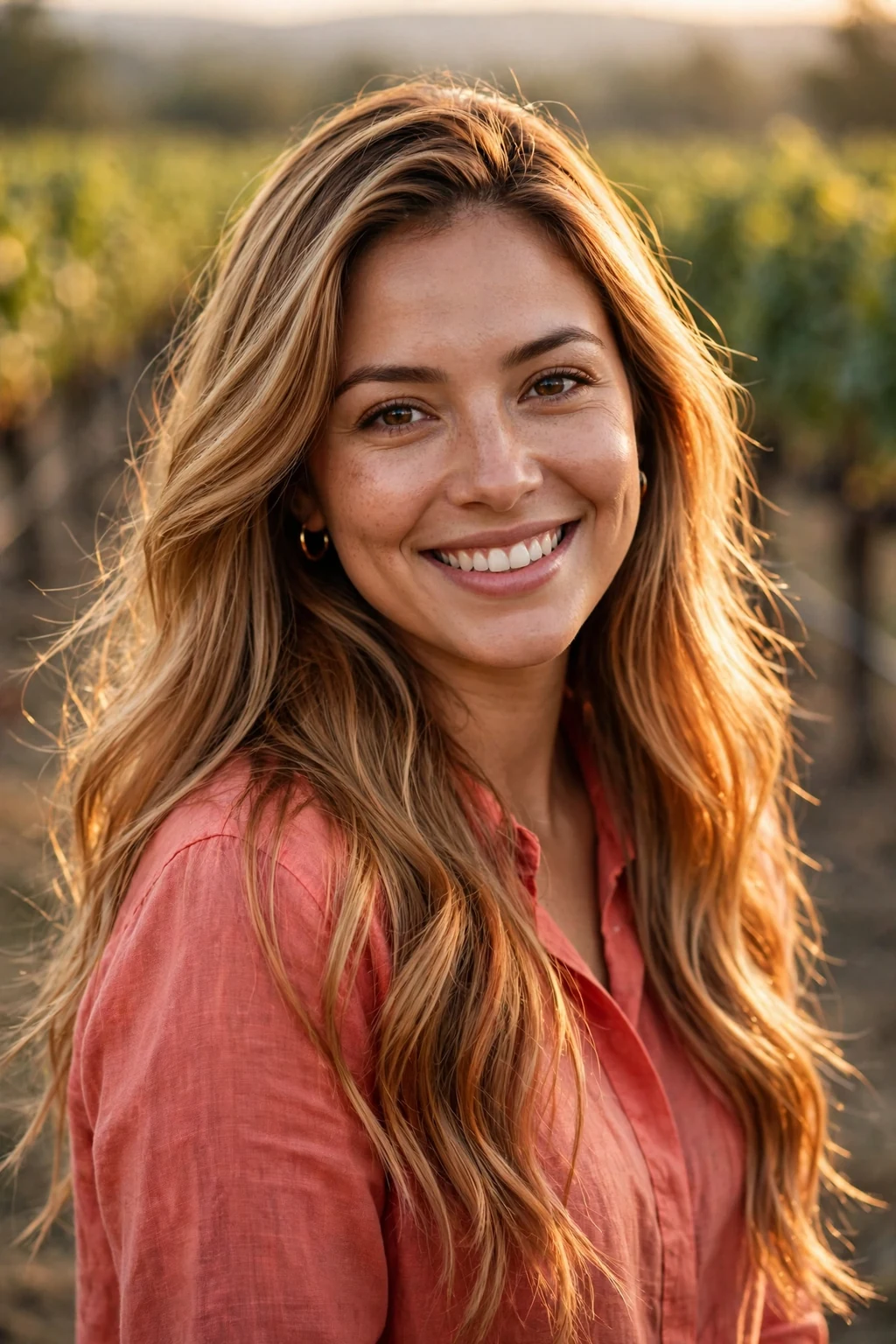
17. Subtle Plum Money-Piece
Subtle plum money-piece frames the face with two soft ribbons of deep violet-brown, like candlelight flickering at the hairline. The placement is strategic: just the front sections carry the color, so the effect is a face-brightening halo that draws attention to the eyes and cheekbones. The plum is deep and muted, closer to black-cherry than bright purple, which keeps it elegant against dark hair. The finish is glossy and rich, best on sleek straight or gently waved bobs where the face-framing pieces sit cleanly. This flatters deep and medium skin tones strikingly, as the violet brings out warmth in the complexion. It suits oval, square, and heart-shaped faces especially well, since the lighter frame softens the jawline and narrows a wider forehead. Thirties through fifties wear it as a refined statement that feels modern without a full-head commitment. The face-framing placement also slims the appearance of the face, as the lighter pieces draw the eye inward. It is the colorist's equivalent of contouring, sculpting with light instead of makeup.
Ask your colorist to lighten just the two front sections and tone with a deep plum demi-permanent shade, keeping the pieces soft rather than chunky. Style sleek with a flat iron, tucking one side behind the ear to show the color placement. A plum color-depositing conditioner every two weeks keeps the violet from fading to brown, and a shine serum on the front pieces maximizes the halo effect. Because only two sections are lightened, damage is minimal and upkeep is low. Refresh the money-piece every eight weeks and trim the bob every six to eight weeks to keep the shape sharp. Grow-out is discreet since the pieces blend with natural regrowth. Try this if you want maximum face-flattery with minimum color: the plum frame brightens every expression and photographs beautifully. Tuck both sides behind the ears for a minimalist look that still shows the plum at the temples. The deep tone also complements gold jewelry beautifully, warming up the violet.
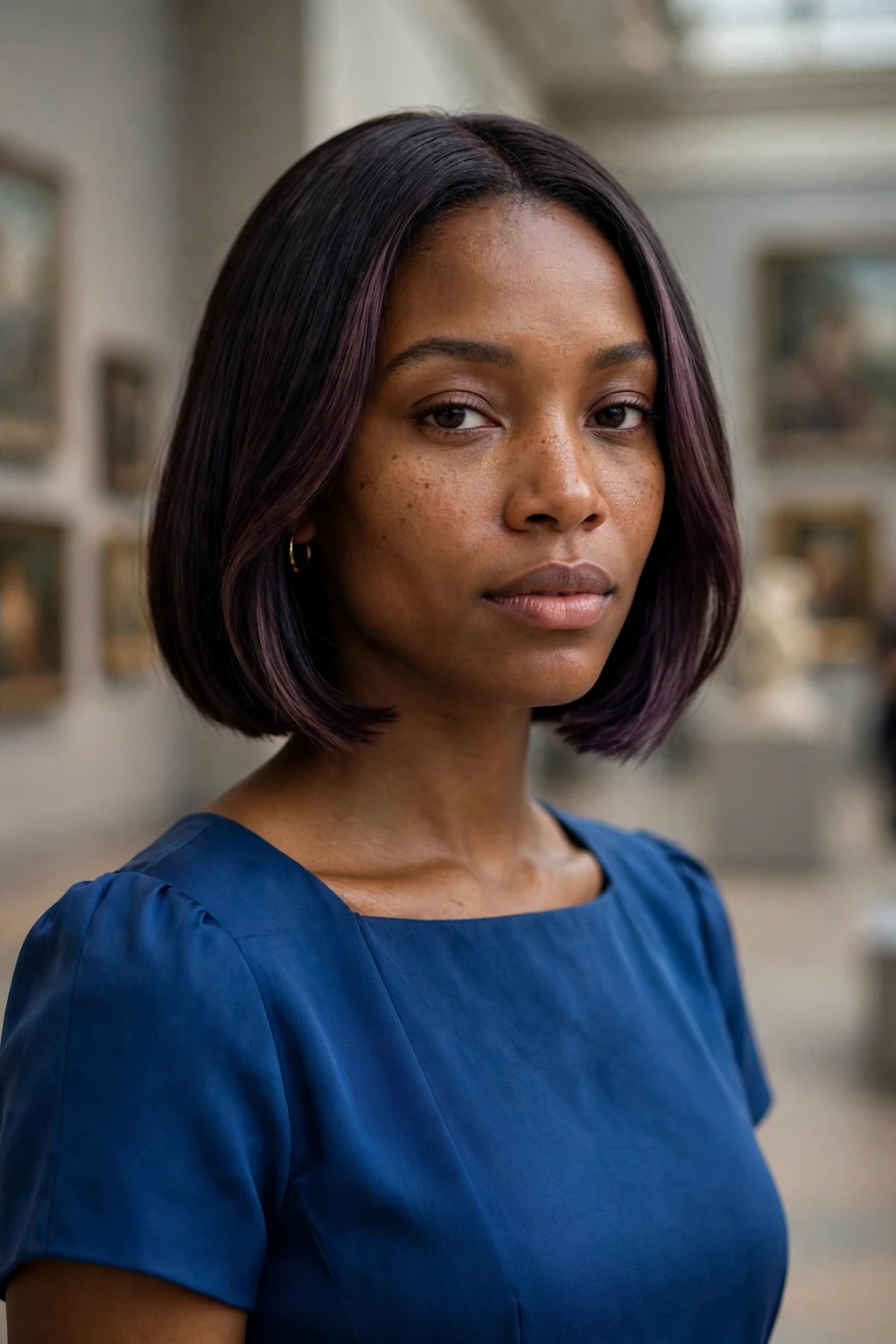
18. Silver-Blonde with Icy Blue Toner
Silver-blonde with an icy blue toner turns natural gray or pre-lightened blonde into a polished, moonlit silver with the faintest blue cast. The blue is barely there, just enough to neutralize any yellow and leave the silver crisp, cool, and mirror-bright. The finish is sleek and modern, transforming gray from something to hide into a deliberate, fashion-forward statement. On short pixie cuts the effect is especially striking, as the cropped shape shows off the metallic tone from every angle. This flatters cool skin tones beautifully and makes the silver look intentional rather than incidental. It suits fine to medium hair where the pale tone creates an illusion of density, and flatters all face shapes since the short cut does the architectural work. Women in their fifties through seventies wear it with pride, though younger women with premature silver carry it equally well. The icy tone also brightens the eye area, giving the whole face a more awake appearance. It pairs strikingly with bold brows and a strong lip, balancing softness with edge.
Achieve it by toning natural or lifted silver with an icy blue-violet toner rather than dyeing. Style the pixie with a small amount of texturizing paste for piece-y definition that catches the light. Purple shampoo once or twice weekly keeps the silver bright and banishes yellow, while a weekly hydrating mask combats the dryness pale hair is prone to. Heat protectant matters even for short hair if you use hot tools. Refresh the toner every six to eight weeks and trim the pixie every four to six weeks to maintain the shape. Grow-out blends seamlessly with natural silver. Choose this if you are embracing gray: the icy toner elevates it to a style choice, looks stunning with bold glasses and red lipstick, and requires less maintenance than fighting silver with dark dye. A pea-sized amount of smoothing cream tames any frizz without weighing down the crop. The silver tone looks especially sharp against black or jewel-toned clothing, which makes the icy color pop.
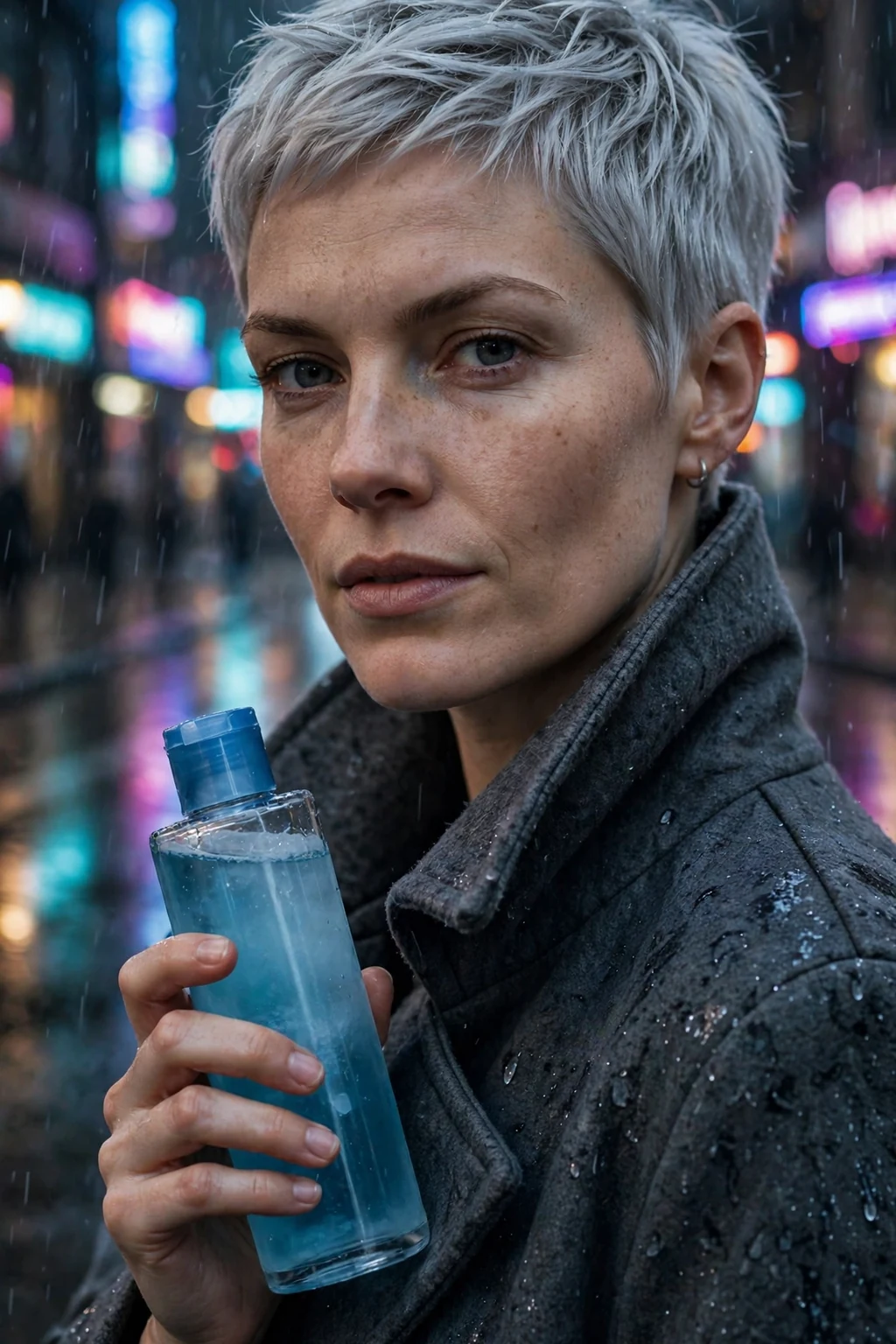
19. Caramel Balayage with Auburn Whispers
Caramel balayage with auburn whispers paints ribbons of golden caramel through a brunette base, then threads the finest auburn lowlights between them for a flicker of red that appears and disappears as the hair moves. The auburn is the secret ingredient: too subtle to name at a glance, but responsible for the richness that makes the caramel look expensive. The finish is warm and dimensional, especially on long layered hair where the ribbons have room to interweave. This flatters warm and neutral skin tones, olive complexions especially, as the caramel and auburn echo golden undertones in the skin. It suits medium to thick hair with wave or curl, where texture multiplies the dimension. Oval, long, and heart-shaped faces wear it well, as the lighter ribbons add width through the mid-face. Twenties through fifties choose it as the quintessential expensive-brunette upgrade. The auburn whispers also add warmth that flatters sallow or tired complexions, acting like a permanent golden-hour filter. Braided styles show off the ribboning beautifully, with caramel and auburn weaving like threads.
Ask your colorist for hand-painted caramel balayage with auburn lowlights woven through the interior, finished with a warm gloss. Style with a curling wand, alternating directions for lived-in waves that show the ribboning. A warm-toned color-depositing conditioner every two weeks keeps the caramel from fading flat, and a shine spray amplifies the dimensional glow. Wash in lukewarm water with sulfate-free shampoo to protect the tone. Refresh the balayage every ten to twelve weeks; the painted placement grows out softly with no harsh line. Trim every ten weeks to keep layers fresh. Try this if your brunette feels flat: the caramel brightens, the auburn deepens, and together they create the kind of rich, touchable color that looks good in every light. Overnight, a loose topknot preserves the waves and minimizes friction fading. A caramel gloss treatment between full appointments keeps the ribbons luminous and fresh without the cost of a full balayage session.
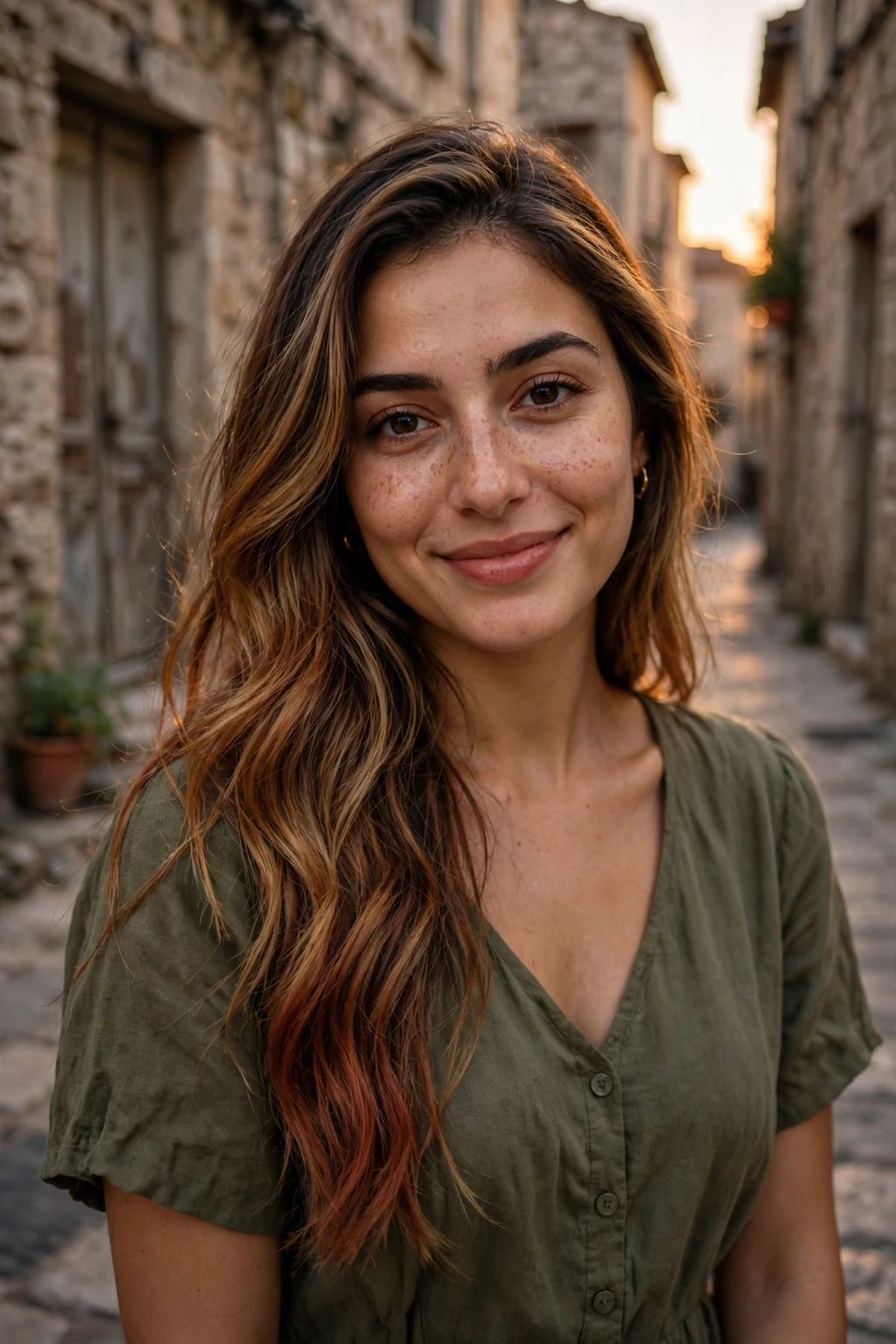
20. Subtle Magenta Face-Framing Slices
Subtle magenta face-framing slices place thin ribbons of deep pink-red along the hairline, creating a halo of color that lights up the face without touching the rest of the hair. The magenta is rich rather than neon, closer to raspberry than hot pink, which keeps it sophisticated against dark hair. The finish is vivid at the perimeter and fades into the natural base within an inch, so the effect is a glowing frame rather than a dye job. This flatters all skin tones, as the pink-red reflects a healthy flush onto the cheeks, and makes dark eyes look dramatic. It suits straight to wavy bobs and lobs best, where the face-framing pieces sit visibly. Oval, round, and square faces benefit, since the bright frame draws the eye to the center of the face. Teens through thirties wear it as a playful accent, though the restrained placement keeps it office-appropriate. The hairline placement means the color frames every expression, acting like a permanent filter. It also grows out from such a small section that touch-ups are quick and inexpensive.
Ask your colorist to foil just the hairline sections and apply a deep magenta demi-permanent shade, keeping the slices fine and blended. Style with a flat iron, flicking the front pieces slightly outward to display the color. Magenta fades moderately fast, so use sulfate-free shampoo, cool rinses, and a magenta color-depositing conditioner weekly. A leave-in UV protectant prevents sun from bleaching the vivid tone. Refresh the slices every six to eight weeks; because they are at the hairline, regrowth shows sooner than hidden placements, but the small area makes touch-ups quick and affordable. Trim every eight weeks. Choose this if you want color that works like makeup: it brightens the face instantly, grows out from a tiny section, and delivers maximum impact per minute of maintenance. For a bolder reveal, wear the front pieces straight and sleek while the rest stays wavy. The magenta photographs vividly, making it a favorite for anyone who loves a striking profile picture.

21. Golden Blonde with Apricot Tint
Golden blonde with an apricot tint washes warm blonde hair in a soft peachy-orange glow that looks like permanent golden hour. The apricot is sheer, sitting between gold and copper, and it gives blonde a juicy warmth that flat beige blonde lacks. The finish is sunny and radiant, especially on long wavy hair where the light plays through the warm tones. This subtle color flatters warm and neutral skin tones beautifully, mimicking a sun-kissed glow that makes the complexion look healthy. It suits medium to thick hair where the warmth has density to saturate, and flatters oval, heart, and long faces with its brightening halo. Women in their twenties through forties choose it when they want blonde that feels alive rather than icy, a warm-weather blonde that works all year. The apricot warmth also neutralizes sallowness in the complexion, giving skin a healthy glow. It layers beautifully with golden jewelry, which picks up the peachy tones in the hair.
Ask your colorist for a golden blonde base finished with an apricot gloss toner, which adds the peachy warmth without permanent commitment. Style with beachy waves from a curling wand, finishing with a texturizing spray for touchable movement. An apricot or copper-gold color-depositing conditioner every two weeks maintains the juicy tone, and a UV protectant spray keeps the sun from bleaching it unevenly. Deep condition weekly to preserve the golden reflectivity. Refresh the gloss every eight weeks and trim every eight to ten weeks. Grow-out is soft because the tint is tonal. Try this if icy blonde washes you out: the apricot warmth flatters like candlelight, looks stunning against tanned summer skin, and brings a cheerful energy no cool blonde can match. A leave-in cream with UV filters doubles as sun protection and frizz control for the lightened hair. Loose braids overnight create heatless waves that show off the apricot dimension by morning.
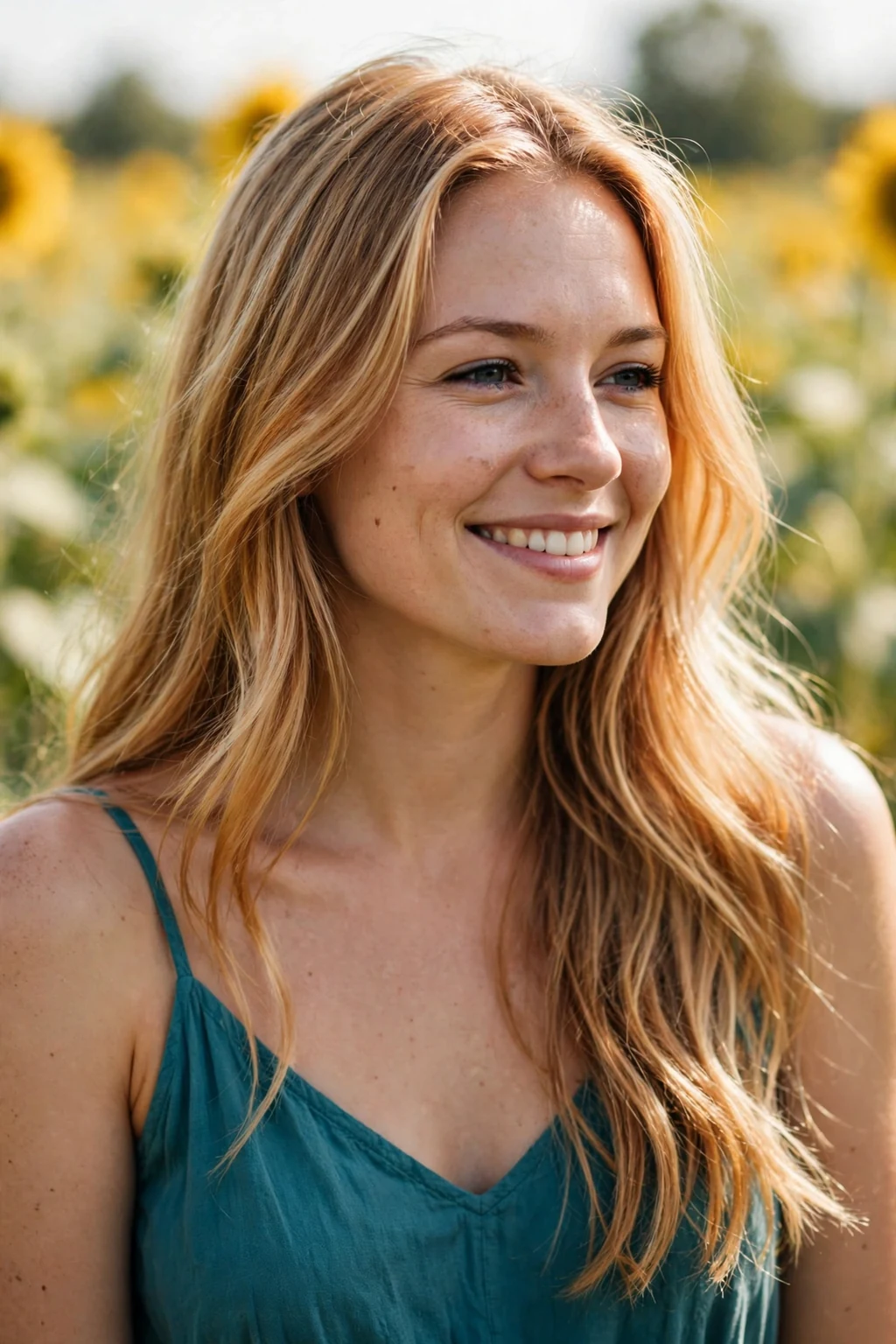
22. Cool Taupe with Smoky Violet Panels
Cool taupe with smoky violet panels blends a greige-blonde base with ribbons of dusty purple, creating the moody, editorial color of storm clouds at dusk. The taupe itself is a sophisticated neutral, neither warm blonde nor ash brown, and the violet panels add a shadowy intrigue that reveals itself in movement. The finish is matte and modern, best on straight to loosely waved hair where the panels read as clean ribbons of tone. This flatters cool and neutral skin tones, and the unusual palette makes a striking backdrop for bold makeup. It suits medium to thick hair where the panels have room to hide and reveal, and flatters oval, square, and diamond faces with its cool, sculpting dimension. Thirties through fifties wear it as the thinking woman's fantasy color: artistic, understated, and endlessly interesting. The cool palette also recedes visually, making thick hair appear sleeker and more controlled. It is a conversation-starting color that still feels completely grown-up and intentional.
Ask your colorist for a cool taupe base with smoky violet panels painted through the interior in a demi-permanent formula. Style sleek and straight with a flat iron for maximum ribbon definition, finishing with a lightweight serum that adds polish without warmth. A violet color-depositing conditioner every two weeks keeps the panels from fading to gray, and sulfate-free shampoo in cool water preserves the cool tone. Weekly masks keep the hair healthy and the matte finish intentional rather than dry-looking. Refresh the panels every seven to nine weeks and trim every eight weeks. Choose this if warm colors bore you: the taupe-violet combination is rare, refined, and quietly dramatic, the color equivalent of a perfectly tailored gray suit with a silk lining. A cool-toned glossing serum on dry hair enhances the smoky dimension between washes. The violet panels look particularly striking in updos, where the interior color is suddenly revealed.
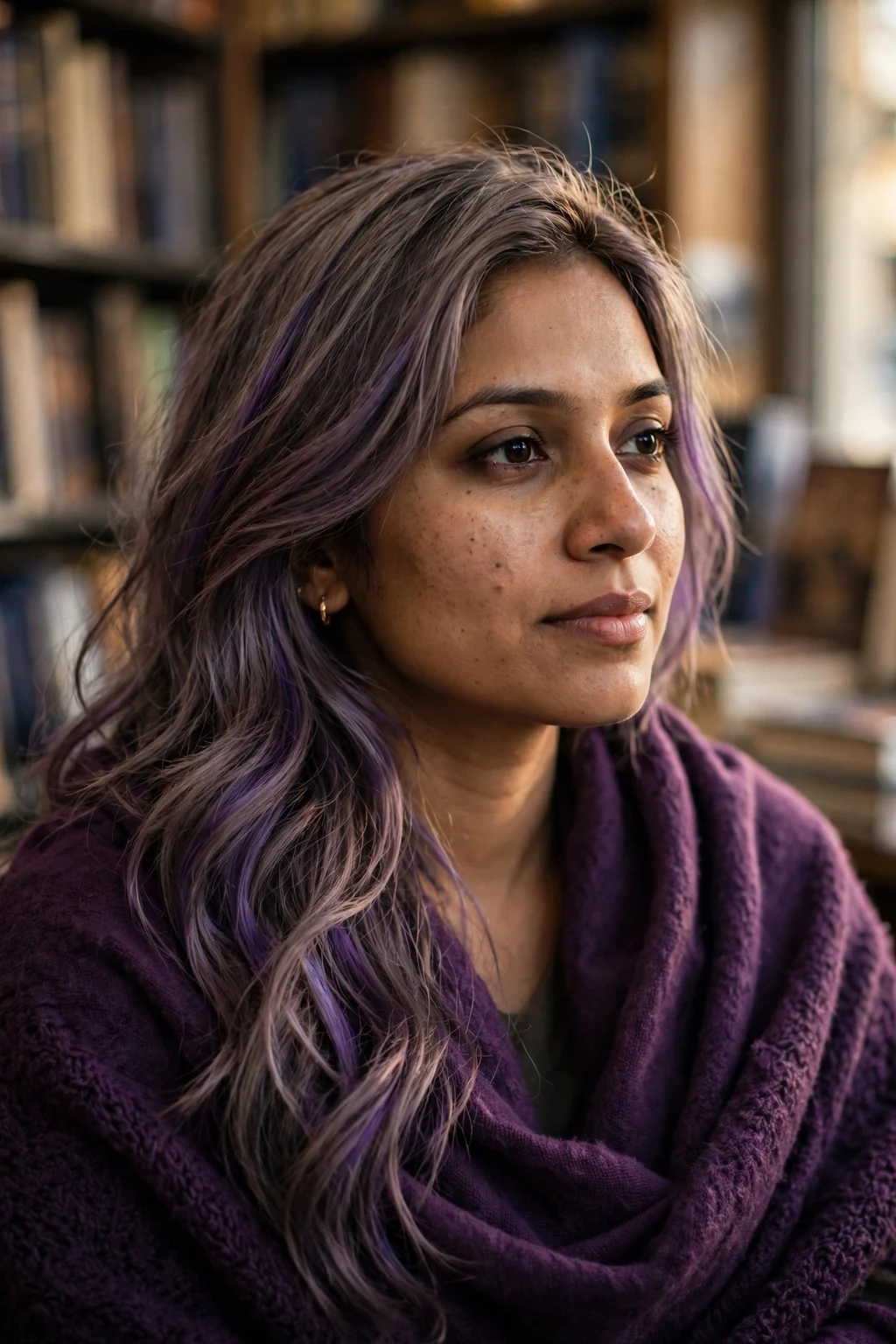
23. Subtle Cherry-Cola Gloss
Subtle cherry-cola gloss pours a deep, effervescent red-brown over dark hair, like cola held up to the light with its ruby depths glowing. The color is rich and dimensional, reading as a luxurious brunette indoors and igniting into cherry-red dimension in sunshine. The finish is ultra-glossy, with the demi-permanent formula adding a lacquered shine that makes hair look dramatically healthier. This flatters medium to deep skin tones beautifully, as the cherry warmth harmonizes with golden and olive undertones, and it makes brown eyes look luminous. It suits thick, long hair best, where the deep color has length to develop its cola-like depth, and works on straight, wavy, and curly textures. Oval, round, and heart-shaped faces glow with it. Twenties through forties choose it as the most wearable red: all of the richness, none of the high-maintenance fading of true red dye. The cola depth also gives fine hair the appearance of greater density, as dark dimensional color reads as thicker. Candlelight and evening settings make the cherry tones glow most dramatically.
Ask your colorist for a demi-permanent cherry-cola gloss over your natural dark base, which deposits red-brown tone and mirror shine without lifting. Style with loose waves or a sleek blowout, both of which show off the dimensional depth. A red-brown color-depositing conditioner every two weeks keeps the cherry from fading to flat brown, and cool rinses lock in the gloss. Weekly deep conditioning maintains the lacquered finish. Refresh the gloss every six to eight weeks and trim every eight to ten weeks. Grow-out is invisible because the gloss fades on tone. Try this if you crave red but fear the upkeep: cherry-cola delivers the drama of red with the manners of brunette, and the shine alone is worth the appointment. For maximum shine, finish every style with a cold-water rinse that seals the cuticle. The cherry tone deepens beautifully over the first week as the gloss settles, reaching its richest color around day seven.
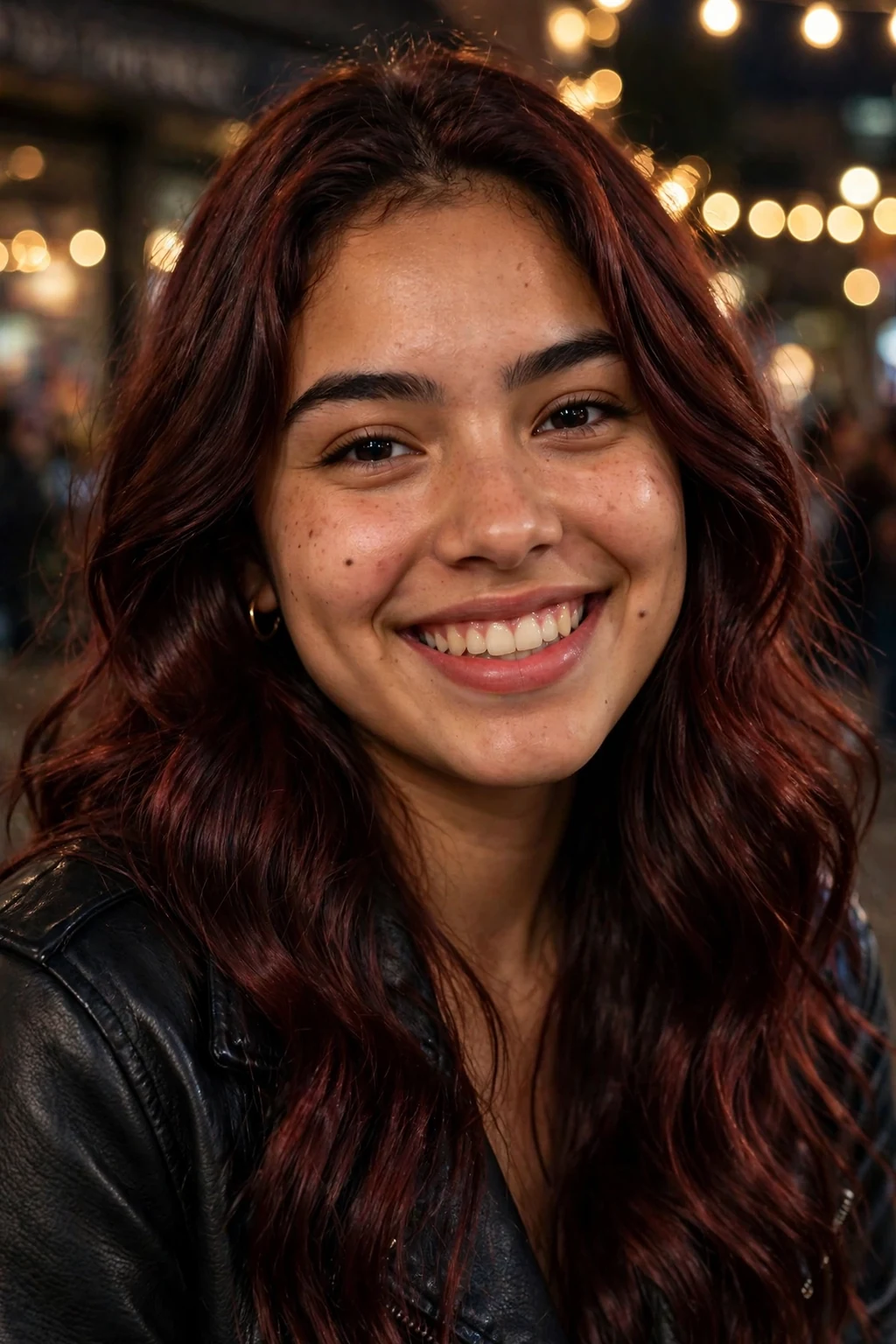
24. Buttery Blonde with Pale Pink Ends
Buttery blonde with pale pink ends melts a creamy, warm blonde into the softest blush at the tips, like the edge of a peony petal. The pink is barely-there, a suggestion rather than a statement, which makes this one of the most wearable fantasy-adjacent blondes. The finish is soft and romantic, especially on long wavy hair where the gradient unfolds gradually. This subtle pink flatters fair to light-medium skin tones, adding a rosy warmth that brightens the complexion. It suits fine to medium hair where the pale tones create an airy, delicate fullness, and flatters oval, heart, and diamond faces with its light-catching ends. Teens through thirties wear it as a dreamy, feminine take on blonde, though the restraint keeps it ageless. The blush ends also soften the overall silhouette, giving long hair a romantic, weightless quality. It is the rare pastel that suits warm complexions, thanks to the buttery rather than icy blonde base.
Ask your colorist for a buttery blonde balayage with a pale pink toner melted through the last few inches. Style with soft waves from a large-barrel iron, letting the pink ends curl and catch the light. A pink color-depositing conditioner every two weeks keeps the blush from washing out, and purple shampoo monthly prevents the blonde from turning brassy. Weekly masks keep the lightened ends healthy. Refresh the pink every six to eight weeks and trim every eight to ten weeks. Grow-out is graceful because the color lives at the ends. Choose this if you want blonde with a whisper of romance: the pink is visible enough to delight and subtle enough for any setting, the sweetest possible introduction to colored hair. A wide-tooth comb on wet hair prevents breakage in the delicate lightened ends. The pink looks especially pretty in half-up styles, where the blush tips gather like petals.
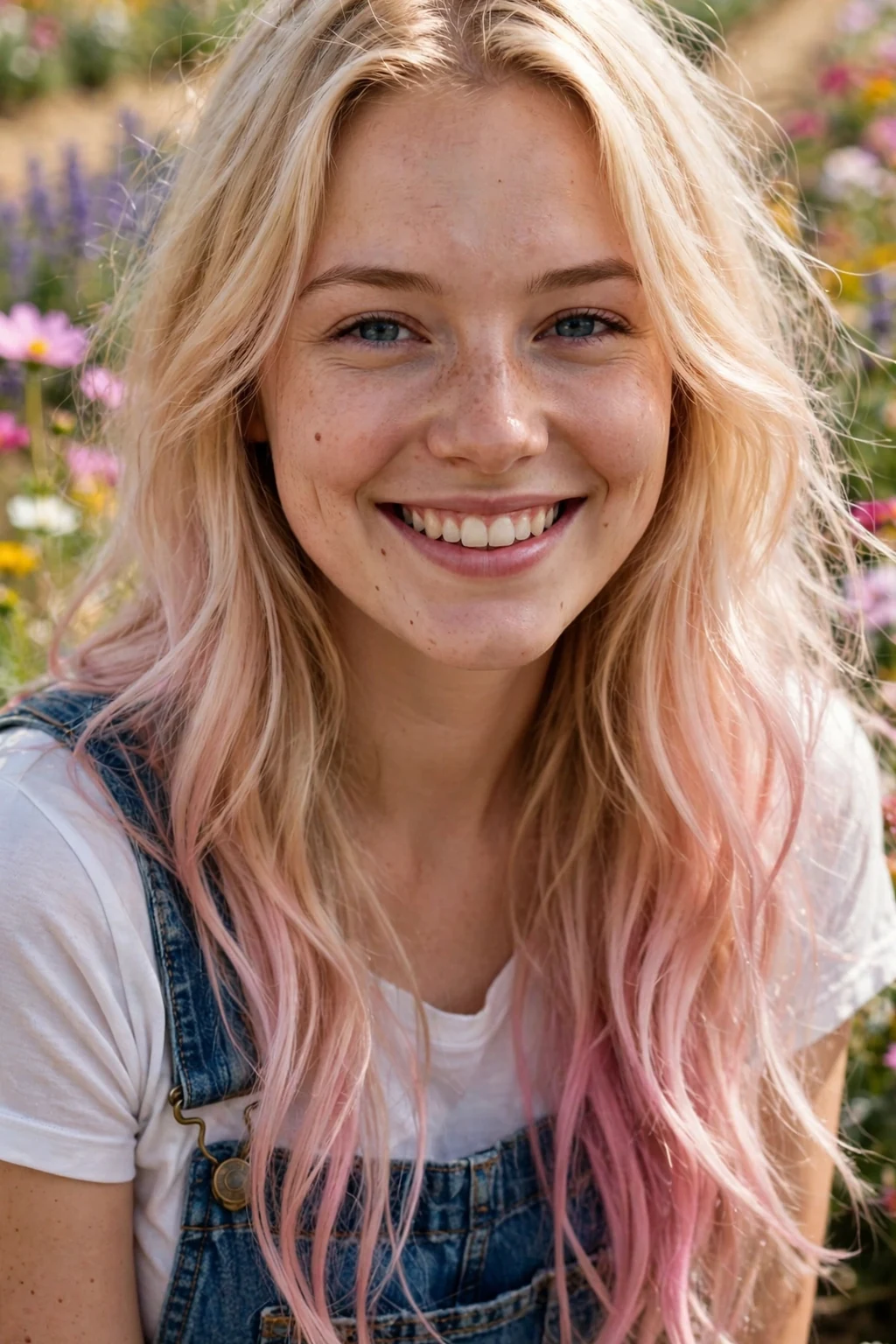
25. Espresso with Subtle Merlot Lowlights
Espresso with subtle merlot lowlights enriches near-black hair with ribbons of deep wine-red that smolder beneath the surface like embers. The merlot is dark and velvety, visible as a burgundy shimmer when light hits and as pure espresso in shadow, giving the hair a luxurious, ever-shifting depth. The finish is rich and polished, best on sleek straight or gently waved bobs where the lowlights read as wine-dark dimension. This flatters deep and medium skin tones exquisitely, as the red brings out golden warmth in the complexion. It suits medium to thick hair where the lowlights have density to weave through, and flatters oval, round, and square faces with its slimming vertical ribbons. Women in their forties through sixties choose it as the most sophisticated red: all wine, no fire, endlessly elegant. The wine-dark ribbons also catch candlelight beautifully, making this a favorite for evening events. It adds a quiet luxury to dark hair that reads as expensive rather than artificial.
Ask your colorist for merlot lowlights in a demi-permanent formula, woven finely through an espresso base so they read as dimension rather than stripes. Style sleek with a blowout and flat iron for a polished bob that shows the wine-dark shimmer, finishing with a shine serum. A red color-depositing conditioner every two weeks keeps the merlot from fading to brown, and sulfate-free shampoo preserves the richness. Weekly masks maintain the velvety finish. Refresh the lowlights every eight to ten weeks and trim the bob every six to eight weeks to keep the shape crisp. Grow-out is discreet since the lowlights sit within dark hair. Try this if black hair feels flat: the merlot adds a candlelit richness that is professional by day and captivating by night. A boar-bristle brush smooths the sleek bob and distributes the shine serum evenly. The merlot depth looks stunning against cream and camel clothing, which makes the wine tones glow by contrast.
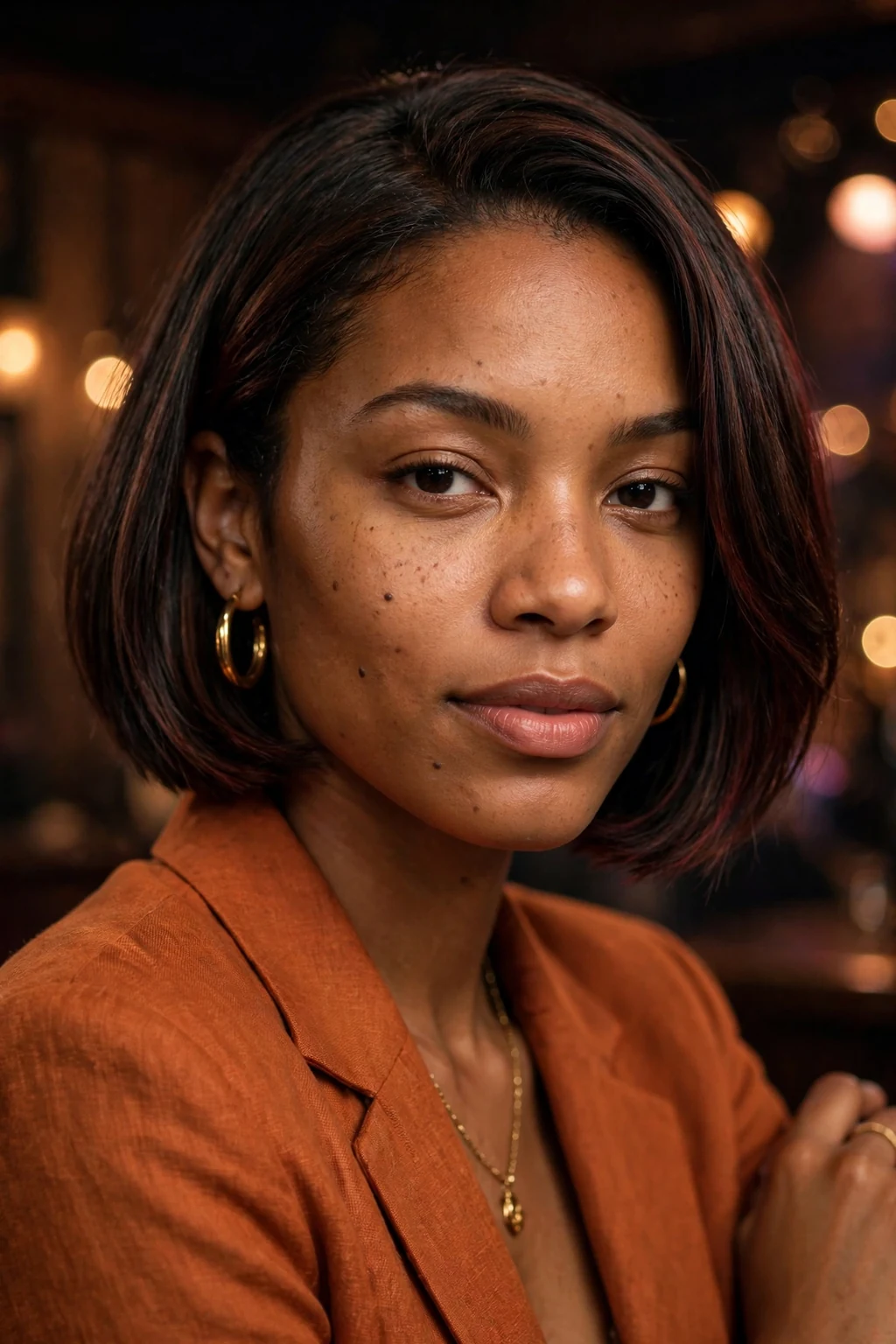
26. Iced Mocha with a Violet Sheen
Iced mocha with a violet sheen is a cool, understated color that looks like deep coffee hair caught in violet light. The base stays a rich, muted brown with ashy, almost gray-brown depth, while a translucent violet gloss is layered over the mid-lengths and ends so the purple reads as a soft reflection rather than a bold dye job. In daylight the hair looks polished and neutral, but under indoor lighting or sunlight it reveals a delicate lilac shimmer that moves with every turn of the head. The finish is smooth and glassy rather than matte, which helps the violet sheen stay visible without looking artificial, and the color works beautifully on straight, wavy, and loosely curled hair alike. It is especially flattering on cool and neutral skin tones, where the violet echo brings out the eyes, and it suits oval, round, and heart-shaped faces because the darker base keeps the silhouette grounded while the sheen adds dimension around the face.
Ask your colorist for a level-five or six mocha base with an ash undertone, followed by a sheer violet gloss rather than a permanent purple dye, and keep the violet concentrated away from the roots so grow-out stays soft and believable. At home, style with a smoothing cream and a round brush or a low-heat flat iron to keep the surface reflective, and use a violet-tinted conditioner once every two weeks to refresh the sheen without over-depositing color. Wash with sulfate-free, color-safe shampoo in cool water, and protect the hair from heavy sun exposure, which can warm the mocha base and dull the violet. Plan a gloss refresh every eight to ten weeks and a trim every ten to twelve weeks to keep the ends healthy. Try this look if you want color that feels grown-up, office-friendly, and quietly striking, because it adds intrigue without demanding a high-maintenance routine or a dramatic change.
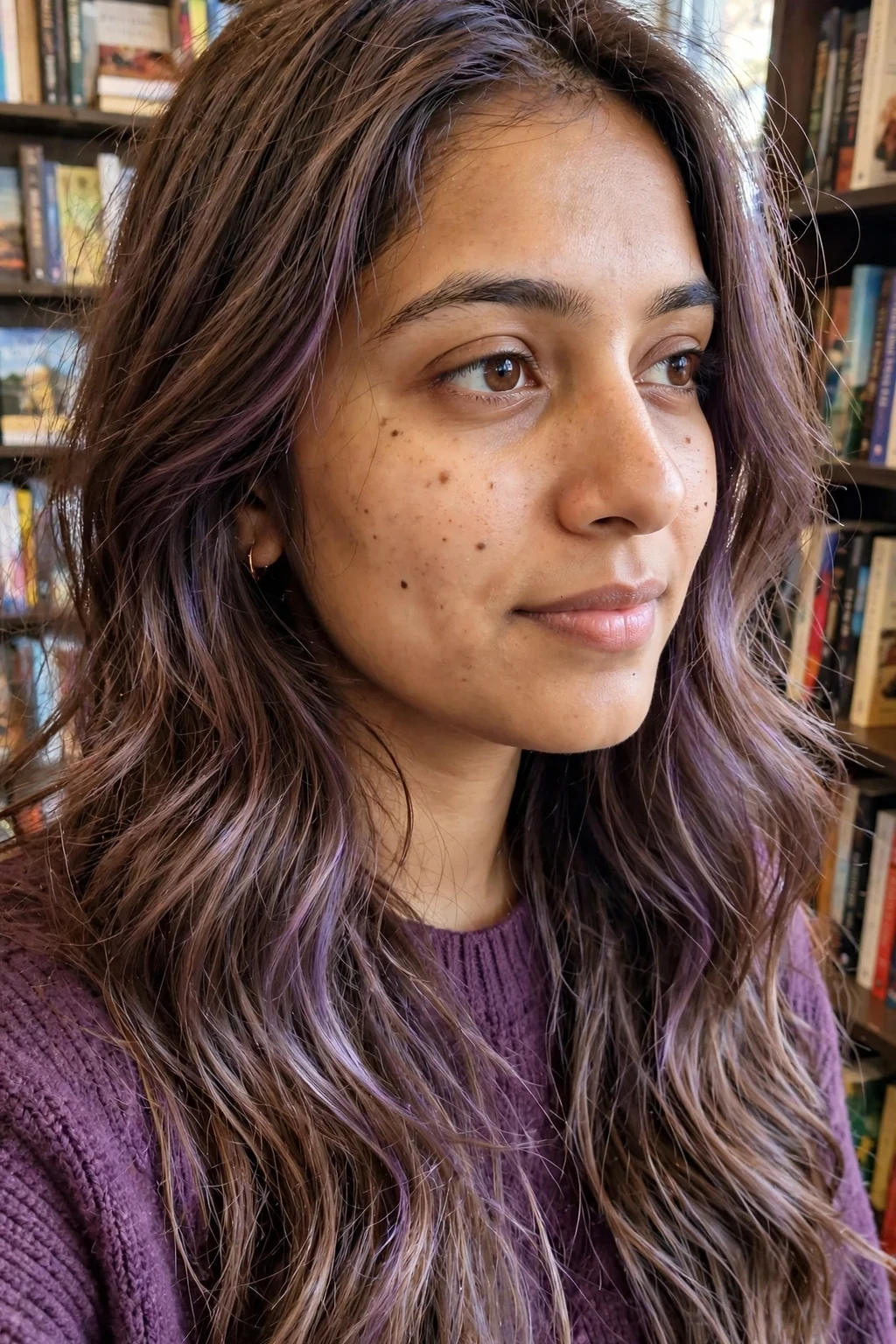
27. Smoky Sage Underlights
Smoky sage underlights hide a muted, gray-green tint beneath the top layer of hair, so the color only appears when the hair moves, is tucked behind the ears, or is worn up. The effect is earthy and modern rather than fantasy-bright: think dried sage leaves and soft moss rather than neon green, blended through the nape and interior layers while the visible canopy stays a natural dark brown or soft black. That hidden placement makes the look surprisingly wearable for work and everyday life, while still giving a secret flash of personality in motion. The muted green flatters warm and neutral skin tones particularly well, and it adds depth to thick, wavy, and curly hair, where the underlayers catch light between curls. It also suits square and oval faces, since the darker top layer frames the face while the sage peeks out lower down, drawing the eye gently downward rather than widening the face.
To create this look, your colorist will section off the underlayers and apply a smoky sage formula over pre-lightened hair, keeping the top canopy untouched so the reveal stays discreet. Styling is simple: wear the hair down for a whisper of color, or try a low bun, half-up twist, or braid to show the sage more deliberately. Use a color-safe shampoo and a green-toned conditioner sparingly, since overuse can push the sage too bright, and add a weekly hydrating mask to keep pre-lightened underlayers soft. Refresh the underlights every eight to twelve weeks, or let them fade gradually into a soft gray-green that still looks intentional. Choose smoky sage underlights if you love unusual color but want to control exactly when it shows, because this placement gives you both polish and playfulness in a single style. For special occasions, a half-up style or a loose French braid will expose the sage layers beautifully, while a silk pillowcase and gentle detangling will protect the pre-lightened underlayers from breakage and keep the muted green looking soft rather than patchy.
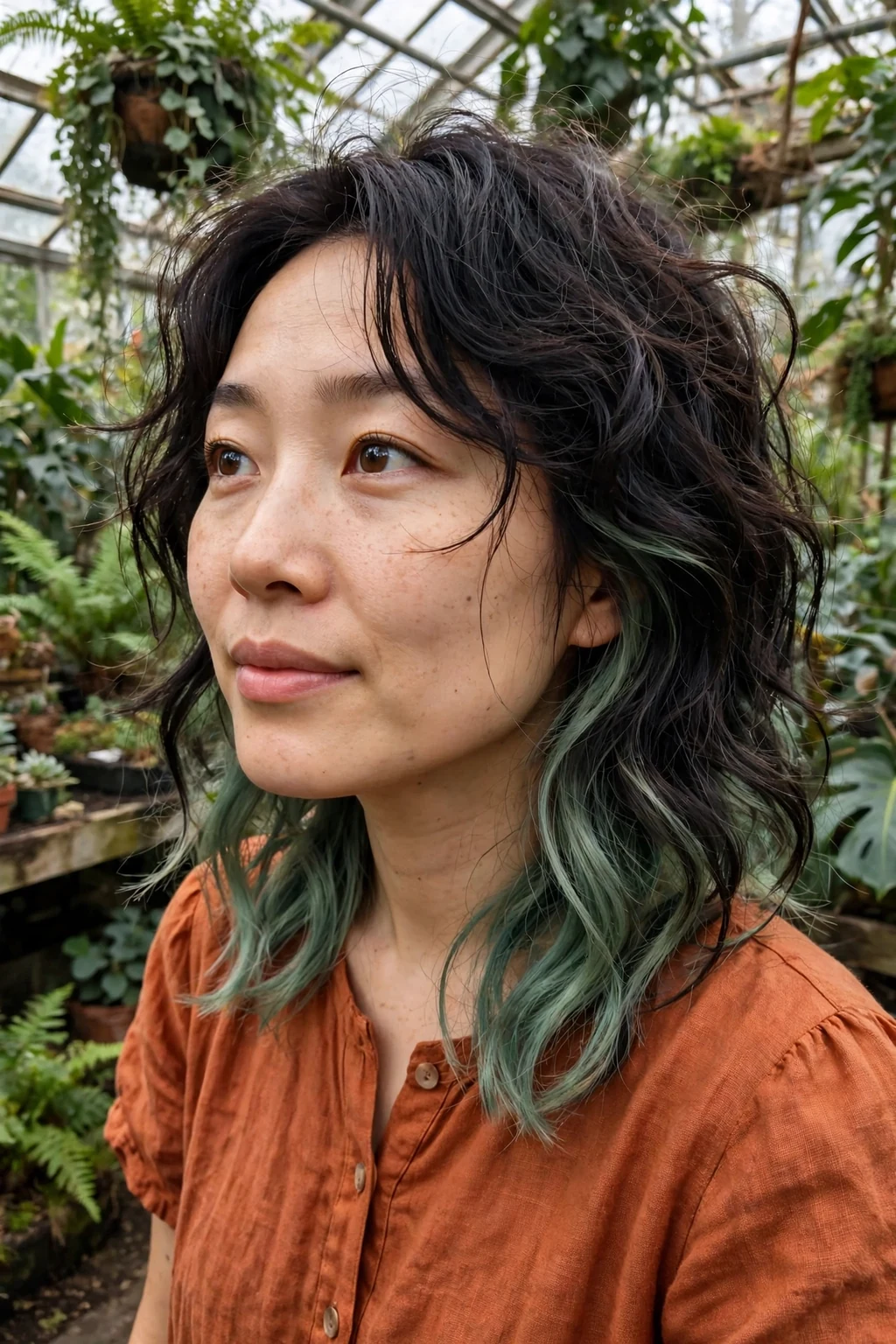
28. Dusty Teal Peekaboo Streaks
Dusty teal peekaboo streaks place a muted blue-green color in slim panels behind the front layers of hair, so the teal flashes through like a watercolor accent whenever the hair swings or is parted. Unlike bright turquoise, dusty teal is desaturated and grayed, which makes it read as sophisticated rather than costume-like, especially against dark brown or black hair. The streaks are usually kept fine and well blended at the roots, widening slightly toward the ends, so the color looks like it belongs to the hair rather than sitting on top of it. This placement flatters most face shapes, because the front layers remain natural and frame the face, while the teal adds interest just behind them. It works on straight and wavy textures best, where the panels stay visible, and it is a wonderful choice for cool skin tones, though warm skin tones can also wear it well when the teal leans slightly greener.
Your colorist should pre-lighten only the peekaboo sections to a pale yellow before applying a dusty teal toner, leaving the surrounding hair untouched to protect its health and keep maintenance low. At home, keep the panels vivid with a teal color-depositing conditioner used every second or third wash, and wash in cool water with a sulfate-free shampoo to slow fading. Style with a straightener or soft waves, since both show the panels clearly, and use a light serum on the ends to keep the pre-lightened sections smooth. Expect to refresh the teal every six to eight weeks, with trims every ten weeks. Try this style if you want a creative accent that stays professional at first glance, because peekaboo placement lets you reveal the color on your own terms. A deep side part will reveal the teal panels more dramatically for evenings out, while a center part keeps them understated for work, and a lightweight leave-in conditioner will keep the lightened sections smooth, shiny, and free from frizz in humid weather.

29. Warm Toffee Gold Gloss
Warm toffee gold gloss is a sheer, golden-brown shine treatment that warms medium brown hair without changing its depth dramatically. Instead of a full color change, the gloss deposits a translucent toffee-gold tone that catches the light, softens harsh lines in the hair, and makes brown hair look richer, healthier, and more expensive. The finish is glossy and reflective, with golden ribbons that appear most strongly in sunlight and under warm indoor light, while the hair still reads as natural brown in shade. It is an ideal choice for anyone who wants a noticeable refresh without commitment, and it flatters warm and golden skin tones beautifully, while also warming up neutral complexions. The gloss suits fine to thick hair, straight to wavy textures, and oval, round, and heart-shaped faces, because the added shine creates the illusion of fuller, smoother hair without adding bulk around the face. The gloss also works beautifully as a bridge between salon color appointments, since it refreshes faded brown hair, softens visible regrowth lines, and restores a healthy, light-reflecting surface without altering the underlying color depth or requiring any lightening at all.
Application is quick and gentle, since a gloss sits on the surface of the hair rather than lifting it, so most colorists can apply it in under an hour with little damage. At home, maintain the warmth with a sulfate-free shampoo, a weekly deep-conditioning mask, and a gold-toned gloss refresh every six to eight weeks as the shine gradually fades. Style with a blow-dry and a round brush for maximum reflection, or let natural waves air-dry with a light curl cream for a softer version of the same glow. Avoid clarifying shampoos too often, since they strip gloss faster, and add a heat protectant before styling. Choose warm toffee gold gloss if your brown hair feels flat or dull, because this low-risk treatment restores warmth and shine while keeping your natural color completely recognizable. Between salon visits, a weekly gloss-boosting mask in a warm golden tone will extend the toffee shine, while avoiding very hot showers and harsh clarifying treatments will prevent the translucent gold from washing out unevenly or turning the brown hair dull again.
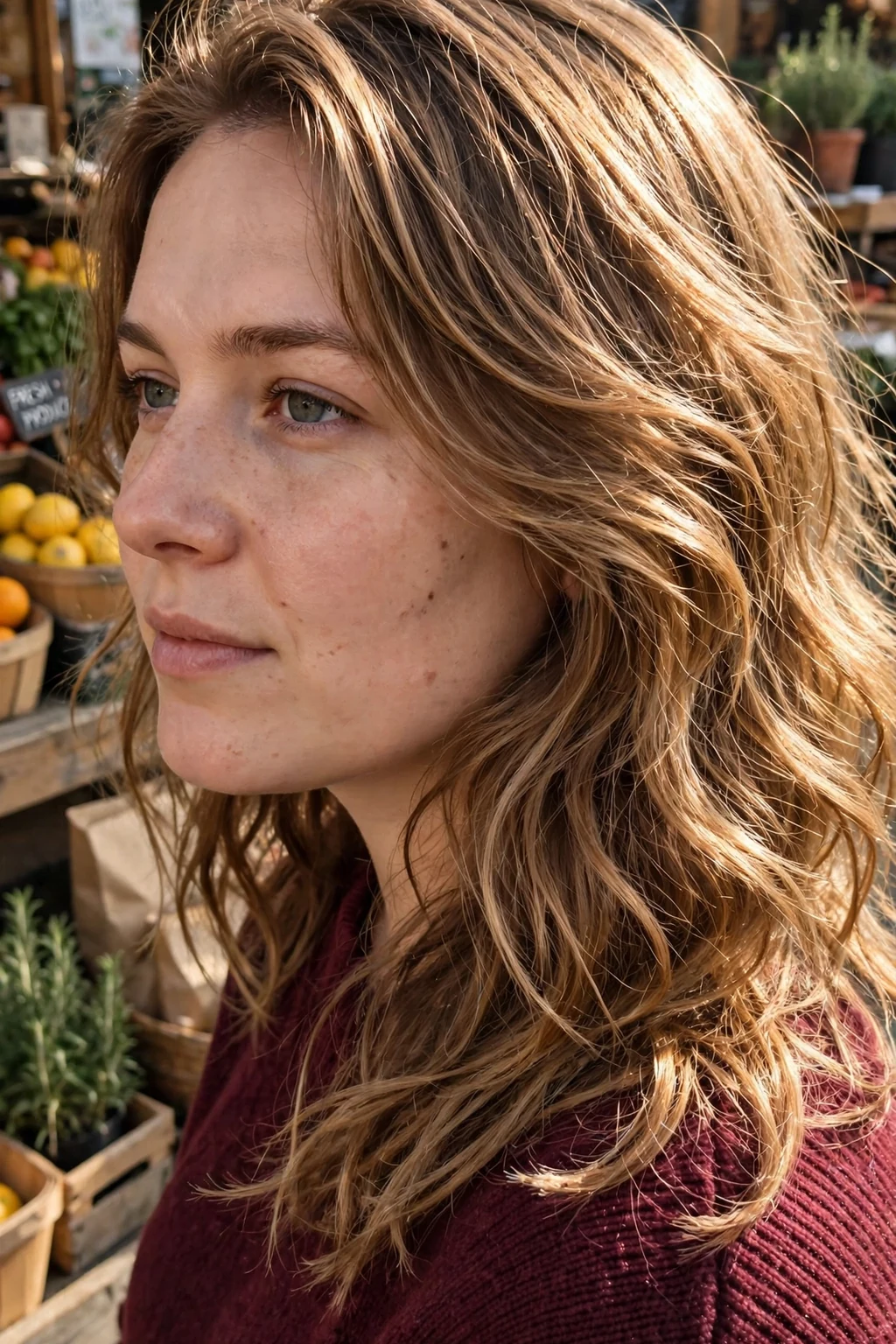
30. Pale Blush Dip-Dye Ends
Pale blush dip-dye ends give the last few inches of hair a soft, barely-there pink wash, as if the tips were dipped in rose water. The transition is gradual rather than a hard line: the natural base, whether blonde, light brown, or dark blonde, melts into a whisper of blush that looks delicate in daylight and slightly more rosy indoors. Because the color lives only at the ends, the look stays fresh and youthful without overwhelming the face, and it works especially well on bobs, lobs, and long layers, where the ends move freely and show the pink from every angle. It flatters fair to medium skin tones and suits oval, heart-shaped, and long faces, since the color draws attention downward and balances the silhouette. Straight hair shows the dip-dye line most crisply, while wavy hair softens it into an ombre-like blur, so both textures wear it beautifully. The blush also photographs beautifully in natural light, giving the ends a rosy glow in portraits and outdoor pictures, while the gradual melt means the color never looks harsh against the skin, even when the hair is pulled back into a ponytail or bun.
To get this look, the ends are gently lightened if needed and then toned with a pale pink formula, keeping the color sheer so it fades gracefully rather than turning patchy. Styling is effortless: a straight finish shows the blush most clearly, while loose waves make it look like a natural sunset tint. Keep the pink alive with a pink color-depositing conditioner once a week and cool-water washes, and protect the ends with a leave-in conditioner, since they are the most fragile part of the hair. Refresh the dip-dye every six to ten weeks, and trim the ends on the same schedule to keep the blush even. Try pale blush ends if you want a romantic, low-commitment touch of color, because you can simply trim it away whenever you are ready for a change. If the pink begins to fade unevenly, a quick pink gloss at the salon will even it out without re-lightening, and storing the hair loosely at night in a soft braid will reduce friction on the delicate ends and keep the blush looking fresh for longer.
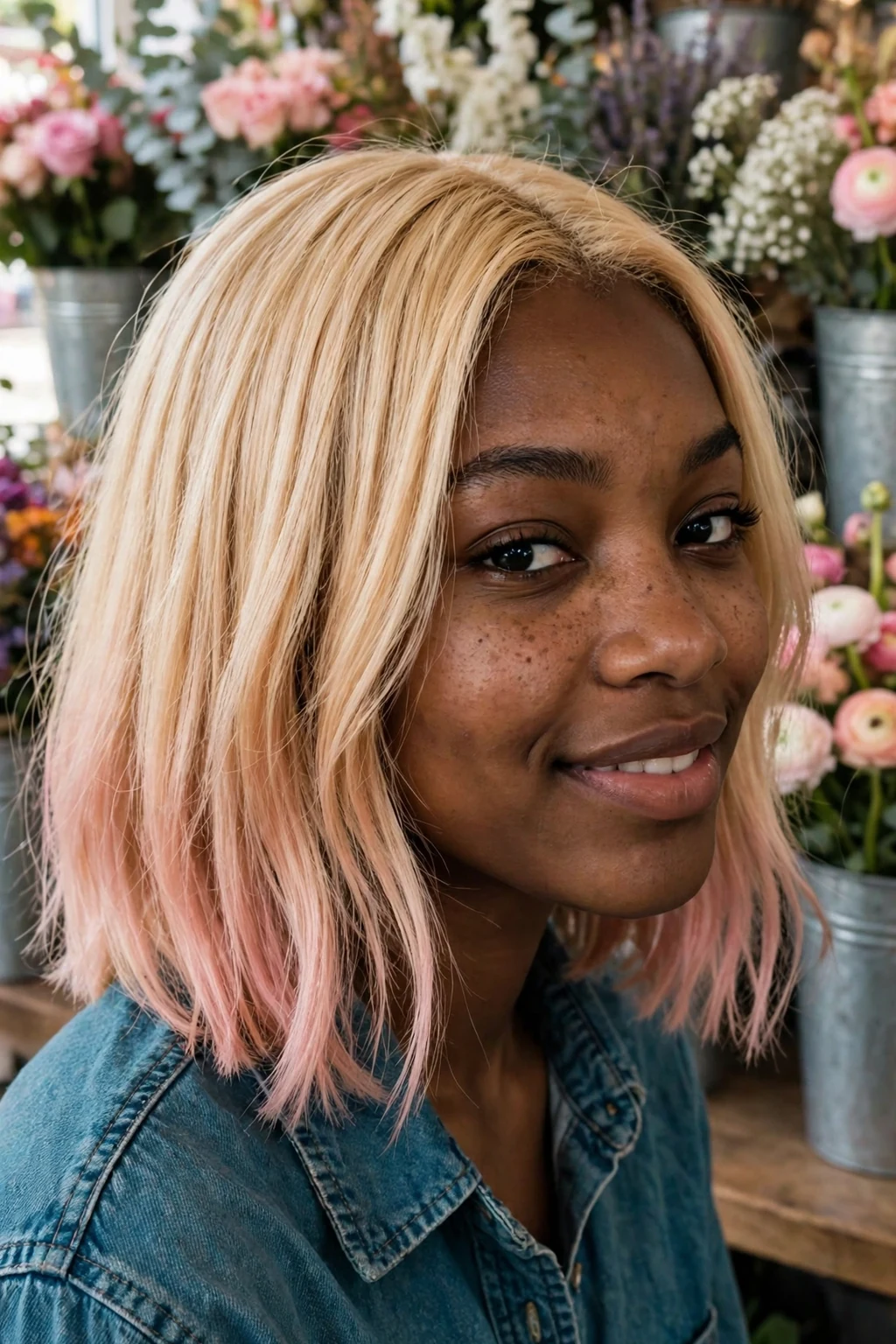
31. Soft Coral Balayage on Brunette
Soft coral balayage on brunette hair paints warm peach-pink ribbons through dark brown lengths, creating a sun-kissed effect with a distinctly rosy warmth. The coral is kept muted and blended, never neon, so it reads as a natural extension of brunette hair in golden light rather than a separate fashion color. Hand-painted balayage placement means the color starts softly below the roots and grows brighter toward the ends, giving the hair movement, dimension, and a healthy glow. This look is especially flattering on warm and neutral skin tones, where coral echoes the skin's natural warmth, and it suits round, oval, and square faces because the vertical ribbons lengthen the appearance of the hair. It works on wavy and straight textures alike, and it adds visible dimension to thick hair without requiring layers or a cut change. The coral ribbons also add warmth to photographs and video calls, where flat brunette hair can sometimes look dark and one-dimensional, while the hand-painted placement ensures no two heads of coral balayage ever look exactly alike, giving each wearer a truly personal result.
Your colorist will hand-paint the coral over pre-lightened sections, focusing on the outer layers and ends while leaving depth at the roots for easy grow-out. At home, style with loose waves or a bouncy blow-dry to show the coral ribbons at their best, and use a curl-enhancing cream or light mousse for hold without stiffness. Maintain the tone with a coral or rose color-depositing conditioner every two weeks and a sulfate-free shampoo, washing in cool water to slow fading. Plan a balayage refresh every ten to twelve weeks and a trim every eight to ten weeks. Choose soft coral balayage if your brunette hair needs warmth and life, because this gentle, hand-painted color feels like summer light captured in the hair all year long. To keep the coral from turning brassy, use a color-safe shampoo and lukewarm water, avoid chlorine without a protective swim cap or pre-wetting the hair, and book a toner refresh sooner if you swim often, since pool chemicals fade warm fashion tones faster than ordinary washing.

32. Champagne Beige with Rosewater Babylights
Champagne beige with rosewater babylights is a refined blonde that combines a cool, creamy beige base with ultra-fine, rosy highlights woven through the top layers. Babylights are so fine they mimic the natural sun-lightened hair of childhood, so the rosewater tint appears as a soft pink shimmer rather than obvious streaks. The overall effect is luminous and expensive-looking: beige keeps the blonde from turning brassy, while the rosewater adds a flush of warmth around the face that brightens the complexion. This color suits fair to medium skin tones, especially cool and neutral undertones, and it flatters oval, heart-shaped, and diamond faces, because the fine highlights frame the cheekbones without adding width. It works best on fine to medium hair, where babylights add visible dimension, and on straight to softly wavy textures that let the fine color show. The rosewater babylights also soften the contrast between the blonde and the skin, making the overall color look more natural in harsh overhead lighting, while the champagne beige base prevents the blonde from looking yellow in photographs or under warm indoor bulbs.
Creating babylights takes patience, since the colorist weaves very small sections and applies a sheer rosewater toner over a beige blonde base, but the result grows out exceptionally gracefully. Style with a smooth blow-dry and a light shine serum to maximize the champagne glow, or add soft bends with a large-barrel iron for a polished everyday finish. Keep the blonde cool with a purple shampoo used once every two weeks, alternating with a rose-tinted conditioner to preserve the pink whisper, and always use a heat protectant. Refresh the babylights every ten to twelve weeks and trim every eight weeks. Try this look if you love blonde but want something softer than icy platinum, because champagne beige with rosewater babylights feels both classic and quietly romantic. A silk scarf or satin-lined hat on windy days will protect the fine babylights from tangling and breakage, while a lightweight bond-repair treatment used monthly will keep the delicately lightened strands strong, smooth, and resistant to the dryness that fine blonde hair often develops.

33. Faded Seafoam Tips
Faded seafoam tips give the ends of the hair a washed-out, pale green tint that looks like sea glass softened by water and time. The color is deliberately muted, sitting somewhere between mint and gray-green, so it feels artistic rather than loud, and it works best on light blonde or pre-lightened hair where the pale tone can show clearly. The fade is gradual, melting from the natural base into seafoam over the last few inches, which keeps the look soft and avoids a harsh dip-dye line. This style suits cool and neutral skin tones and adds a fresh, creative edge to bobs, lobs, and layered cuts, where the tips swing and catch light. It flatters oval and heart-shaped faces in particular, since the color sits low and draws the eye down, and it looks wonderful on straight and wavy textures that keep the tips visible. The seafoam also pairs beautifully with silver jewelry and cool-toned clothing, since the pale green echoes those colors without clashing, while the gradual fade means the color looks intentional even as it softens, rather than appearing as an unfinished dye job.
To achieve faded seafoam, the ends are lightened to a pale blonde and then toned with a sheer seafoam formula, with the colorist blending upward so no hard edge remains. At home, keep the tone from turning yellow by using a purple shampoo sparingly, and refresh the seafoam with a mint color-depositing conditioner every two to three weeks. Wash in cool water, use a leave-in treatment on the ends, and style straight for the clearest color or wavy for a softer, beachy version. Expect the seafoam to fade gently over six to eight weeks, which is part of its charm, and trim every eight to ten weeks to keep the tips even. Choose faded seafoam tips if you want a dreamy, ocean-inspired accent that stays subtle enough for everyday wear. A swim cap or thorough pre-wetting before swimming will protect the pale seafoam from chlorine, which can shift mint tones toward yellow, while a gentle, sulfate-free cleansing routine will keep the lightened ends from becoming dry, brittle, or unevenly faded over time.
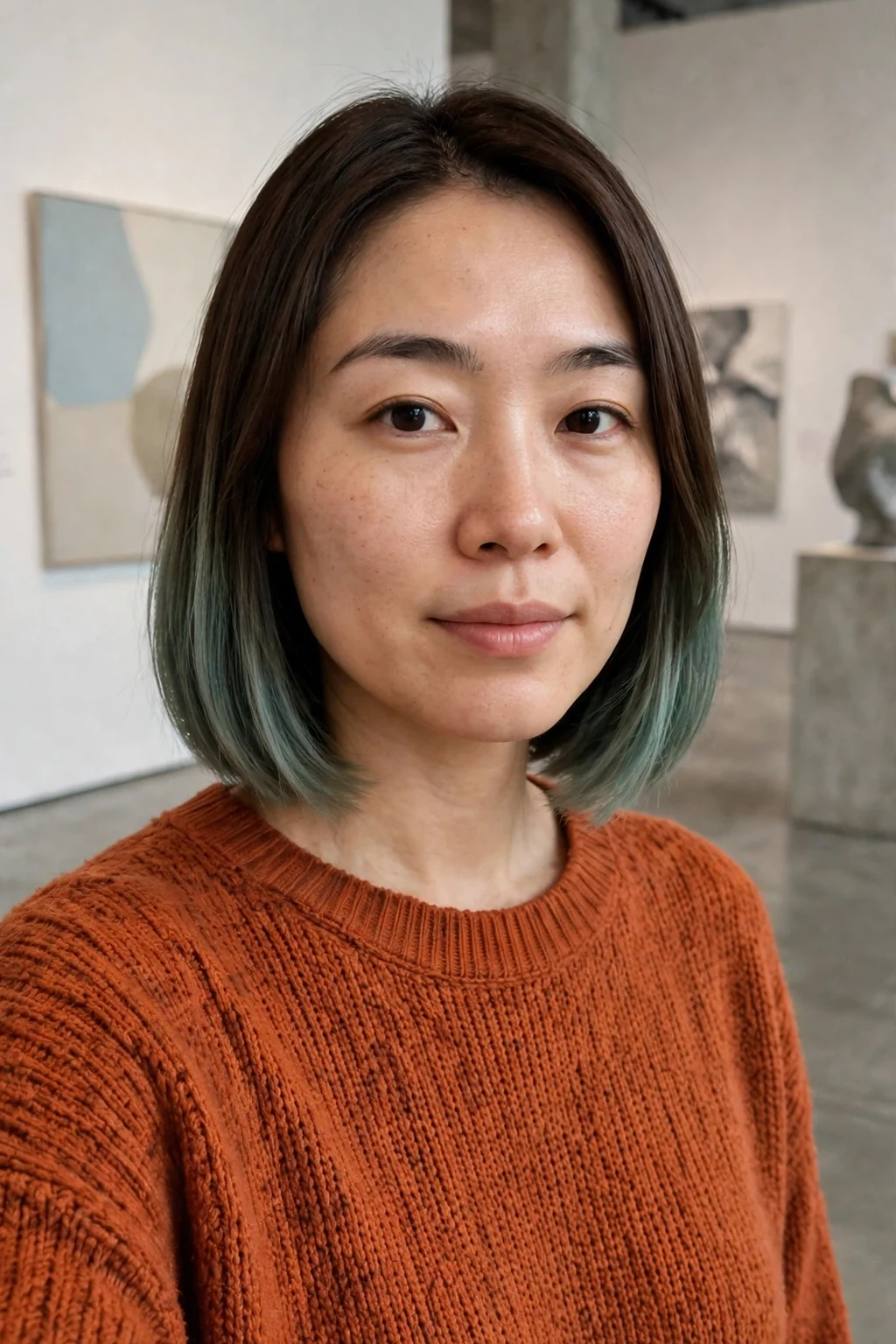
34. Subtle Cranberry Tint on Dark Brown
A subtle cranberry tint on dark brown hair adds a deep berry warmth that is visible mainly in sunlight, where the hair glows with a rich red-purple undertone. Indoors the hair still reads as dark brown, which makes this one of the most wearable red-toned colors for people who want warmth without a bright red result. The cranberry is applied as a gloss or demi-permanent color over the whole head or through the mid-lengths and ends, giving an even, wine-like depth rather than streaks. It flatters warm, neutral, and olive skin tones, bringing warmth to the complexion, and it suits all face shapes because the color adds richness without changing the hair's silhouette. Thick, wavy, and straight hair all show the tint well, and it is especially beautiful on long layers, where the berry tone shifts as the hair moves. The cranberry tint also deepens beautifully in autumn light, where the berry undertone glows against cozy sweaters and warm scarves, while the even, all-over application means there are no streaks or lines to grow out awkwardly as the color gradually softens over several weeks.
Application is low-damage, since a cranberry gloss or demi-permanent color does not require heavy lightening on dark brown hair. Style with a glossy blow-dry or soft waves to show the berry depth, and use a shine serum to enhance the wine-like reflection. Maintain the tint with a red color-depositing conditioner every two weeks and a sulfate-free, color-safe shampoo, avoiding hot water, which fades red tones fastest. Refresh the gloss every six to eight weeks and trim every ten weeks to keep the ends healthy. Try a subtle cranberry tint if you have always liked the idea of red hair but never wanted the upkeep of bright copper, because this deep berry version gives you warmth, richness, and sophistication in one gentle step. A red-toned gloss applied at home between salon visits will keep the cranberry rich, while washing the hair less frequently and using dry shampoo on off days will dramatically slow the fading that red and berry tones are famous for in the first place.
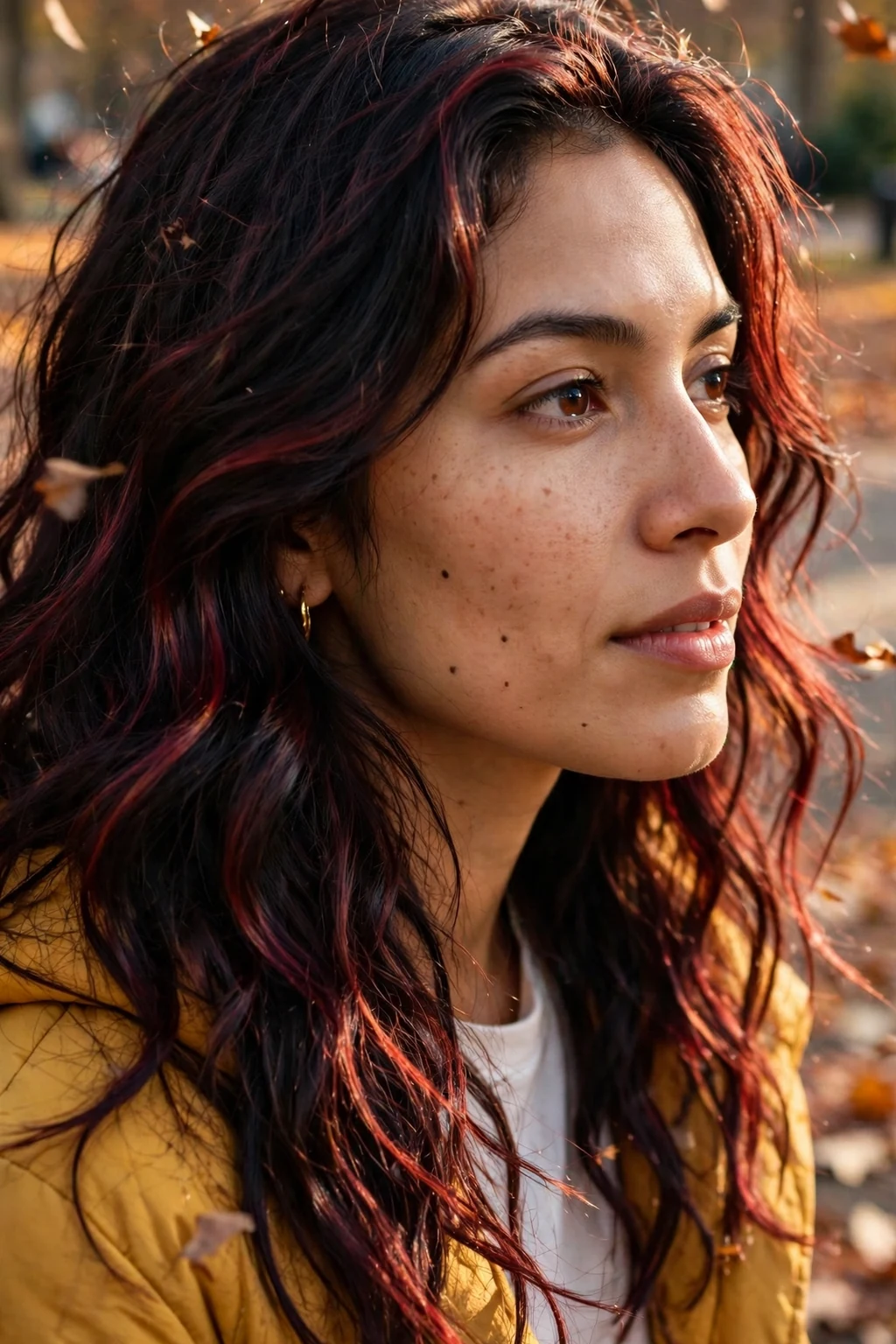
35. Sandy Blonde with Pale Lavender Babylights
Sandy blonde with pale lavender babylights pairs a warm, beachy blonde base with whisper-fine lavender highlights that shimmer like lilac in sunlight. The sandy base keeps the look grounded and natural, while the lavender babylights add a cool, ethereal contrast that stops the blonde from looking flat or brassy. Because babylights are so fine, the lavender reads as a soft glow rather than streaks, and it is most visible around the face and through the parting, where it brightens the whole look. This combination flatters fair to medium skin tones, particularly cool and neutral undertones, and it suits oval, round, and heart-shaped faces, since the fine highlights lift the face without widening it. It works beautifully on fine to medium hair, where babylights create the illusion of thickness, and on straight to wavy textures. The lavender babylights also catch the eye in motion, flashing lilac as the hair swings, while the sandy base keeps the overall look grounded enough for professional settings, where a full pastel color might feel too bold or distracting for everyday office wear.
Your colorist will apply a sandy blonde base, then weave fine babylights and tone them with a sheer lavender formula, keeping the lavender away from the roots for graceful grow-out. Style with a smooth blow-dry or loose waves, and use a light texturizing spray for a beachy finish that shows the lavender in motion. Keep the tone balanced with a purple shampoo once every two weeks, alternating with a moisturizing conditioner so the fine highlights stay soft. Refresh the babylights every ten to twelve weeks and trim every eight to ten weeks. Choose sandy blonde with pale lavender babylights if you want blonde with a twist, because the lavender adds just enough fantasy to feel special while remaining completely wearable every day. A leave-in conditioner with UV protection will guard the fine lavender strands against sun fading, while gentle brushing with a wide-tooth comb when wet will prevent the delicately lightened babylights from snapping or developing split ends between appointments.
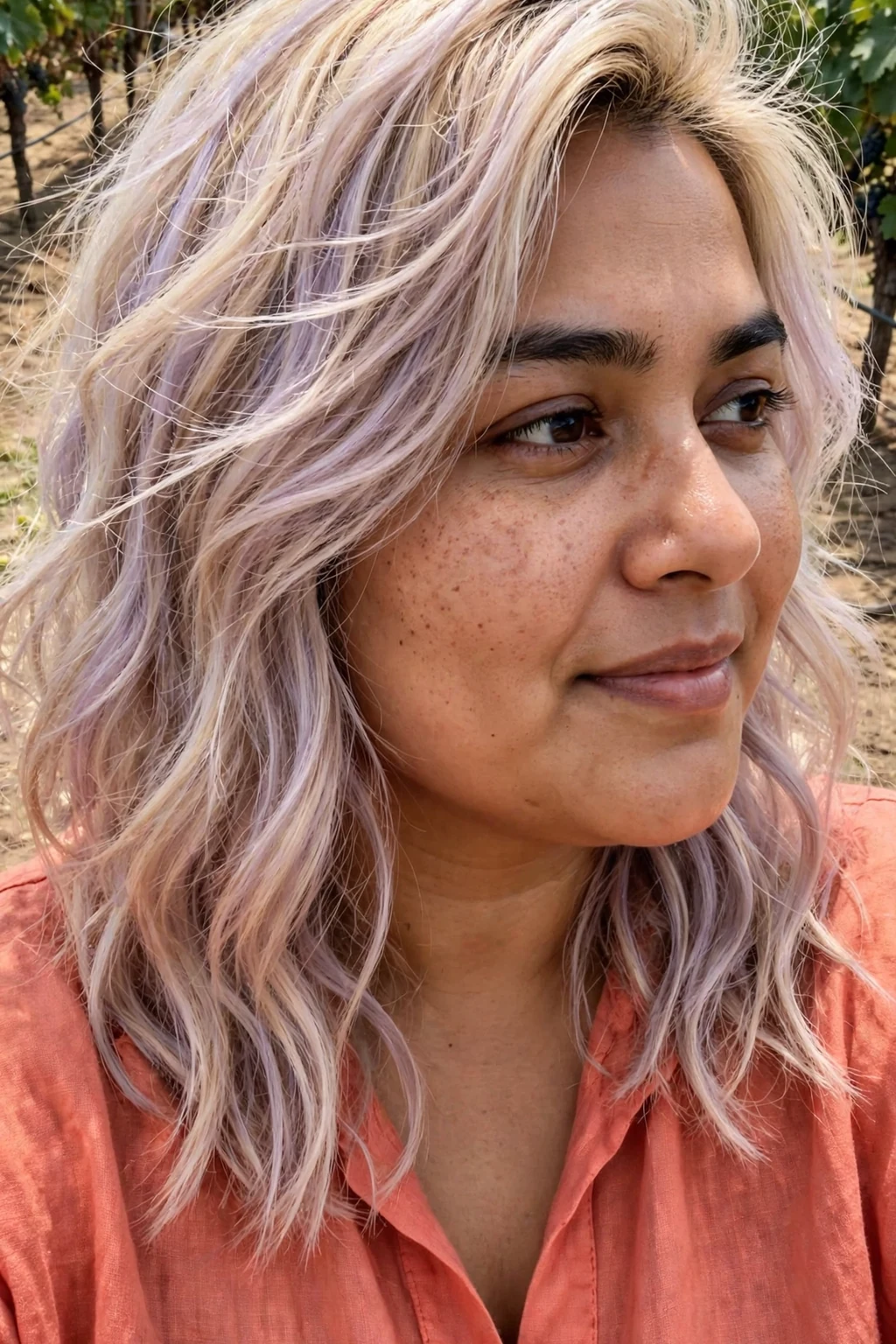
36. Rosewood Gloss on Chestnut Hair
Rosewood gloss on chestnut hair layers a deep, rosy brown shine over a warm chestnut base, giving the hair a polished, almost lacquered richness. Rosewood sits between brown and muted red, so the result is neither fully brunette nor fully red: in shade it looks like deep, expensive brown, while in light it reveals a rosy warmth that makes the hair look incredibly healthy. The gloss finish adds reflection and smoothness, which is especially flattering on medium to thick hair, where shine can get lost in texture. This color suits warm and neutral skin tones, and it flatters oval, round, and square faces because the even, rich tone creates a sleek frame around the face without adding visual weight. It works on straight, wavy, and loosely curled hair, and it is a wonderful way to refresh chestnut hair that has faded or dulled over time. The rosewood gloss also enhances natural wave patterns, since the added shine defines each wave's curve, while the deep rosy brown makes brown eyes appear warmer and more intense, creating a harmonious, polished effect across the entire face and hair combination.
Because a gloss does not lift the hair, this treatment is gentle and quick, making it ideal for hair that needs shine more than a dramatic change. Your colorist will apply the rosewood gloss over your existing chestnut color, processing it just long enough to deposit tone and shine. At home, maintain the result with a sulfate-free shampoo, a weekly hydrating mask, and a rosewood color-depositing conditioner every few weeks to keep the rosy depth alive. Style with a round-brush blow-dry for maximum gloss, or let waves air-dry with a smoothing cream for a softer shine. Refresh the gloss every six to eight weeks and trim every ten weeks. Try rosewood gloss if your chestnut hair feels dull, because this single treatment restores depth, warmth, and mirror-like shine at once. Between gloss appointments, a color-depositing mask in a rosewood or deep rose-brown shade will revive the rosy depth, while sleeping on a silk pillowcase will reduce friction and preserve the glossy, lacquered finish that makes this treatment look so expensive.

37. Smoky Gray-Violet Balayage
Smoky gray-violet balayage blends a cool, muted violet into dark hair through hand-painted sections, creating a smoky, dimensional effect that looks like dusk light on dark hair. The violet is grayed and desaturated, so it never reads as bright purple; instead it adds a cool, almost silvered depth to the mid-lengths and ends, while the roots stay naturally dark for easy grow-out. Balayage placement means the color is softest near the face and stronger toward the ends, which gives the hair movement and a modern, lived-in feel. This look flatters cool and neutral skin tones and suits oval, long, and heart-shaped faces, since the vertical color placement lengthens the hair visually. It works best on straight to wavy hair, where the painted sections stay distinct, and it adds striking dimension to thick, dark hair that can otherwise look one-dimensional. The smoky violet also adds a cool, contemporary edge to classic dark haircuts such as long layers or a blunt lob, while the grayed tone prevents the purple from clashing with warm-toned makeup or clothing, making the color surprisingly easy to coordinate every day.
Your colorist will hand-paint the balayage sections over pre-lightened hair, then tone them with a smoky gray-violet formula that mutes the purple into a sophisticated haze. Style with loose waves or a straight, glossy finish, both of which show the smoky dimension clearly, and use a light serum to keep the surface reflective. Maintain the cool tone with a purple shampoo once every two weeks and a sulfate-free conditioner, washing in cool water to slow fading. Refresh the balayage every ten to twelve weeks, which is longer than most fashion colors allow, and trim every eight to ten weeks. Choose smoky gray-violet balayage if you want cool-toned dimension without committing to silver or platinum, because this smoky violet gives dark hair a contemporary edge while staying soft. A cool-toned purple shampoo used every other week will keep the gray-violet from warming up, while a monthly deep-conditioning treatment will repair the pre-lightened balayage sections and keep them as soft, smooth, and manageable as the untouched dark hair around them.

38. Apricot Rose Toner on Light Brown
Apricot rose toner on light brown hair adds a soft, peachy-pink warmth that makes light brown hair look sun-warmed and romantic. The toner is sheer, so it does not change the depth of the hair dramatically; instead it washes the existing light brown with apricot and rose tones that glow in sunlight and soften the overall color indoors. The result is fresh and youthful, with a hint of fruit-like warmth that flatters warm and neutral skin tones and brings a healthy flush to the complexion. It suits oval, heart-shaped, and round faces, because the warm tone draws light to the face, and it works on fine to medium hair, where the sheer color adds visible warmth without weight. Straight hair shows the apricot rose most evenly, while wavy hair breaks it into soft, dimensional ribbons. The apricot rose warmth also complements gold jewelry and warm-toned clothing beautifully, since the peachy glow echoes those colors, while the sheer toner means the color never looks heavy or opaque, even on fine hair that can easily be overwhelmed by strong dye.
Application is gentle, since a toner deposits color without heavy lifting, and most colorists can apply it as a finishing step after a cut or gloss service. At home, keep the apricot rose alive with a peach or rose color-depositing conditioner every two weeks and a sulfate-free shampoo, and avoid over-washing, which fades sheer toners fastest. Style with a bouncy blow-dry or loose waves to show the warm glow, and use a heat protectant before any hot tools. Refresh the toner every six to eight weeks and trim every eight to ten weeks to keep the ends fresh. Try apricot rose toner if your light brown hair feels ashy or flat, because this sheer wash restores warmth and softness without pushing you into copper or blonde territory. A peach-toned glossing treatment at home every few weeks will keep the apricot rose fresh, while avoiding overuse of purple shampoo, which would cool the warmth away, ensures the toner stays peachy and romantic rather than drifting back toward ashy light brown.
39. Subtle Indigo Underlights on Black Hair
Subtle indigo underlights on black hair hide a deep, midnight-blue tint beneath the top layer, so the color appears as a rich blue shadow when the hair moves or is worn up. Indigo is darker and more muted than bright blue, which makes it blend beautifully with black hair: in low light the hair simply looks glossy and deep, while in sunlight the underlayers glow with a cool blue depth. The hidden placement keeps the look professional and versatile, while still giving a distinctive edge that feels personal rather than showy. It flatters cool and neutral skin tones and adds depth to thick, curly, and wavy hair, where the underlayers peek through texture. It suits oval, round, and square faces, since the dark canopy frames the face while the indigo adds interest lower down, away from the cheekbones. The indigo also looks striking against silver and cool-toned accessories, since the deep blue echoes those metals, while the hidden placement means the color stays completely professional in conservative settings until you deliberately choose to reveal it with an updo.
Your colorist will section the underlayers, pre-lighten them gently, and apply a deep indigo formula, leaving the canopy untouched so the reveal stays discreet and the top hair stays healthy. Style the hair down for a subtle blue shadow, or wear a high ponytail, bun, or braid to show the indigo boldly. Maintain the color with a blue color-depositing conditioner every two to three weeks and a sulfate-free shampoo in cool water, and use a hydrating mask on the pre-lightened underlayers. Refresh the indigo every eight to ten weeks and trim every ten weeks. Choose subtle indigo underlights if you love blue but want it on your own terms, because this placement gives you a hidden jewel-tone that you can reveal or conceal as you like. A hydrating curl cream will keep the pre-lightened underlayers defined and soft on curly hair, while a satin bonnet or silk scarf at night will protect the indigo sections from friction, dryness, and the color transfer that can dull deep blue tones over time.
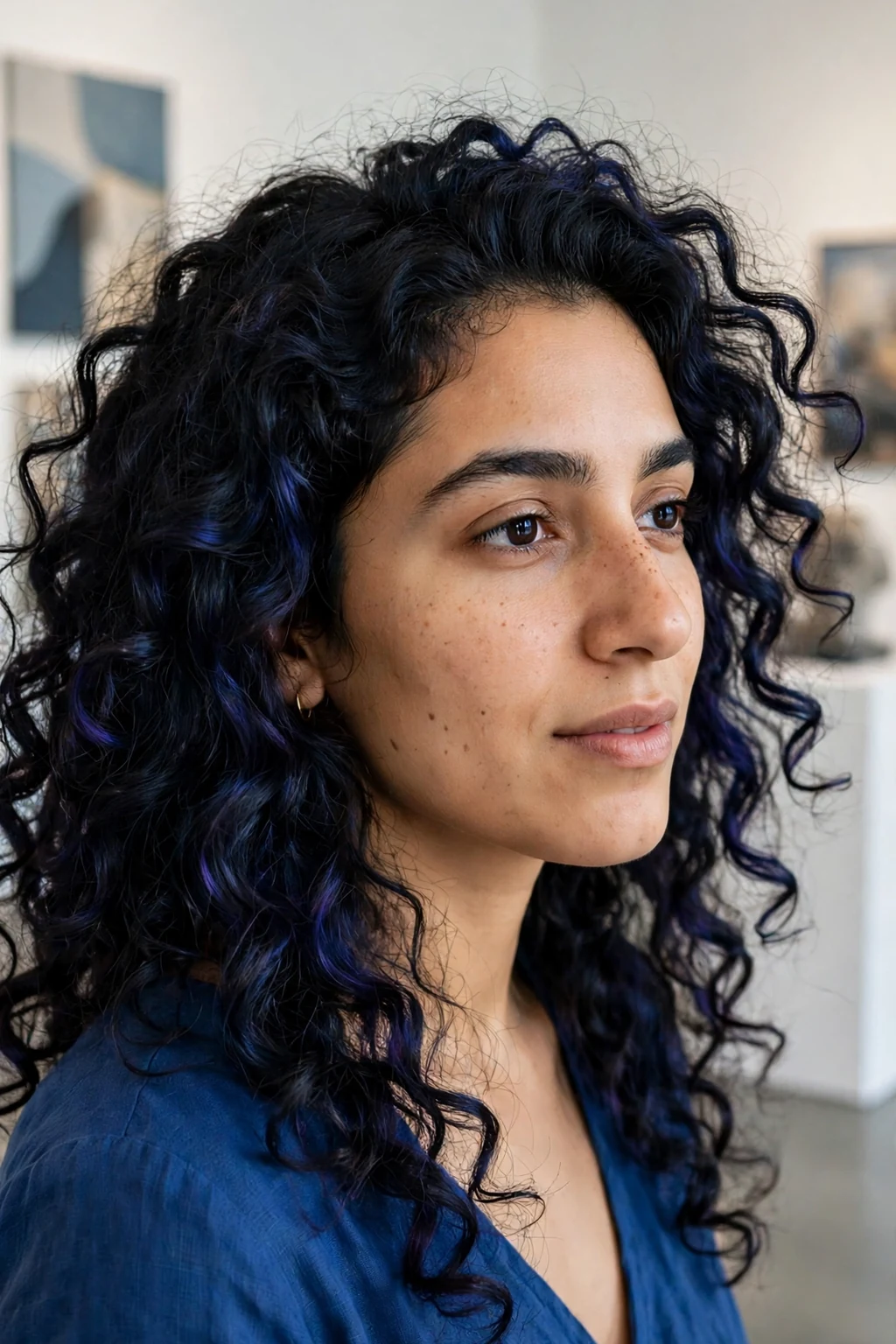
40. Honeyed Amber Wash
Honeyed amber wash is a translucent golden-amber color that bathes medium brown or dark blonde hair in warm, honey-like light. The wash is sheer rather than opaque, so the natural base still shows through, giving the hair a glowing, multi-tonal quality that looks like late-afternoon sun caught in the strands. Amber adds warmth without the intensity of copper, making it an ideal middle ground for anyone who finds copper too bold but blonde too light. It flatters warm and golden skin tones especially well, and it suits oval, round, and heart-shaped faces, because the warm glow draws light upward to the face. The wash works on straight, wavy, and curly textures, and it is particularly beautiful on long hair, where the amber deepens and lightens as the hair moves. The amber wash also adds a golden glow to photographs taken in natural light, where brown hair can otherwise photograph dark and flat, while the translucent formula means the color adapts to your natural base, looking slightly different and uniquely personal on every wearer.
Application is gentle, since a wash or gloss deposits translucent color without aggressive lifting, so it is a good choice for hair that needs warmth but not damage. Your colorist will apply the amber wash evenly through the mid-lengths and ends, sometimes leaving the roots slightly darker for dimension. At home, maintain the warmth with a sulfate-free shampoo, a weekly deep-conditioning mask, and a golden color-depositing conditioner every few weeks. Style with a glossy blow-dry or soft waves to maximize the honey glow, and protect the color from harsh sun, which can fade amber unevenly. Refresh the wash every six to eight weeks and trim every ten weeks. Try a honeyed amber wash if your hair needs warmth and light, because this gentle color makes brown and dark blonde hair look sun-kissed without a major change. A golden gloss mask used monthly will keep the amber luminous between salon visits, while a heat protectant spray before blow-drying or curling will prevent the warm tones from fading unevenly or developing the dry, brittle ends that heat damage often causes.
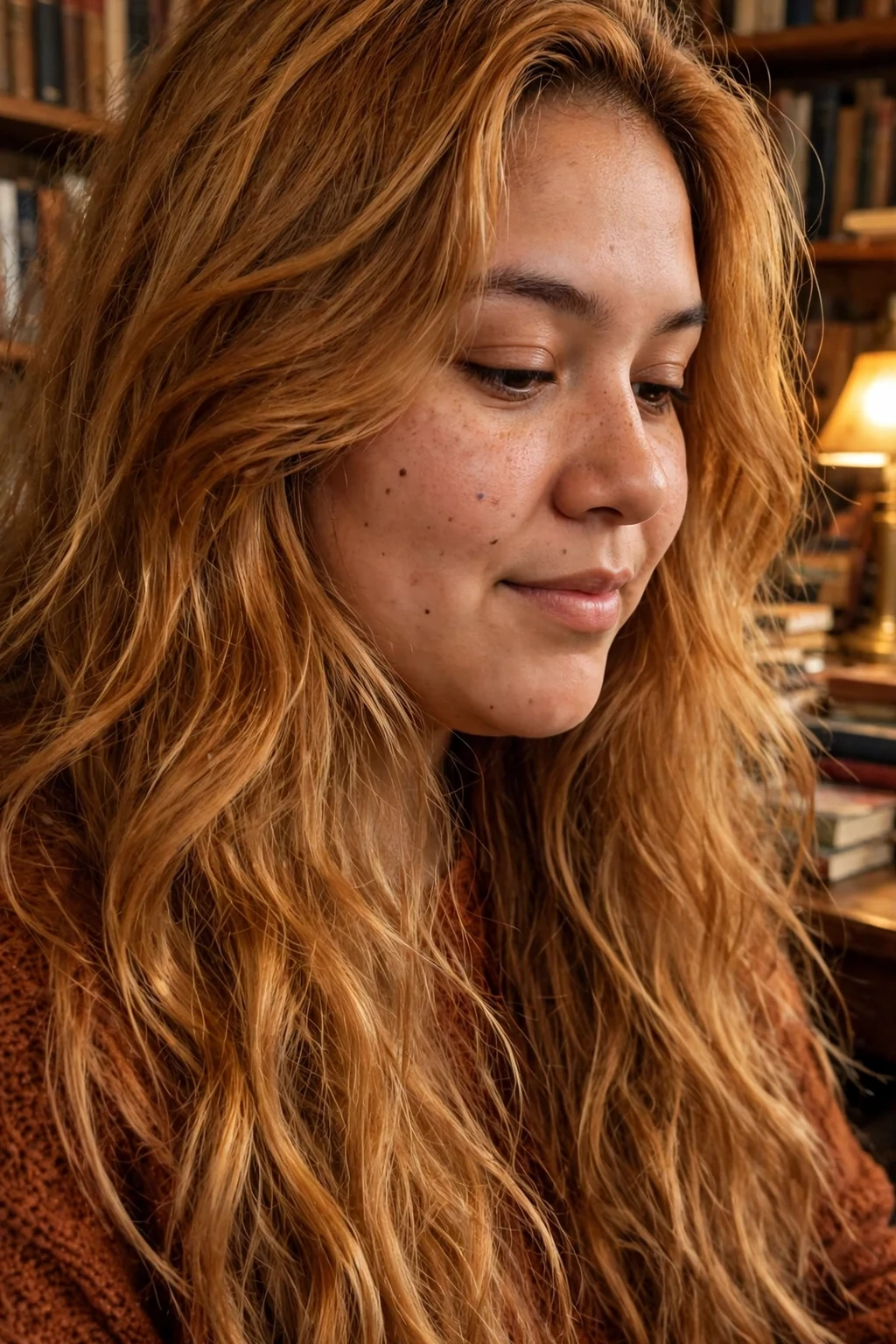
41. Cool Mint Whisper on Platinum Blonde
Cool mint whisper on platinum blonde adds the faintest green tint to icy blonde hair, creating a fresh, almost frosted effect that looks like mint light reflected in snow. The mint is kept extremely sheer, so it reads as a cool tone rather than a green dye job, and it works by neutralizing any lingering warmth in platinum hair while adding a unique, modern edge. In bright light the mint appears as a pale, silvery green shimmer; indoors the hair simply looks cooler and more polished than ordinary platinum. This look suits cool skin tones and fair to light complexions, and it flatters oval, heart-shaped, and diamond faces, because the icy color sharpens the features beautifully. It works best on straight and softly wavy platinum hair, where the sheer mint can show evenly, and it is a striking choice for anyone who already maintains platinum and wants a subtle twist.
Your colorist will tone freshly lightened platinum hair with a sheer mint formula, carefully balancing the green so it stays whisper-light rather than turning the hair visibly green. At home, maintain the cool tone with a purple shampoo used sparingly, alternating with a mint color-depositing conditioner every two to three weeks to keep the whisper alive. Use a bond-building treatment regularly, since platinum hair needs extra care, and always apply a heat protectant before styling. Style sleek and straight for the frostiest effect, or add soft waves for a more relaxed version. Refresh the mint toner every four to six weeks, since sheer pastels fade fastest on platinum, and trim every six to eight weeks. Choose a cool mint whisper if you love platinum but want it to feel fresh and current, because this barely-there tint sets your blonde apart without changing its icy character. A weekly purple-toning mask will keep the platinum base icy and prevent the mint whisper from turning yellow, while a reparative bond treatment after every lightening session will keep the fragile platinum strands strong enough to hold the sheer mint tone evenly.

42. Dusty Pink Money-Piece on Ash Blonde
Dusty pink money-piece on ash blonde frames the face with soft, muted pink sections at the front, set against a cool ash blonde base. The money-piece placement draws light directly to the face, brightening the complexion and highlighting the eyes, while the dusty, grayed pink keeps the effect sophisticated rather than bubblegum-bright. Against ash blonde, the pink reads as a gentle contrast: cool blonde on the sides, warm-leaning pink at the front, creating a balanced, modern frame. This style suits fair to medium skin tones, especially cool and neutral undertones, and it flatters oval, round, and heart-shaped faces, because the front sections can be cut and colored to slim or soften the face as needed. It works on straight, wavy, and softly curled hair, and it is especially effective on medium-length cuts, where the face-framing pieces fall naturally around the cheekbones. The dusty pink frame also photographs beautifully, drawing attention to the eyes and cheekbones in portraits, while the muted, grayed pink ensures the color complements rather than competes with makeup, so both warm and cool lipstick shades still work harmoniously.
Your colorist will isolate the front sections, lighten them if needed, and tone them with a dusty pink formula while keeping the rest of the hair ash blonde. Style with a middle or side part to show the pink frame, and use a straightener or soft waves to keep the front pieces polished. Maintain the pink with a pink color-depositing conditioner every one to two weeks, since face-framing color fades fastest from washing and styling, and wash in cool water with a sulfate-free shampoo. Refresh the money-piece every six to eight weeks and trim every eight weeks to keep the frame sharp. Try a dusty pink money-piece if you want color that makes an immediate impact around your face, because this placement gives you maximum visibility with minimum overall commitment. A small bottle of pink color-depositing conditioner kept in the shower makes upkeep effortless, since a five-minute application during a regular wash will revive the face-framing pink, while a silk scrunchie will protect the front sections from breakage when the hair is tied back.

43. Warm Cinnamon Gloss on Medium Brown
Warm cinnamon gloss on medium brown hair adds a spicy, reddish-brown warmth that makes medium brown look richer, warmer, and more dimensional. Cinnamon sits between copper and brown, so the result is warm without being orange: in shade the hair looks like deep, warm brown, while in sunlight it glows with a cinnamon spice that feels cozy and autumnal. The gloss finish adds shine and smoothness, which helps the warm tone read as healthy rather than brassy, and it works on straight, wavy, and curly hair alike. This color flatters warm and neutral skin tones, bringing warmth to the complexion, and it suits oval, round, and square faces because the even warm tone frames the face softly. It is an excellent choice for medium brown hair that has gone dull or ashy, since cinnamon restores warmth in a single gentle treatment. The cinnamon warmth also pairs beautifully with autumn wardrobes, gold jewelry, and warm-toned makeup, since the spicy brown echoes those colors, while the gloss finish ensures the warmth reads as healthy shine rather than the brassiness that medium brown hair often develops.
Because a gloss does not lift the hair, this treatment is low-damage and can be done quickly in the salon. Your colorist will apply the cinnamon gloss over your existing medium brown, processing it just long enough to deposit warmth and shine. At home, maintain the color with a sulfate-free shampoo, a copper-toned conditioner every few weeks, and a weekly hydrating mask to keep the gloss reflective. Style with a round-brush blow-dry for a polished finish, or let natural waves show the cinnamon dimension. Avoid clarifying shampoos, which strip gloss, and refresh the treatment every six to eight weeks with a trim every ten weeks. Choose warm cinnamon gloss if your medium brown needs spice and shine, because this gentle color warms the whole look without a permanent commitment. A copper-toned glossing mask used every few weeks will keep the cinnamon spice vivid, while washing with lukewarm rather than hot water will slow fading and preserve the glossy, warm finish that makes this treatment look freshly done for weeks longer.

44. Pale Periwinkle Ends
Pale periwinkle ends tint the last few inches of hair with a soft blue-lavender shade that looks like a faded watercolor wash. Periwinkle sits exactly between blue and lavender, so it feels dreamy and cool without committing fully to either color, and its paleness keeps it subtle even on light blonde hair. The transition melts gradually from the natural base into periwinkle, avoiding a harsh line and giving the ends a soft, ethereal quality. This style suits cool and neutral skin tones and works best on light blonde or pre-lightened hair, where the pale tone can show clearly. It flatters oval and heart-shaped faces, since the color sits low and draws the eye down, and it looks wonderful on bobs, lobs, and long layers, where the ends move freely and show the periwinkle from every angle. The periwinkle also pairs beautifully with denim and cool-toned outfits, since the blue-lavender echoes those shades, while the gradual melt means the color looks like a natural extension of blonde hair rather than a separate, attention-seeking fashion color applied on top.
To create pale periwinkle ends, the tips are lightened to a pale blonde if needed and then toned with a sheer periwinkle formula, blended upward so the color fades naturally. At home, keep the tone cool with a purple shampoo used sparingly, and refresh the periwinkle with a blue-lavender color-depositing conditioner every two to three weeks. Wash in cool water, protect the ends with a leave-in conditioner, and style straight for the clearest color or wavy for a softer, blended effect. Expect the periwinkle to fade gently over six to eight weeks, and trim every eight to ten weeks to keep the ends even. Try pale periwinkle ends if you want a pastel accent that feels calm and dreamy, because this soft blue-lavender gives blonde hair a magical finish without shouting. A blue-lavender color-depositing conditioner used every two weeks will keep the periwinkle balanced between blue and purple, while a leave-in treatment on the ends will prevent the lightened tips from becoming dry, tangled, or unevenly faded between salon visits.
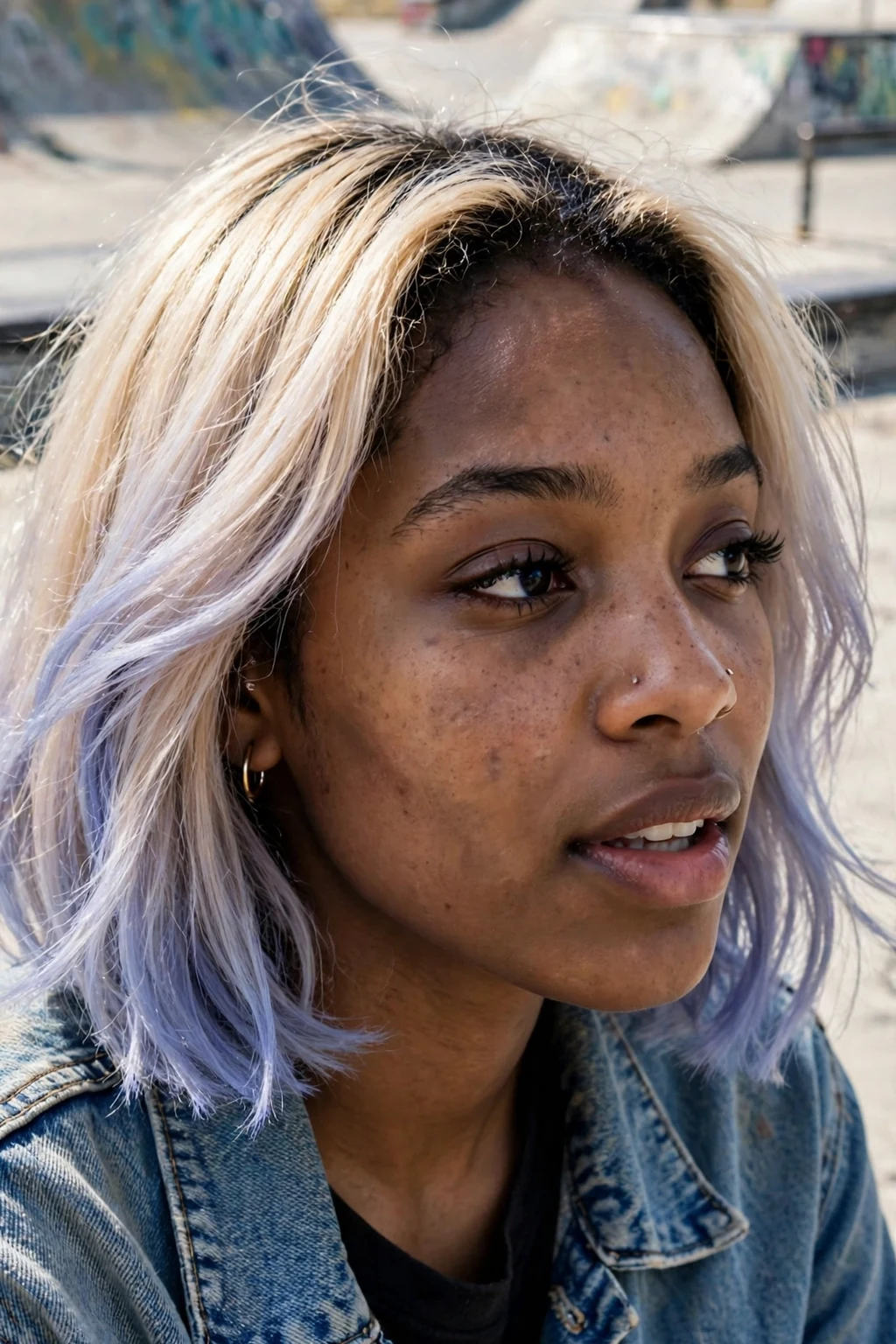
45. Subtle Olive-Taupe Gloss
Subtle olive-taupe gloss is a cool, muted brown with a faint green-gray undertone that neutralizes warmth and gives brown hair a sophisticated, smoky finish. Taupe itself is a gray-brown that sits between ash and natural brown, while the olive whisper cools it further, removing brassiness and creating a soft, almost matte depth. The result looks incredibly natural, like brown hair in soft, overcast light, yet it feels distinctly modern and editorial. This color suits cool and neutral skin tones, especially olive complexions, where it harmonizes beautifully rather than fighting the skin's undertone. It flatters oval, square, and long faces, because the muted tone creates a sleek, understated frame, and it works on straight to wavy hair, where the smoky finish shows most clearly. It is also a wonderful corrective gloss for brown hair that has turned too warm or orange. The olive-taupe gloss also works as a corrective treatment after a color service that turned too warm, since the green-gray undertone cancels orange and gold, while the muted finish gives the hair a modern, editorial quality that photographs beautifully in natural light.
Your colorist will apply the olive-taupe gloss over your existing brown, using a formula that deposits cool tone without lifting, so damage stays minimal. At home, maintain the cool finish with a sulfate-free shampoo and an ash-toned conditioner, avoiding warm-toned products that could pull the color brassy. Style with a smooth blow-dry for a polished, smoky finish, or let waves air-dry for a softer, lived-in version. Use a heat protectant before styling and a weekly mask to keep the gloss reflective. Refresh the gloss every six to eight weeks and trim every ten weeks. Choose subtle olive-taupe gloss if your brown hair keeps turning warm no matter what you do, because this cool, muted tone finally keeps brassiness at bay while looking completely natural. An ash-toned glossing mask used monthly will keep the olive-taupe cool, while avoiding warm-toned styling products and gold-based serums will prevent the carefully balanced cool tone from drifting back toward the brassiness it was designed to correct in the first place.
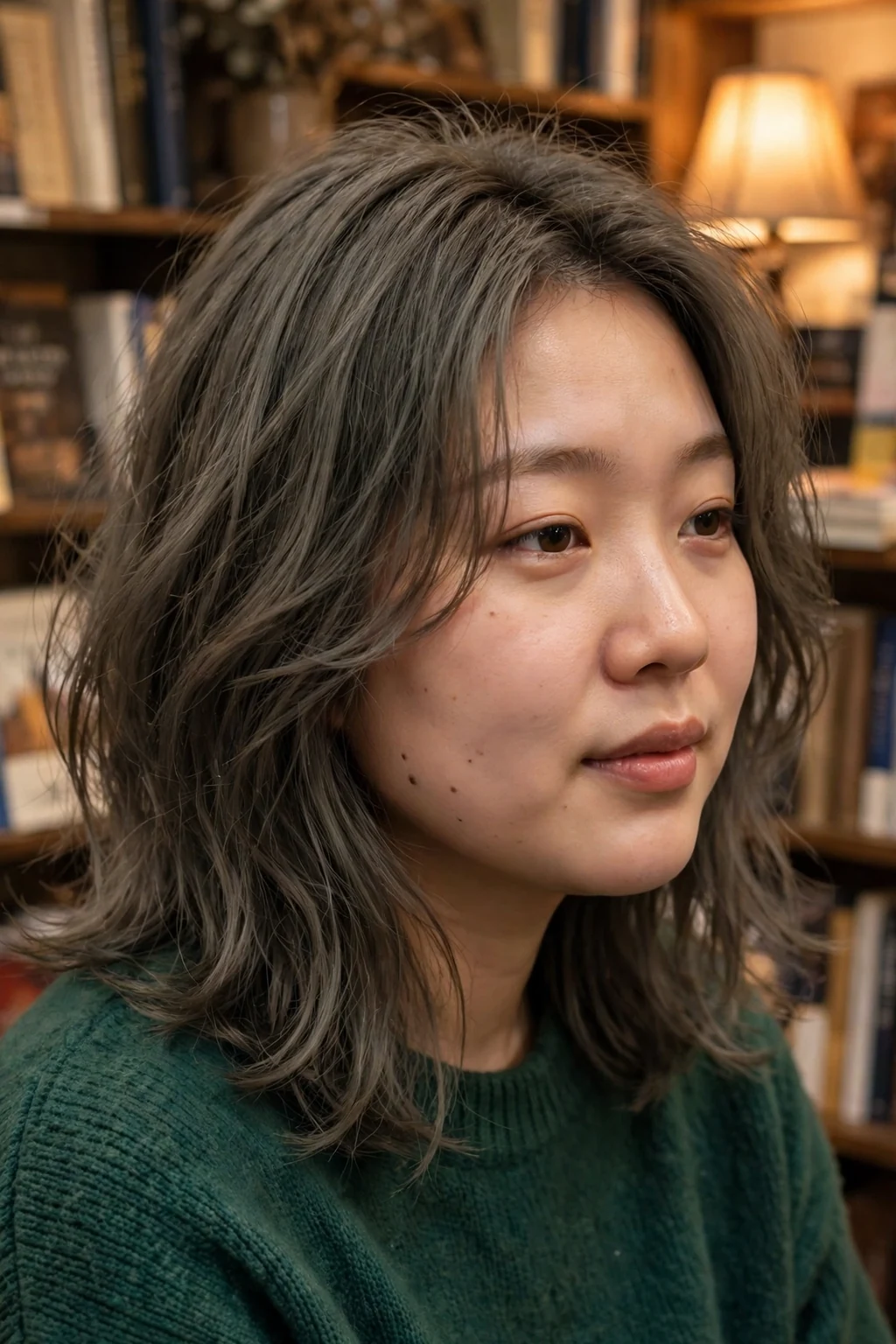
46. Blush Champagne Ombre
Blush champagne ombre melts a natural dark blonde or light brown root into a soft, rosy champagne blonde at the ends, creating a gradient that looks like champagne with a drop of rose stirred in. The ombre transition is gradual and seamless, with the blush becoming stronger toward the tips, so the hair gains lightness and warmth without a harsh line or obvious regrowth. The champagne tone keeps the blonde creamy rather than icy, while the blush adds a romantic flush that brightens the whole look. This style suits fair to medium skin tones, especially warm and neutral undertones, and it flatters oval, long, and heart-shaped faces, because the vertical gradient lengthens the hair visually. It works beautifully on long layers and wavy hair, where the gradient shows in waves of color, and it adds dimension to straight hair as well. The blush champagne gradient also adds softness to strong jawlines and angular features, since the light, rosy ends draw the eye downward and soften the overall silhouette, while the natural roots ensure the style never looks harsh or high-maintenance as it grows out.
Your colorist will lighten the ends gradually, blending upward, and then tone them with a blush champagne formula, keeping the roots natural for easy grow-out. Style with loose waves or a bouncy blow-dry to show the gradient at its best, and use a shine serum on the ends to keep the champagne luminous. Maintain the tone with a sulfate-free shampoo, a pink-tinted conditioner every two weeks, and a purple shampoo used sparingly to keep the champagne from turning brassy. Refresh the ombre every ten to twelve weeks and trim every eight to ten weeks to keep the ends healthy. Choose blush champagne ombre if you want a soft, romantic blonde that grows out gracefully, because this gradient gives you lightness and warmth with far less upkeep than an all-over blonde. A pink-tinted conditioning mask used every two weeks will keep the blush fresh without over-depositing color, while a lightweight oil applied only to the ends will keep the lightened ombre tips smooth, shiny, and protected from the dryness that gradient color often causes.
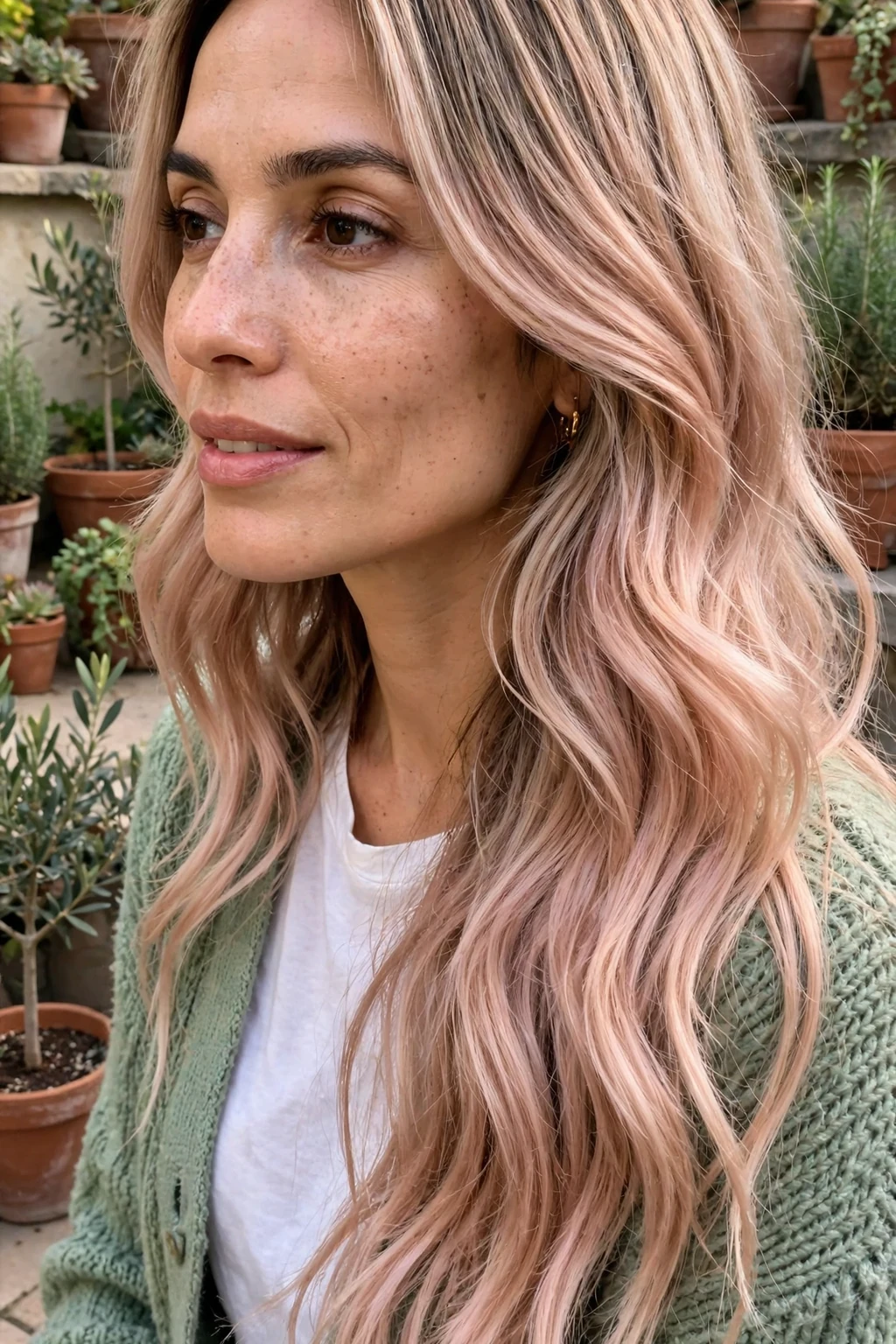
47. Faded Lilac-Gray Melt
Faded lilac-gray melt blends pale lavender into a soft gray base, creating a muted, smoky pastel that looks like lilac faded by time and sunlight. The melt technique means there are no lines at all: lilac and gray flow into each other so smoothly that the hair looks like a single, multi-tonal color rather than two separate shades. The overall effect is cool, modern, and quietly artistic, with the lilac adding a hint of fantasy to an otherwise sophisticated gray. This look suits cool and neutral skin tones and works best on pre-lightened or naturally light hair, where the pale tones can show clearly. It flatters oval, heart-shaped, and diamond faces, because the cool, muted color sharpens the features gently, and it looks wonderful on bobs, lobs, and layered cuts, where the melt shows in every layer. The lilac-gray melt also looks striking with minimalist, monochrome outfits, since the muted pastel acts as a subtle accessory rather than a competing color, while the seamless blend means the hair looks polished from every angle, with no lines or harsh transitions anywhere.
Your colorist will lighten the hair to a pale base, then apply a lilac-gray melt formula, blending the tones so no demarcation remains. At home, maintain the cool pastel with a purple shampoo used once every two weeks and a lilac color-depositing conditioner every two to three weeks, washing in cool water to slow fading. Use a bond-building mask regularly, since lightened hair needs extra care, and style sleek for a polished smoky finish or wavy for a softer, lived-in melt. Refresh the color every six to eight weeks and trim every eight weeks. Try a faded lilac-gray melt if you love pastels but want them muted and grown-up, because this smoky blend gives you lilac's dreaminess with gray's sophistication. A lilac color-depositing conditioner used every two weeks will keep the pastel balanced, while a bond-building mask used weekly will repair the lightened hair and prevent the pale lilac-gray from becoming patchy, dry, or uneven as the color gradually fades over time.
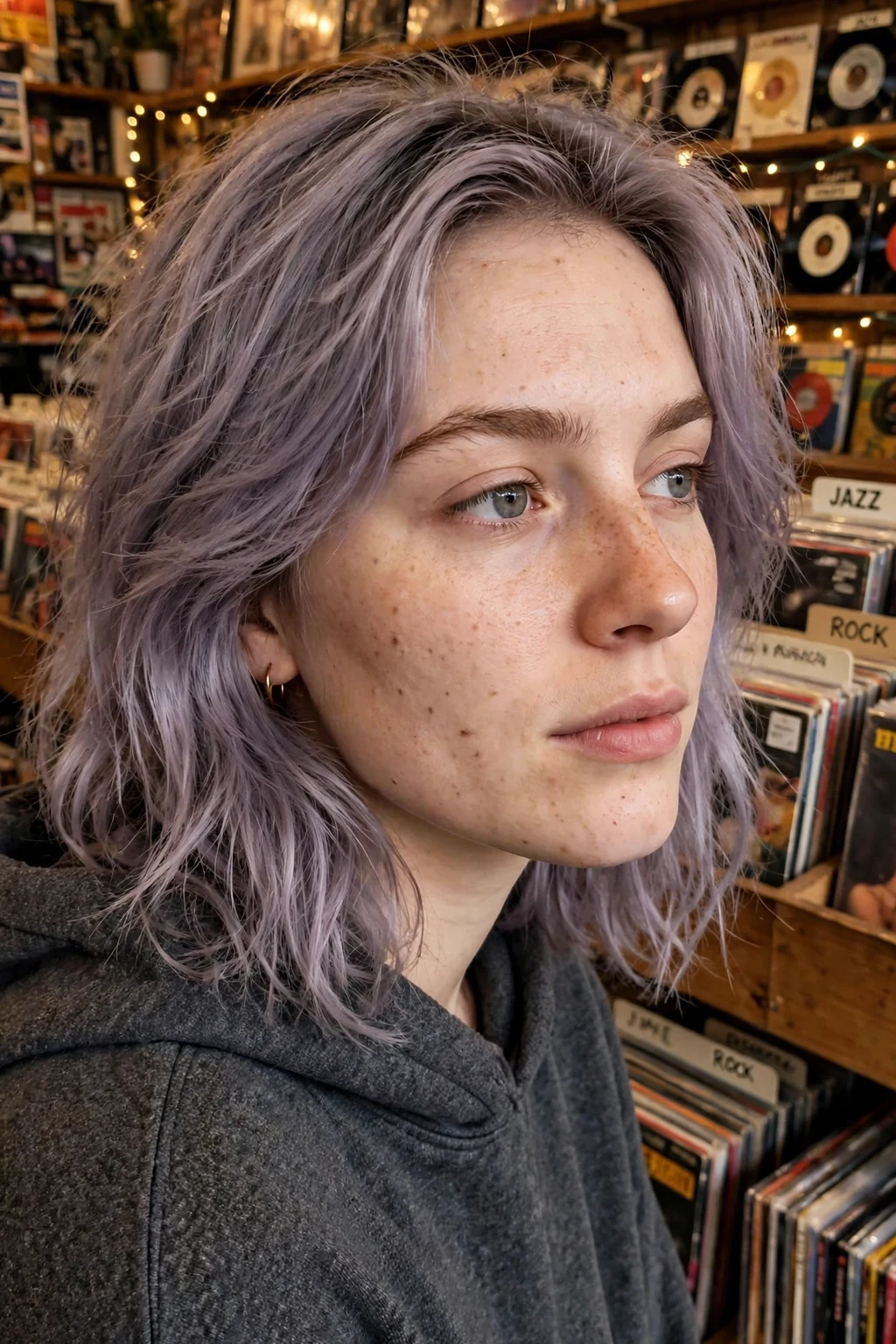
48. Soft Terracotta Babylights
Soft terracotta babylights weave ultra-fine, warm clay-toned highlights through brown hair, mimicking the way sunlight naturally lightens fine strands. Terracotta is a muted, earthy orange-brown, so these babylights add warmth without turning the hair copper or orange: they read as sun-kissed dimension rather than obvious highlights. Because babylights are so fine, the effect is subtle and blended, brightening the hair overall while keeping the base color dominant. This look flatters warm and neutral skin tones, bringing warmth to the complexion, and it suits oval, round, and heart-shaped faces, because the fine highlights lift the face without adding width. It works on fine to medium hair, where babylights create the illusion of thickness, and on straight to wavy textures that let the fine color shimmer. The terracotta babylights also warm up the complexion in photographs and video calls, where cool lighting can make brown hair look flat, while the ultra-fine placement ensures the warmth looks like natural sun exposure rather than an obvious salon highlight service.
Creating terracotta babylights takes a patient colorist, since many tiny sections are woven and painted with a sheer terracotta formula over a brown base. Style with a smooth blow-dry or loose waves to show the fine warmth, and use a light shine serum to keep the hair reflective. Maintain the tone with a sulfate-free shampoo and a warm-toned conditioner every few weeks, avoiding purple shampoo, which would cool the terracotta away. Refresh the babylights every ten to twelve weeks and trim every eight to ten weeks. Choose soft terracotta babylights if your brown hair needs warmth and dimension but you dislike obvious highlights, because these whisper-fine strands give you sun-kissed richness that looks completely natural. A warm-toned glossing mask used monthly will keep the terracotta clay tone rich, while gentle detangling with a wide-tooth comb and a silk scrunchie for updos will protect the fine, lightened strands from the breakage that babylights are sometimes prone to developing.
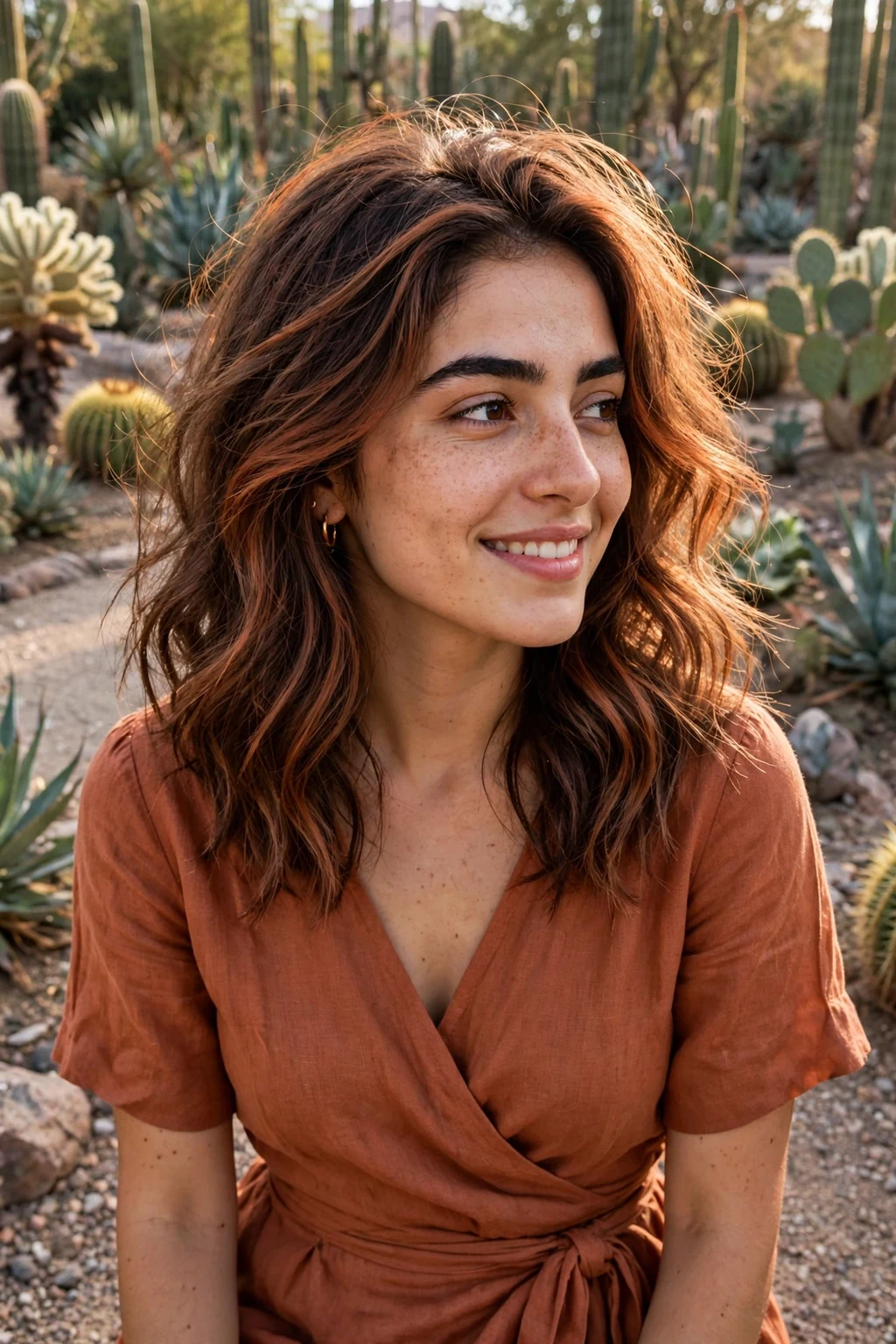
49. Icy Rose Toner on Silver Blonde
Icy rose toner on silver blonde adds a frosty pink tint to cool silver hair, creating a blonde that looks like silver caught in rose-colored light. The rose is kept icy and pale, so it cools rather than warms the silver, giving the hair a luminous, almost metallic pink sheen that shifts with the light. In bright daylight the pink appears as a delicate flush; indoors the hair reads as polished silver with a hint of warmth that stops it from looking flat or gray. This look suits fair to light skin tones, especially cool undertones, and it flatters oval, heart-shaped, and diamond faces, because the icy color highlights the cheekbones and eyes. It works best on straight and softly wavy silver blonde hair, where the sheer rose can show evenly, and it is a beautiful next step for anyone already maintaining silver blonde. The icy rose also softens the sometimes severe look of pure silver blonde, adding a romantic, almost ethereal quality, while the frosty pink ensures the overall color still reads as cool and modern rather than warm, brassy, or traditionally pink in any obvious way.
Your colorist will tone freshly refreshed silver blonde with a sheer icy rose formula, balancing the pink so it stays frosty rather than turning the hair warm pink. At home, maintain the tone with a purple shampoo used sparingly and a rose color-depositing conditioner every two weeks, washing in cool water to preserve the sheer tint. Use a bond-building treatment and a heat protectant, since silver blonde hair needs extra care, and style sleek for the most metallic effect or wavy for a softer rose glow. Refresh the toner every four to six weeks, since sheer pastels fade fastest, and trim every six to eight weeks. Try icy rose toner if your silver blonde feels too cold or one-dimensional, because this frosty pink adds just enough warmth to make silver feel romantic. A rose color-depositing conditioner used every two weeks will keep the icy pink balanced, while a reparative mask and a heat protectant will protect the fragile silver blonde strands from the dryness and breakage that can make sheer pastel toners fade unevenly.
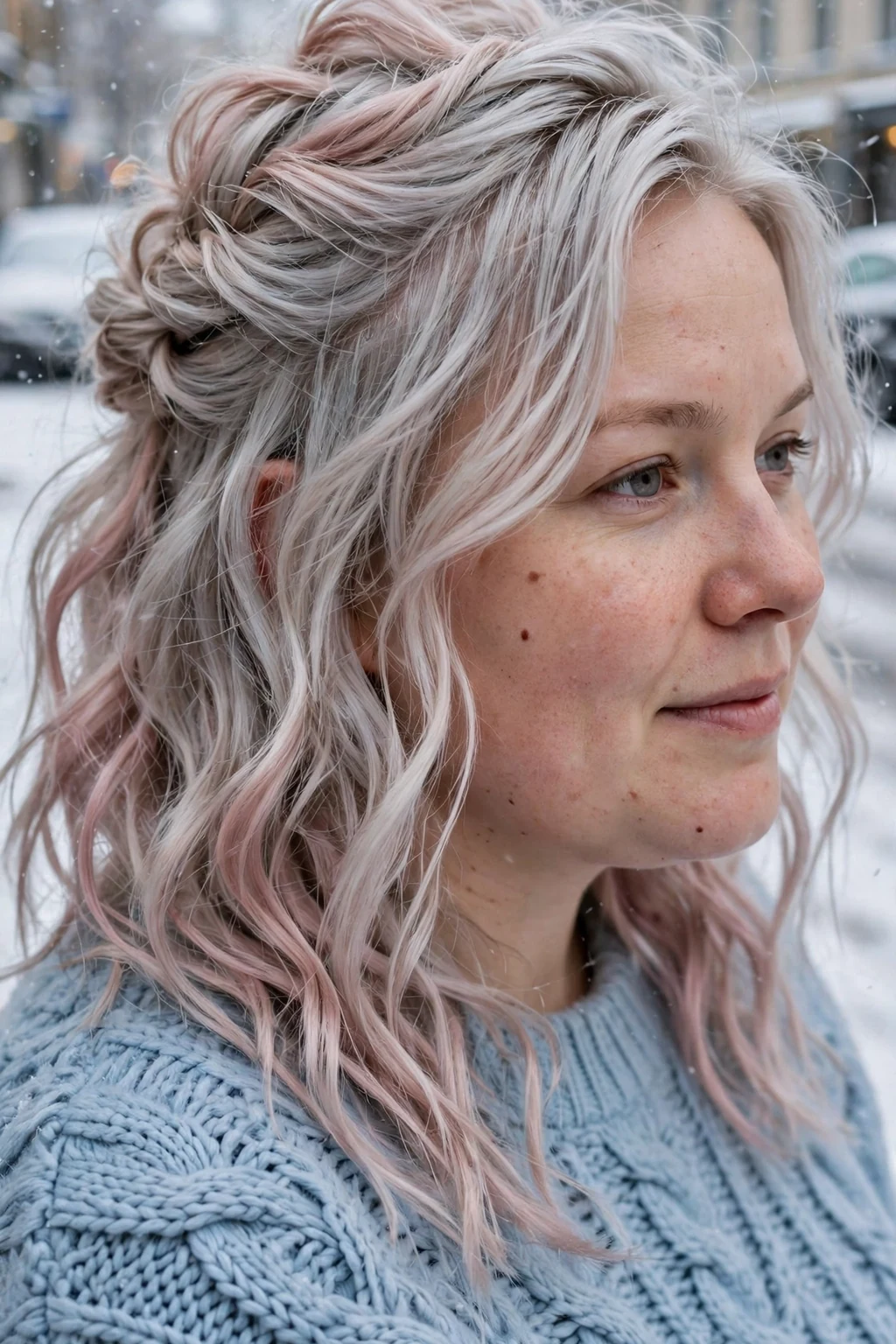
50. Subtle Wine-Tinted Lowlights on Brunette
Subtle wine-tinted lowlights on brunette hair add deep, burgundy shadows beneath the main brunette tone, creating dimension that looks like dark wine glinting through brown hair. Unlike highlights, which lighten, lowlights darken selected sections, so the wine tone adds depth and richness without lightening the hair or requiring heavy bleaching. The wine is kept deep and muted, appearing mainly in sunlight or when the hair moves, while indoors the hair simply looks like rich, dimensional brunette. This style suits warm, neutral, and olive skin tones, and it flatters oval, round, and square faces, because the darker lowlights add depth without widening the face. It works on thick, wavy, and straight brunette hair, and it is especially effective on long layers, where the wine shadows shift as the hair moves. The wine lowlights also add a sense of movement to straight hair, since the darker burgundy shadows create contrast as the hair swings, while the deep tone makes the surrounding brunette look richer by comparison, giving the whole head a more expensive, dimensional finish.
Your colorist will weave lowlight sections through the hair and apply a deep wine formula, keeping the surrounding brunette untouched so the dimension looks natural. Style with loose waves or a glossy blow-dry to show the wine depth, and use a shine serum to enhance the burgundy reflection. Maintain the tone with a red color-depositing conditioner every two weeks and a sulfate-free shampoo in cool water, since red tones fade fastest in hot water. Refresh the lowlights every eight to ten weeks and trim every ten weeks. Choose subtle wine-tinted lowlights if your brunette hair looks flat or one-dimensional, because this deep wine dimension adds richness and movement without the damage or upkeep of lightening. A burgundy color-depositing conditioner used every two weeks will keep the wine shadows deep, while washing in cool water and avoiding frequent hot-tool use without protection will prevent the red-purple tones from fading faster than the surrounding brunette hair around them.
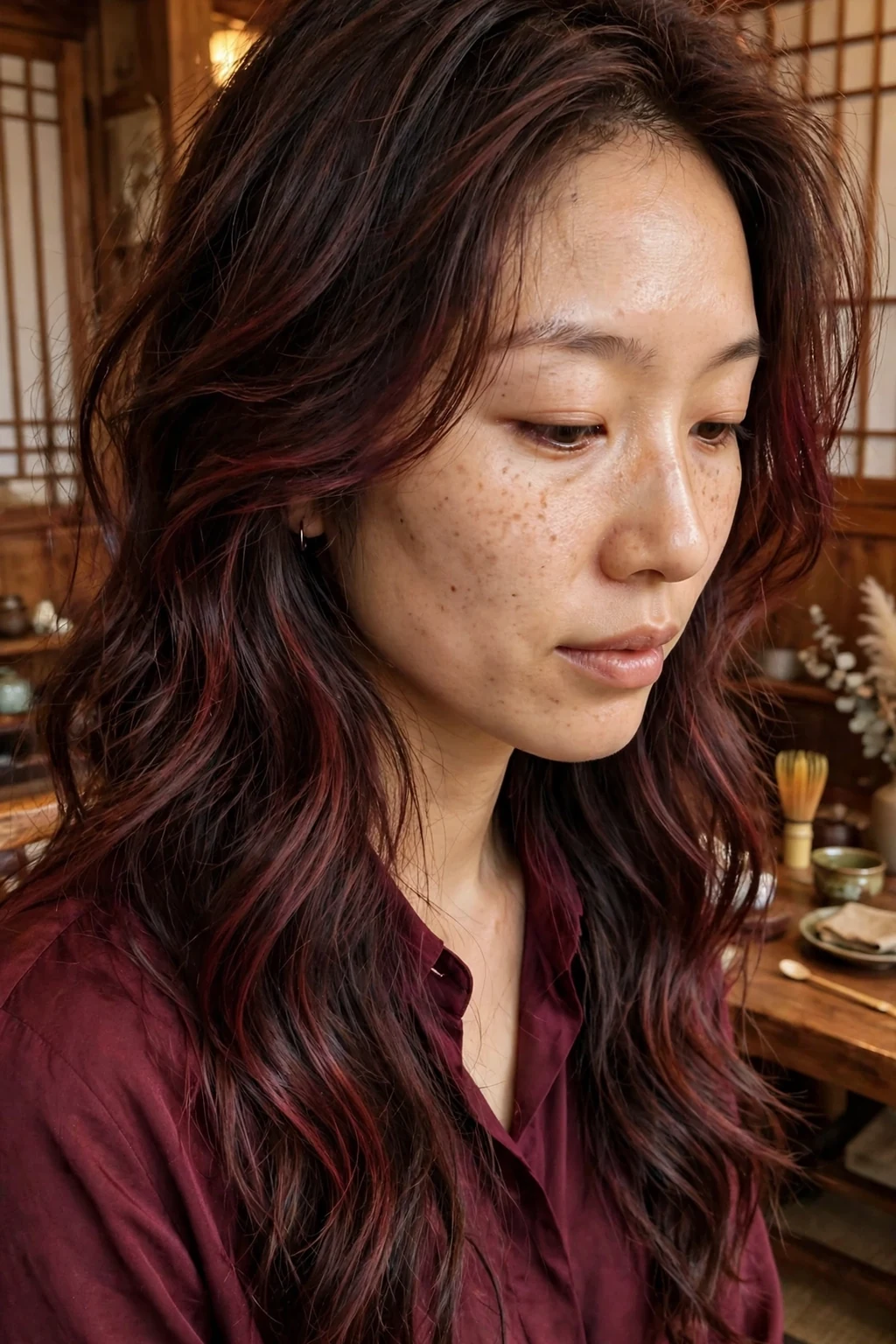
51. Butterscotch with Honeyed Rose Babylights
Butterscotch with honeyed rose babylights combines a warm, golden blonde base with ultra-fine rose highlights that glow like honey with a drop of pink. Butterscotch is a rich, caramel-gold blonde that flatters warm skin beautifully, while the honeyed rose babylights add a soft pink shimmer through the top layers, preventing the blonde from looking flat or brassy. Because babylights are so fine, the rose appears as a warm glow rather than streaks, brightening the face and adding dimension throughout the hair. This look suits warm and neutral skin tones and flatters oval, round, and heart-shaped faces, since the fine highlights lift the face gently. It works on fine to medium hair, where babylights create fullness, and on straight to wavy textures that let the fine color show in motion. The honeyed rose babylights also add a flattering glow to the skin in warm indoor lighting, where blonde hair can sometimes look washed out, while the butterscotch base keeps the overall color rich and golden rather than pale, icy, or overly cool in tone.
Your colorist will create a butterscotch base, then weave fine babylights and tone them with a honeyed rose formula, keeping the rose away from the roots for graceful grow-out. Style with a bouncy blow-dry or loose waves to show the golden-rose dimension, and use a light texturizing spray for a soft, lived-in finish. Maintain the warmth with a sulfate-free shampoo, a rose-gold conditioner every two weeks, and a purple shampoo used only sparingly so it does not cool the butterscotch away. Refresh the babylights every ten to twelve weeks and trim every eight to ten weeks. Try butterscotch with honeyed rose babylights if you want warm blonde with a romantic twist, because this golden-rose combination feels sunny, soft, and completely wearable. A rose-gold conditioning mask used every two weeks will keep the honeyed pink shimmer alive, while a lightweight shine spray applied to the mid-lengths and ends will enhance the golden-rose dimension without weighing down the fine babylight strands or making the hair look greasy.
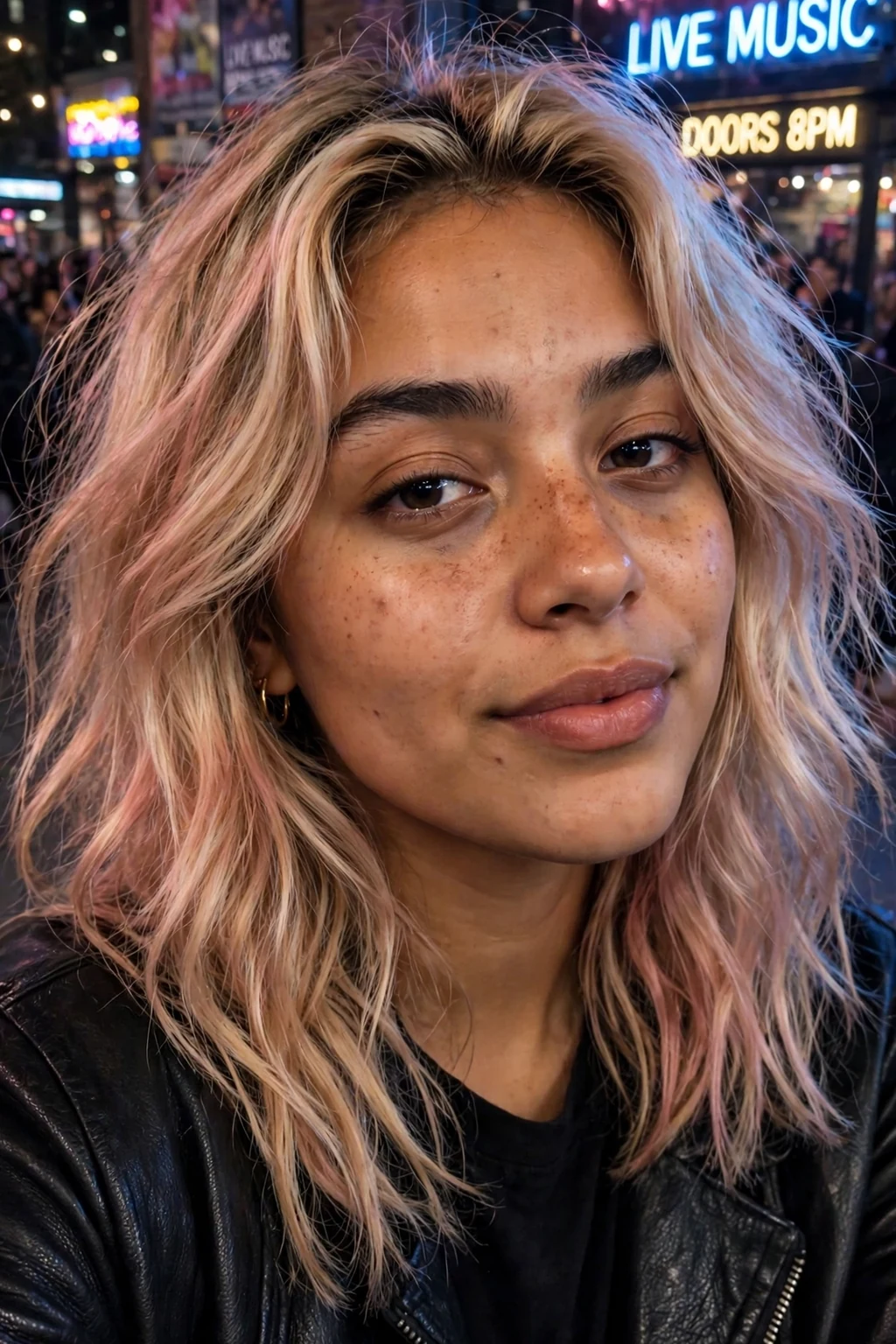
52. Smoky Plum Balayage
Smoky plum balayage paints muted purple ribbons through dark hair, creating a deep, wine-purple dimension that looks sophisticated rather than vivid. The plum is grayed and desaturated, so it reads as a smoky shadow of purple in low light and a rich berry tone in sunlight, while the balayage placement keeps the color softest at the roots and stronger toward the ends. Hand-painted sections give the color a natural, lived-in quality, with no harsh lines and graceful grow-out. This look flatters cool, neutral, and olive skin tones, and it suits oval, long, and heart-shaped faces, because the vertical balayage placement lengthens the hair visually. It works on straight to wavy dark hair, where the painted sections stay distinct, and it adds striking dimension to thick hair that can otherwise look flat. The smoky plum also adds depth to photographs, where dark hair can otherwise photograph as a single flat mass, while the muted purple ensures the color complements both warm and cool wardrobes, since the grayed berry tone sits comfortably between those two color families.
Your colorist will hand-paint the balayage sections over pre-lightened hair, then tone them with a smoky plum formula that mutes the purple into a sophisticated berry haze. Style with loose waves or a glossy straight finish, both of which show the plum dimension clearly, and use a light serum to keep the surface reflective. Maintain the tone with a purple-red color-depositing conditioner every two weeks and a sulfate-free shampoo in cool water. Refresh the balayage every ten to twelve weeks and trim every eight to ten weeks. Choose smoky plum balayage if you want purple dimension that still feels grown-up, because this muted, hand-painted plum gives dark hair depth and drama without a fashion-color commitment. A plum color-depositing conditioner used every two weeks will keep the berry tone rich, while a monthly deep-conditioning mask will repair the pre-lightened balayage sections and keep them as soft and manageable as the untouched dark hair surrounding them at all times.
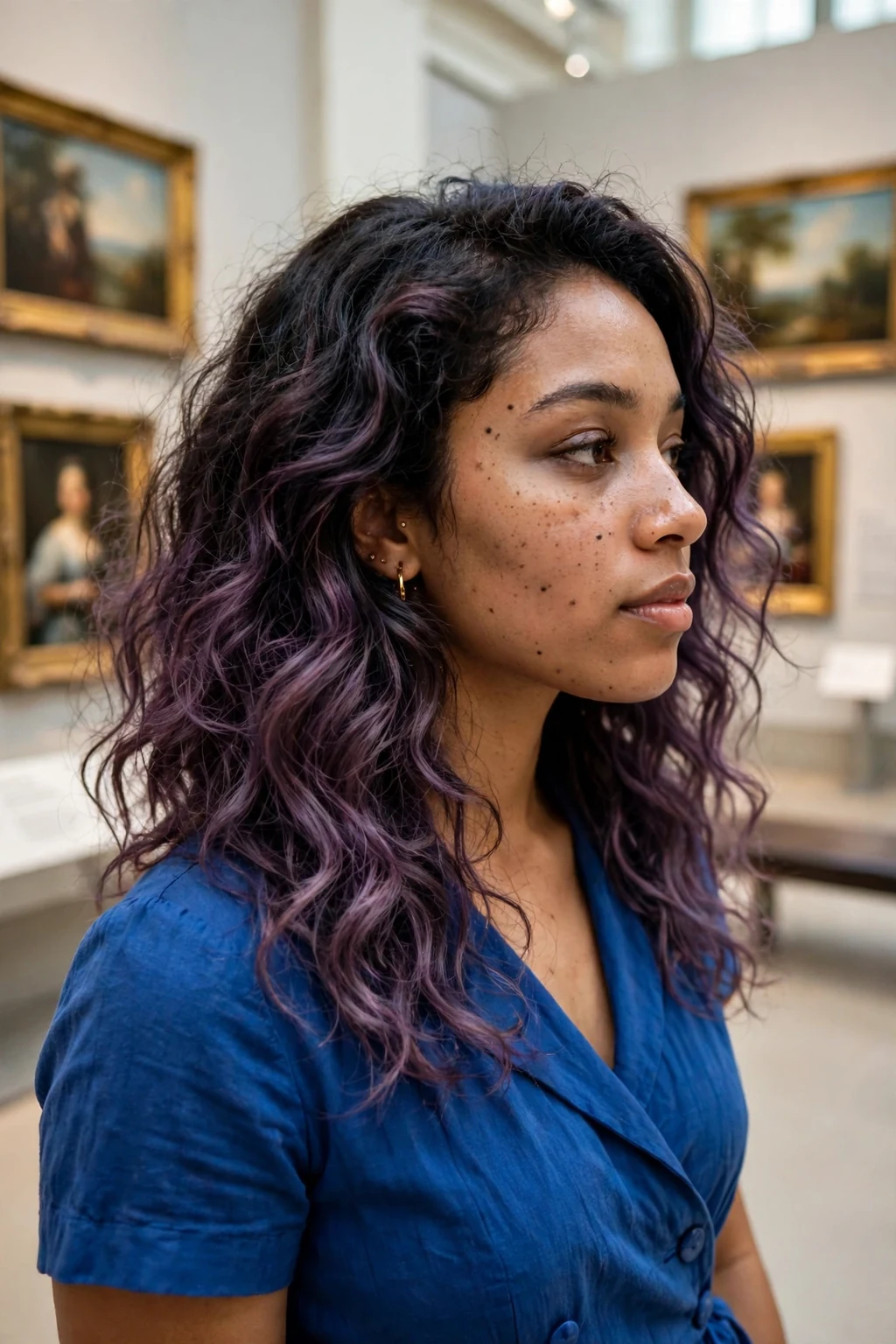
53. Dusty Blue-Gray Toner on Dark Blonde
Dusty blue-gray toner on dark blonde cools warm blonde hair into a muted, smoky shade that looks like dark blonde in soft, overcast light. The toner deposits a sheer blue-gray veil that neutralizes brassiness and adds a cool, almost slate-like depth, without turning the hair gray or silver. The result is sophisticated and modern: dark blonde that feels editorial rather than beachy, with a soft matte finish that suits minimalist style beautifully. This color suits cool and neutral skin tones and flatters oval, square, and long faces, because the muted tone creates a sleek, understated frame. It works on straight to wavy hair, where the cool finish shows most evenly, and it is an excellent corrective toner for dark blonde hair that keeps pulling warm or brassy between salon visits. The dusty blue-gray veil also gives dark blonde hair a modern, almost Scandinavian quality, since the cool, muted finish echoes the soft, overcast light of northern climates, while the sheer formula ensures the hair never looks gray, silver, or artificially colored in any way.
Your colorist will apply the dusty blue-gray toner over your existing dark blonde, processing it carefully so the cool tone deposits evenly without going too gray. At home, maintain the cool finish with a sulfate-free shampoo and a blue-toned conditioner, avoiding warm-toned products that could pull the color brassy. Style with a smooth blow-dry for a polished, smoky finish, or let waves air-dry for a softer, lived-in version. Use a heat protectant before styling and a weekly mask to keep the hair healthy and reflective. Refresh the toner every six to eight weeks and trim every ten weeks. Choose a dusty blue-gray toner if your dark blonde always turns warm too quickly, because this cool, muted veil finally keeps brassiness away while looking completely natural. A blue-toned conditioning mask used monthly will keep the dusty cool tone balanced, while avoiding warm-toned shampoos and gold-based styling products will prevent the carefully cooled dark blonde from drifting back toward the brassiness it was toned to correct.
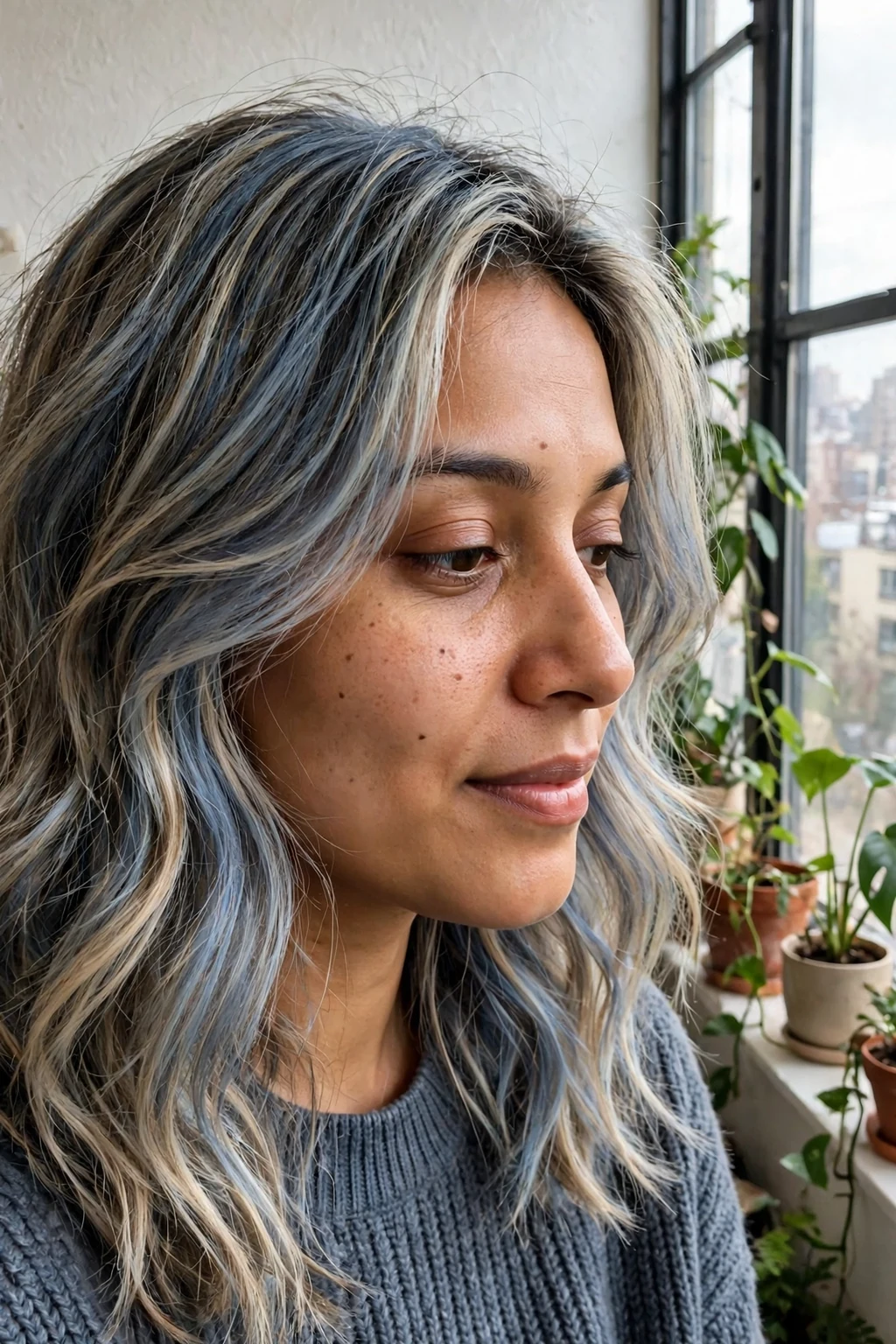
54. Warm Rose-Bronze Gloss
Warm rose-bronze gloss layers a rosy, metallic warmth over brown hair, giving it a polished, bronze-like shine with a distinct pink undertone. Bronze adds golden warmth, while rose softens it, so the result is neither fully copper nor fully pink: in shade the hair looks like rich, warm brown, while in light it glows with a rose-bronze shimmer that looks expensive and healthy. The gloss finish maximizes reflection, which is especially flattering on medium to thick hair, where shine can be lost in texture. This color suits warm and neutral skin tones, bringing warmth to the complexion, and it flatters oval, round, and heart-shaped faces because the even warm tone frames the face softly. It works on straight, wavy, and loosely curled hair, and it is a wonderful refresh for brown hair that has faded or lost its shine. The rose-bronze shimmer also enhances the appearance of healthy hair, since the metallic warmth reflects light in a way that mimics naturally glossy, well-conditioned strands, while the rosy undertone flatters both warm and neutral complexions without overwhelming either one.
Because a gloss does not lift the hair, this treatment is gentle and quick, making it ideal for a shine refresh between fuller color services. Your colorist will apply the rose-bronze gloss over your existing brown, processing it just long enough to deposit warmth and shine. At home, maintain the result with a sulfate-free shampoo, a weekly hydrating mask, and a rose-gold conditioner every few weeks to keep the rosy bronze alive. Style with a round-brush blow-dry for maximum gloss, or let waves air-dry with a smoothing cream for a softer shine. Refresh the gloss every six to eight weeks and trim every ten weeks. Try warm rose-bronze gloss if your brown hair feels dull, because this single treatment restores warmth, rose shimmer, and mirror-like shine at once. A rose-gold glossing mask used every few weeks will keep the bronze shimmer vivid, while sleeping on a silk pillowcase and using a wide-tooth comb will preserve the glossy, reflective finish that makes this treatment look freshly salon-done for weeks after application.
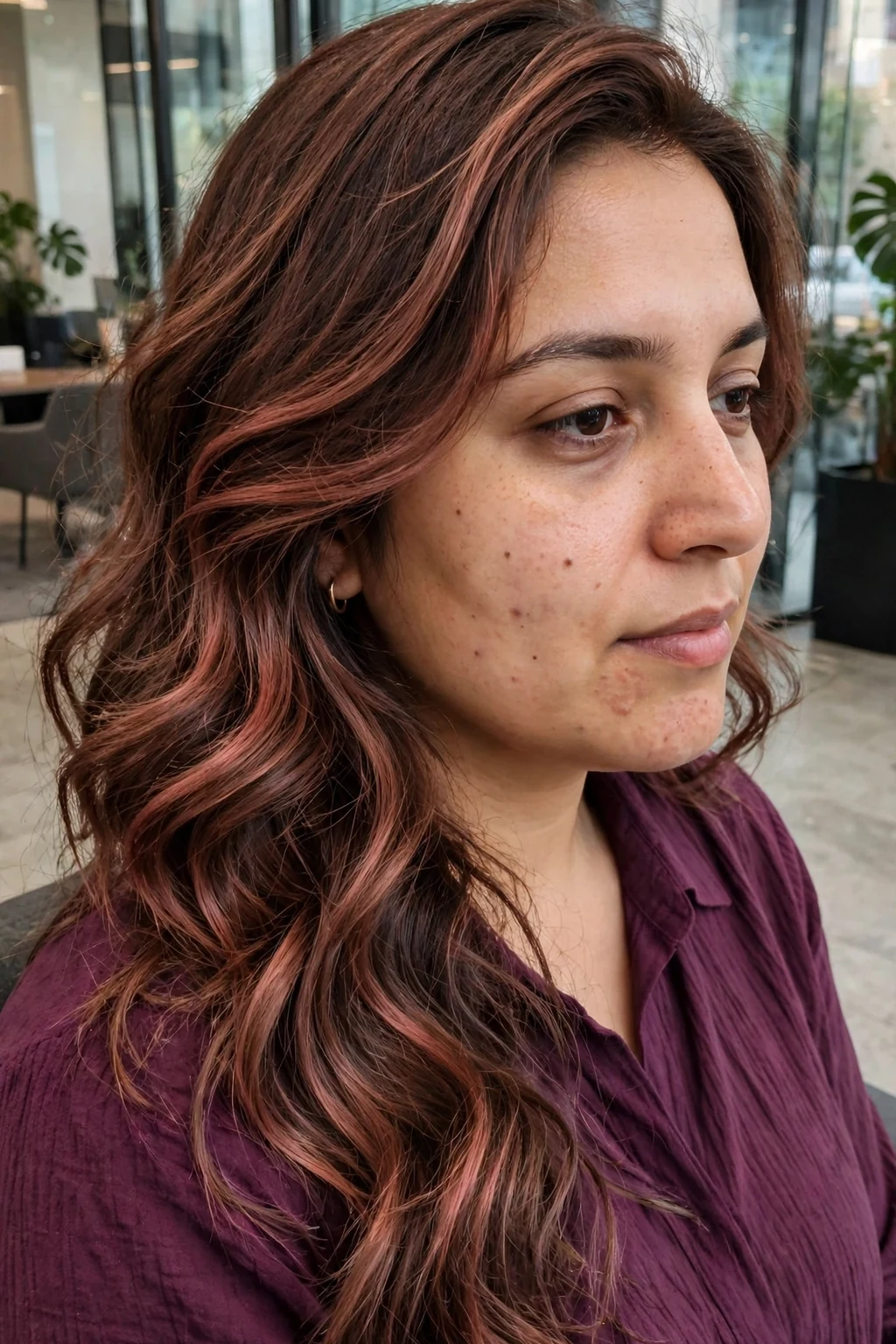
55. Soft Lilac-Pink Melt on Light Brown
Soft lilac-pink melt on light brown blends pale lavender and blush pink into light brown hair so smoothly that the pastels look like a natural wash of color rather than a dye job. The melt technique eliminates lines entirely, so lilac and pink flow into the light brown base and into each other, creating a multi-tonal, dreamy effect that is most visible in sunlight and softer indoors. Light brown is an ideal base for this melt, since it is light enough for pastels to show yet dark enough to keep them muted and wearable. This look suits fair to medium skin tones, especially cool and neutral undertones, and it flatters oval, heart-shaped, and round faces, because the soft pastel wash brightens the face without adding width. It works on straight to wavy hair, where the melt shows in smooth gradients, and on layered cuts, where each layer reveals a different pastel note.
Your colorist will lighten the hair gently if needed, then apply a lilac-pink melt formula, blending the pastels through the mid-lengths and ends while keeping the roots natural for easy grow-out. Style with loose waves or a smooth blow-dry to show the melt's gradient, and use a shine serum to keep the pastels luminous. Maintain the color with a sulfate-free shampoo in cool water, alternating a lavender and a pink color-depositing conditioner every two weeks to keep both pastels balanced. Refresh the melt every eight to ten weeks and trim every eight weeks to keep the ends fresh. Choose a soft lilac-pink melt if you want pastels that feel romantic and wearable, because this gentle blend gives light brown hair a dreamy, multi-tonal finish without a bold fashion-color commitment. A dual-tone conditioning routine, alternating lavender and pink depositing conditioners, will keep both pastels visible rather than letting one dominate, while cool-water washing and a leave-in conditioner will protect the delicately lightened melt from fading unevenly over time.
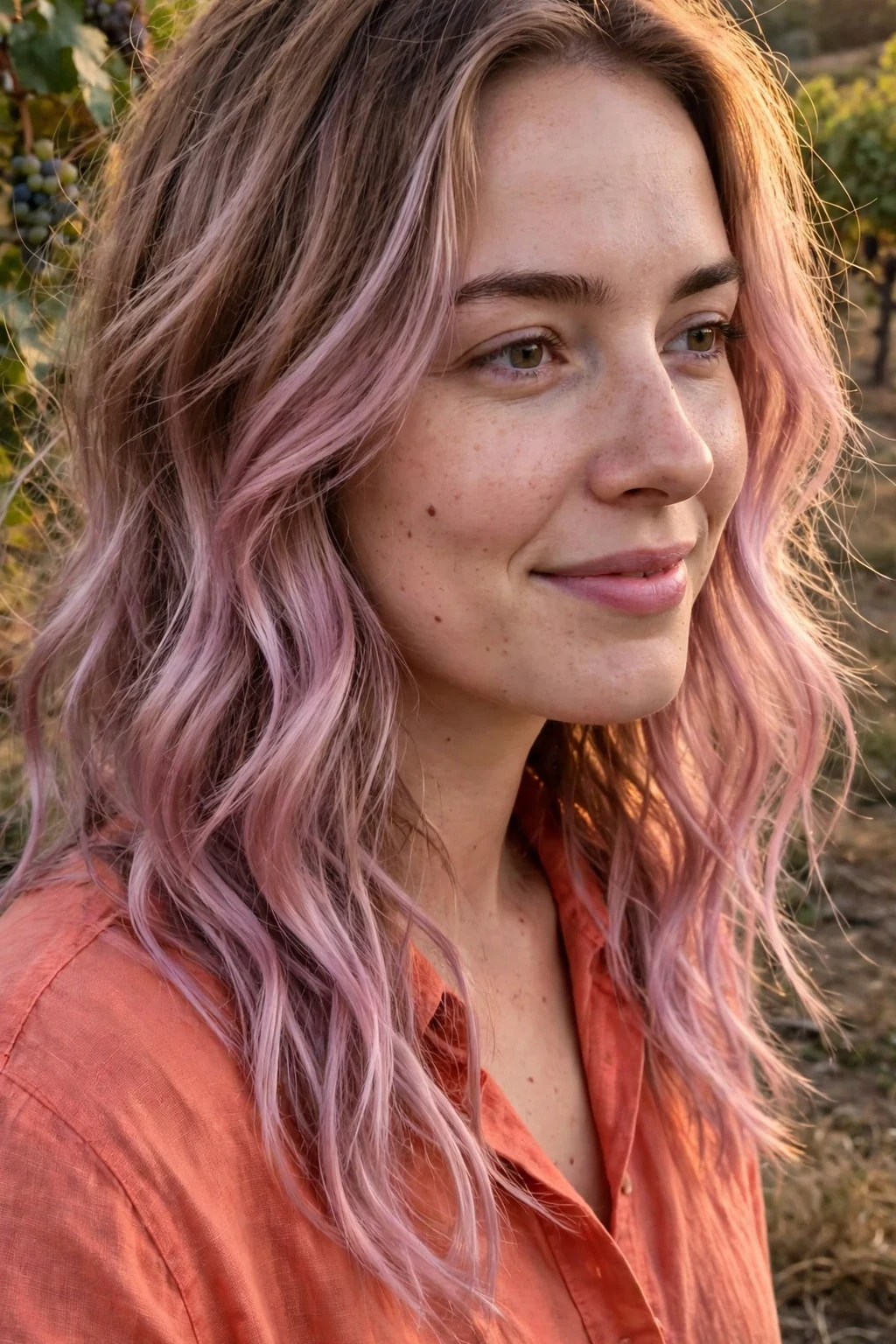
How to Choose the Right Subtle Colored Hair Look
The most flattering subtle colored hair is personal: pick a tone that echoes your skin's undertone, a placement that suits your haircut, and an intensity you will still love in eight weeks. Cooler skin tones glow with lavender, smoky blue, and pearl pink; warmer skin tones come alive with copper, peach, and rose gold. Bring reference photos to your consultation, be honest about how often you want to visit the salon, and choose the subtle hair color that makes you feel like the best version of yourself.
Subtle hair dye is wonderfully low-maintenance when the color starts away from the roots, since grow-out looks intentional rather than neglected. Most of these looks need only a toner refresh every eight to twelve weeks and a trim on the same schedule. A sulfate-free shampoo, a color-depositing conditioner in your chosen tone, and weekly deep conditioning will keep any subtle color luminous. Choose the idea that excites you most, commit to the aftercare, and enjoy color that turns heads quietly.
Conclusion
From soft rose-gold balayage to smoky blue peekaboos, these 55 subtle colored hair ideas prove that quiet color makes the loudest impression. Choose the tone that flatters your skin, keep up with gentle maintenance, and wear your subtle color with total confidence.