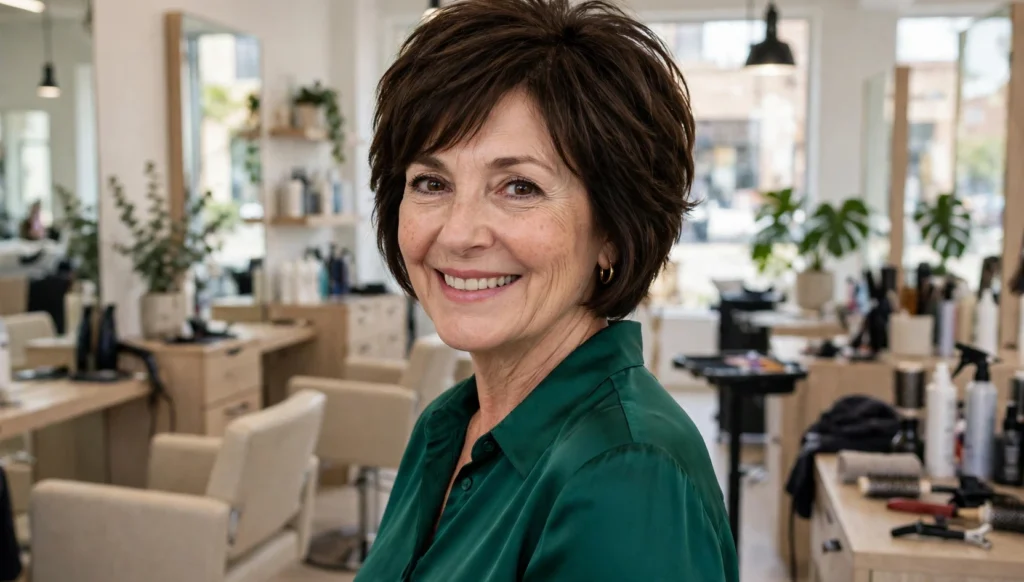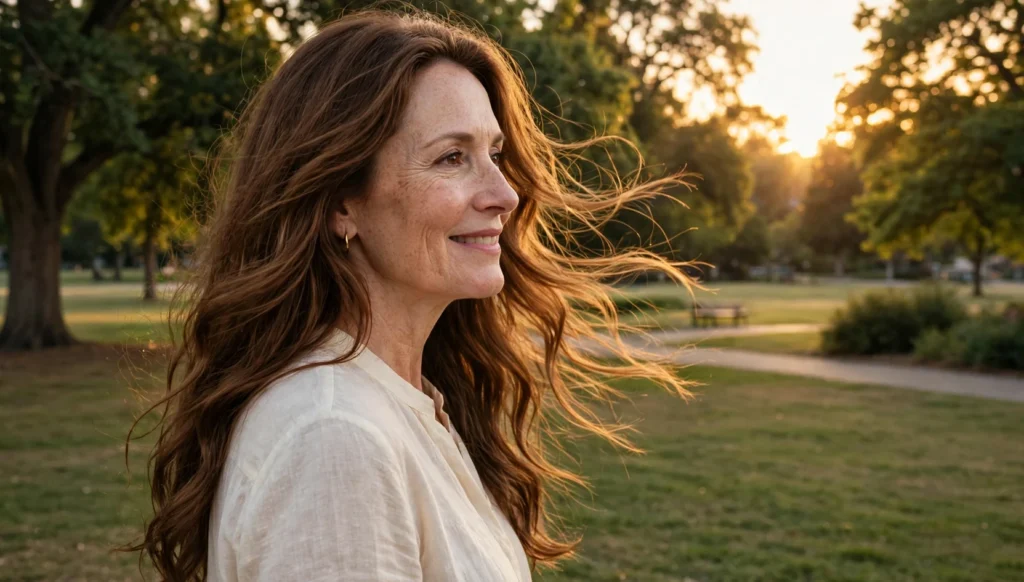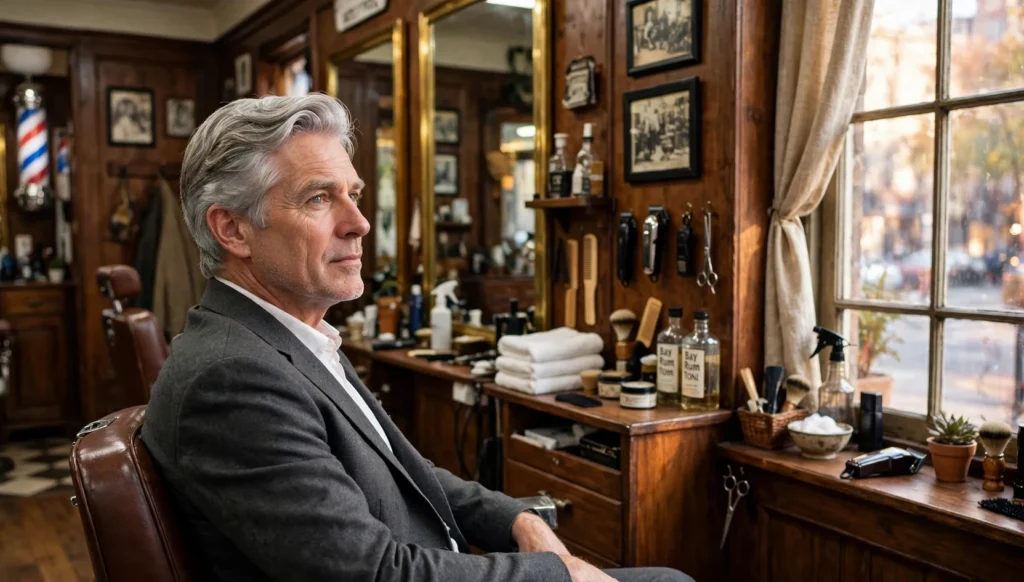
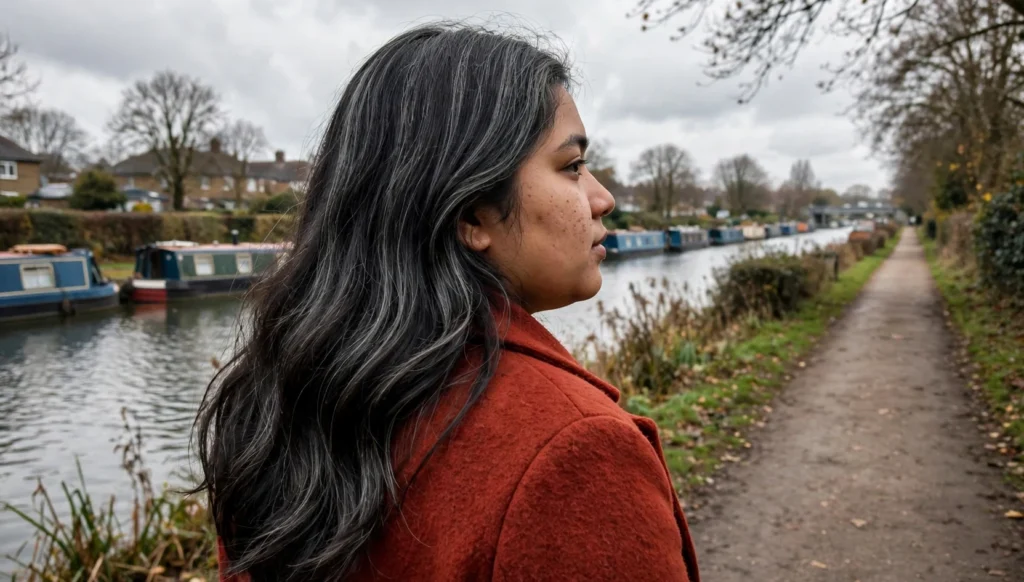
Blending gray into dark hair is modern, chic, and wonderfully low-maintenance. These 56 gray blending ideas for dark hair are seamless, dimensional, and flattering, turning the grow-out into a gorgeous, intentional look.
1. Subtle Gray Babylights
Subtle gray babylights are the gentlest introduction to blending: ultra-fine, delicate highlights woven throughout dark hair that mimic the way gray naturally appears — softly and scattered. The babylights are painted in ashy, silver-kissed tones that bridge the gap between your dark base and incoming grays, making regrowth look intentional rather than neglected. The effect is luminous dimension rather than obvious color. Your colorist weaves the babylights in a scattered pattern that mirrors natural gray distribution, so the result never looks striped or artificial.
This technique is perfect for women with early graying (under thirty percent) who want to camouflage without committing to full coverage. It flatters every skin tone when the ash tones are customized, and works on all textures. The grow-out is the gentlest in coloring — touch-ups every ten to twelve weeks, since the fine highlights blur into natural regrowth. Choose it when you want to ease into gray gracefully, with no harsh lines and no drastic change. Between appointments, a color-depositing conditioner in an ash tone keeps the babylights fresh and prevents any warmth from creeping in.

2. Silver Money Piece
The silver money piece spotlights the face in brightness: bold, face-framing highlights in luminous silver that draw the eye immediately. Against dark hair, the contrast is striking — the silver pieces illuminate the eyes and cheekbones while cleverly disguising grays at the temples, where they appear first. It is high-impact blending with a fashion-forward edge. The placement follows your natural part and hairline, concentrating brightness where sunlight would hit and where grays cluster most densely.
This placement is genius for camouflaging the most visible grays while leaving the rest of the hair natural. It suits all face shapes and skin tones, with the brightness universally flattering. The money piece needs refreshing every eight to ten weeks to stay luminous, and purple shampoo keeps the silver from yellowing. Choose it when you want maximum camouflage with minimum all-over coloring — strategic brightness where it counts most. The focused application also means lower cost per appointment, since far less hair is being processed than a full highlight.
3. Gray Blending Balayage
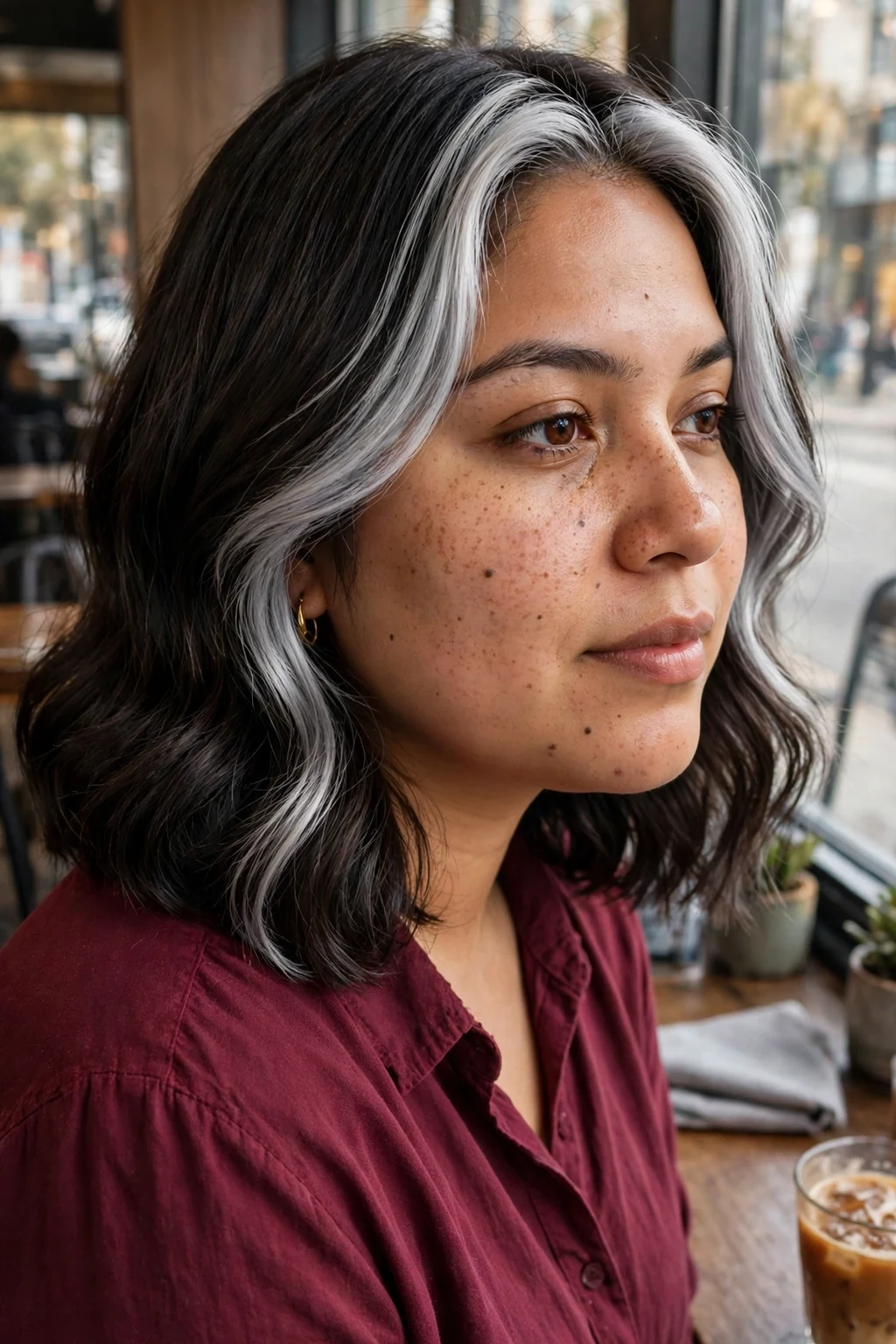
Gray blending balayage is the gold standard: hand-painted dimension that sweeps from your dark base into ashy, silver-kissed mids and ends, mimicking how hair lightens naturally over time. The painted application means no harsh foil lines — just soft, lived-in dimension that makes grays disappear into the overall pattern. It is the most natural-looking blending technique available. During the appointment, your colorist maps your gray pattern first, then paints brightness to integrate with it rather than mask it uniformly.
Ideal for thirty to sixty percent gray, this technique works on all textures and face shapes. The grow-out is famously forgiving — appointments every three to four months — because there is no solid regrowth line. Style with waves to show off the dimension, and use color-safe, sulfate-free products to preserve the ash tones. Choose it when you want the most seamless, low-maintenance path to embracing your gray. Sleep on a silk pillowcase to reduce friction on the lightened pieces, keeping them smooth and shiny between washes.

4. Ash Brown Melt
The ash brown melt is sophisticated camouflage: a seamless gradient from dark roots through cool ash-brown mids, with the color melting so smoothly that no line of demarcation exists anywhere. The ashy tones neutralize the warmth that makes grays look brassy against dark hair, creating a cohesive, expensive-looking finish. It is blending as color correction. The melting technique uses multiple ash formulas blended wet-on-wet, creating a gradient so smooth it looks like your natural color evolved.
Perfect for women whose grays are turning yellow or brassy against their dark base, flattering cool and neutral skin tones especially. The melted application grows out softly with touch-ups every ten to twelve weeks. Glossing treatments between appointments keep the ash tones fresh and the hair mirror-shiny. Choose it when your grays are fighting your color — the ash melt makes peace between them. Avoid hot water when washing, since heat opens the cuticle and allows the carefully calibrated ash tones to escape faster.

5. Silver Foil Highlights
Silver foil highlights offer precision blending: carefully placed foiled highlights in silver and ash tones that target gray clusters with surgical accuracy. Unlike balayage's softness, foils give controlled, even lightness — ideal for stubborn grays that resist softer techniques. The result is bright, dimensional silver woven through dark depth. Each foil is placed to target specific gray clusters, with the colorist adjusting developer strength based on how resistant each section is.
Best for resistant gray hair that needs extra lift, working on all textures. The precision placement means your colorist can put brightness exactly where the grays are densest. Foils need touch-ups every eight to ten weeks as the regrowth line is more defined than balayage. Use purple shampoo weekly to maintain the silver clarity. Choose it when your grays are stubborn and you need blending with real lifting power. Deep-condition weekly, since the lifting required for resistant grays is more demanding on the hair's moisture balance.

6. Gray Root Smudge
The gray root smudge is the ultimate grow-out hack: your colorist smudges a tone matching your natural root over the regrowth area, blurring the line between colored hair and incoming gray. The smudged root creates a soft, shadowed effect that makes regrowth look like intentional dimension. It extends the life of every color appointment dramatically. The smudge formula is custom-mixed to your exact root color, then feathered downward so the transition zone is completely invisible.
This technique suits anyone growing out color or transitioning to gray, working on all textures and tones. The smudge buys you an extra four to six weeks between appointments — the most economical blending option. It is also the kindest to hair, since less of the regrowth gets processed. Choose it when you want to stretch salon visits and soften every grow-out phase. This technique also protects previously colored lengths from unnecessary reprocessing, keeping the mids and ends healthier.
7. Dimensional Gray Lowlights
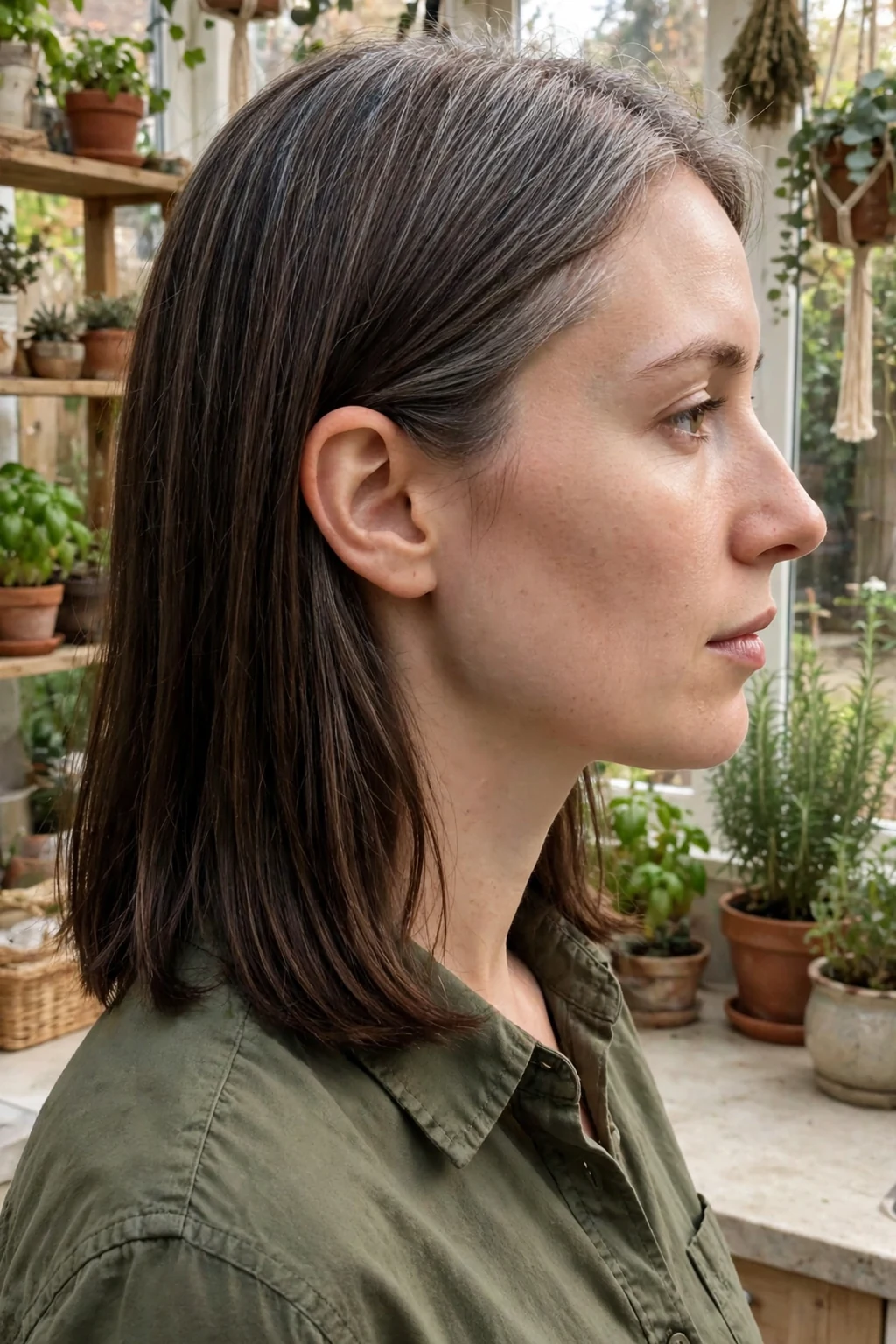
Dimensional gray lowlights add depth rather than lightness: darker ash pieces woven through graying hair to create shadow and contrast. While most blending focuses on lightening, lowlights work in reverse — adding dark dimension that makes grays look like deliberate highlights. The interplay of light and dark reads as rich, expensive color. Your colorist alternates lowlight shades for a multi-dimensional effect that mimics the natural variation of virgin hair.
Brilliant for hair that is more than fifty percent gray and looking washed out, since the added depth restores richness. It flatters all skin tones and adds the illusion of thickness to fine hair. Lowlights grow out softly with touch-ups every ten to twelve weeks. Choose it when your gray is making your hair look flat — depth is the missing dimension. The added depth makes styling more forgiving, since dimension disguises everything from frizz to second-day texture.
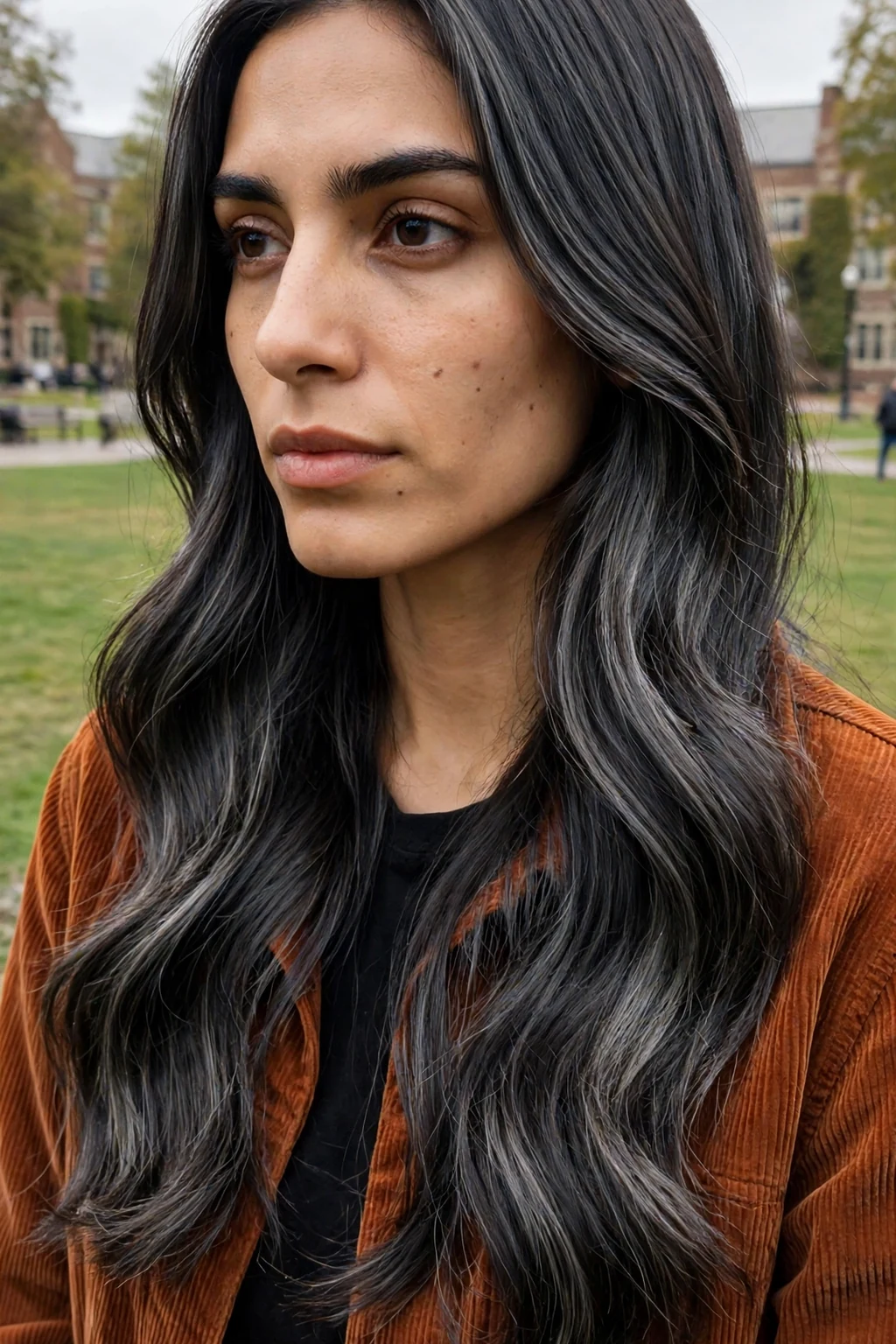
8. Silver Face-Framing
Silver face-framing is strategic brightness: silver and ash pieces concentrated around the face, where grays are most visible and where brightness is most flattering. The face frame illuminates the complexion, brightens the eyes, and camouflages temple grays simultaneously. It is the highest-impact, lowest-commitment blending on this list. The framing pieces are cut to fall precisely along the cheekbones, maximizing both the brightening and slimming effects.
Universally flattering — brightness around the face suits every skin tone and face shape. The focused application means quicker, cheaper appointments with touch-ups every eight to twelve weeks. It is also the easiest blending to grow out if you change your mind. Choose it when you want noticeable brightening and camouflage without coloring your whole head. Because so little hair is colored, this is the fastest blending appointment — often under two hours in the chair.

9. Gray Blending Ombré
The gray blending ombré is bold and beautiful: dark roots melting into silver-gray ends in a dramatic gradient. Rather than hiding the gray, this technique celebrates it — the ombré transitions from your natural dark into full, glorious silver. It is the most fashion-forward blending option, turning the gray journey into a style statement. The gradient is customized to your length, with the transition point placed to flatter your specific proportions.
Best for women ready to embrace significant gray with drama, flattering oval, oblong, and heart-shaped faces with its vertical gradient. The dark roots mean minimal touch-ups — just tone the ends every ten to twelve weeks. Purple shampoo is essential to keep the silver ends luminous. Choose it when you are done hiding and ready to make your gray the main event. The bold gradient also means you can stretch appointments further than any other technique, since roots are part of the design.
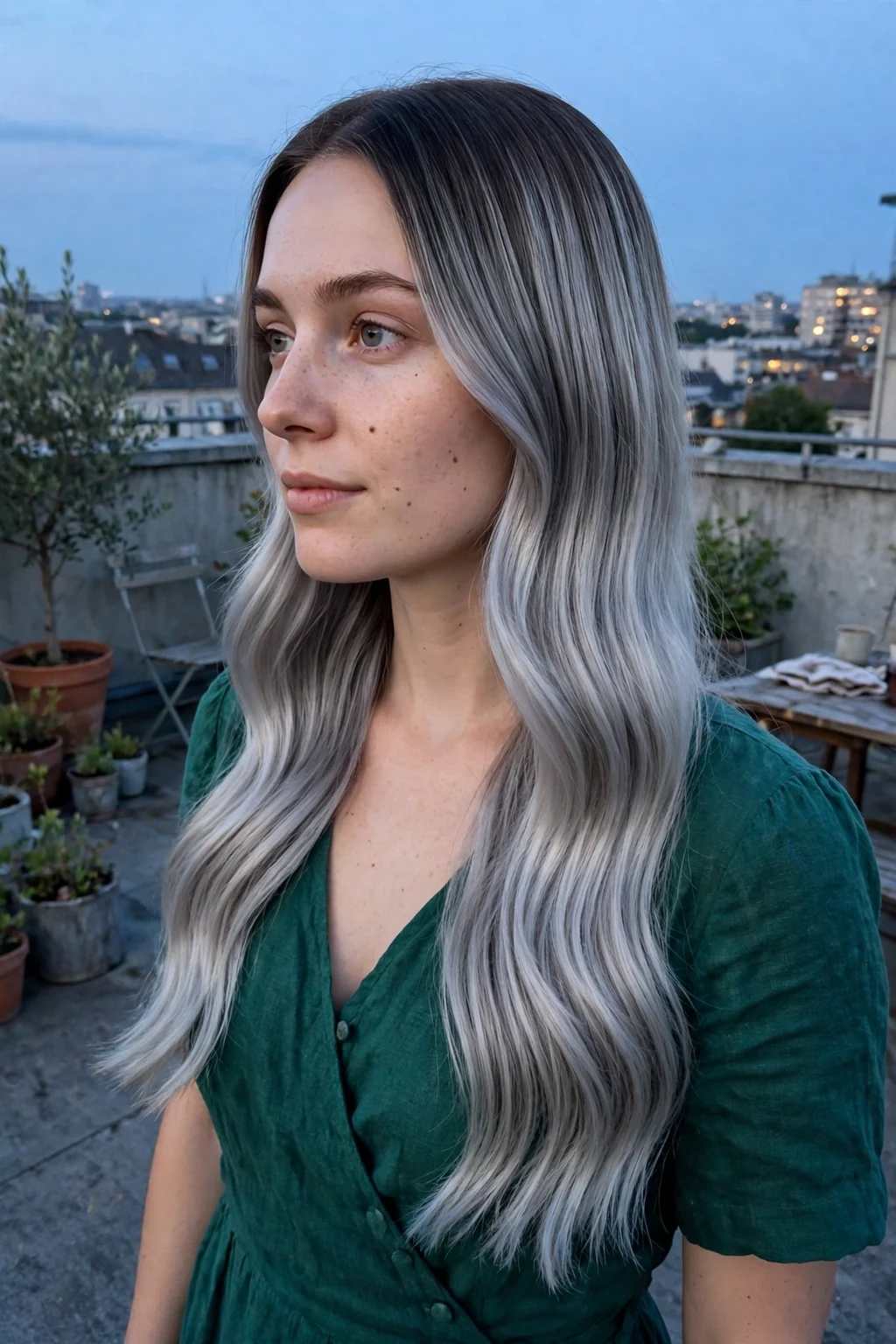
10. Cool Ash Balayage
Cool ash balayage is the tone-perfect blend: hand-painted dimension in strictly cool, ashy tones that harmonize with gray's natural coolness. By eliminating all warmth from the equation, the balayage makes grays indistinguishable from the colored dimension. The result is smoky, sophisticated, and incredibly cohesive. Multiple cool formulas are blended throughout to create depth within the cool family, preventing a flat, one-note result.
Ideal for women whose skin has cool undertones and whose grays look best in silver rather than warm tones. The cool palette is also brilliant for counteracting brassiness. Maintain with purple shampoo and glossing treatments every few months; appointments stretch to three or four months. Choose it when you want the most harmonious, tone-on-tone blending possible. Cool tones fade faster than warm ones, so washing in cool water significantly extends the life of your balayage. The cool palette also makes eye color appear more vivid, since the ashy frame provides striking contrast.
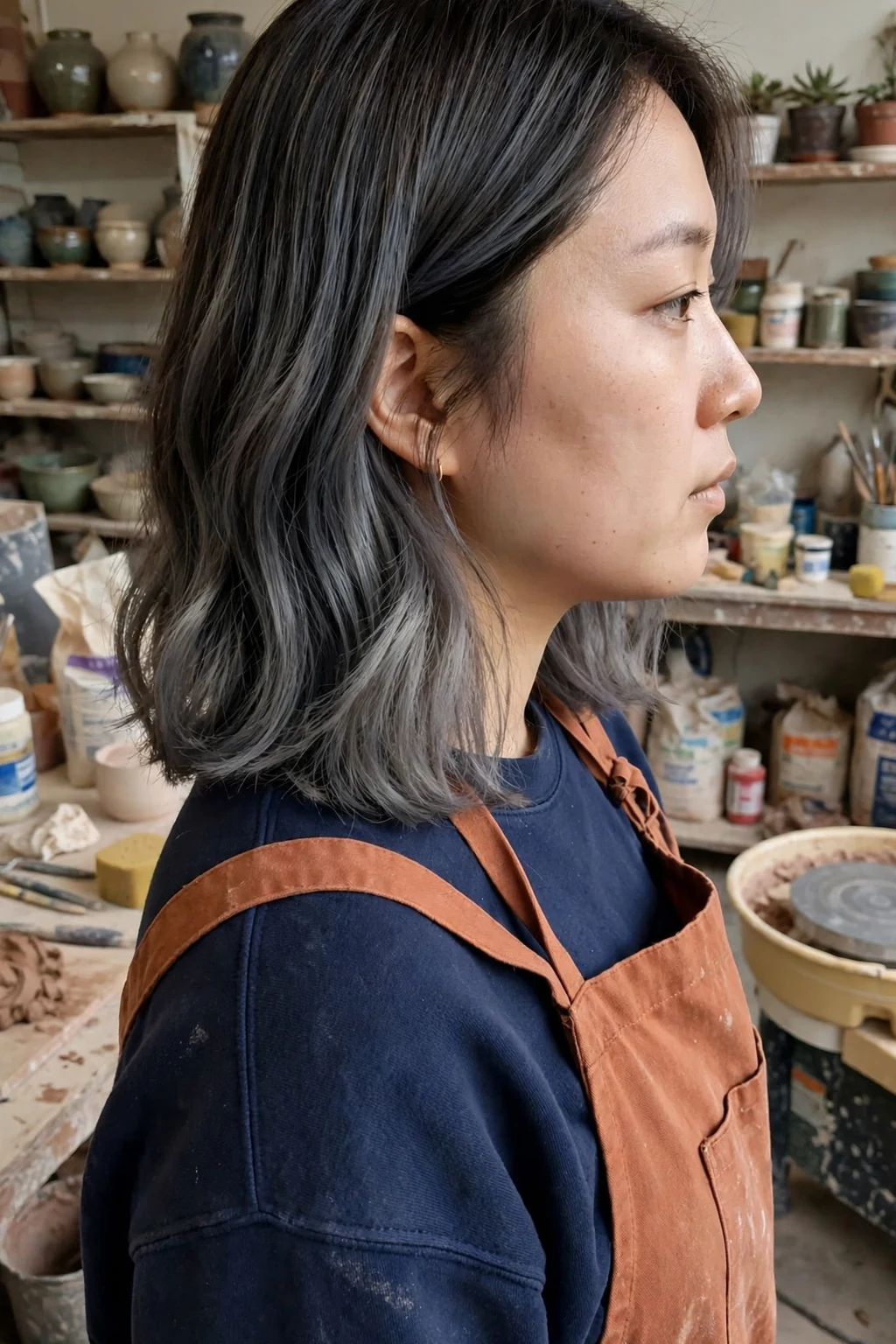
11. Silver Gray Babylights
Silver gray babylights are babylights gone luminous: the ultra-fine highlighting technique executed in bright silver tones for maximum gray camouflage. The fine weave means the silver integrates seamlessly with both dark hair and natural grays, creating an overall impression of shimmering dimension. Delicate but powerful. The ultra-fine sections mean minimal stress on each strand, making this the gentlest way to achieve significant brightening.
Perfect for fine hair that needs camouflage without heavy processing, since babylights are the gentlest highlighting method. The fine texture also means the softest grow-out — twelve weeks or more between appointments. It suits all face shapes and skin tones. Choose it when your hair is delicate and your grays need the gentlest possible blending. The delicate weave also means less scalp irritation during processing, a blessing for sensitive skin. The whisper-fine brightness also layers beautifully under other techniques if you later want more dramatic blending.
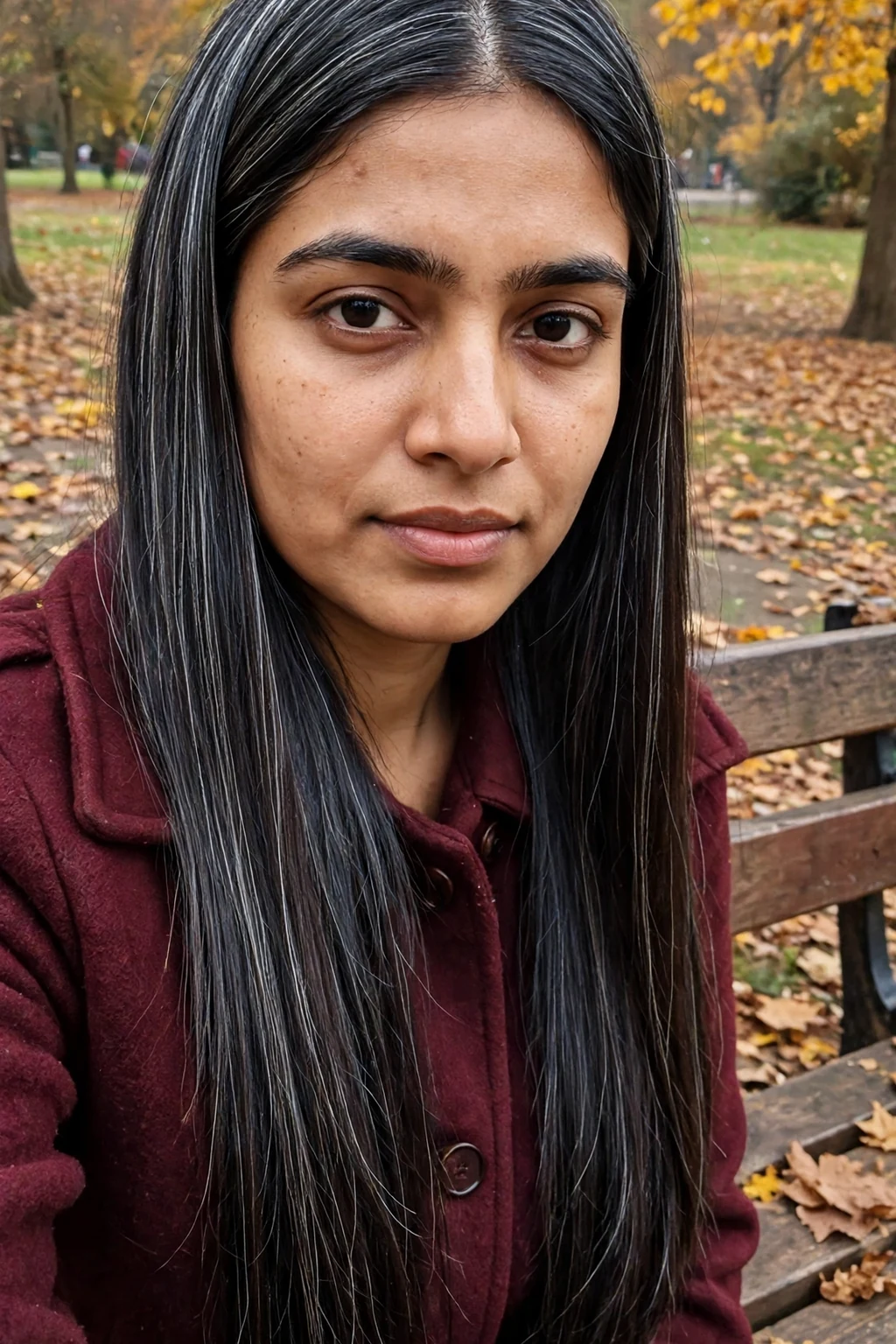
12. Blended Gray Roots
Blended gray roots are the grow-out disguise perfected: the root area is colored in a multi-tonal blend that mimics natural gray distribution, so real regrowth vanishes into the pattern. Instead of fighting the roots, this technique makes them part of the design. It is camouflage by imitation — the cleverest trick in the book. The multi-tonal root formula typically combines three or more shades to replicate the complexity of natural regrowth.
Designed for women in active transition, buying months between full appointments with just root touch-ups every eight to ten weeks. Works on all textures and gray percentages. The multi-tonal root is also incredibly forgiving of missed appointments. Choose it when you are transitioning and want the roots to work for you instead of against you. This approach also saves significant money over time, since you are maintaining roots rather than recoloring lengths.
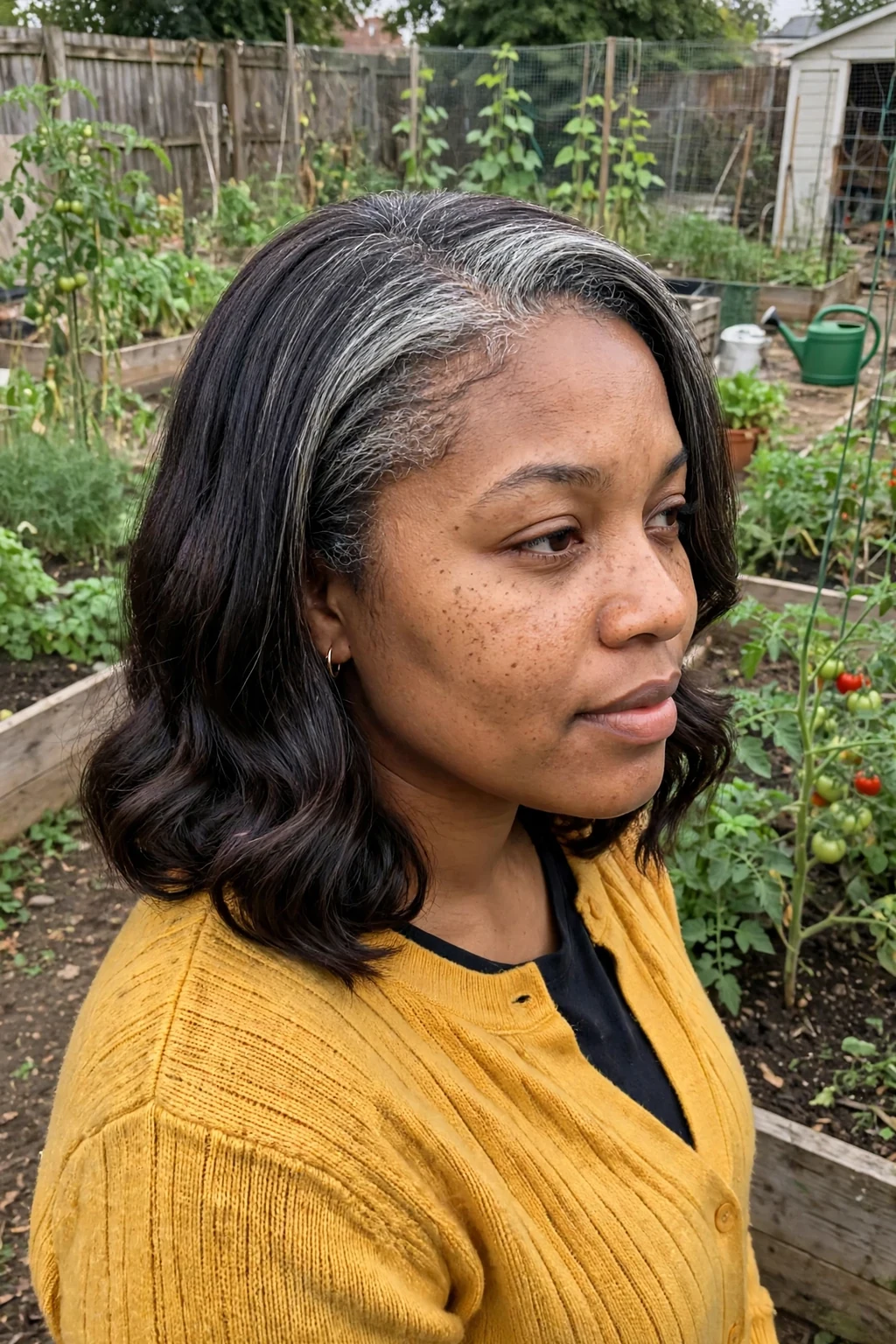
13. Ash Gray Highlights
Ash gray highlights are classic dimension: traditional highlighted brightness in cool ash-gray tones woven through dark hair. The ash tone is key — it bridges dark bases and silver grays without the warmth that creates contrast. The result is natural-looking dimension with a modern, smoky edge. The ash formulas are calibrated to your base color so the highlights integrate rather than sitting visibly on top.
Versatile across gray percentages and flattering on cool to neutral skin tones. Traditional highlights give more uniform brightness than balayage, which some women prefer. Touch-ups every eight to ten weeks keep the brightness fresh. Choose it when you want reliable, classic highlighting with a gray-blending twist. Traditional partial highlights every other appointment can alternate with full appointments to manage both cost and maintenance. The reliability of classic foiling also makes this the easiest technique to replicate consistently across appointments.
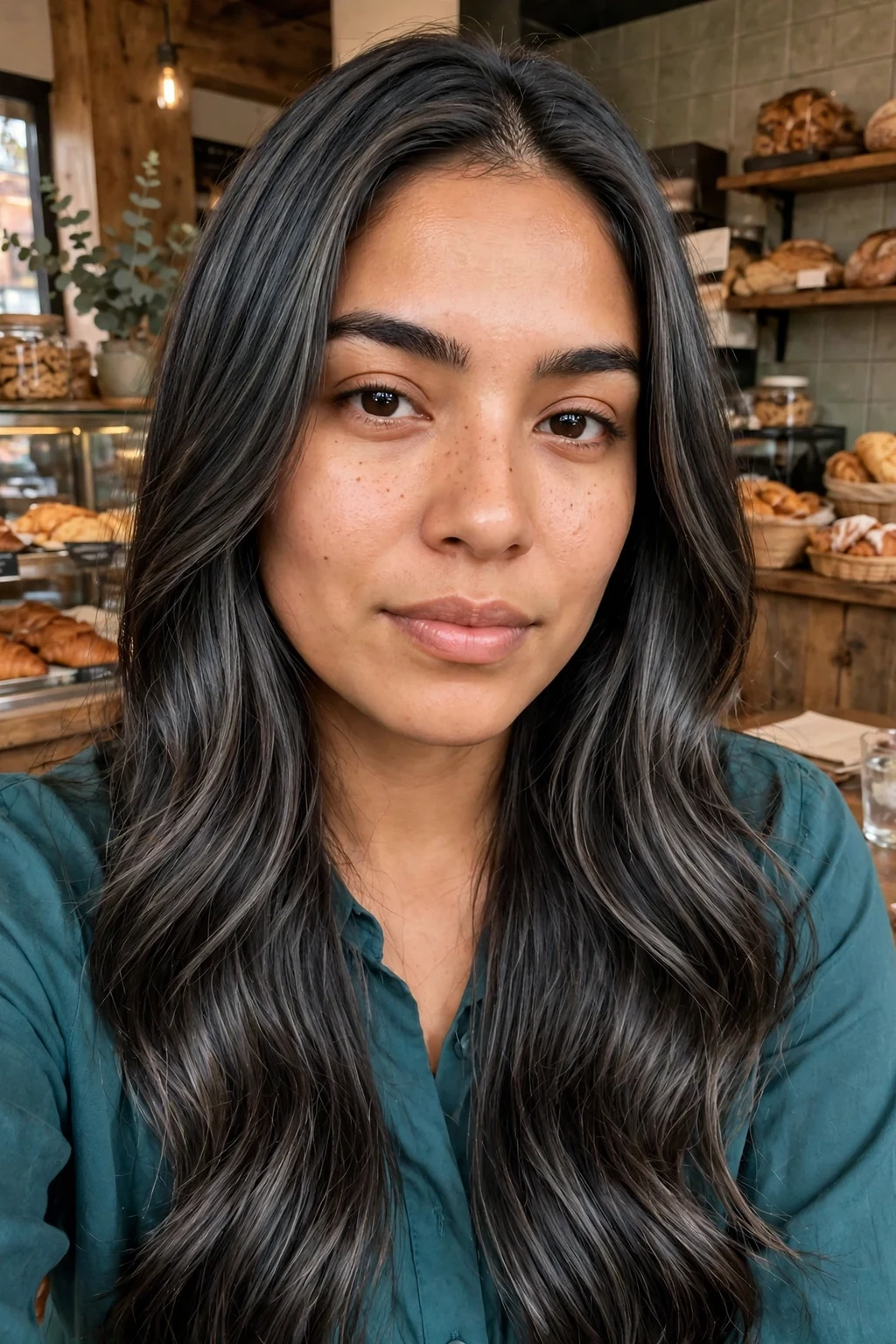
14. Silver Lived-In Color
Silver lived-in color is the low-maintenance dream: color applied with a rooted, melted technique that looks effortlessly natural from day one and only gets better as it grows. The 'lived-in' aesthetic means no harsh lines ever — just soft, dimensional silver woven through dark depth. It is the hair color equivalent of perfectly broken-in jeans. The rooted application starts with a shadow root that melts into the dimensional mids, eliminating any harsh starting line.
The grown-out-from-day-one look means appointments every four to six months — the lowest maintenance on this list. It suits every lifestyle, especially busy women who cannot do frequent salon visits. The soft grow-out also means no emergency root appointments. Choose it when your calendar is full and your hair needs to keep up without constant attention. The extended appointment interval also means less cumulative chemical exposure, keeping hair healthier over the years.
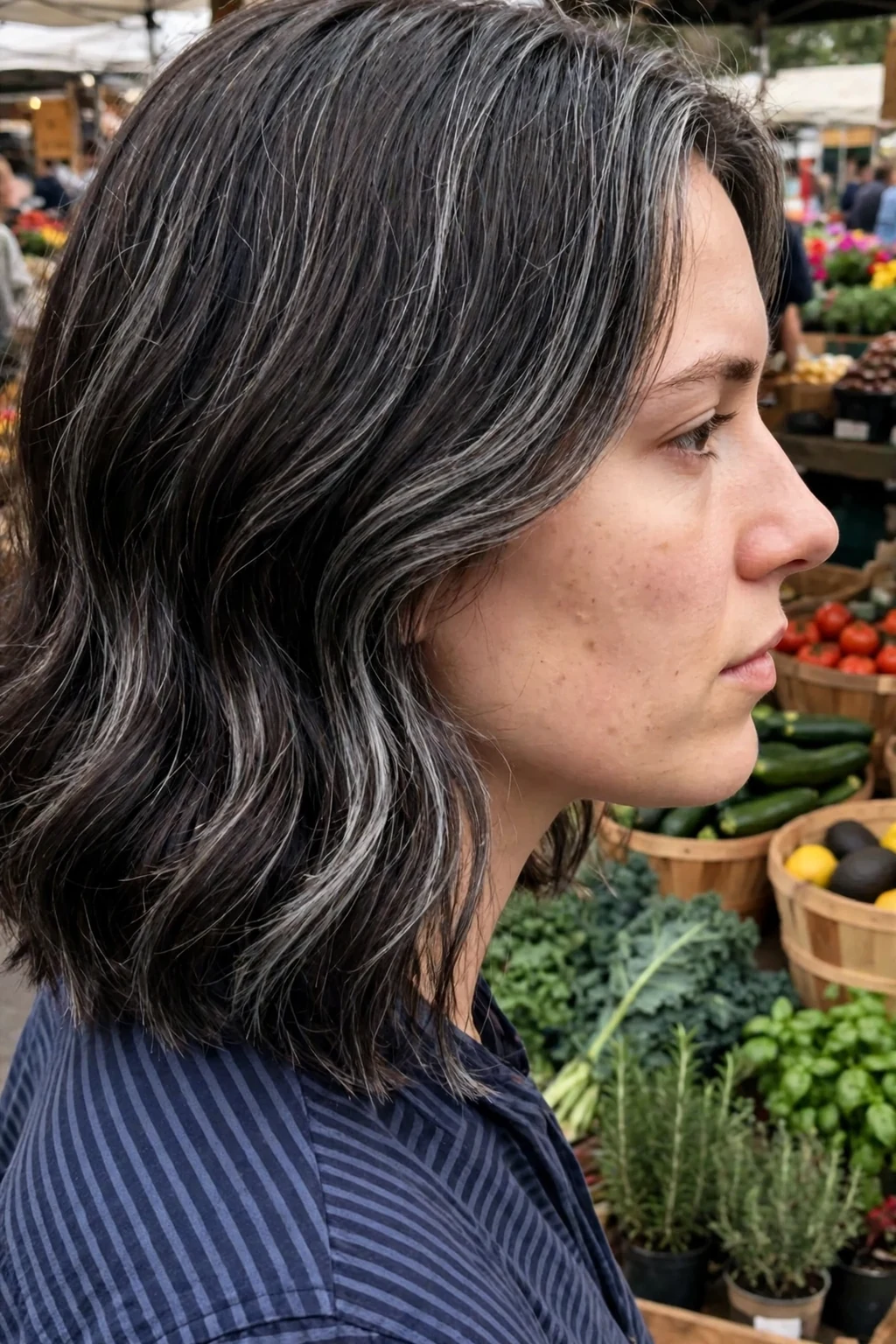
15. Gray Blending Foilayage
Gray blending foilayage combines the best of both worlds: the precision of foils with the softness of balayage, using foils to paint brighter silver pieces with controlled lift. The technique delivers brighter, more defined silver dimension than open-air balayage while keeping the grow-out soft. It is the power tool of gray blending — maximum brightness, minimum harshness. Foils are placed using a balayage-style sweeping motion inside the foil, combining precision with softness.
Ideal for darker bases with resistant grays that need real lift, working on all textures. The foiled brightness needs touch-ups every eight to ten weeks, but the painted application keeps regrowth softer than traditional foils. Purple shampoo maintains the silver clarity. Choose it when balayage is not bright enough but you still want a soft grow-out. The controlled lift also makes this the best choice for previously colored dark hair that needs predictable results.
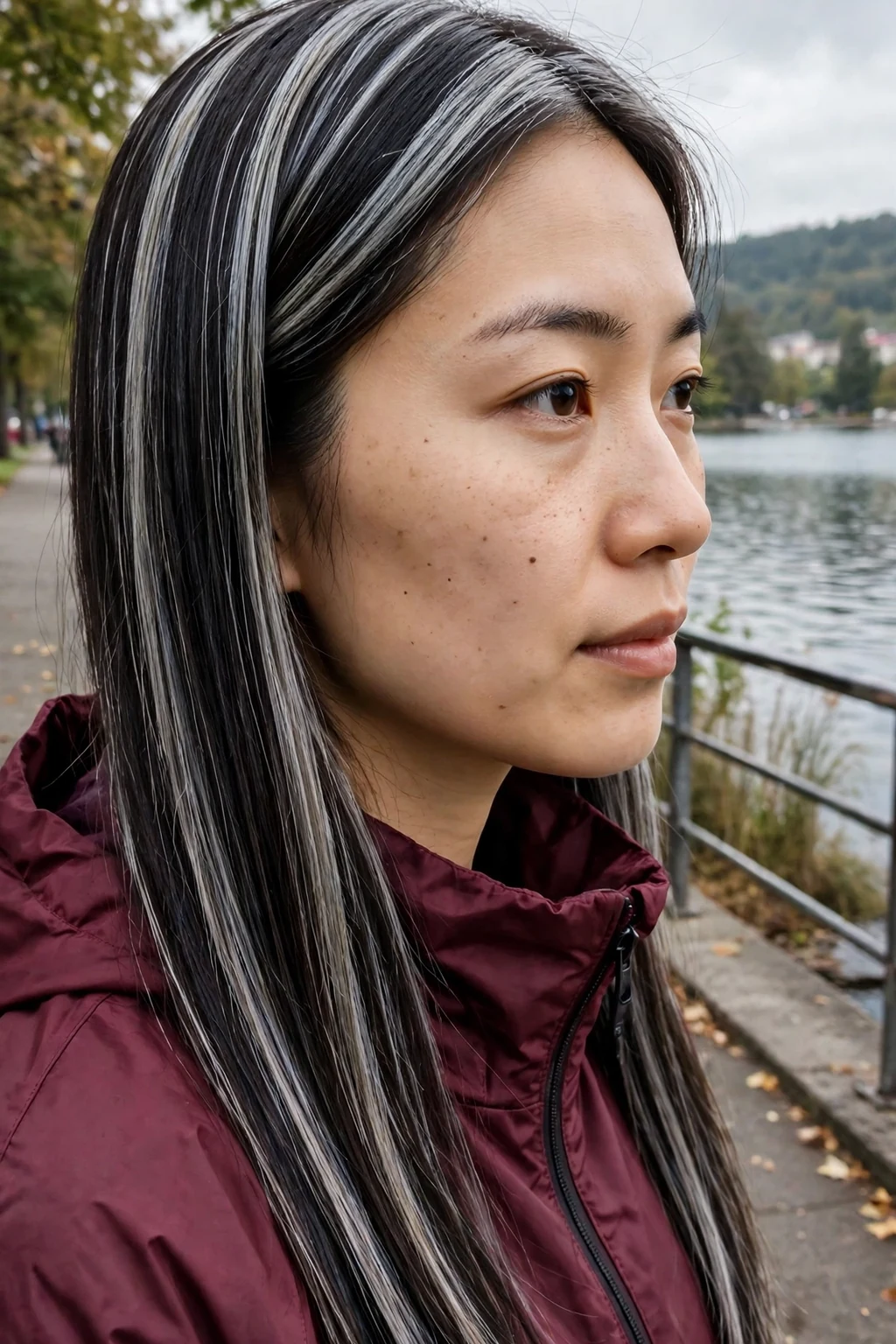
16. Smoky Gray Melt
The smoky gray melt is moody and modern: dark roots dissolving into smoky, charcoal-kissed silver through the mids and ends. The smoky tones add depth and edge to the silver, creating a dimensional finish that is more fashion-forward than natural gray. It is blending with an attitude — silver with shadows. Charcoal and slate tones are woven through the silver to create the smoky depth that defines this look.
Stunning on cool skin tones and dramatic personal styles, flattering oval, heart, and oblong faces. The smoky dimension needs glossing treatments to stay rich rather than muddy, with appointments every ten to twelve weeks. Choose it when natural-looking is not the goal and you want your silver to make a statement. Smoky tones require commitment to cool-toned makeup and wardrobe, since warm tones can clash with the ashy palette. The edgy finish also pairs beautifully with silver jewelry, creating a cohesive cool-toned aesthetic.
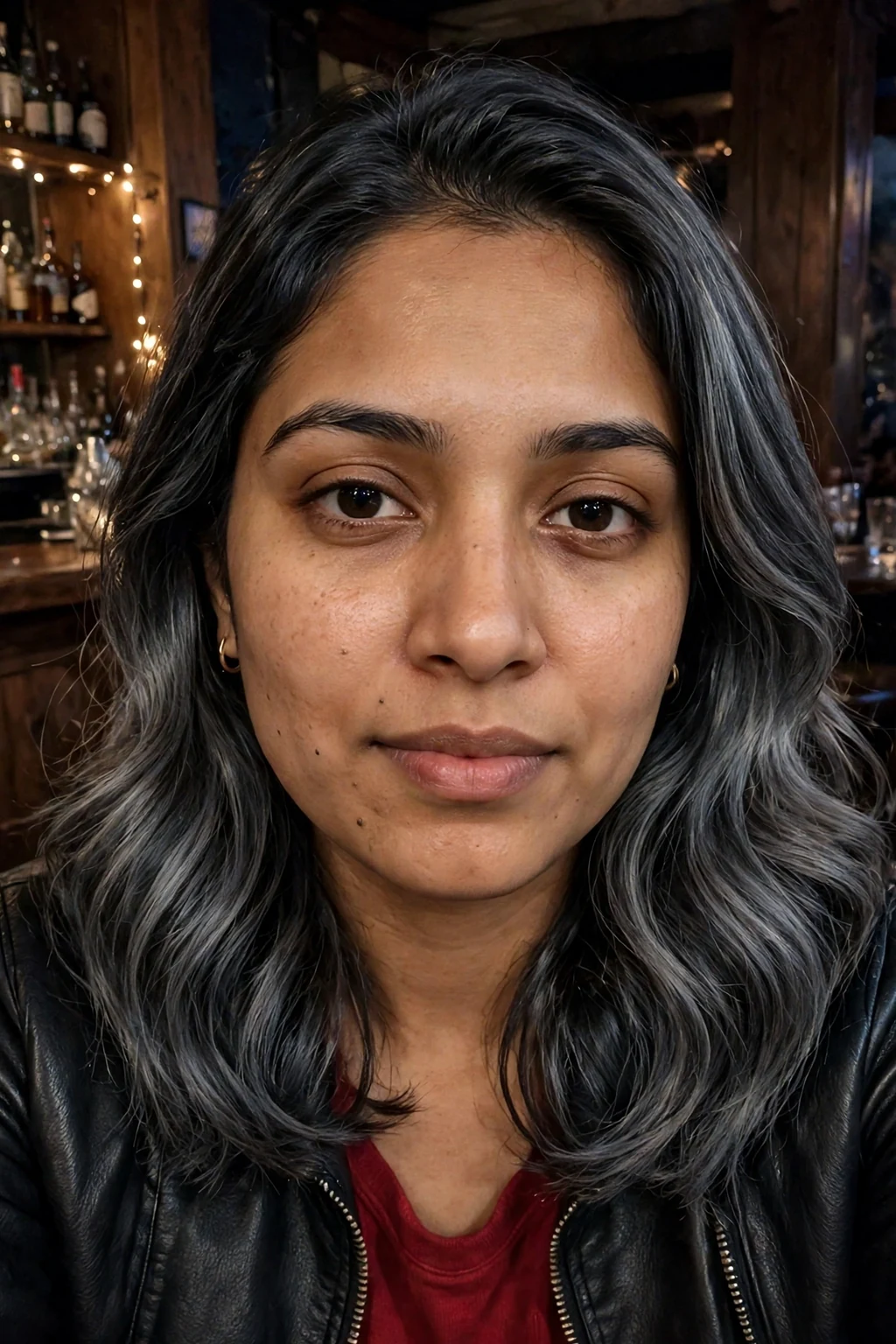
17. Silver Dimension
Silver dimension is all about the interplay: multiple tones of silver, ash, and dark woven together to create hair with incredible depth and movement. Rather than one flat silver, the dimensional approach layers light, medium, and dark silvers for a finish that shifts in different lighting. It is the most visually interesting blending on this list. Your colorist layers at least three silver tones, placing the brightest pieces where light naturally hits the hair.
Perfect for women who find single-process silver flat or boring, adding the illusion of thickness to fine hair. The multi-tonal approach grows out beautifully with touch-ups every ten to twelve weeks. It suits all skin tones when the silver palette is customized. Choose it when you want silver hair with depth, intrigue, and constant visual interest. The complexity of the color means it looks different in every lighting, giving you endless visual interest.
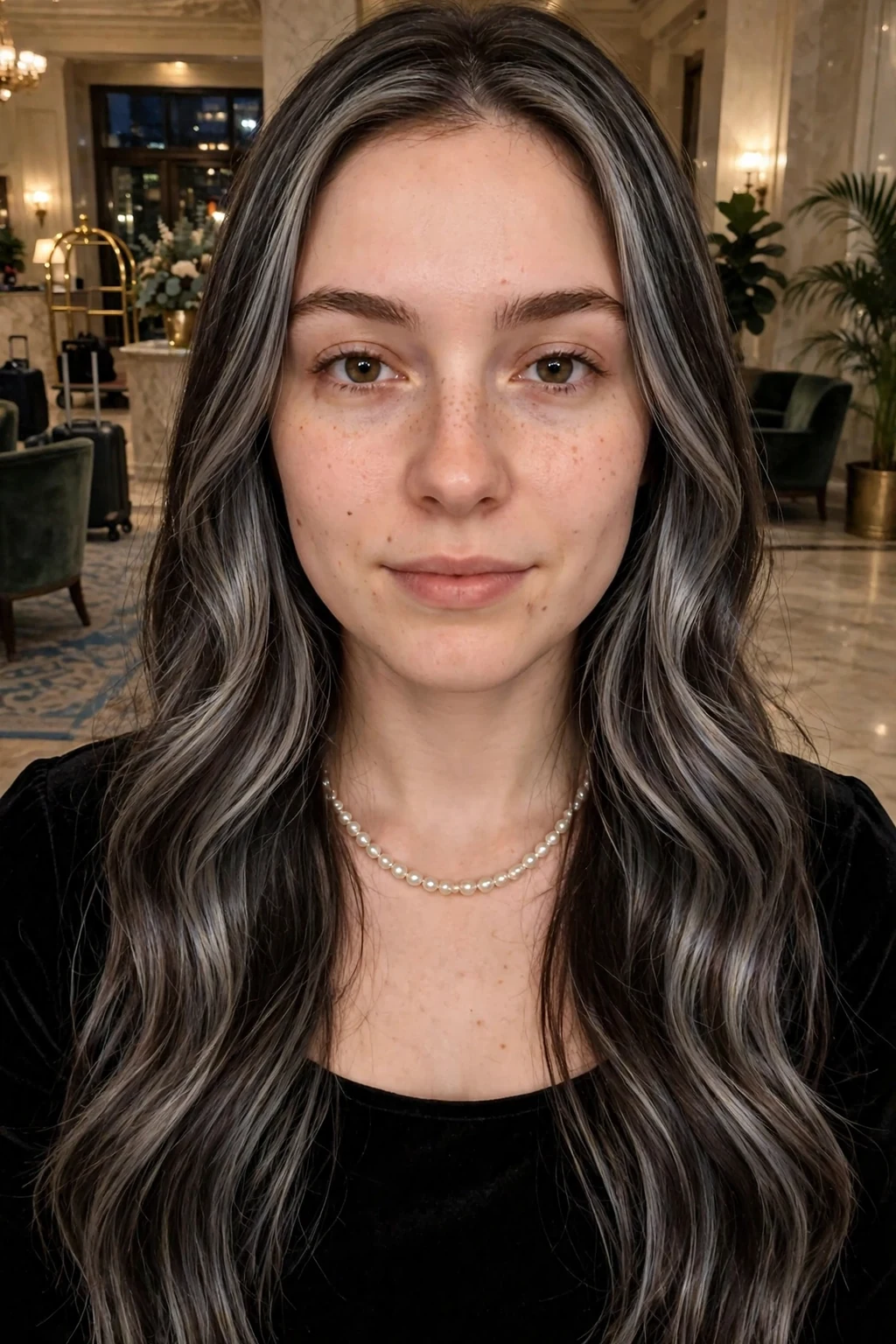
18. Gray Blending Teasylights
Gray blending teasylights are the softest foil technique: backcombed, feathered highlights that diffuse into the hair with zero harsh lines. The teasing creates a graduated, airy lightness that mimics how sun would naturally lighten graying hair. It is the most natural-looking foil method — brightness without evidence. The backcombing creates a cushion that diffuses the color's starting point, eliminating any visible line.
Brilliant for fine to medium hair, since the diffused application adds brightness without visible stripes. The feathered grow-out stretches appointments to ten or twelve weeks. It flatters every face shape with its soft, diffused dimension. Choose it when you want foil brightness with balayage softness — the best of both techniques. The soft grow-out also makes this ideal for first-time highlight clients nervous about obvious regrowth. The airy lightness also keeps the overall look youthful, since heavy solid color can age the face.
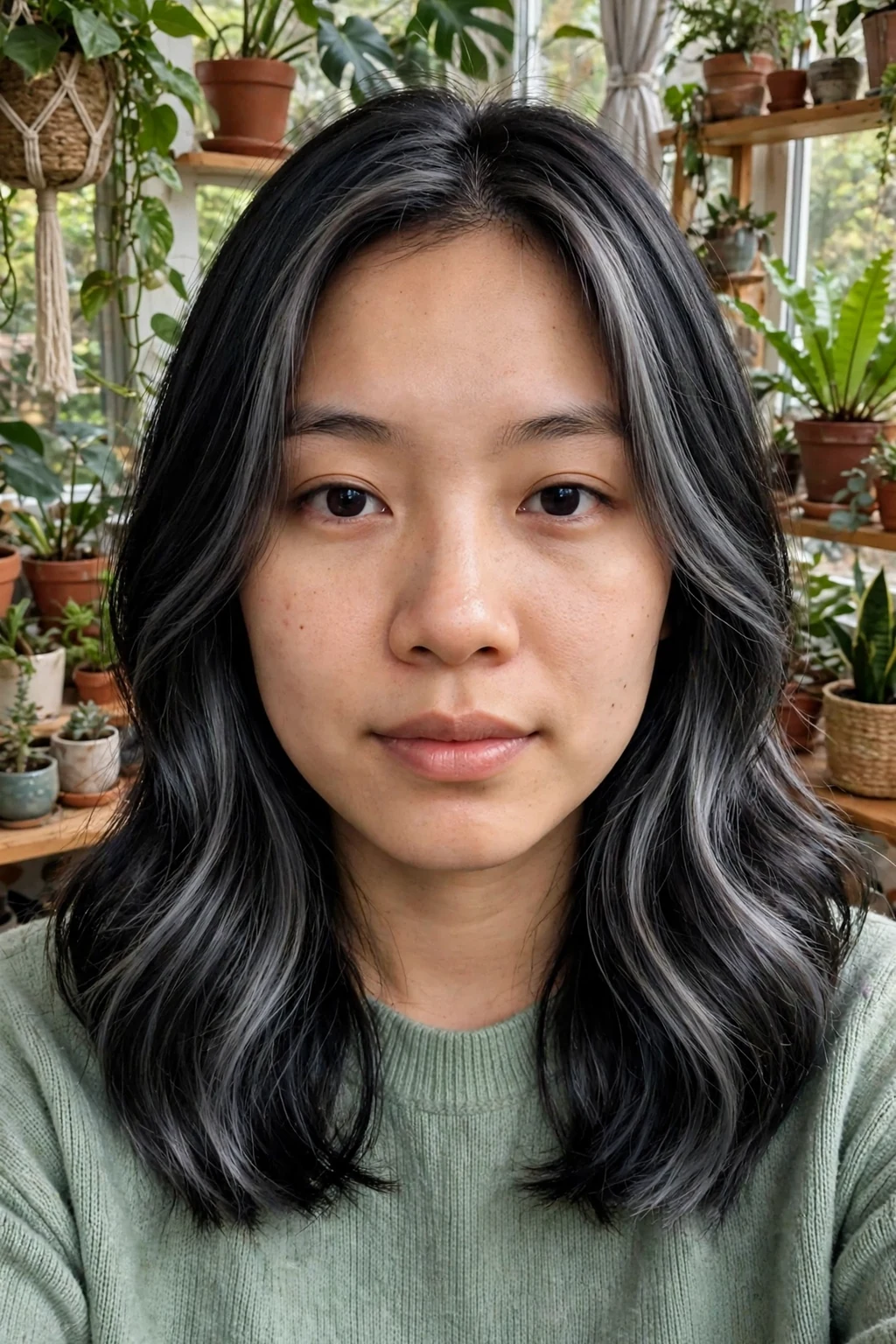
19. Ash Blonde Blend
The ash blonde blend is the brightest blending option: dark roots melting into ash-blonde brightness that incorporates grays into an overall blonde effect. The blonde brightness makes grays completely invisible — they simply become part of the blonde dimension. It is camouflage through transformation. The transition from dark to blonde is stretched over several inches to keep the gradient soft and natural.
Ideal for women ready to go significantly lighter, flattering warm to neutral skin tones with its brighter palette. The blonde requires more maintenance — touch-ups every eight weeks and purple shampoo to prevent brassiness. But the payoff is total gray invisibility. Choose it when you are ready for a real change and want your grays gone without a trace. The dramatic change deserves a professional consultation first to ensure your skin tone harmonizes with the brighter palette. The brightness also has a wonderfully illuminating effect on the complexion, acting like a permanent soft-focus filter.
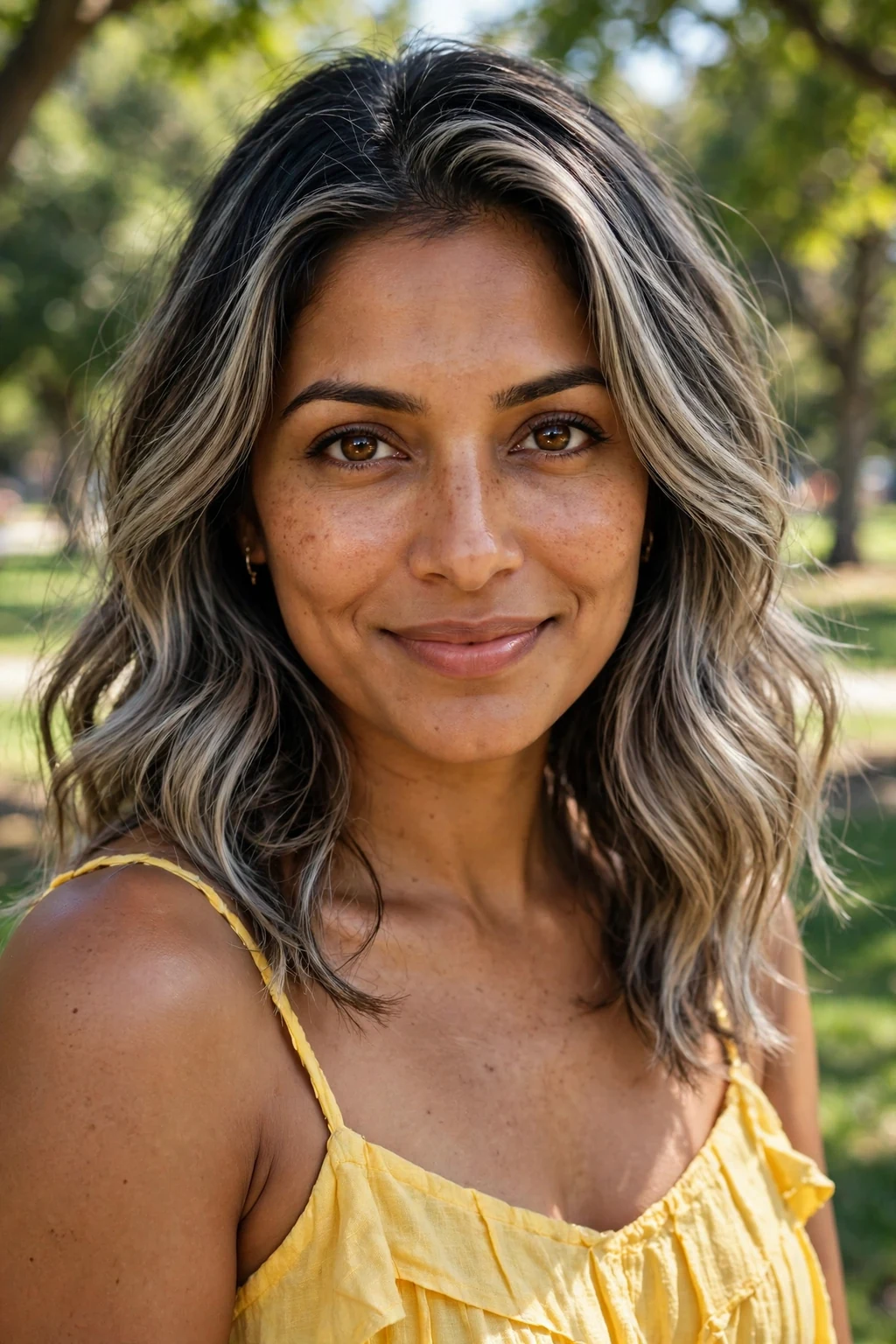
20. Silver Gray Balayage
Silver gray balayage is balayage at its brightest: hand-painted dimension pushed to luminous silver through the mids and ends. The painted lightness creates a striking contrast with dark roots while the soft application keeps everything blended. It is the statement balayage — silver worn boldly and beautifully. The brightest silver pieces are concentrated through the mids and ends where they create maximum luminous impact.
Best for women embracing major silver with confidence, flattering cool skin tones especially. The dark roots keep maintenance manageable — toning every ten to twelve weeks — while the silver ends need purple shampoo to stay bright. Style with waves to maximize the dimensional impact. Choose it when you want silver balayage that does not whisper. The statement brightness pairs beautifully with bold personal style, from edgy fashion to dramatic makeup. The luminous ends also move beautifully, with the silver catching light differently with every turn of the head.
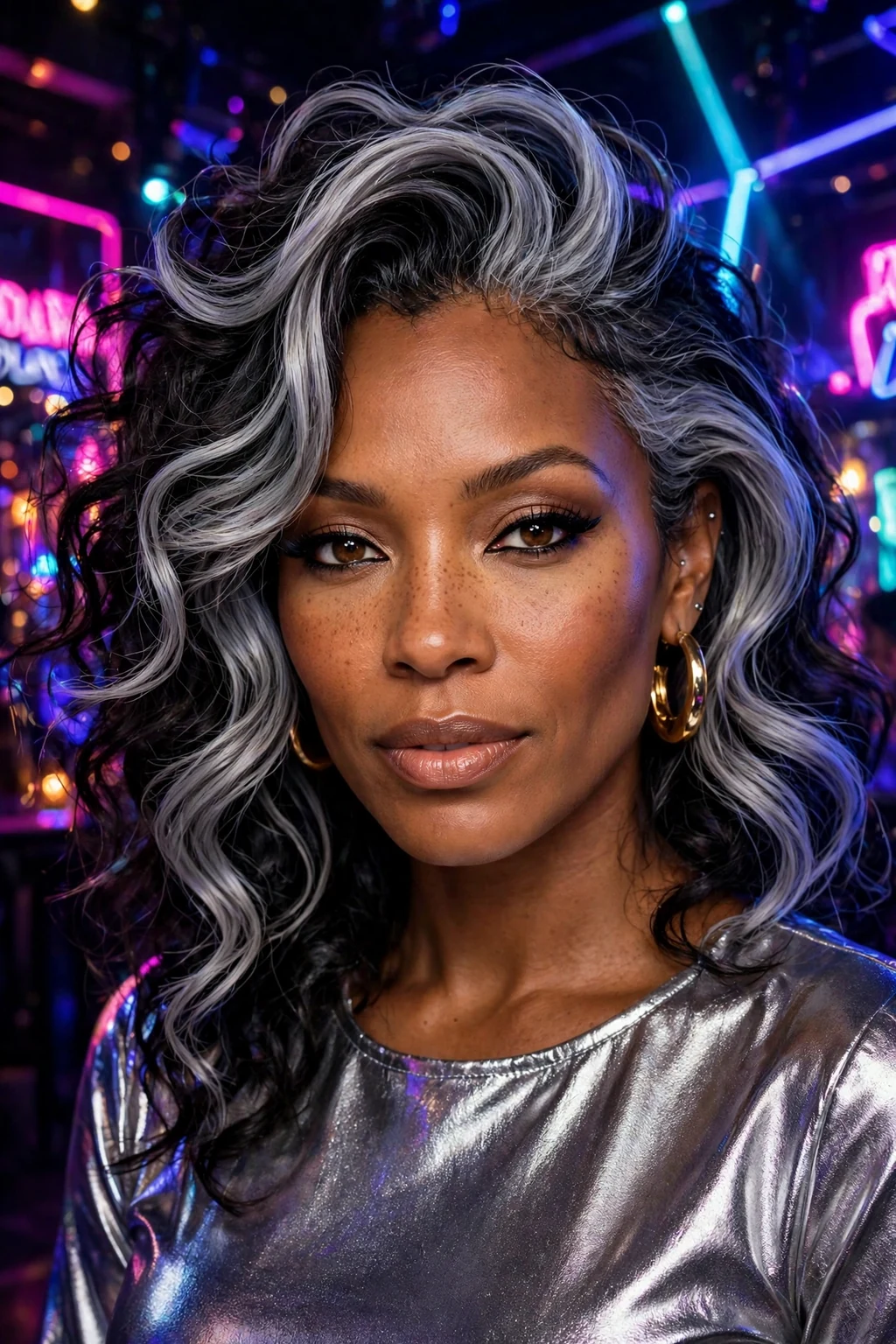
21. Blended Salt and Pepper
The blended salt and pepper is the classic perfected: natural dark and silver woven together in harmonious proportion, enhanced and refined by your colorist. Rather than fighting the salt-and-pepper pattern, this technique perfects it — evening out the distribution for the most flattering version of what nature started. It is nature, edited. Your colorist studies your natural distribution carefully, then enhances the pattern rather than imposing a new one.
Perfect for women whose natural salt-and-pepper is almost perfect but needs refinement — typically forty to sixty percent gray. The enhancement is subtle enough to look completely natural with touch-ups every twelve weeks. It suits every skin tone since it is your own pattern, perfected. Choose it when you love your natural grays and just want the best possible version of them. The subtlety of the enhancement means even close friends may not realize you have had anything done.

22. Gray Coverage Balayage
Gray coverage balayage offers the best of both: the softness of balayage with more complete gray coverage than traditional blending. The technique uses denser painting through the grayest areas while keeping the airy balayage finish everywhere else. It is for women who want coverage without the solid, opaque look of permanent color. Denser saturation is applied only where gray is densest, keeping the airy balayage feel through the rest.
Ideal for sixty percent-plus gray when full silver is not the goal, giving coverage with dimension. The denser application needs touch-ups every eight to ten weeks. It works on all textures and flatters every skin tone. Choose it when you want your grays covered but your hair to still look like hair — dimensional, not painted. The dimensional coverage also photographs beautifully, avoiding the flat, helmet-like look of solid permanent color.

23. Silver Ash Ombré
The silver ash ombré is gradient glamour: dark roots flowing into silver-ash ends in a smooth, dramatic transition. The ombré's bold gradient makes the silver ends a deliberate style choice rather than a grow-out accident. It is the most editorial blending option — high fashion meets natural transition. The transition zone is carefully placed at the point that best elongates your face and complements your features.
Stunning on long hair where the gradient has room to develop, flattering oval, oblong, and heart-shaped faces. The dark roots mean minimal maintenance — just tone the silver ends every ten to twelve weeks and use purple shampoo. Choose it when you want your gray transition to look like a magazine editorial. Long layers enhance the gradient's flow, so consider a cut that gives the ombré room to shine. The dramatic length of the gradient also creates a slimming vertical line that elongates the entire silhouette.

24. Natural Gray Transition
The natural gray transition is the honest path: a planned, supported journey from dyed dark hair to natural silver, using blending techniques to make each stage beautiful. Your colorist maps the transition — gradually reducing dark color while enhancing the incoming silver — so there is never an ugly phase. It is the grow-out without the trauma. Your colorist creates a month-by-month map at the first appointment, so every visit builds toward the silver goal.
Designed for women committed to going fully natural, typically taking six to twelve months of strategic appointments. Each visit adjusts the blend as more silver arrives. It requires patience but delivers the healthiest, most authentic result. Choose it when you are ready to meet your natural silver — with professional support making every stage gorgeous. Document the journey with photos at each appointment — the gradual transformation is incredibly satisfying to witness.

25. Seamless Gray Blend
The seamless gray blend is the ultimate goal: dark hair and silver grays woven together so perfectly that no one can tell where nature ends and color begins. Every technique serves invisibility — the blend is undetectable, the grow-out nonexistent, the finish flawless. It is the platonic ideal of gray blending. Multiple techniques are layered in a single appointment — babylights, lowlights, and melting — for undetectable results.
Achievable at any gray percentage with the right combination of techniques, customized entirely to your hair. Maintenance is tailored to your specific blend, typically every ten to twelve weeks. It suits everyone because it is bespoke by definition. Choose it when you want the definitive answer — gray blending so perfect it is invisible. The bespoke nature means bringing detailed reference photos helps your colorist understand your exact vision. The invisible finish also means total freedom, since no one can tell where your color ends and nature begins.

26. Pewter Ribbon Highlights
Pewter ribbon highlights weave cool, metallic strands through dark hair like ribbons of moonlight, creating polished yet soft dimension that reads as intentional gray blending rather than regrowth. The pewter tone sits between silver and charcoal, so it melts into espresso and black bases without harsh contrast, while fine ribbon-like sections catch the light with every movement of the head. Your colorist paints the ribbons in varying widths, some whisper-fine near the hairline and others bolder through the mid-lengths, so the result looks layered and natural instead of striped or blocky. The finish is luminous and cool, with a smooth, reflective shine that flatters mature skin and brightens the face without washing it out. It works beautifully on straight and gently wavy hair, where the ribbons stay visible, and it suits women who want clear dimension without committing to a full silver transformation. The pewter shade also photographs beautifully, holding its cool metallic character in both daylight and indoor light, which is why it has become a favorite for women who want dimension that looks refined in person and in pictures alike.
This technique flatters oval, round, and heart-shaped faces because the ribbons can be placed to draw the eye upward and outward, opening up the features. It is ideal for women in their forties through sixties with roughly twenty to fifty percent gray, since the pewter pieces camouflage incoming silver while keeping the dark base dominant. Styling is simple: blow-dry with a round brush for smoothness, or air-dry with a light smoothing cream on wavy textures, and finish with a shine spray to emphasize the metallic ribbons. Maintenance is refreshingly low-key, with gloss or ribbon touch-ups every ten to twelve weeks, and purple shampoo once a week keeps the pewter cool instead of brassy. Choose pewter ribbons when you want a refined, modern blend that grows out gracefully and always looks deliberate. For the most flattering result, ask your colorist to keep the brightest ribbons near the face and let them soften toward the back, and bring reference photos showing both the pewter tone and the ribbon width you prefer, since pewter can shift warmer or cooler depending on the formula used.

27. Charcoal Gray Melt
The charcoal gray melt is a moody, sophisticated take on gray blending that dissolves dark roots into smoky charcoal and soft silver ends with no visible line of demarcation. Instead of bright silver, this melt uses deep, shadowy gray tones that echo the natural depth of dark hair, so the transition feels gradual, seamless, and quietly dramatic. On coily and curly textures, the melt creates beautiful depth, with darker coils at the crown giving way to lighter, smoky lengths that catch the light as the curls move. The finish is rich and velvety rather than frosty, which makes it especially flattering for women who find bright silver too stark against their skin. It reads as elegant and intentional, a color that looks expensive and considered rather than accidental. The melt also pairs beautifully with a layered cut, since the layers let the charcoal gradient unfold gradually instead of sitting as one flat block of color, and the smoky ends keep the style looking soft even as it grows.
This melt suits women with medium to high percentages of gray who want to embrace silver without a jarring contrast, and it flatters warm and deep skin tones beautifully because the charcoal keeps the overall look grounded. Face shapes of every kind wear it well, particularly when the lightest tones are kept toward the ends to elongate the silhouette. Styling focuses on moisture: a leave-in conditioner and curl cream define the coils, and diffusing on low heat preserves the smoky dimension. Trim every eight to ten weeks to keep the shape crisp, and refresh the melt with a demi-permanent gloss every ten to twelve weeks to prevent fading. Choose the charcoal melt when you want gray blending with depth, drama, and a remarkably forgiving grow-out. At home, a weekly deep-conditioning mask keeps the charcoal tones rich and the coils hydrated, and sleeping on a satin pillowcase or in a silk scarf protects both the color and the curl pattern between appointments.

28. Silver Shadow Root
A silver shadow root flips the usual blending script by keeping soft silver at the roots and letting it shadow gently into darker lengths, so new gray growth looks like part of the design from day one. The root area is toned to a muted, smoky silver rather than a bright platinum, which means it harmonizes with dark brown and black hair instead of fighting it. Through the mid-lengths, the silver diffuses in a feathered, hand-painted gradient, so there is never a hard line where one color stops and the other begins. The overall effect is lived-in and modern, with movement and depth that make long hair look thicker and more dimensional. It is a particularly clever choice for women whose gray arrives fastest at the part and hairline, because those are exactly the areas the shadow root celebrates. The shadow root also works beautifully with a center or side part, since the silver at the part line makes the part itself look like a deliberate design feature rather than a line of regrowth to hide.
Long and medium lengths show this technique best, and it suits straight, wavy, and loosely curled textures equally well. Oval and oblong faces benefit from the brightness at the crown, which lifts the features, while round faces gain balance when a few darker pieces are left near the cheeks. Styling is effortless: rough-dry with a volumizing mousse, then use a large-barrel iron on a few face-framing waves, or simply braid damp hair overnight for soft texture. Because the roots are already silver-toned, appointments stretch to twelve or even fourteen weeks, with only a toner refresh in between. Choose a silver shadow root when you are tired of the grow-out battle and want your natural gray to finally work for you. If your gray is concentrated at the temples, ask your colorist to feather a little extra silver there, and keep a tinted dry shampoo in a cool tone on hand for weeks when you want the roots to look freshly toned between salon visits.

29. Ash Pearl Balayage
Ash pearl balayage sweeps luminous, pearl-toned highlights through dark hair in a soft, hand-painted gradient that mimics how sunlight and natural gray would lighten the hair over time. The pearl tone is cooler than beige and softer than stark silver, giving the hair a pearlescent sheen that looks almost lit from within. Your colorist paints the highlights heavier toward the ends and more sparingly near the roots, so the grow-out is diffused and the color appears to melt rather than stripe. Layered cuts show this technique at its best, because each layer catches a different amount of pearl, creating a rippling, multi-tonal effect. The finish is refined and radiant, ideal for women who want their gray blending to look like an expensive salon color rather than a camouflage job. The pearl finish also responds beautifully to gloss treatments, which revive the pearlescent sheen between full appointments and keep the cool tone from drifting warm as the color ages.
This balayage flatters most face shapes, especially when the brightest pearl pieces frame the cheekbones and jawline to add lift. It works on straight, wavy, and thick hair, and it is a wonderful option for women with thirty to sixty percent gray who still love their dark base. Styling with a round brush and a light smoothing serum enhances the pearlescent shine, while loose waves show off the gradient beautifully. Maintenance means a toner every eight to ten weeks and a full balayage refresh every three to four months, which is far less demanding than traditional foil highlights. Choose ash pearl balayage when you want gray blending that feels luminous, feminine, and quietly luxurious. Bring photos that show the exact pearl intensity you want, since pearl can range from barely-there shimmer to a clearly luminous silver, and discuss whether your base needs a light pre-lightening step to reach the pearl tone evenly.
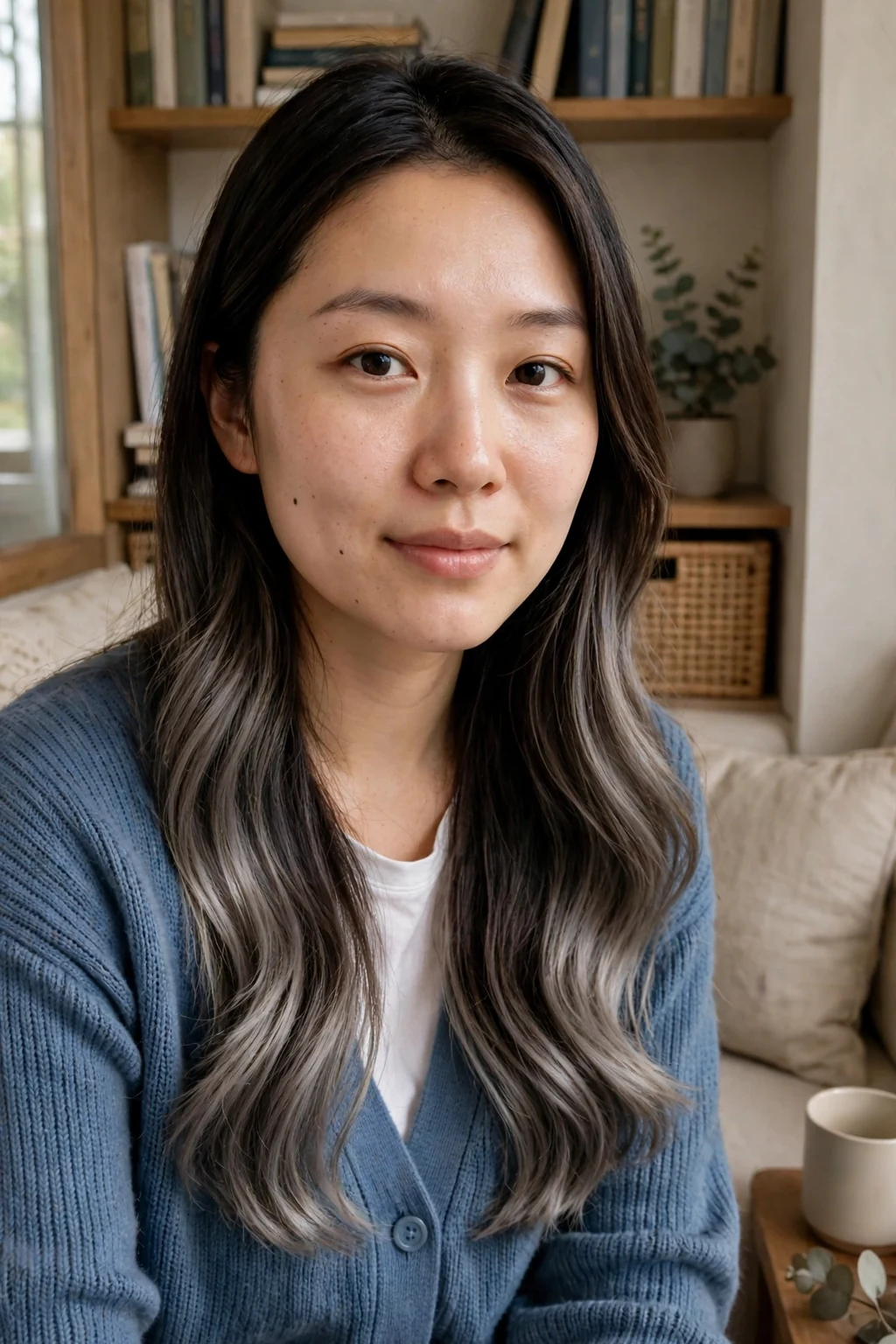
30. Gray Ribbon Lowlights
Gray ribbon lowlights take the opposite approach to most blending techniques: instead of lightening, they weave deeper gray and charcoal ribbons back into dark hair to create shadow, depth, and a more convincing salt-and-pepper pattern. The lowlights are painted in ribbon-like sections beneath the top layer, so they peek through as the hair moves, giving fine or flat hair an illusion of thickness and texture. Because the ribbons are darker than silver highlights, the result looks remarkably natural, like the varied tones that appear when gray grows in on its own. The finish is dimensional rather than bright, with a soft, smoky interplay between dark brown, charcoal, and silver that flatters women who prefer subtlety. It is an especially smart choice for fine hair, which can look washed out by too much lightness. The lowlights also help gray hair that has turned wiry or coarse, because the demi-permanent lowlight formula conditions as it colors, leaving the hair smoother and easier to manage than untreated gray strands.
Women with fine, straight, or thinning hair benefit most, since the lowlights add visual density without the damage of heavy lightening. Oval, round, and square faces all wear it well, particularly when the darkest ribbons sit underneath to anchor the style. Styling is simple: a volumizing spray at the roots and a smooth blow-dry let the ribbons show, while a texturizing powder adds grip on especially fine textures. Because lowlights fade gently and gray continues to arrive naturally, touch-ups can wait ten to fourteen weeks, and a color-depositing conditioner keeps the gray ribbons from warming. Choose gray ribbon lowlights when you want depth, fullness, and the most natural-looking blend of all. For the best result, ask your colorist to vary the lowlight depths rather than using a single shade, since the mix of charcoal, slate, and espresso is what creates the convincing, naturally varied salt-and-pepper effect. Regular trims also keep the lowlights looking intentional, since healthy ends show the ribbon pattern far more clearly than split or ragged ones.

31. Silver Gloss Blend
The silver gloss blend is the lowest-commitment way to start gray blending: a sheer, silver-toned gloss washed over dark hair to soften gray strands, add reflective shine, and unify the overall color without any lightening. The gloss does not lift or bleach the hair; instead, it deposits a translucent veil of cool silver that makes wiry gray hairs lie smoother and look like deliberate highlights. The result is subtle and glossy, with dark hair gaining a silvery sheen in sunlight and gray strands losing their coarse, wiry appearance. It is the perfect first step for women who are curious about blending but nervous about permanent color or dramatic change. Thick hair takes the gloss beautifully, gaining a mirror-like finish that makes the whole style look healthier and more polished. The gloss also acts as a conditioning treatment, sealing the cuticle and smoothing wiry gray strands so the hair feels softer and looks healthier after every application, not just more blended.
This technique suits every face shape and works on all hair types, though thick, coarse, and wiry textures see the most dramatic improvement in softness and shine. It is ideal for early graying, when silver strands are scattered rather than dominant, and for women who want to test cool tones before committing to highlights. Styling is unchanged from your normal routine, though a shine serum or gloss spray enhances the reflective finish. The gloss gradually fades over six to eight weeks, so reapplication is quick, inexpensive, and damage-free, with no harsh grow-out line at all. Choose a silver gloss blend when you want a gentle, reversible introduction to gray blending that leaves hair shinier than it found it. Because the gloss is sheer, it is also easy to adjust: if the first application feels too cool or too subtle, your colorist can deepen or soften the silver tone at the next visit without any corrective color work.

32. Cool Slate Babylights
Cool slate babylights are ultra-fine highlights in a muted, blue-gray slate tone that scatter through dark hair like the first cool tones of natural graying. The slate shade is deliberately restrained: cooler than ash brown but softer than bright silver, so it reads as sophisticated rather than flashy. Because the babylights are so fine, they never create stripes or obvious patterns; instead, they give the hair an overall cool, dimensional haze that makes gray regrowth nearly invisible. The technique is painted in a scattered, organic pattern that follows the way gray actually appears, concentrated slightly at the part and temples where silver arrives first. The finish is modern and understated, with a cool luminosity that flatters both warm and cool skin tones when the slate is customized correctly. The slate tone also has a slimming, cooling effect on the overall look, making it a favorite for women who want their color to feel modern and architectural rather than soft and romantic.
Women in their forties and fifties with early to moderate graying are the ideal candidates, especially those with straight or slightly wavy hair where fine highlights stay visible. Round and heart-shaped faces benefit from babylights placed to brighten the perimeter, which draws attention to the eyes. Styling needs nothing special: a smooth blow-dry or a quick pass with a flat iron shows the slate dimension, and a lightweight oil keeps the fine pieces from looking dry. Touch-ups every ten to twelve weeks are enough, since the fineness of the highlights means regrowth blurs rather than announces itself. Choose cool slate babylights when you want the most discreet, elegant form of gray blending available. A color-safe, sulfate-free shampoo is essential for slate babylights, since harsh cleansers strip the cool tone fastest, and a weekly purple conditioner keeps the slate from drifting toward warmth between appointments. A wide-tooth comb used on wet hair prevents breakage in the fine highlighted pieces, keeping the slate babylights smooth and intact for longer.
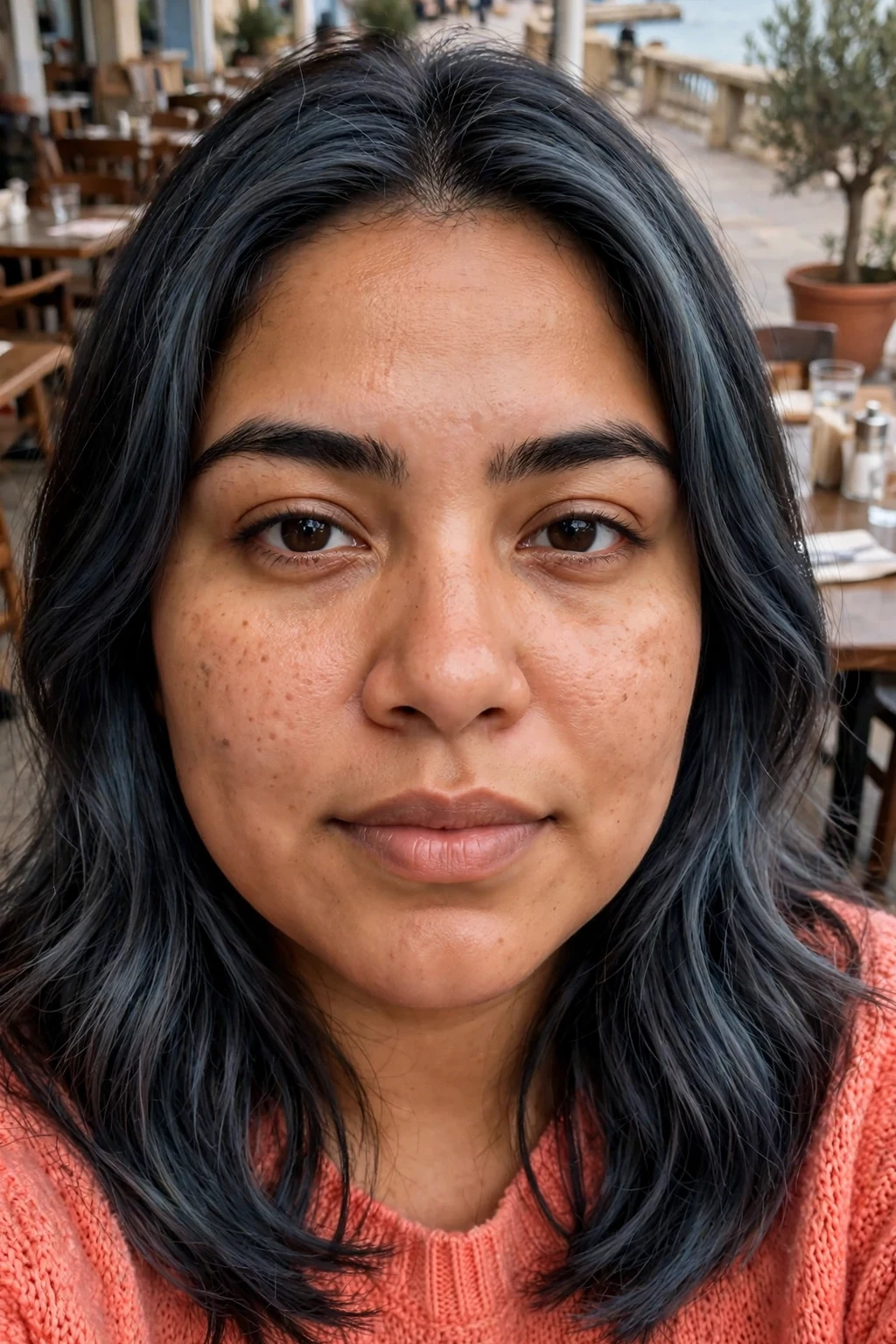
33. Ash Smoke Ombré
Ash smoke ombré carries dark hair through a gradual, smoky fade into soft ash gray ends, creating a dramatic yet wearable gradient that turns gray blending into a statement. The smoke tone is key: a muted, slightly darkened gray that keeps the ends from looking bleached or brassy, so the fade feels intentional and moody rather than accidental. Your colorist blends the transition zone with backcombing and feathered painting, so the dark roots melt into the smoky mid-lengths and then into lighter ash ends without any harsh band. Long hair shows this gradient best, because the slow fade has room to unfold, and the movement of long layers makes the smoke tones shift beautifully in the light. The overall effect is bold, artistic, and surprisingly flattering, since the darker roots anchor the face while the lighter ends add lightness. The ombré also photographs strikingly, with the dark-to-smoke gradient creating a sense of length and movement that makes long hair look even longer and more dramatic in pictures.
This style suits women with medium to long hair who are ready to embrace a visible silver presence, and it flatters oval, oblong, and heart-shaped faces by keeping brightness away from the jawline. Straight and wavy textures display the gradient most clearly, though loose curls add a beautiful smoky depth of their own. Styling with loose waves or a smooth blow-dry shows the fade, and a purple conditioner once a week keeps the ash ends from yellowing. Maintenance is gentle for such a dramatic look: root touch-ups every twelve weeks and a toner refresh every eight weeks keep the smoke tones true. Choose ash smoke ombré when you want gray blending with real drama and a grow-out that only improves with time. If you heat-style often, a heat protectant is non-negotiable for the lightened ends, and a monthly bond-building treatment keeps the ash ends strong, smooth, and free of the dryness that can dull a gradient.

34. Silver Streak Blend
The silver streak blend places a few confident, face-framing streaks of silver through dark curly hair, then softens their edges so they read as natural gray rather than bold highlights. Unlike chunky highlights of the past, these streaks are feathered at the roots and diffused through the curls, so each curl catches a different amount of silver and the overall effect shimmers instead of striping. The contrast against dark curls is striking in the best way: the silver streaks illuminate the face, define the curl pattern, and make the whole style look intentional and modern. Because curls naturally separate into ribbons, the streaks fall exactly where the eye expects dimension, giving the hair movement and a beautiful, organic rhythm. The streaks also give fine or thinning curly hair a visual boost, since the contrast between dark curls and silver streaks makes each curl stand out and the overall style look fuller than it is.
Curly and wavy textures are the natural home of this technique, and it suits women with twenty to forty percent gray who want their silver to be visible and celebrated. Oval and round faces benefit when the brightest streaks sit near the temples and cheekbones, lifting the features, while longer faces gain balance from streaks placed lower. Styling centers on curl care: a curl cream scrunched into damp hair, diffusing until just dry, and a light oil to separate the curls without frizz. Trim every eight to ten weeks to keep the curl shape, and refresh the streak toner every ten weeks to keep the silver bright. Choose the silver streak blend when you want your gray to be a feature, not something to hide. To keep the streaks crisp, avoid heavy oils that can weigh curls down and dull the silver, and instead use a lightweight curl cream plus a purple conditioner every second or third wash to maintain brightness.

35. Gray Pearl Foilayage
Gray pearl foilayage combines the precision of foils with the softness of balayage, wrapping selected sections in foil to lift them to a luminous pearl gray while leaving the surrounding dark hair untouched. The foil gives the colorist control over exactly how light each section becomes, so the pearl pieces are brighter and more consistent than freehand painting alone can achieve, yet the placement stays soft and diffused. The result is a refined, multi-dimensional blend: pearly ribbons of silver-gray woven through a dark base, with a cool, almost opalescent finish that glows under indoor light. It is an excellent choice for women whose dark hair resists lightening, because the foil processing achieves the pearl tone more reliably than open-air techniques. The foilayage also allows your colorist to customize the pearl intensity section by section, going brighter around the face for lift and softer underneath for depth, which is difficult to achieve with freehand painting alone.
This method suits medium and thick hair best, and it flatters women with forty to seventy percent gray who want strong coverage that still looks dimensional rather than flat. Square and oval faces wear it beautifully, especially when the pearl sections are concentrated around the face and through the top layers. Styling with soft waves or a smooth blow-dry shows the pearl ribbons, and a sulfate-free shampoo protects the delicate tone. Maintenance runs every ten to twelve weeks for foil refreshes, with purple conditioner between visits keeping the pearl cool and preventing warmth. Choose gray pearl foilayage when you want precise, luminous blending with a polished, salon-perfect finish. Because foils process more evenly, the pearl tone tends to last longer than open-air color, and a bond-building treatment during the service protects the hair so the brighter sections stay healthy and shiny. A satin-lined cap or scarf worn overnight also protects the pearl foils from friction, preserving both the tone and the smoothness of the finish.
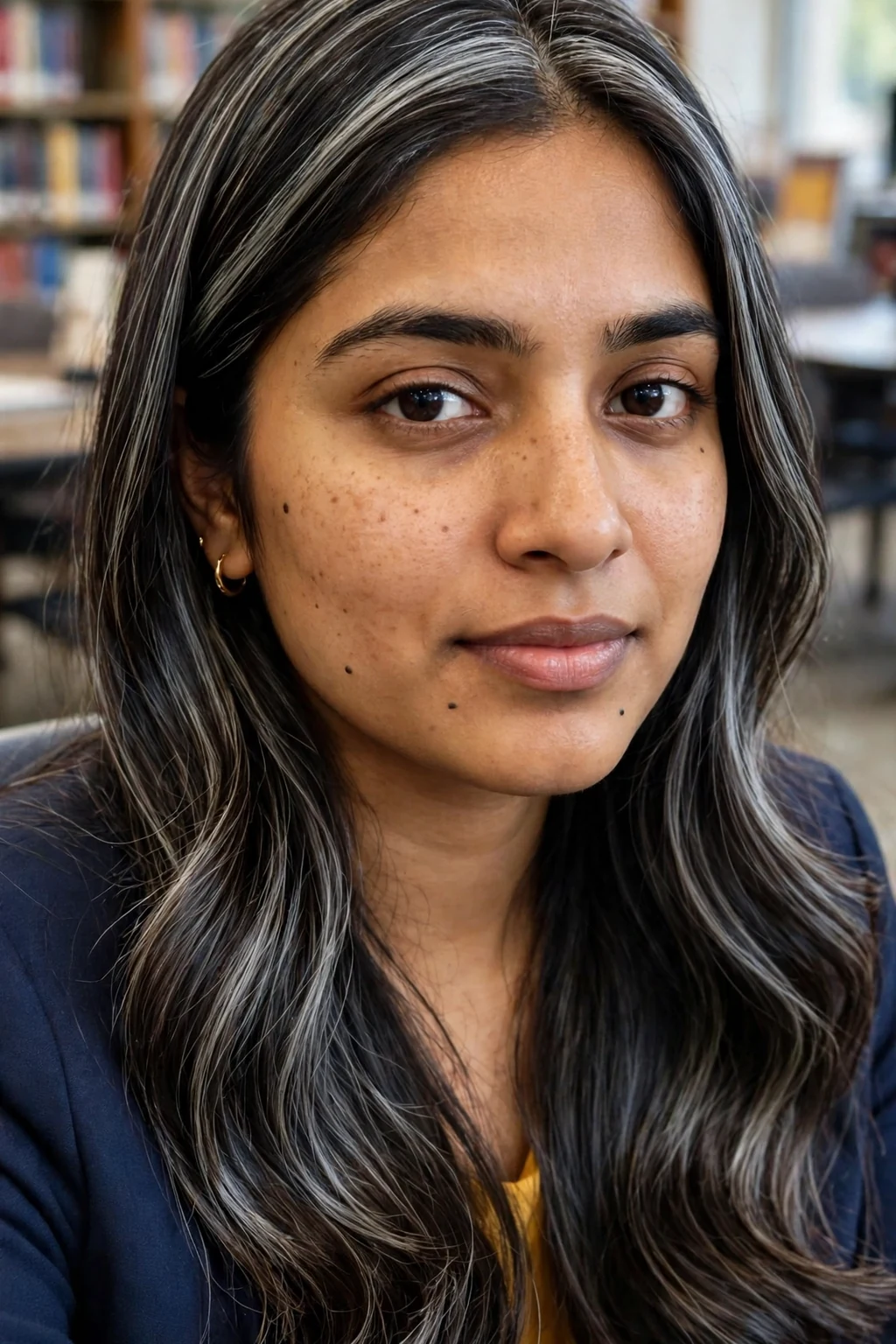
36. Dimensional Ash Melt
The dimensional ash melt layers several ash tones, from deep smoky brown through cool ash to pale silver, melted together so seamlessly that the hair looks naturally multi-tonal rather than colored. Instead of one flat shade, the melt uses a gradient of ash shades that shift with the light, giving dark hair a complexity that reads as expensive and completely natural. Your colorist maps the tones to your natural gray pattern, placing the lightest ash where your silver is densest and deeper ash where your dark base dominates, so the color genuinely mirrors your own growth. The finish is soft and dimensional, with no line, no band, and no obvious starting point for any single shade. Long and medium lengths display the melt best, because the gradual tonal shift needs length to unfold. The melt also adapts beautifully to seasonal changes, looking cooler and more dramatic in winter light and softer and more sun-kissed in summer, so it never feels like a single static color.
Women with thirty to sixty percent gray are ideal candidates, and the technique works on straight, wavy, and thick textures alike. It flatters every face shape, since the tonal mapping can be customized to brighten or shadow any area of the face. Styling is versatile: sleek blow-dries emphasize the smooth melt, while loose waves reveal the layered tones. A color-safe shampoo and a gloss refresh every eight to ten weeks keep the ash tones from warming, and trims every ten weeks maintain the shape. Choose the dimensional ash melt when you want the most realistic, multi-tonal version of gray blending, one that looks like your hair only better. Ask your colorist to map the tones to your part line as well as your gray pattern, since the part is where regrowth shows first, and a well-mapped melt keeps the part looking blended for months. A leave-in conditioner applied before heat styling protects the melted tones and keeps the multi-tonal gradient looking soft rather than dry.
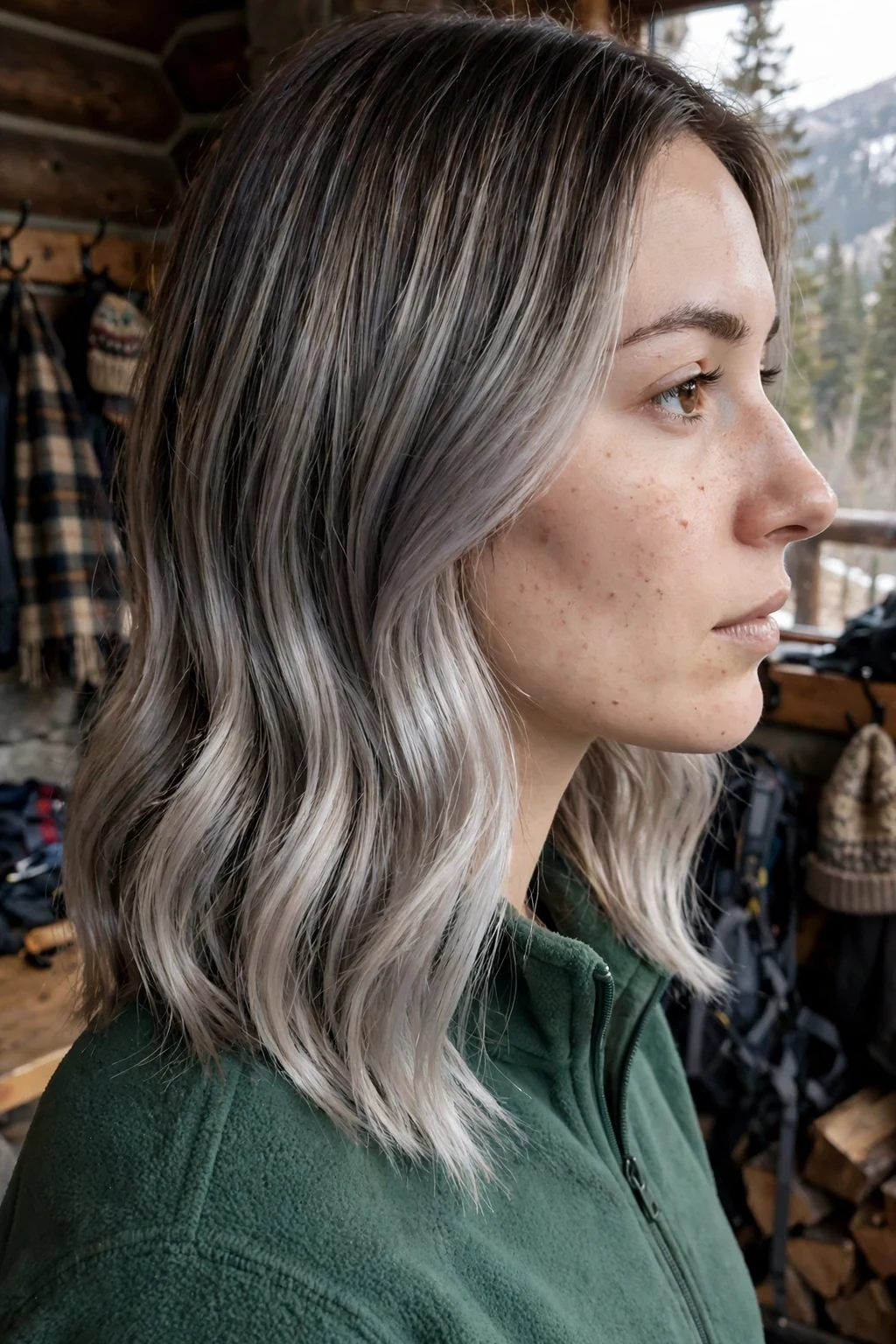
37. Silver Frost Balayage
Silver frost balayage dusts the ends and outer layers of dark hair with a frosty, icy silver, like the first touch of winter on dark branches. The frost is concentrated on the surface layers and the ends, leaving the underlayers dark, so the hair gains a luminous halo of silver without losing its depth. On a chin-length bob, the effect is especially chic: the frosted ends swing and catch the light with every turn of the head, framing the face in brightness. The tone is deliberately cool and crisp, which makes it a wonderful match for women whose natural gray arrives as a bright, clear silver rather than a warm gray. The finish is polished and modern, with a frosted glow that feels seasonal yet wearable all year. The frost also creates a beautiful frame for eyeglasses, since the bright ends near the face catch the light around the frames and draw attention to the eyes in a flattering, luminous way.
This balayage suits short to medium hair beautifully, and it flatters women in their fifties through seventies who want a visible silver statement that still feels elegant. Round and square faces benefit from the brightness at the ends, which draws the eye downward and elongates the look, while heart-shaped faces gain balance from the frosted perimeter. Styling a bob with a round brush and a smoothing cream shows the frost best, and a dab of pomade defines the ends. Maintenance is simple: a frost toner every eight weeks and a balayage refresh every three months, with purple shampoo keeping the frost icy. Choose silver frost balayage when you want a crisp, luminous blend with real presence. For extra polish, a pea-sized amount of smoothing cream worked through the ends before blow-drying keeps the frosted bob sleek, and a silk pillowcase reduces friction that can rough up the frosted ends overnight.

38. Soft Gray Contouring
Soft gray contouring borrows the logic of makeup contouring and applies it to hair color, placing lighter silver tones where you want lift and deeper tones where you want shadow. Bright silver pieces hug the hairline, part, and cheekbone area to open up the face, while darker, smoky tones sit underneath and at the back to create depth and shape. The result is a sculpted, face-flattering blend that does more than camouflage gray: it actively enhances your features, much like well-placed highlights enhance a haircut. The contouring is painted freehand, so the transitions are feathered and soft, never striped, and the overall effect reads as naturally dimensional. Layered lobs and medium cuts show contouring best, because the layers give the colorist surfaces at different depths to work with. The contouring also grows out more gracefully than traditional highlights, because the brightness is concentrated where your natural gray already appears, so regrowth blends into the design instead of fighting it.
This technique is ideal for women who want their gray blending to be genuinely flattering rather than merely concealing, and it can be customized for every face shape: brightness at the temples lifts round faces, while darker sides slim wider ones. It suits women with twenty to fifty percent gray and works on straight, wavy, and fine hair. Styling with a blow-dry that lifts the roots and curves the ends shows the contouring, and a light texturizing spray adds movement. Touch-ups every ten to twelve weeks keep the contour sharp, with gloss refreshes in between. Choose soft gray contouring when you want gray blending that works as hard for your face as a great haircut does. During your consultation, point out the features you most want to highlight, such as your eyes or cheekbones, so your colorist can place the lightest contouring pieces exactly where they will flatter you most.

39. Ash Silver Teasylights
Ash silver teasylights use gentle backcombing at the roots to diffuse the lightening, creating the softest, most feathered silver highlights imaginable for dark hair. The teasing pushes the shortest hairs back toward the scalp, so only the longer surface strands are lightened, and the resulting highlights melt into the base with no visible starting point. The ash silver tone is cool and muted, which keeps the blend from looking brassy or over-processed, and the feathered application makes regrowth almost undetectable. Fine hair benefits enormously, because the teasylights add both color dimension and a touch of root volume from the backcombing itself. The finish is airy and natural, like gray that arrived gradually and gracefully over several years rather than in a single salon visit. The teasylights also protect the hair from over-processing, since the backcombing means only the longest surface strands are lightened while the shorter, more fragile hairs near the scalp are left untouched.
Women with fine or medium hair and thirty to sixty percent gray are the best candidates, and the technique suits every face shape since the diffusion can be weighted wherever brightness is wanted. Straight and gently wavy textures show the feathered silver most clearly, while the soft root lift flatters women whose hair tends to lie flat. Styling is easy: a volumizing mousse at the roots and a smooth blow-dry, or a few loose waves for movement, and the teasylights do the rest. Maintenance stretches to twelve weeks or more, because the diffused roots blur regrowth so effectively, with only a toner refresh needed between full appointments. Choose ash silver teasylights when you want the softest, most forgiving blend with built-in volume. A root-lifting spray applied before blow-drying enhances the natural volume the teasing creates, and a gentle, sulfate-free shampoo preserves both the ash tone and the soft, feathered finish between visits.

40. Pewter Face-Framing Blend
The pewter face-framing blend concentrates cool, metallic pewter tones in the hair around the face, creating a bright, lifting frame that draws attention to the eyes and cheekbones. The pewter is softer than bright silver and deeper than ash blonde, so it flatters a wide range of skin tones while still providing real brightness exactly where it matters most. Your colorist paints the face-framing sections in graduated widths, finer at the hairline and bolder a little further back, so the frame looks natural rather than like a harsh stripe. The rest of the hair stays dark, which makes the pewter frame pop by contrast and keeps the overall look grounded and elegant. It is a brilliant strategy for women whose gray clusters at the temples and part, because it turns the most visible gray into the most beautiful part of the style. The pewter frame also makes an excellent companion to glasses, since the bright pewter near the temples echoes most frame colors and keeps the face looking luminous rather than shadowed behind lenses.
This blend suits every face shape, with the frame customized to widen narrow faces or soften strong jawlines as needed. It works on straight, wavy, and relaxed textures, and it is ideal for women with twenty to fifty percent gray who want maximum impact from minimal coloring. Styling is simple: a smooth blow-dry with the front sections curved slightly away from the face shows the frame, or tuck one side behind the ear for an asymmetric reveal. The face frame needs refreshing every eight to ten weeks to stay bright, while the rest of the hair can go much longer between appointments. Choose the pewter face-framing blend when you want brightness, lift, and a remarkably efficient use of salon time. If you wear your hair tucked behind your ears, ask for the frame to extend slightly further back, so the pewter remains visible from the front and the side rather than disappearing behind the ear.

41. Gray Blending Root Melt
The gray blending root melt is the workhorse of low-maintenance color: the root area is melted into a tone that sits halfway between your dark base and your natural gray, so regrowth emerges into a matching shade instead of a contrasting one. The melt is applied as a demi-permanent color smudged down from the roots for an inch or two, feathered so it fades imperceptibly into the lengths. The result is a root zone that looks intentionally shadowed and dimensional, with gray strands woven through it like natural variation rather than standing out as regrowth. Thick, wavy hair shows this melt beautifully, because the waves break up the root area and make the feathered transition even harder to detect. The finish is soft, lived-in, and polished all at once, with none of the helmet-like uniformity of full coverage color. The root melt also saves significant money over time, since stretching appointments from four weeks to twelve weeks cuts the annual number of salon visits by more than half while keeping the hair looking consistently polished.
Women with forty to eighty percent gray benefit most, since the melt makes heavy regrowth genuinely manageable, and it suits every face shape and most textures. It is especially freeing for women who previously colored every three to four weeks, because the melt stretches appointments to ten or twelve weeks with no visible line. Styling needs nothing special: waves can be enhanced with a salt spray or smoothed with a round brush, and the melt looks good either way. A gloss refresh every eight weeks keeps the root tone fresh, and trims every ten weeks maintain the shape. Choose the gray blending root melt when you want the longest possible stretch between appointments without ever looking grown out. Between appointments, a color-depositing conditioner in a cool gray tone refreshes the melt and keeps any warmth from creeping into the root zone, especially during summer when sun exposure can warm the color.

42. Silver Cloud Highlights
Silver cloud highlights are soft, billowing ribbons of silver painted through dark curls so the hair looks like it holds drifting clouds of light. The highlights are placed on the outer curls and the crown, where light naturally falls, while the underlayers stay dark to preserve depth and keep the curls looking full. Because each curl catches the silver differently, the effect is never uniform or striped; instead, it shifts and shimmers as the head moves, giving curly hair a luminous, almost three-dimensional quality. The silver tone is kept soft rather than icy, which flatters warm skin tones and keeps the overall look gentle. The finish is airy and romantic, with dark curls gaining a halo of brightness that makes the whole style look lighter and more voluminous. The cloud highlights also add perceived volume to curly hair, since the bright outer curls appear to advance toward the eye while the dark underlayers recede, creating a fuller, more three-dimensional silhouette.
Curly and coily textures are the ideal canvas, and the technique suits women with twenty to sixty percent gray who want their curls to be the star. Round and oval faces benefit from cloud highlights concentrated at the crown, which add height, while longer faces gain balance from highlights through the sides. Styling follows good curl care: a leave-in conditioner, curl cream scrunched into soaking-wet hair, and diffusing on low heat, with a light oil to finish. Trim curly hair every ten to twelve weeks to preserve the shape, and refresh the silver toner every ten weeks to prevent warmth. Choose silver cloud highlights when you want your curls to glow with soft, natural-looking silver dimension. A diffuser attachment is the single most useful tool for this style, since it dries the curls without disturbing the silver placement, and a microfiber towel reduces frizz far better than a regular bath towel.

43. Smoky Ash Dimension
Smoky ash dimension layers cool, smoky ash tones through long dark hair in a way that adds shadow and mystery rather than brightness, creating depth that makes straight hair look thicker and more expensive. The smoky tones are painted in varying depths, some barely lighter than the base and others a clear cool ash, so the hair gains a multi-tonal, almost smoldering quality. Straight hair shows this dimension beautifully, because the smooth surface reflects each tonal shift clearly, and the long lengths give the smoky gradient room to develop. The finish is sleek and sophisticated, with a cool, muted glow that flatters women who find bright silver too attention-grabbing. It is gray blending for women who prefer subtlety with substance, a color that reveals itself gradually rather than announcing itself. The smoky dimension also works beautifully for women transitioning away from permanent dark dye, since the smoky tones bridge the gap between dyed dark hair and natural gray without a harsh grow-out line.
Women with long, straight, or slightly wavy hair and twenty to fifty percent gray are ideal candidates, and the technique suits oval, oblong, and heart-shaped faces particularly well. It works on fine and thick hair alike, since the dimension adds visual fullness without heavy lightening. Styling with a flat iron and a smoothing serum emphasizes the smoky shifts, while a few loose waves add movement. Maintenance is gentle: a gloss refresh every eight to ten weeks and a dimension touch-up every twelve weeks, with sulfate-free shampoo protecting the cool tones. Choose smoky ash dimension when you want gray blending that is understated, elegant, and quietly captivating. A weekly hair mask keeps the long lengths hydrated, which matters because well-moisturized hair reflects light more evenly and shows the smoky tonal shifts far more clearly than dry, rough hair. A color-safe heat protectant used before every flat-iron session is essential, since heat damage dulls smoky tones faster than almost anything else.

44. Gray Balayage with Lowlights
Gray balayage with lowlights pairs the brightness of hand-painted silver balayage with the grounding depth of dark lowlights, creating the most realistic salt-and-pepper effect a salon can produce. The balayage lifts selected strands to soft silver-gray, while the lowlights weave darker charcoal and espresso tones back through the hair, so the final result mimics the genuine variation of naturally graying hair. Layered cuts show this pairing at its best, because each layer holds a different balance of light and dark, giving the hair a rich, textured appearance. The finish is neither too light nor too dark, but perfectly balanced, with a natural, lived-in quality that never looks like a single-process color. It is the technique colorists reach for when a client wants to look like herself, only with more beautiful gray. The pairing also future-proofs the color, since as more gray arrives naturally, it simply joins the existing pattern of light and dark instead of creating a new demarcation line to correct.
This combination suits women with forty to seventy percent gray who want a believable, dimensional result, and it works on straight, wavy, and thick hair. Every face shape wears it well, since the balance of light and dark can be shifted to flatter any features. Styling with soft waves or a textured blow-dry shows the interplay of tones, and a texturizing spray adds separation. Maintenance runs every ten to twelve weeks, with the lowlights extending the life of the balayage by keeping regrowth from showing as a line. Choose gray balayage with lowlights when you want the most natural, believable gray blend possible. Ask your colorist to keep a record of the exact balayage and lowlight formulas used, so future appointments can reproduce the balance precisely rather than drifting lighter or darker over time. A monthly clarifying wash followed by a deep-conditioning mask keeps both the balayage and the lowlights fresh without stripping the carefully balanced tones.

45. Ash Taupe Gray Blend
The ash taupe gray blend introduces a warm-neutral taupe note into cool ash gray, creating a sophisticated, muted blend that flatters women who find pure silver too cold against their skin. Taupe softens the ash, giving the gray a gentle, earthy undertone that harmonizes with dark brown and black bases while still reading clearly as gray blending. On a sleek bob, the taupe-ash tones create a polished, tailored effect, with the smooth surface showing the muted tonal shifts beautifully. The finish is refined and professional, with a quiet luxury that suits workplaces and formal occasions as easily as weekends. It is an excellent choice for women with warm or neutral undertones who want gray blending that complements rather than contrasts with their complexion. The taupe blend also complements warm-toned wardrobes and jewelry, since its muted, earthy undertone harmonizes with gold, camel, and olive in a way that pure silver sometimes does not.
Women in their fifties and sixties with twenty to fifty percent gray are ideal candidates, and the technique suits straight and slightly wavy hair best. Oval, round, and heart-shaped faces all wear it well, particularly in a bob or lob where the clean lines frame the face. Styling with a flat iron and a smoothing serum gives the sleek finish that shows the taupe tones, and a shine spray adds polish. Maintenance means a toner every eight to ten weeks and a blend refresh every twelve weeks, with color-safe shampoo keeping the taupe from fading warm. Choose the ash taupe gray blend when you want gray blending that is warm, sophisticated, and effortlessly professional. A shine spray used sparingly on the sleek bob enhances the taupe tones without weighing the hair down, and a flat iron passed only over the mid-lengths and ends preserves the smooth, tailored finish. A trim every eight weeks keeps the bob's clean lines sharp, which matters because the taupe blend's tailored effect depends on a precise, well-maintained shape.

46. Silver Metallic Glaze
The silver metallic glaze is a sheer, reflective color treatment that coats dark curls in a luminous metallic sheen, turning natural gray into a shimmering accent rather than something to cover. Unlike opaque color, the glaze is translucent, so it lets the dark base show through while adding a silver-metallic reflectivity that catches the light with every movement. On short natural curls, the effect is dazzling: each curl gains a metallic halo, the curl pattern looks more defined, and the whole style glows without any heaviness. The finish is modern and fashion-forward, with a liquid-metal shine that feels celebratory rather than conservative. It is gray blending as adornment, a treatment that makes silver the most beautiful part of the hair. The glaze also improves manageability noticeably, since the conditioning glaze formula smooths the cuticle of wiry gray curls and makes them easier to shape, define, and refresh on non-wash days.
Short and medium curly hair is the perfect canvas, and the technique suits women with scattered to moderate gray who want shine and dimension without lightening. Every face shape wears it well, since the glaze enhances whatever cut is already there rather than changing the shape. Styling follows curl care: a curl cream and diffuser, with the glaze itself adding softness and manageability to wiry gray strands. The glaze fades gradually over six to eight weeks, so reapplication is quick and damage-free, and there is never a grow-out line. Choose the silver metallic glaze when you want your gray to shine, literally, with a modern metallic finish. On non-wash days, a light mist of water mixed with leave-in conditioner reactivates the curls and revives the metallic sheen without requiring a full wash or restyle. A weekly deep-conditioning treatment keeps the short curls bouncy and hydrated, which in turn keeps the metallic glaze looking luminous rather than dull.

47. Gray Blending for Curly Dark Hair
Gray blending for curly dark hair is a curl-first technique that paints silver and ash tones onto the outer curls while respecting the curl pattern, so the color enhances the curls instead of disrupting them. Your colorist works curl by curl, painting the silver onto the surface of selected curl clumps and leaving the inner curls dark, which preserves the hair's natural volume and prevents the flat, over-processed look that blanket coloring can cause. The result is a joyful, dimensional blend where silver ribbons wind through dark curls like light through foliage, and the curl pattern itself becomes more visible because the color defines each clump. The finish is bouncy and full of life, with a natural, sun-kissed quality that makes gray look like a gift to curly hair rather than a problem. The curl-first approach also means less damage overall, since only selected outer curls are lightened while the inner curls remain untouched, preserving the hair's strength and elasticity where it matters most.
Voluminous curly and coily hair of any length benefits, and the technique suits women with twenty to sixty percent gray who have struggled to find colorists who understand curls. Round and oval faces gain lift from silver placed at the crown, while the volume itself balances longer faces beautifully. Styling is all about curl health: a leave-in conditioner, curl cream, and diffusing, with regular deep-conditioning treatments to keep color-treated curls soft. Trim every ten to twelve weeks using a curl-by-curl cut, and refresh the silver toner every ten weeks. Choose this approach when you want gray blending designed around your curls, not in spite of them. Finding a colorist experienced with curly hair is worth the search, since curl-aware painting and cutting techniques make the difference between a blend that enhances curls and one that fights them. A silk or satin pillowcase reduces overnight friction on curls, preserving both the curl definition and the silver placement for days after styling.

48. Silver Ribbon Balayage
Silver ribbon balayage paints wide, flowing ribbons of silver through long dark hair in a freehand sweeping motion, creating a bold yet graceful gradient that feels like silk ribbons woven into the lengths. The ribbons are wider than babylights and more fluid than foils, so they create sweeping bands of silver that move with the hair and catch the light in long, luminous streaks. Long layered hair is the ideal canvas, because the ribbons have room to flow from the mid-lengths to the ends, and each layer carries a different ribbon placement for a cascading effect. The finish is dramatic and elegant, with a high-contrast beauty that still grows out softly because the ribbons are feathered at their tops. It is a statement blend for women who want their silver to be seen and admired. The ribbon balayage also creates a slimming vertical line through long hair, since the long silver ribbons draw the eye downward and make the overall silhouette look longer and more elegant.
Women with long hair and thirty to seventy percent gray are the best candidates, and the technique suits straight, wavy, and thick textures. Oval and oblong faces benefit from ribbons that start below the chin, which elongate the look, while round faces gain definition from ribbons framing the cheeks. Styling with loose waves or a smooth blow-dry shows the ribbons best, and a shine serum emphasizes their silkiness. Maintenance runs every twelve weeks for ribbon refreshes, with toner every eight weeks keeping the silver bright. Choose silver ribbon balayage when you want a bold, flowing blend that turns long hair into a showcase for silver. For the glossiest ribbons, finish styling with a lightweight shine oil applied only to the mid-lengths and ends, avoiding the roots so the hair keeps its volume and movement. A wide-barrel curling iron used on just a few outer sections adds soft waves that catch the light and show the silver ribbons at their most dramatic.

49. Ash Gray Root Blur
The ash gray root blur is a soft-focus technique for the root area, blurring the boundary between dark hair and incoming gray with a hazy, airbrushed ash tone. Instead of covering gray or highlighting over it, the blur tones the entire root zone to a muted ash that sits between the two colors, so neither the dark base nor the silver stands out sharply. The application is feathered downward for a couple of inches, creating a gradient that the eye reads as natural shadow rather than color. Medium wavy hair shows the blur beautifully, because the waves break up the root area and make the soft transition even less detectable. The finish is gentle and forgiving, with a diffused, almost watercolor quality that flatters women who dislike any harshness in their hair color. The root blur also pairs well with a layered cut, since the layers break up the root zone visually and make the blurred transition even harder to detect from any angle.
This technique suits women with thirty to sixty percent gray who want the softest possible root transition, and it works on straight, wavy, and fine hair. Every face shape wears it well, since the blur can be weighted to brighten the part or shadow the hairline as desired. Styling is effortless: a textured blow-dry or natural waves both show the blur to advantage, and a root-lifting spray adds volume where the blur sits. Because the blurred roots match regrowth so closely, appointments stretch to twelve or fourteen weeks, with only a toner refresh in between. Choose the ash gray root blur when you want the gentlest, most forgiving root transition available. A dry shampoo in a cool or gray tint can extend the blur between appointments, absorbing oil at the roots while reinforcing the ashy tone exactly where regrowth would otherwise show. A gentle scalp massage during washing also boosts circulation and keeps the root zone healthy, which supports both hair growth and long-lasting color.

50. Gray Blending Shag Layers
Gray blending shag layers pair a textured, rock-and-roll shag cut with silver and ash tones painted onto the choppy layers, creating a youthful, effortless blend with real attitude. The shag's disconnected layers give the colorist multiple surfaces at different lengths, so the silver can be placed on the shorter top layers for brightness and feathered through the longer layers for depth. The result is a tousled, lived-in style where gray looks completely at home, like a natural part of a cool, textured cut rather than a color problem to solve. The finish is piecey and full of movement, with the silver pieces catching the light as the layers flip and turn. It is gray blending for women who want to look current and a little bit edgy, not merely covered. The shag also hides regrowth better than almost any other cut, since its choppy, disconnected layers break up the root area and make any new growth look like part of the texture.
Women in their forties through sixties with wavy or straight hair and twenty to fifty percent gray are ideal candidates, and the shag suits oval, round, and heart-shaped faces by adding width and texture around the cheekbones. Styling is deliberately undone: a texturizing spray scrunched into damp hair, air-drying or diffusing, and a quick tousle, with no need for precise blow-drying. Trim every eight weeks to keep the shag's layers sharp, and refresh the silver toner every ten weeks. The grow-out is exceptionally forgiving, since the shag's texture disguises regrowth better than any sleek cut. Choose gray blending shag layers when you want a modern, low-effort blend with personality to spare. A sea-salt spray or texturizing cream is the shag's best friend, giving the layers separation and grit without stiffness, and a quick scrunch is often all the styling the cut needs. A light pomade worked through the shortest layers adds definition and separation, giving the shag its signature piecey texture without any stiffness.

51. Silver Dimensional Foils
Silver dimensional foils use traditional foil placement with a modern, multi-tonal approach, weaving fine and medium silver foils through dark hair at varying depths to build a rich, three-dimensional result. The foils allow precise control over lift, so each section reaches exactly the silver tone intended, from soft ash to bright metallic, and the varying foil sizes prevent the uniform, striped look of old-fashioned highlighting. The result is a polished, dimensional blend with clear silver presence and beautiful depth, the kind of color that looks flawless under stage lights and sunlight alike. Shoulder-length hair shows the foils beautifully, because the length is enough for the dimension to develop without the color becoming overwhelming. The finish is refined and luminous, with a salon-perfect quality that freehand techniques sometimes cannot match. The foils also make this technique a good choice for resistant gray hair, since foil processing generates gentle heat that helps stubborn silver strands accept tone more evenly than open-air methods.
This technique suits women with forty to seventy percent gray who want reliable, even coverage with dimension, and it works on straight, wavy, and thick hair. Oval and square faces benefit from foils placed to brighten the perimeter, while the depth underneath keeps the style grounded. Styling with a smooth blow-dry or soft waves shows the dimension, and a shine serum enhances the foil brightness. Maintenance runs every ten to twelve weeks, with purple conditioner keeping the silver tones cool between visits. Choose silver dimensional foils when you want precise, dependable blending with a polished, high-definition finish. To protect the investment, use lukewarm water when washing, since hot water opens the cuticle and fades silver tones faster, and always finish with a cool rinse for extra shine. A monthly bond-building treatment keeps the foiled sections strong and smooth, which is especially important for hair that has been lightened more than once.

52. Cool Gray Gloss Melt
The cool gray gloss melt combines a root melt with a sheer cool-gray gloss over the lengths, creating a seamless, glossy blend that unifies dark hair and silver into one cool, harmonious color. The melt softens the root transition, while the gloss veils the lengths in a translucent cool gray that cools any warmth and adds a mirror-like shine. Long hair benefits most, because the gloss gives the lengths a liquid, reflective quality that makes the whole style look healthy and expensive. The finish is sleek and cool-toned, with a subtle silver sheen that appears in sunlight and a soft, dimensional depth indoors. It is an ideal choice for women whose dark hair tends to throw warm or brassy tones, because the cool gloss corrects that warmth while blending the gray. The gloss melt also acts as a powerful shine treatment, sealing the cuticle so light reflects evenly along the lengths and the hair looks freshly salon-finished for weeks after the appointment.
Women with long or medium hair and twenty to sixty percent gray are ideal candidates, and the technique suits straight, wavy, and thick textures. Every face shape wears it well, since the melt and gloss can be customized to brighten or shadow any area. Styling with a smooth blow-dry and a shine serum maximizes the glossy finish, while loose waves show the cool dimension. The gloss fades over six to eight weeks, so reapplication is quick, and the melt itself lasts ten to twelve weeks. Choose the cool gray gloss melt when you want a sleek, shiny, cool-toned blend with a remarkably polished finish. A boar-bristle brush used for the final smoothing pass distributes natural oils down the lengths, enhancing the gloss melt's reflective finish without adding any product weight. A cool-water final rinse after washing seals the cuticle and locks in the gloss melt's shine, making the cool gray tones last noticeably longer.

53. Ash Blending for Short Dark Hair
Ash blending for short dark hair proves that pixies and short crops can carry gray blending just as beautifully as long hair, with ash tones painted onto the top layers and crown to soften gray and add dimension. On short hair, the colorist works with the cut's natural movement, placing ash pieces on the longer top sections and keeping the sides and nape darker for contrast and shape. The result is a chic, sculpted blend where silver reads as a deliberate design element, brightening the crown and framing the face without overwhelming the short silhouette. The finish is modern and confident, with a cool, polished quality that makes short hair look intentional and fashion-forward. It is an especially liberating choice for women who have kept their hair short for years and assumed gray blending was only for longer lengths. The short-hair blend also saves considerable styling time, since a pixie dries in minutes and the ash pieces are placed to look good with minimal effort, making it ideal for busy mornings.
Short crops, pixies, and bobs are all ideal canvases, and the technique suits women with twenty to sixty percent gray who want a low-maintenance yet stylish result. Oval, round, and heart-shaped faces benefit from ash placed at the crown, which adds height and lift. Styling is quick: a texturizing paste or pomade defines the pieces, and a few minutes with a blow-dryer gives the crown lift. Trim every four to six weeks to keep the short shape crisp, and refresh the ash toner every eight weeks. Choose ash blending for short dark hair when you want a bold, modern blend that celebrates short hair and silver together. A small amount of matte pomade worked through the crown pieces defines the ash tones without shine overload, and a quick finger-tousle is often the entire styling routine. A lightweight wax applied to the crown pieces adds texture and hold without heaviness, keeping the short ash blend looking styled all day long.

54. Silver Peppered Highlights
Silver peppered highlights scatter fine, irregular flecks of silver through dark hair like pepper ground over a dark dish, creating the most organic imitation of natural graying available. The highlights are deliberately irregular in size and placement, some barely wider than a single strand, so the result never looks like a pattern or a technique at all. Instead, the hair simply looks like it is graying beautifully, with silver appearing exactly where nature would put it: at the part, the temples, and scattered through the crown. The finish is subtle and completely believable, with a soft, speckled dimension that flatters women who want their blending to be a secret. Medium straight hair shows the peppering clearly, because the smooth surface lets each silver fleck catch the light. The peppered effect also ages beautifully, since as your natural gray percentage increases, the peppered highlights simply look more plentiful rather than needing correction or a new technique.
Women with early to moderate graying are the ideal candidates, especially those who want the most discreet blend possible and dislike any obvious salon color. Every face shape wears it well, since the peppering follows the natural gray pattern rather than imposing a design. Styling needs nothing special: a smooth blow-dry or natural air-dry both show the silver flecks, and a light oil keeps the fine pieces healthy. Touch-ups every twelve weeks or more are enough, because the irregular peppering makes regrowth genuinely invisible. Choose silver peppered highlights when you want gray blending that looks like nature, only slightly more flattering. Because the highlights are so fine, the peppered technique causes minimal damage, making it one of the gentlest lightening options available for women concerned about hair health. A boar-bristle brush used gently on dry hair distributes natural oils and adds a soft sheen that makes the silver peppering glow subtly.

55. Gray Blending Long Layers
Gray blending long layers uses the architecture of a long layered cut to distribute silver and ash tones through dark hair in a cascading, waterfall-like gradient. Each layer receives a different balance of color: the shortest face-framing layers carry the brightest silver, the mid layers hold a softer ash, and the longest layers stay darkest, so the color flows downward like a natural gradient. The result is a breathtaking, dimensional blend where silver appears to tumble through the hair rather than sit on top of it, and the movement of long layers makes the tones shift constantly. The finish is luxurious and romantic, with a long, flowing silhouette that turns gray blending into a genuine showpiece. It is the technique for women who have grown their hair long and want their silver to be part of its beauty, not an interruption. The long-layer blend also moves beautifully, with the cascading tones shifting as the hair swings, so the color never looks static and always reveals a new combination of silver and dark.
Women with long hair and twenty to sixty percent gray are ideal candidates, and the technique suits straight, wavy, and thick textures. Oval and oblong faces benefit from the cascading layers, which add width and movement, while round faces gain length from the longest layers. Styling with loose waves or a bouncy blow-dry shows the cascading color, and a shine serum emphasizes the flow. Trim every ten to twelve weeks to keep the layers fresh, and refresh the silver toner every ten weeks. Choose gray blending long layers when you want a dramatic, flowing blend worthy of very long hair. A large round brush used during blow-drying gives the long layers their bounce and shows the cascading color to best effect, while a flexible-hold spray keeps movement without stiffness. A leave-in detangling spray used before brushing protects the long layers from breakage, keeping the cascading color smooth and unbroken. Choose this blend for truly show-stopping, flowing silver dimension.

56. Silver Ash Lived-In Layers
Silver ash lived-in layers combine a relaxed, grown-out color philosophy with layered cutting, so the silver ash tones look like they have always belonged in the hair. The color is applied with a deliberately diffused root and soft, feathered ends, mimicking hair that has been lived in for months rather than freshly colored yesterday. Layered medium cuts are the perfect partner, because the layers break up the color into soft, overlapping tones that never form a line or a band. The finish is effortless and modern, with a cool silver ash that feels calm and understated rather than dramatic. It is gray blending for women who value ease above all, a color that looks good on day one and even better at week ten. The lived-in layers also make salon visits genuinely relaxing, since there is no pressure to maintain a perfect, freshly colored look, and the color is designed to look its best precisely when it is a little grown out.
Women with medium layered hair and thirty to sixty percent gray are ideal candidates, and the technique suits straight, wavy, and fine textures. Every face shape wears it well, since the lived-in diffusion can be weighted to flatter any features. Styling is minimal: air-dry with a texturizing cream, or a quick blow-dry for smoothness, and the layers do the rest. Maintenance is the easiest of any blending technique, with full refreshes every twelve to fourteen weeks and only a toner in between. Choose silver ash lived-in layers when you want the most effortless, low-maintenance gray blend, one that truly gets better as it grows. A texturizing cream scrunched into damp hair and left to air-dry is often the entire styling routine, which is exactly the point of a lived-in blend: beautiful hair with minimal effort. A flexible-hold hairspray misted lightly over the finished style holds the lived-in layers in place while preserving their soft, touchable movement.

How to Choose the Right Gray Blending for Dark Hair
The most flattering gray blending for dark hair is soft, dimensional, and easy — subtle silver tones woven through dark bases, a grow-out that looks intentional, and a technique that works with your natural pattern will always look fresh and modern. Choose the blend level that makes you feel wonderful, and your transition will always look beautiful.
Gray blending is wonderfully freeing: it softens the demarcation line, extends time between appointments, and embraces your natural texture. Gloss treatments every eight to ten weeks keep the blend seamless and luminous. Choose the gray blending approach that makes you feel confident — that is always the most flattering choice.
Conclusion
From subtle babylights to dimensional balayage, these 56 gray blending ideas prove dark hair and silver can be stunning together. Choose the technique and tone that make you feel wonderful, keep up with gloss treatments, and wear your blend with total confidence.