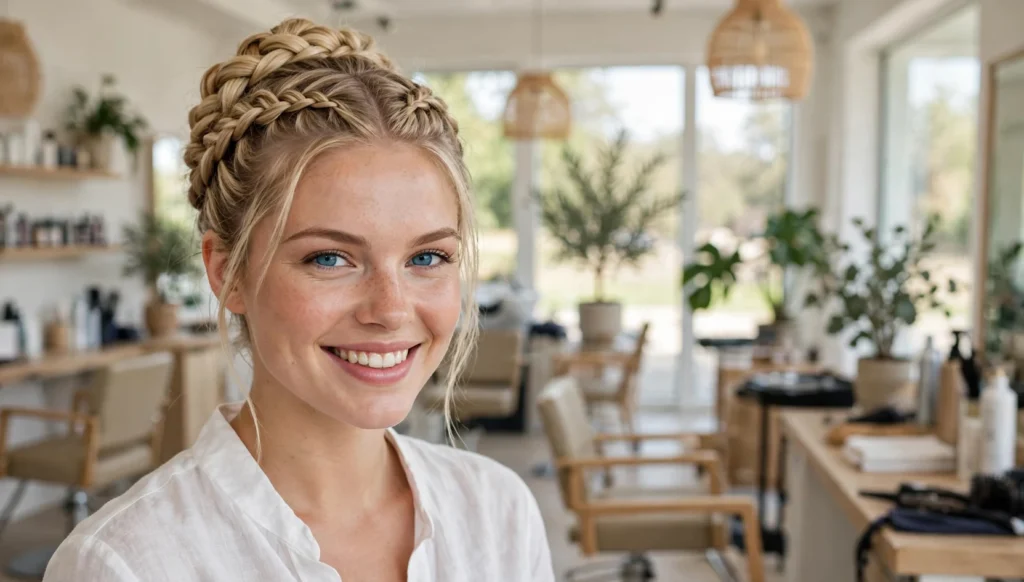
Double dutch braid updos are secure, stylish, and effortlessly cool. These 37 double dutch braid updo tutorials are detailed, versatile, and beautiful, giving you that perfect braided updo that stays put all day.
1. Classic Double Dutch Updo
The classic double Dutch updo is the foundation every braided updo builds on: two inverted Dutch braids running from the forehead to the nape, then coiled and pinned into a secure, elegant updo. Dutch braids — where strands cross under rather than over — sit raised on the hair, creating gorgeous three-dimensional definition that regular braids cannot match. The finished updo is polished, intricate-looking, and remarkably secure, staying put through entire days and dance floors.
Start with brushed, slightly textured hair (day-old hair grips best; add texturizing spray to clean hair). Part down the center, then Dutch-braid each side from the hairline to the nape, crossing strands under and adding hair as you go. Secure each braid with a small elastic, then twist and coil both braids together at the nape, pinning with bobby pins in an X formation. Gently pancake the braids — tugging the edges outward — for fullness. This style suits medium to long hair of any texture and flatters every face shape. Practice makes perfect: your third attempt will take half the time of your first.
2. Double Dutch Bun
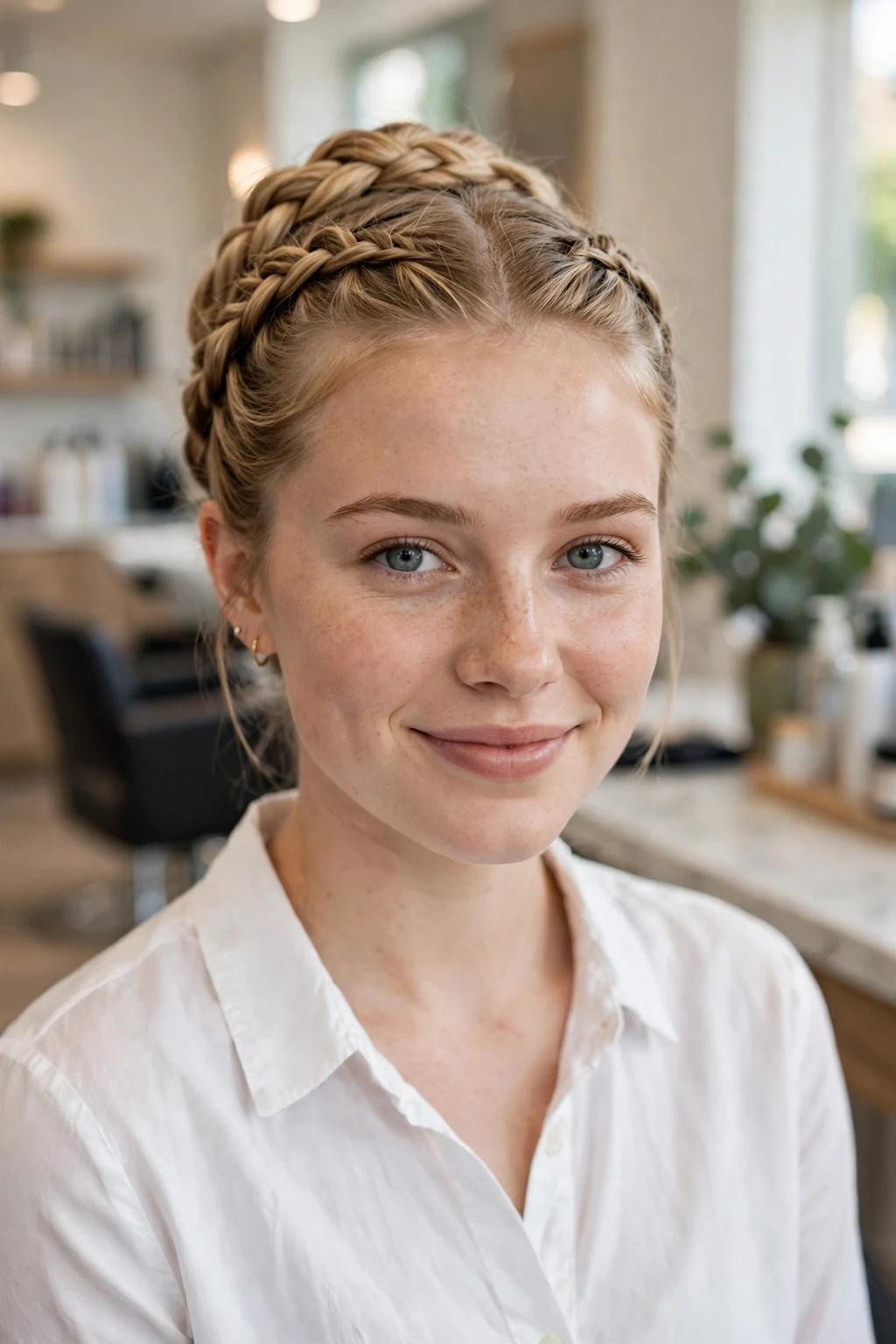
The double Dutch bun takes the classic braided base and finishes it with a chic, sculpted bun: two Dutch braids lead from the front hairline back into a smooth, coiled bun at the crown or nape. The braids add intricate detail to what would otherwise be a simple bun, elevating it from everyday to event-worthy. It is the perfect hybrid of sporty and sophisticated — secure enough for workouts, pretty enough for weddings.
Braid two Dutch braids from the front to the crown, then gather all the hair — including the braid tails — into a ponytail. Twist the pony into a bun and pin securely, tucking the ends underneath. For a sleeker finish, smooth the crown with a light gel before braiding; for a softer look, pancake the braids generously. This style works on medium to long hair and keeps every strand contained. It is ideal for long days when you need your hair completely out of the way but still want to look intentionally styled.
3. Double Dutch Crown
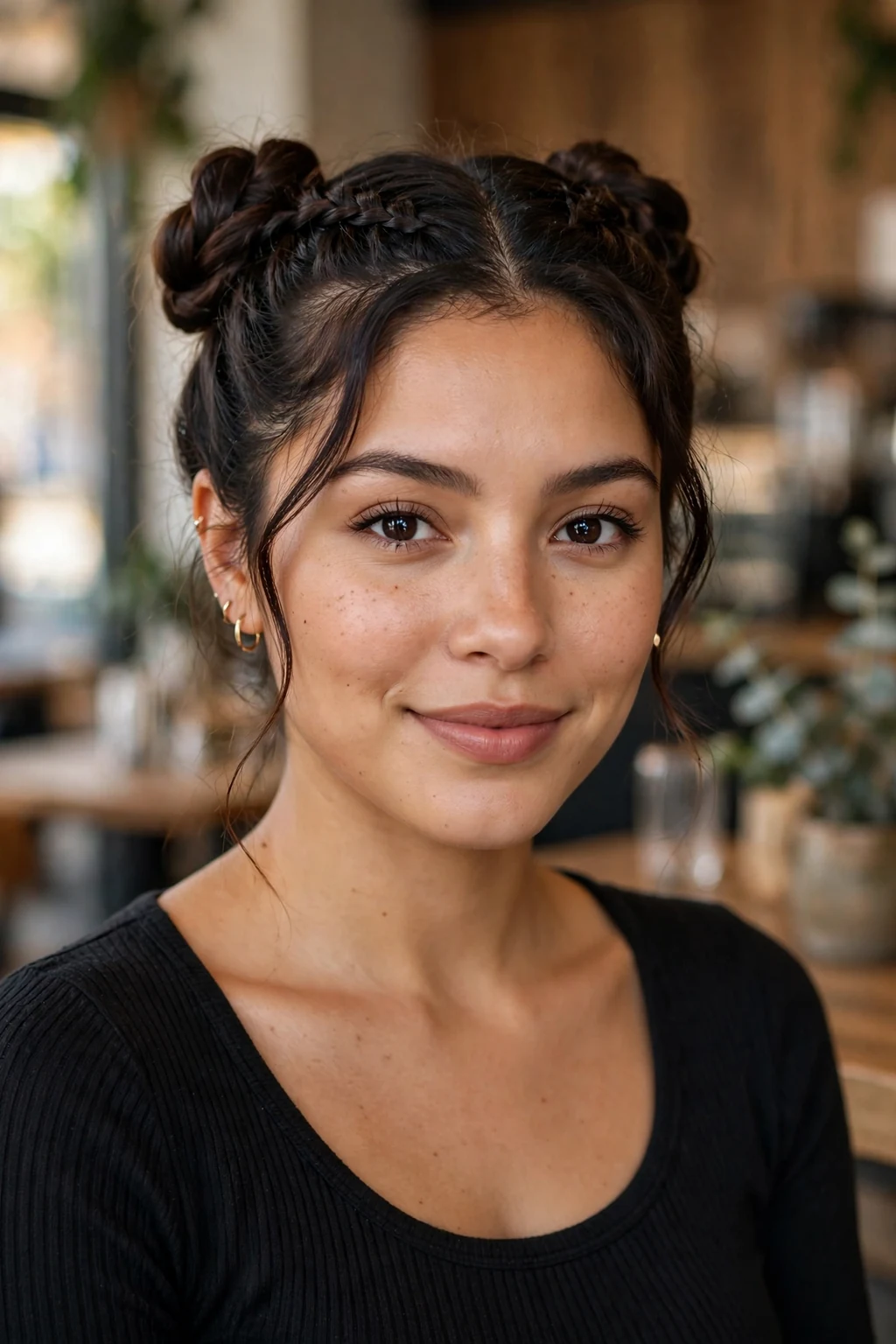
The double Dutch crown is regal and romantic: two Dutch braids that travel along the hairline like a headband, meeting at the back in a hidden, pinned finish. The braids frame the face beautifully while keeping every strand swept up and away — it is the hairstyle equivalent of a tiara, but one you braid yourself. Ethereal, feminine, and surprisingly sturdy.
Begin with a center or side part, then Dutch-braid along each side of the hairline, following the curve of the head toward the back. Cross the braid tails over each other at the nape and pin them flat against the head, tucking the ends under the opposite braid. Pancake gently for a fuller crown effect. This suits medium to long hair and is especially flattering on oval, heart, and round faces. Add small flowers or pearl pins for weddings — the crown becomes a garden.
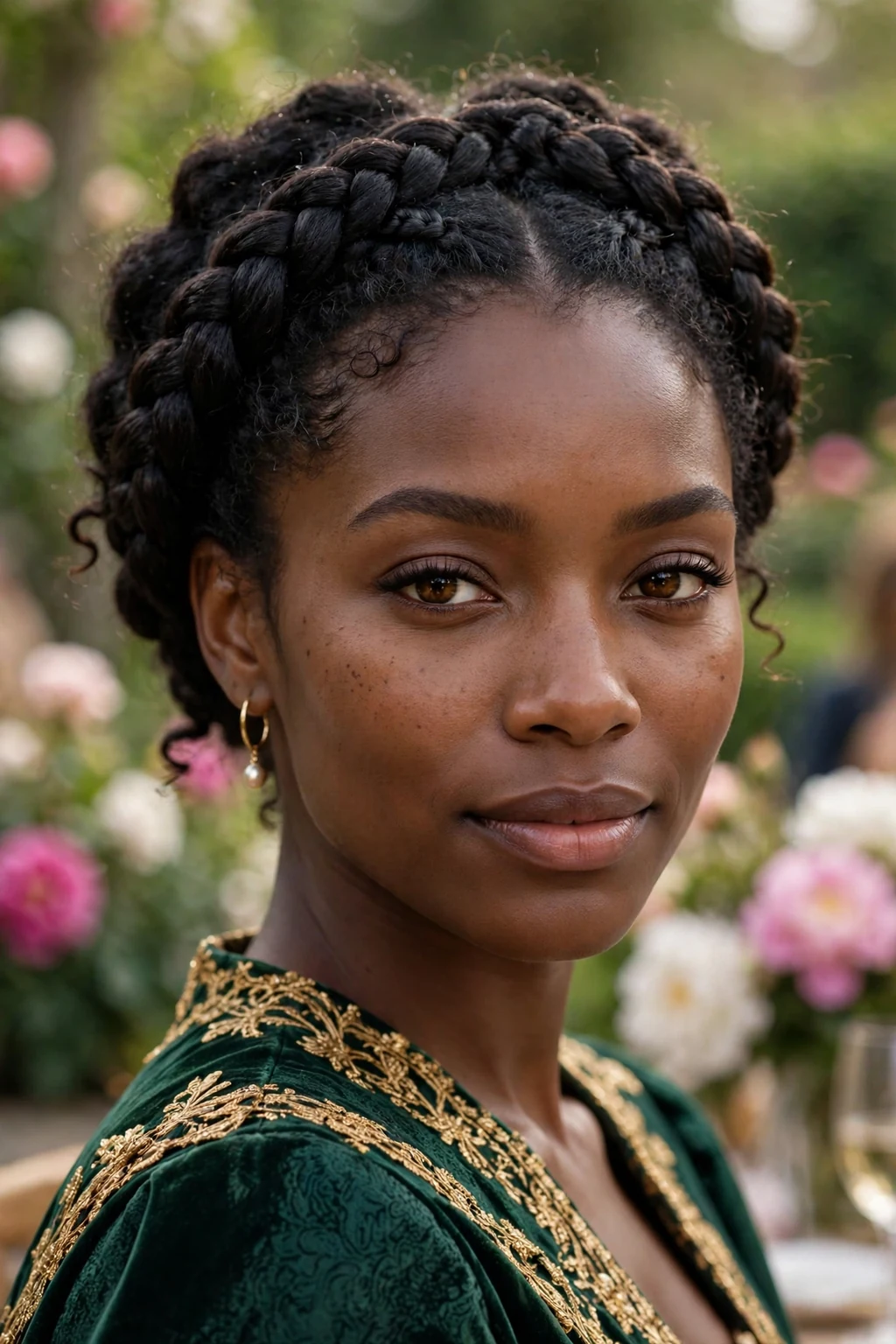
4. Double Dutch Space Buns
Double Dutch space buns are pure fun: two Dutch braids running from the front to the crown, each finishing in a playful topknot — one on each side of the head. The braids add structure and cool detail to the whimsical double-bun silhouette, making it look intentional rather than childish. It is festival hair, concert hair, weekend-adventure hair.
Part down the center and Dutch-braid each side up toward the crown, securing with elastics. Twist each ponytail into a bun and pin, leaving the braid tails wrapped around the bun bases. Pancake the braids for extra texture and pull a few face-framing pieces loose. This style works on medium-length and longer hair and suits oval, round, and heart-shaped faces. It stays secure through dancing, rides, and windy days — space buns are famously indestructible. Add glitter roots or temporary color spray on the braids for festivals, since space buns are the perfect canvas for playful extras.
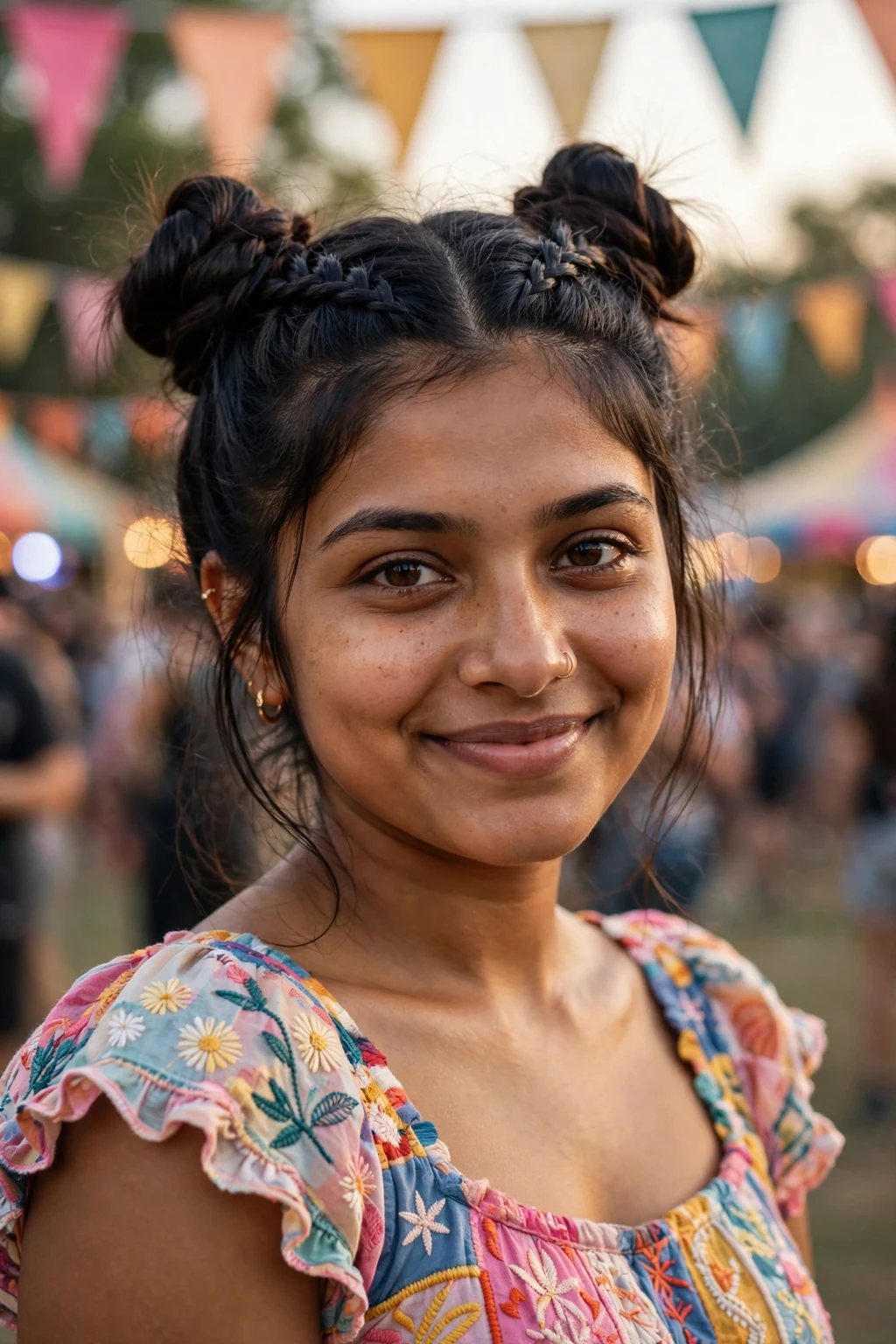
5. Double Dutch Pony Updo
The double Dutch pony updo is sporty polish: two Dutch braids from the hairline that feed into a high, bouncy ponytail. The braids keep the front sleek and detailed while the pony adds movement and energy. It is the ultimate active-girl style — gym sessions, tennis matches, and busy days all handled with style to spare.
Braid two tight Dutch braids from the front hairline back to the crown, then gather everything into a high ponytail with a strong elastic. Wrap a strand of hair around the elastic for polish, and pancake the braids for dimension. Use a smoothing gel on the front for a sleek finish that lasts through sweat. Best on medium to long hair. Choose it when you need maximum security with maximum style — nothing moves, everything looks intentional. A second elastic wrapped over the first gives extra insurance for high-intensity workouts and windy outdoor days.
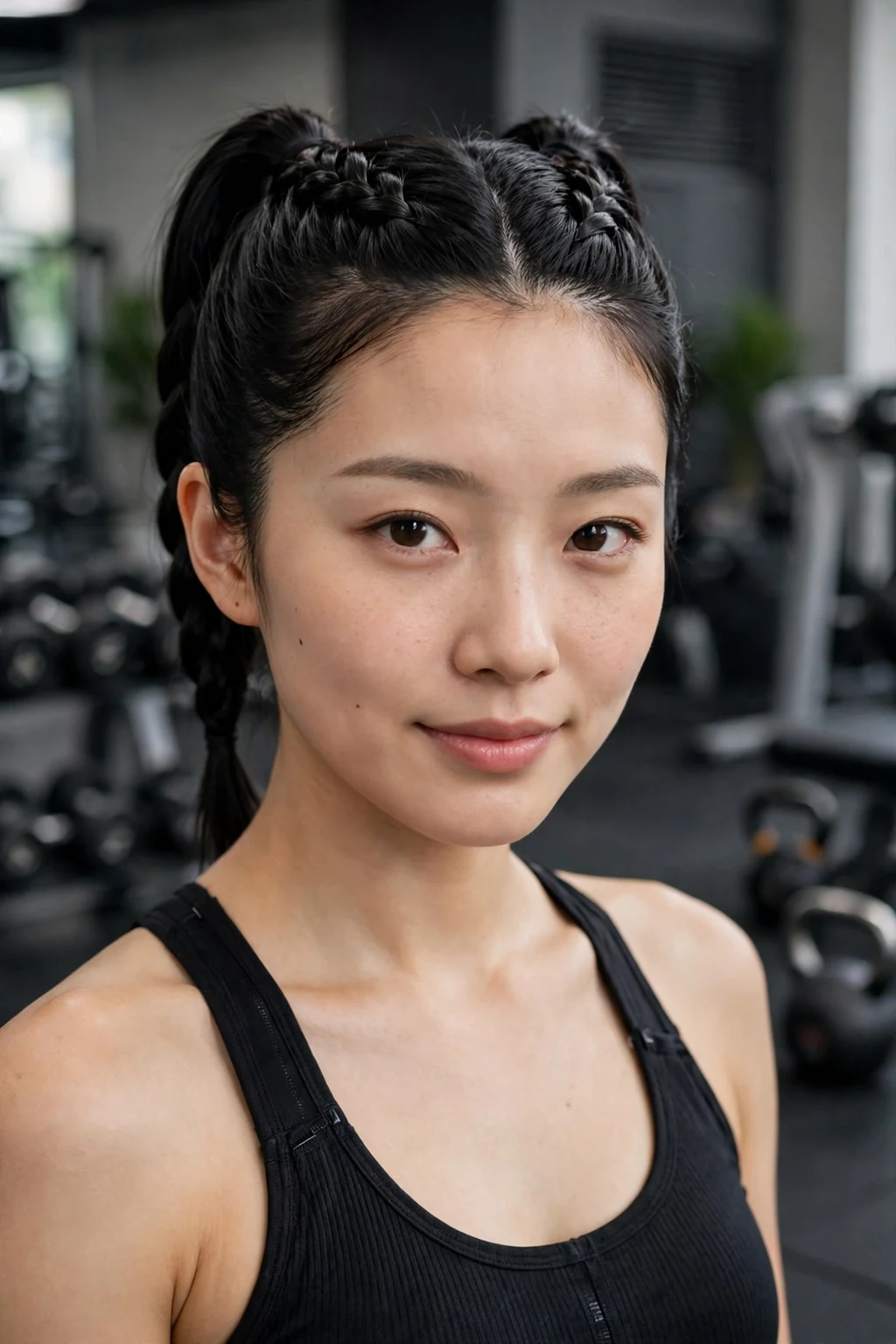
6. Inverted Double Dutch Updo
The inverted double Dutch updo flips the script: instead of braiding from front to back, the braids start at the nape and travel upward, finishing in a top knot or bun at the crown. The upside-down braiding creates stunning visual interest at the back of the head — a hidden detail that reveals itself from behind. It is the updo with a secret.
Flip your head upside down and Dutch-braid from the nape upward to the crown on both sides (or one center braid for a bolder look). Gather into a high ponytail and twist into a bun. This technique takes practice — braiding upside down is awkward at first — but the payoff is a genuinely unique silhouette. Works on medium to long hair. Choose it when you want an updo that surprises from every angle. Keep a hand mirror nearby while learning so you can check the back without uncomfortably craning your neck.
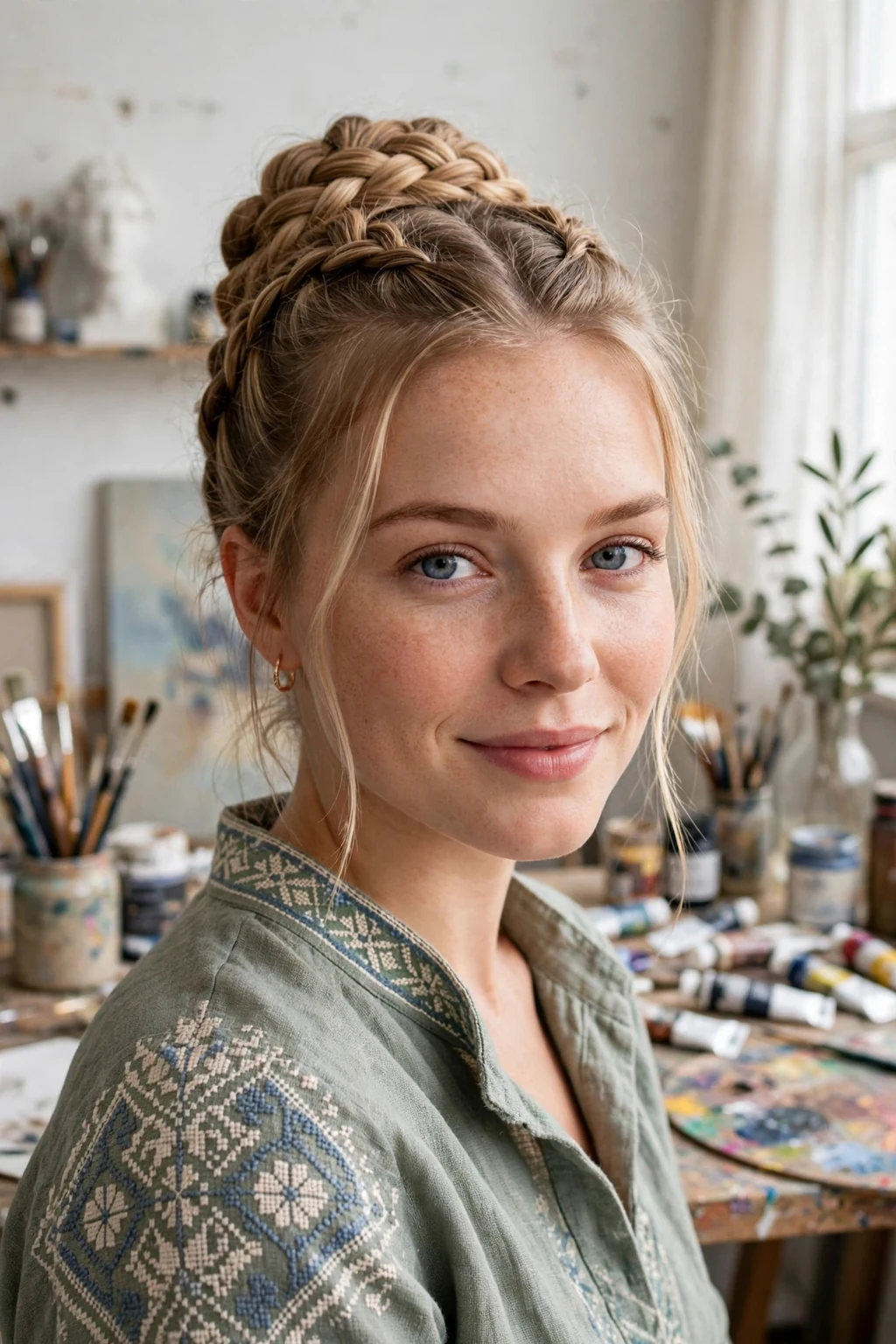
7. Double Dutch Low Bun
The double Dutch low bun is understated elegance: two soft Dutch braids that flow into a relaxed chignon at the nape. Lower and looser than its high-bun cousins, this version reads as effortlessly chic — the kind of style that looks beautiful with both evening gowns and cashmere sweaters. Quiet luxury in updo form. This is also the most comfortable braided updo for long wear, since the low placement avoids the headaches tight high styles can cause.
Braid two loose Dutch braids from the temples to the nape, then coil the tails into a low bun and pin. Keep the braids soft by pancaking generously and leaving the front pieces slightly loose around the face. A light texturizing spray before braiding gives grip without stiffness. This suits all face shapes and medium to long hair. Choose it for dinners, offices, and occasions where you want to look polished without looking overdone. A few pearl pins tucked into the braids elevate this from everyday pretty to wedding-guest ready in seconds.

8. Double Dutch Top Knot
The double Dutch top knot is cool-girl minimalism: tight Dutch braids leading into a sleek, high knot. The braids add edge and detail to the simple topknot silhouette, transforming a basic bun into a deliberate style statement. It is street-style meets ballet — sharp, modern, and completely secure. The geometric contrast between the textured braids and the smooth knot is what makes this style so visually striking.
Dutch-braid from the hairline to the crown on both sides, keeping the braids tight and close to the scalp. Gather into a high ponytail, twist tightly, and coil into a knot, pinning firmly. Smooth flyaways with gel for the sleekest finish. Best on medium to long hair; the tight braiding keeps everything locked down. Choose it for days when you want your hair completely handled — this style does not budge. For maximum sleekness, wrap the finished knot with a silk scarf for ten minutes to set everything glassy smooth.
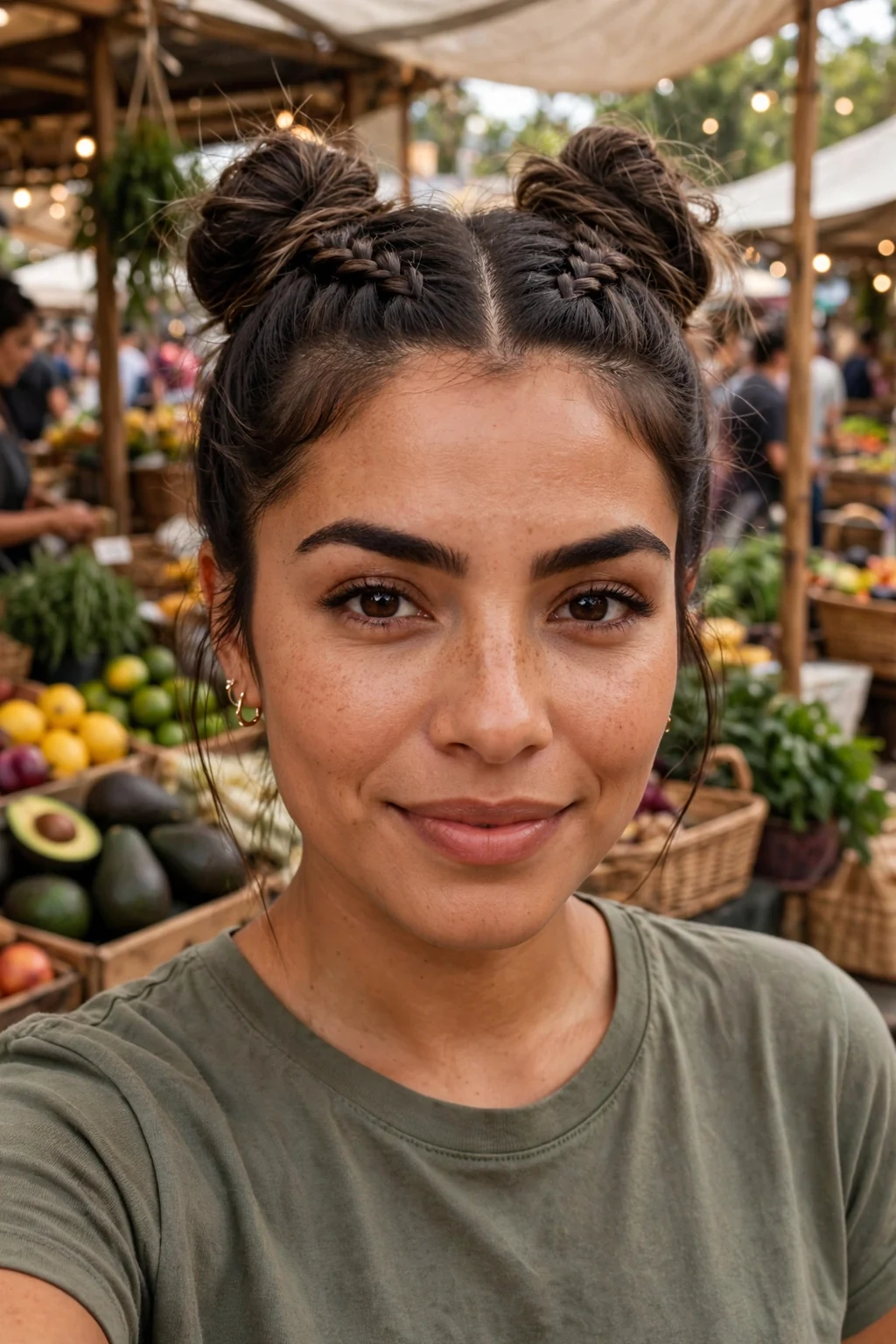
9. Double Dutch Chignon
The double Dutch chignon is timeless sophistication: two refined Dutch braids that merge into a classic rolled chignon at the nape. The chignon's smooth, sculpted finish contrasts beautifully with the braids' texture, creating an updo that belongs at galas, weddings, and black-tie events. It is old-world elegance with a hand-braided twist. Because the silhouette is so classic, it pairs beautifully with both modern minimalist gowns and traditional formalwear.
Braid two neat Dutch braids to the nape, then roll the combined tails upward into a chignon, pinning as you go for a smooth finish. Keep the braids relatively tight and skip the pancaking for the most formal effect. A shine spray on the finished style adds red-carpet polish. Suits medium to long hair. Choose it when the occasion demands true elegance — this is as refined as braided updos get. A decorative hair comb slid above the chignon adds a jewelry-like finishing touch for black-tie occasions.
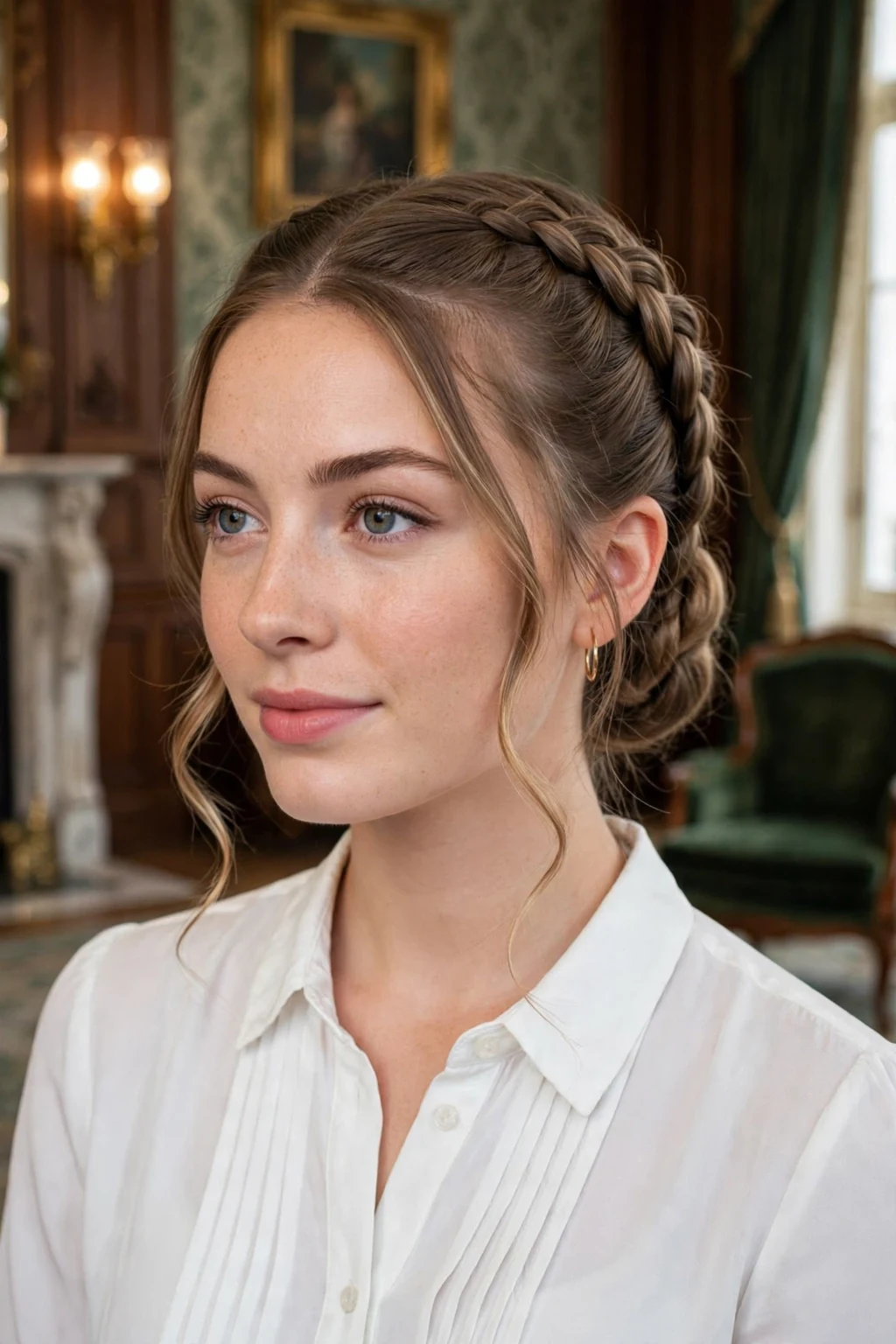
10. Double Dutch French Twist
The double Dutch French twist is vintage glamour reimagined: Dutch braids along the sides that feed into a classic vertical French twist. The braids modernize the retro twist silhouette, adding texture and visual interest to the smooth, sculpted roll. It is Grace Kelly meets festival braid — unexpected and utterly chic. The vertical line of the twist is wonderfully elongating, making it especially flattering in photographs.
Dutch-braid each side from the temple back, then gather all hair to one side at the nape. Twist upward vertically, tucking ends inside, and pin along the seam. The braids should sit just above the twist's edges for maximum effect. This works best on medium to long hair with some texture for grip. Choose it for a truly distinctive formal style that no one else will be wearing. Practice the twist direction a few times before pinning, since the roll must go the same way consistently to sit correctly.
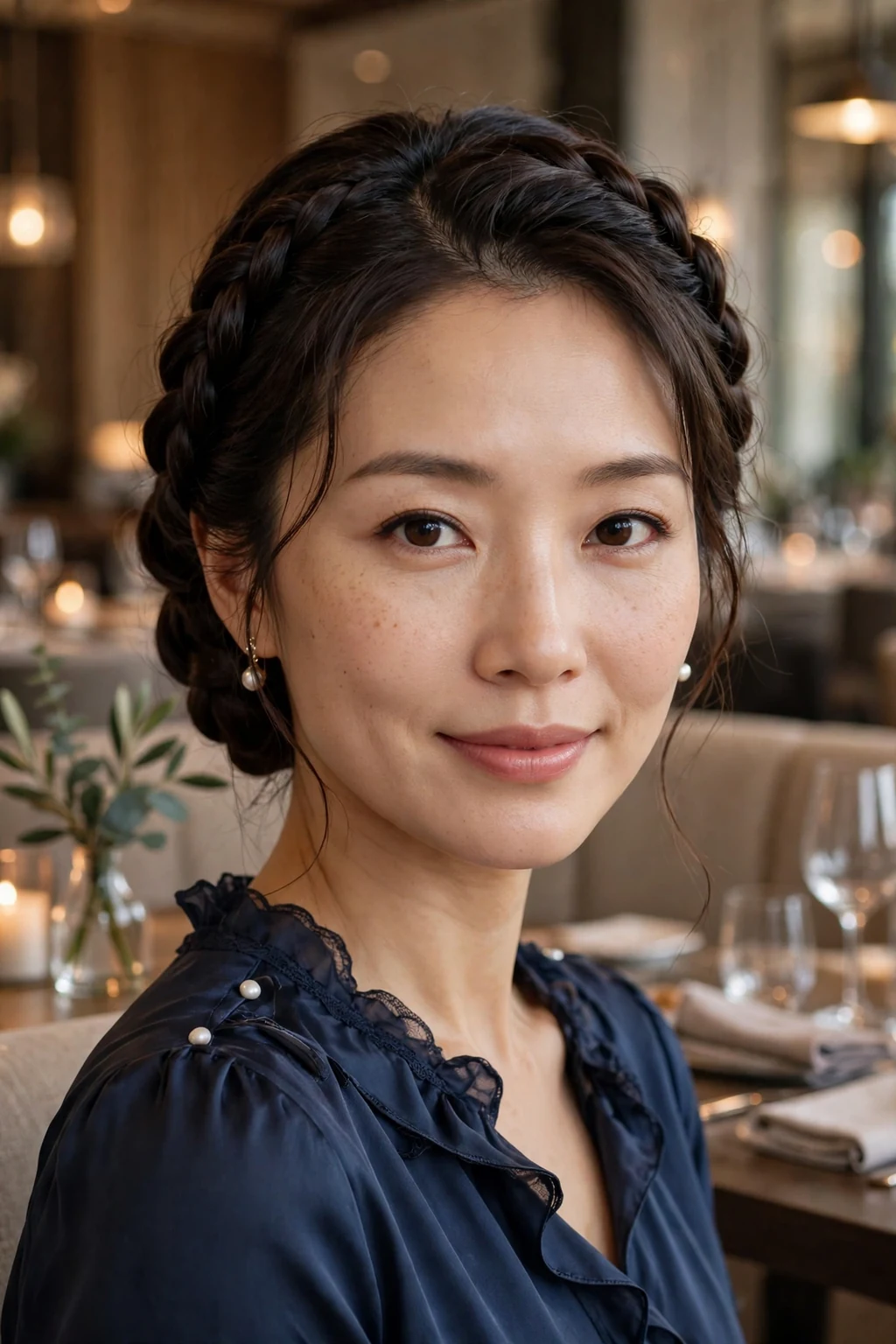
11. Double Dutch Side Updo
The double Dutch side updo is asymmetric romance: both Dutch braids sweep to one side, finishing in a side-swept bun or twist. The diagonal lines create gorgeous movement and a wonderfully flattering asymmetric frame for the face. It is the updo equivalent of a one-shoulder gown — elegant with a twist. Sweeping everything to your 'good side' lets you control exactly how the style photographs.
Part hair deeply to one side and Dutch-braid both sections diagonally toward the opposite nape, then coil into a side bun and pin. The asymmetric design is especially flattering on round faces. Pancake the braids for softness and pull a few tendrils loose on the heavier side. Works on medium to long hair. Choose it when you want an updo with built-in drama and movement. Balance the asymmetry with a statement earring on the exposed side to complete the red-carpet effect.
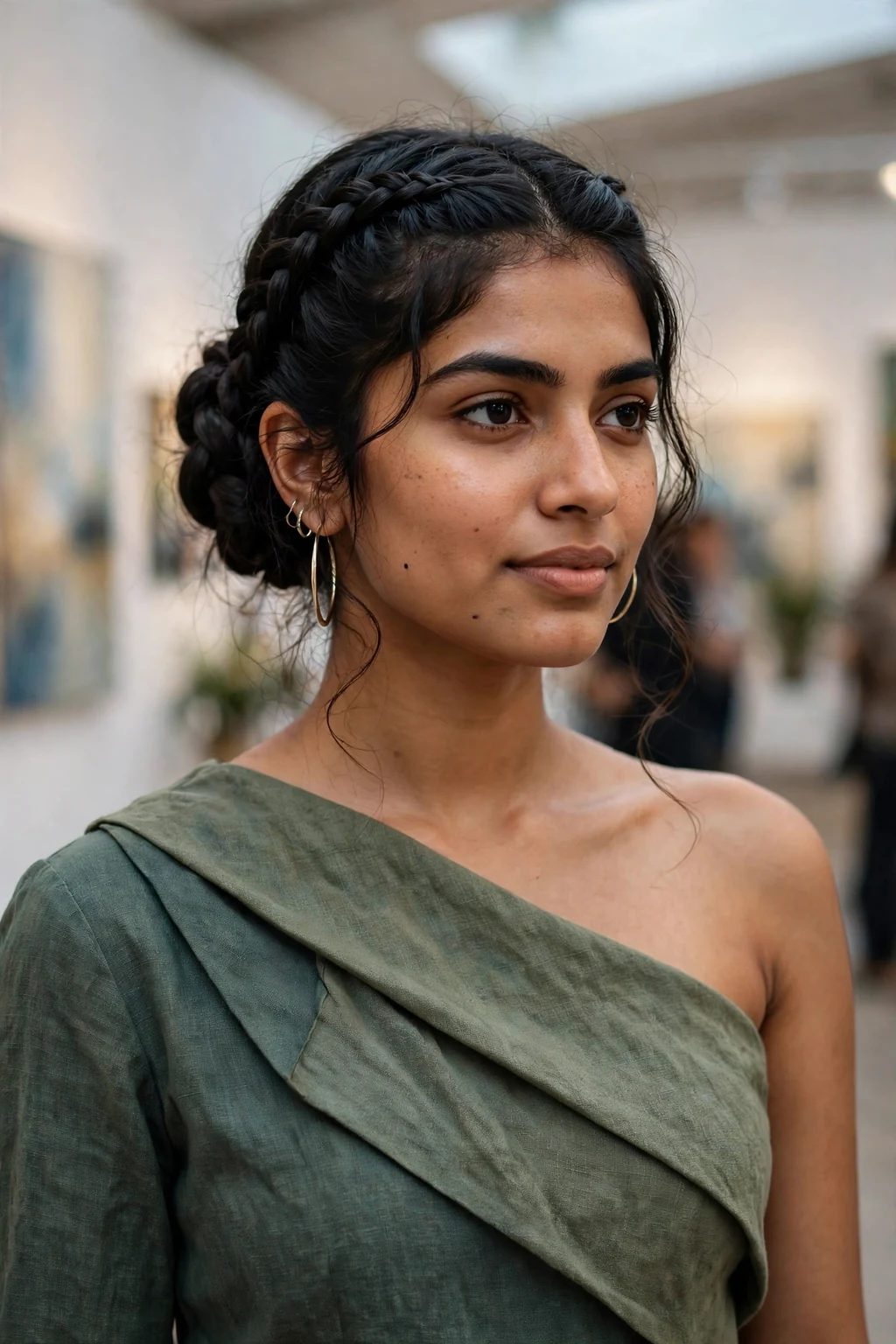
12. Double Dutch Braided Crown
The double Dutch braided crown takes the crown concept further: fuller, more prominent Dutch braids encircling the head like a laurel wreath, with the ends woven into the style for a seamless finish. Bolder than the delicate crown, this version makes a genuine statement — braids as jewelry, worn proudly. Festival royalty, wedding goddess, or just Tuesday — you decide. For maximum comfort at all-day events, keep the braids snug but not tight to avoid tension headaches.
Braid two substantial Dutch braids along the hairline, pancaking generously for fullness, and pin the tails underneath the opposite braid for a continuous circle. Weave in ribbon, wire, or flowers for extra impact. Best on medium to thick long hair that can support the volume. Choose it when you want your hair to be the accessory — no jewelry required. Mist the finished crown with strong-hold hairspray, since the weight of full braids needs extra support through long events.
13. Double Dutch Messy Updo
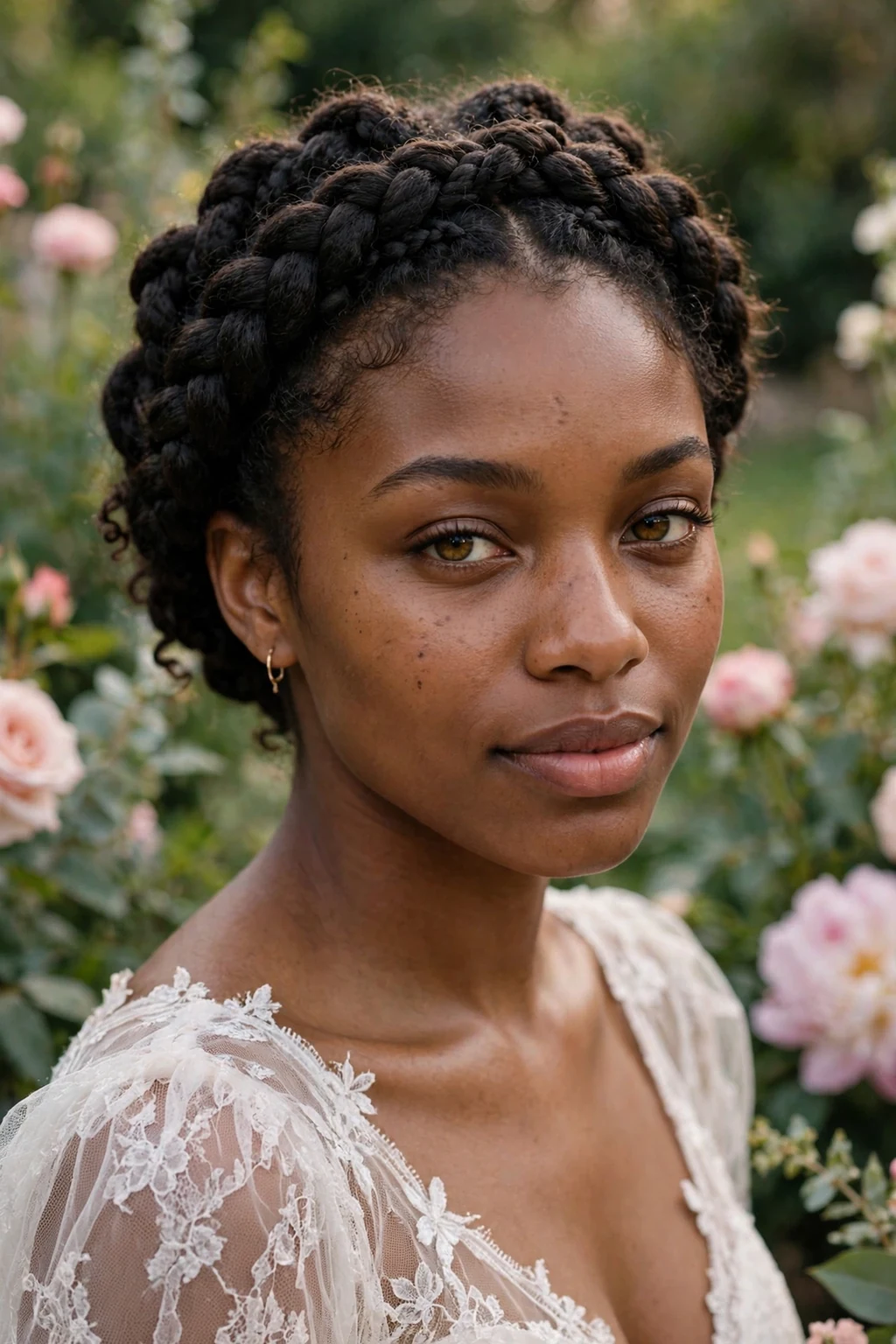
The double Dutch messy updo is perfectly imperfect: loose, pancaked Dutch braids leading into an artfully undone bun with pieces escaping exactly where they should. The mess is deliberate — every pulled-loose strand placed for maximum romantic effect. It is the updo that looks like you did not try, except you absolutely did. Keep a few extra bobby pins in your bag, since embracing the undone aesthetic means occasional strategic re-pinning.
Braid loosely, pancake aggressively, and pin the bun with intentional imperfection — then pull pieces loose around the face and nape. Texturizing spray is essential for the piece-y finish. This style actually improves as the day goes on and more pieces escape. Works on all textures and lengths from medium up. Choose it when polished feels too stiff — this is romance you can live in. The beauty of deliberate mess is that touch-ups are unnecessary; simply tuck any truly fallen pieces back with a pin.

14. Double Dutch Ballerina Bun
The double Dutch ballerina bun is dance-class perfection: sleek Dutch braids flowing into a smooth, high, perfectly round bun. The braids add pretty detail to the classic dancer's bun while keeping every hair disciplined and secure. It is grace under pressure — pirouette-proof and performance-ready. The discipline of this style makes it a favorite for auditions, where neatness and poise are being judged.
Keep the braids tight and smooth with gel, braiding all the way to the crown before forming the bun. Wrap the pony around its base for a perfectly round shape and pin meticulously. A hairnet over the bun adds traditional ballerina polish. Best on medium to long hair. Choose it for dance, gymnastics, or any occasion demanding absolute neatness with beautiful detail. Apply edge control along the hairline for the ultra-clean finish that classical dance demands. The style's symmetry also makes it ideal for stage performances viewed from a distance.
15. Double Dutch Twisted Updo
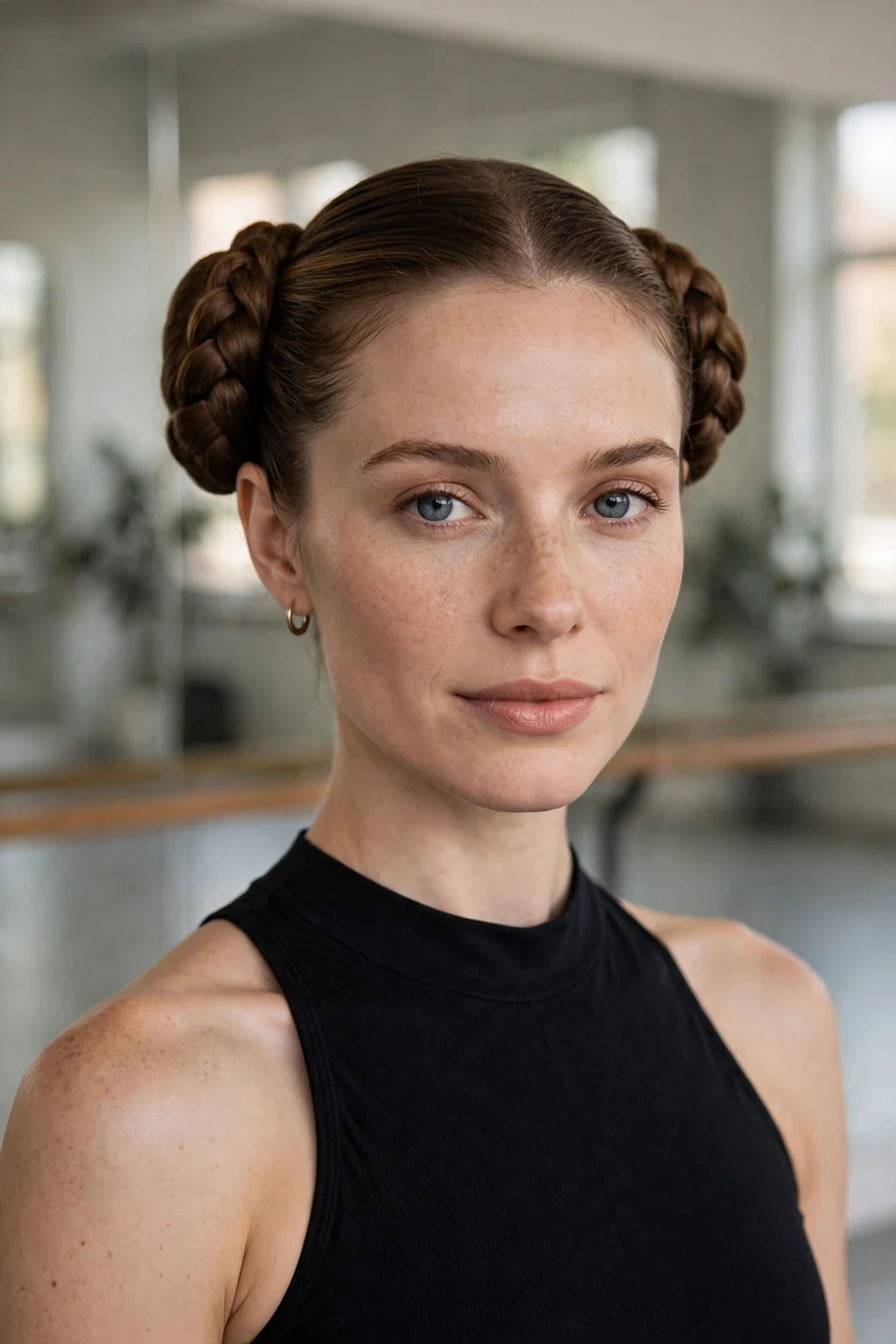
The double Dutch twisted updo swaps braiding complexity for twist simplicity: two rope-twisted sections instead of full Dutch braids, coiled into an elegant updo. The twists are faster to create than braids but give a similarly intricate, textured finish — perfect for braiding beginners or rushed mornings. Proof that simple techniques can look spectacular. Once comfortable with twists, try combining one twist with one braid for an asymmetric mixed-texture finish.
Split each side into two strands and twist them around each other, adding hair as you go for a French-twist effect. Coil both twists into a bun or chignon and pin. The twists take half the time of Dutch braids with eighty percent of the visual impact. Works on medium to long hair. Choose it when you love the braided-updo look but are still building your braiding skills. The twists also work beautifully on second-day hair, when natural oils give extra grip to the rope sections.
16. Double Dutch Sock Bun
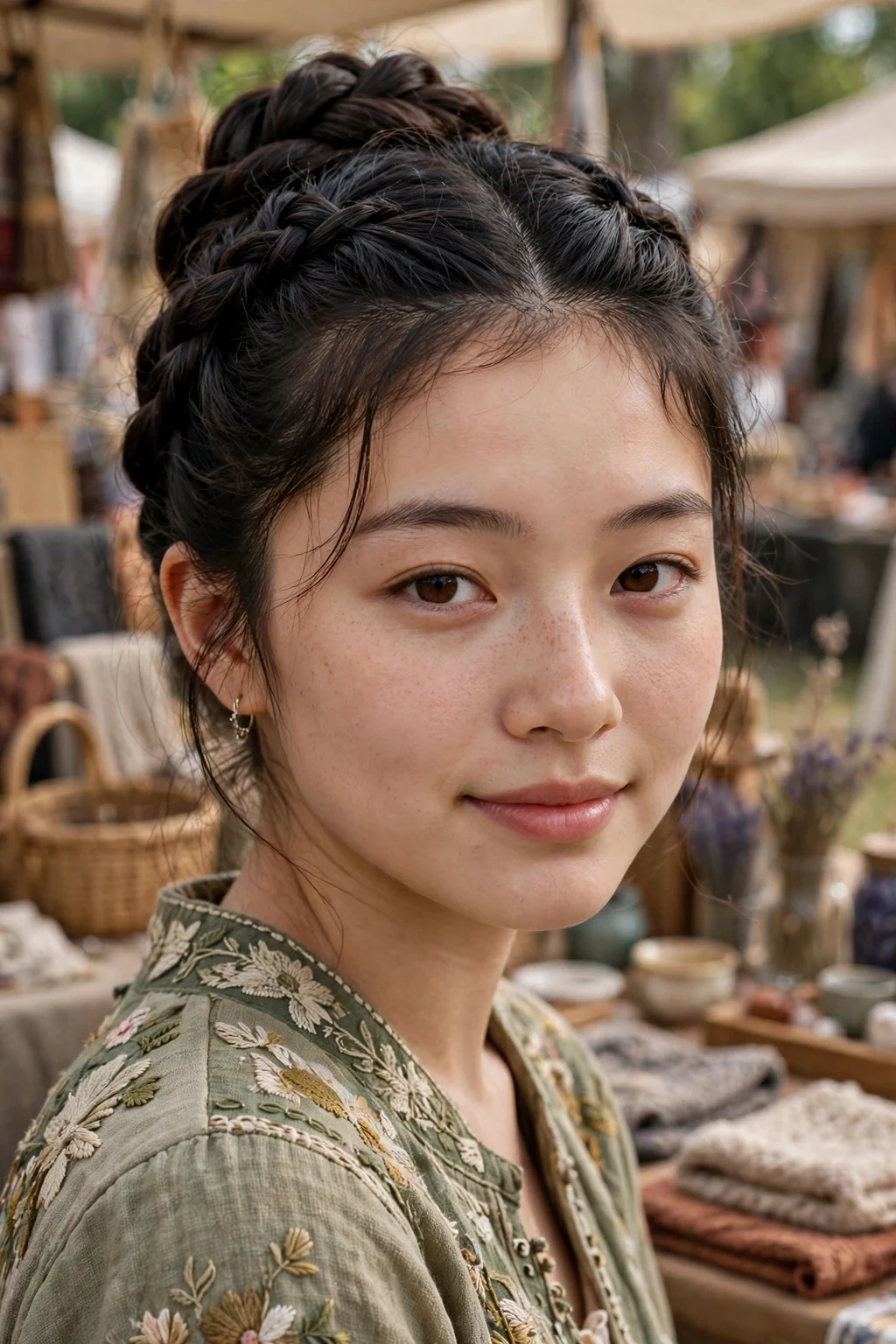
The double Dutch sock bun is volume magic: Dutch braids leading into a perfectly full, round bun built over a sock donut. The braids provide the intricate detail while the donut guarantees a flawless, voluminous bun shape that pinning alone cannot achieve. It is the cheat code for a perfect bun, every single time. The sock bun method also protects the ends from damage, since they stay tucked inside the donut all day.
Braid two Dutch braids to the crown, gather into a ponytail, then thread the pony through a sock donut and roll down, spreading hair evenly. Pin the braid tails around the bun base to hide the mechanics. The donut comes in colors to match your hair. Best on medium to long hair. Choose it when you want a red-carpet bun without red-carpet skills — the donut does the hard part. Choose a donut slightly smaller than you think you need, since hair expands around it more than expected.
17. Double Dutch Gibson Tuck
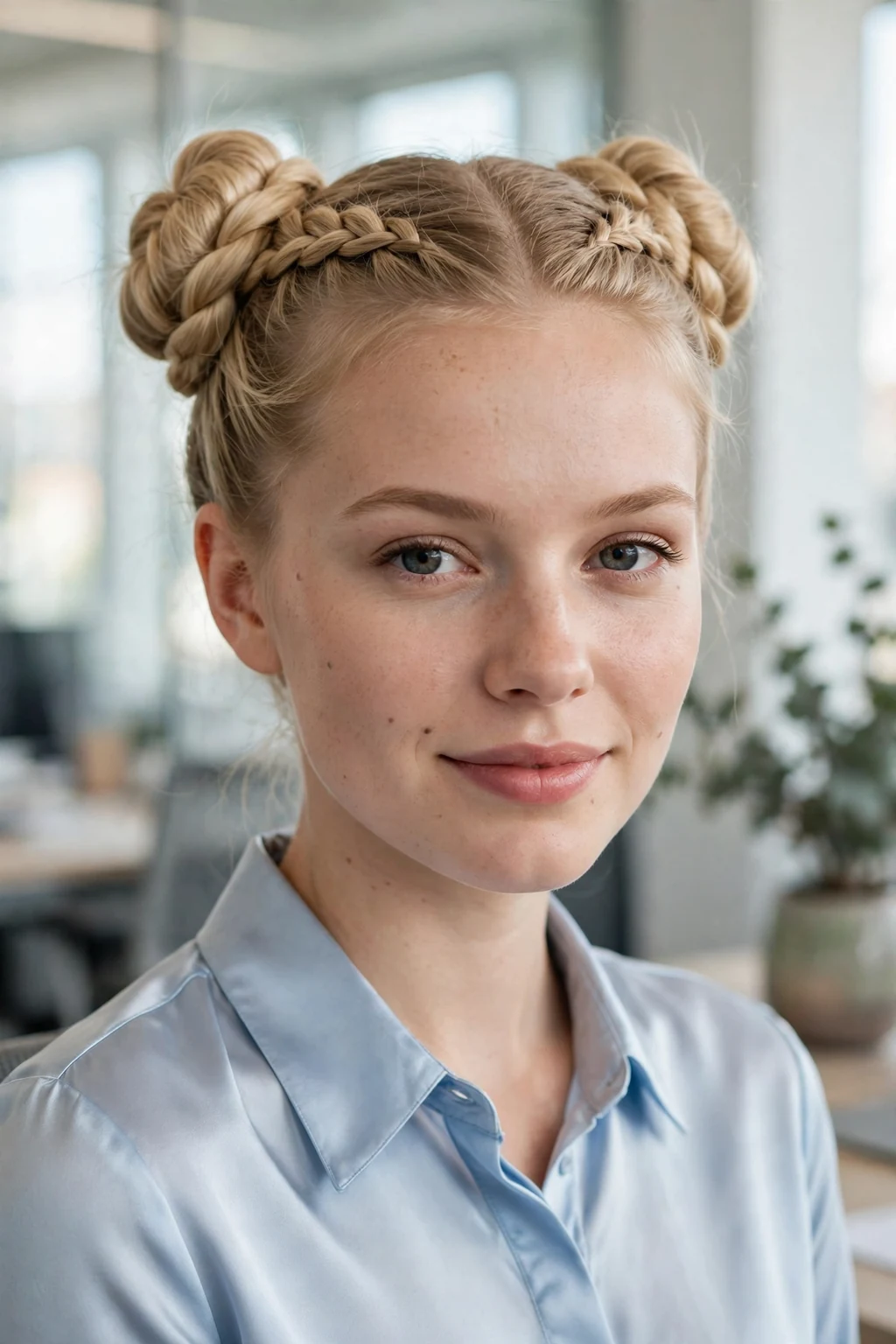
The double Dutch Gibson tuck is vintage romance: Dutch braids that finish in the classic Gibson tuck — hair rolled and tucked into itself at the nape. The Edwardian-inspired silhouette gets a modern braided update, creating an updo that looks straight out of a period drama. Timeless, feminine, and quietly dramatic. A light veil or birdcage veil pinned above the tuck creates a breathtaking vintage bridal look.
Dutch-braid both sides to the nape, then instead of coiling, roll the combined hair upward and tuck it into the braid base, pinning along the roll. The tuck should look soft and pillow-like, not tight. Pancake the braids for a romantic finish. Works on medium to long hair. Choose it for vintage-themed events or when you want an updo with genuine historical charm. Vintage waves at the front can be set with pin curls overnight for an authentically soft Edwardian finish.

18. Double Dutch Waterfall Updo
The double Dutch waterfall updo is the most romantic on this list: Dutch braids that incorporate a waterfall technique — dropping strands as you braid — before sweeping into a soft updo. The dropped strands create a cascading effect around the braids, like water flowing through the style. It is pure fairy tale. The dropped strands can be lightly curled after braiding for an even more ethereal cascading effect.
Braid Dutch-style but drop the bottom strand each stitch, picking up a new section instead, working from temple to nape on both sides. Gather the remaining hair into a loose low bun, letting the waterfall strands frame it. This advanced technique takes practice — watch a video tutorial first. Best on long hair. Choose it when you want the most breathtaking braided style achievable at home. Work slowly on the waterfall sections, since dropped strands tangle easily if you rush the technique.
19. Double Dutch Knotted Updo
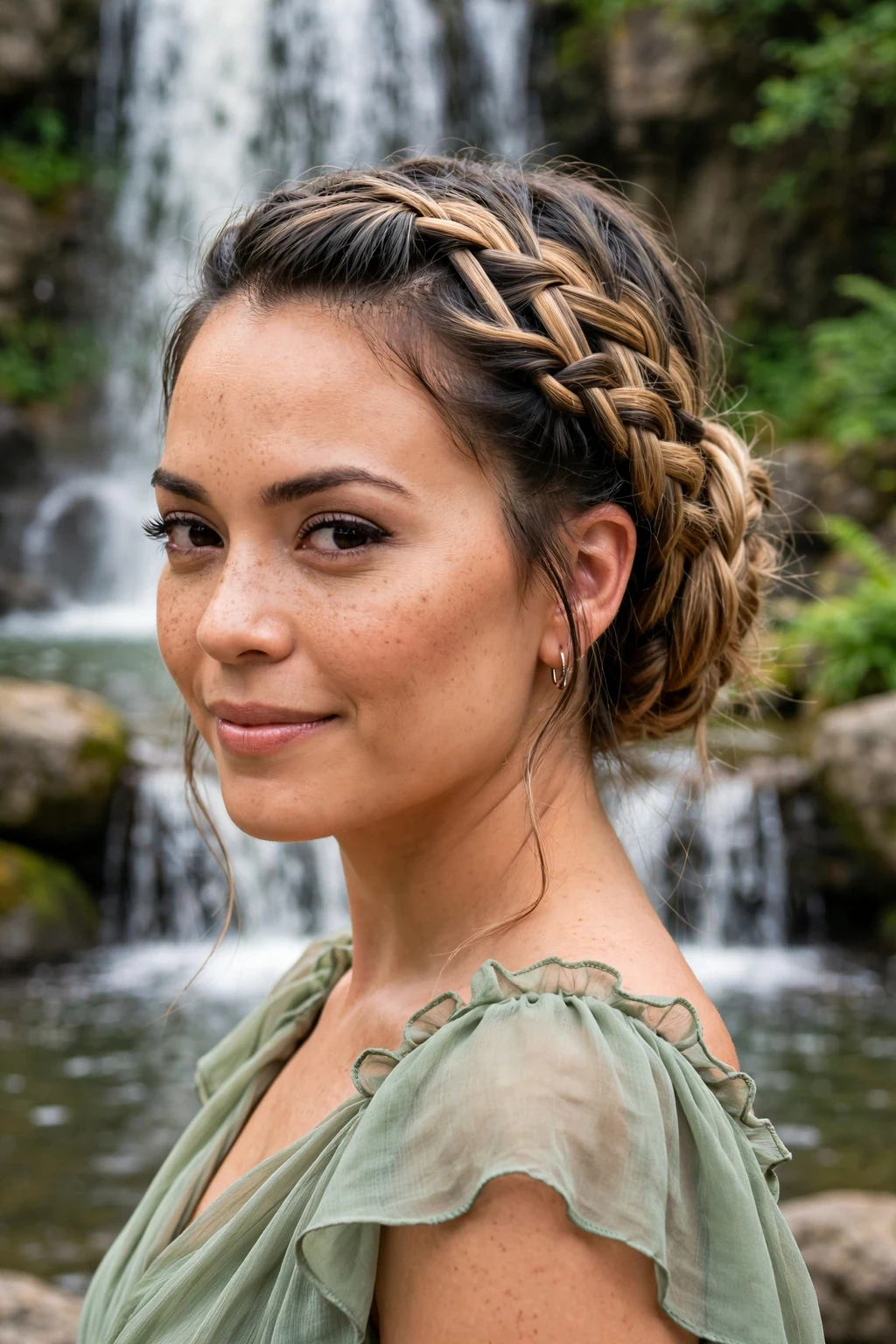
The double Dutch knotted updo is modern minimalism: Dutch braids that end in a series of elegant knots rather than a traditional bun. The knots create a sculptural, contemporary silhouette with beautiful texture and dimension. It is architectural hair — clean, striking, and completely current. This knotted finish also works beautifully as a half-up style if you want the length flowing free below.
Braid to the nape, then divide the tails into sections and tie each in a loose overhand knot, stacking and pinning them into a cluster. The knots should be soft, not tight, for the best texture. A texturizing spray helps the knots hold their shape. Works on medium to long hair. Choose it when your style is modern and you want an updo that looks like wearable art. Vary the knot sizes slightly for an organic, sculptural look rather than uniform repetition.
20. Double Dutch Romantic Updo
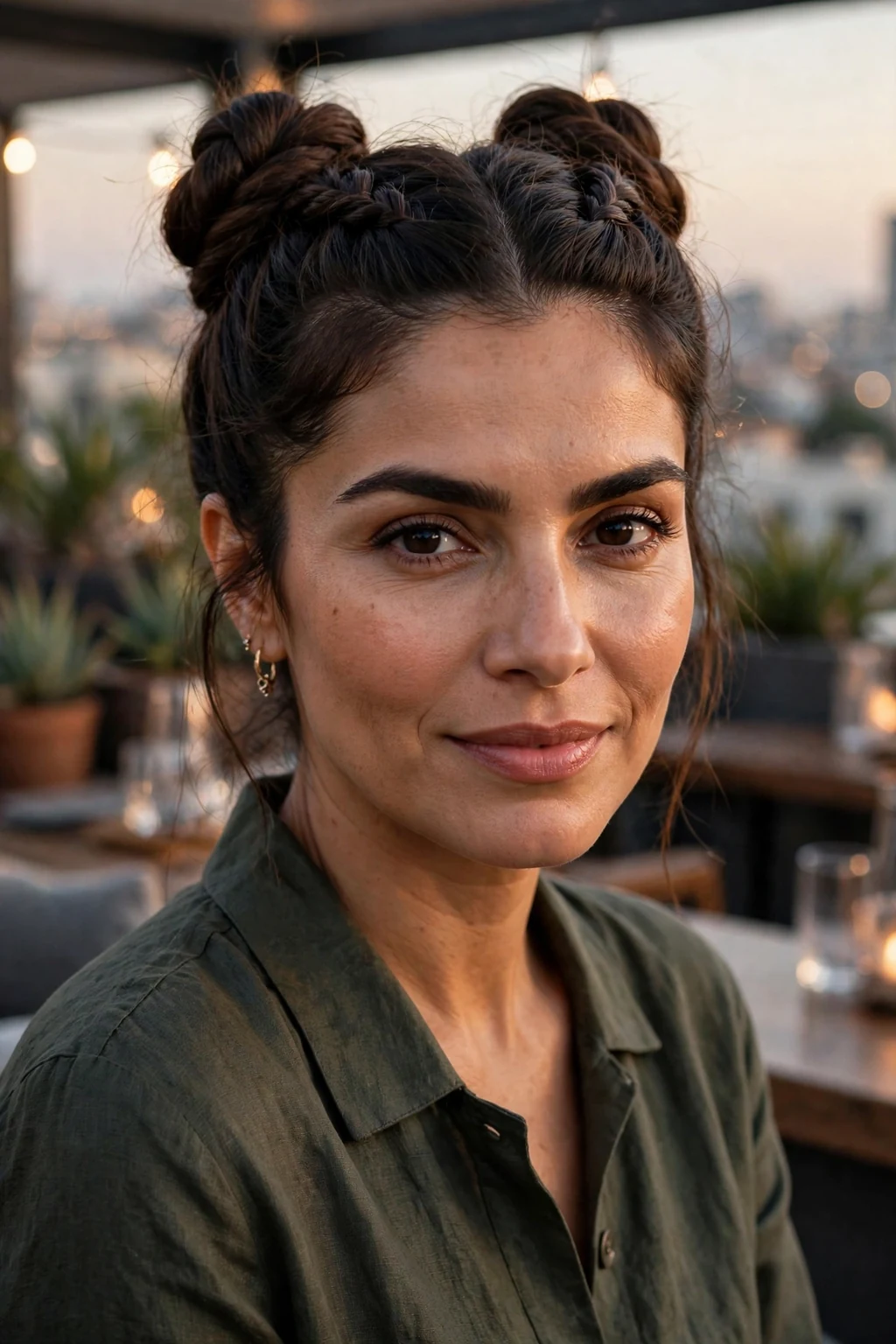
The double Dutch romantic updo is softness itself: loosely braided Dutch braids, generous pancaking, face-framing tendrils, and a dreamy low bun. Every element is designed for romance — this is the updo of first dances, golden-hour photos, and love stories. Ethereal without being fragile, pretty without being precious. Schedule a trial run before the big day so you can adjust the looseness to your exact preference.
Braid loosely from the start, pancake each stitch as you go, and keep the bun soft and low with tendrils pulled free around the face. A curling wand on the tendrils adds extra romance. Finish with a flexible-hold spray that allows movement. Suits all face shapes and medium to long hair. Choose it when the occasion is love itself — weddings, anniversaries, Valentine's days. A light mist of rose-scented hair perfume on the tendrils adds a sensory detail guests will remember.
21. Double Dutch Boho Updo
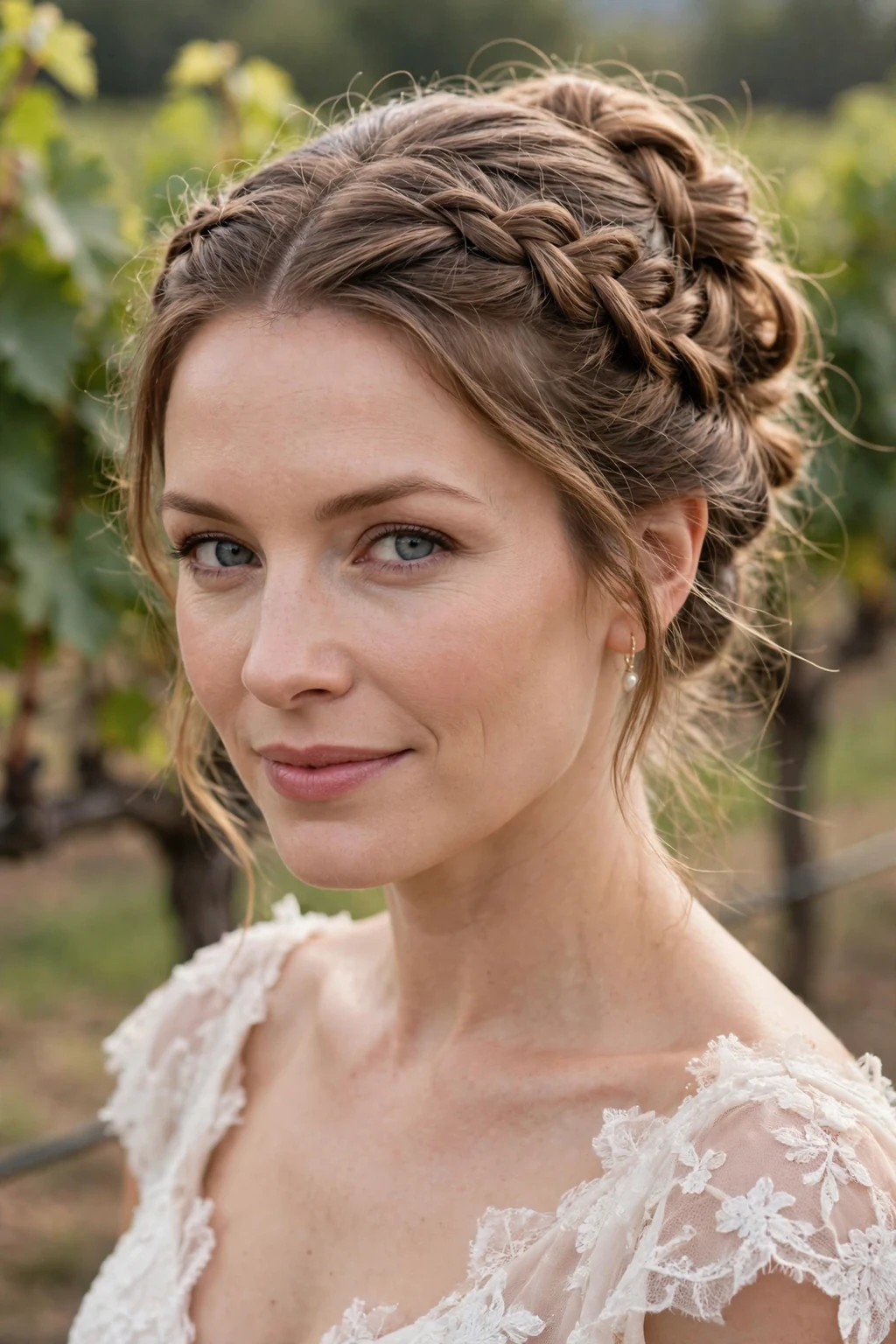
The double Dutch boho updo is festival spirit in hair form: relaxed Dutch braids with a carefree, undone finish, adorned with the bohemian touches you love — texture, volume, and effortless charm. The braids are deliberately imperfect, the updo artfully messy, the whole effect free-spirited and joyful. Coachella-ready, everyday-wearable. The forgiving nature of boho styling means this is the ideal first braided updo to attempt.
Braid with a light hand, leaving the texture piece-y and organic. Finish in a loose messy bun and accessorize — small braids woven in, rings, feathers, or fresh flowers tucked into the braids. The boho aesthetic welcomes imperfection, so this is the most forgiving style on the list. Works on all textures from medium length up. Choose it when your soul is bohemian and your hair should match. Weave a thin ribbon through one braid for an extra bohemian touch that moves beautifully.

22. Double Dutch Elegant Updo
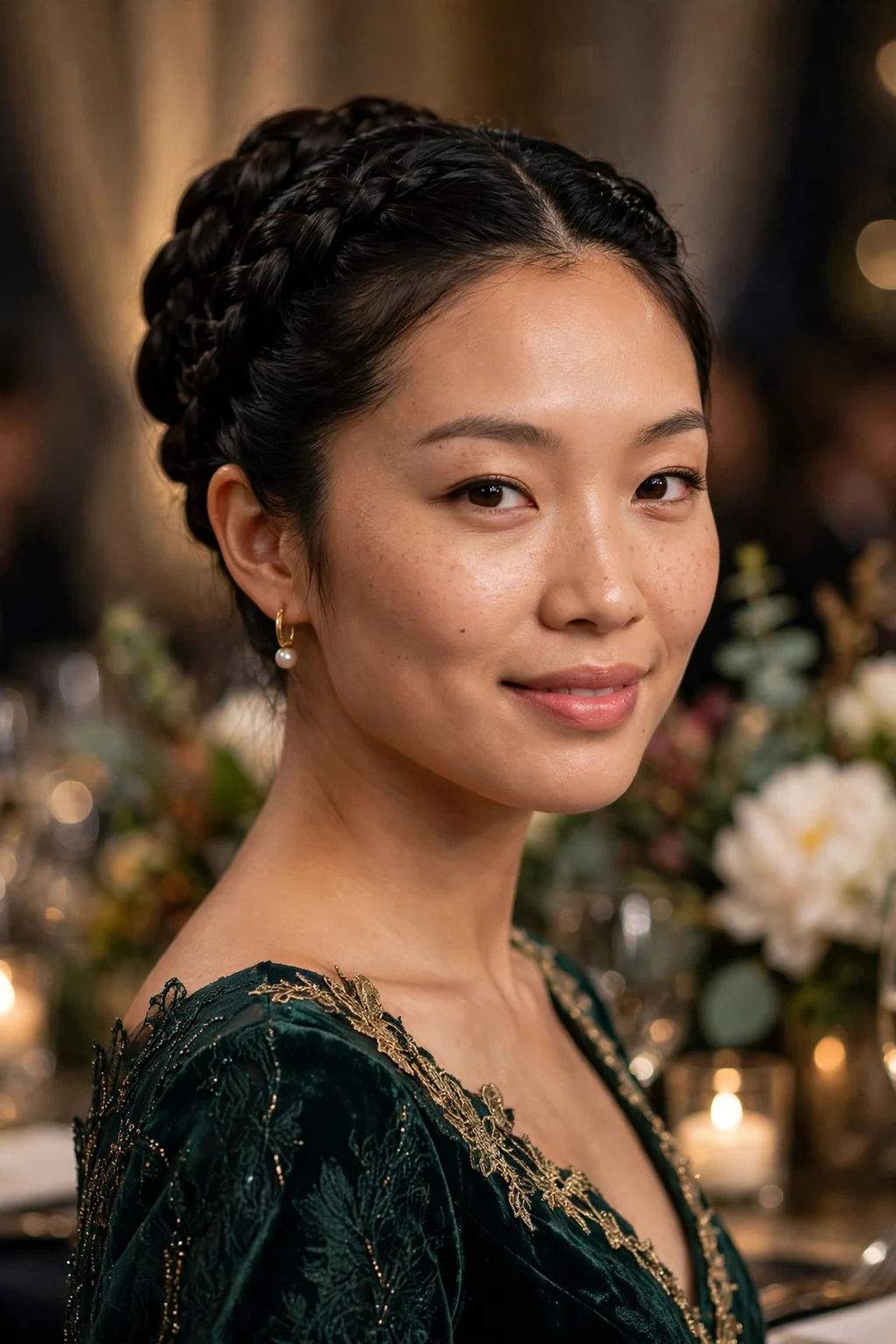
The double Dutch elegant updo is refined to perfection: sleek, precise Dutch braids leading into a polished, sculpted updo with not a hair out of place. This is the boardroom-to-ballroom version — every stitch neat, every pin hidden, the finish immaculate. Understated luxury that speaks volumes. Arrive early for formal events, since the precision this style demands should never be rushed.
Use smoothing products and keep the braids tight and even, pancaking minimally for a clean finish. The updo should be smooth and architectural — a sleek chignon or twisted bun. Take your time; precision is the entire point. Best on medium to long hair with some natural smoothness. Choose it when the dress code is formal and your hair needs to match the occasion's gravity. Finish with a shine serum smoothed over the braids' surface to catch the light with understated luxury. The investment of time pays off in compliments, since immaculate braided updos always draw admiration.
23. Double Dutch Vintage Updo
The double Dutch vintage updo channels old-Hollywood glamour: Dutch braids styled with retro waves and pin curls into a sculpted, vintage-inspired updo. Think victory rolls meet braids — the textures combine into something uniquely nostalgic yet fresh. It is time travel you can wear. A vintage brooch pinned at the twist's base anchors the retro theme with authentic period charm.
Set the front sections in pin curls or use a curling iron for vintage waves before braiding the back sections Dutch-style. Combine into a sculpted updo with the waves framing the face. Strong-hold products are essential for the vintage finish. Best on medium to long hair. Choose it for themed parties, retro weddings, or whenever you want to channel the golden age of glamour. Red lipstick and winged eyeliner complete the vintage fantasy, since the hair deserves a matching era-perfect face. Study reference photos of the era you are channeling so the details feel authentic rather than costumey.
24. Double Dutch Modern Updo
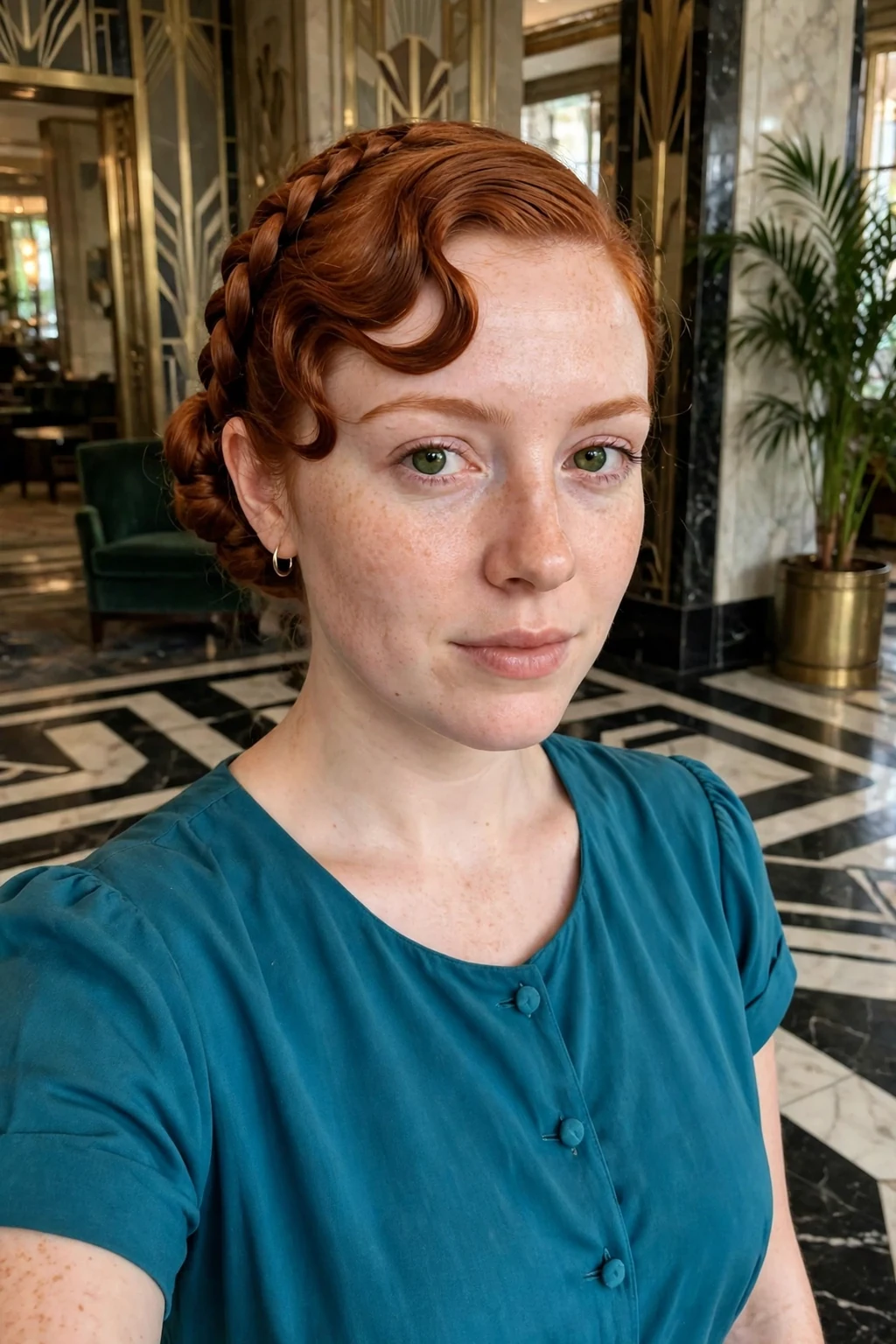
The double Dutch modern updo is sleek and architectural: sharp Dutch braids with clean parts leading into a geometric, contemporary updo. The aesthetic is fashion-editorial — precise lines, bold shapes, zero fuss. This is the updo for women whose style is firmly in the now. The clean geometry photographs exceptionally well, making it a favorite for editorial and fashion shoots.
Part with precision using a rattail comb, keep braids tight and uniform, and finish with a sculptural bun or knot. A strong-hold gel gives the glassy finish this style demands. The modern updo is about intention — every element deliberate. Works on medium to long hair. Choose it when your personal style is minimalist and you want hair that looks designed, not decorated. Photograph the finished style from multiple angles to appreciate the architectural precision you have created. Keep the overall silhouette clean and let the precision speak, since restraint is the soul of modern styling.
25. Ultimate Double Dutch Updo
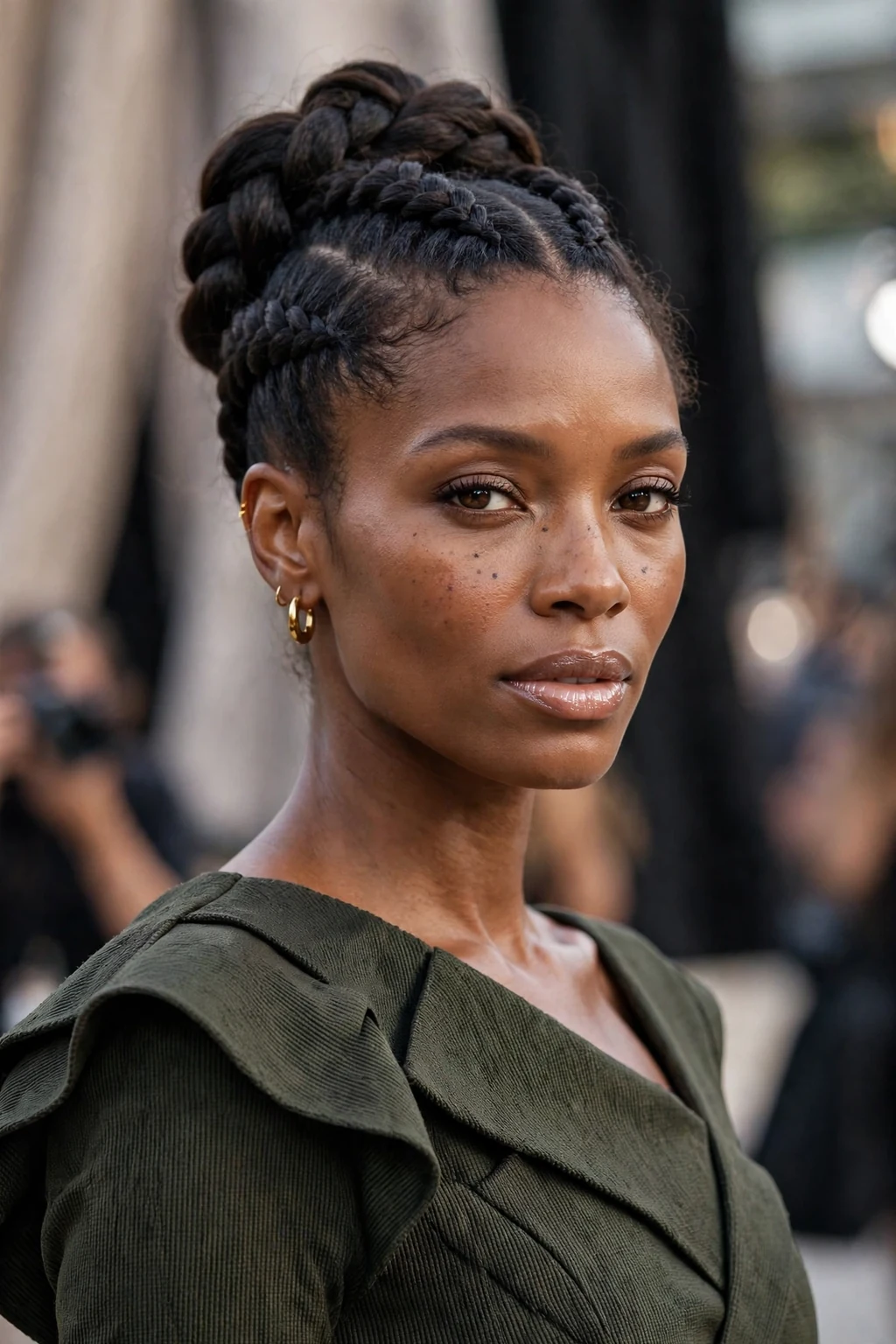
The ultimate double Dutch updo combines the best of everything: the most flattering braid placement, the most secure pinning, the most beautiful finish — the definitive version you will return to again and again. This is the one to master first, because every other style on this list builds on its foundation. The classic, perfected.
Master the center part, the under-cross technique, even tension, and the X-pin method, and you can create any braided updo imaginable. Practice on slightly dirty hair, keep a spray bottle handy for flyaways, and always pancake before pinning — never after. Once this becomes muscle memory, the other twenty-four styles are just variations. Choose it as your starting point: the ultimate foundation for a lifetime of beautiful braided updos. Film yourself braiding once you are comfortable, since teaching the technique cements it in your own muscle memory. Share your finished ultimate updo online to inspire the next generation of braid enthusiasts.

26. Double Dutch Halo Updo
The double Dutch halo updo wraps two inverted Dutch braids around the crown of the head like a braided crown, creating a regal, symmetrical silhouette that looks far more complicated than it actually is. Because Dutch braids cross under rather than over, the braids sit raised and proud against the head, giving the halo beautiful three-dimensional definition from every angle, while the wrapped ends tuck neatly away so the finish looks seamless and polished. The overall shape is soft and rounded rather than severe, with gently pancaked braid edges adding fullness and a romantic, almost Grecian feel that works beautifully for weddings, festivals, garden parties, and elegant everyday wear alike. The halo also photographs beautifully from the side and back, which matters for wedding albums and event photos, and because the braids distribute weight evenly around the head, the updo stays comfortable for hours without the pulling or headaches that tighter styles can cause.
To create this tutorial-style updo, part the hair down the center and Dutch-braid each side from the hairline, following the curve of the head toward the back, then continue braiding the lengths and wrap each braid across the crown in opposite directions, pinning securely with bobby pins hidden inside the braid. This style suits medium to long hair best and flatters round, oval, and heart-shaped faces, since the halo draws the eye upward and opens up the face; fine hair benefits from texturizing spray and gentle backcombing at the roots for grip, while thick hair holds the shape effortlessly. Use a light-hold hairspray and a few U-pins for all-day security, refresh the edges with a touch of smoothing serum, and expect the style to last from morning to midnight with only minor touch-ups. Try it when you want a secure updo that photographs beautifully and never slips. For extra staying power on fine or slippery hair, braid over a light mousse applied to damp hair and dried in, and carry two spare pins for the wrapped ends, which are the only section likely to loosen.

27. Double Dutch Milkmaid Braid Updo
The double Dutch milkmaid braid updo crosses two chunky inverted Dutch braids over the top of the head and pins them in place, producing a charming, storybook silhouette that feels both vintage and completely current. The raised Dutch texture gives the crossed braids a bold, rope-like presence that flat French braids simply cannot match, while the wrapped-over-crown shape keeps every strand off the neck and face, making it one of the most practical updos in this collection. The finish can be kept neat and sleek for formal occasions or loosened with pulled-out face-framing pieces for a softer, bohemian mood, and it looks especially striking on thick, coily, and textured hair where the braids gain extra volume and presence. The crossed-over-crown shape also keeps hair completely off the neck, making it a favorite for workouts, hot weather, and long festival days when loose styles would quickly fall apart. It is a style that earns compliments everywhere.
Begin with detangled, slightly stretched hair and create a clean center part, then Dutch-braid each side from the nape upward toward the crown, or from the front back, depending on your preferred braid direction, and secure the ends with snag-free elastics. Cross the braids over the top of the head, tuck the ends underneath, and anchor with bobby pins placed in an X formation so the style survives dancing, wind, and long days. This updo suits oval, square, and long face shapes particularly well, since the height on top balances the jawline, and it works on medium to long hair of any texture. Apply edge control or a light gel along the hairline for a polished finish, mist with flexible-hold spray, and re-pin only the crossed section if it loosens. Choose this tutorial when you need a secure, sweat-proof updo with undeniable charm. If your hair is freshly washed and slippery, work a little dry shampoo or texturizing powder through the lengths before braiding, and sleep in the style loosely covered with a silk scarf if you want second-day wear.

28. Double Dutch Rose Bun Updo
The double Dutch rose bun updo transforms two inverted Dutch braids into a single sculpted bun that blooms like a rose at the nape, combining the security of braiding with the romance of an evening updo. The braids feed into the bun from both sides, so the finished shape has visible woven texture spiraling into the center, like petals curling inward, which makes it look intricate and expensive while remaining surprisingly sturdy. The silhouette is low and graceful rather than high and dramatic, sitting elegantly at the nape and elongating the neck, which makes it a favorite for weddings, date nights, galas, and any occasion where you want your hair to look deliberately, beautifully finished. Because the bun sits low, it also pairs beautifully with veils, hair vines, and statement earrings, none of which compete with the braided rose for attention. The low placement also flatters longer necks and keeps the style comfortable against high-backed chairs during long dinners and ceremonies.
To build it, Dutch-braid both sides from the temples toward the nape, then gather the two braids together and coil them flat against the head, wrapping the coil around itself and pancaking the outer edges so the bun opens like petals. Pin through the center of the coil with U-pins and finish with a light mist of strong-hold hairspray, adding a decorative pin or fresh flower at the side for special occasions. This updo suits long hair best, flatters oval and heart-shaped faces, and works on straight, wavy, and lightly curled textures; fine hair gains fullness from pancaking, while thick hair creates a larger, more dramatic rose. Trim every eight to ten weeks to keep the ends neat inside the coil, and try this tutorial when you want a show-stopping updo that stays perfectly in place all evening. On very thick hair, split the coil into two smaller roses side by side for a lighter feel, and refresh the style the next day by re-pinning the center and misting lightly rather than starting over.

29. Double Dutch Asymmetric Side Bun
The double Dutch asymmetric side bun sweeps both inverted Dutch braids to one side of the head and coils them into a low bun behind one ear, creating a deliberately off-center silhouette that feels modern, editorial, and effortlessly chic. The asymmetry is the whole point: one side of the head shows clean, tight Dutch braiding hugging the scalp, while the other side softens into the bun itself, giving the style movement and visual interest from every angle. The finish can be sleek and sculpted for a night out or gently loosened for a relaxed daytime look, and because the bun sits low and to the side, it pairs beautifully with statement earrings and off-shoulder necklines that would be hidden by a centered updo. The side placement also makes this updo a natural partner for one-shoulder dresses and asymmetrical necklines, since the hair and the outfit echo the same diagonal line, and for anyone who finds centered buns severe, the off-center balance instantly softens the whole look.
Start with a deep side part and Dutch-braid the larger side across the crown toward the opposite ear, then braid the smaller side back and join both braids at the side, coiling them into a bun and pinning with bobby pins angled into the base. This tutorial suits medium to long hair and flatters round and square faces especially well, since the diagonal line slims and lengthens the face, while oval faces can wear it with any amount of volume. Use texturizing spray for grip on freshly washed hair, a smoothing cream to tame flyaways along the braided side, and flexible-hold hairspray to finish. The style holds comfortably all day, grows out gracefully if you loosen it into waves later, and is the perfect choice when you want an updo that looks fashion-forward without trying too hard. If the bun feels heavy on one side, redistribute a few pins into the base and add a small clear elastic under the coil, which takes the weight off the braids and keeps the style balanced all day.

30. Double Dutch Braided Beehive Updo
The double Dutch braided beehive updo pairs the retro drama of a voluminous beehive with the modern security of inverted Dutch braids, piling height on the crown while braided sections anchor the whole shape firmly in place. The beehive itself is soft and rounded rather than stiff, with teased volume at the crown that elongates the face and adds instant glamour, while the Dutch braids running up the sides provide crisp woven detail and stop the volume from collapsing. The result is a bold, confident updo with vintage soul and present-day wearability, ideal for parties, retro-themed events, nights out, and anyone who loves height and is tired of flat, forgettable updos. The beehive's height also has a practical benefit: it keeps the crown from falling flat in humidity, since the teased interior and braided anchors hold the shape far longer than a smooth updo would, even on long, warm evenings.
Build the height first by backcombing the crown section in small layers and smoothing the top layer over it, then Dutch-braid each side from the temples upward and pin the braids into the base of the beehive so they support the volume like scaffolding. Secure with U-pins and a firm-hold hairspray, and keep a small teasing comb in your bag for quick crown touch-ups. This style suits medium to long hair with medium or thick density best, flatters round and square faces by adding vertical length, and works on straight and wavy textures; fine hair should use volumizing mousse and dry shampoo at the roots for extra lift. Schedule trims every six to eight weeks to keep the shape clean, and choose this tutorial when you want maximum impact with a genuinely secure foundation. For fine hair, add a small mesh hair donut inside the beehive for structure, and at the end of the night, brush the teasing out gently with a wide-tooth comb to avoid breakage.

31. Double Dutch Fishtail Braid Updo
The double Dutch fishtail braid updo blends two braiding techniques into one showpiece: inverted Dutch braids along the sides flow into a finely woven fishtail that coils into a low bun, giving the finished updo a delicate, almost woven-fabric texture. The fishtail section is the star, with its tiny interlaced strands catching the light differently from the chunky Dutch sections, so the updo rewards a closer look and photographs with beautiful detail. The overall shape is low, relaxed, and romantic rather than severe, making it perfect for outdoor weddings, summer parties, vacations, and any day when you want your hair to look artfully, intricately done without feeling over-styled. The fishtail section also hides grown-out layers beautifully, since the small crossed strands blur uneven ends, making this a forgiving choice between haircuts. And because the bun sits low, the style stays comfortable under hats and hoods, so it transitions easily from a daytime outing to an evening event.
Begin by Dutch-braiding both sides from the hairline to the nape, then combine the lengths into a single fishtail braid, crossing small sections from each side to the center until you reach the ends, and coil the fishtail into a bun, pinning it flat against the nape. This tutorial suits long hair best, since the fishtail needs length to show its pattern, and flatters oval, round, and heart-shaped faces; fine hair looks especially beautiful here because the fishtail technique creates the illusion of density, while thick hair should be fishtailed loosely to keep the bun manageable. Use a light texturizing spray for grip, pancake the fishtail gently for fullness, and finish with flexible-hold spray. Try it when you want a conversation-starting updo that stays secure through wind, dancing, and long celebrations. If your fishtail starts to slip, secure the coil with an extra elastic before pinning, and refresh second-day hair by re-braiding only the fishtail section while leaving the Dutch sides intact.

32. Double Dutch Braided Headband Updo
The double Dutch braided headband updo runs two inverted Dutch braids along the hairline like a living headband, then gathers the remaining hair into a low chignon at the nape, giving you a complete, polished updo with no accessories required. The braided headband frames the face beautifully, drawing attention to the eyes and cheekbones, while the tucked-away chignon keeps the silhouette neat and professional from behind, so the style works equally well for work, weddings, and weekends. The raised Dutch texture makes the headband braids stand out crisply against the rest of the hair, and the finish can be kept smooth and refined or softened with wispy face-framing strands for a more romantic effect. The headband braids also solve the common problem of front layers falling into the face, since every short piece is woven into the braid and pinned away. That makes it a genuinely practical choice for long workdays, exams, and travel, not just a pretty one.
To create it, part the hair from ear to ear and Dutch-braid the front section along the hairline on each side, crossing the strands under and adding hair as you travel toward the opposite temple, then twist the remaining back hair into a low chignon and pin the braid ends into its base. This tutorial suits medium to long hair and flatters nearly every face shape, particularly round and heart-shaped faces, since the headband opens up the forehead and balances the chin; it works on straight, wavy, and curly textures, with a little smoothing serum keeping the braids sleek. Secure with bobby pins that match your hair color, mist with light-hold spray, and expect all-day hold with no slipping. Choose this updo when you want an elegant, accessory-free style that looks intentional from every angle. For curly hair, braid the headband sections on damp, product-coated hair for a smoother finish, and trim the face-framing pieces every few weeks so they fall exactly where you want them.
33. Double Dutch Braided Faux Hawk Updo
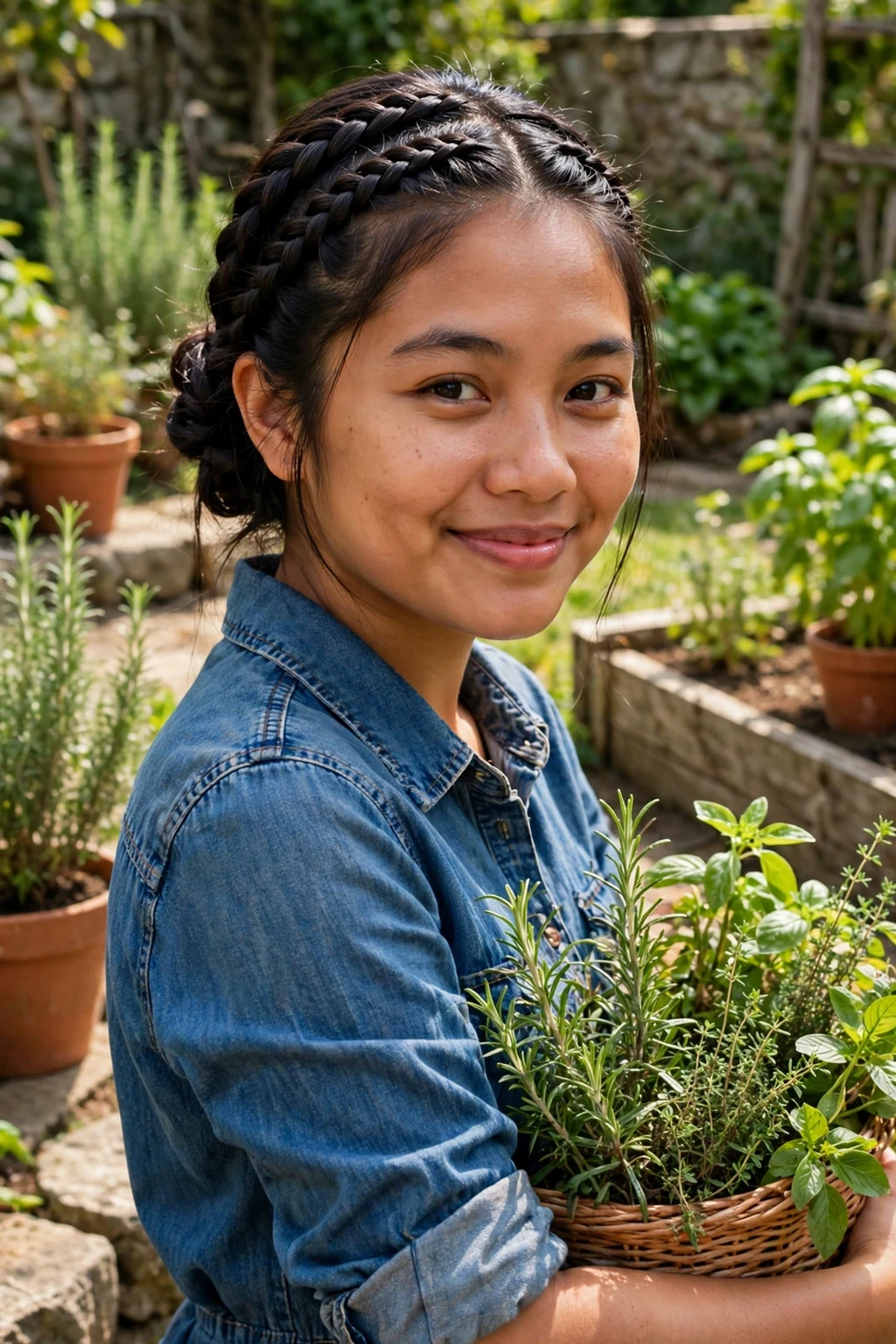
The double Dutch braided faux hawk updo is the boldest tutorial in this collection: tight inverted Dutch braids along both sides create a sleek, shaved-side illusion, while the center section is pancaked and pinned upward into a dramatic mohawk-shaped ridge that runs from forehead to nape. The contrast is striking, with smooth braided sides emphasizing the height and texture of the raised center, giving the updo an edgy, runway-ready attitude that still keeps every strand securely pinned and off the face. It is the perfect choice for concerts, festivals, parties, and photo shoots, or any moment when you want your hair to make the statement before you say a word. The faux hawk also has a practical edge: with the sides braided flat and the center pinned high, nothing falls into your eyes, so it survives dancing, wind, and long nights out. It is also fully reversible, since the same braids can be released into loose waves the next day.
Build it by parting out a wide center section from forehead to nape and clipping it aside, then Dutch-braiding each side tightly upward and pinning the ends at the back. Next, backcomb the center section lightly, roll or twist it into a ridge, and pin it in place section by section, pancaking the top for width and spraying firmly as you go. This style suits medium to long hair with medium to thick density, flatters oval, round, and heart-shaped faces by adding height, and works on straight, wavy, and curly textures; fine hair benefits from texturizing powder at the roots for extra grip. Use strong-hold hairspray and plenty of bobby pins, and try this tutorial when you want a secure updo with genuine edge and attitude. Take the style down gently at night by removing pins in reverse order and finger-combing the center section, which protects the backcombed roots and keeps breakage to a minimum.
34. Double Dutch Wrapped Low Bun
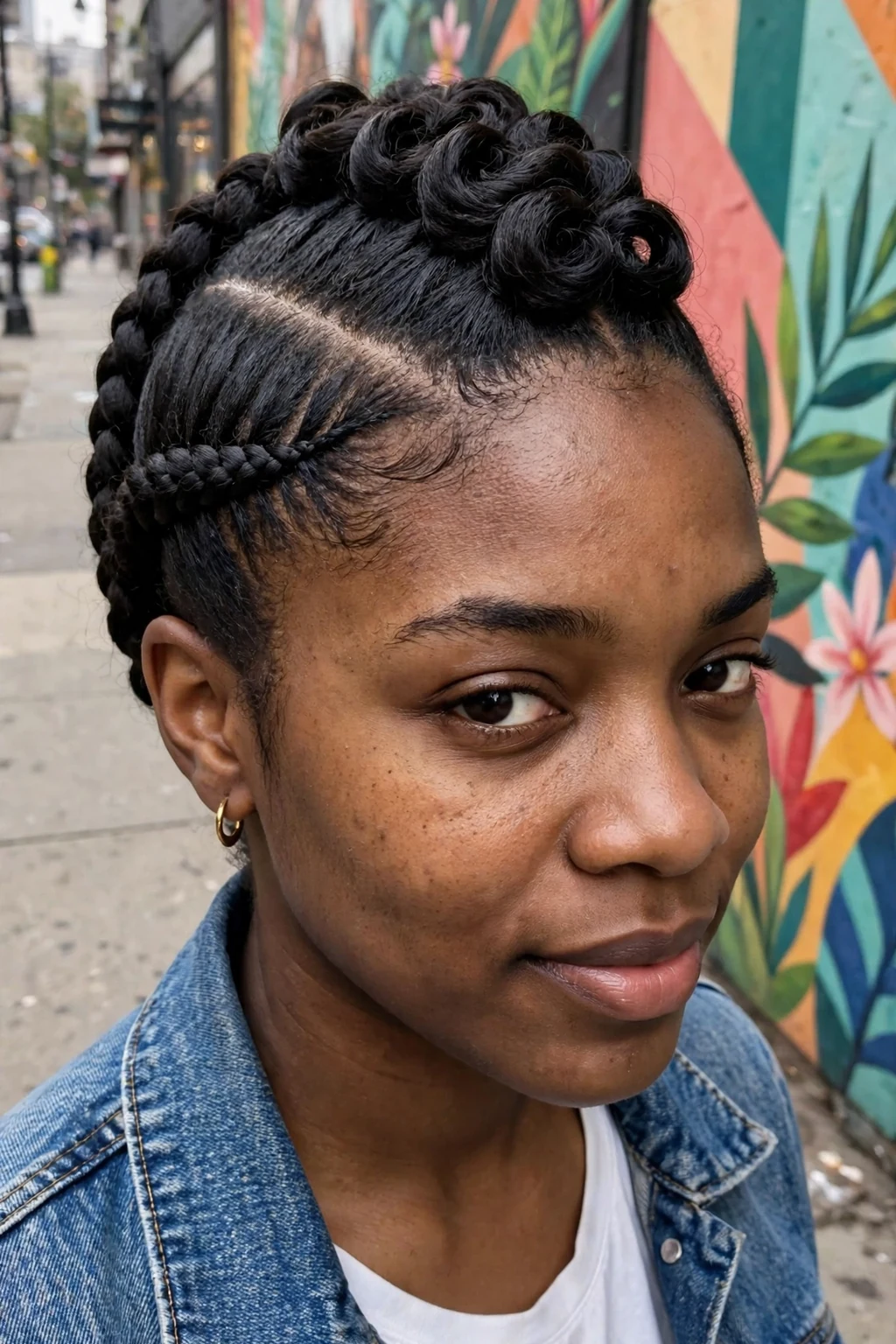
The double Dutch wrapped low bun frames a smooth, classic low bun with two inverted Dutch braids that wrap around it like a braided border, combining minimalist elegance with just enough woven detail to keep the style interesting. The bun itself is sleek and understated, sitting quietly at the nape, while the raised Dutch braids add texture and craftsmanship around its edges, so the finished updo reads as polished and expensive rather than plain. It is a quietly luxurious style that suits offices, interviews, formal dinners, and weddings alike, and because everything is pinned low and close to the head, it is exceptionally comfortable to wear for long days and pairs perfectly with hats, scarves, and high collars. The wrapped design also hides elastics and pins completely, so the updo looks clean from behind in photographs, which is exactly where simpler buns often give themselves away. That polish is why it photographs so well at formal events.
Create it by Dutch-braiding both sides from the temples to the nape, then gathering all the hair into a low bun and wrapping each braid around the base of the bun in opposite directions, pinning the ends underneath so the wrap looks continuous. Smooth the crown with a light serum or pomade for a glassy finish, or keep a soft, touchable texture for daytime wear. This tutorial suits medium to long hair and flatters oval, square, and long faces, since the low placement balances height, and it works beautifully on straight and wavy textures; thick hair creates a fuller wrap, while fine hair should be pancaked gently for the same effect. Trim every eight weeks to keep the bun neat, mist with flexible-hold spray, and choose this updo when you want timeless elegance with a secure, all-day hold. For extra shine on straight hair, finish with a drop of lightweight hair oil smoothed over the crown, and re-wrap any loosened braid section in the evening rather than redoing the whole bun.

35. Double Dutch Braided Infinity Bun
The double Dutch braided infinity bun loops two long inverted Dutch braids into a figure-eight shape at the back of the head, creating a sculptural, almost mathematical updo that looks like a piece of wearable art. The infinity loops give the bun a sense of movement and symmetry that a simple round bun cannot match, with the raised Dutch texture tracing the curves of the eight so the pattern is visible from behind and in profile. The silhouette is neat and contained rather than bulky, sitting flat enough to be comfortable against a chair or car headrest, which makes it a surprisingly practical choice for long events, travel days, and formal occasions where you want something genuinely unusual. The figure-eight shape also distributes the weight of long hair more evenly than a single heavy bun, so the style feels lighter on the head and causes less tension at the hairline.
To build it, Dutch-braid both sides all the way to the ends, then loop the braids into two interlocking circles at the back of the head, crossing one over the other to form the figure eight and pinning each crossing point with U-pins hidden inside the braids. This tutorial needs long hair to form full loops and suits oval, round, and heart-shaped faces, since the wide shape balances the chin and neck; it works on straight, wavy, and thick textures, with texturizing spray giving fine hair the grip needed to hold the loops. Finish with strong-hold hairspray and a final check in a hand mirror from behind, and try this updo when you want a secure, sculptural style that guests will ask about all evening. If one loop feels looser than the other, re-pin its crossing point with a U-pin pushed through both braids, and check the symmetry in two mirrors before you leave the house.

36. Double Dutch Basket Weave Updo
The double Dutch basket weave updo weaves inverted Dutch braids over and under each other across the back of the head into a lattice pattern, then tucks the ends into a low bun, producing one of the most intricate-looking updos in this collection. The basket-weave texture is the star: alternating raised braids create a woven, almost textile-like surface that catches the light and looks astonishingly detailed, especially on thick, coily, and textured hair where each braid holds its shape boldly. Despite its complex appearance, the finished updo is compact, secure, and practical, keeping all the hair contained and off the neck, which makes it ideal for celebrations, cultural events, festivals, and hot-weather days when you need style that truly stays put. The woven panel also acts like a built-in headband, keeping the hairline neat and every short layer contained, which is why the style holds up so well through long, active days.
Create the weave by Dutch-braiding several sections from the crown downward, then passing the braids over and under one another in alternating order and pinning each crossing point before gathering the ends into a low bun at the nape. Work with small, even sections and a light braiding gel for control on textured hair, and use bobby pins in your hair color to keep the focus on the pattern itself. This tutorial suits medium to long hair with medium to thick density and flatters oval, round, and square faces, since the wide woven panel balances the features beautifully. Mist with flexible-hold spray, check the crossings in a mirror, and choose this updo when you want a secure, head-turning style with real artistry in every strand. Protect the style overnight by wrapping it in a silk scarf, which preserves the weave pattern for a second or even third day with only minor re-pinning at the crossings.

37. Double Dutch Braided Pin-Up Updo
The double Dutch braided pin-up updo rolls two inverted Dutch braids into vintage-style victory rolls on top of the head, blending the security of Dutch braiding with the playful glamour of classic pin-up styling. The rolls sit high and proud, giving the updo instant retro charm and a flattering lift that opens up the face, while the visible Dutch braiding at the base of each roll adds modern texture and proves the style is braided, not just rolled. The finish is fun, feminine, and full of personality, perfect for themed parties, retro events, weddings with a vintage twist, and anyone who loves a hairstyle with a wink of old-Hollywood confidence. The victory rolls also add flattering height without a single teased section at the crown, since the rolls themselves create the lift, so the style feels lighter than a traditional beehive. That height also balances fuller faces beautifully, drawing the eye upward.
Build it by Dutch-braiding both sides from the hairline toward the crown, then rolling each braid upward and inward into a victory roll shape, pinning the roll from underneath with U-pins and shaping it with your fingers until it feels balanced and secure. Backcomb the roots lightly for volume inside the rolls, smooth the outer surface with a light pomade, and finish with firm-hold hairspray to keep the rolls standing through hours of dancing. This tutorial suits medium to long hair and flatters oval, round, and heart-shaped faces, since the height on top lengthens the face; it works on straight, wavy, and lightly curled textures, with texturizing spray helping fine hair hold the roll shape. Try this updo when you want a secure, joyful style with unbeatable vintage flair. If a roll starts to sag, slide a small section clip inside its base for hidden support, and at the end of the night, unroll the braids gently and brush through for soft, vintage waves.

How to Master the Double Dutch Braid Updo
The most beautiful double dutch braid updo is neat, secure, and personal — braids that are tight enough to last, an updo that suits your face shape, and a finish that reflects your style will always look amazing. Choose the variation that makes you feel wonderful, and your hairstyle will always turn heads.
Double dutch braid updos are wonderfully versatile: they work for sports, festivals, weddings, and everyday wear, suit all hair textures, and stay put all day. Practice the dutch braiding technique — underhand instead of overhand — for that raised, 3D effect. Choose the double dutch braid updo that makes you feel confident — that is always the most flattering choice.
Conclusion
From classic double dutch to intricate braided buns, these 37 double dutch braid updos prove this style is endlessly versatile. Choose the double dutch braid updo that makes you feel wonderful, practice your dutch braiding, and wear your braids with total confidence.