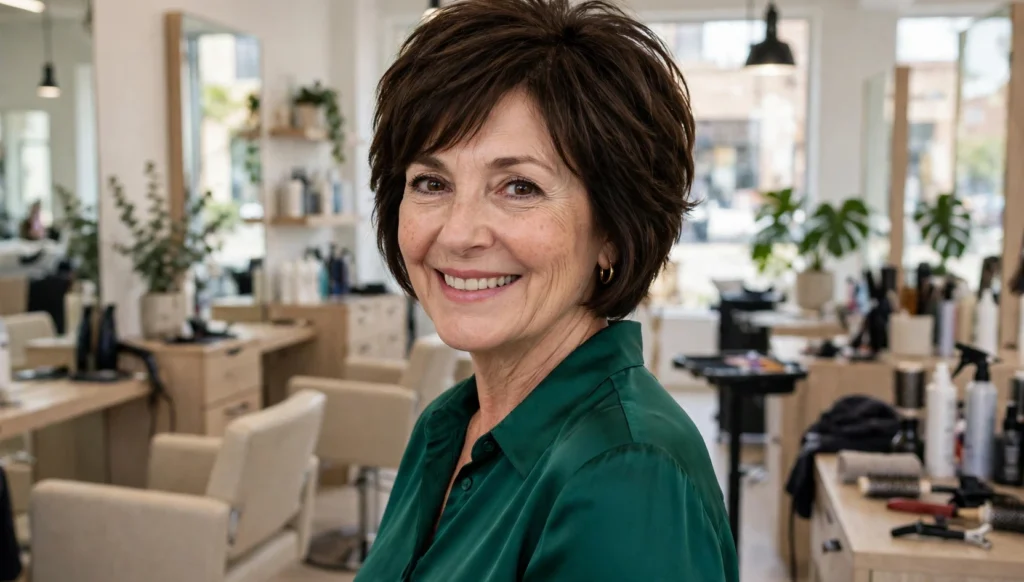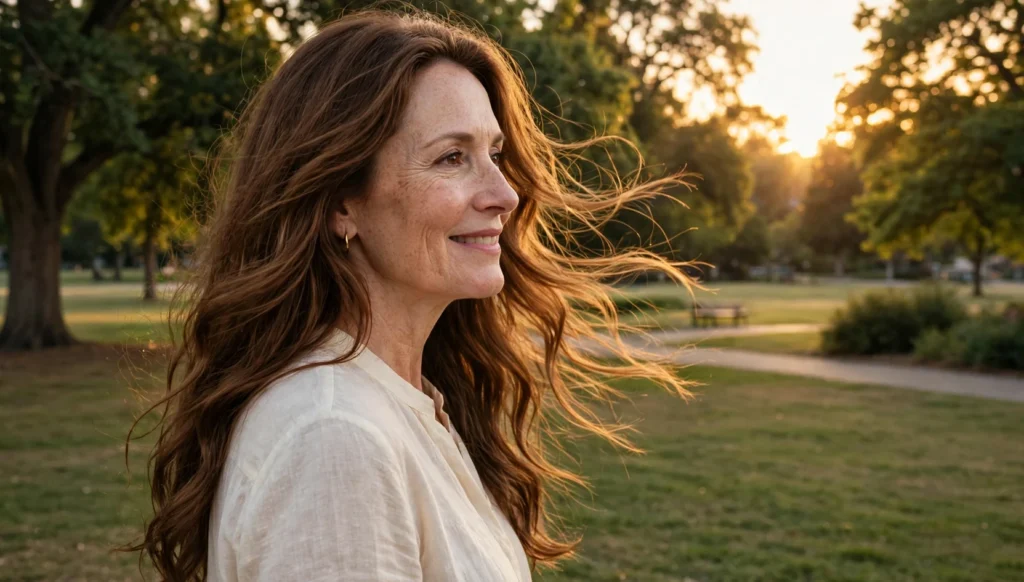

Medium length layered haircuts are the sweet spot — versatile, flattering, and full of movement. These 55 medium length layered haircuts are modern, dimensional, and beautiful, giving you the perfect balance of length and shape.
1. Soft Face-Framing Layers
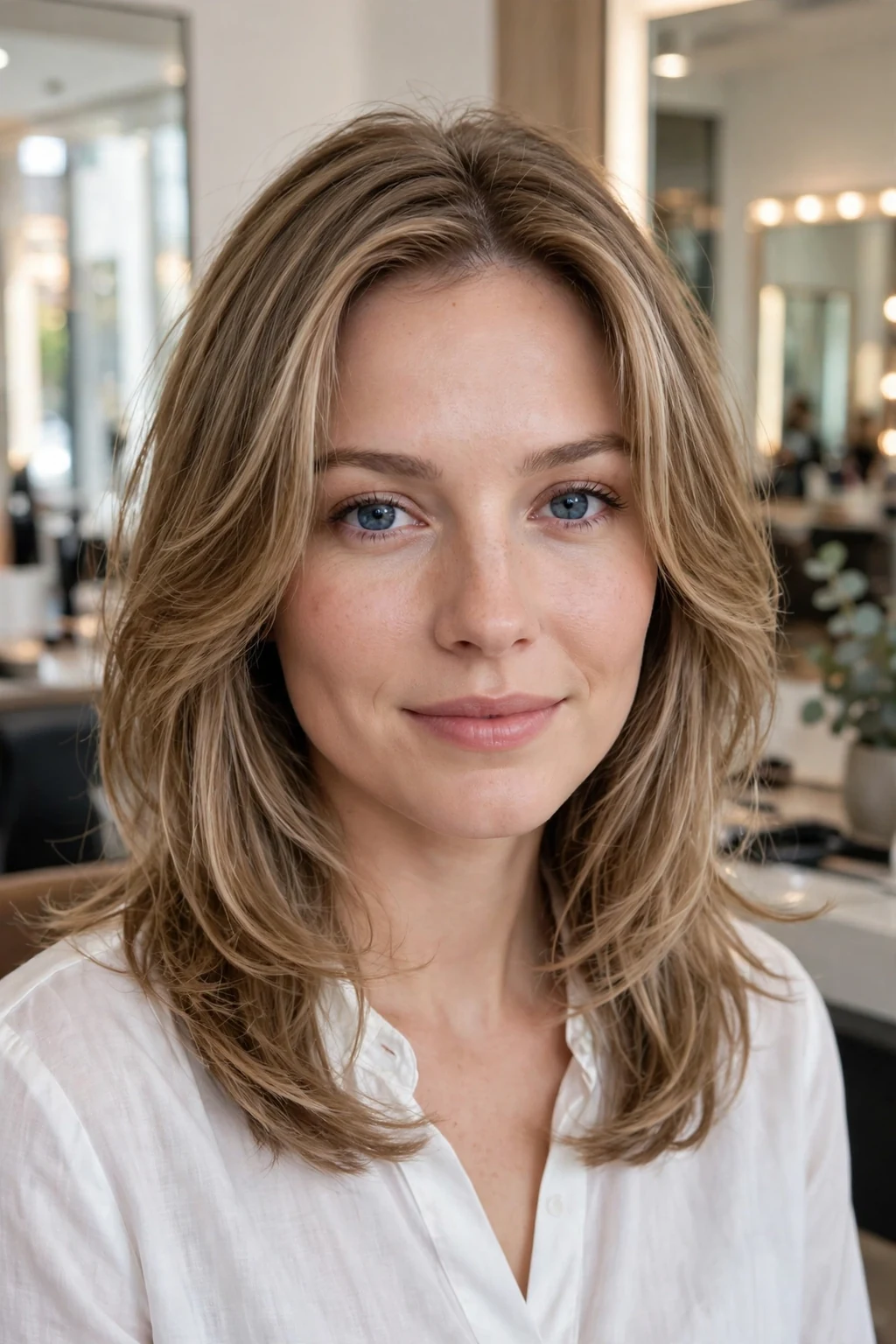
Soft face-framing layers are the haircut equivalent of perfect lighting: long, blended layers that begin around the cheekbones or chin and melt seamlessly into the rest of the hair, creating a gentle curtain of movement around the face. The texture is smooth and fluid rather than choppy, with ends that are point-cut just enough to feel light and airy without looking thinned. This is the most universally flattering layering technique in the book because it sculpts without sacrificing length — the layers add shape, swing, and dimension while the overall silhouette stays soft and romantic.
This cut suits nearly every face shape, but it is especially kind to square and long faces, where the curving layers visually soften strong jawlines and break up length. It works beautifully on fine to medium hair that needs body without bulk, and on thick hair when the stylist removes weight through the interior. To style it, blow-dry with a medium round brush, rolling the face-framing pieces away from the face for that open, lifted effect, and finish with a light shine serum on the ends. A large velcro roller set at the crown while you do your makeup adds polish with zero effort. Plan a trim every eight to ten weeks to keep the framing fresh, though this cut grows out gracefully. Try it when you want instant polish: it photographs beautifully, transitions from office to evening without restyling, and makes even air-dried hair look intentional.
2. Long Layered Cut
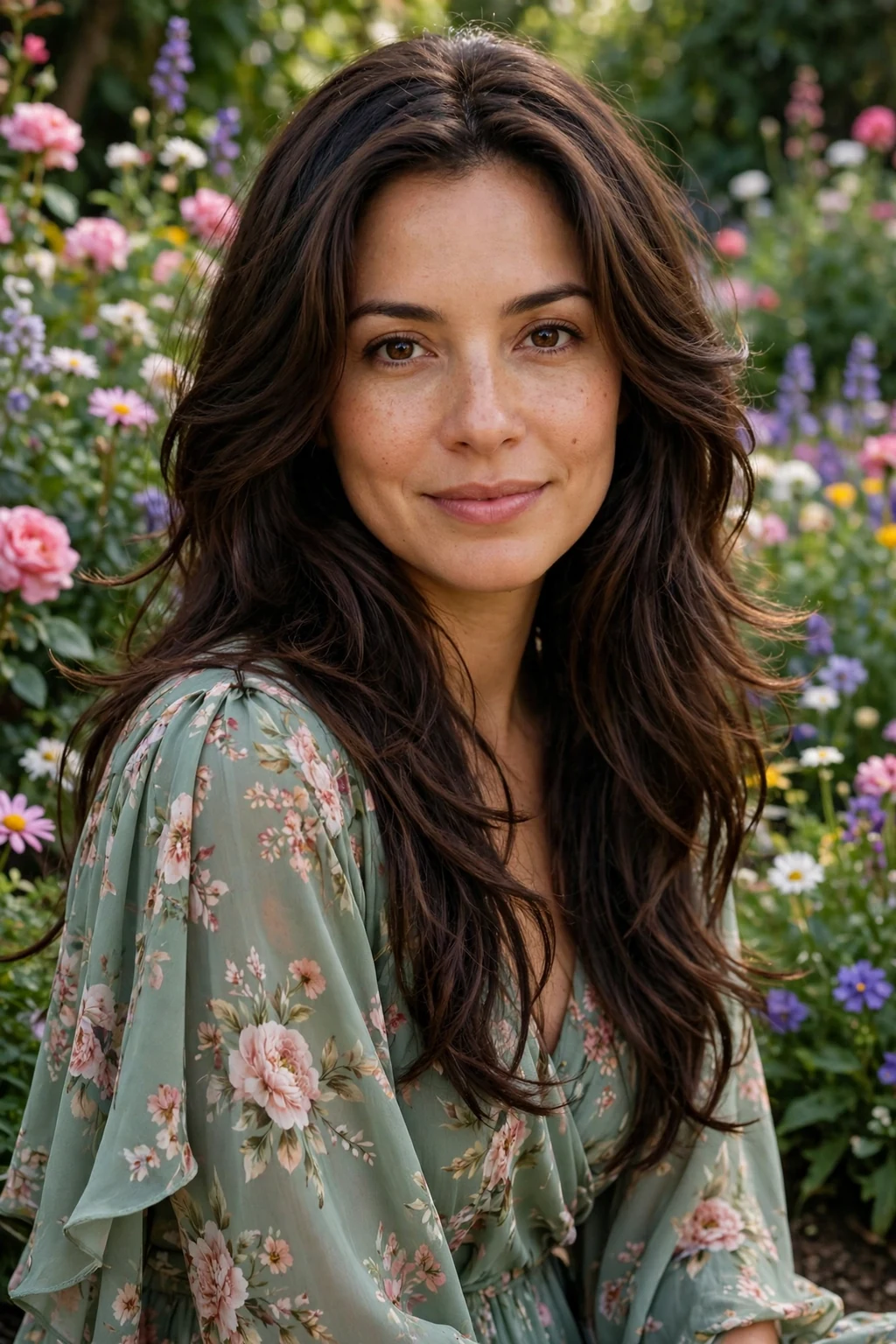
The long layered cut keeps serious length — typically falling past the shoulders toward the mid-back — while strategic layers through the lower two-thirds remove weight and inject movement. Unlike blunt long hair, which can hang heavy and shapeless, long layers create a cascading effect where each layer falls over the next, giving the hair natural bounce and a beautiful tapered silhouette from the side. The texture reads as flowing and touchable, with ends that flip and flutter instead of sitting in one solid curtain.
Women with thick, heavy, or coarse hair benefit most, because the layers prevent the dreaded triangle shape and make long hair far easier to manage day to day. It flatters oval, long, and heart-shaped faces especially well, and the length itself is slimming on rounder faces. Styling is wonderfully versatile: wear it smooth with a paddle-brush blowout for boardroom polish, or wrap large sections around a one-and-a-quarter-inch curling iron, alternating directions, for soft, expensive-looking waves. A heat protectant is non-negotiable at this length, and a pea-sized amount of smoothing cream keeps the layers defined rather than frizzy. Trims every ten to twelve weeks keep the ends healthy; ask your stylist to dust the layers rather than chop them. Choose this cut when you are not ready to give up length but crave shape — it is the perfect compromise between long hair dreams and real-world wearability.
3. Shaggy Medium Layers
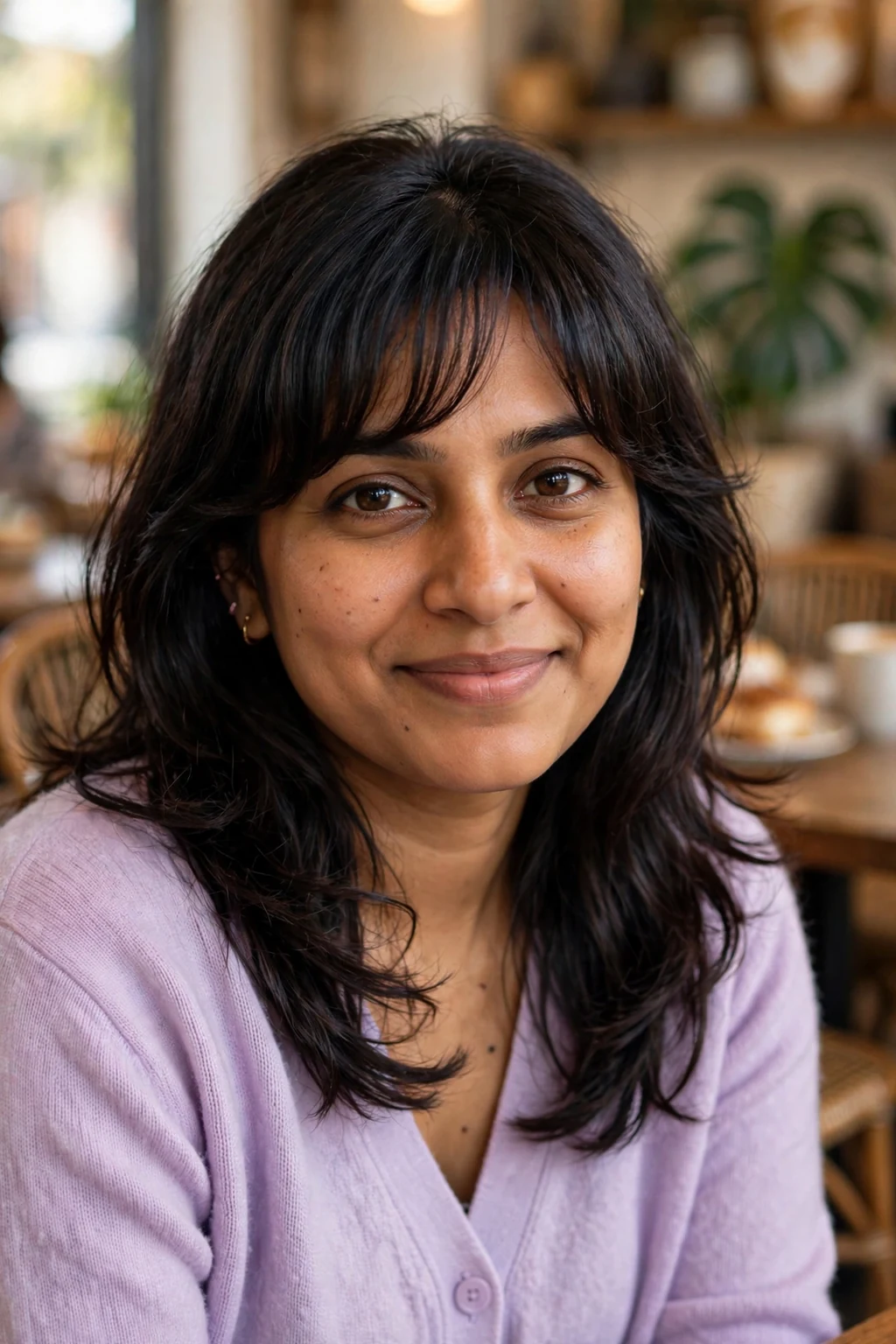
Shaggy medium layers channel pure rock-and-roll energy: a collarbone-to-shoulder cut loaded with razored, piece-y texture through the crown and mid-lengths, often paired with a fringe. The layers are deliberately disconnected, which means the top stays full and piece-y while the ends shatter into feathery points. The overall texture is wild in the best way — tousled, lived-in, and full of movement — with a silhouette that is wider at the crown and piece-y through the ends rather than sleek or polished.
This cut is a dream for wavy, curly, and thick hair types, because the heavy layering removes bulk and lets natural texture spring to life instead of puffing outward. It flatters oval and heart-shaped faces particularly well, and the fringe element can visually shorten a long forehead. Fine, pin-straight hair can wear it too, but will need texturizing products to fake the grit. Style it by scrunching a salt spray or texture foam into damp hair and diffusing upside down for maximum volume, then pinch small sections with a matte paste to define the piece-y ends. A flat iron can add a few deliberate bends for extra edge. Maintenance runs every six to eight weeks to keep the shag from growing into a mullet, and the fringe needs attention between visits. Try it when you want hair with attitude — it is the fastest way to look effortlessly cool, hides second-day hair beautifully, and pairs perfectly with leather jackets and bold eyeliner.

4. Curtain Bang Layers
Curtain bang layers pair the internet's favorite fringe with flowing medium-length layers: a center-parted bang that splits open like curtains, blending directly into face-framing layers that continue down past the chin. The bangs themselves are typically cut to cheekbone or lip length so they can be worn parted, swept, or tucked, while the layers beneath are long and soft to keep the whole look cohesive. The texture is romantic and touchable — nothing harsh or blunt — with a distinctly 1970s softness that feels fresh again.
Curtain bangs are famously flattering on round, square, and heart-shaped faces because the diagonal opening elongates and slims, while the part itself adds height at the crown. They work on straight, wavy, and curly textures alike, though very curly hair should have them cut dry to account for shrinkage. To style, blow-dry the bangs forward with a small round brush and then flick them outward and back for that signature swoop — or cheat with one large velcro roller placed horizontally at the front while the hair cools. Keep a mini flat iron handy for touch-ups, since curtain bangs show creases from sleeping. Bang trims every three to four weeks keep them at the sweet spot, while the layers can go eight to ten. Choose this look for instant face-framing romance: it grows out into beautiful face-framing layers, photographs like a dream, and softens strong features without a drastic chop.
5. Voluminous Layered Cut
The voluminous layered cut is engineered for maximum body: shorter, stacked layers through the crown and upper lengths that push the hair up and out, creating lift, bounce, and that coveted big-hair silhouette. The layers graduate from short at the top to longer at the bottom, so the cut has built-in architecture that holds volume even on hair that normally falls flat. The texture is full and bouncy with rounded, inflated ends rather than piece-y or shattered ones — think glamorous blowout frozen into the cut itself.
Fine, limp, or flat hair is the prime candidate here, since the layering does the volumizing work that products alone cannot. It adds flattering width to long, narrow faces, and the height at the crown visually balances a longer forehead. Thicker hair can wear it too, but needs the interior thinned so the volume does not become triangle-shaped. Styling starts with a volumizing mousse applied to damp roots, followed by an upside-down rough dry and then a round-brush blowout, lifting each section straight up from the scalp. Velcro rollers at the crown set while cooling lock in the lift for hours; a light mist of flexible-hold hairspray finishes without crunch. Trims every eight weeks keep the crown layers from collapsing under their own weight. Try it when your hair's default setting is flat — this cut delivers red-carpet body on demand and makes thin hair look genuinely abundant.
6. Subtle Invisible Layers
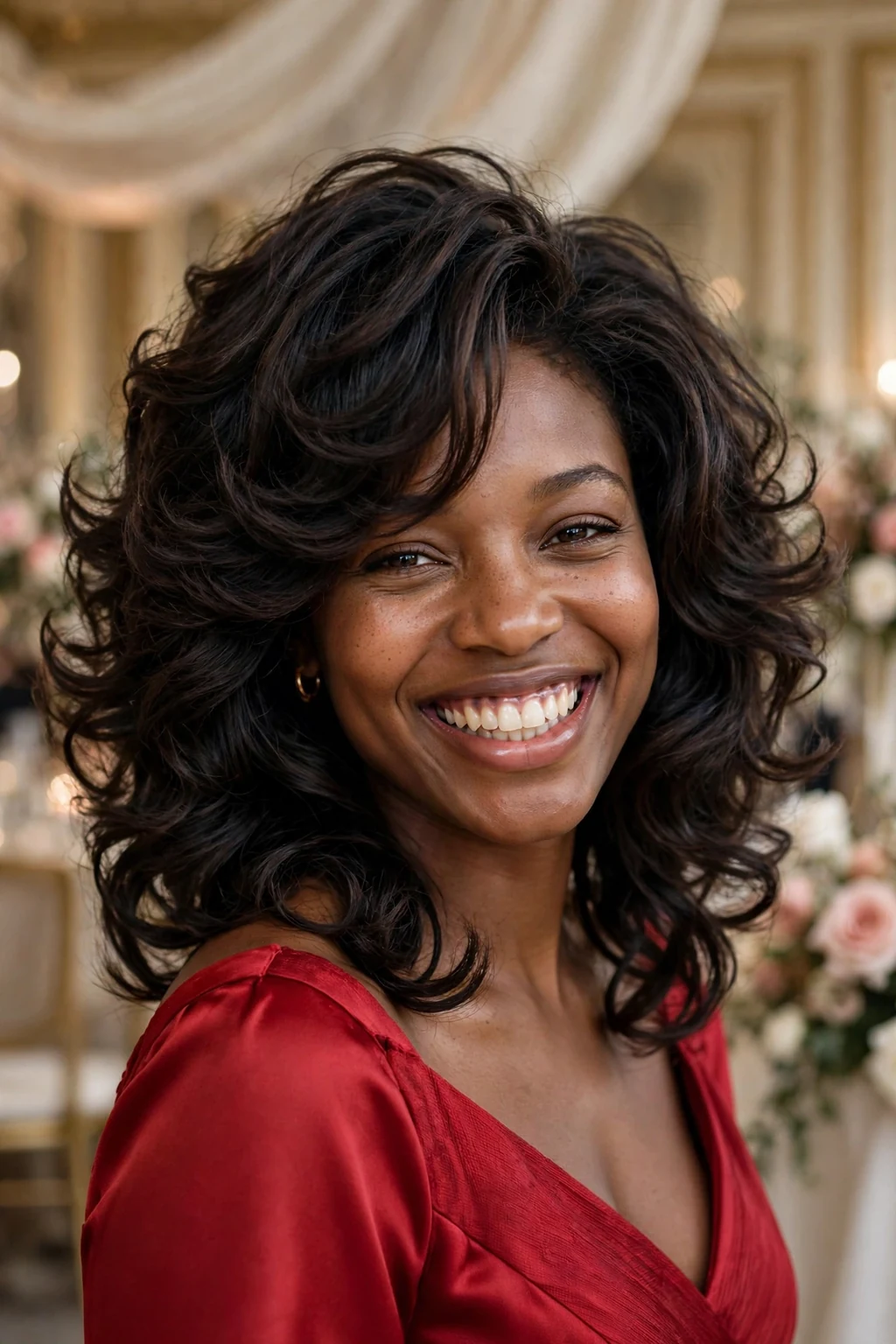
Subtle invisible layers are the quiet-luxury haircut: layering so seamless and internal that the hair reads as one length, yet moves with a fluidity blunt cuts cannot match. The stylist removes weight from the interior and bevels the perimeter just slightly, so the hair swings, flips, and falls with natural movement while the silhouette stays clean and polished. There are no visible steps, no piece-y ends, no obvious texture — just hair that behaves beautifully and looks expensive.
This is the ideal choice for thick, heavy hair that needs debulking without a visibly layered look, and for professional environments where edgy texture feels out of place. It suits every face shape because it does not impose a strong shape of its own, and it is wonderful on long faces that cannot afford width-adding volume. Styling is refreshingly simple: a smooth paddle-brush blowout with a heat protectant and a drop of shine serum is all it takes, since the cut does the work. It air-dries better than almost any other layered cut. Maintenance is wonderfully low — trims every ten to twelve weeks, and grow-out is essentially invisible, making it perfect for anyone growing their hair out. Choose it when you want the benefits of layers with none of the look: it is timeless, office-proof, and the closest thing to a no-maintenance haircut that still has shape.
7. Choppy Textured Layers
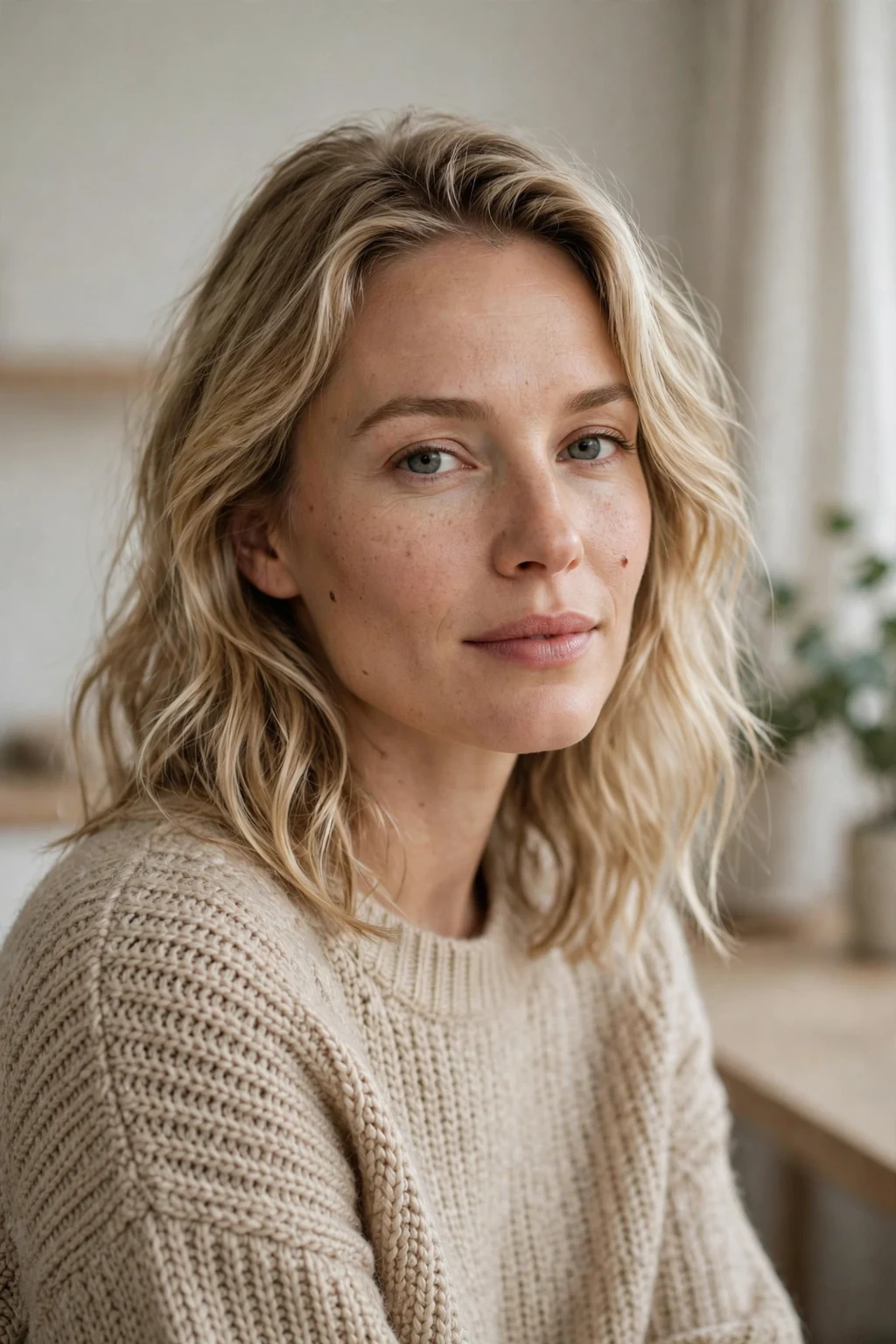
Choppy textured layers bring deliberate edge to medium length: ends that are point-cut and notched to create jagged, piece-y separation through the mid-lengths and perimeter. Unlike soft blended layers, these are meant to be seen — the texture is the star, giving the hair a cool, undone finish with tons of visual interest and movement. The silhouette stays at medium length, but the ends look shattered and modern rather than blunt or wispy, which keeps the cut feeling current and youthful.
Straight to wavy hair shows off choppy texture best, since curls can make the ends look frizzy rather than piece-y. It flatters oval, heart, and diamond faces beautifully, and the texture adds flattering width around the jawline for longer faces. Very fine hair should keep the choppiness concentrated at the ends rather than throughout, to avoid looking thin. To style, work a small amount of texturizing paste or fiber cream through dry hair, pinching and twisting the ends to emphasize the separation, and use a flat iron to add a few deliberate bends in alternating directions. Sea salt spray on damp hair before air-drying gives an effortless lived-in version. Plan trims every six to eight weeks, since choppy ends show damage faster than blunt ones. Try it when your hair feels boring — this cut adds instant personality, hides styling mistakes, and looks even better slightly messy.
8. Feathered Medium Layers
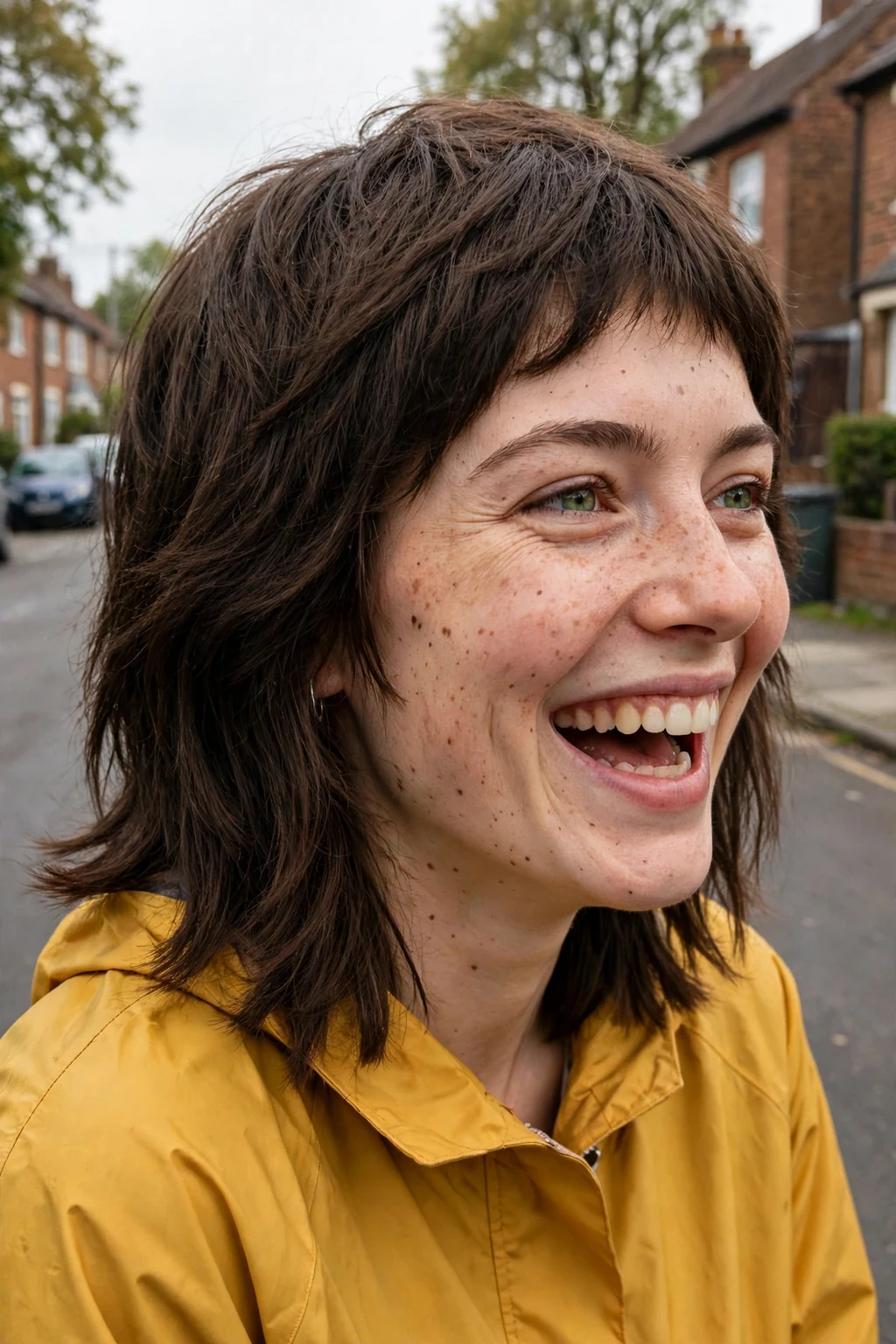
Feathered medium layers are a love letter to 1970s glamour: soft, airy layers that are blow-dried to flick outward and inward in feathery wings, creating that iconic bouncy, flipped silhouette. The layering is concentrated through the mid-lengths and ends, with face-framing pieces cut to flip back away from the cheeks. The texture is light and buoyant rather than heavy or sleek — each layer floats over the next, giving the hair visible movement and a retro-feminine softness that photographs gorgeously.
This cut loves medium to thick hair with some natural body, since fine hair can struggle to hold the flipped shape without help. It is especially flattering on oval and long faces, where the outward flicks add flattering width, and the face-framing pieces soften square jawlines beautifully. Styling is all about the round brush: blow-dry sections with a medium round brush, flicking the ends outward at the bottom layers and under at the top for that classic feathered curve, then set with a cool shot. A volumizing mousse at the roots gives the lift this style demands, and a flexible-hold spray keeps the feathers in place without stiffness. Trims every seven to nine weeks maintain the precise layering. Choose feathered layers when you want unapologetic femininity and bounce — it is joyful, face-brightening hair that turns a simple blowout into an event.
9. Rounded Layered Bob
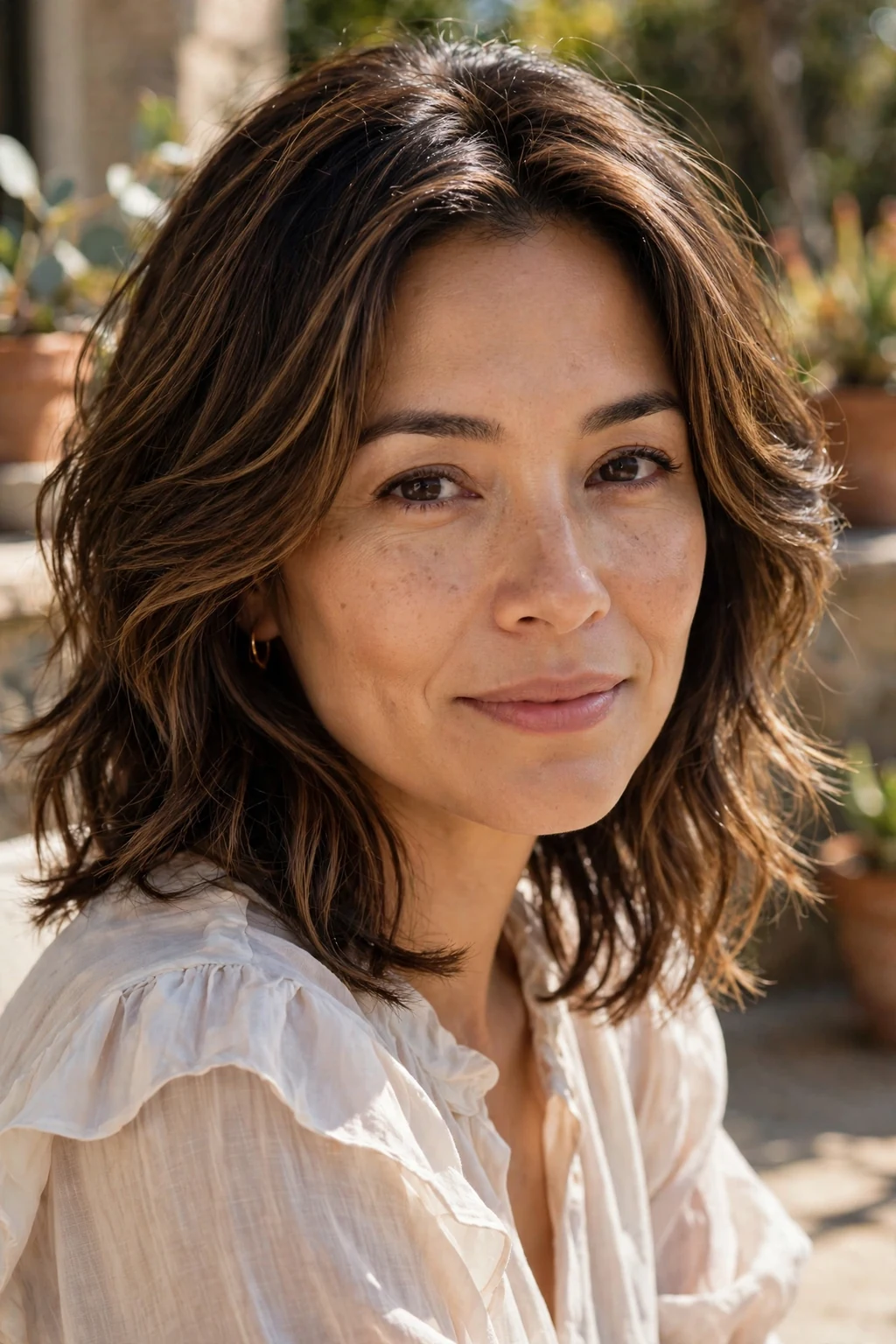
The rounded layered bob sits at that perfect medium length — typically grazing the jaw to the collarbone — with layers cut to create a soft, rounded silhouette that curves gently under. Interior layering builds a beautiful dome of shape through the crown and sides, so the bob has body and swing instead of hanging flat. The texture is polished and smooth with beveled ends that tuck naturally under, giving the cut a refined, almost sculptural finish that looks immaculate from every angle.
This shape is a gift to fine hair, since the rounded layering creates the illusion of density and fullness, and it gives structure to wavy hair that can look shapeless at longer lengths. It flatters round faces by adding height on top, softens square jaws with its curves, and gives long faces welcome width. Style it with a round-brush blowout, rolling the ends under for that classic rounded finish, and smooth a shine serum through the mid-lengths for a glassy polish. A flat iron can refine the bevel on second-day hair in minutes. Maintenance every six to eight weeks keeps the rounded shape crisp, as this cut loses its architecture quickly when overgrown. Try it for instant sophistication — it is the haircut equivalent of a perfectly tailored blazer, professional yet feminine, and it makes hair look thicker and healthier immediately.

10. Wispy End Layers
Wispy end layers are all about the finish: medium-length hair with ends that have been carefully thinned and texturized to create a soft, feathered perimeter that moves like air. The layers themselves are long and subtle — the drama is in the ends, which taper into delicate, wispy points rather than a blunt line. The result is hair that looks lighter than it is, with ends that flutter and separate naturally, giving an ethereal, romantic quality to the entire cut.
Thick, heavy hair benefits enormously, since the wispy ends remove bulk and weight without sacrificing length, making the hair feel dramatically lighter. It is lovely on long faces, where the airy ends keep the silhouette from dragging downward, and on anyone whose hair tends to look triangular or bottom-heavy. Fine hair should approach with caution — too much thinning at the ends can make it look sparse — so ask for texturizing only through the last inch. Styling is minimal: a light leave-in oil smoothed through the ends prevents the wisps from looking frizzy, and a flat iron flicked outward emphasizes the feathered finish. Air-drying works beautifully. Trims every eight to ten weeks keep the wisps from turning stringy. Choose this cut when your hair feels heavy and lifeless — it is the fastest way to make long hair feel weightless and romantic.

11. Layered Lob Cut
The layered lob — long bob — is the haircut that broke the internet for good reason: a collarbone-grazing cut with strategic layers that give it shape, movement, and endless versatility. The base length sits right at the sweet spot where hair can still go up in a ponytail, while layers through the mid-lengths and face-framing front pieces keep it from looking boxy or severe. The texture is modern and touchable — smooth enough for polish, piece-y enough for edge — and it works with virtually every styling approach.
Lobs are famously universal: the length elongates round faces, the layers add width to long faces, and the collarbone-skimming perimeter flatters every neck and shoulder line. It suits fine hair (the blunt-ish perimeter keeps ends looking thick while layers add body), thick hair (layers remove weight), straight hair, and wavy hair alike. Style it straight with a flat iron for sleek minimalism, add loose waves with a one-inch iron for weekend ease, or tuck one side behind the ear for asymmetric chic. A texturizing spray is the lob's best friend for second-day lived-in texture. Trims every eight weeks maintain the precise length. Try the layered lob when you want a genuinely low-risk transformation — it is flattering on almost everyone, grows out beautifully into a long layered cut, and offers more styling options per inch than any other haircut.

12. Curtain Layered Shag
The curtain layered shag merges two beloved trends into one gloriously textured cut: a true shag silhouette — heavy crown layers, piece-y disconnected ends — finished with a center-parted curtain fringe that melts into the shaggy layers. The result is maximum 1970s rock-chick romance: fullness and texture on top, shattered ends through the lengths, and that face-opening curtain bang that makes the whole cut feel soft despite its edge. The texture is wild and touchable, with visible separation and movement in every direction.
This cut is happiest on wavy, curly, and thick hair, where the heavy layering removes bulk and lets natural texture do the talking. It flatters oval, heart, and long faces especially well, and the curtain fringe visually balances a high forehead. Pin-straight fine hair can wear it but needs texturizing products and some styling effort to achieve the piece-y finish. Style by scrunching curl cream or texture foam into damp hair and diffusing for definition, then piece out the ends with a matte wax. The curtain bangs can be blow-dried with a round brush for swoop or left natural for a more undone feel. Maintenance every six to eight weeks keeps the shag from losing its shape, with bang trims in between. Choose it when you want hair with a personality as big as yours — it is effortlessly cool, hides unwashed roots like a champion, and makes every outfit look more interesting.

13. Smooth Polished Layers
Smooth polished layers are the embodiment of expensive hair: medium-length layers cut with precision and styled to a glossy, sleek finish where every strand lies in perfect formation. The layers are long and seamless, designed to create fluid movement rather than visible texture, and the ends are beveled to fall in a clean, healthy line. The overall effect is liquid shine and mirror-like smoothness — hair that looks like it has its own lighting crew.
This finish shows off best on straight to slightly wavy hair that can be smoothed easily; very curly or coarse hair can achieve it but will need significant heat styling and keratin treatments to maintain. It is stunning on oval and heart-shaped faces, and the sleekness has a slimming effect on rounder faces. Professional settings love this cut because it reads as meticulous and put-together. Achieving the look requires a proper blowout: apply a smoothing cream and heat protectant to damp hair, blow-dry section by section with a paddle brush, then pass a flat iron over the lengths for glass-like shine, finishing with a few drops of shine serum. A silk pillowcase and weekly deep-conditioning mask keep the gloss intact. Trims every eight weeks keep the ends immaculate. Try smooth polished layers when you want to look undeniably put-together — it is the hair equivalent of a fresh manicure and pressed suit, and it makes color look richer and more expensive.
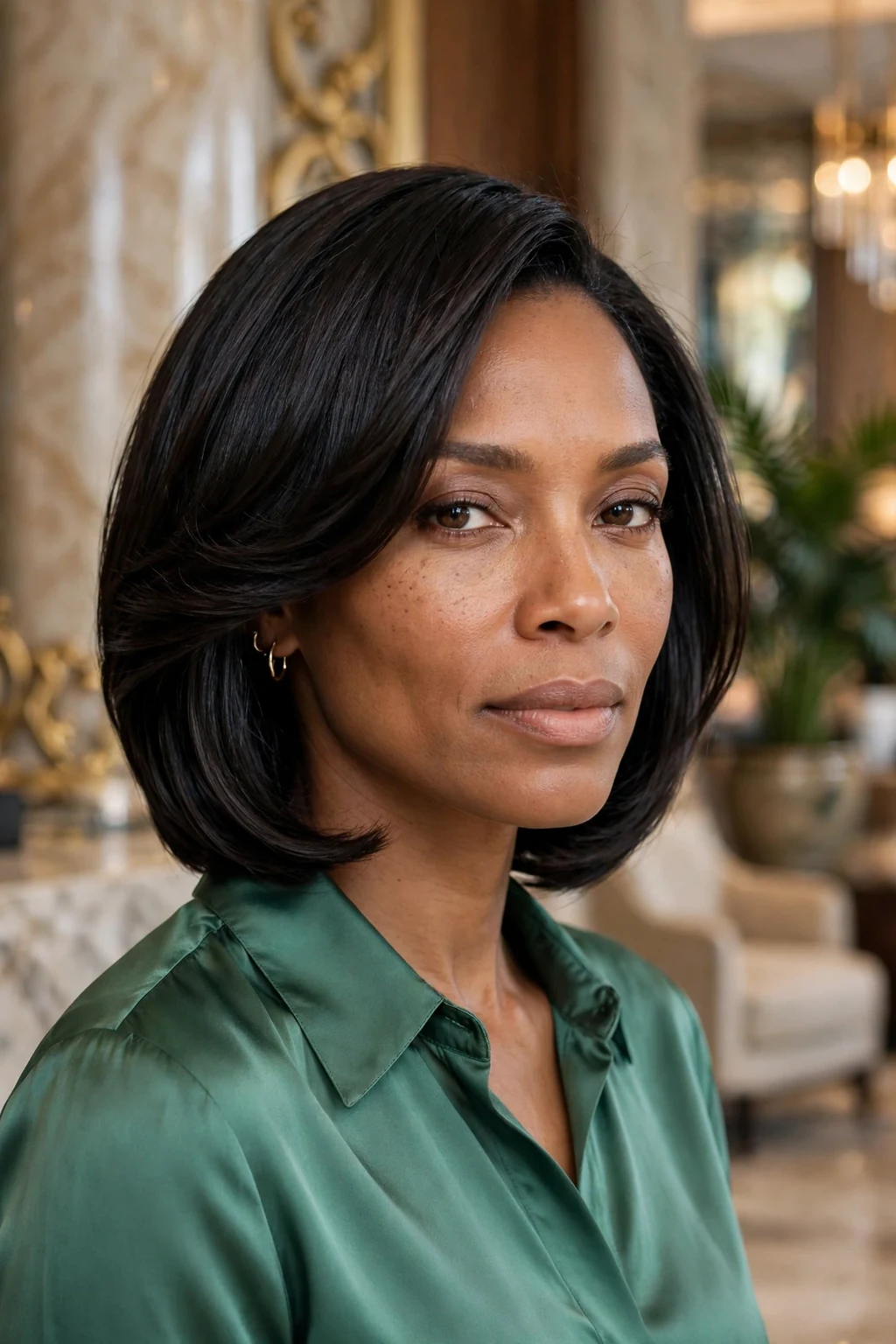
14. Textured Beach Layers
Textured beach layers are permanent vacation hair: medium-length layers cut with tons of internal texture and styled to look sun-tousled, salty, and effortlessly undone. The layers are long and piece-y rather than precise, with ends that are point-cut to encourage natural separation and movement. The texture is the whole point — matte, touchable, slightly imperfect waves that look like you spent the day at the shore, even if you spent it at a desk.
Wavy and naturally textured hair is the ideal canvas, since the cut simply enhances what is already there, but straight hair can fake it convincingly with the right products and technique. It flatters every face shape because the undone texture softens everything it touches, and it is especially forgiving on long faces. Styling is delightfully lazy: mist sea salt spray through damp hair, scrunch upward with your hands, and either air-dry or diffuse for extra volume. A texturizing spray on dry hair revives second-day waves, and braiding damp hair overnight creates heat-free beach texture by morning. Maintenance is minimal — trims every ten to twelve weeks, since the undone finish hides grow-out beautifully. Choose beach layers when you want hair that never looks try-hard: it is the lowest-effort path to looking effortlessly pretty, perfect for weekends, holidays, and anyone who hates fussy styling.
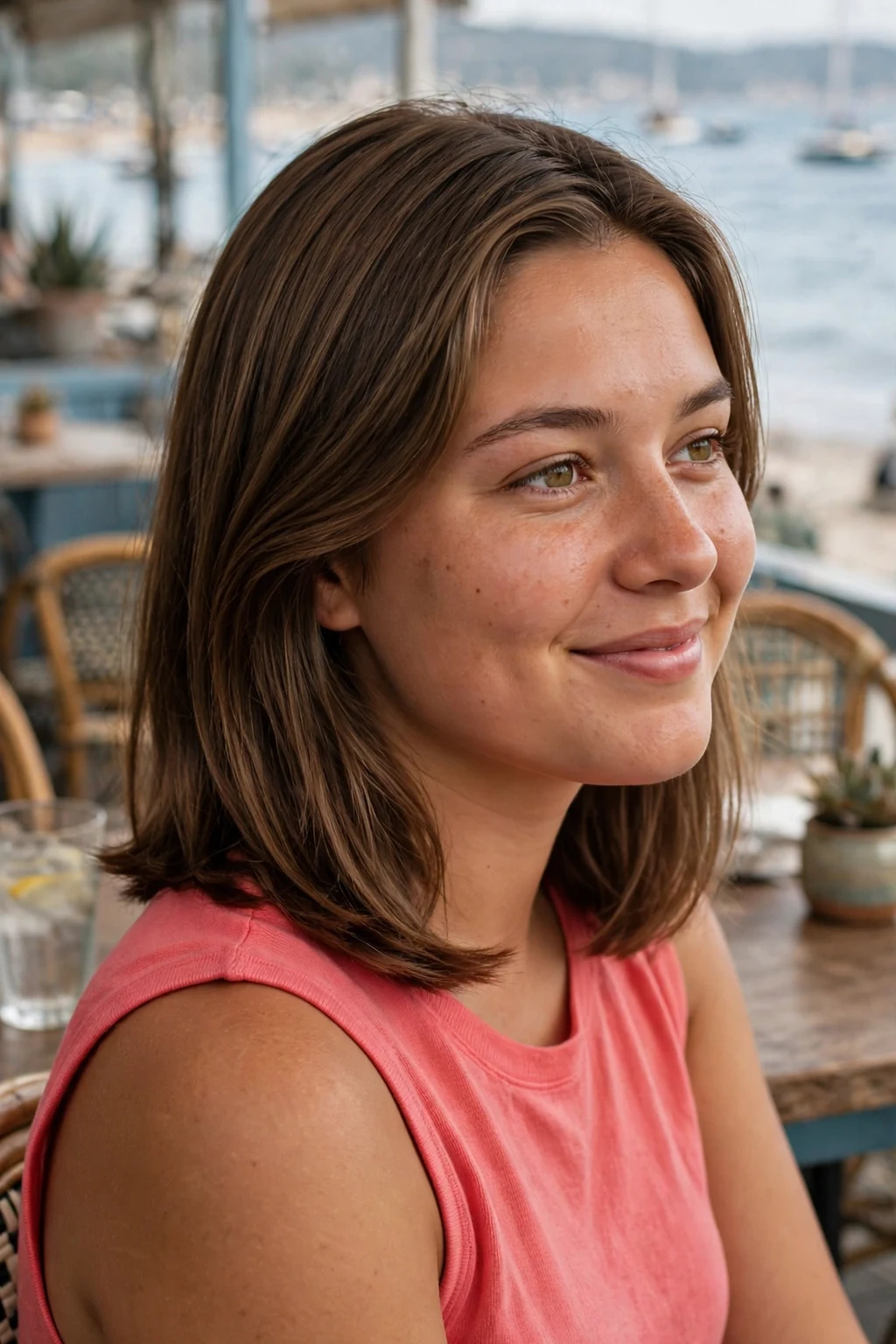
15. Angled Layered Cut
The angled layered cut is architectural hair: a medium cut where the layers graduate from shorter at the back to dramatically longer at the front, creating a sharp, forward-swinging A-line silhouette. The angle itself is the statement — precise, geometric, and modern — while interior layers keep the shape light and wearable rather than heavy. The texture is sleek and controlled, with ends that come to clean points at the front, giving the cut a striking profile from every angle.
Round and square faces benefit most, because the longer front pieces visually elongate and slim, drawing the eye downward past the jawline. It is excellent on fine hair, where the angled perimeter makes ends look thicker, and on straight hair that shows off the precision cutting. Very curly hair will lose the sharp angle to shrinkage, so this one favors straighter textures. Style it sleek with a flat iron, pulling the front sections forward and slightly under to emphasize the angle, and finish with a shine serum for a glassy edge. A deep side part amplifies the drama. Trims every six weeks are essential — the angle blurs quickly as it grows. Try the angled cut when you want hair that makes a statement without being short: it is bold, face-slimming, and unapologetically modern, perfect for anyone who loves clean lines and sharp style.
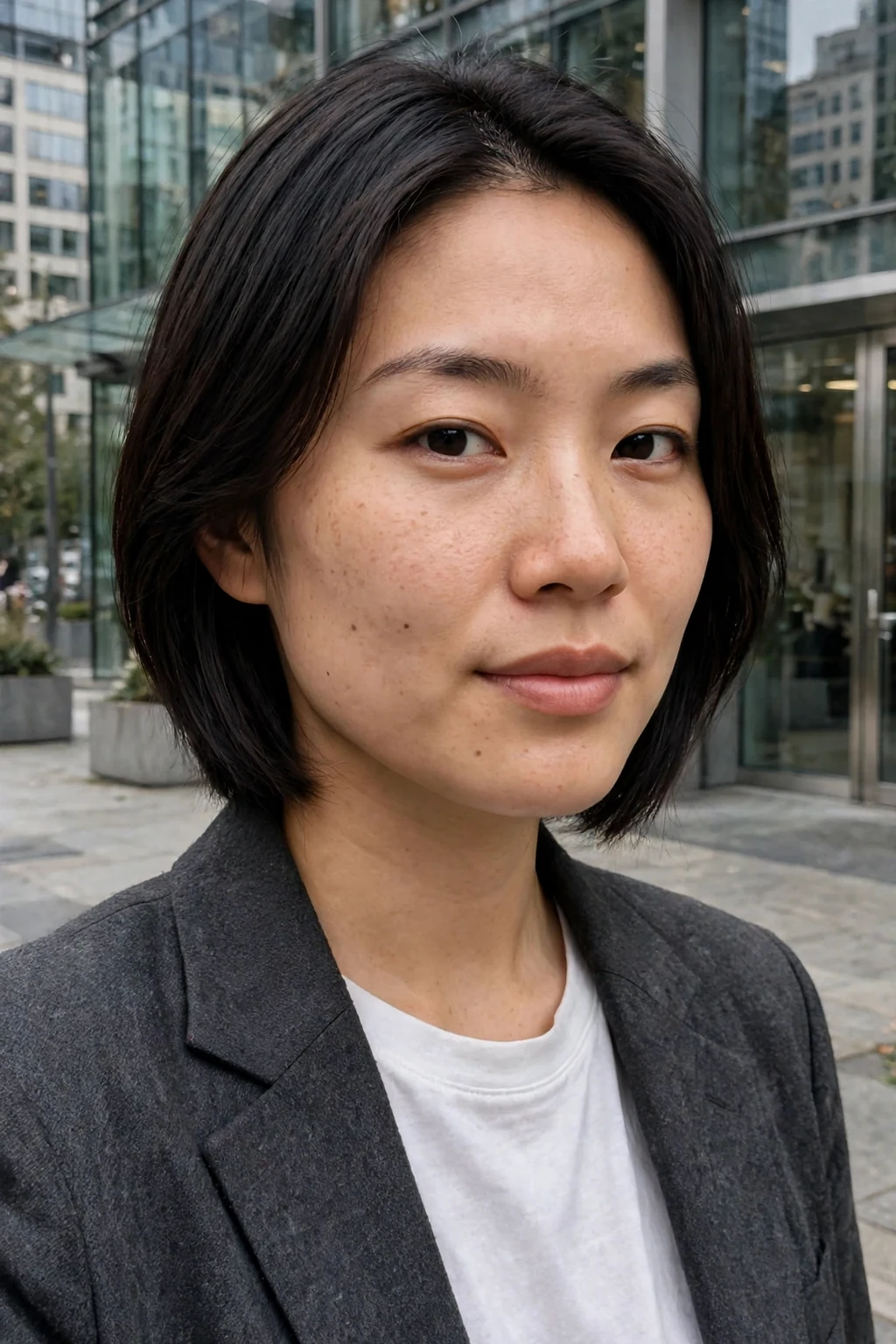
16. Soft U-Shaped Layers
Soft U-shaped layers create one of the most flattering perimeters in haircutting: the outline dips into a gentle U, with the sides slightly shorter and the back cascading to its fullest length. The layers themselves are long and blended, following the U-shape so the hair falls in a continuous, flowing curtain with beautiful natural movement. The texture is smooth and fluid — romantic rather than edgy — with ends that curve softly inward and a silhouette that looks lush and healthy from behind.
This shape is a savior for thick, long, heavy hair, because the U-shape removes the bottom-heavy bulk that makes long hair look triangular while preserving maximum length. It flatters oval, round, and heart-shaped faces, and the curved perimeter is especially pretty on long faces. Fine hair can wear it too, though the layers should be kept minimal to protect density at the ends. Style with a classic round-brush blowout, rolling the ends under to emphasize the U-curve, or add loose waves with a large-barrel iron for romantic movement. A smoothing cream keeps the layers cohesive. Trims every ten weeks maintain the shape; the grow-out is graceful since the U simply deepens. Choose U-shaped layers when you want long hair that actually moves — it is timeless, feminine, and the rare cut that looks even better from the back.

17. Layered Wolf Cut
The layered wolf cut is the wild child of the haircut world: a hybrid of shag and mullet with aggressively short, choppy layers through the crown that cascade into longer lengths at the back. The top is full of volume and texture — almost spiky in its piece-y energy — while the nape keeps surprising length, creating that signature contrast between cropped and long. The texture is deliberately untamed: shattered ends, visible separation, and a silhouette that refuses to sit still.
Thick, wavy, and curly hair types are the wolf cut's natural habitat, since the heavy layering tames bulk while letting texture explode with personality. It suits oval and heart-shaped faces best, and the crown volume can beautifully balance a longer face. Fine, straight hair will need serious texturizing products and styling commitment to achieve the wild finish. Style it by working a matte texture paste or clay through dry hair, lifting and piecing the crown layers for height, and letting the back lengths fall naturally. A diffuser enhances the chaos on wavy hair. Maintenance every six to eight weeks keeps the contrast sharp — grown-out wolf cuts quickly become accidental mullets. Try it when you are craving a genuine transformation: it is fashion-forward, high-energy hair that announces confidence and looks incredible with streetwear and bold makeup.

18. Bouncy Blowout Layers
Bouncy blowout layers are cut with one goal in mind: to look like you just stepped out of the salon every single day. The layers are long, round, and precisely graduated to catch air and spring back with movement, creating that inflated, bouncy silhouette that defines a professional blowout. The shape is full through the mid-lengths with ends that flip and bounce rather than lying flat, and the texture is smooth, glossy, and touchably soft — volume without frizz, body without stiffness.
Medium to thick hair holds a bouncy blowout longest, since the hair has enough substance to support the shape, though fine hair can achieve it with the right products and will enjoy the added illusion of fullness. It flatters every face shape because the rounded volume is universally kind, and it adds gorgeous width to long, narrow faces. The styling ritual is the star here: apply volumizing mousse to damp roots, blow-dry upside down for lift, then work through with a large round brush, rolling each section up and pinning to cool. Velcro rollers at the crown are the cheat code for lasting bounce. A light flexible-hold spray finishes. Trims every eight weeks keep the layers springy. Choose bouncy blowout layers when you want everyday glamour — it is the most confidence-boosting cut on this list, turning an ordinary Tuesday into a good-hair-day event.
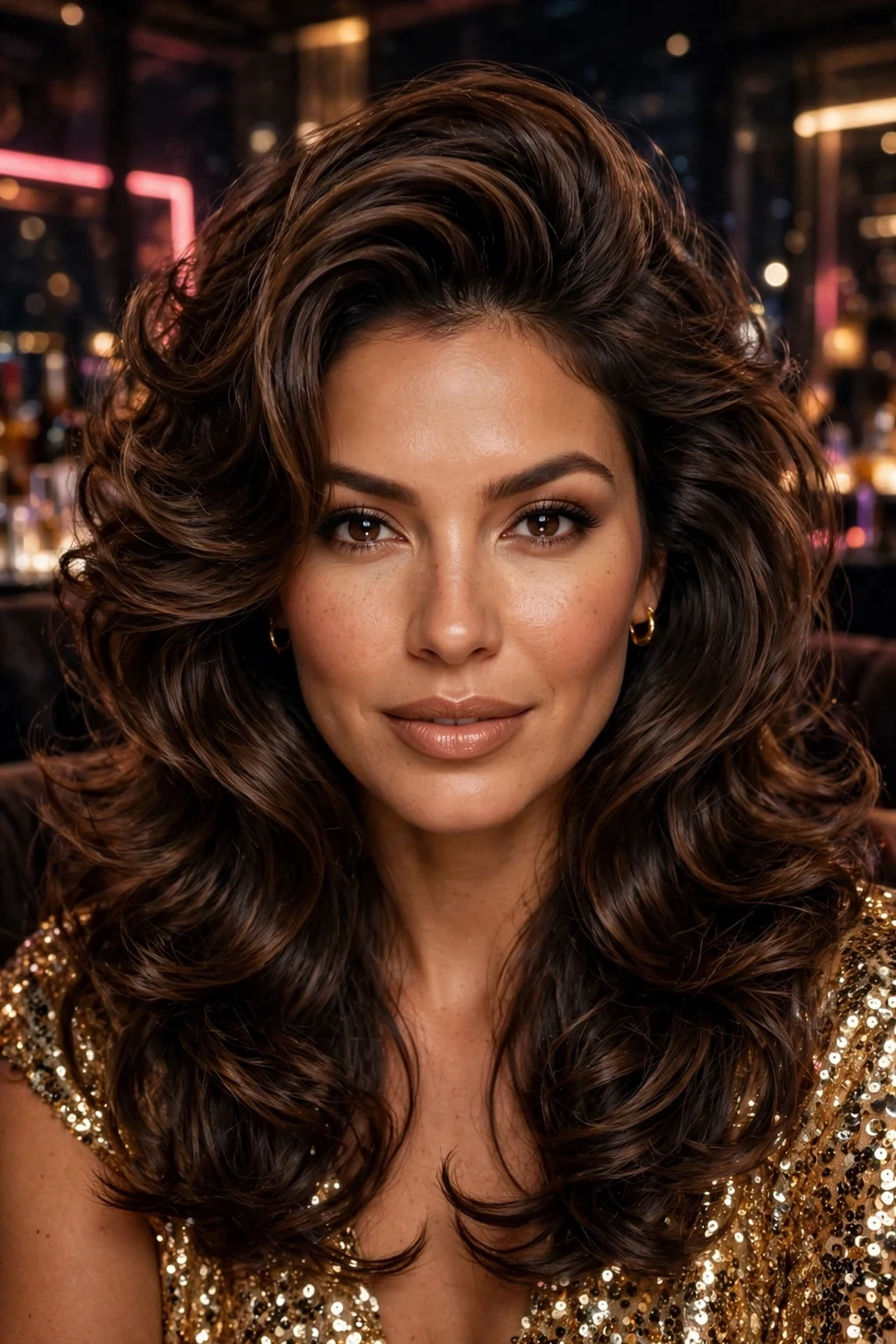
19. Lived-In Layered Cut
The lived-in layered cut is the antidote to high-maintenance hair: layers cut to look as good at week ten as they do at week one, with soft, seamless graduation that grows out without any awkward phases. There are no harsh lines, no precise perimeters, no shapes that demand constant upkeep — just easy, natural-looking layers that blend into each other and move beautifully whether freshly cut or months old. The texture is relaxed and touchable, the kind of hair that looks better slightly imperfect.
Busy women, new mothers, and anyone who cannot get to the salon regularly will find this cut life-changing, since it is specifically designed for longevity. It suits all hair types and face shapes because the softness adapts to whatever it is working with — though it is especially kind to wavy and thick hair that looks best with minimal fussing. Styling is gloriously simple: a little leave-in cream on damp hair, air-dry or quick rough-dry, and go. The cut looks intentional even when you do nothing at all. Trims every ten to twelve weeks are plenty, and many women stretch it further. Try the lived-in cut when you want to stop thinking about your hair: it is freedom in haircut form, effortlessly pretty without effort, and proof that the best haircut is the one that fits your real life.
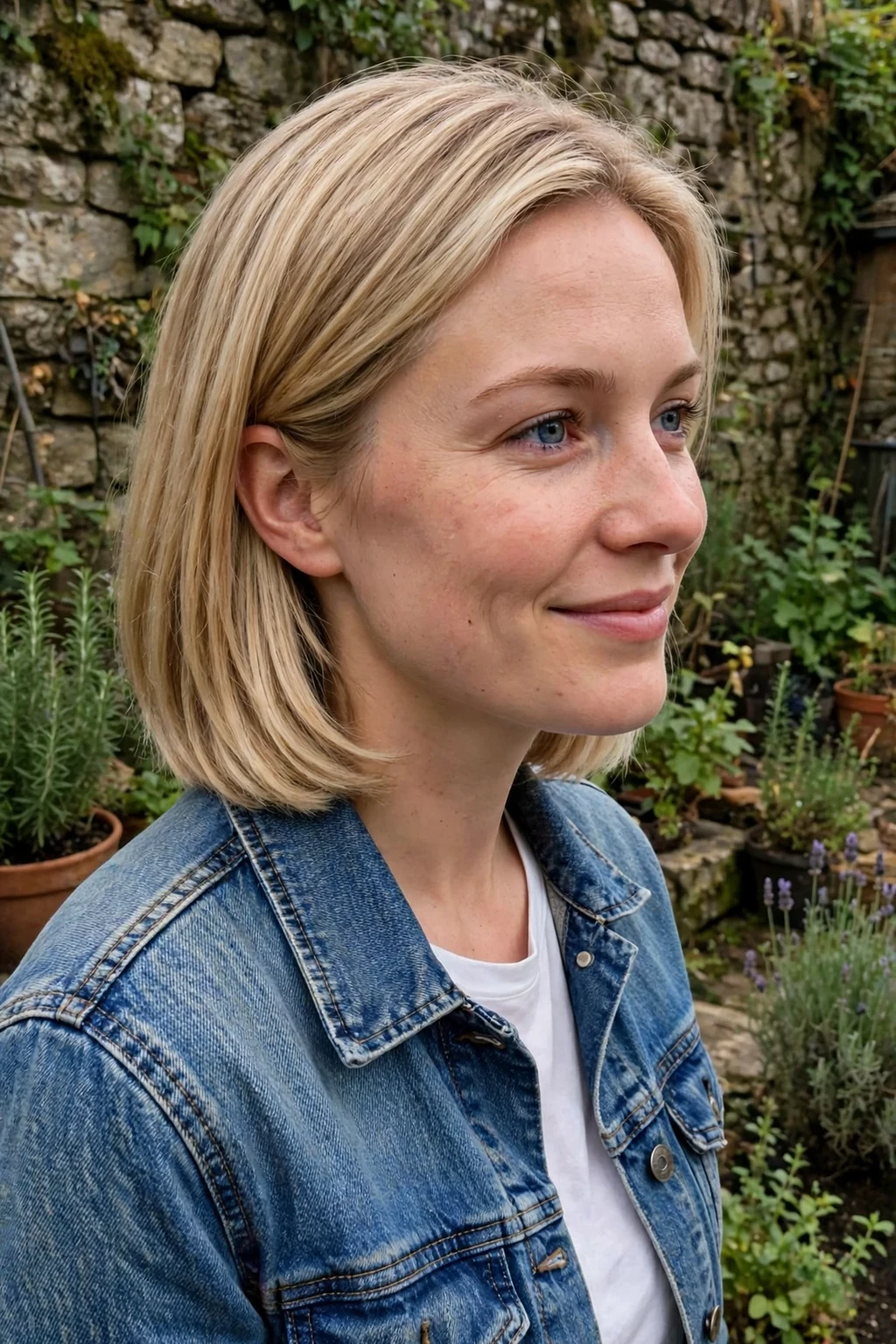
20. Face-Framing Curtain Layers
Face-framing curtain layers take the framing concept to its most sculpted extreme: bold, deliberate curtain pieces — often cut to cheekbone or jaw length — that act like contouring for the face, carving out cheekbones and slimming the jawline with hair. Unlike softer framing, these pieces are distinct and architectural, parted down the middle and curving away from the face in a dramatic swoop that blends into the longer layers behind. The effect is striking and intentional, with the curtain pieces clearly defined as the cut's focal point.
This is the power move for square, round, and wide faces, where the strong diagonal lines of the curtain pieces visually narrow and sculpt. It works on straight, wavy, and thick hair that can hold the curved shape; very fine hair may need the pieces kept slightly longer so they do not look wispy. Style the curtain pieces with a round brush, blowing them away from the face to maximize the swoop, or use a flat iron to bend them outward in a dramatic flick. A root-lift spray at the part keeps the opening voluminous rather than flat. The curtain pieces need trimming every four to six weeks to maintain their sculpting power, while the base layers go eight to ten. Choose this cut when you want your hair to do the contouring: it is the most face-transforming option here, delivering cheekbones and definition with zero makeup.
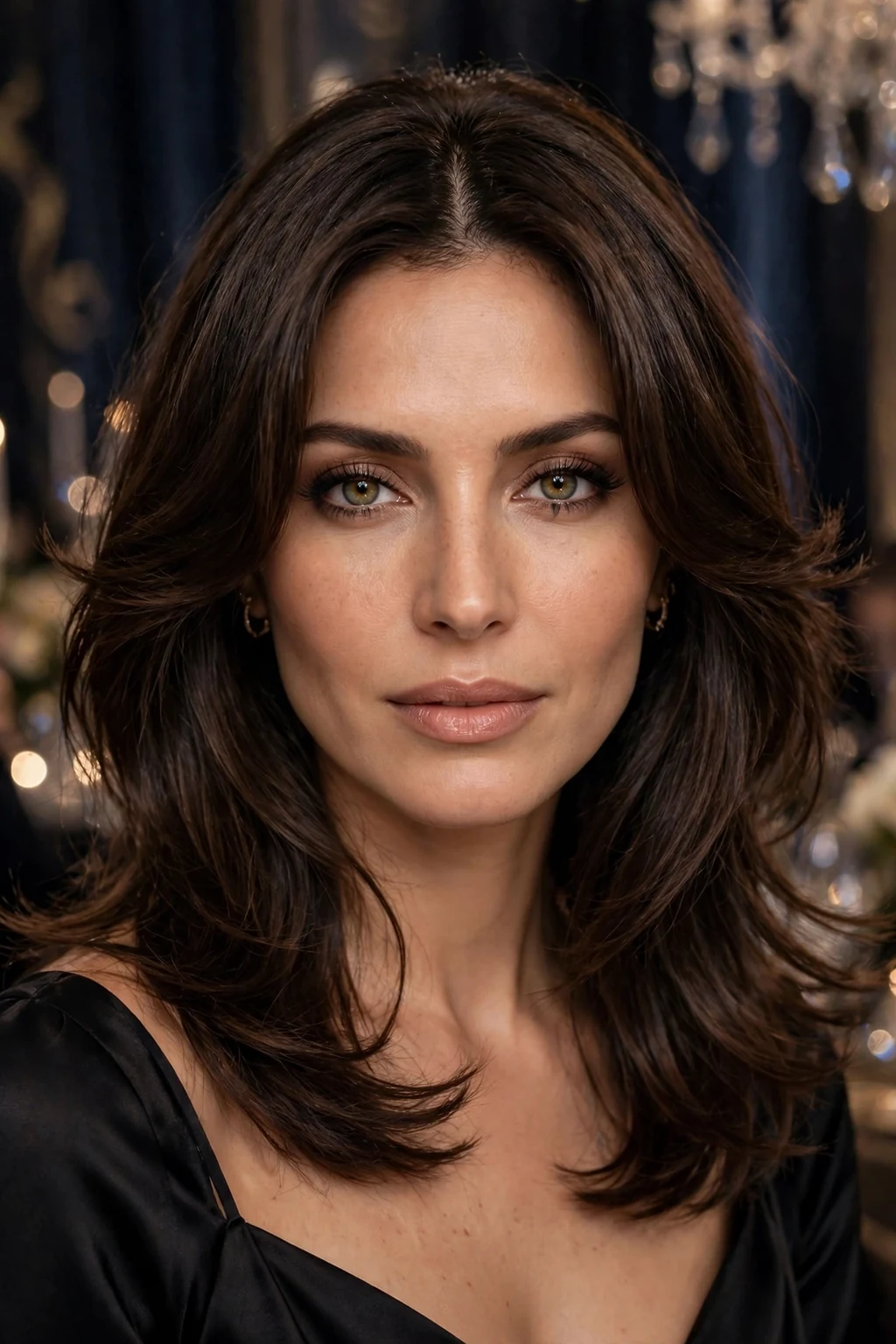
21. Soft Shaggy Layers
Soft shaggy layers are the shag for the rest of us: all the texture and movement of a classic shag, but dialed back to a wearable, approachable softness. The layers are piece-y but not shattered, the crown has gentle volume rather than wild height, and the ends are textured without looking jagged. The overall impression is modern and cool rather than edgy — a cut with personality that still works for the office, the school run, and dinner with the in-laws.
This is the perfect entry point into shag territory for fine to medium hair, since the softer layering adds body without removing too much weight, and for anyone who loves the shag aesthetic but fears commitment. It flatters oval, heart, and long faces, and the soft texture is kind to mature faces that want modernity without harshness. Styling is easy: a bit of texture cream scrunched into damp hair and air-dried gives effortless piece-y movement, while a quick round-brush blowout polishes it for dressier days. A flat iron can add a few loose bends for extra texture. Trims every eight weeks keep the softness from turning shaggy-for-real. Try soft shaggy layers when you want texture without drama: it is the friendly face of the shag trend, endlessly wearable, and a wonderful way to add interest to hair that feels flat or boring.

22. Dimensional Layered Cut
The dimensional layered cut is designed as a canvas for color: layers placed specifically to catch light and create depth, making highlights, balayage, and multi-tonal color look their absolute best. The layering alternates between longer and shorter pieces in a way that exposes different levels of the hair, so every shade in a dimensional color shows up as a distinct ribbon of tone. Even on uncolored hair, the varied layer lengths create natural-looking depth and movement that flat, one-length hair cannot achieve.
Anyone with dimensional color — balayage, highlights, lowlights, or lived-in blonde — should consider this cut, because the right layers can make color look twice as expensive. It suits medium to thick hair best, since there needs to be enough hair to create the varied levels, and it flatters oval, round, and square faces equally. Style to showcase the dimension: loose waves with a curling iron make every layer and color ribbon visible, while a smooth blowout shows off the depth in a more polished way. A color-protecting heat protectant and purple or blue shampoo (depending on your tone) keep the dimension vivid. Trims every eight to ten weeks, timed with color appointments for efficiency. Choose this cut when your color deserves better: it is the difference between color that sits on your hair and color that lives in it.

23. Airy Feathered Lob
The airy feathered lob combines the beloved long bob with feather-light layering: a collarbone-length cut where the ends are heavily texturized to feel weightless and move with the slightest breeze. The feathering is concentrated through the mid-lengths and ends, creating soft, flicked-out pieces that give the lob an airy, floating quality rather than a solid, heavy perimeter. The texture is delicate and kinetic — hair that seems to shimmer with movement even when you are standing still.
Fine to medium hair is the ideal candidate, since the feathering removes just enough weight to create volume and bounce without sacrificing the appearance of fullness. It is beautiful on oval and heart-shaped faces, and the lightness is flattering on petite frames that can be overwhelmed by heavy hair. Thicker hair needs the feathering balanced with enough interior weight to avoid a triangular silhouette. Style with a round brush, flicking the ends outward for maximum airiness, or let it air-dry with a light mousse for a softer take. A weightless shine spray adds polish without heaviness. Trims every seven to nine weeks keep the feathered ends from turning wispy. Try the airy feathered lob when your hair feels heavy and dull: it is like opening a window for your hair, bringing lightness, movement, and a fresh, modern energy to the classic lob.
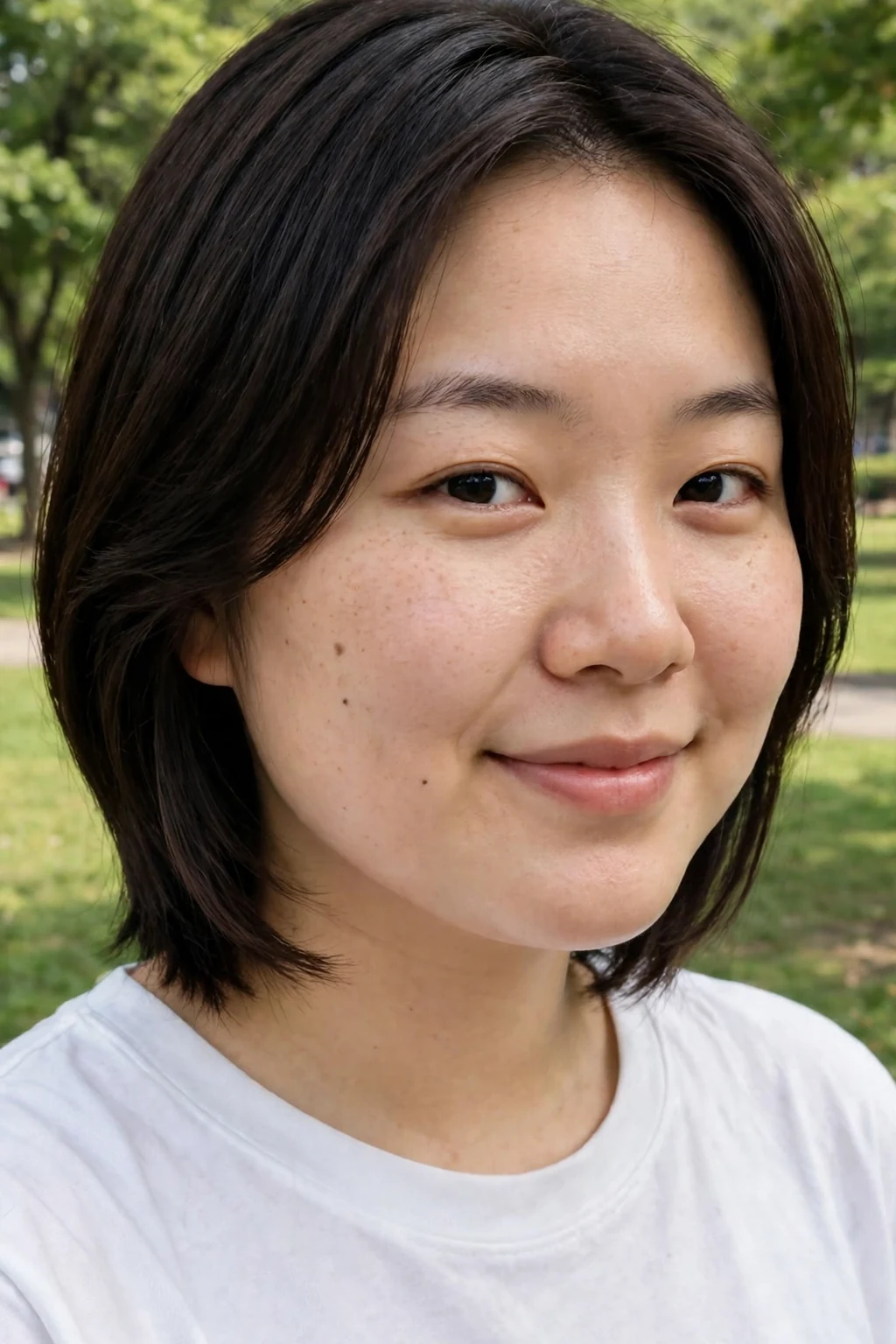
24. Modern Layered Shag
The modern layered shag is the 2020s refinement of the rock-and-roll classic: all the texture and cool-girl energy of a traditional shag, but with cleaner lines, softer graduation, and a more polished finish. The crown layers still deliver volume and piece-y texture, and the ends still have that lived-in feel, but the overall silhouette is more controlled and wearable — less costume, more fashion. Think shag grown up: the edge is still there, it is just wearing better shoes.
This updated version suits a wider range of hair types than the classic shag, including fine to medium hair, because the layering is strategic rather than aggressive. It flatters oval, heart, and square faces, and the modern finish makes it appropriate for professional settings that a wilder shag might not suit. Styling is versatile: wear it tousled with texture spray for weekend cool, or blow it out smooth with a round brush for a polished take that still has the shag's signature movement. A flat iron through the ends refines without removing character. Trims every eight weeks maintain the modern precision. Choose the modern layered shag when you want edge you can wear anywhere: it is the most versatile shag here, equally at home at a concert or a client meeting, and it proves that cool and polished are not opposites.

25. Classic Layered Cut
The classic layered cut is the one that started it all: even, beautifully blended layers that have flattered women for decades and will flatter them for decades more. There are no gimmicks here — just perfectly executed graduation that gives medium-length hair shape, movement, and a healthy, full appearance. The layers are balanced and harmonious, creating a silhouette that is neither too edgy nor too plain, with ends that fall in a soft, natural line and texture that reads as simply healthy, beautiful hair.
Its greatest strength is universality: this cut suits every face shape, every hair type from fine to coarse, and every age from teens to seventies. It is the safest recommendation a stylist can make and the hardest to get wrong. Styling options are endless — blow it out smooth, curl it, wear it straight, pin it up — because the balanced layers support every approach. A basic blow-dry with a round brush and a touch of smoothing serum is all most days require. Trims every eight to ten weeks keep it looking intentional. Choose the classic layered cut when you want a sure thing: it never looks dated, never looks try-hard, grows out gracefully, and lets your natural beauty and personal style take center stage. Sometimes the original is the original for a reason.
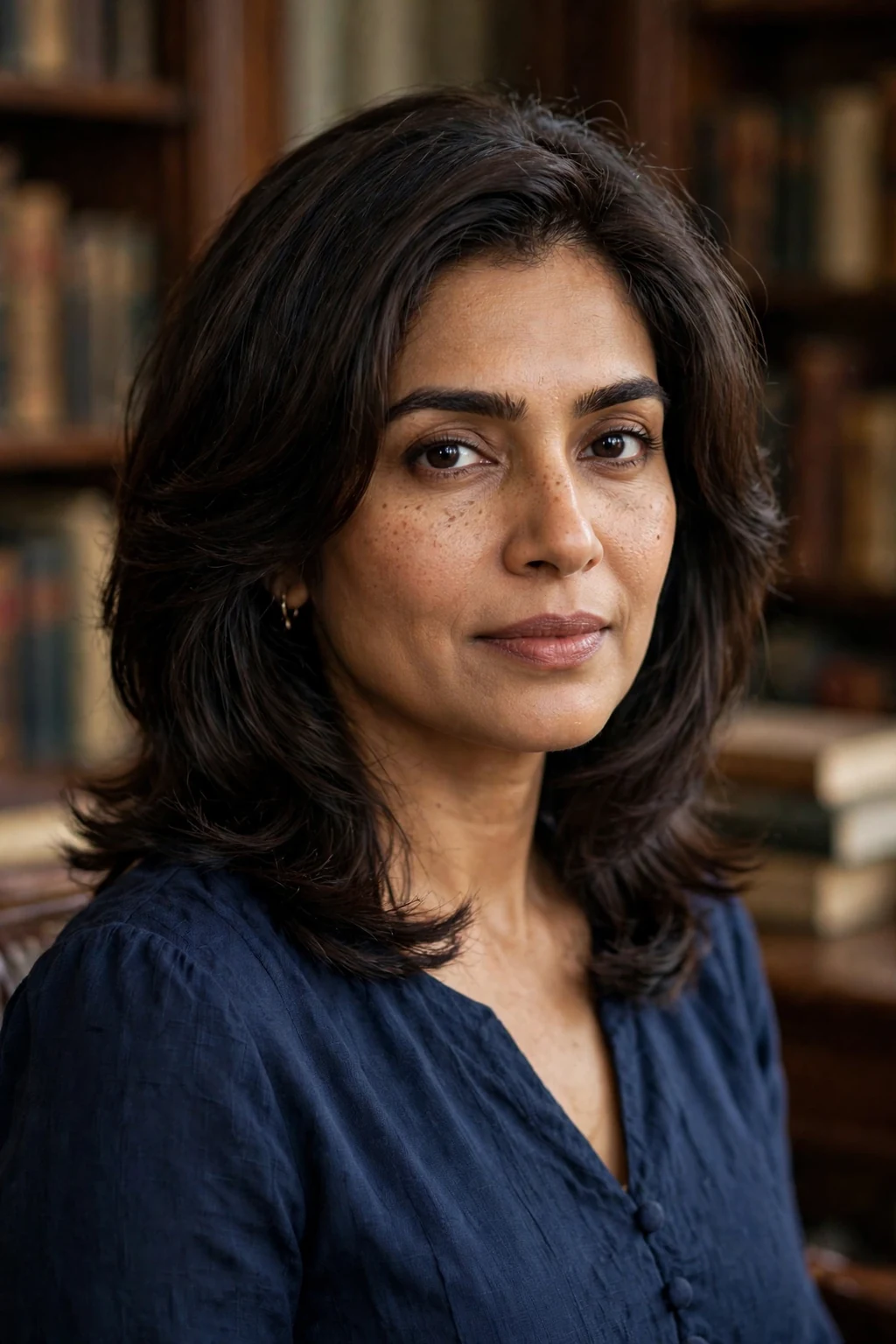
26. Tousled Mid-Length Layers
Tousled mid-length layers are the haircut for anyone who wants to look like they just stepped out of a breezy weekend, not a salon chair. The cut falls between the shoulders and collarbone, with long, broken-up layers cut through the mid-lengths and ends so the hair separates into soft, piece-y sections instead of sitting as one solid sheet. The texture is deliberately undone: airy, touchable, and full of natural movement, with ends that flick outward in different directions rather than curling under in a uniform line. A light texturizing spray or sea-salt mist brings out the separation, while the overall finish stays matte and relaxed instead of glossy or stiff. It reads as youthful and carefree, yet the length keeps it polished enough for work, dinner, or a night out. The beauty of this cut is how it adapts to your day, looking relaxed at brunch, polished with a blazer at work, and effortlessly cool at an evening gathering without any restyling in between.
This cut flatters oval, heart, and square faces especially well, because the tousled pieces break up strong lines and draw the eye to the cheekbones rather than the jaw. It works beautifully on wavy and fine-to-medium hair, where the layers create the illusion of fullness, and on thick hair once interior weight has been removed so the texture can move freely. To style it, rough-dry with your fingers, scrunch in a pea-sized amount of texture cream, and twist a few random sections around your fingers as it dries. A one-inch curling wand on just the top layer adds extra bend when you want more polish. Maintenance is forgiving: a trim every ten to twelve weeks keeps the ends fresh, and the grow-out is graceful because the layers simply get longer and softer. Try it if you want a cut that looks great with almost no effort. It also grows out beautifully, since the tousled texture disguises uneven growth, and a quick refresh with dry shampoo on the second day often looks even better than the freshly washed version.
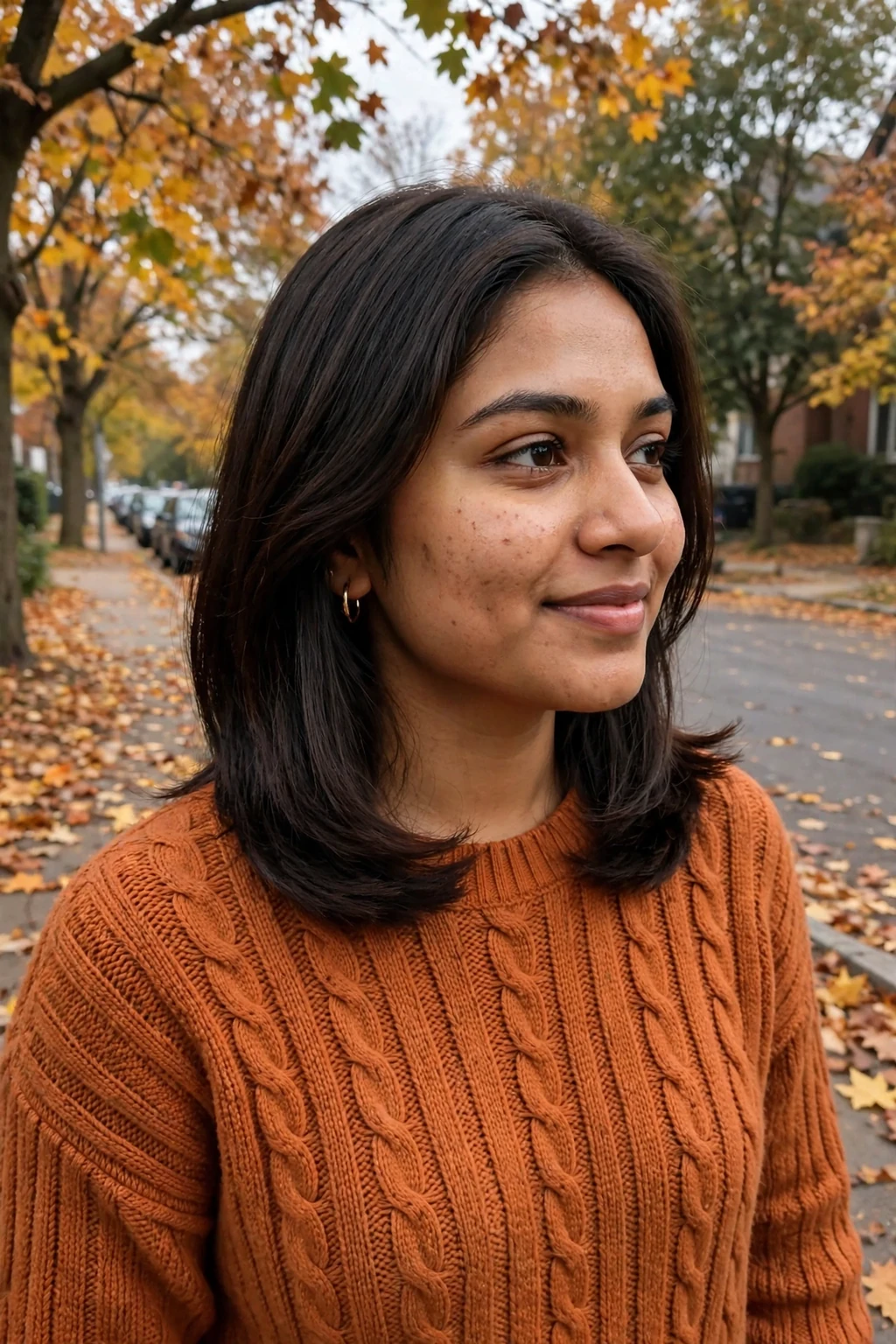
27. Sleek Glass Layers
Sleek glass layers pair the movement of a layered cut with a mirror-shine, ultra-smooth finish that looks expensive from every angle. The hair falls to the shoulders or just below, with long internal layers that remove weight without creating visible steps, so the silhouette stays clean and fluid. The defining feature is the finish: hair that reflects light like glass, with sealed ends, no frizz, and a liquid-smooth surface from root to tip. Achieving it takes a smoothing blowout with a paddle brush, a flat iron passed lightly over the outer layer only, and a drop of shine serum or glossing oil pressed through the ends. The result is a cut that looks intentional and refined, yet still swings and moves because the hidden layers keep it from hanging flat. The glass finish also photographs exceptionally well, catching light in a way that makes the hair look thicker, healthier, and more expensive, which is why it remains a favorite for weddings, portraits, and important presentations.
This style suits oval, long, and heart-shaped faces, where the sleek line elongates the neck and sharpens the cheekbones, and it is especially flattering on straight or slightly wavy hair that can hold a smooth finish. Fine hair gains the appearance of density because the polished surface catches light, while thick hair benefits from the internal layers that prevent a heavy, triangular shape. Styling starts with a heat protectant and a smoothing cream, followed by a blow-dry in sections with tension from a paddle brush, finishing with a cool shot to lock in shine. Maintenance means a trim every six to eight weeks to keep the ends blunt and healthy, plus a weekly glossing mask to preserve the shine. Choose it when you want layers that feel luxurious and boardroom-ready. For lasting results, sleep on a silk pillowcase to reduce friction overnight, and keep a small bottle of shine serum in your bag for quick touch-ups that restore the mirror-like finish before evening events.
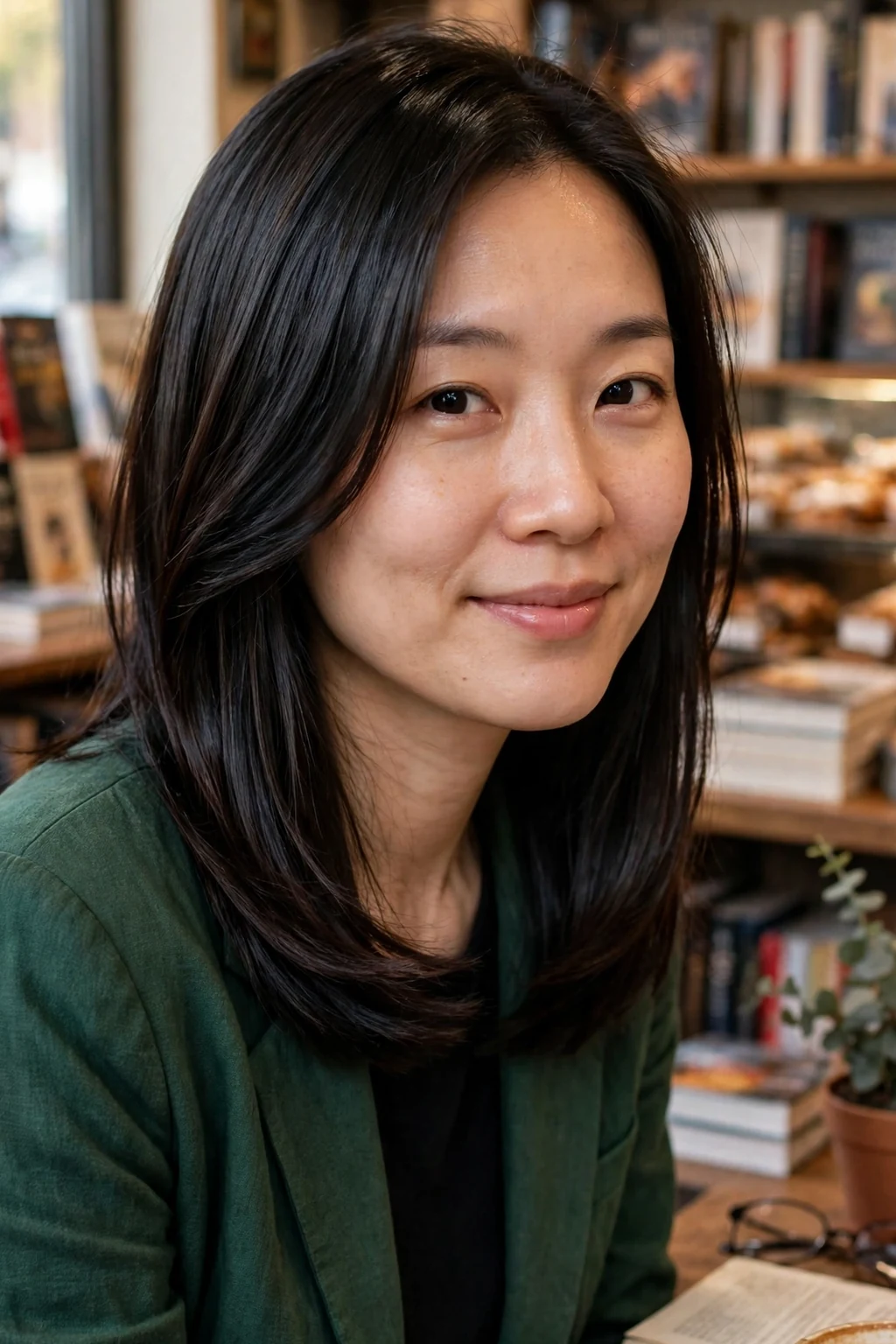
28. Layered Cut with Side-Swept Bangs
A layered cut with side-swept bangs is the classic face-framing combination that never dates, because the diagonal fringe instantly softens the forehead while the layers keep the rest of the hair full of movement. The bangs are cut long, usually sweeping from a deep side part across the brow to blend into the shortest face-framing layer near the cheekbone, so there is no harsh line where fringe ends and layers begin. The rest of the hair falls to the shoulders with long, blended layers that add bounce and prevent the style from looking heavy. Worn smooth, the sweep looks elegant and grown-up; worn with a little texture, it turns playful and romantic. It is a cut that photographs beautifully, since the diagonal line across the face adds instant structure to every angle. The diagonal sweep also has a slimming effect on photographs, creating a sense of movement across the face that flatters every angle, which is why this combination has remained popular for decades without ever feeling dated.
Side-swept bangs flatter round, square, and heart-shaped faces in particular, because the diagonal sweep breaks up width and draws attention toward the eyes. They work on straight, wavy, and fine-to-medium hair, and they are a gentle way to try a fringe without committing to a short, blunt bang. To style, blow-dry the bangs with a small round brush, directing them across the forehead and slightly away from the face, then set the sweep with a light-hold spray. The layers need only a quick blow-dry with a round brush or a few passes of a straightener for polish. Trims every six to eight weeks keep the sweep at the right length, since bangs that grow past the eyes lose their shape quickly. Pick this cut if you want an easy, face-flattering update. If your bangs start falling into your eyes between appointments, a quick at-home dusting of just the longest corner pieces can extend the style, though most wearers find the six-to-eight-week salon rhythm easy to maintain.
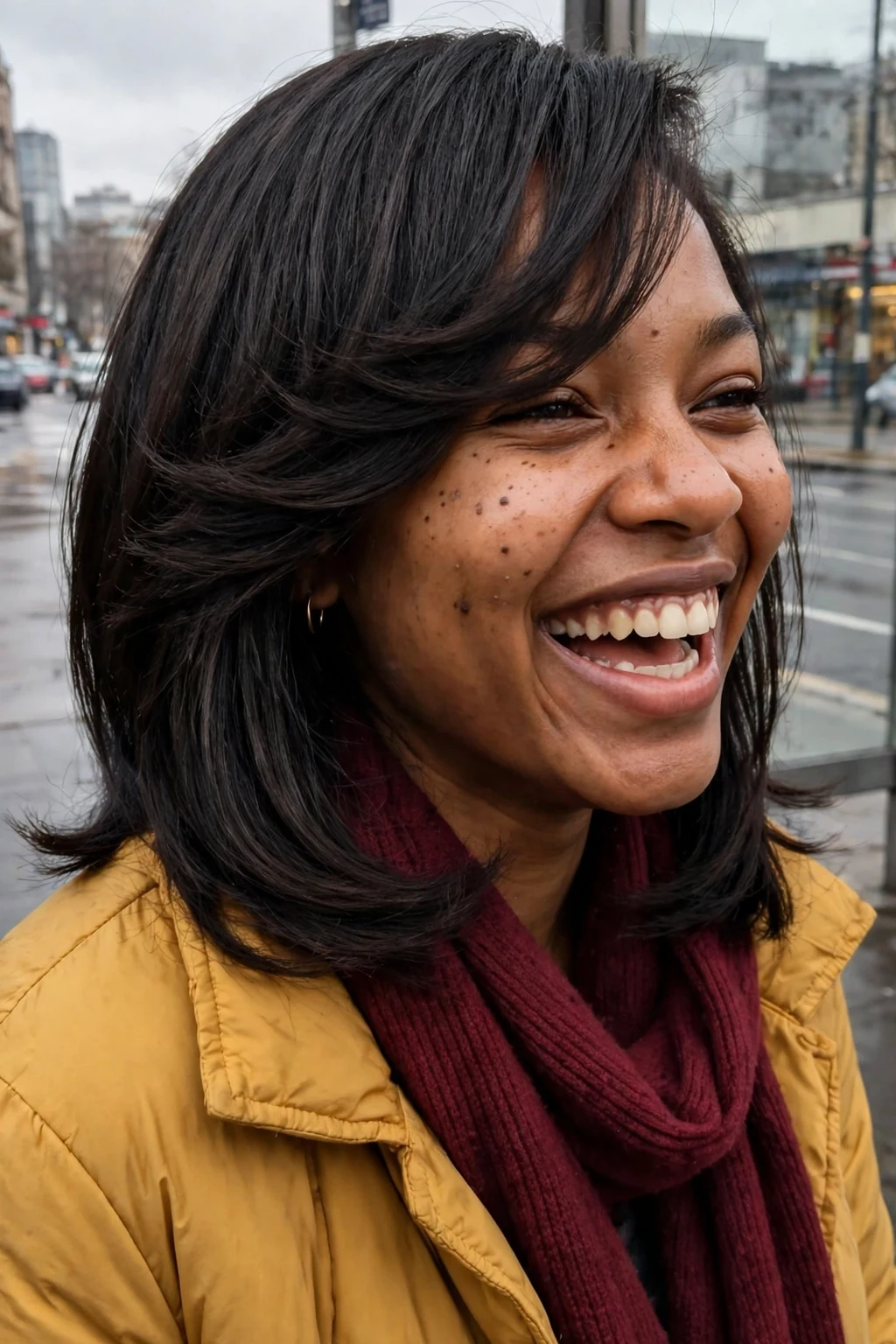
29. Textured Mid-Length Shag
The textured mid-length shag is a modern, wearable take on the classic rock-and-roll shag, scaled to sit between the chin and shoulders with plenty of attitude. Short, choppy layers through the crown create lift and volume on top, while longer, razored layers through the mid-lengths and ends shatter into piece-y points that move with every turn of the head. The texture is the star: gritty, separated, and deliberately imperfect, with a fringe or curtain bangs often finishing the look. A texturizing spray and a quick scrunch bring it to life, and it looks even better slightly undone, as though you have been running your fingers through it all day. Despite its edge, the medium length keeps it versatile enough for everyday wear. The shag also pairs beautifully with bold accessories, from statement earrings to leather jackets, because its rock-inspired texture gives even a simple outfit an instant sense of attitude and creative confidence.
This shag flatters oval, heart, and long faces, because the crown volume and fringe shorten the appearance of a longer face while the piece-y ends soften angular features. It is a dream for wavy, curly, and thick hair, since the heavy layering removes bulk and lets natural texture spring up, and fine hair can wear it with the help of volumizing mousse and texture powder. To style, apply mousse to damp hair, diffuse or rough-dry, then pinch small sections with a dab of pomade to define the pieces. A one-inch iron can add a few bends through the ends for extra separation. Maintenance is refreshingly low: trims every eight to ten weeks keep the shape, and the grow-out stays stylish because the layers simply soften. Try it for a bold, effortless edge. Between cuts, a monthly clarifying wash prevents product buildup from dulling the texture, and a light sea-salt spray revived on dry hair can bring back the piece-y separation on days when the shag starts to fall flat.
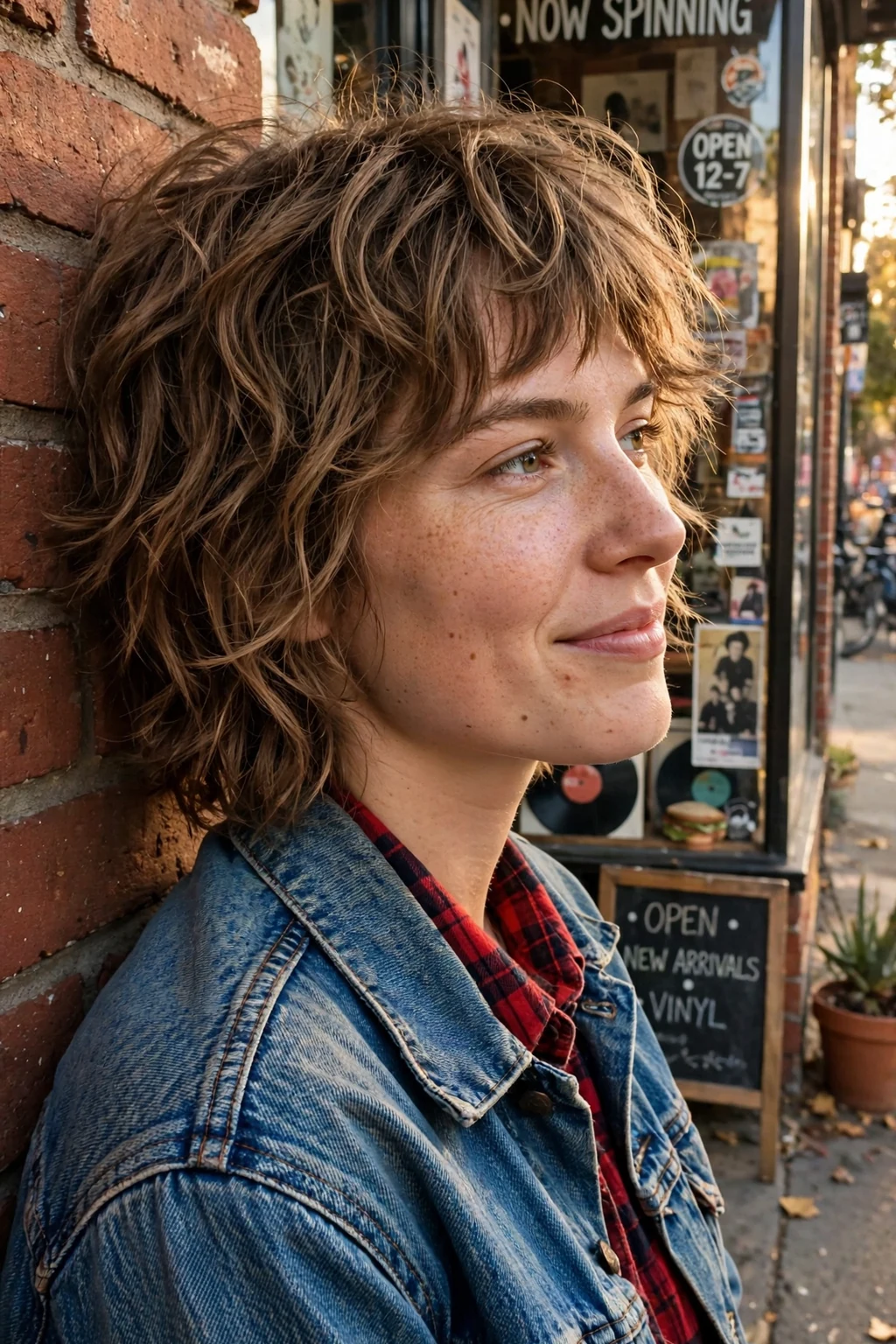
30. Soft Wavy Layers
Soft wavy layers are made for hair that already has a natural bend, turning that gentle wave into a polished, flowing shape instead of a shapeless mass. The cut sits at the shoulders or collarbone, with long layers that follow the wave pattern rather than fighting it, so each wave falls into place and builds on the one beneath. The finish is romantic and fluid: waves that start around the cheekbones and gather momentum toward the ends, with enough layering to keep the shape light but not so much that the waves turn frizzy or thin. A curl-enhancing cream scrunched into damp hair, followed by diffusing or air-drying, gives the waves definition without stiffness. The result looks soft, feminine, and completely natural, as if the waves were always meant to fall this way. The romantic finish also transitions beautifully from day to evening, since a few extra waves through the top layer and a touch of shine spray are all it takes to turn an everyday style into something occasion-ready.
This cut is especially flattering on oval, round, and heart-shaped faces, where the waves add width at the right places and soften the jawline. It works best on naturally wavy or wavy-permed hair of fine to medium density, though straight hair can achieve it with a large-barrel curling iron and a brush-out. Styling is simple: apply a lightweight curl cream, scrunch upward, and either diffuse on low heat or let the hair air-dry, then break up the waves gently with your fingers. Avoid heavy oils, which drag waves down, and use a wide-tooth comb rather than a brush to keep frizz away. A trim every eight to ten weeks removes split ends and keeps the layers balanced. Choose soft wavy layers if you want your natural texture to shine. To keep the waves defined between washes, braid the hair loosely overnight for gentle reinforcement, and refresh the shape in the morning with a light mist of water mixed with a drop of curl cream.

31. Layered Cut with Bottleneck Bangs
Bottleneck bangs are the clever fringe that suits almost everyone, and paired with medium-length layers they create one of the most flattering cuts of the moment. The fringe is narrow at the top, hugging the center of the forehead, then widens and lengthens as it curves outward toward the cheekbones, like the neck of a bottle, before melting into the face-framing layers. The rest of the hair falls to the shoulders with soft, blended layers that echo the curve of the fringe. The effect is a beautiful frame around the eyes and cheekbones, with a shape that feels both retro and completely current. Worn with a bouncy blowout, the bottleneck fringe gives the whole cut a seventies-inspired glamour that still feels fresh. The bottleneck shape also works beautifully with updos and half-up styles, since the curved fringe stays in place around the face while the rest of the hair is gathered back, keeping the look soft rather than severe.
Bottleneck bangs flatter round, oval, and heart-shaped faces because the curved shape opens up the center of the face while the longer sides slim the cheeks. They work on straight, wavy, and fine-to-medium hair, and they are more forgiving than blunt bangs because they grow out into face-framing layers rather than an awkward in-between stage. To style, blow-dry the fringe with a small round brush, rolling it slightly under and outward at the sides, then blow out the layers with a medium round brush for bounce. A light texturizing spray keeps the fringe from sticking to the forehead. Trim the fringe every four to six weeks to hold the shape, with full layer trims every eight weeks. Try this cut if you want a fringe that flatters without the commitment. Because the fringe grows out into face-framing layers, you can stretch the time between fringe trims if needed, simply sweeping the longer pieces to the side until your next salon visit without any awkward stage.
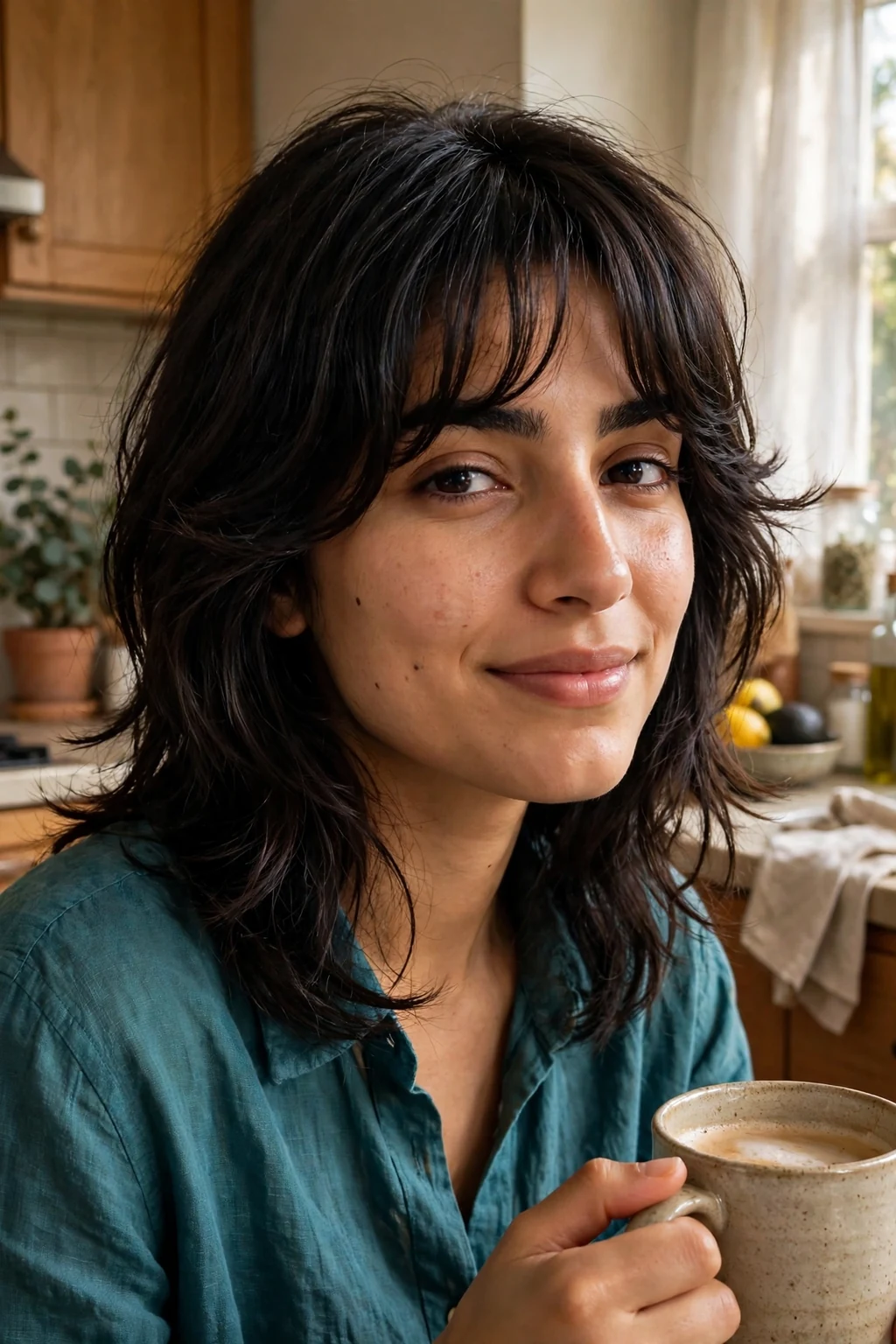
32. Bouncy Curled Layers
Bouncy curled layers turn medium-length hair into a cascade of springy, defined curls that move with energy and bounce. The cut falls around the shoulders, with layers staggered so that shorter curls on top create lift while longer curls beneath give the shape weight and length. Each layer is shaped to encourage the curl pattern rather than suppress it, so curls form in soft, rounded spirals instead of collapsing into a triangle. The finish is full and joyful: curls that catch the light, spring back when touched, and hold their shape all day with the help of a curl cream and a diffuser. It is a cut with real presence, made for anyone who loves volume and does not want their curls tamed into submission. The joyful volume of this cut also makes it a natural choice for celebrations and photographs, where the springy curls catch the light and give the whole style a sense of movement and celebration.
This style flatters oval, round, and square faces, because the rounded curl shape softens angles and the layers prevent the width from sitting too low on the face. It is ideal for naturally curly and coily hair of medium to thick density, and for wavy hair that holds a curl with styling. To style, apply curl cream to soaking-wet hair, scrunch upward, and diffuse on low heat until about eighty percent dry, then let the rest air-dry to avoid frizz. A pick at the roots adds lift without disturbing the curl clumps. Maintenance means a trim every eight to ten weeks, ideally a dry curl-by-curl cut, plus a weekly deep-conditioning mask to keep curls hydrated and springy. Choose bouncy curled layers to celebrate your natural curl. To protect the curl pattern overnight, gather the hair loosely on top of the head in a pineapple shape with a silk scrunchie, which preserves the bounce and prevents the curls from flattening while you sleep.
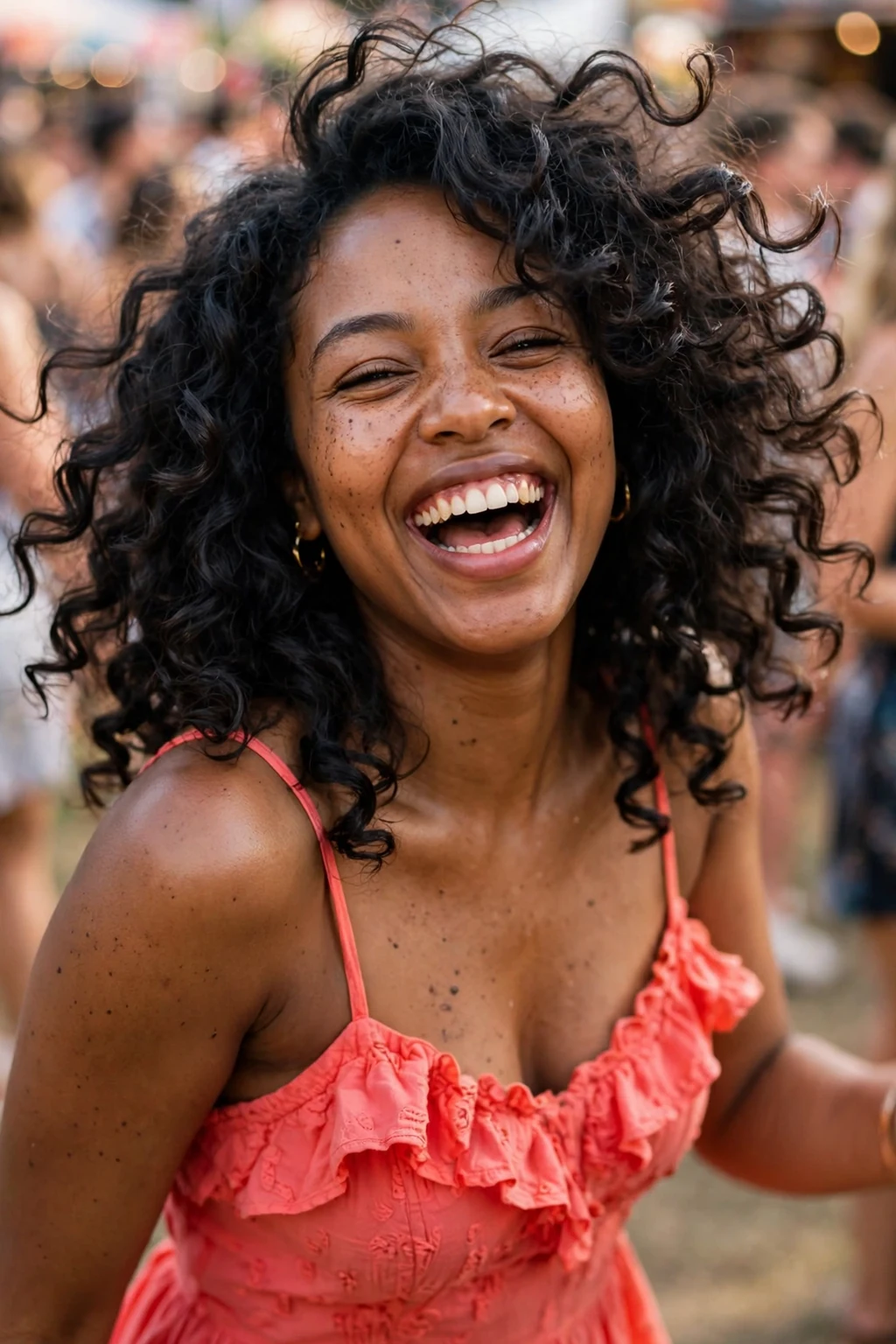
33. Asymmetrical Layered Cut
An asymmetrical layered cut is the bold, fashion-forward choice for anyone who wants their medium-length hair to make a statement. One side of the hair falls noticeably longer, often grazing the collarbone, while the other side is cut shorter, around the jaw or chin, creating a dramatic diagonal line that draws the eye across the face. Layers are woven through both sides so the asymmetry feels intentional and fluid rather than accidental, with the longer side carrying soft, blended layers and the shorter side featuring sharper, more textured pieces. The finish can be sleek and graphic when straightened, or tousled and edgy with texture spray. Either way, it is a cut that turns heads and photographs with striking geometry. The dramatic diagonal line also makes this cut a favorite for creative professionals and fashion lovers, since it reads as intentional and artistic while still being completely wearable for everyday life.
Asymmetry flatters oval, round, and heart-shaped faces, because the diagonal line breaks up symmetry and creates the illusion of a slimmer, more sculpted face. It works on straight, wavy, and fine-to-thick hair, though very curly hair will soften the graphic line unless it is smoothed. To style, blow-dry with a paddle brush for a sleek finish, or add texture spray and scrunch for an undone edge, always keeping the part deep on one side to emphasize the difference in length. A flat iron can sharpen the longer side for extra drama. Maintenance is more frequent than most layered cuts: trims every six weeks keep the asymmetry crisp, since even a little growth blurs the line. Pick this cut if you love standing out. If you ever want to soften the asymmetry for a formal occasion, a deep side part with the longer side smoothed over the shoulder creates a more classic silhouette without losing the cut's distinctive character.
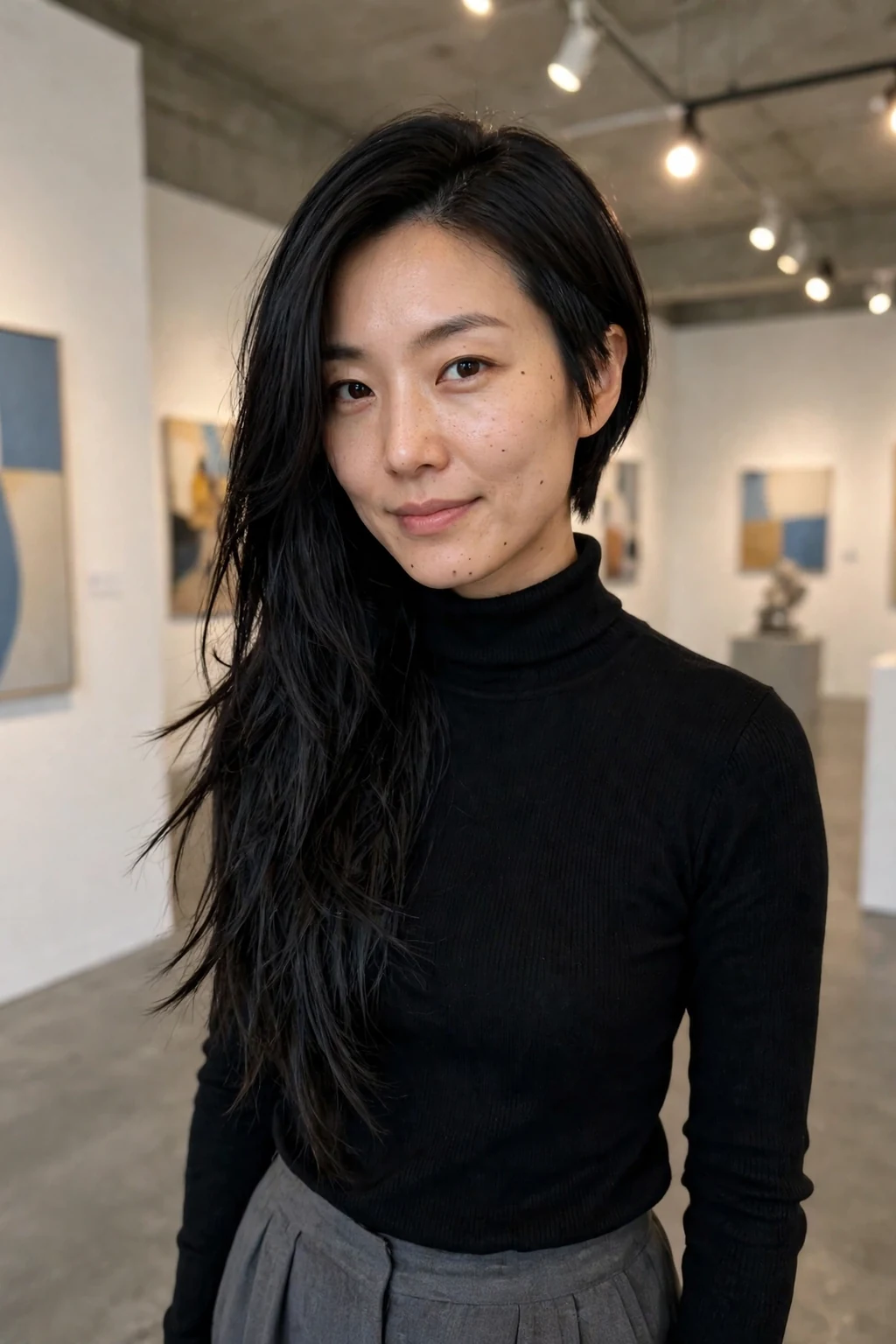
34. Piecey Mid-Length Layers
Piecey mid-length layers are all about definition: instead of blending into one smooth sheet, the hair is cut so it separates into distinct, touchable pieces that give the style texture and personality. The length sits at the shoulders, with layers cut at slightly different lengths and point-cut at the ends, so each section moves independently and catches the light differently. The finish is modern and a little bit edgy, with visible separation that keeps the cut from ever looking flat or boring. A small amount of pomade or texture paste, warmed between the palms and worked through the ends, defines the pieces without making them stiff or sticky. It is the perfect cut for anyone who finds perfectly smooth hair a little too predictable. The defined pieces also make this cut incredibly photogenic, since each separated section catches light differently and gives the hair a sense of depth and dimension that flat, blended cuts simply cannot match.
Piecey layers flatter oval, square, and heart-shaped faces, because the separated ends break up strong lines and add visual interest around the jaw and cheekbones. They work on straight, wavy, and fine-to-medium hair, and they are especially good for fine hair, since the piece-y texture creates the illusion of thickness and movement. To style, blow-dry with a round brush for a smooth base, then define the ends with a pea-sized amount of pomade, twisting small sections between your fingers. A texturizing spray through the mid-lengths adds grit and hold. Maintenance is easy: trims every eight to ten weeks keep the ends sharp, and the grow-out is gentle because the pieces simply soften over time. Try piecey layers if you want texture with attitude. For extra definition on special occasions, warm a tiny amount of pomade between your fingertips and twist the ends of just the top layer, leaving the underlayers smooth so the piece-y texture stays controlled rather than messy.
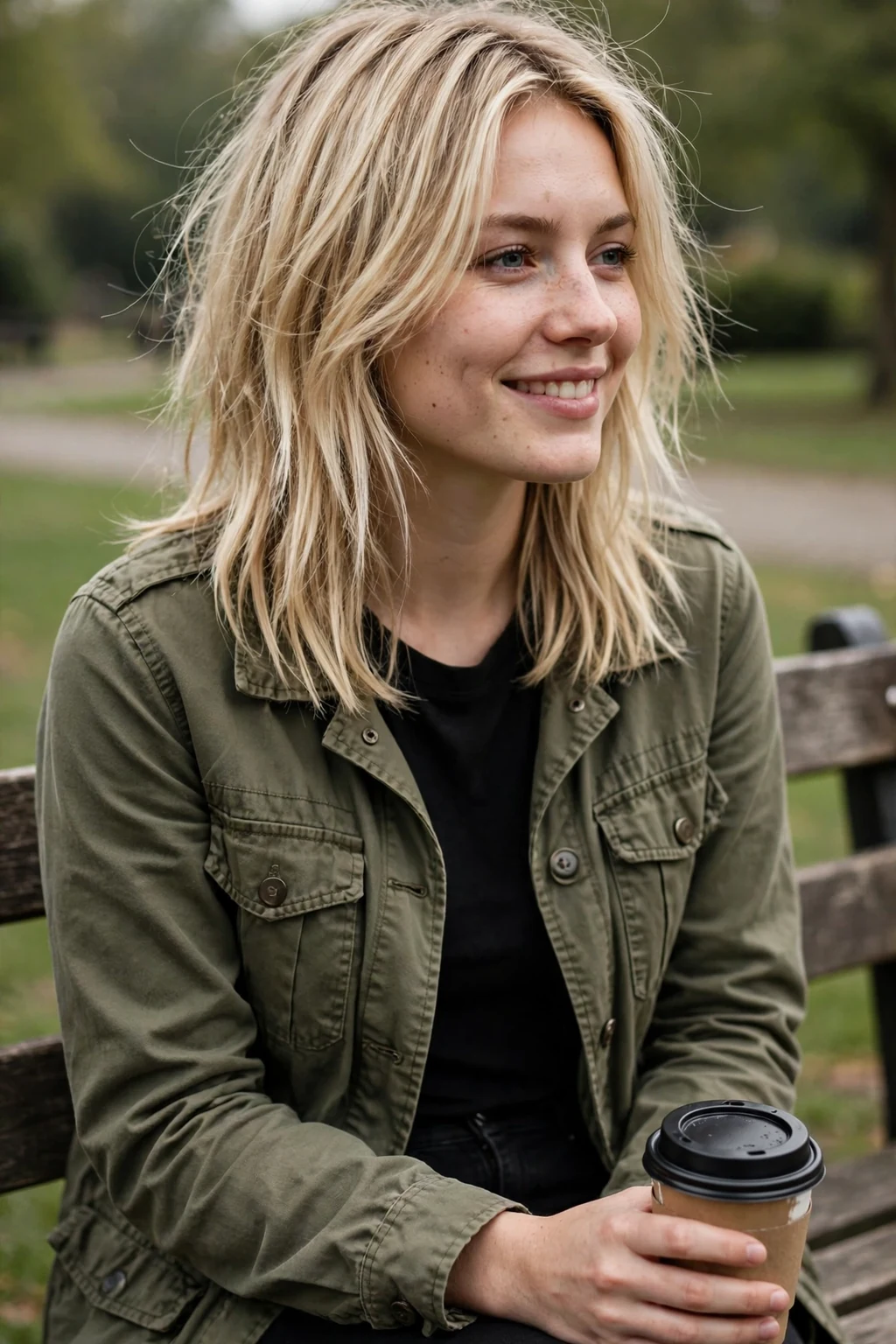
35. Layered Cut with Wispy Bangs
A layered cut with wispy bangs is the softest way to wear a fringe, pairing feather-light, see-through bangs with flowing medium-length layers. The bangs are cut thin and airy, with fine strands that fall across the forehead in a sheer veil rather than a solid wall, so the brows and a hint of skin show through. They blend gently into the face-framing layers at the temples, creating a seamless, romantic frame for the eyes. The rest of the hair falls to the shoulders with long, blended layers that keep the shape light and full of movement. The overall effect is youthful, dreamy, and effortlessly pretty, like a style borrowed from a romantic film rather than a salon poster. The sheer, airy fringe also pairs beautifully with delicate jewelry and soft makeup, enhancing the romantic, dreamy quality of the whole style without ever overpowering the face or the features. It is a gentle, low-risk way to try a fringe.
Wispy bangs flatter nearly every face shape, but they are especially kind to long and oval faces, where the soft fringe visually shortens the forehead, and to heart-shaped faces, where they balance a wider forehead. They work on straight, wavy, and fine-to-medium hair, and they are ideal for anyone nervous about bangs, since their sheerness makes them easy to sweep aside or grow out. To style, blow-dry the fringe with a small round brush or simply smooth it with your fingers as it air-dries, using a tiny amount of lightweight cream to prevent flyaways. The layers need only a quick blowout or a few bends with a curling iron. Trim the fringe every five to seven weeks to keep it wispy. Choose this cut for a gentle, romantic update. Because wispy bangs are so lightweight, they rarely need heavy styling products, and a simple finger-comb after washing is often enough to settle them into their natural, feathery fall across the forehead.
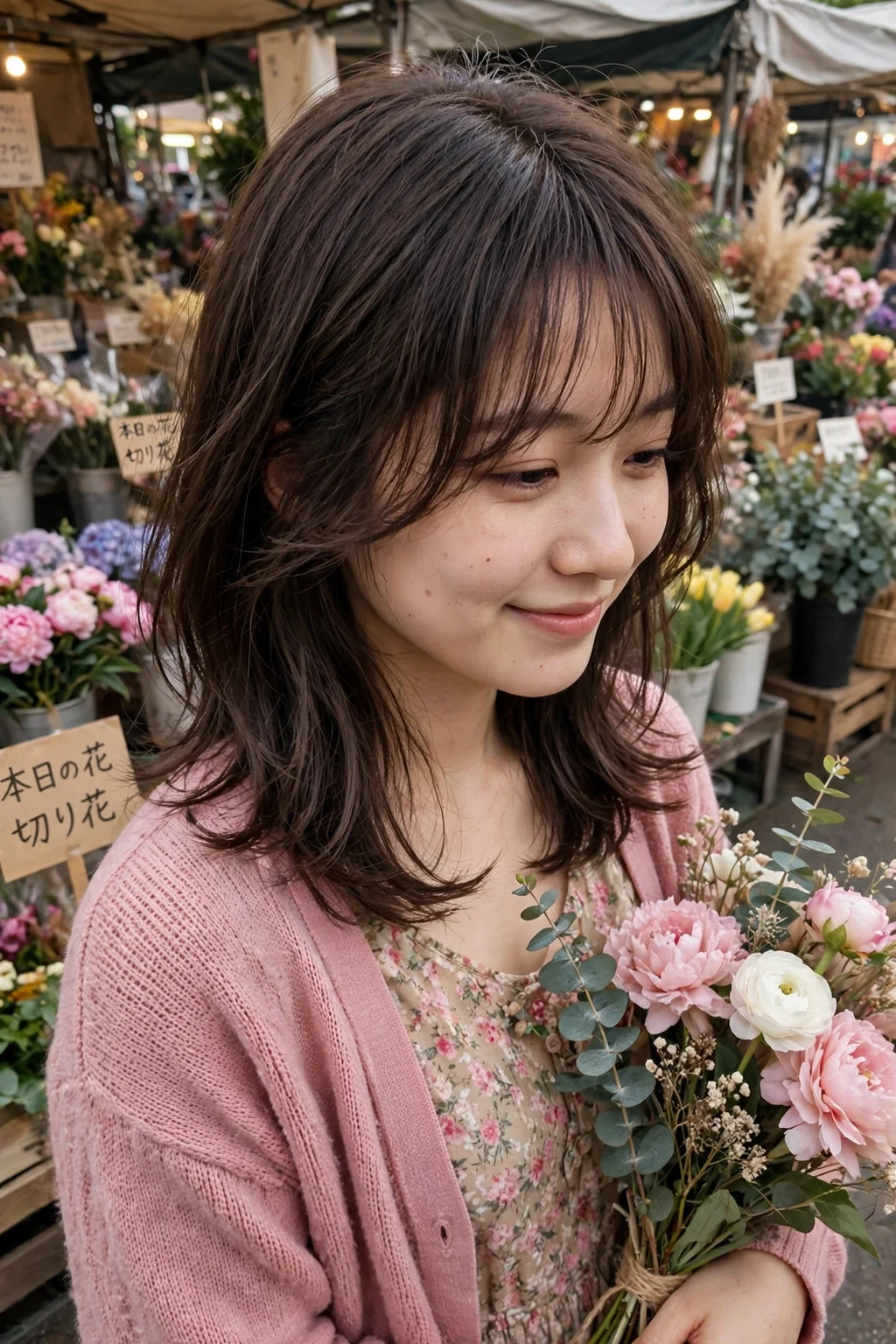
36. Curly Layered Cut
A curly layered cut is the foundation of great curly hair, because curls need layers to have shape instead of collapsing into a heavy triangle. The cut falls to the shoulders, with layers carved to follow the natural curl pattern so that shorter curls on top create volume while longer curls below provide length and weight. The silhouette is rounded and balanced, with curls that spring up evenly rather than sitting flat on top and wide at the bottom. A curl-defining cream and a diffuser bring out the pattern, while the layers ensure each curl clump has room to form and move. The result is hair that looks intentionally shaped, healthy, and full of life, with curls that bounce instead of dragging down. The rounded, balanced silhouette also means this cut looks wonderful from behind, with curls that fall in an even, cloud-like shape rather than tapering into a point or spreading into an uncontrolled triangle.
This cut flatters oval, round, and heart-shaped faces, because the rounded shape frames the face softly and the layers keep volume at the crown rather than at the jaw. It is designed for naturally curly and wavy-curly hair of all densities, and it works best when cut dry, curl by curl, so the stylist can see exactly how each curl will fall. To style, apply leave-in conditioner and curl cream to wet hair, scrunch upward, and diffuse gently or air-dry, then fluff the roots with a pick for lift. Avoid brushing dry curls, which creates frizz, and sleep on a satin pillowcase to preserve the pattern. Trims every eight to twelve weeks keep the shape, with a deep-conditioning mask weekly. Choose it to give your curls their best shape. Regular deep-conditioning treatments are the secret to keeping the layers springy, since hydrated curls hold their shape far better than dry ones, and a weekly mask makes a visible difference within a month.
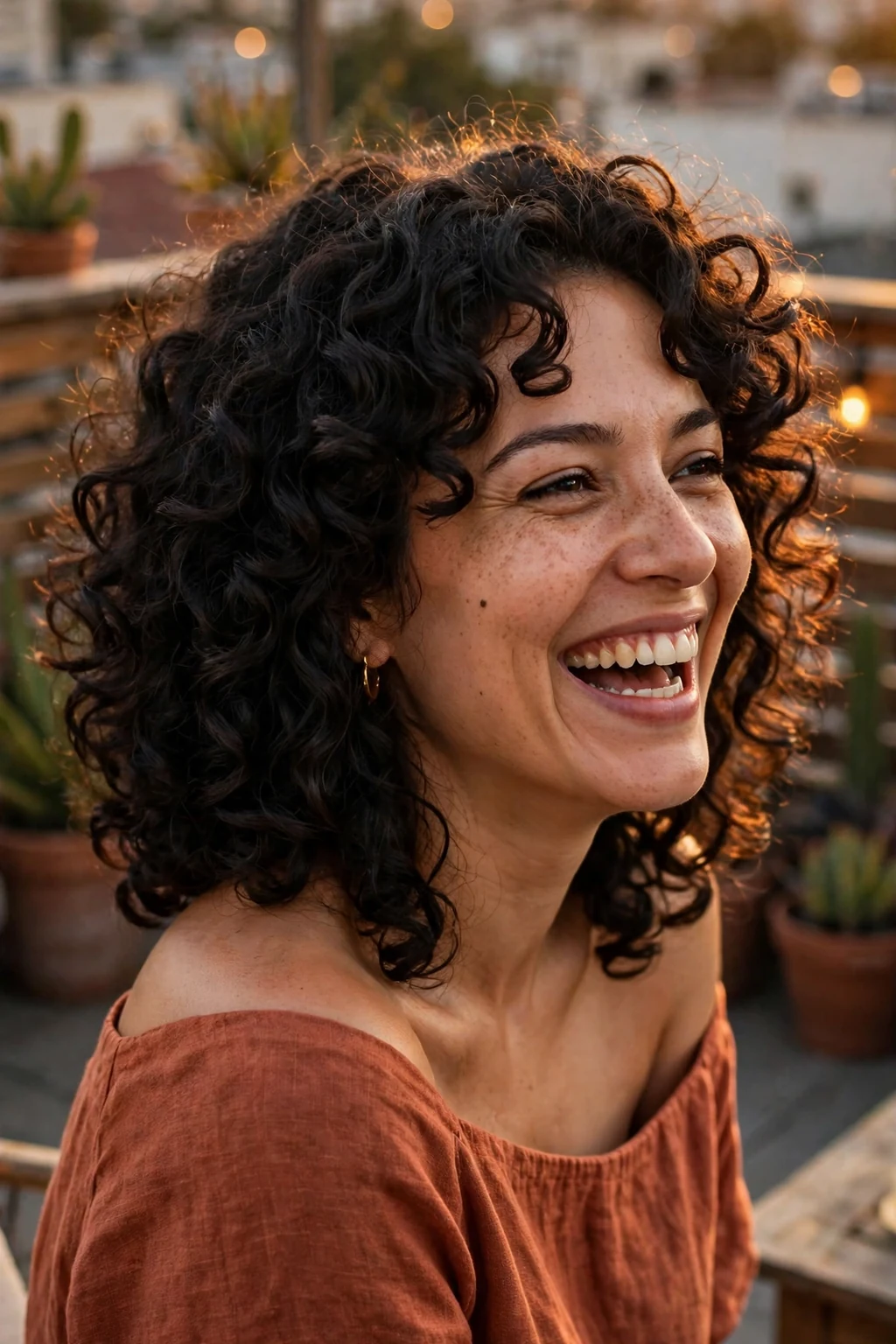
37. Layered Butterfly Cut
The layered butterfly cut is the viral sensation that gives medium-length hair the drama of long, flowing layers with the bounce of a short cut. Short, face-framing layers are cut around the chin and cheekbones, like butterfly wings opening around the face, while the longer layers beneath fall to the shoulders and beyond. When the hair is blown out, the short layers flip and bounce around the face while the long layers swing freely, creating a shape that is both voluminous and light. The finish is glamorous and full of movement, with hair that looks thick, bouncy, and impossibly healthy. It is a cut that begs for a big, bouncy blowout and rewards the effort with serious impact. The dramatic contrast between the short, bouncy face-framing layers and the long, swinging lengths also makes this cut exceptionally flattering in motion, with hair that seems to dance around the face as you turn your head.
The butterfly cut flatters oval, long, and heart-shaped faces, because the short layers around the face add width and softness where it is needed most, while the long layers elongate the neck. It works best on medium-to-thick straight or wavy hair that can hold a blowout, and fine hair can wear it with volumizing mousse and root-lifting spray. To style, blow-dry with a large round brush, rolling the face-framing layers away from the face and the longer layers under for bounce, then set with a light-hold spray. Velcro rollers on the top sections add extra lift. Maintenance means trims every eight weeks to keep the short layers from growing into the long ones, plus regular blowouts to show off the shape. Try it for maximum drama. To keep the butterfly shape at its best, ask your stylist to preserve the distinction between the short and long layers at every trim, since allowing them to merge is the quickest way to lose the cut's signature winged effect.
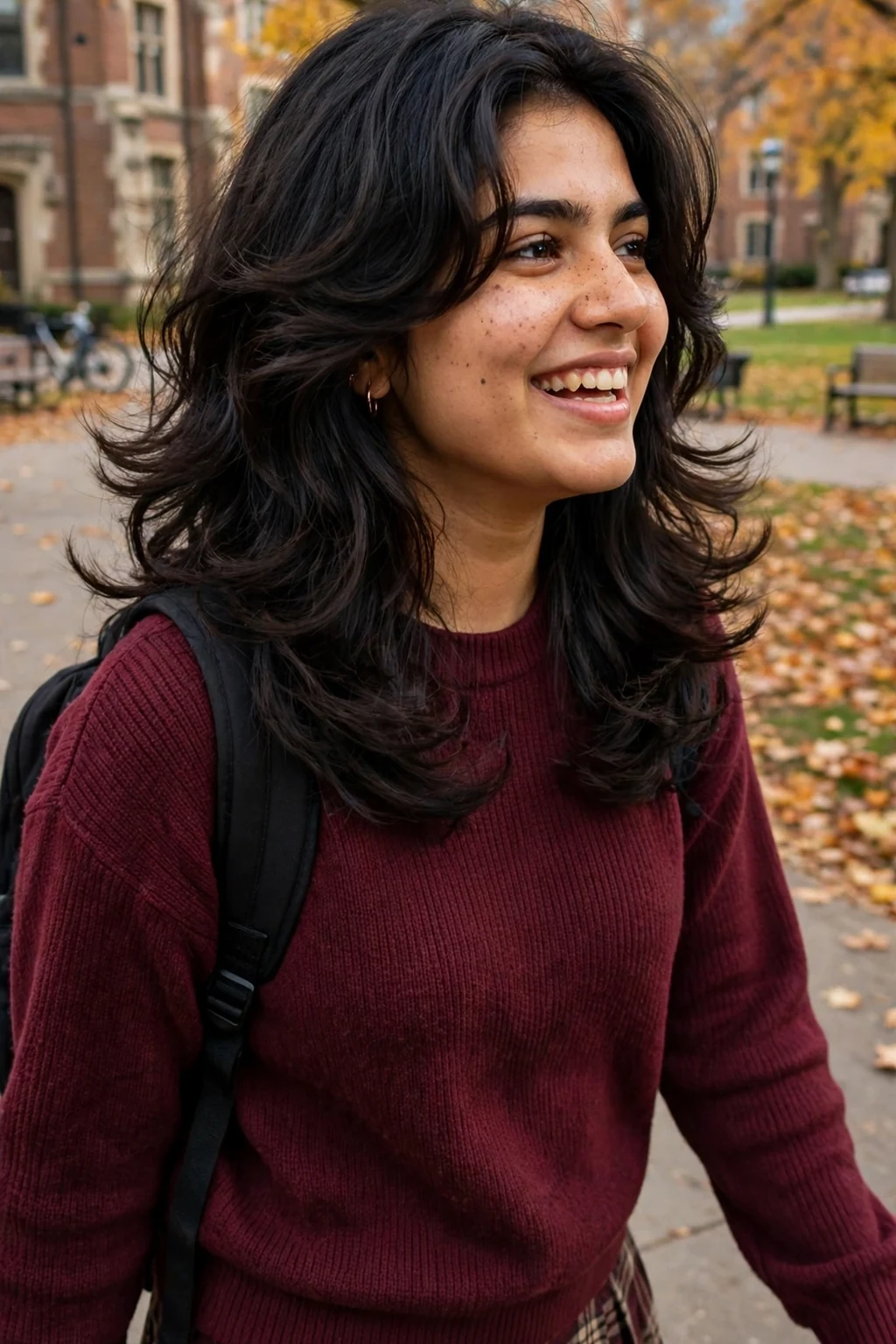
38. Feathered Flip Layers
Feathered flip layers bring back the breezy, seventies-inspired movement that makes medium-length hair look like it is always in motion. The cut sits at the shoulders, with layers feathered so that the ends flick outward rather than curling under, creating a winged, airy silhouette around the face and shoulders. The feathering is achieved by point-cutting and slide-cutting the ends, so each layer tapers to a soft point instead of a blunt line. The finish is light and playful, with hair that flips and bounces as you move, especially when styled with a round brush rolled outward at the ends. It is a cut with vintage charm that feels completely modern when paired with a fresh, glossy finish. The outward flicks also give this cut a playful, youthful energy that works beautifully with casual outfits, turning a simple jeans-and-top combination into something that feels styled and put-together with almost no effort.
Feathered flips flatter oval, square, and heart-shaped faces, because the outward flicks soften the jawline and add width around the cheekbones in a flattering way. They work on straight, wavy, and fine-to-medium hair, and they are a wonderful choice for fine hair, since the flipped ends create the illusion of fullness and swing. To style, blow-dry with a medium round brush, rolling the ends outward and away from the face, then flick a few pieces with a flat iron turned outward for extra definition. A lightweight shine spray finishes the look without weighing it down. Trims every six to eight weeks keep the feathered ends crisp, since flipped layers lose their shape as they grow. Choose this cut for a fun, retro bounce. A quick pass with a flat iron turned outward on just the top layer can revive the flips between washes, giving the style a fresh, bouncy finish in under five minutes on busy mornings.
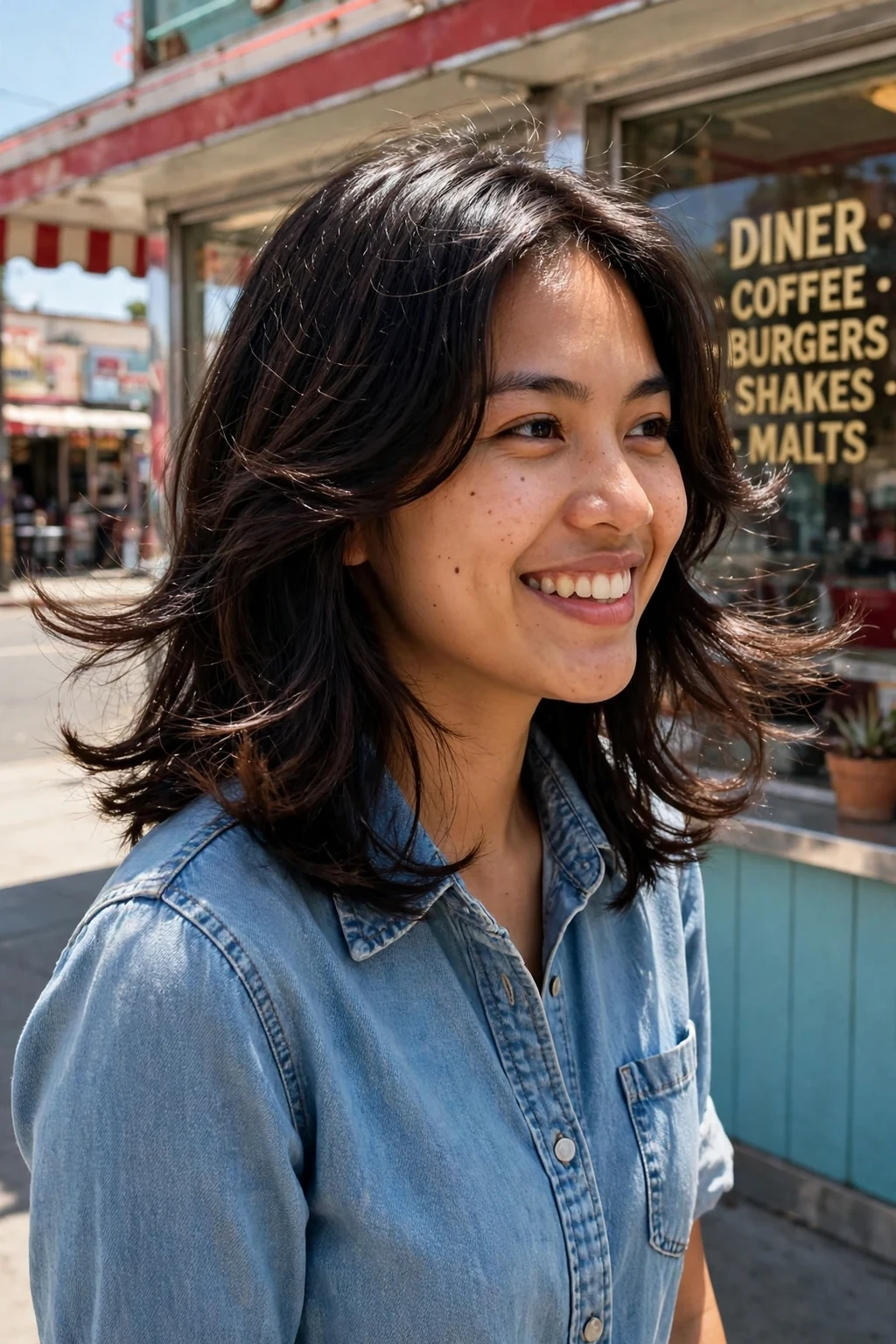
39. Deep Side-Part Layers
Deep side-part layers are the red-carpet trick for making medium-length hair look instantly glamorous, because a dramatic part changes the whole balance of the cut. The hair is parted far to one side, so a heavy sweep of layered hair falls across the forehead and frames one side of the face, while the other side stays sleeker and tucked behind the ear. Layers are cut to support the sweep, with longer pieces on the heavy side that curve softly around the cheek and jaw, and shorter layers beneath that keep the shape from collapsing. The finish is old-Hollywood elegant when smoothed, or modern and sultry when worn with loose waves. It is a cut that turns an everyday layered style into something occasion-ready. The glamorous sweep also works beautifully for formal events, since it pairs naturally with statement earrings and elegant necklines, drawing the eye upward and giving the whole look a polished, red-carpet quality.
A deep side part flatters round, square, and heart-shaped faces, because the diagonal sweep slims the face and draws attention to the eyes and cheekbones. It works on straight, wavy, and medium-to-thick hair, and it is especially good for anyone who wants volume without teasing, since the weight of the sweep naturally lifts the roots. To style, create the part while the hair is damp, blow-dry the heavy side with a round brush for smoothness and lift, and tuck the lighter side behind the ear with a light-hold spray. A curling iron can add soft waves through the sweep for evening glamour. Trims every eight weeks keep the layers balanced, and the part can be moved as it grows. Pick this cut for instant elegance. To keep the deep part from migrating during the day, set the roots on the heavy side with a light-hold spray while the hair is still slightly damp, which trains the part to stay exactly where you placed it.
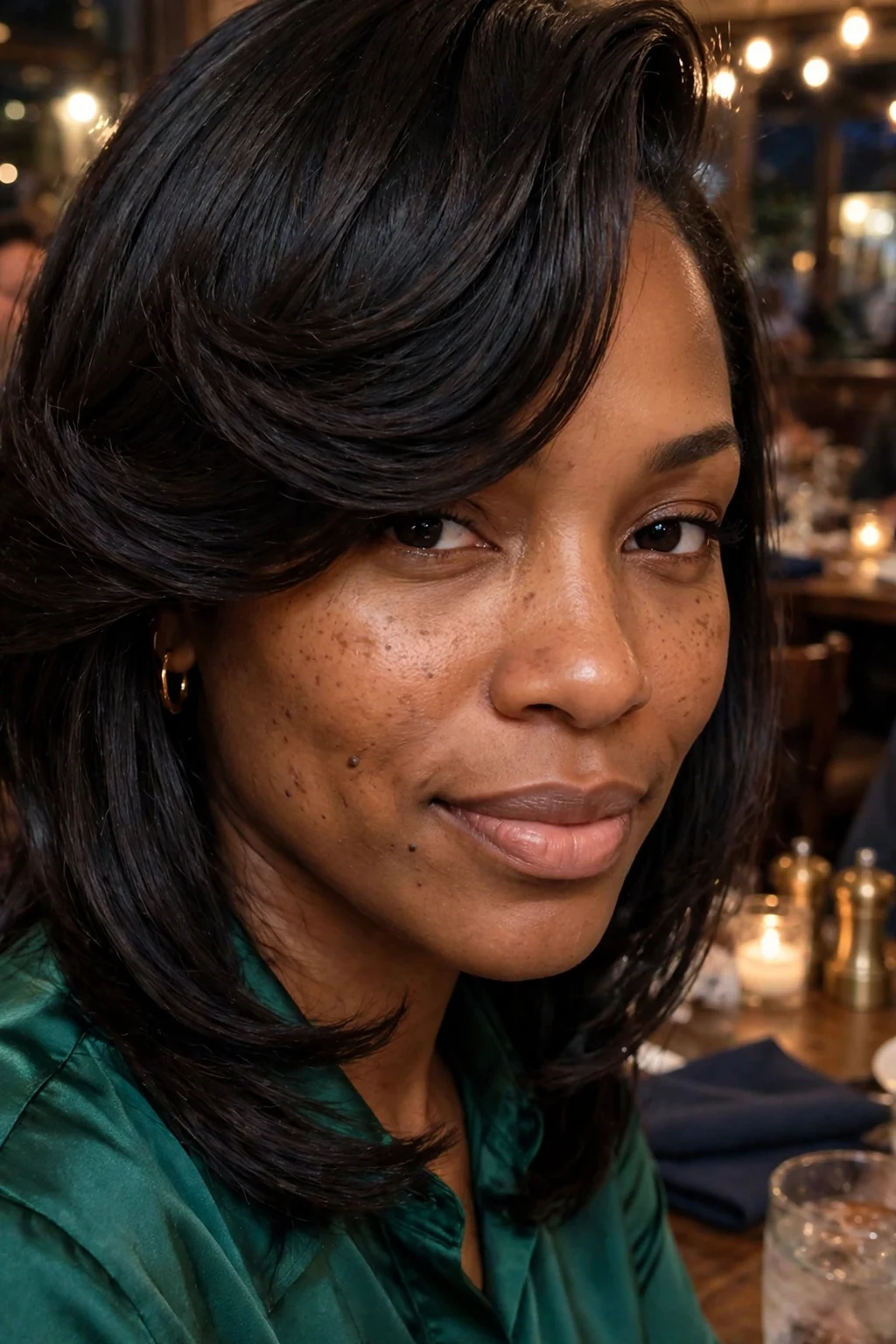
40. Layered Cut with Long Bangs
A layered cut with long bangs is the versatile middle ground between a full fringe and no fringe at all, giving you face-framing softness without the high maintenance of short bangs. The bangs fall to the cheekbones or chin, long enough to tuck behind the ears or sweep to the side, and they blend seamlessly into the shortest layers around the face. The rest of the hair sits at the shoulders with long, flowing layers that add movement and keep the style from feeling heavy. Worn forward, the long bangs frame the eyes beautifully; worn swept back, they disappear into the layers for a completely different look. It is a cut with built-in versatility, perfect for anyone who likes to change their style day to day. The cheekbone-length pieces also make this cut a wonderful choice for growing out a shorter fringe, since the long bangs bridge the gap gracefully and never pass through an awkward, eye-poking stage.
Long bangs flatter oval, long, and heart-shaped faces, because the cheekbone-length pieces break up the length of the face and highlight the eyes. They work on straight, wavy, and fine-to-thick hair, and they are the easiest fringe to grow out, since they simply become another face-framing layer. To style, blow-dry the bangs with a round brush, curving them slightly toward the face, then style the layers as usual with a blowout or loose waves. A texturizing spray keeps the bangs from falling flat against the forehead. Maintenance is simple: trim the bangs every eight to ten weeks along with the layers, and they never reach that awkward poking-your-eyes stage. Choose this cut if you want fringe flexibility. On days when you want the bangs completely out of your face, a few bobby pins tucked discreetly at the temples can sweep them back into the layers, giving you a totally different look without any cutting.
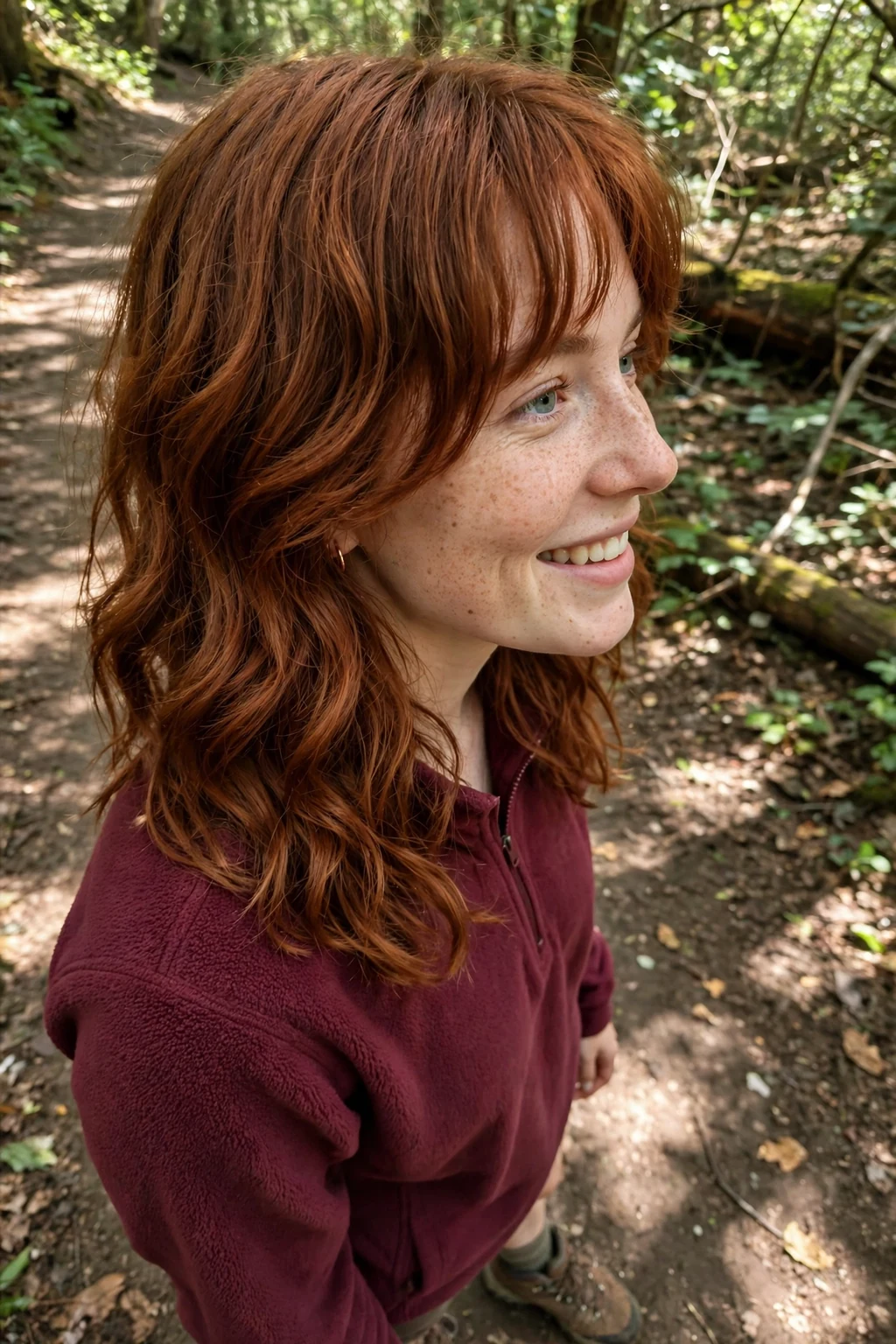
41. Effortless Air-Dried Layers
Effortless air-dried layers are designed for real life, for mornings when you want to wash, scrunch, and go without ever picking up a blow dryer. The cut falls to the shoulders with long, soft layers that are shaped to fall naturally as the hair dries, so the texture does the styling for you. The layers remove just enough weight to prevent the dreaded air-dry triangle, while keeping enough length for the hair to settle into gentle, organic waves and bends. The finish is relaxed and believable, with a soft, matte texture and ends that look healthy rather than frayed. A leave-in cream or light mousse is all it needs, making it the lowest-effort layered cut that still looks deliberately styled. The natural, low-effort finish also makes this cut ideal for travel and holidays, since it looks great in humidity, needs no hot tools, and can be refreshed with nothing more than a splash of water and a scrunch.
This cut flatters oval, round, and heart-shaped faces, because the natural fall of the layers softens the face without any harsh lines. It works best on wavy or slightly wavy hair that has its own movement, and on straight hair it creates a gentle, lived-in bend with the help of a salt spray. To style, apply a lightweight leave-in cream to damp hair, scrunch gently, and let it air-dry, shaking the roots occasionally for lift. Avoid touching the hair too much as it dries, which causes frizz, and use a microfiber towel instead of a rough one. Trims every ten to twelve weeks keep the ends healthy, and the grow-out is beautifully forgiving. Try it if you want great hair with almost no styling time. Choosing a sulfate-free shampoo helps preserve the hair's natural texture and moisture balance, which in turn keeps the air-dried layers falling softly rather than turning frizzy or flyaway between washes.

42. Layered Cut with Razored Ends
A layered cut with razored ends is the edgy, fashion-forward version of medium-length layers, where a razor replaces scissors for the finishing touches. The base cut falls to the shoulders with classic layered structure, but the ends are thinned and tapered with a razor, creating wispy, feather-light tips that move like silk. The texture is deliberately shattered rather than blunt, with ends that separate into fine points and give the whole style a soft, almost frayed elegance. It looks modern and slightly rebellious, especially when paired with a little texture spray, yet the medium length keeps it wearable for everyday life. It is the cut for anyone who finds blunt ends too heavy and too predictable. The wispy, tapered tips also give this cut a beautiful sense of lightness in motion, with ends that flutter and separate as you move rather than swinging as one heavy, solid curtain of hair.
Razored ends flatter oval, square, and heart-shaped faces, because the wispy tips soften strong lines and keep the shape light around the jaw. They work best on straight, wavy, and medium-to-thick hair, since fine hair can look too thin if over-razored, so the technique must be used sparingly on finer textures. To style, blow-dry smooth with a paddle brush for a sleek finish, or scrunch in texture cream for a piece-y, undone look that shows off the tapered ends. A light oil on the very tips prevents them from looking dry or split. Maintenance matters: trims every six to eight weeks keep the razored ends from turning ragged, and a hydrating mask keeps the fine tips healthy. Choose this cut for an edgy, lightweight finish. Because razored ends are finer than scissor-cut ends, a lightweight leave-in conditioner is essential to keep them from feeling dry, and applying it only to the last few inches prevents the roots from going flat.
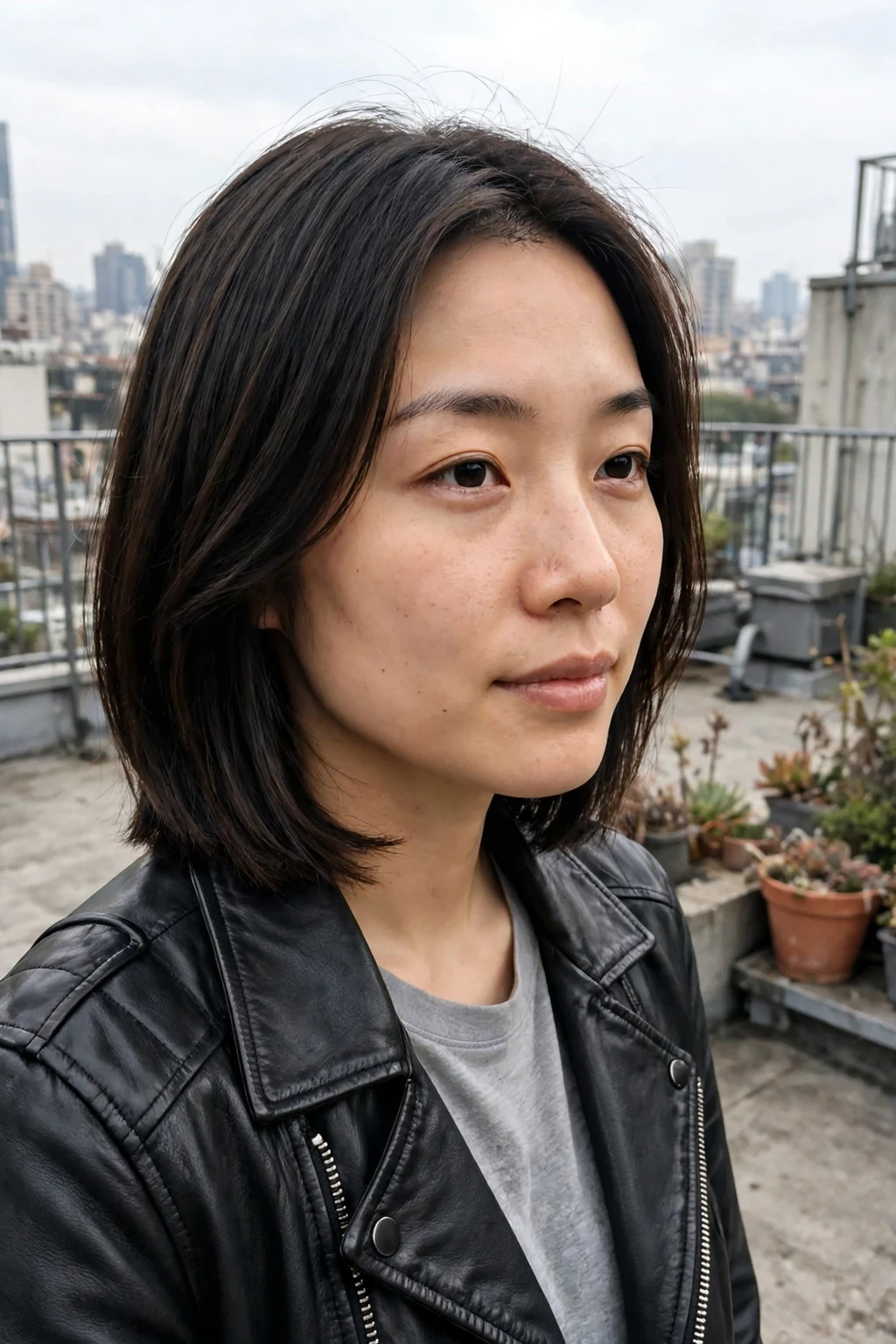
43. Soft C-Curve Layers
Soft C-curve layers are the quietly elegant cut that makes medium-length hair look like it was born to curve inward in a perfect, rounded shape. The layers are cut so that the hair falls in a gentle C shape when viewed from the side, with the ends tucking softly under toward the neck instead of flipping out or hanging straight. The silhouette is rounded and feminine, hugging the shoulders and framing the face with a smooth, continuous curve. The finish is polished but not stiff, with hair that looks healthy, shiny, and beautifully behaved. It is the cut that salon clients ask for when they want to look put-together without looking over-styled, and it suits almost any occasion. The gentle inward curve also makes this cut exceptionally flattering in profile, creating a smooth, continuous line from the crown to the shoulders that looks polished and intentional from every angle. The result is quietly polished and endlessly wearable.
The C-curve flatters round, square, and heart-shaped faces, because the inward curve softens the jawline and creates a slimming frame around the face. It works on straight, slightly wavy, and fine-to-medium hair, and it is especially flattering on fine hair, since the curved ends make the hair look thicker and more substantial. To style, blow-dry with a medium round brush, rolling the ends under as you dry, and finish with a smoothing serum for shine. A flat iron can reinforce the curve on stubborn sections by turning it slightly inward at the ends. Trims every six to eight weeks preserve the curve, since grown-out ends start to flip outward and break the shape. Pick this cut for timeless, rounded elegance. To reinforce the C shape on humid days, a light smoothing cream applied before blow-drying helps the ends hold their inward curve instead of flipping outward, keeping the rounded silhouette intact all day.

44. Layered Cut with Voluminous Crown
A layered cut with a voluminous crown is the answer for anyone whose hair falls flat on top, because the layers are engineered to build height exactly where it is needed. Shorter layers through the crown create natural lift and fullness at the roots, while longer layers through the mid-lengths and ends keep the shape balanced and prevent the top from looking disconnected. The silhouette is full and rounded on top, tapering softly toward the shoulders, with a shape that looks glamorous from every angle. A volumizing mousse at the roots and a round-brush blowout bring the crown to life, and the volume lasts all day because the layering supports it structurally rather than relying on teasing alone. It is a cut with confidence built in. The lifted crown also has a face-brightening effect, since the added height draws the eye upward and creates the impression of a longer, more balanced profile in photographs and in person alike.
A voluminous crown flatters oval, long, and heart-shaped faces, because the added height balances facial proportions and elongates the overall look. It works on fine, medium, and straight-to-wavy hair, and it is a game-changer for fine hair, which gains the appearance of thickness and body. To style, apply volumizing mousse to damp roots, blow-dry with a round brush lifting each section upward, and set the crown with a light-hold spray or a few Velcro rollers while the hair cools. Avoid heavy conditioners at the roots, which flatten volume, and use dry shampoo between washes to refresh lift. Trims every eight weeks keep the crown layers short enough to support volume. Choose this cut if you crave lift that lasts. For extra staying power, backcomb just the underlayers at the crown very gently before smoothing the top layer over them, a technique that adds invisible support without any visible teasing or stiffness.

45. Sculpted Wave Layers
Sculpted wave layers are the polished, editorial version of wavy hair, where each wave is shaped and placed with intention rather than left to chance. The cut sits at the shoulders with layers that support a smooth, sculpted wave pattern, with waves that begin at the cheekbones and roll evenly toward the ends in a continuous, glossy ribbon. The finish is refined and glamorous, with waves that hold their shape, reflect light, and move as one fluid unit rather than breaking into frizz. A large-barrel curling iron and a soft brush create the sculpted effect, followed by a shine spray that keeps the waves looking expensive. It is the cut for special occasions that still works beautifully as an everyday polished style. The glossy, sculpted finish also makes this cut a favorite for brides and wedding guests, since the waves photograph beautifully, hold their shape through long celebrations, and look elegant from every angle.
Sculpted waves flatter oval, round, and heart-shaped faces, because the even wave pattern adds width at the cheekbones and softens the jawline. They work on straight, wavy, and medium-to-thick hair that can hold a curl, and fine hair can achieve them with volumizing mousse and a strong but flexible hold spray. To style, curl sections with a one-and-a-quarter-inch iron in the same direction, let them cool completely, then brush through gently with a soft bristle brush to form the sculpted waves. Set with a light-hold spray and a drop of shine serum on the ends. Trims every eight weeks keep the layers even so the waves fall uniformly. Try sculpted waves when you want waves with real polish. To extend the sculpted waves to a second day, wrap the hair loosely in a silk scarf overnight and refresh the shape in the morning with a light mist of flexible-hold spray rather than re-curling the whole head.
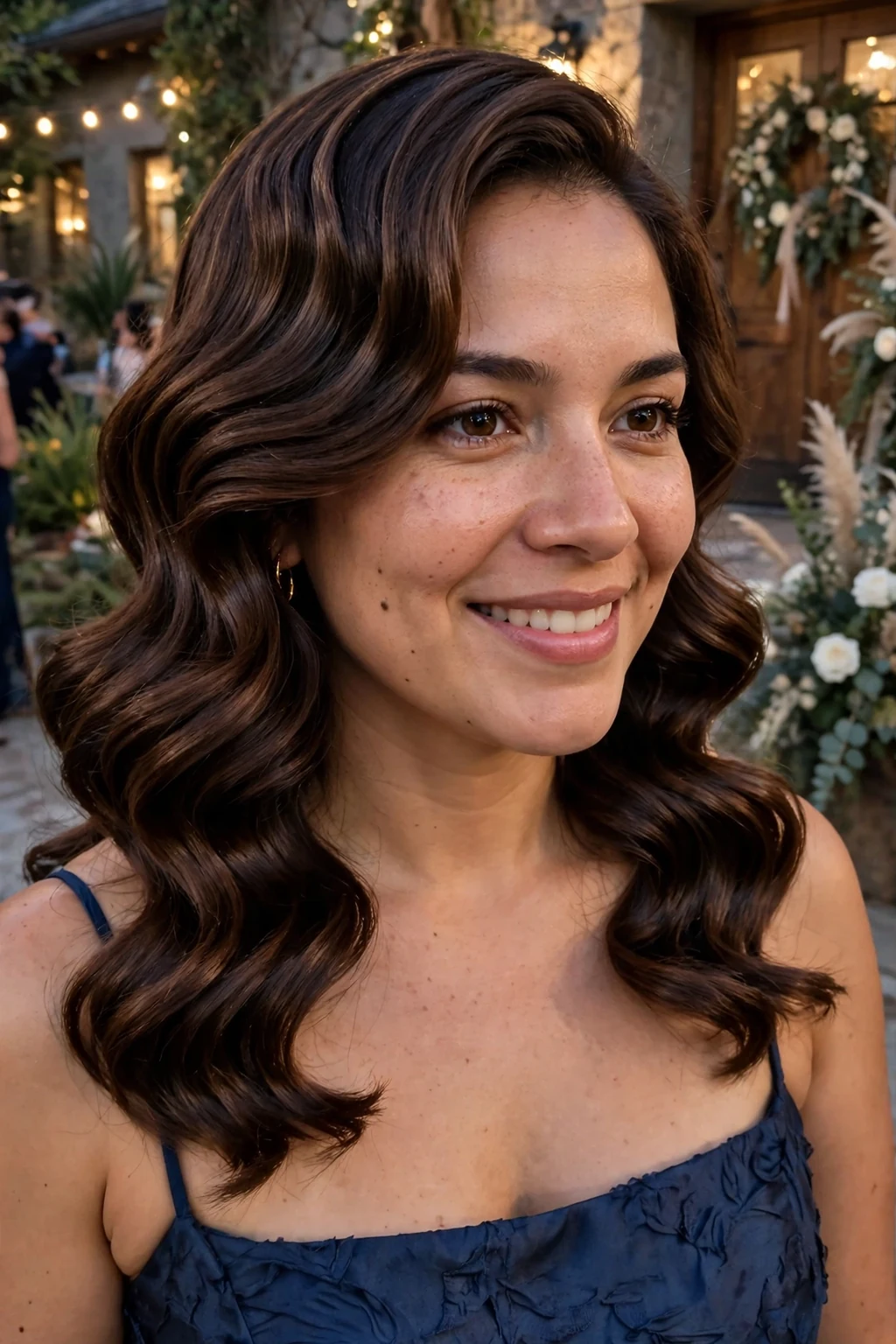
46. Layered Cut with Textured Fringe
A layered cut with a textured fringe pairs medium-length layers with a modern, piece-y bang that feels fresh rather than formal. The fringe is cut with texture, so it separates into soft, distinct pieces across the forehead instead of sitting as a solid block, giving it a casual, contemporary feel. It blends into the face-framing layers at the sides, creating a continuous frame that draws attention to the eyes. The rest of the hair falls to the shoulders with long, blended layers that add movement and keep the overall shape light. The combination is youthful and stylish, with a fringe that adds personality without demanding the precision of a blunt bang. It is a cut that looks great both polished and slightly undone. The piece-y fringe also gives this cut a youthful, creative edge that pairs naturally with modern fashion, from oversized blazers to vintage denim, without ever looking costume-like or overdone.
A textured fringe flatters oval, long, and heart-shaped faces, because the piece-y texture breaks up the forehead and adds softness around the eyes. It works on straight, wavy, and fine-to-medium hair, and it is more forgiving than a blunt fringe because the texture disguises uneven growth and cowlicks. To style, blow-dry the fringe with your fingers or a small round brush, separating it into pieces with a tiny amount of pomade, then style the layers with a blowout or loose waves. A dry texturizing spray keeps the fringe from clumping together. Trim the fringe every five to seven weeks to maintain the texture, with layer trims every eight weeks. Choose this cut for a modern fringe with personality. If the fringe starts to clump together during the day, a quick blast of dry texturizing spray at the roots and a gentle finger-separation restores the piece-y definition in seconds, even without a mirror nearby.

47. Silky Straight Layers
Silky straight layers are the minimalist dream cut, proving that straight hair can be just as interesting as curls when the layers are cut with precision. The hair falls to the shoulders or collarbone in a smooth, glossy sheet, with long internal layers that remove weight and create subtle movement without any visible steps. The finish is liquid and sleek, with hair that swings freely, catches the light, and looks impossibly healthy from root to tip. A smoothing blowout with a paddle brush and a light pass of a flat iron over the outer layer create the silk effect, finished with a drop of shine oil. It is understated luxury, a cut that looks expensive because of its simplicity and perfect condition. The liquid-smooth finish also makes this cut remarkably versatile for accessories, since sleek hair provides the perfect backdrop for bold earrings, silk scarves, and statement hair clips that might get lost in textured styles.
Silky straight layers flatter oval, long, and square faces, because the sleek line elongates the neck and sharpens the features. They work best on naturally straight or slightly wavy hair that can hold a smooth finish, and they are stunning on thick hair once the internal layers remove bulk. To style, apply a heat protectant and smoothing cream, blow-dry in sections with a paddle brush for tension, then flat-iron only the outer layer to preserve the internal movement. A shine spray or a single drop of oil finishes the look. Maintenance means trims every six to eight weeks to keep the ends healthy, plus a weekly smoothing mask to maintain the silk texture. Pick this cut for sleek, effortless sophistication. Protecting the silk finish starts in the shower, where lukewarm water and a smoothing conditioner help seal the cuticle, while a final cool rinse adds an extra boost of shine that lasts until the next wash.
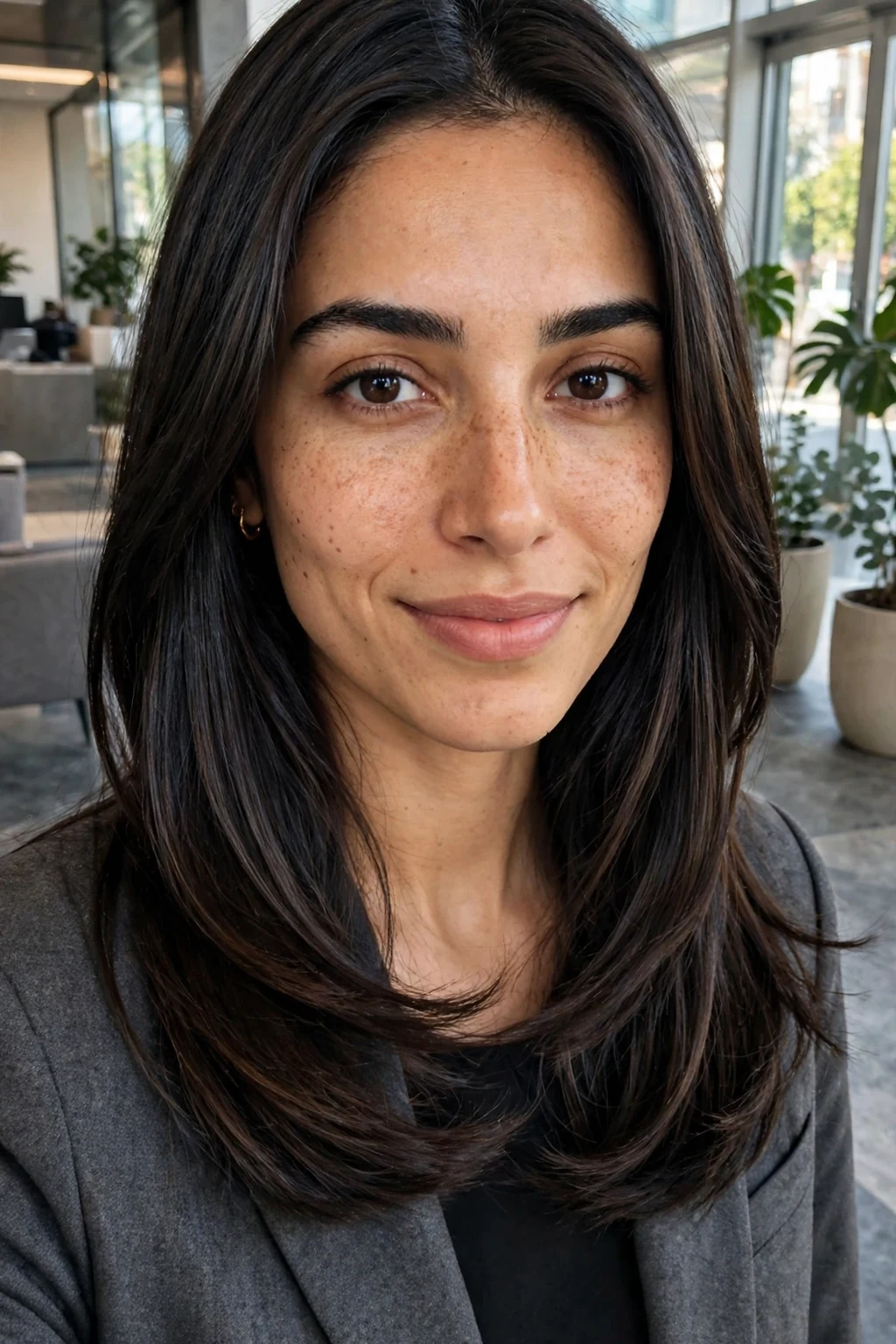
48. Layered Cut with Bouncy Ends
A layered cut with bouncy ends is the cheerful, high-energy style that makes medium-length hair look like it is always freshly blown out. The layers are cut to encourage the ends to curl under and spring up, creating a rounded, bouncy silhouette that moves with every step. The shape is full at the bottom rather than flat, with ends that flip under in a soft, uniform curve and give the hair a healthy, thick appearance. A round-brush blowout is the key, rolling each section under as it dries, and the bounce holds all day because the layering supports the curl of the ends. It is a cut that looks happy, polished, and full of life, perfect for anyone who loves a classic blowout finish. The cheerful, rounded silhouette also makes this cut a wonderful mood-lifter, since hair that bounces and swings tends to make its wearer feel more energetic and confident throughout the day.
Bouncy ends flatter oval, round, and heart-shaped faces, because the rounded bottom softens the jawline and adds fullness where the face narrows. They work on straight, wavy, and fine-to-medium hair, and they are especially good for fine hair, since the curled-under ends make the hair look thicker and more substantial. To style, blow-dry with a medium round brush, rolling each section under and holding it briefly to set the curl, then finish with a light-hold spray. Velcro rollers on the ends while the hair cools add extra bounce. Trims every six to eight weeks keep the ends healthy and the bounce intact, since split ends refuse to curl under properly. Choose this cut for a blowout that never quits. To keep the bounce consistent, always dry the ends with the round brush held underneath the section, rolling upward, since drying from above flattens the curl and removes the very springiness that defines this style.

49. Soft Disconnected Layers
Soft disconnected layers are the contemporary cut that adds edge without going fully shaggy, using layers of noticeably different lengths that still blend softly. Unlike traditional blended layers, which melt into one another, disconnected layers create subtle steps that give the hair dimension and movement, but the steps are softened with point-cutting so they never look harsh or choppy. The length sits at the shoulders, with shorter layers on top that create lift and longer layers beneath that keep the shape grounded. The finish is modern and textured, with hair that moves in interesting ways and never sits flat. It is a cut for anyone who wants something a little more fashion-forward than classic layers. The subtle steps between layers also give this cut a beautiful sense of depth in photographs, where the varied lengths catch light at different levels and make the hair look thicker and more dimensional. The effect is modern, dimensional, and quietly confident.
Disconnected layers flatter oval, heart, and square faces, because the varied lengths break up strong lines and add visual interest around the cheekbones. They work on straight, wavy, and medium-to-thick hair, and they are especially good for thick hair, since the disconnection removes weight in a controlled way. To style, blow-dry with a round brush for a smooth base, then add texture spray and scrunch lightly to emphasize the separation between layers. A small amount of pomade on the ends defines the steps without stiffness. Maintenance is straightforward: trims every eight weeks keep the disconnection deliberate rather than overgrown, and the grow-out stays stylish because the layers soften gradually. Try this cut for modern dimension. Because the disconnection is soft rather than severe, this cut transitions gracefully into other styles, and the layers can easily be blended further at a future appointment if you ever want a more classic finish.

50. Layered Cut with Feathered Bangs
A layered cut with feathered bangs is the soft, airy combination that makes a fringe feel weightless and romantic. The bangs are feathered, meaning they are cut and thinned so the ends taper into fine, wispy points that float across the forehead rather than sitting heavily. They blend into the feathered layers around the face, creating a continuous, airy frame that highlights the eyes and cheekbones. The rest of the hair falls to the shoulders with soft, feathered layers that echo the lightness of the fringe. The overall effect is gentle and feminine, with a shape that moves beautifully in a breeze and never looks stiff or overdone. It is a cut that feels like a breath of fresh air. The floating, feather-light fringe also pairs beautifully with soft, natural makeup, enhancing the gentle, romantic quality of the style and keeping the overall look fresh, youthful, and effortlessly pretty. The look is light, romantic, and easy to love.
Feathered bangs flatter oval, long, and heart-shaped faces, because the airy fringe shortens the appearance of a long forehead while keeping the face open and bright. They work on straight, wavy, and fine-to-medium hair, and they are ideal for fine hair, since the feathering prevents the fringe from looking thin or sparse. To style, blow-dry the bangs with a small round brush, feathering the ends outward slightly, then style the layers with a blowout or soft waves. A lightweight texturizing spray keeps the feathering defined without stiffness. Trim the fringe every five to seven weeks to preserve the feathered ends, with full trims every eight weeks. Choose this cut for a fringe that floats. A tiny amount of lightweight styling cream smoothed over the fringe with the fingertips is usually enough to control flyaways, and heavy products should be avoided since they collapse the airy feathering that defines this fringe.

51. Chic Parisian Layers
Chic Parisian layers capture the effortless elegance that French women are famous for: hair that looks like it was never trying too hard, yet falls perfectly every time. The cut sits at the shoulders with long, undone layers and a slightly tousled texture, as though the hair was air-dried and then gently shaped by hand. The finish is deliberately imperfect, with a few pieces falling out of place, a soft natural wave, and ends that look lived-in rather than freshly trimmed. There is no heavy styling, no stiff product, and no overly polished shine, just hair that looks naturally beautiful and completely at ease. It is the cut for anyone who believes that true style whispers rather than shouts. The deliberately imperfect finish also makes this cut wonderfully forgiving of bad hair days, since a little frizz or an unexpected bend simply adds to the lived-in charm rather than ruining a precise, polished shape.
Parisian layers flatter oval, round, and heart-shaped faces, because the undone texture softens the features and the shoulder length elongates the neck. They work on wavy, straight, and fine-to-medium hair, and they are perfect for anyone who prefers low-maintenance styling, since the cut is designed to look good with minimal effort. To style, apply a light texturizing cream to damp hair, rough-dry or air-dry, and tousle gently with your fingers, letting a few pieces fall naturally around the face. A salt spray adds the signature undone texture. Trims every ten to twelve weeks keep the shape relaxed, and the grow-out is famously graceful because the layers were never meant to look perfect. Try this cut for effortless French chic. Embracing the Parisian philosophy means resisting the urge to over-style, and most wearers find that the less they fuss with the hair, the more authentically chic and effortlessly elegant the layers actually look.
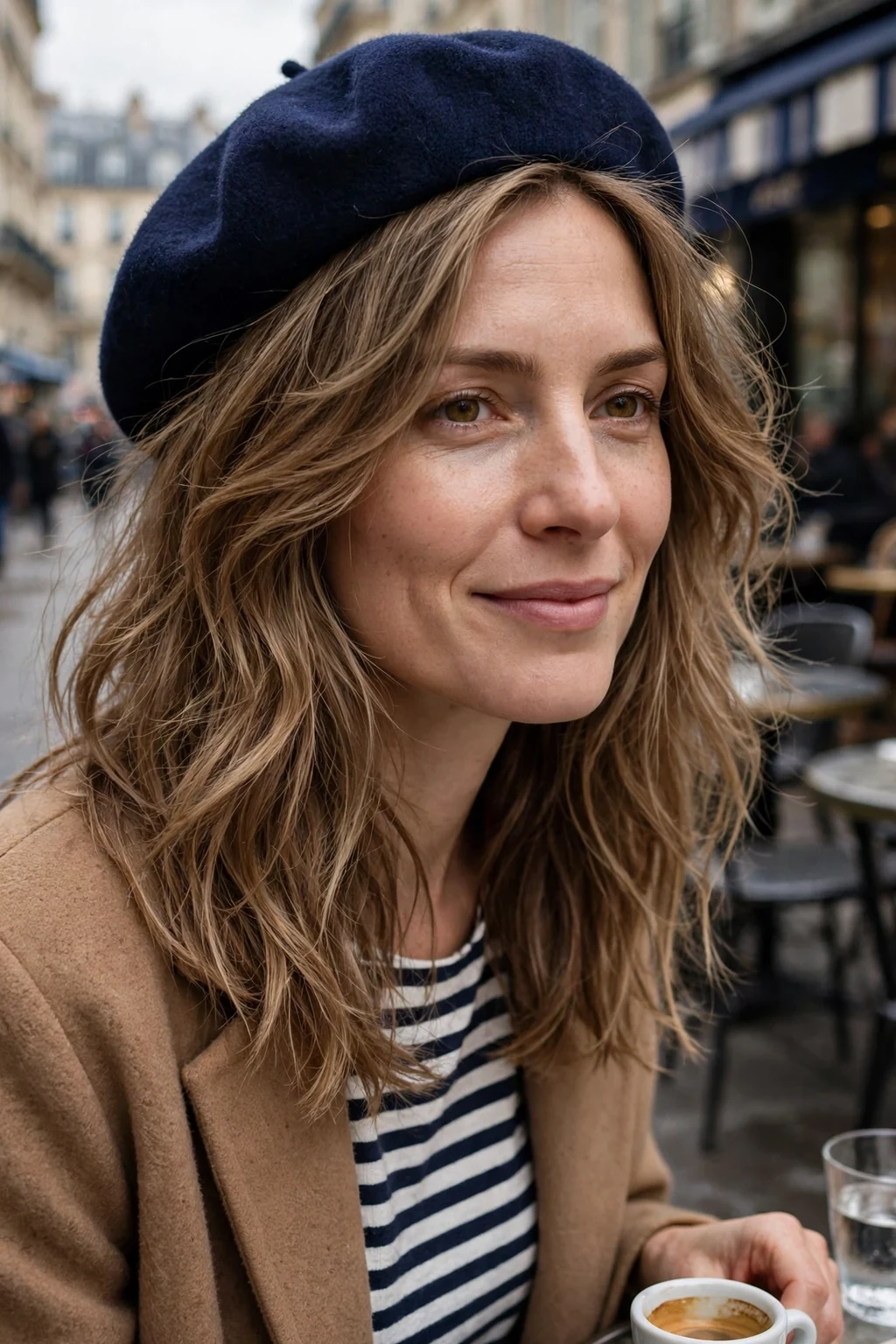
52. Layered Cut with Soft Curls
A layered cut with soft curls is the romantic choice for medium-length hair, pairing gentle, loose curls with layers that let them fall gracefully. The cut sits at the shoulders, with layers that stagger the curls so they cascade rather than bunch together, creating a flowing, waterfall-like shape. The curls themselves are soft and loose, more like large waves than tight spirals, with a touchable, brushed-out finish that looks dreamy rather than structured. A large-barrel curling iron and a gentle brush-through create the softness, while the layers ensure the curls keep their bounce and do not weigh each other down. It is a cut made for weddings, dates, and any day you want to feel a little more romantic. The cascading, waterfall-like shape also makes this cut beautiful from behind, with curls that fall in soft, graduated tiers rather than ending in a blunt, uniform line at the shoulders. The finish is soft, touchable, and beautifully romantic.
Soft curls flatter oval, round, and heart-shaped faces, because the loose curl pattern adds width at the cheekbones and softens the jawline. They work on straight, wavy, and medium-to-thick hair that can hold a curl, and naturally wavy hair achieves them with just a curl cream and a diffuser. To style, curl sections with a one-and-a-quarter-inch iron away from the face, let them cool, then brush through gently with a soft brush to loosen them into waves. A light-hold spray keeps the shape without stiffness, and a shine serum adds a romantic glow. Trims every eight weeks keep the layers balanced so the curls fall evenly. Choose this cut for soft, romantic movement. To keep the curls soft rather than crunchy, use a flexible-hold spray instead of a strong one, and scrunch the hair gently after spraying to break any stiffness while preserving the romantic, touchable finish. The result is graceful, feminine, and occasion-ready.
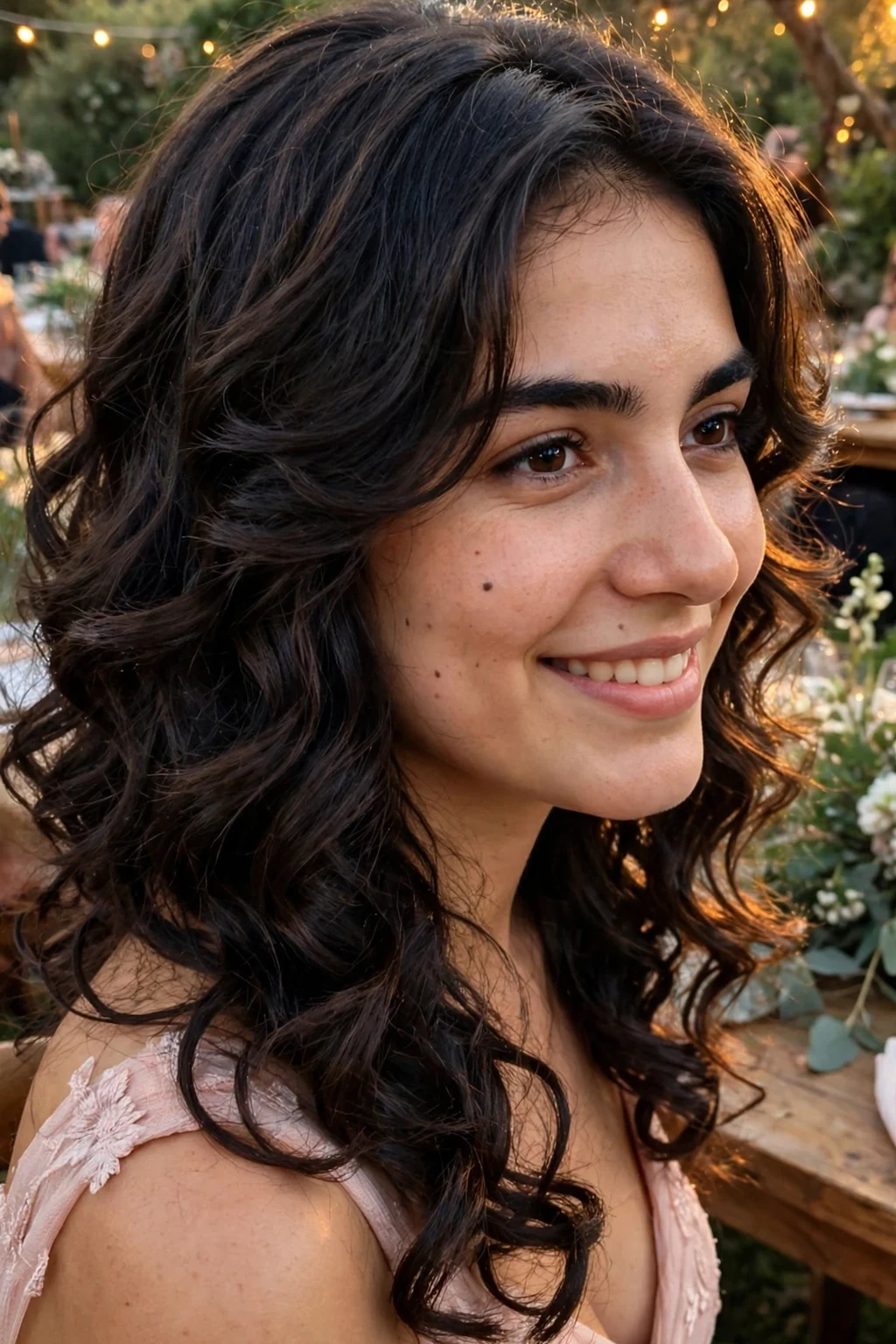
53. Undone Mid-Length Layers
Undone mid-length layers are the cut for anyone who loves the look of second-day hair on the very first day, with texture that feels natural and unbothered. The layers are cut long and loose through hair that falls to the shoulders, with enough internal texture to keep the shape from looking too neat, but not so much that it turns shaggy. The finish is relaxed and slightly messy in the best way, with bends and waves that look like they happened on their own, a matte texture, and ends that separate gently. A texturizing spray and a quick scrunch are all it takes, and the style actually improves as the day goes on and the hair settles. It is the ultimate low-effort, high-style cut. The relaxed, second-day quality of this cut also makes it ideal for busy lifestyles, since it looks just as good on the morning after washing as it does freshly styled, saving precious time every single week.
Undone layers flatter oval, square, and heart-shaped faces, because the relaxed texture softens strong features and adds a casual, approachable feel. They work on wavy, straight, and fine-to-thick hair, and they are especially forgiving on hair that misbehaves, since the undone finish disguises cowlicks and uneven waves. To style, apply texturizing spray to damp hair, scrunch and rough-dry, then twist a few random sections around your fingers for extra bend. Sleep on it and refresh with dry shampoo the next day for even better texture. Trims every ten to twelve weeks keep the ends healthy, and the grow-out is seamless because the cut was never meant to look precise. Try undone layers for effortless cool. A silk pillowcase helps preserve the undone texture overnight without creating frizz, so the morning refresh often needs nothing more than a quick shake, a spritz of texturizing spray, and you are ready to go.
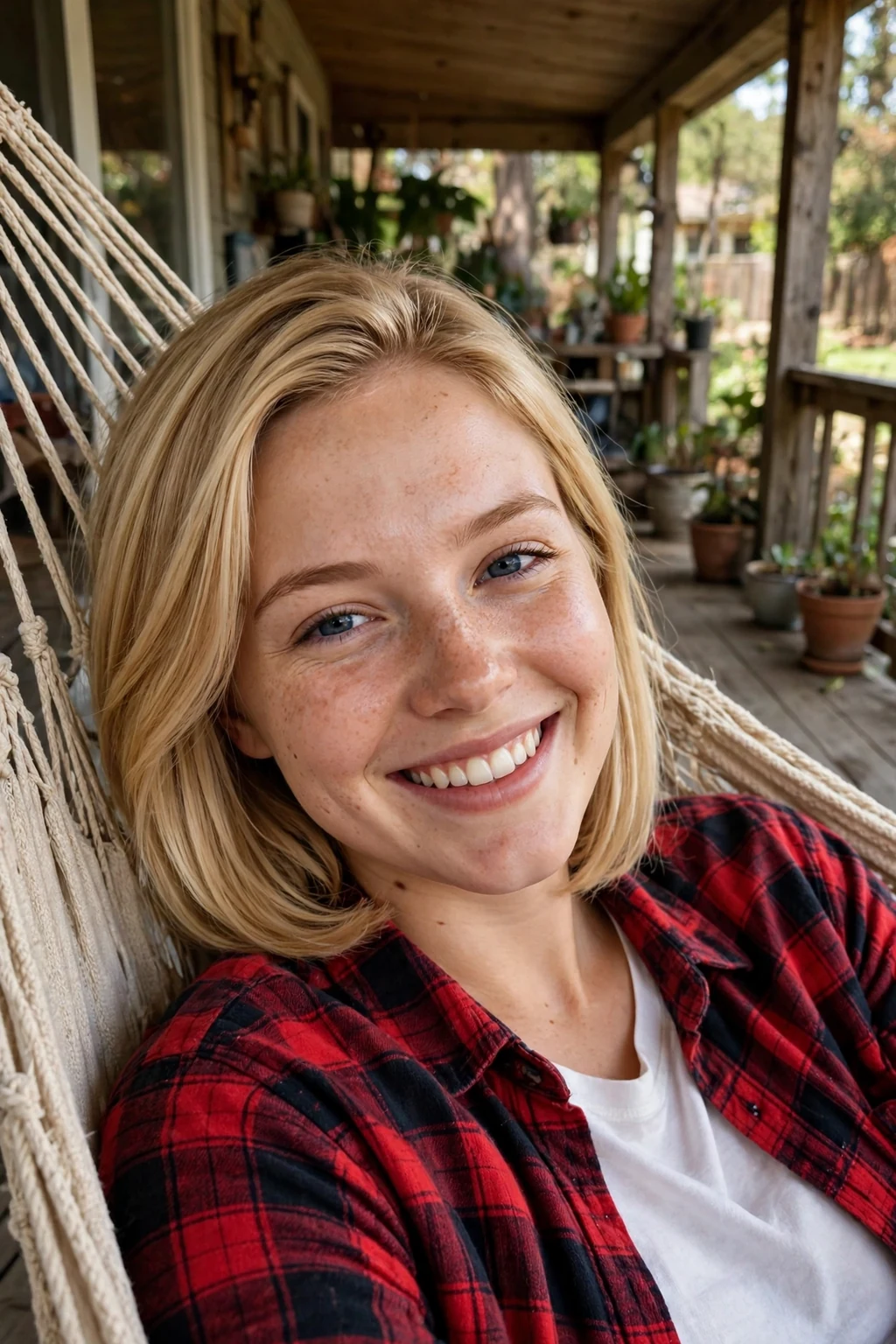
54. Layered Cut with Full Fringe
A layered cut with a full fringe is the bold, statement-making combination that pairs a thick, straight bang with flowing medium-length layers. The fringe is cut full and straight across the forehead, ending just above the brows, creating a strong horizontal line that frames the eyes dramatically. The layers beneath fall to the shoulders, soft and blended, providing a beautiful contrast to the graphic precision of the fringe. The combination is striking and confident, with a shape that looks intentional from every angle and gives the whole cut a high-fashion edge. Worn sleek, it is pure editorial glamour; worn with a little texture, it turns playful and modern. The bold horizontal line of the fringe also creates a striking frame for the eyes, making eye makeup and brows stand out dramatically, which is why this combination remains a favorite on runways and in editorial photography. The look is confident, striking, and unforgettable.
A full fringe flatters oval and long faces especially well, because the strong horizontal line shortens the appearance of a longer forehead and balances the proportions. It works best on straight, thick, or medium-density hair that can hold a clean line, and it is a commitment, since a full fringe needs regular trimming to stay above the brows. To style, blow-dry the fringe straight down with a paddle brush or a small round brush, then smooth the layers with a blowout or loose waves. A flat iron can sharpen the fringe line for extra precision. Trim the fringe every three to four weeks to keep it at the right length, with layer trims every eight weeks. Choose this cut for bold, confident style. Because a full fringe draws so much attention, keeping the brows groomed and the fringe freshly trimmed makes a bigger difference here than with any other cut, turning routine maintenance into the key to the whole look.
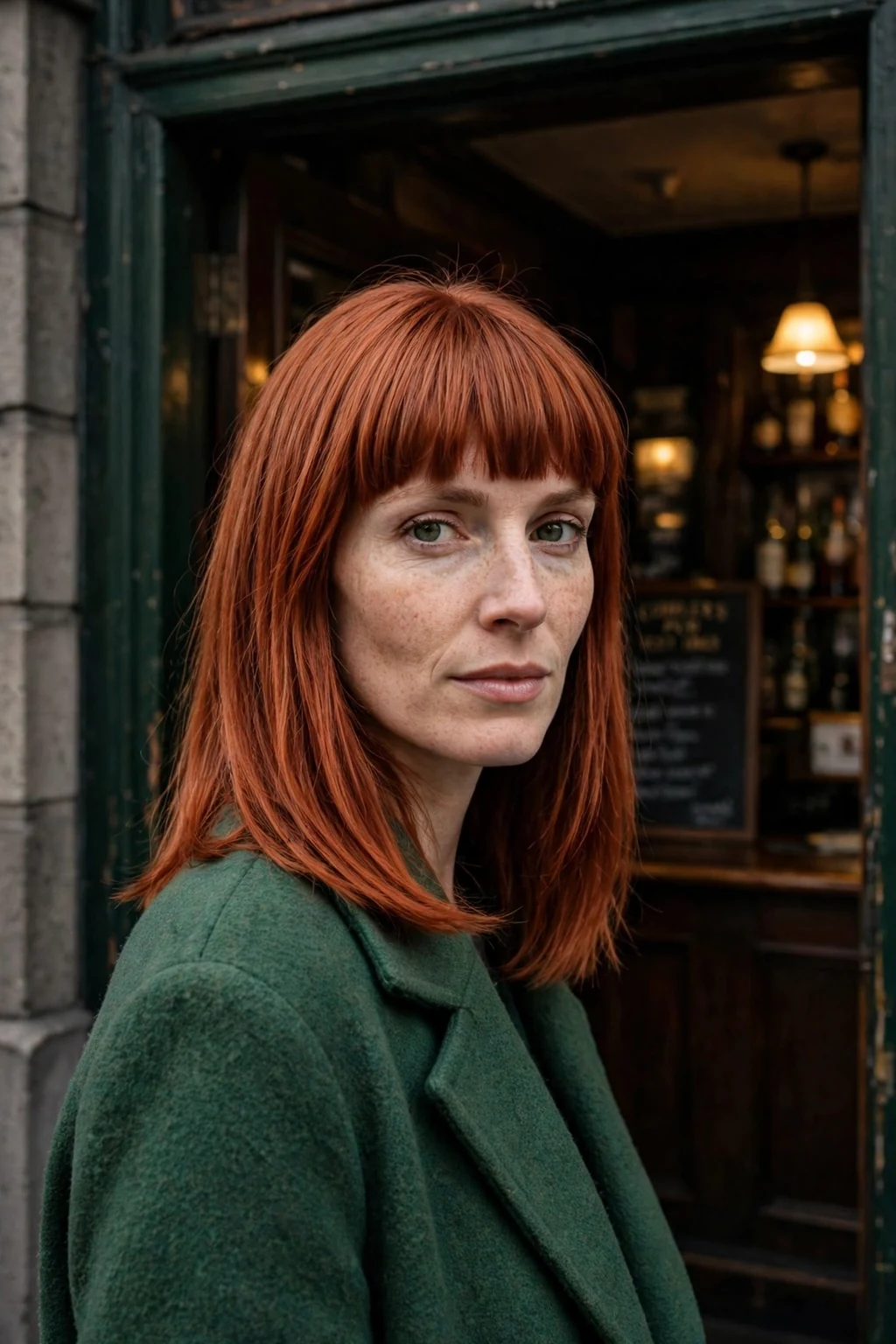
55. Elegant Sculpted Layers
Elegant sculpted layers are the refined, grown-up version of medium-length layers, shaped with precision to create a graceful, sculptural silhouette. The cut falls to the shoulders with layers that are carefully graduated, so the hair curves smoothly around the face and shoulders in a continuous, elegant line. The finish is polished and luxurious, with a smooth surface, healthy ends, and a shape that holds beautifully from morning to evening. A round-brush blowout creates the sculpted curve, with the ends turned gently under for a classic, refined finish. It is the cut for anyone who wants their hair to look timelessly elegant, whether at work, at a wedding, or at a quiet dinner. The smooth, graduated silhouette also makes this cut a timeless choice for professional settings, where its refined finish communicates polish and attention to detail without ever appearing fussy or overworked. The finish is timeless, graceful, and quietly luxurious.
Sculpted layers flatter oval, round, and square faces, because the smooth, graduated shape softens angles and creates a slimming frame around the face. They work on straight, wavy, and medium-to-thick hair that can hold a smooth finish, and they are especially beautiful on hair with a natural shine. To style, blow-dry with a medium round brush, turning the ends under and smoothing each section, then finish with a shine serum and a light-hold spray. A flat iron can perfect any stubborn sections. Maintenance means trims every six to eight weeks to preserve the sculpted graduation, plus a weekly conditioning mask to keep the hair glossy and healthy. Pick elegant sculpted layers for timeless refinement. For the most elegant result, invest in a high-quality round brush and a reliable blow dryer, since the right tools make the sculpted blowout faster, smoother, and far easier to recreate at home between salon visits.

How to Choose the Right Medium Length Layered Haircut
The most flattering medium length layered haircut is soft, dimensional, and easy — layers that create movement without sacrificing length, a shape that works with your natural texture, and a cut that grows out gracefully will always look fresh and modern. Choose the layer placement that makes you feel wonderful, and your cut will always look beautiful.
Medium length layered cuts are wonderfully versatile: they add volume to fine hair, remove bulk from thick hair, and frame the face beautifully. A trim every eight to ten weeks keeps the layers fresh. Choose the layered cut that makes you feel confident — that is always the most flattering choice.
Conclusion
From soft face-framing to bold shaggy layers, these 55 medium length layered haircuts prove the mid-length cut is endlessly versatile. Choose the layer style that makes you feel wonderful, keep up with regular trims, and wear your layered cut with total confidence.