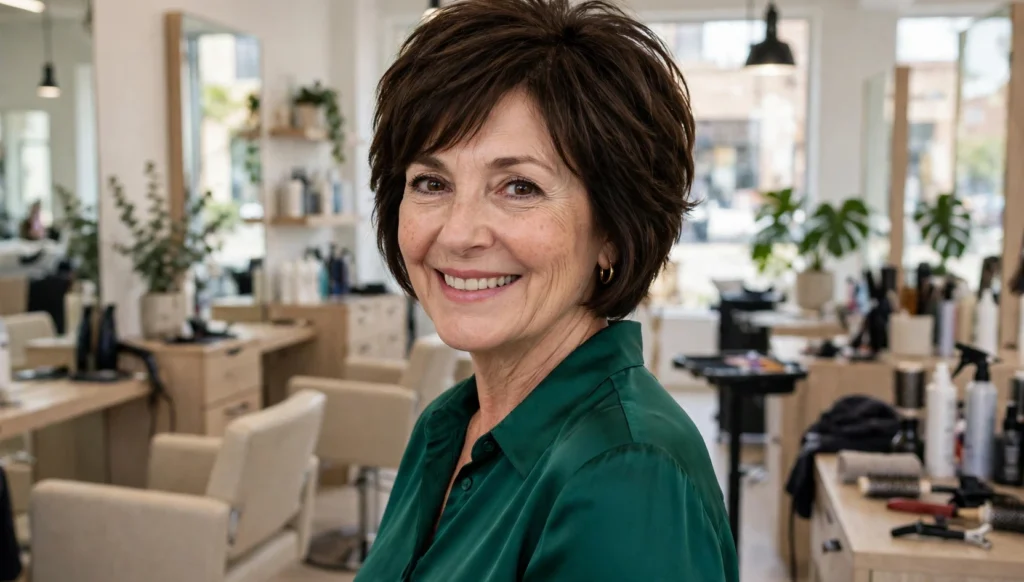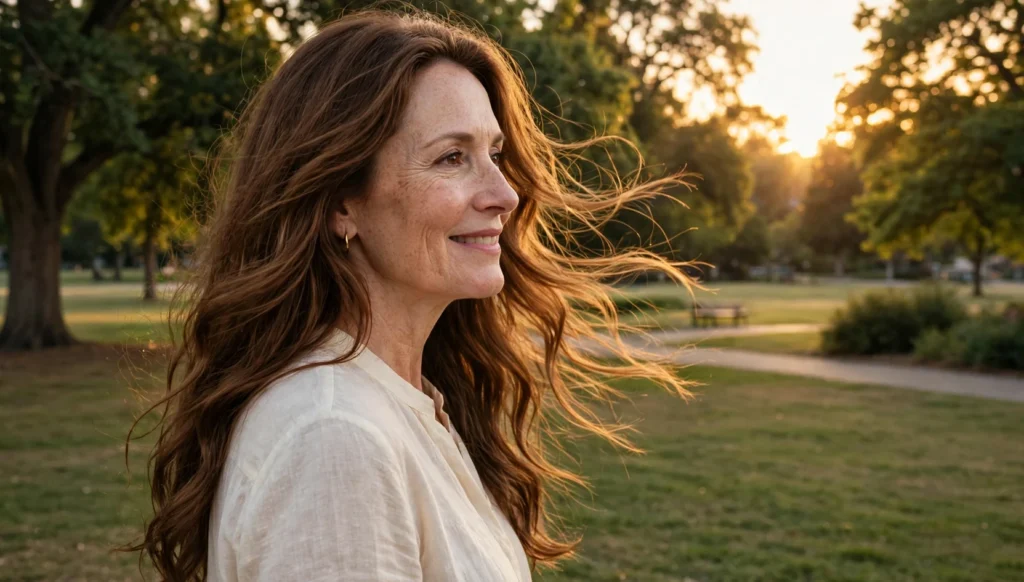
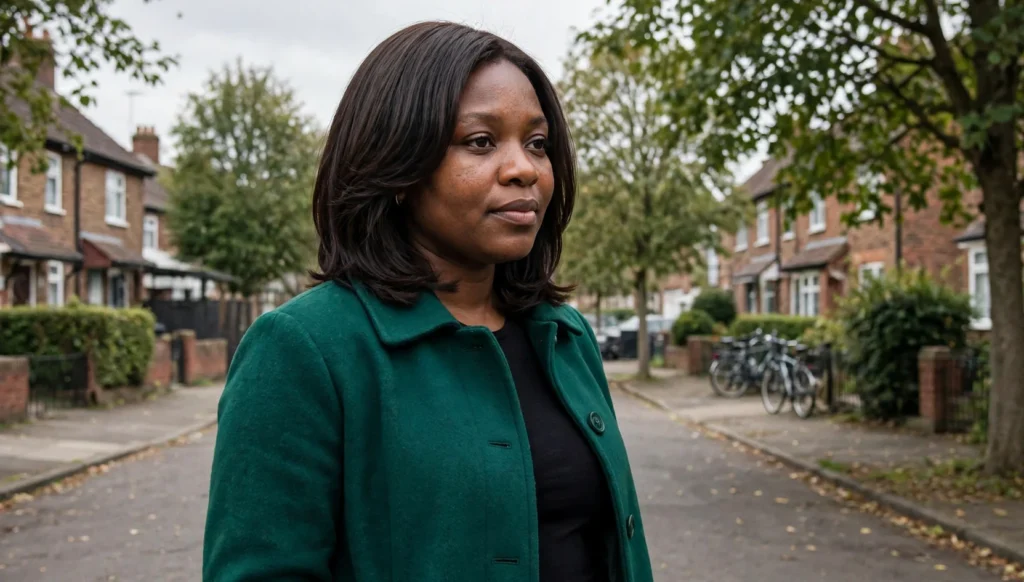
Shag haircuts for women are back in a big way, and this time they are softer, more wearable, and more versatile than ever. From choppy bobs to long, tousled layers, these 46 shag haircuts bring instant movement, texture, and cool-girl energy to every hair type.
1. Classic Shag
The classic shag is the original layered rebel: a medium-length cut built on choppy, disconnected layers, a full crown, and feathered ends that fall in soft, piecey points around the face and shoulders. Its silhouette is unmistakably seventies-inspired but thoroughly modern in execution, with shorter layers on top creating lift and volume while longer layers underneath keep the length looking full rather than thinned out. The finish is deliberately undone, with textured ends that flick outward, curl under, or do a little of both, giving the hair a lived-in quality that looks effortless from every angle and never stiff or over-styled. Ask your stylist to point-cut the ends rather than blunt-cutting them, since that technique creates the signature piecey separation that keeps a shag looking light, textured, and intentionally undone instead of heavy. The beauty of this shape is how it moves when you do, with layers that swing, bounce, and resettle naturally throughout the day, so the cut looks freshly styled even hours after you leave the house.
This cut suits young women with straight to wavy hair and medium density best, flattering oval, round, and heart-shaped faces because the face-framing layers soften the jawline and draw attention to the eyes and cheekbones. It is a wonderful choice for anyone who wants volume without teasing or heavy styling products. To style, work a golf-ball-sized amount of mousse through damp hair, scrunch upward, and air-dry or diffuse on low heat, then finish with a light texturizing spray to separate the ends. A trim every six to eight weeks keeps the layers crisp and the shape intentional, while grow-out is forgiving since extra length only makes the shag look softer. Choose the classic shag when you want the definitive version of the cut: timeless, cool, and endlessly wearable. When you visit the salon, ask your stylist to show you exactly how much product to use, since shag layers look best with a light hand and too much cream or wax can weigh the texture down.

2. Modern Shag
The modern shag takes everything great about the classic cut and refines it for everyday life: softer layering, a more blended crown, and ends that are textured without looking ragged or extreme. The overall shape is still full of movement, but the transitions between layers are smoother, so the haircut reads as polished in an office and effortlessly cool on the weekend. Face-framing pieces start around the cheekbones and taper down through the shoulders, while the interior layers remove just enough weight to let the hair swing freely. The finish is touchable and airy, with natural separation that makes even fine hair look fuller and more interesting. If your hair is naturally straight, a few loose bends added with a flat iron will bring the layers to life, while naturally wavy hair usually needs nothing more than a good air-dry to look complete. Bring reference photos that show both the front framing and the back shape to your appointment, since a shag looks very different from behind and agreeing on the silhouette in advance prevents surprises.
This versatile cut suits almost every face shape, including oval, square, and oblong faces, and works beautifully on straight, wavy, and lightly curly hair of fine to medium density. It is ideal for women who love the shag idea but want something office-friendly and low-drama. To style, apply a lightweight leave-in cream to damp hair and blow-dry with your fingers for a smooth yet textured result, or simply air-dry with a sea-salt spray for a softer wave. A trim every seven to nine weeks maintains the shape, and grow-out transitions gracefully into a long layered cut. Choose the modern shag when you want current, wearable texture without committing to an extreme chop: it is the shag for real life. Colour maintenance matters too, because faded or brassy tones can make textured layers look dull, so a gloss treatment every couple of months will keep the cut looking fresh and dimensional. If you swim or spend time in the sun, a leave-in conditioner with UV protection will prevent the ends from drying out, which is especially important for layered cuts where the ends are constantly on display.

3. Shaggy Bob
The shaggy bob is the perfect meeting point between a classic bob and a full shag: chin-to-shoulder length with choppy internal layers, a piecey fringe option, and ends that are deliberately uneven for maximum texture. Unlike a blunt bob, which can sit flat and heavy, the shaggy bob is full of air and movement, with layers that lift the crown and let the ends flick and separate naturally. The silhouette is slightly rounded at the top and softer at the bottom, giving it a playful, youthful energy that flatters the neck and jawline while still feeling grown-up and polished enough for any occasion. A good shag should feel balanced rather than top-heavy, so ask your stylist to check the crown volume and the weight at the ends together before finishing, ensuring neither section overwhelms the other. The cut also transitions well between seasons, looking soft and romantic under a winter coat and light, breezy, and carefree in summer heat when you want hair off your neck.
This cut is especially flattering for oval, heart, and square faces, and it works on straight, wavy, and fine hair that needs the illusion of fullness. Women with thicker hair will love how the internal layers remove bulk without sacrificing the bob shape. To style, scrunch a texturizing cream into damp hair and air-dry for natural texture, or blow-dry with a round brush and flip the ends outward for a bouncier finish. A trim every five to seven weeks keeps the bob length and the layers in balance, and grow-out becomes a shaggy lob, so there is no awkward stage. Choose the shaggy bob when you want short hair with personality: it is chic, low-maintenance, and impossible to bore of. A flexible-hold hairspray, rather than a stiff one, will preserve the movement that makes this cut appealing, allowing the layers to shift naturally while still holding their shape through the day. If your hair tends to frizz in humidity, a pea-sized amount of smoothing cream smoothed only over the outer surface will tame flyaways without flattening the interior texture underneath.

4. Long Shag
The long shag proves you do not have to sacrifice length to get shag texture: hair worn past the shoulders with long, cascading layers, a shorter face frame, and textured ends that keep the whole cut moving. The top layers are cut shorter to create lift and volume at the crown, while the length underneath stays long enough to swing, braid, or pull back on busy days. The result is hair that looks full and dimensional rather than heavy and flat, with a finish that is romantic and a little wild, like hair that has spent a happy afternoon outdoors and looks better for it. The shape works just as well dressed up as it does casually, pairing naturally with everything from a tailored blazer to a vintage band tee, which is part of why the shag has stayed popular for decades. Ask your stylist to point-cut the ends rather than blunt-cutting them, since that technique creates the signature piecey separation that keeps a shag looking light, textured, and intentionally undone instead of heavy.
This cut suits women with medium to thick hair and straight to wavy textures, flattering oval, oblong, and heart-shaped faces with its vertical, elongating lines and face-framing movement. It is less ideal for very fine hair, which can look sparse at long lengths unless the layers are kept soft and minimal. To style, apply a wave-enhancing cream to damp hair and air-dry, or blow-dry smooth and add loose bends with a large-barrel iron for a polished wave. Trims every eight to ten weeks keep the ends healthy, and grow-out is the entire point, since longer layers only add to the effect. Choose the long shag when you love your length but hate flat hair: it is length with life in it. Sleeping on a silk pillowcase or in a loose, low braid will protect the layers overnight and prevent tangles, so you wake up with texture that looks intentional rather than knotted or flattened. When you visit the salon, ask your stylist to show you exactly how much product to use, since shag layers look best with a light hand and too much cream or wax can weigh the texture down.
5. Curly Shag
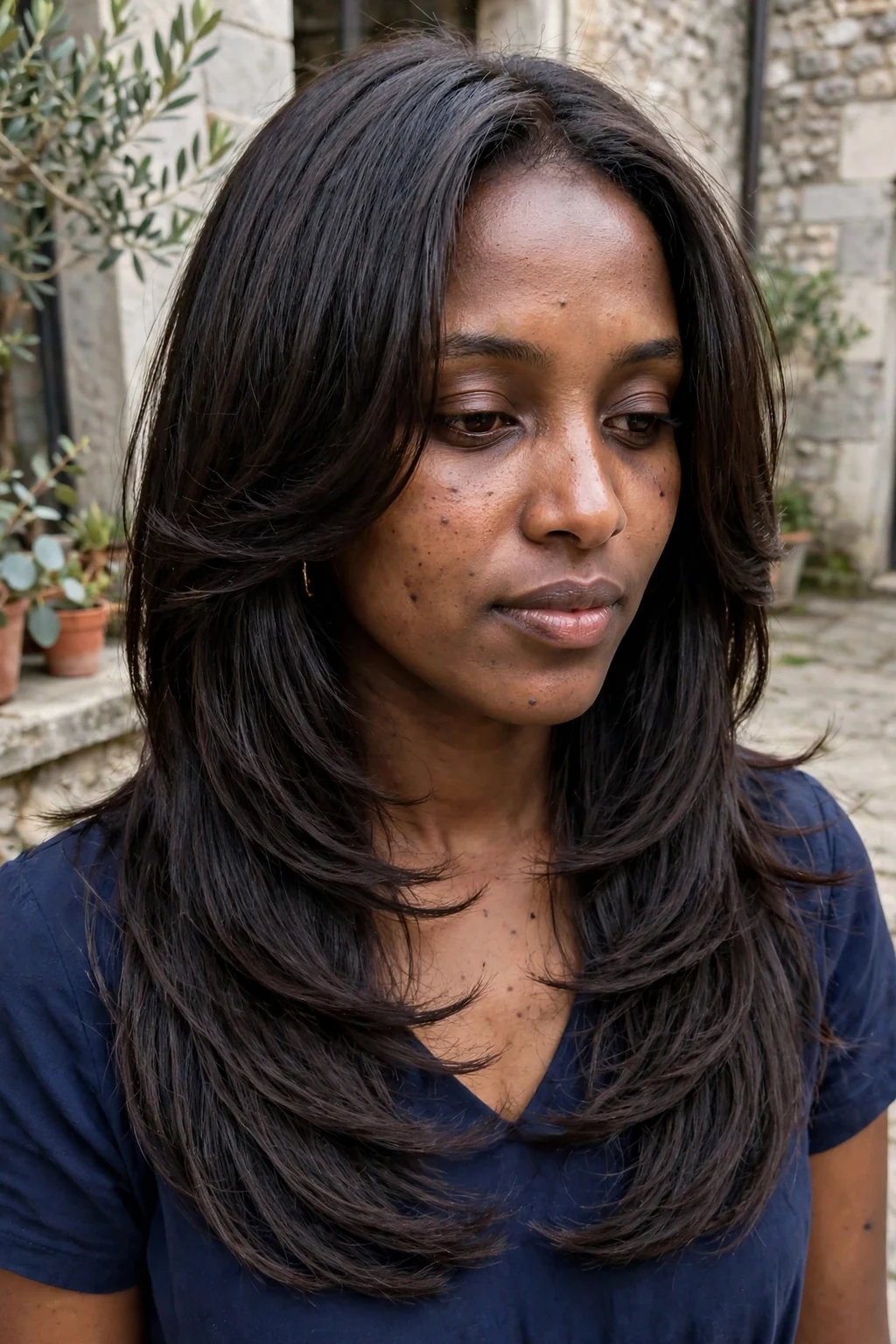
The curly shag is a game-changer for natural curls: layers cut to let each curl spring, separate, and settle into a rounded, voluminous shape instead of collapsing into a heavy triangle. Shorter layers at the crown create lift and bounce, while longer layers underneath give the curls room to form their natural pattern, producing a silhouette that is gloriously full and balanced from every angle. The finish is defined yet soft, with curls that look touchable rather than crunchy, and the cut celebrates texture instead of trying to tame it into submission. If your hair is naturally straight, a few loose bends added with a flat iron will bring the layers to life, while naturally wavy hair usually needs nothing more than a good air-dry to look complete. Bring reference photos that show both the front framing and the back shape to your appointment, since a shag looks very different from behind and agreeing on the silhouette in advance prevents surprises.
This cut is essential for women with naturally curly or coily hair, flattering round, oval, and heart-shaped faces by placing volume exactly where it beautifies rather than at the widest point of the face. It must be cut dry or by a curl specialist who understands how each curl will spring once cut. To style, apply curl cream to soaking-wet hair, scrunch upward, and diffuse or air-dry without touching the curls until fully dry, then gently separate for volume. Trims every ten to twelve weeks keep the shape intact, and grow-out simply adds more glorious volume. Choose the curly shag when you want your curls at their absolute best: it is the difference between curls that merely happen and curls that are genuinely designed. Colour maintenance matters too, because faded or brassy tones can make textured layers look dull, so a gloss treatment every couple of months will keep the cut looking fresh and dimensional. If you swim or spend time in the sun, a leave-in conditioner with UV protection will prevent the ends from drying out, which is especially important for layered cuts where the ends are constantly on display.

6. Wavy Shag
The wavy shag is beach-day beauty refined for real life: layers that enhance natural waves into perfectly imperfect, touchable texture with movement in every direction. The cut removes weight from the interior so waves can form freely instead of being pulled straight by their own heaviness, and the face-framing layers encourage the front waves to curl softly toward or away from the face. The finish is relaxed and radiant, with soft, separated waves that look sun-kissed even in winter, and the whole effect is one of easy confidence rather than careful construction. A good shag should feel balanced rather than top-heavy, so ask your stylist to check the crown volume and the weight at the ends together before finishing, ensuring neither section overwhelms the other. The cut also transitions well between seasons, looking soft and romantic under a winter coat and light, breezy, and carefree in summer heat when you want hair off your neck. Because the layers are the star, a simple, healthy shine is more important than elaborate styling, so a weekly hydrating mask will keep the ends looking polished rather than dry or frayed.
This cut suits women with naturally wavy hair best, flattering oval, oblong, and heart-shaped faces with its soft framing, and it works beautifully at every length from bob to long. It is the lowest-effort path to beautiful hair for wavy textures. To style, scrunch a wave-enhancing cream into damp hair and air-dry, or diffuse on low heat for extra volume, and finish with a light sea-salt spray if you want more grit. Trims every eight to ten weeks keep the waves springy and the ends healthy, and grow-out simply means longer, lovelier waves. Choose the wavy shag when you want to work with your texture instead of against it: it is the shag that practically styles itself. If your hair tends to frizz in humidity, a pea-sized amount of smoothing cream smoothed only over the outer surface will tame flyaways without flattening the interior texture underneath. Book your next trim before leaving the salon, since layered cuts lose their intention quickly once they grow past their ideal length, and a standing appointment keeps the shape consistently sharp.
7. Shag with Curtain Bangs
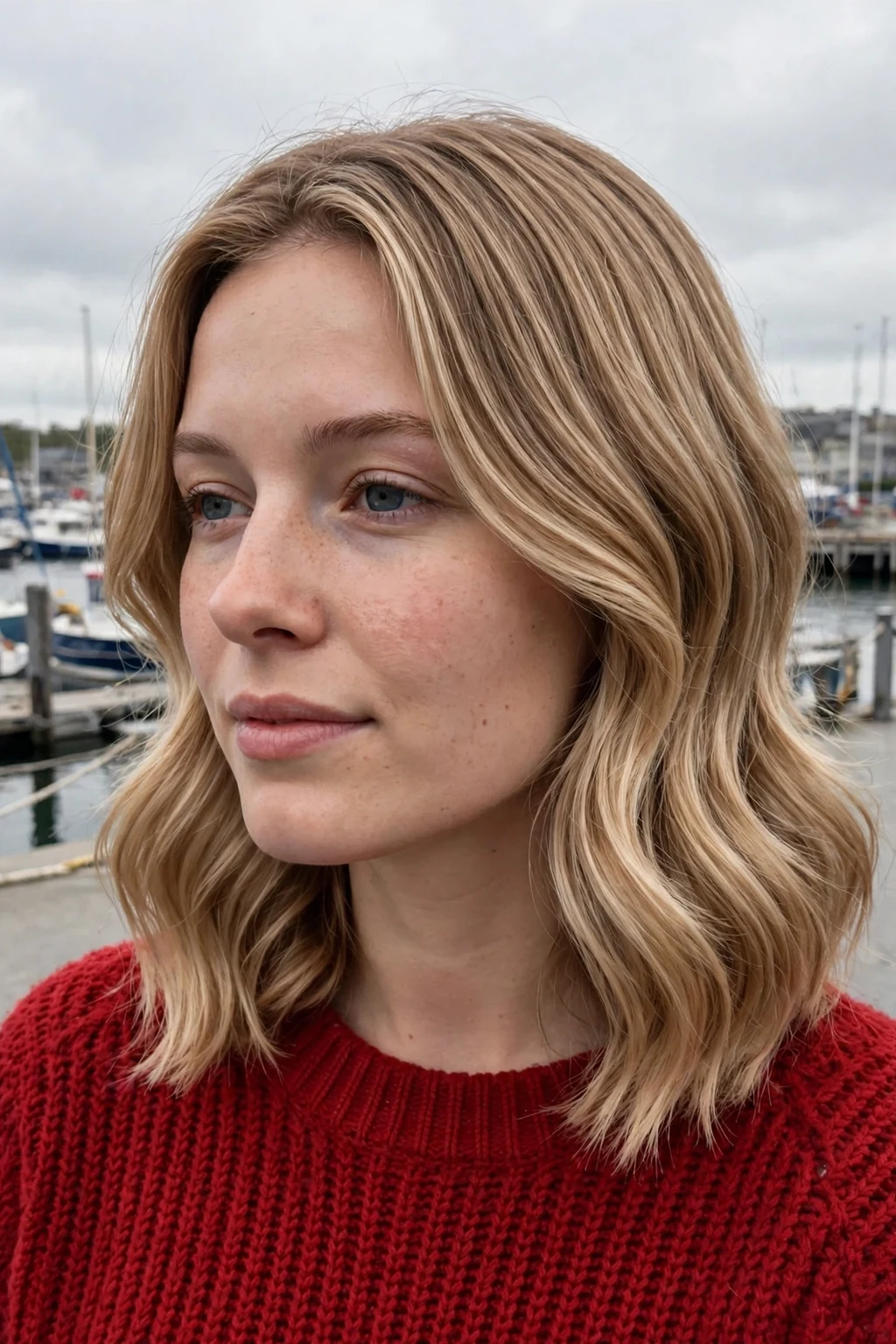
The shag with curtain bangs pairs the cut's signature choppy layers with a soft, face-framing fringe that parts in the middle and sweeps outward like curtains, drawing the eye straight to the cheekbones and eyes. The bangs themselves are longer than a traditional fringe, usually falling from the eyebrows down to the cheekbones, so they blend seamlessly into the shorter face-framing layers instead of sitting apart as a separate feature. The overall silhouette is balanced and romantic, with volume at the crown, texture through the mid-lengths, and ends that flick and separate naturally. The finish is soft rather than severe, which makes this version of the shag feel approachable and flattering even for women trying a fringe for the very first time. It also grows out beautifully, since the curtain pieces simply lengthen into face-framing layers without an awkward in-between stage. Ask your stylist to point-cut the ends rather than blunt-cutting them, since that technique creates the signature piecey separation that keeps a shag looking light, textured, and intentionally undone instead of heavy.
This combination suits almost every face shape, and it is famously flattering on oval, round, and square faces, where the parted fringe softens angles and creates the illusion of a longer, more balanced face. It works best on straight to wavy hair of fine to medium density, and it is a smart choice for women with larger foreheads or strong jawlines who want gentle softening. To style, blow-dry the curtain pieces away from the face with a round brush, or simply part damp hair in the middle and let the bangs air-dry into their natural sweep. A small amount of texturizing spray through the layers adds separation, while a pea-sized dab of pomade keeps the fringe pieces from looking flyaway. A trim every six to eight weeks keeps the bangs at the perfect length and the layers intentional. Choose the shag with curtain bangs when you want guaranteed flattery: it is the rare trend that truly suits everyone, and it instantly makes a shag feel finished and face-aware.
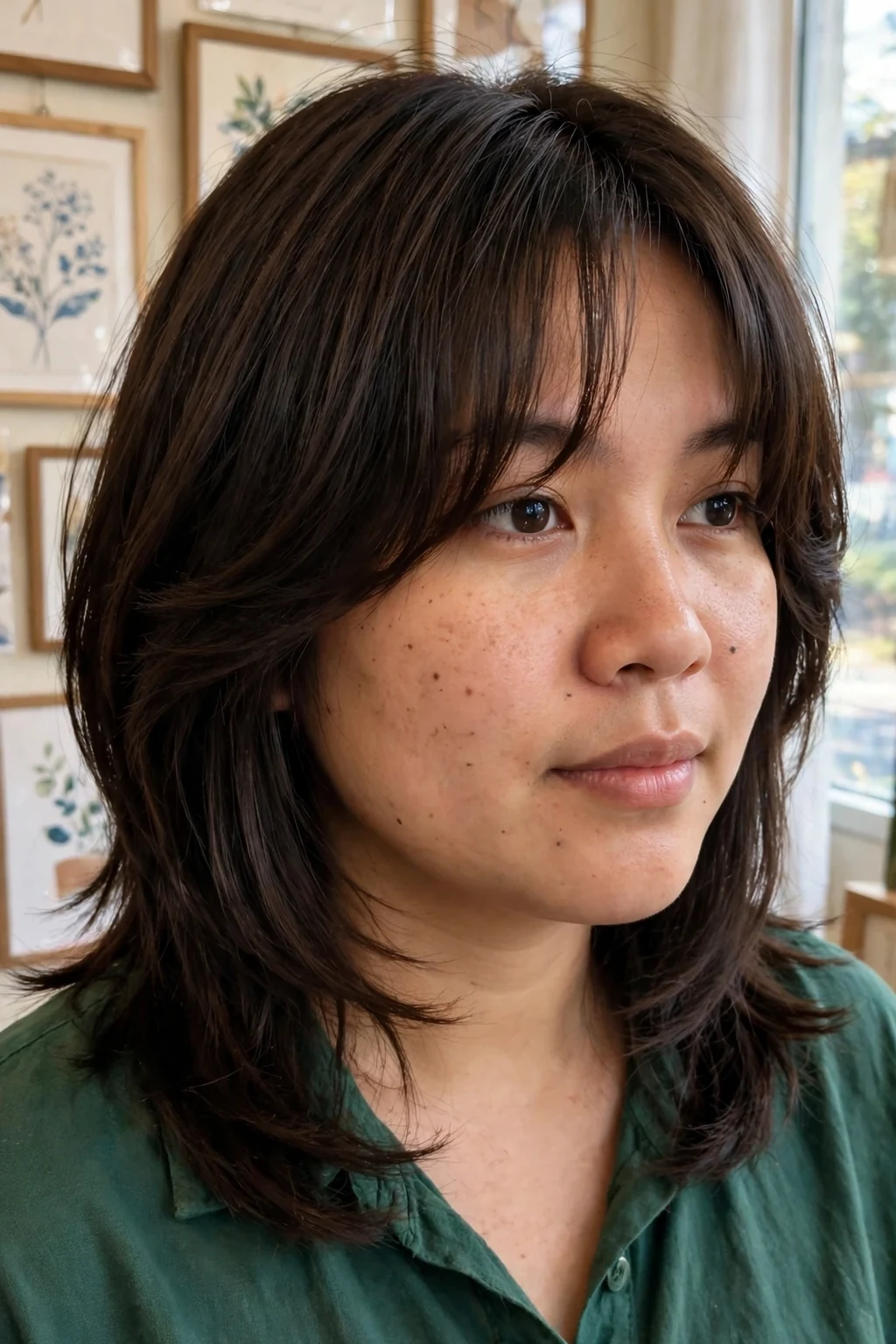
8. Shag with Wispy Bangs
The shag with wispy bangs is the softest, most romantic way to wear the cut, pairing choppy, textured layers with a delicate, feathered fringe that barely grazes the eyebrows. Unlike a heavy, blunt fringe, wispy bangs are cut with a light hand and plenty of texture, so you can see hints of forehead through them and they move with the rest of the hair instead of sitting as a solid block. The effect is youthful and dreamy, softening the forehead and drawing gentle attention to the eyes, while the shag layers underneath provide the volume and movement that keep the whole style from looking flat or precious. The finish is airy and touchable, with ends that separate naturally and a fringe that looks best when it is slightly imperfect, never shellacked into place. The beauty of this shape is how it moves when you do, with layers that swing, bounce, and resettle naturally throughout the day, so the cut looks freshly styled even hours after you leave the house.
This version suits women with fine to medium hair and straight to wavy textures, flattering oval, long, and heart-shaped faces with its gentle, face-softening effect. It is especially kind to delicate hair types that could be overwhelmed by aggressive texturizing or a heavy fringe, and it is a wonderful first fringe for anyone nervous about committing to bangs. To style, mist a light texturizing spray through damp hair and air-dry, or blow-dry the fringe forward with your fingers and let it fall naturally, then piece it apart with a tiny amount of cream. Because wispy bangs grow quickly, a fringe trim every four to five weeks keeps them out of your eyes, while the shag layers need attention only every seven to eight weeks. Choose the shag with wispy bangs when you want the gentlest possible fringe: it is pretty, forgiving, and timelessly feminine, and it makes a shag feel instantly softer. When you visit the salon, ask your stylist to show you exactly how much product to use, since shag layers look best with a light hand and too much cream or wax can weigh the texture down.
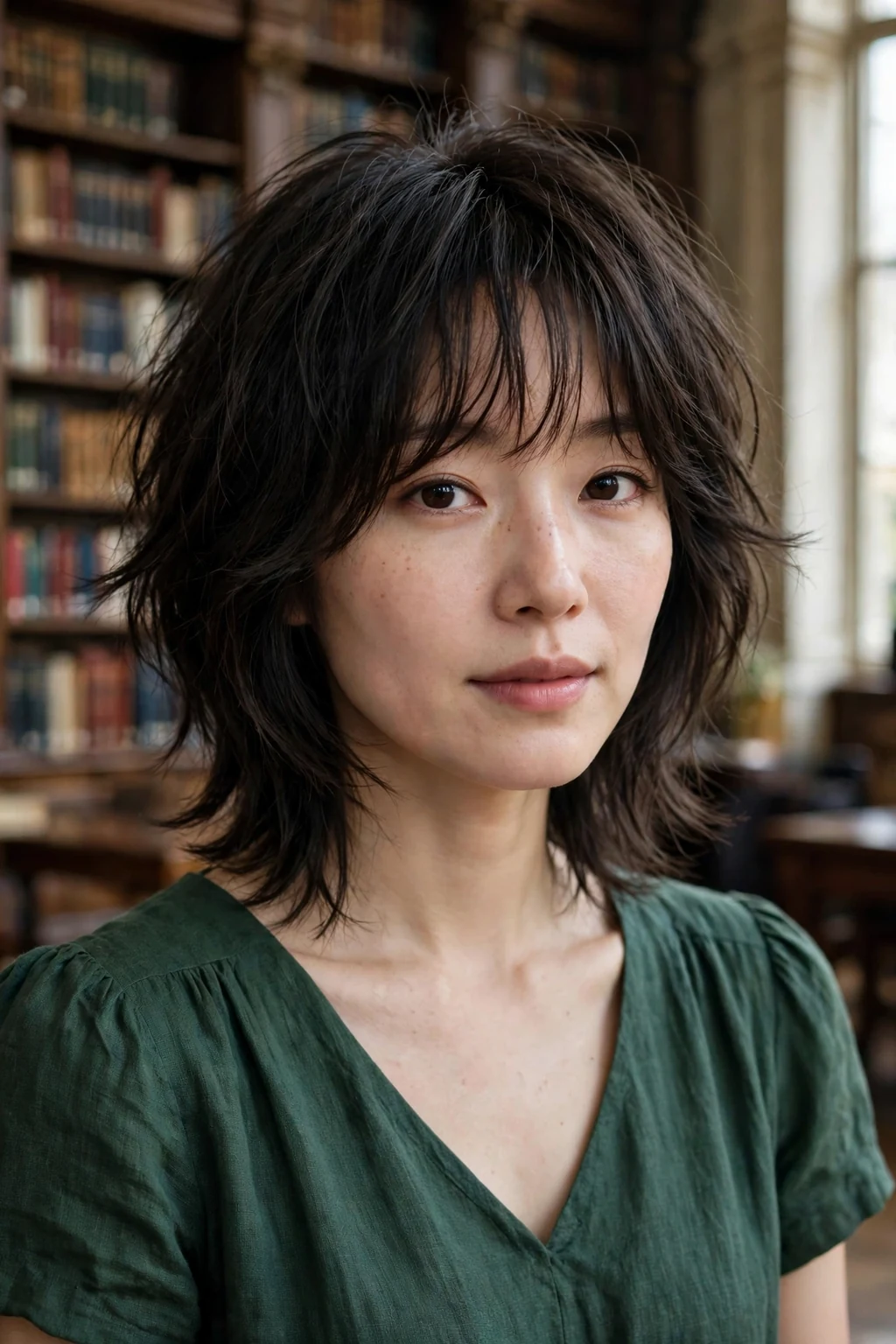
9. Shaggy Pixie
The shaggy pixie is short hair with serious attitude: a cropped cut with shaggy, textured layers on top, longer piecey bits around the face, and clean, tapered lines at the sides and nape. It takes the pixie's boldness and softens it with the shag's signature messiness, so the result is edgy yet completely wearable, with genuine personality in every piece. The top layers create lift and separation, the fringe can be worn swept to the side or tousled forward, and the finish is deliberately undone, proving definitively that the shortest hair can have the most interesting structure of all. It is a cut that photographs beautifully and turns heads in person, because it frames the eyes, cheekbones, and jawline with nothing to hide behind. If your hair is naturally straight, a few loose bends added with a flat iron will bring the layers to life, while naturally wavy hair usually needs nothing more than a good air-dry to look complete.
This cut suits women with fine to medium hair and straight to wavy textures, flattering oval, heart, and diamond faces with its height and texture. It is brilliant for fine hair, where the layered pieces create visible fullness and the illusion of density that a one-length pixie cannot offer. To style, work a dab of texturizing cream or matte pomade through damp or dry hair and piece it with your fingers, directing the top forward or to the side as you prefer, and the whole routine takes under two minutes. A trim every four to six weeks keeps it sharp and intentional, and grow-out evolves gracefully into a shaggy bob, so there is no dreaded awkward stage. Choose the shaggy pixie when you want short hair that never bores: it is fresh, confident, and full of character, and it shows off your features beautifully. For special occasions, a few face-framing pieces curled away from the face with a medium-barrel iron will instantly elevate the whole style without requiring a full restyle or a trip to the salon.

10. Medium-Length Shag
The medium-length shag is the sweet spot of the shag world: collarbone-grazing length with layered texture throughout, a full crown, and face-framing pieces that start at the cheekbones and taper down to the shoulders. It is long enough to pull back into a ponytail or a loose bun on busy days, yet short enough that the layers can actually do their work, lifting the roots and letting the ends move freely. The silhouette is balanced and versatile, neither too short to feel risky nor too long to feel heavy, and the finish is soft and piecey, with natural separation that makes the hair look fuller, healthier, and more interesting from every angle. It is the shag most stylists recommend first, because it suits so many women and adapts so easily to different textures. This length also photographs beautifully, because the layered silhouette creates natural shadow and dimension that a one-length cut cannot match, especially in outdoor or window light.
This cut suits nearly every face shape, including oval, round, square, and heart-shaped faces, and it works on straight, wavy, and lightly curly hair of fine to thick density. Women with thick hair will appreciate how the internal layers remove bulk, while women with fine hair will love the added volume. To style, apply mousse or a wave cream to damp hair and air-dry for natural texture, or blow-dry with a round brush for a smoother, bouncier finish, then separate the ends with a light texturizing spray. A trim every seven to eight weeks keeps the shape crisp, and grow-out transitions smoothly into a long shag. Choose the medium-length shag when you want the most versatile version of the cut: it is the reliable, flattering, everyday shag that works for work, weekends, and everything in between. If you swim or spend time in the sun, a leave-in conditioner with UV protection will prevent the ends from drying out, which is especially important for layered cuts where the ends are constantly on display.
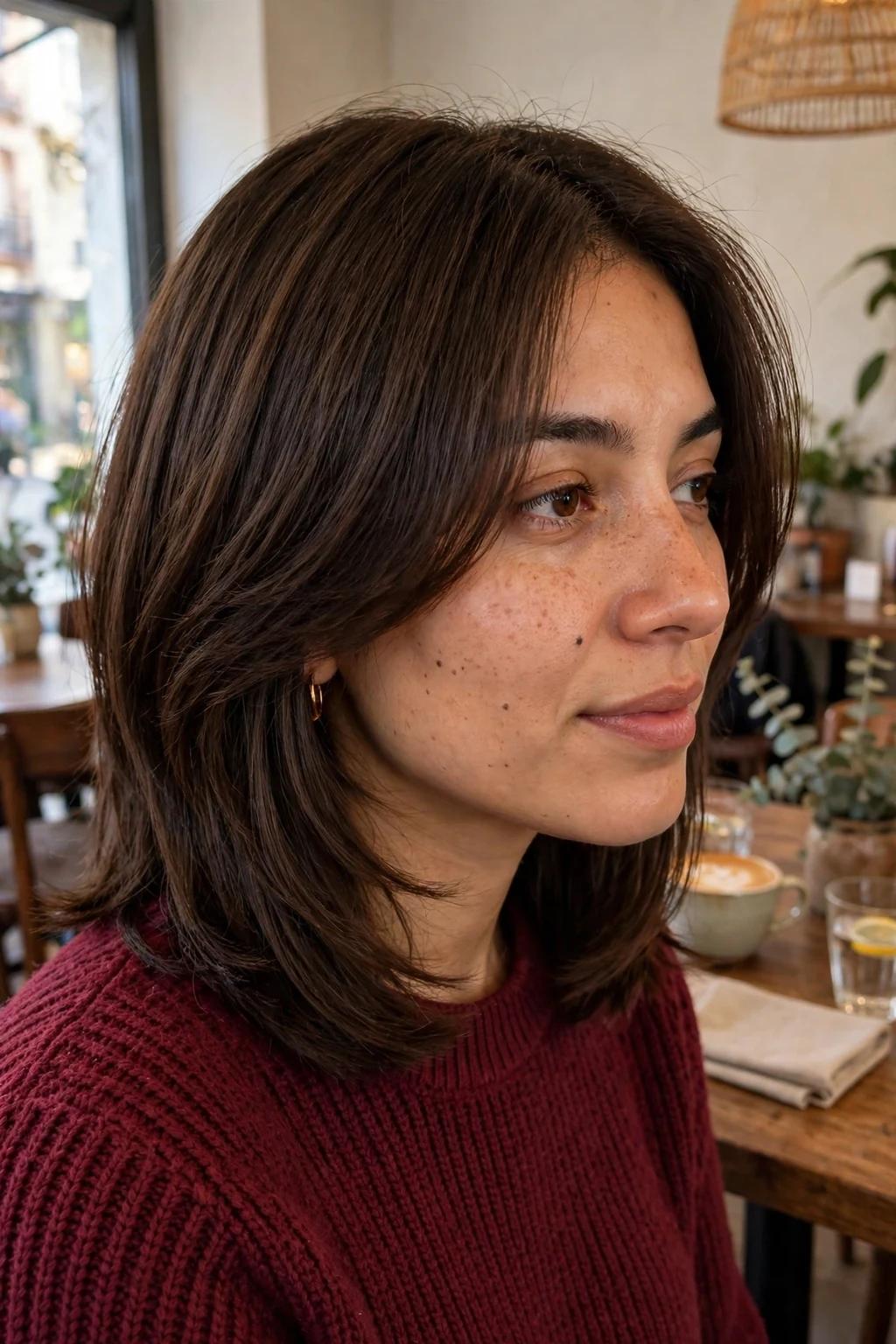
11. Wolf Cut Shag
The wolf cut shag is the boldest member of the shag family: a dramatic hybrid of a mullet and a shag, with very short, choppy layers at the crown and much longer, wispy layers underneath. The contrast is the whole point, creating a wild, untamed silhouette with serious volume on top and tapered, textured length below, like the mane of its namesake. The face-framing layers are cut aggressively short around the cheeks and jaw, which makes the eyes and cheekbones pop, while the longer back layers keep the cut from feeling like a true mullet. The finish is intentionally messy and rock-and-roll, with piecey ends that refuse to sit neatly, and it looks best when it is slightly windblown, as if you have just come in from an adventure. A good shag should feel balanced rather than top-heavy, so ask your stylist to check the crown volume and the weight at the ends together before finishing, ensuring neither section overwhelms the other.
This daring cut suits women with straight to wavy hair and medium to thick density, flattering oval, round, and heart-shaped faces with its dramatic framing and crown volume. It needs enough hair to create the short-to-long contrast without looking sparse, so very fine hair should keep the top layers a little longer. To style, scrunch texturizing spray into damp hair and air-dry or diffuse, then shake it out with your fingers and piece the ends with pomade for definition. A trim every six to eight weeks keeps the contrast intentional rather than overgrown, and grow-out softens beautifully into a long shag. Choose the wolf cut shag when subtlety bores you: it is fun, fearless, and full of attitude, and it is the most talked-about shag variation for a reason. Second-day hair is often when this cut looks its best, because natural oils add grip and texture, so do not be afraid to skip a wash and let the layers do their work.

12. Textured Shag
The textured shag is dimension you can see and feel: layers cut with point-cutting or razor techniques that create visible separation, piecey movement, and beautiful depth throughout the hair. Every layer is distinct and defined, with a finish that has genuine texture you can see from across the room, and the cut is the opposite of a flat, one-length style, giving hair energy, interest, and touchable separation built right into its architecture. The crown is full without being teased, the mid-lengths have movement without frizz, and the ends are deliberately piecey, so the hair looks styled even when you have done almost nothing to it. It is the shag for women who want their haircut to do the talking, with craftsmanship that is visible in every section. Because the layers are the star, a simple, healthy shine is more important than elaborate styling, so a weekly hydrating mask will keep the ends looking polished rather than dry or frayed.
This cut suits women with medium to thick straight or wavy hair, flattering oval, heart, and diamond face shapes with its lively movement. It is excellent for thick hair, where the texturizing removes bulk and weight, and equally valuable for fine hair, where the piecey ends create the convincing illusion of fullness. To style, work a pea-sized amount of texturizing cream through dry hair, pinching and piecing sections with your fingers to encourage separation, and finish with a light mist of texturizing spray for lasting grit. Trims every seven to eight weeks keep the texture crisp rather than overgrown, and grow-out stays attractively textured since the cut is designed to evolve gracefully. Choose the textured shag when you want hair with visible craftsmanship: it is contemporary, lively, and endlessly interesting to wear, and it never looks flat. If your hair tends to frizz in humidity, a pea-sized amount of smoothing cream smoothed only over the outer surface will tame flyaways without flattening the interior texture underneath.
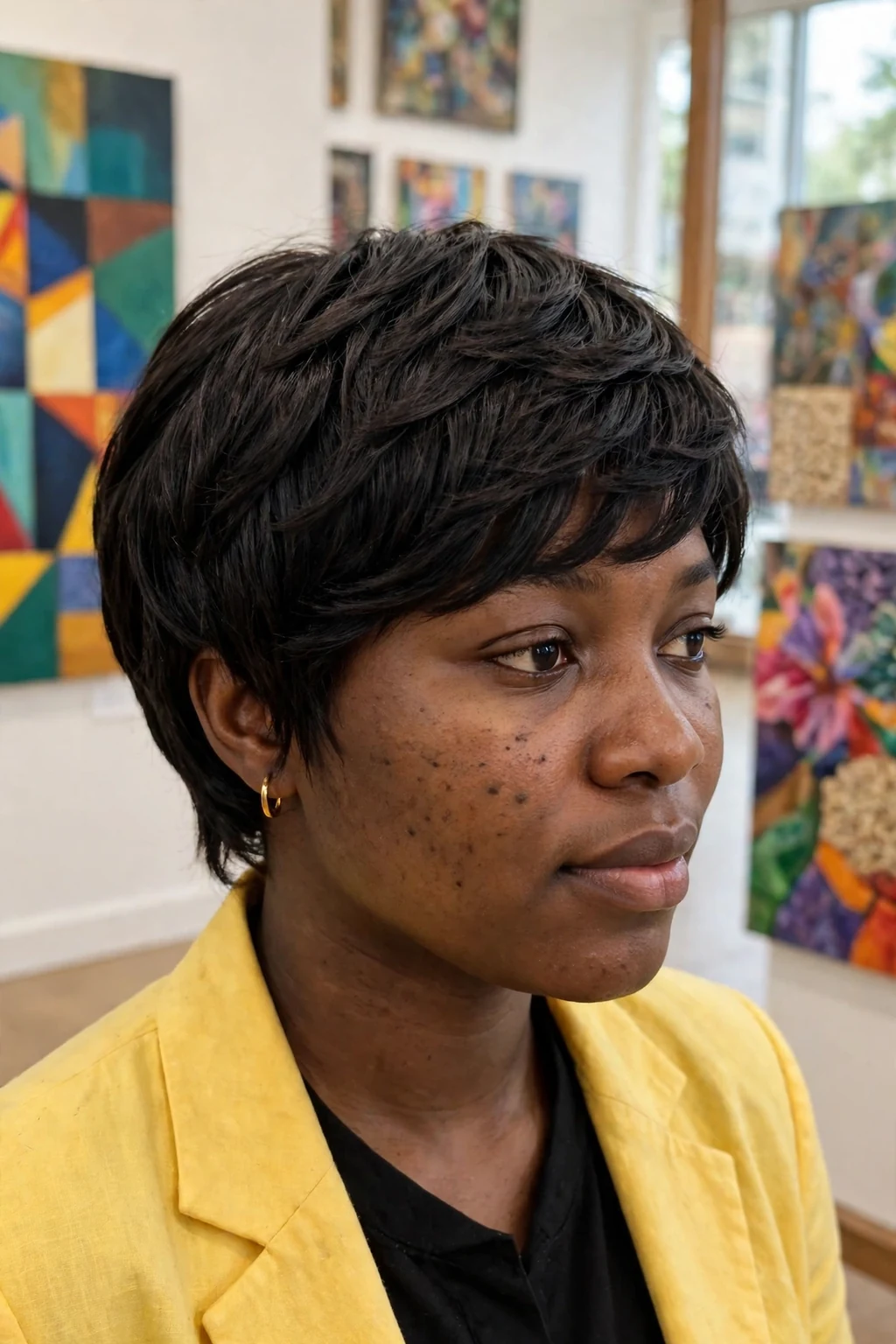
13. Choppy Shag
The choppy shag is texture with genuine attitude: boldly piecey, deliberately uneven layers that create striking separation and edgy, head-turning movement throughout the hair. Its appearance is modern and spirited, with visibly textured ends that have real personality and character, and a finish that is dynamic and confident rather than demure or predictable. The layers are cut with a heavier hand than a soft shag, so the ends flick, flip, and separate in different directions, giving the hair a restless energy that looks fantastic in motion. It is the shag for women who want their hair to have opinions, and it photographs with wonderful dimension because light catches each separate piece differently. The overall effect is youthful, cool, and slightly rebellious, without ever crossing into costume territory. The shape works just as well dressed up as it does casually, pairing naturally with everything from a tailored blazer to a vintage band tee, which is part of why the shag has stayed popular for decades.
This cut suits women with straight to wavy hair and medium to thick density, flattering oval, heart, and square faces with its energetic texture. It needs enough hair to chop into without looking sparse, so very fine hair should keep the choppiness moderate and the layers a little longer. To style, work matte texturizer through dry hair and piece it with your fingers, encouraging the ends to flick and separate naturally, and finish with a flexible-hold spray that preserves movement without stiffness. A trim every six to eight weeks keeps the choppiness looking intentional rather than overgrown, and grow-out softens beautifully into a textured shag, so the cut evolves gracefully. Choose the choppy shag when subtlety bores you: it is fun, fearless, and full of life, and it makes even a simple outfit feel instantly more interesting. On busy mornings, a quick refresh with dry shampoo at the roots and a shake of the ends is often all this cut needs, making it one of the most forgiving styles for women with packed schedules.
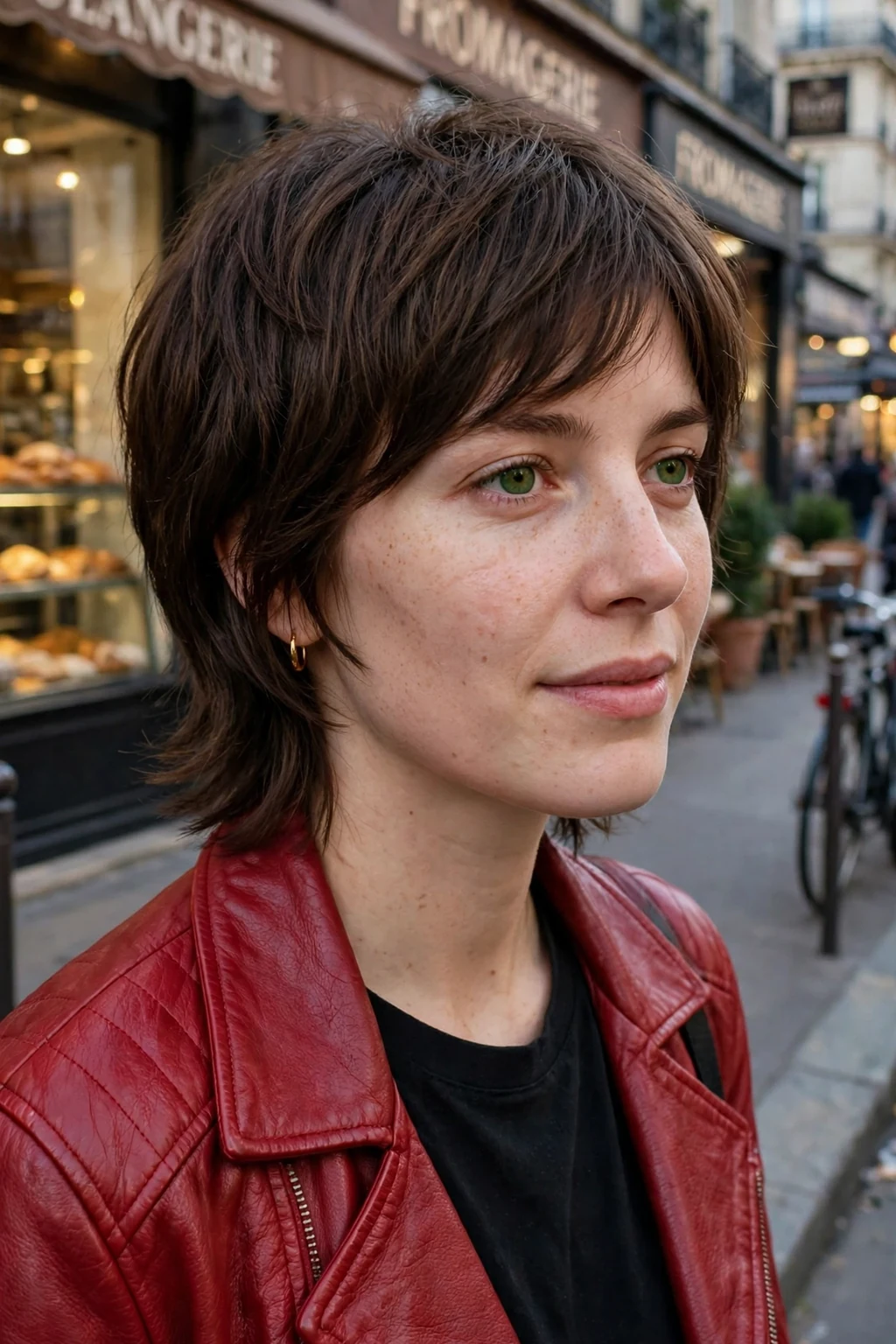
14. Feathered Shag
The feathered shag is softness given form: delicate, wispy layers feathered through the lengths that create airy movement and a light, floating finish, all while keeping the shag's signature volume at the crown. Its appearance is gentle and feminine, with hair that looks full of air and ends that flicker and separate naturally, like feathers catching a breeze. There is nothing heavy or blunt about this cut; the whole effect is one of lightness and grace, with layers that blend more smoothly than a choppy shag but still deliver plenty of texture. It is the perfect bridge between a classic layered cut and a true shag, offering movement without messiness and softness without flatness, and it looks particularly beautiful when it catches the light. The beauty of this shape is how it moves when you do, with layers that swing, bounce, and resettle naturally throughout the day, so the cut looks freshly styled even hours after you leave the house.
This cut is beautiful for women with fine to medium hair, because the feathering creates the illusion of fullness without sacrificing length, and it flatters round, square, and heart-shaped faces by softening angles. It is a wonderful choice for anyone who loves shag texture but prefers a more polished, romantic result. To style, apply volumizing mousse at the roots on damp hair and air-dry or blow-dry with a round brush, letting the feathered ends flick outward naturally. A light shine serum on the ends keeps the feathering looking healthy rather than frizzy. Trims every eight to ten weeks keep the feathering fresh, and grow-out is graceful since the soft layers simply lengthen. Choose the feathered shag when you want romance without effort: it is the softest way to wear a shag, and it makes fine hair look twice as thick. When you visit the salon, ask your stylist to show you exactly how much product to use, since shag layers look best with a light hand and too much cream or wax can weigh the texture down.

15. Short Shag
The short shag is chic efficiency with a wild streak: a jaw-to-neck-length cut with textured layers that create shape, lift, and personality in minimal length. Its appearance is modern and spirited, with piecey texture on top, clean lines at the nape, and a finish that is polished but never fussy. It proves that short hair can have just as much dimension as long hair, because the layers do all the work, creating volume at the crown and movement through the ends that a one-length short cut simply cannot match. The result is a cut that looks intentional from every angle, frames the face beautifully, and feels light and free, especially in warm weather when long hair can feel like a burden. If your hair is naturally straight, a few loose bends added with a flat iron will bring the layers to life, while naturally wavy hair usually needs nothing more than a good air-dry to look complete. Bring reference photos that show both the front framing and the back shape to your appointment, since a shag looks very different from behind and agreeing on the silhouette in advance prevents surprises.
This cut suits women with fine to medium hair, flattering oval, heart, and square faces by adding height at the crown and softening the jawline. It is brilliant for fine hair, where short layers create the illusion of fullness, and it is equally good for thick hair that needs weight removed. To style, work a dab of texturizing cream through damp hair and air-dry, or blow-dry with your fingers for a slightly smoother finish, and the layers do the rest. A trim every five to six weeks keeps the shape crisp, and grow-out becomes a shaggy bob, so the transition is seamless. Choose the short shag when you want short hair with staying power: it is fresh, youthful, and wonderfully low-maintenance, and it takes minutes to style each morning. Colour maintenance matters too, because faded or brassy tones can make textured layers look dull, so a gloss treatment every couple of months will keep the cut looking fresh and dimensional.
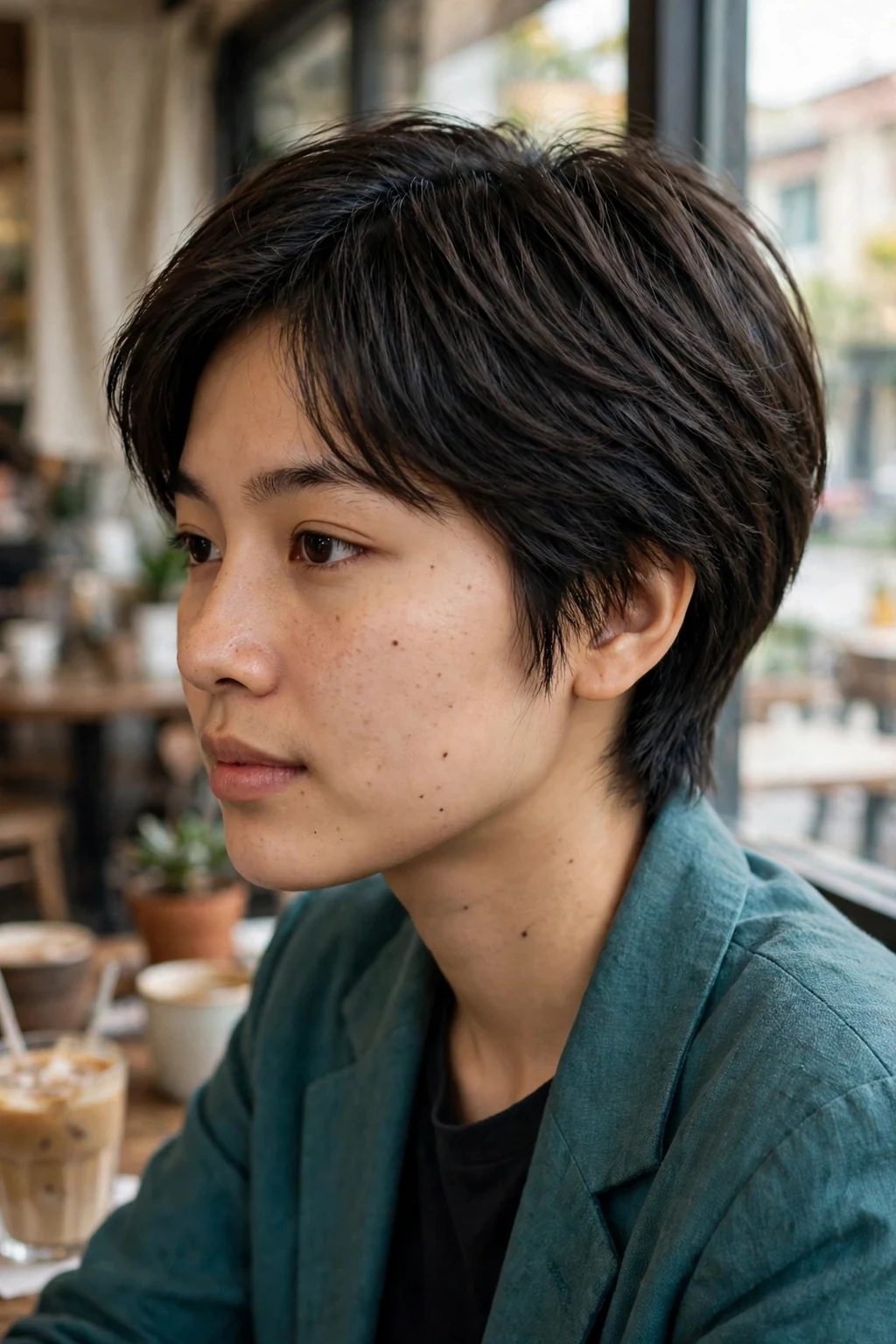
16. Shaggy Lob
The shaggy lob is the long bob, shagged: shoulder-length hair with choppy internal layers, a piecey finish, and just enough length to feel versatile while still delivering serious texture. It combines the lob's classic, face-framing silhouette with the shag's movement, so the hair swings when you walk, the ends separate naturally, and the crown has lift without any teasing. The layers are cut throughout rather than only at the ends, which prevents the dreaded boxy lob shape and gives the cut a soft, rounded profile that flatters the neck and shoulders. It is polished enough for the office, cool enough for the weekend, and long enough to tie back, making it arguably the most practical shag of all. Women who like to change their part will appreciate how forgiving this cut is, since the layers fall attractively whether the hair is parted in the middle, swept to one side, or pushed back off the face. A good shag should feel balanced rather than top-heavy, so ask your stylist to check the crown volume and the weight at the ends together before finishing, ensuring neither section overwhelms the other.
This cut suits women with straight to wavy hair, from fine to thick, flattering oval, round, and heart-shaped faces with its face-framing shape. The internal layers make it more forgiving and wearable than a blunt lob, and they remove bulk from thick hair while adding body to fine hair. To style, smooth a light leave-in conditioner through damp hair and air-dry for ease, or blow-dry with a round brush for a polished finish with flipped ends. A trim every seven to eight weeks keeps the shape crisp, and grow-out transitions gracefully into a long shag, so there is no awkward stage. Choose the shaggy lob when you want the best of both worlds: it is the most versatile medium-length cut in existence, and it suits almost everyone. Second-day hair is often when this cut looks its best, because natural oils add grip and texture, so do not be afraid to skip a wash and let the layers do their work.

17. Retro Seventies Shag
The retro seventies shag is a loving throwback to the decade that invented the cut: big, feathered layers, a full fringe, and volume that starts at the crown and flows outward in soft, winged shapes. Its appearance is gloriously full, with layers that curve away from the face like wings, ends that flip and feather, and a finish that is bouncy, touchable, and unapologetically glamorous. Unlike a modern, piecey shag, the retro version is smoother and more blown-out, with a polished, salon-finished quality that still feels relaxed because the layers keep it moving. It is the shag as a statement, full of disco-era confidence and warmth, and it looks spectacular with vintage-inspired clothing and bold accessories. Because the layers are the star, a simple, healthy shine is more important than elaborate styling, so a weekly hydrating mask will keep the ends looking polished rather than dry or frayed. If you wear glasses, mention them at the consultation, since the face-framing layers can be adjusted to sit beautifully alongside frames instead of competing with them or falling across the lenses.
This cut suits women with medium to thick straight or wavy hair, flattering oval, oblong, and heart-shaped faces with its face-framing wings and crown volume. It needs enough density to support the feathered shape, so very fine hair may need volumizing products to hold the style. To style, blow-dry with a large round brush, flipping the face-framing layers away from the face and the ends outward, then finish with a flexible-hold spray and a shine serum for that seventies glow. A trim every seven to nine weeks maintains the feathered shape, and grow-out keeps its retro charm gracefully. Choose the retro seventies shag when you want hair with undeniable presence: it is joyful, glamorous, and turns every day into an occasion, and it never fails to get compliments. Book your next trim before leaving the salon, since layered cuts lose their intention quickly once they grow past their ideal length, and a standing appointment keeps the shape consistently sharp.

18. Face-Framing Shag
The face-framing shag puts the spotlight exactly where it belongs: shorter layers cut around the face that draw attention to the eyes and cheekbones while softening the jawline, all supported by shaggy texture through the rest of the hair. Its appearance is luminous and flattering, with hair that seems to glow around the face, pieces that curve inward exactly where they beautify most, and a finish that is polished yet natural. The framing layers are the star, but the shag layers underneath provide the volume and movement that keep the cut from looking like a simple layered style, creating a beautiful balance between structure and messiness. It is the shag for women who want maximum flattery with a cut that still feels cool and current. Ask your stylist to point-cut the ends rather than blunt-cutting them, since that technique creates the signature piecey separation that keeps a shag looking light, textured, and intentionally undone instead of heavy. The beauty of this shape is how it moves when you do, with layers that swing, bounce, and resettle naturally throughout the day, so the cut looks freshly styled even hours after you leave the house.
This cut is universally flattering, working beautifully on oval, round, square, and heart-shaped faces, and it suits straight, wavy, and curly textures alike. It is particularly magical on highlighted or dimensional color, where the framing pieces catch light and show off the color work. To style, blow-dry the front pieces with a round brush for a polished curve, or let them air-dry for a softer, more natural effect, then add texturizing spray through the lengths. A trim every six to eight weeks keeps the framing precise, and grow-out simply lengthens the frame into longer layers. Choose the face-framing shag when you want maximum flattery with minimum effort: it is the closest thing to a guaranteed compliment, and it makes any shag feel custom-made for your face. When you visit the salon, ask your stylist to show you exactly how much product to use, since shag layers look best with a light hand and too much cream or wax can weigh the texture down.

19. Razored Shag
The razored shag is precision with a soft edge: layers cut with a razor rather than scissors, creating feathered ends and the most seamless blending imaginable within a shag silhouette. Its appearance is sleek and modern, with ends that taper to whispers rather than stopping at blunt lines, and a finish that is smooth yet full of subtle, touchable texture. The razor creates a distinctive softness and fluidity that scissor-cutting alone cannot achieve, so the shag looks refined rather than ragged, even though it keeps all the movement and volume the cut is known for. It is the shag for women who love texture but prefer their edges soft, and it moves beautifully, with layers that fall into place without stiffness. If your hair is naturally straight, a few loose bends added with a flat iron will bring the layers to life, while naturally wavy hair usually needs nothing more than a good air-dry to look complete. Bring reference photos that show both the front framing and the back shape to your appointment, since a shag looks very different from behind and agreeing on the silhouette in advance prevents surprises.
This cut suits women with medium to thick straight or wavy hair, flattering oval, oblong, and heart-shaped faces with its fluid movement. It is not ideal for very fine, fragile, or damaged hair, which can look thinner and frizzier with razoring, so discuss your hair health honestly with your stylist first. To style, smooth a light serum through damp hair and air-dry or blow-dry, letting the feathered ends fall naturally, and finish with a tiny amount of cream to tame flyaways. Trims every seven to eight weeks keep the razor texture fresh and defined, and grow-out is soft and forgiving since there are no harsh lines to outgrow. Choose the razored shag when you want the sleekest possible texture: it is modern, refined, and quietly luxurious, and it elevates the shag into something truly elegant. Colour maintenance matters too, because faded or brassy tones can make textured layers look dull, so a gloss treatment every couple of months will keep the cut looking fresh and dimensional.
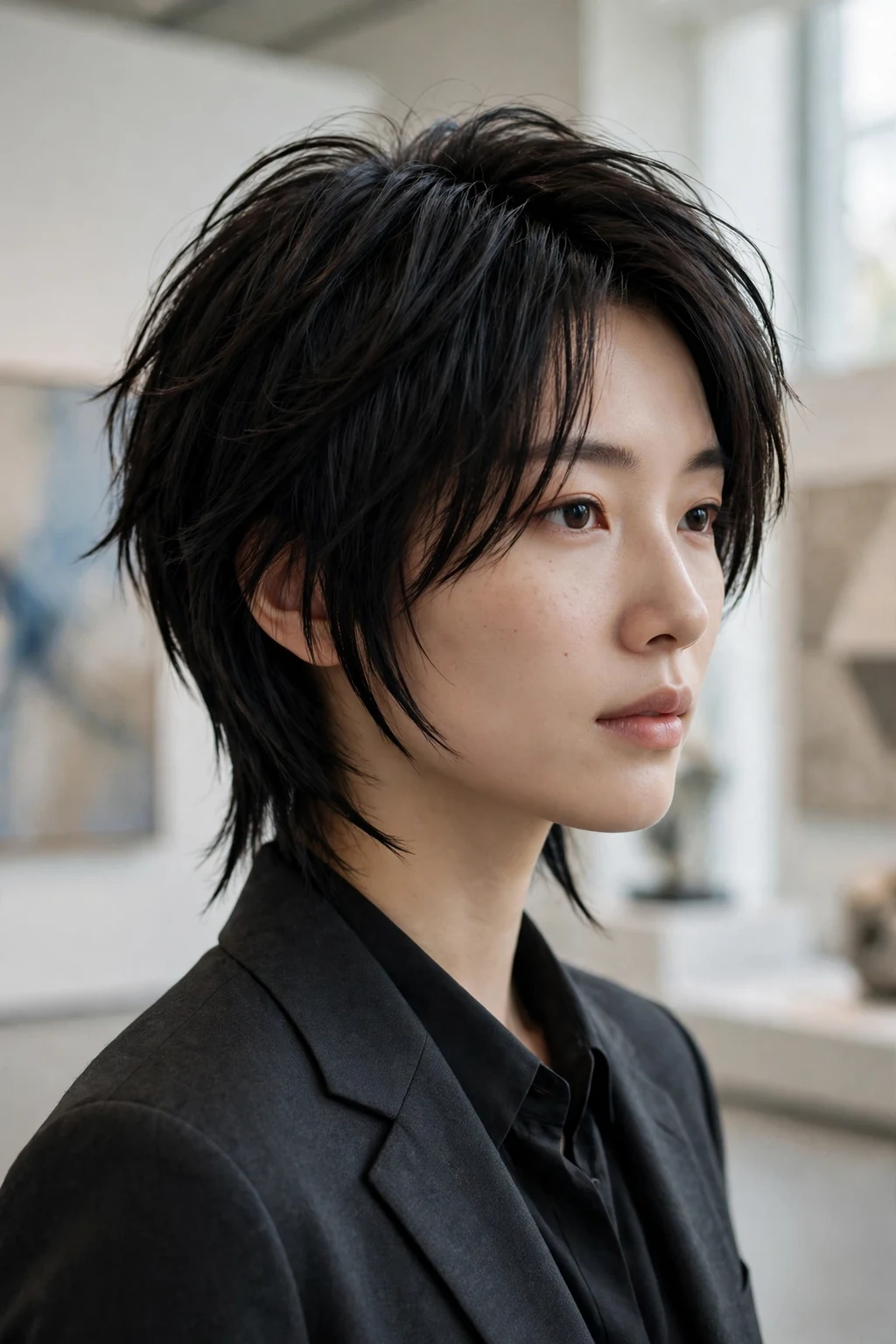
20. Shag with Side-Swept Bangs
The shag with side-swept bangs is effortlessly glamorous: a long, sweeping fringe that crosses the forehead diagonally, paired with choppy shag layers that give the whole cut movement and volume. The side-swept bang softens the forehead, adds asymmetry and drama, and can be worn tucked behind the ear, pinned back, or falling loosely across the brow for different moods. The layers underneath keep the hair from looking heavy, so the sweeping fringe feels light and integrated rather than like an afterthought, and the overall finish is polished but relaxed, like hair that was styled in five minutes and happens to look perfect. It is a versatile combination that works for both casual days and dressier evenings, since the fringe instantly makes the style feel more finished. Women who like to change their part will appreciate how forgiving this cut is, since the layers fall attractively whether the hair is parted in the middle, swept to one side, or pushed back off the face.
This cut suits women with straight to wavy hair and fine to medium density, flattering oval, round, and square faces, where the diagonal line of the fringe breaks up symmetry and creates flattering angles. It is a smart choice for women with broad foreheads or strong features who want gentle softening without a full fringe commitment. To style, blow-dry the bangs to the side with a round brush or a paddle brush, then add texturizing spray through the layers and piece the ends with cream. A fringe trim every five to six weeks keeps the sweep at the right length, while the shag layers need attention every seven to eight weeks. Choose the shag with side-swept bangs when you want drama without effort: it is elegant, versatile, and instantly makes a shag feel more sophisticated. Between salon visits, a tiny trim of split ends at home is not a substitute for a professional shape-up, but keeping the ends healthy will help the layers hold their definition for longer.
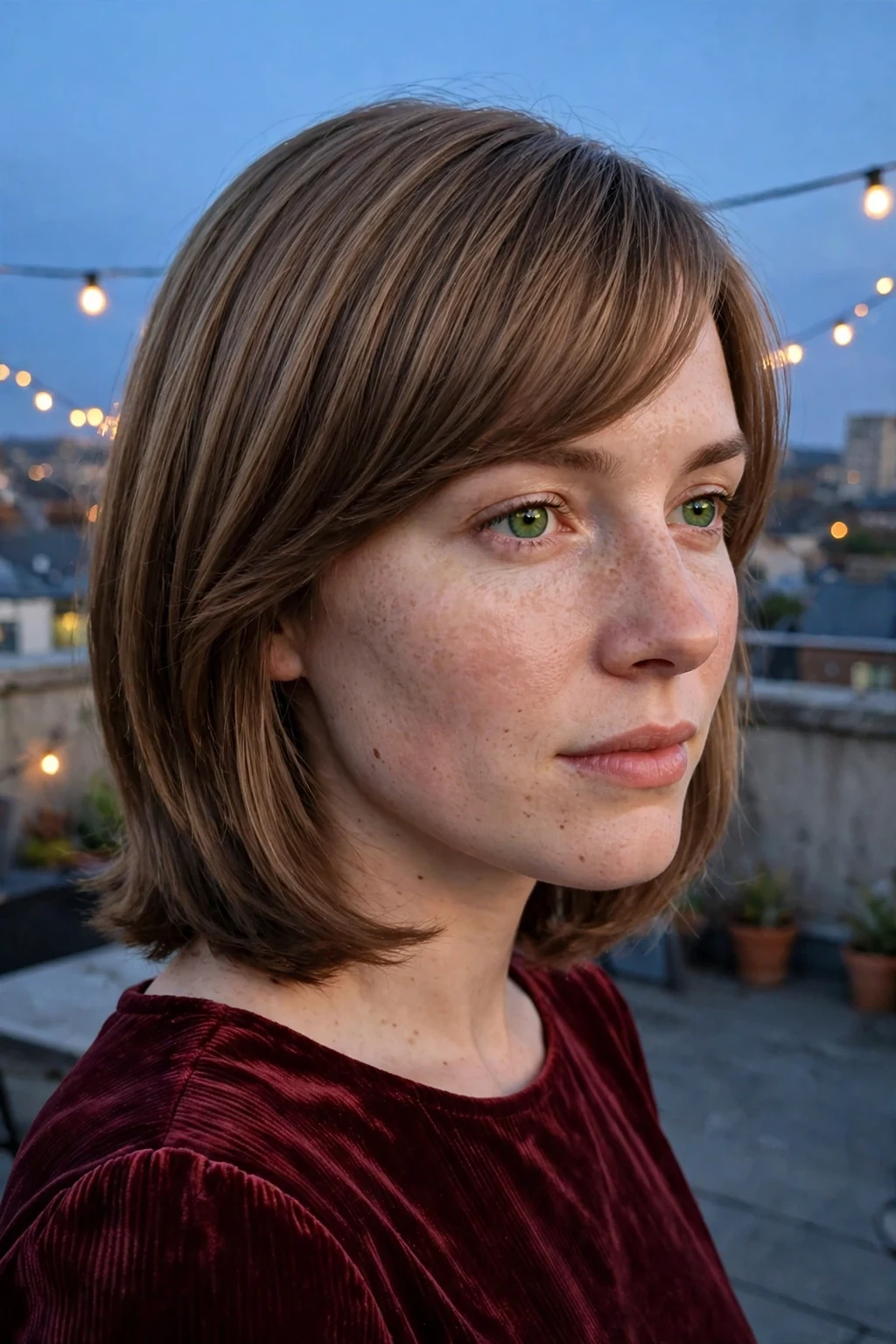
21. Voluminous Shag
The voluminous shag is glamour engineered from the inside out: layers cut and styled specifically for maximum body, bounce, and fullness, with a crown that lifts naturally and lengths that cascade with movement. Its appearance is lush and dramatic, with hair that has serious presence, beautiful lift at the roots, and a finish that is bouncy and touchable rather than stiff or sprayed into place. The secret is strategic layering, with shorter layers on top creating height and longer layers underneath supporting the shape, so the volume looks built into the cut rather than forced with backcombing. It is the definitive answer for anyone who has ever looked in the mirror and wished for more hair, and it turns an ordinary day into something that feels a little more special. The cut also transitions well between seasons, looking soft and romantic under a winter coat and light, breezy, and carefree in summer heat when you want hair off your neck.
This cut suits women with fine to medium hair craving fullness, flattering oval, oblong, and heart-shaped faces with its face-framing body and crown height. The strategic layering combined with the right products creates truly remarkable volume, even on hair that usually falls flat by midday. To style, apply volumizing mousse to damp roots, blow-dry with a round brush lifting at the crown, and finish with a light texturizing spray for lasting lift without crunch. A root-lifting spray on second-day hair revives the volume instantly. Trims every seven to eight weeks maintain the bounce and shape, and grow-out keeps its volume gracefully as the layers lengthen. Choose the voluminous shag when you want hair with undeniable presence: it is joyful, glamorous, and guaranteed to lift your mood every morning. A flexible-hold hairspray, rather than a stiff one, will preserve the movement that makes this cut appealing, allowing the layers to shift naturally while still holding their shape through the day.
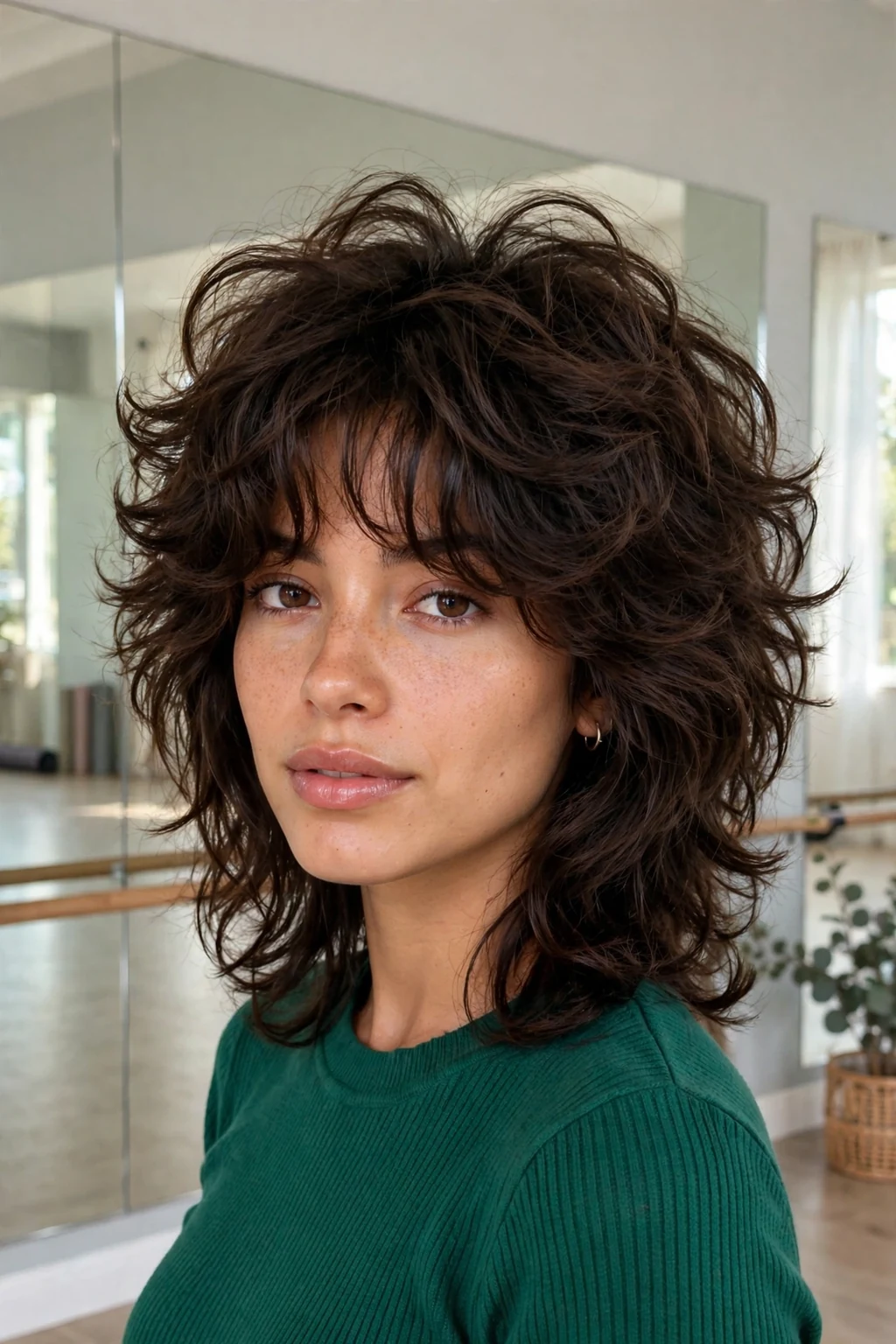
22. Soft Shag
The soft shag is understatement perfected within the shag family: gentler layering, smoother transitions, and a finish that is touchable and calm rather than choppy and wild. Its appearance is refined and completely natural, with hair that looks like a beautiful layered cut but moves with a softness and fluidity that one-length hair cannot achieve. The layers are blended more seamlessly than in a classic shag, so the texture reveals itself in movement rather than in obvious steps, and the ends are soft rather than piecey. It is the shag for women who love the idea of texture but want their hair to look polished at work, romantic on a date, and effortless everywhere else, without ever looking like they tried too hard. If you wear glasses, mention them at the consultation, since the face-framing layers can be adjusted to sit beautifully alongside frames instead of competing with them or falling across the lenses. The shape works just as well dressed up as it does casually, pairing naturally with everything from a tailored blazer to a vintage band tee, which is part of why the shag has stayed popular for decades.
This cut suits women who prefer classic, wearable styles, flattering every face shape and working beautifully on all hair types and textures, from fine to thick. It is perfect for professional environments where quiet polish matters most, and it is a wonderful first shag for anyone nervous about an extreme chop. To style, simply air-dry with a leave-in cream or blow-dry smooth with a round brush, since soft shags need no special products or complicated techniques. A light texturizing spray adds optional separation on days when you want more texture. Trims every eight to ten weeks keep the layers fresh, and grow-out is completely invisible since there are no harsh lines to outgrow. Choose the soft shag when you believe true style is quiet: it is the refined choice for women whose hair speaks softly and carries genuine weight. On busy mornings, a quick refresh with dry shampoo at the roots and a shake of the ends is often all this cut needs, making it one of the most forgiving styles for women with packed schedules.

23. Asymmetrical Shag
The asymmetrical shag is the shag for rule-breakers: one side cut noticeably longer than the other, with choppy layers throughout that make the imbalance feel deliberate, artistic, and cool rather than accidental. The longer side frames the face and falls toward the shoulder, while the shorter side opens up the neck and jawline, creating a dynamic diagonal line that draws the eye across the face in the most flattering way. The finish is edgy and modern, with piecey ends and plenty of movement, and the cut looks different from every angle, which keeps it interesting in person and in photographs. It is a conversation-starting haircut, the kind that gets compliments from strangers, and it pairs beautifully with bold earrings and statement makeup. The beauty of this shape is how it moves when you do, with layers that swing, bounce, and resettle naturally throughout the day, so the cut looks freshly styled even hours after you leave the house.
This cut suits women with straight to wavy hair and medium density, flattering oval, heart, and square faces with its diagonal lines and face-framing asymmetry. It is ideal for anyone who wants a truly individual look and is comfortable with a cut that requires a confident stylist. To style, work texturizing cream through damp hair and air-dry, or blow-dry smooth and piece the ends with pomade to emphasize the asymmetry. A trim every five to seven weeks keeps the difference between the sides crisp and intentional, and grow-out gradually softens the asymmetry into a textured lob. Choose the asymmetrical shag when you want to stand out: it is bold, artistic, and full of personality, and it proves that a haircut can be a genuine form of self-expression. When you visit the salon, ask your stylist to show you exactly how much product to use, since shag layers look best with a light hand and too much cream or wax can weigh the texture down.

24. Shag for Fine Hair
The shag for fine hair is proof that thin hair and great texture are not mutually exclusive: a carefully calibrated cut with soft, strategic layers that create the illusion of fullness without removing the precious density fine hair needs. The layers are kept longer and more blended than in a classic shag, the crown is layered just enough to lift the roots, and the ends are texturized lightly so they look piecey rather than wispy. The result is hair that looks twice as thick as it actually is, with movement, body, and a finish that is airy rather than flat. It is a cut that understands fine hair's challenges and works around them, instead of applying a one-size-fits-all shag formula that would leave fine hair looking sparse. If your hair is naturally straight, a few loose bends added with a flat iron will bring the layers to life, while naturally wavy hair usually needs nothing more than a good air-dry to look complete.
This cut suits women with fine, straight to wavy hair, flattering oval, round, and heart-shaped faces with its gentle volume and face-framing movement. It is the kindest possible shag for delicate hair types that could be overwhelmed by aggressive choppiness or heavy razoring. To style, apply volumizing mousse to damp roots, blow-dry with your fingers lifting at the crown, and finish with a dry texturizing spray that adds grit without weight. Avoid heavy oils and creams, which flatten fine hair instantly. Trims every seven to eight weeks keep the ends looking full rather than straggly, and grow-out stays soft and flattering. Choose the shag for fine hair when you want volume without sacrifice: it is the smart, tailored shag that makes fine hair look its absolute best. For special occasions, a few face-framing pieces curled away from the face with a medium-barrel iron will instantly elevate the whole style without requiring a full restyle or a trip to the salon.

25. Tousled Shag
The tousled shag is bedhead, perfected: a deliberately messy, lived-in cut with layers that fall wherever they please, ends that flick in every direction, and a finish that looks like you just woke up looking amazing. It is the most low-maintenance version of the shag, because the messiness is the style, not a flaw to be corrected, and the layers are cut to encourage natural separation and movement. The crown has soft volume, the mid-lengths have texture, and the ends are piecey and free, creating a silhouette that is relaxed, youthful, and effortlessly cool. It is the hair equivalent of a deep, contented breath: easy, open, and completely free, and it looks better the less you fuss with it, which is a rare and wonderful quality in a haircut. This length also photographs beautifully, because the layered silhouette creates natural shadow and dimension that a one-length cut cannot match, especially in outdoor or window light. Women who like to change their part will appreciate how forgiving this cut is, since the layers fall attractively whether the hair is parted in the middle, swept to one side, or pushed back off the face.
This cut suits women with straight to wavy hair and medium density, flattering oval, round, and heart-shaped faces with its relaxed, face-framing texture. It is ideal for anyone with a busy lifestyle who wants to look great without a lengthy morning routine. To style, scrunch a generous amount of texturizing spray into damp hair and air-dry, then shake it out with your fingers, and that is genuinely the entire routine. A little dry shampoo on second-day hair revives the tousle instantly. Trims every eight to ten weeks refresh the texture and keep the shape intentional, and grow-out is forgiving since tousled length only looks more relaxed. Choose the tousled shag when you want edge in an everyday package: it is youthful, low-maintenance, and cooler than a polished cut could ever hope to be. Between salon visits, a tiny trim of split ends at home is not a substitute for a professional shape-up, but keeping the ends healthy will help the layers hold their definition for longer.
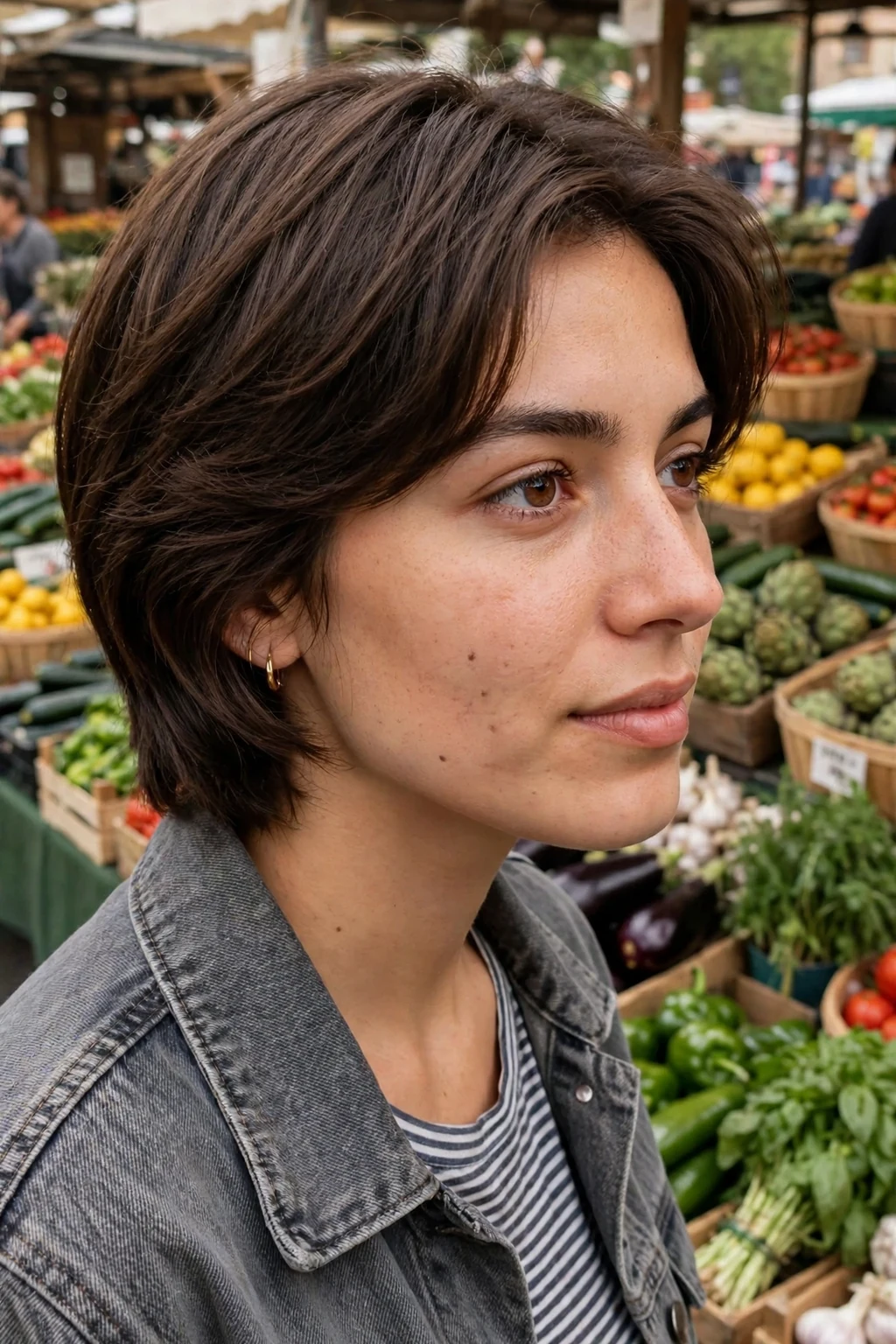
26. Micro Bang Shag
The micro bang shag pairs an ultra-short fringe that sits well above the eyebrows with the choppy, piecey layers that define the classic shag, creating a bold, editorial silhouette that instantly draws attention to the eyes and cheekbones. The fringe is cut bluntly or slightly jagged depending on how much edge you want, while the rest of the hair falls in disconnected layers that taper around the face and build soft volume through the crown. This cut works best on straight to wavy hair, where the short fringe holds its shape without curling unpredictably, and it flatters oval, heart-shaped, and long faces especially well because the abbreviated fringe opens up the face rather than closing it in. Fine hair gains the illusion of density from the stacked layers, while thick hair benefits from the weight removed by internal texturizing. It is a confident, fashion-forward choice for women in their twenties and thirties who want a shag with real attitude and do not mind a fringe that makes a statement every single day.
Styling a micro bang shag is refreshingly quick once the cut is right, since the layers are designed to fall into place with minimal effort. Work a pea-sized amount of texturizing cream or light pomade through damp hair, scrunch the layers upward for separation, and let it air-dry or diffuse on low heat to keep the movement soft rather than frizzy. The fringe itself needs a quick pass with a small round brush or a flat iron on low heat to keep it sitting neatly, and a tiny dab of styling paste will stop it from flipping in humidity. Trims every four to six weeks are essential, because even a few millimetres of growth change how a micro fringe frames the face, and your stylist should check the fringe at every appointment. Grow-out is manageable if you commit to regular fringe trims while the layers lengthen, and the cut pairs beautifully with bold lipstick, statement earrings, and textured outfits that echo its fearless energy.
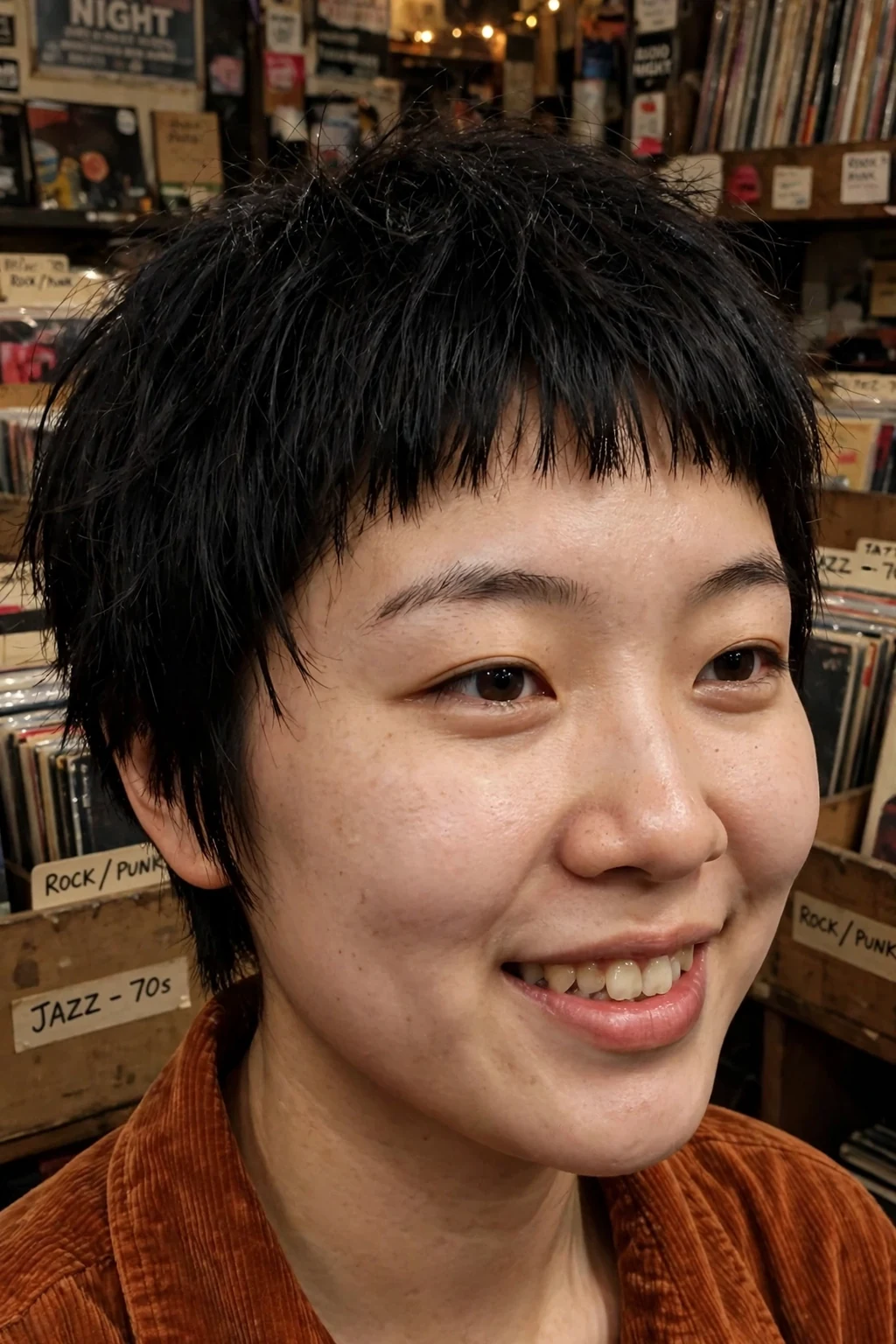
27. Shag for Thick Hair
A shag designed for thick hair is all about strategic weight removal, using long, disconnected layers and internal thinning to turn a heavy, triangular mass into a shape full of air, movement, and swing. Instead of blunt bulk that pyramids outward, the layers are carved through the interior so the hair collapses gracefully around the shoulders, with shorter pieces through the crown creating lift and longer pieces preserving length and flow. This approach suits women with dense, coarse, or abundant wavy hair who have struggled with cuts that feel like a helmet, and it flatters round and square faces because the vertical layering draws the eye downward and softens strong jawlines. The cut works at almost any length, from a shaggy bob to a long, flowing shag, and it is especially liberating for women who have always felt their hair was too much to manage. When executed well, thick hair finally moves the way it looks in photographs, with layers that separate naturally instead of clumping into one solid block.
Styling thick-hair shags rewards a less-is-more approach, since the cut itself does most of the work once the weight has been removed. Apply a lightweight leave-in conditioner and a few drops of smoothing serum to damp hair, then rough-dry with your fingers or diffuse gently to encourage the layers to separate without adding frizz. A wide-tooth comb is far better than a brush for detangling, and a texturizing spray applied at the roots adds grip and definition on second-day hair. Avoid heavy oils and thick creams, which can weigh the layers back down and undo the airiness your stylist created. Trims every eight to ten weeks keep the shape from regrowing into a bulky triangle, and your stylist can refresh the internal layers without sacrificing length. The result is a cut that finally makes thick hair feel light, wearable, and effortlessly cool rather than a daily battle. A clarifying shampoo once a week also helps, since product buildup can make thick layers feel heavy again, and sleeping on a silk pillowcase reduces overnight tangling in the dense interior layers.
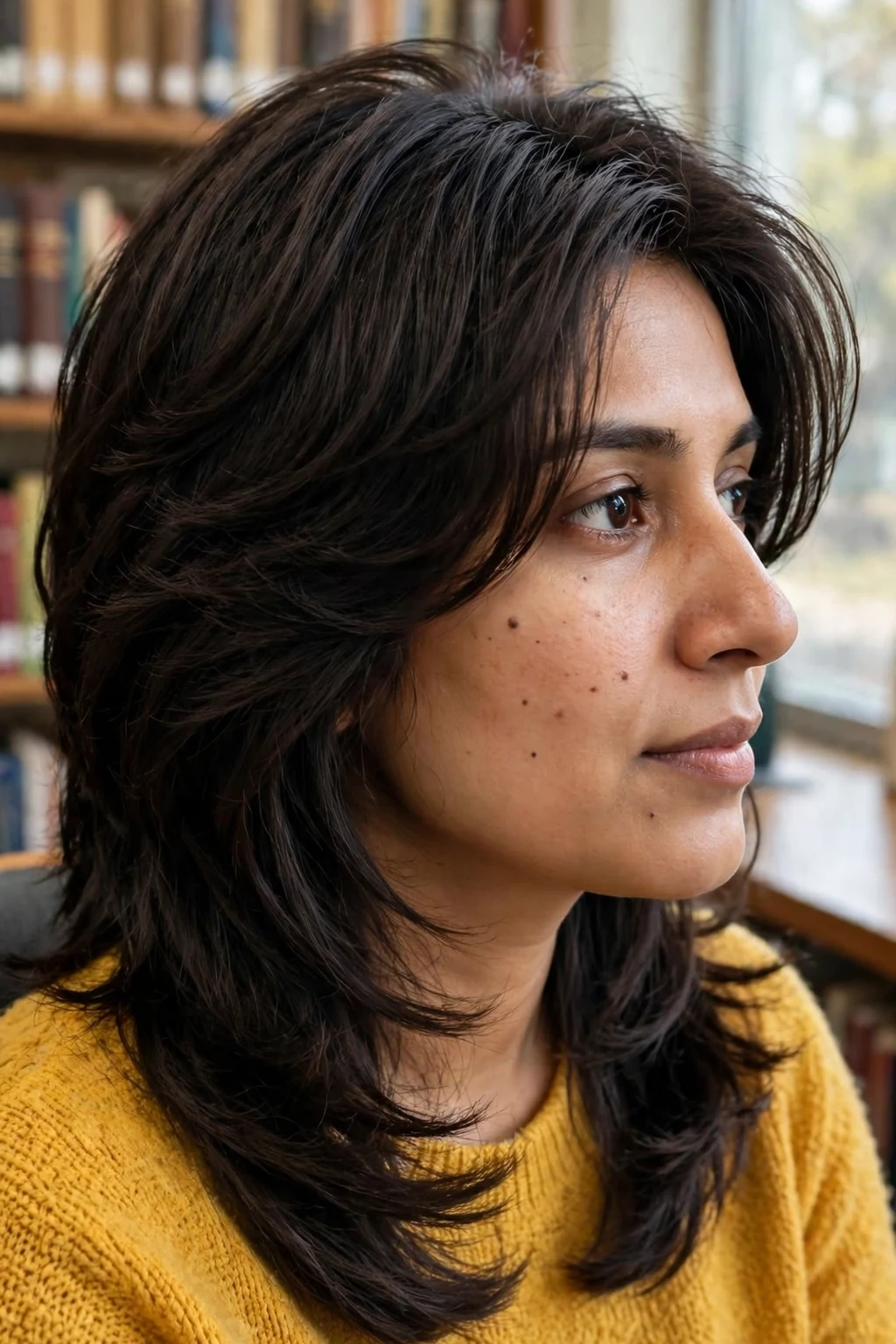
28. Shag for Straight Hair
Straight hair and shag cuts are a perfect match when the layers are cut visibly choppy, because the contrast between sleek strands and jagged, piecey ends creates texture that straight hair rarely achieves on its own. The key is layering that is bold enough to see: shorter crown layers for lift, face-framing pieces that flick outward, and ends that are point-cut or razored so they never fall in one heavy, flat sheet. This version flatters oval, oblong, and heart-shaped faces particularly well, since the horizontal movement of the layers visually widens the face and balances longer proportions. Fine straight hair gains body and the illusion of thickness, while medium-density straight hair gets swing and separation that survives even humid days. It is an ideal choice for women who love a low-maintenance, wash-and-go routine but are tired of straight hair that looks limp, lifeless, and one-dimensional no matter how much product they use.
Styling a straight-hair shag is delightfully simple, which is exactly why the cut is so popular. After washing, work a volumizing mousse or a salt spray through the roots and lengths, then rough-dry upside down for lift before smoothing the ends with a quick pass of a flat iron bent slightly outward. A dab of texturizing paste scrunched into the ends defines the piecey separation that makes the shag read as a shag rather than an ordinary layered cut. Skip heavy serums and shine sprays, which can glue the layers together and erase the texture you paid for. Trims every six to eight weeks keep the choppy ends crisp, since straight hair shows split ends and grown-out layers more obviously than wavy textures do. The grow-out is forgiving, gradually softening into a long layered cut, which makes this shag a smart, low-risk way to try the trend. For extra movement on flat days, try twisting a few face-framing sections away from the face with a large-barrel iron, then shaking them out so the waves look soft rather than curled.
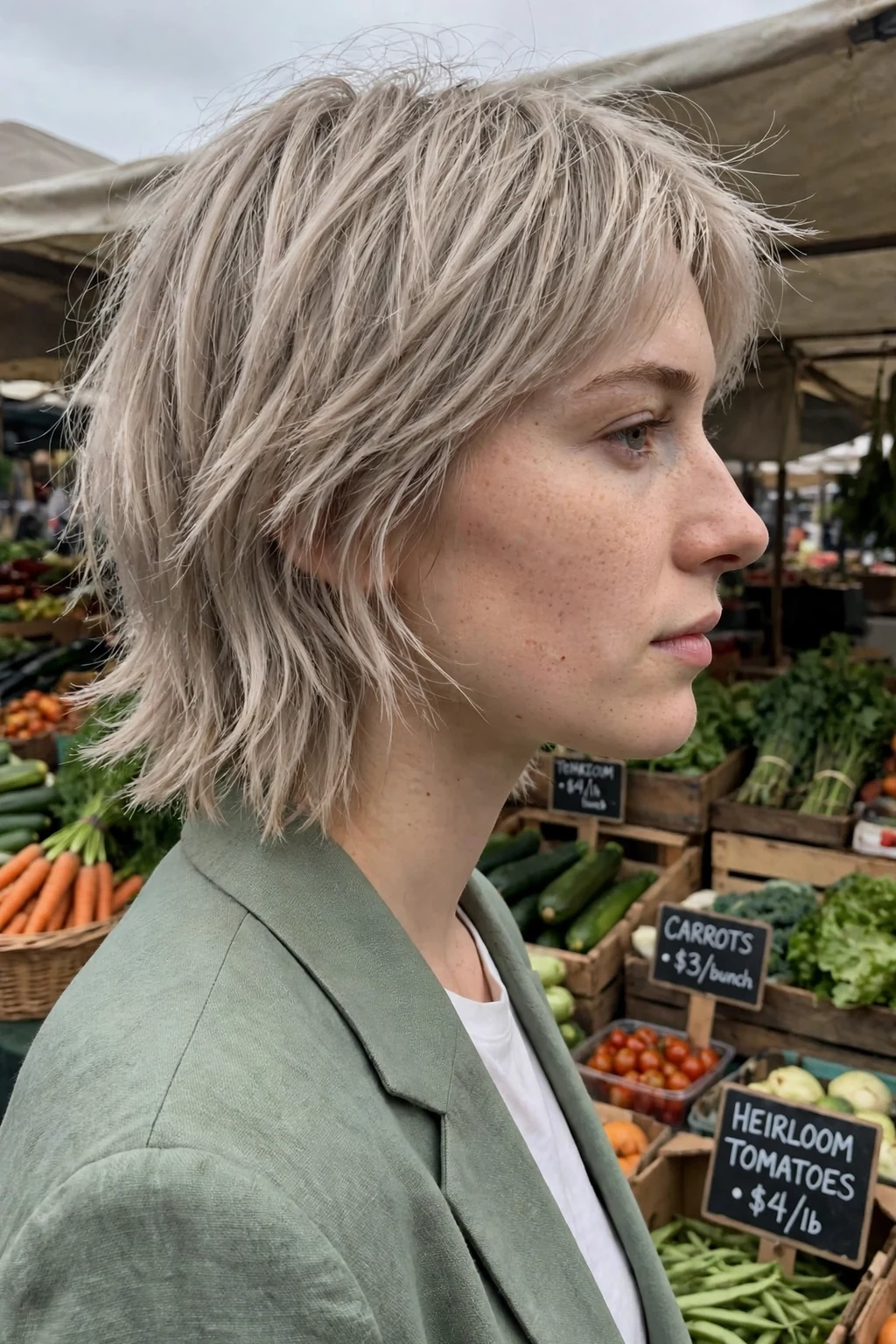
29. Blunt-End Shag
The blunt-end shag is a clever hybrid that combines the shag's signature choppy layers through the crown and around the face with a strong, solid perimeter at the ends, giving you movement on top and weight and polish at the bottom. The top layers are cut short and piecey to create lift and texture, while the bottom few inches are left blunt so the hair still swings as one substantial curtain rather than wispy, feathered ends. This balance makes it a brilliant choice for fine to medium hair, where overly thinned ends can look straggly, and it flatters oval, round, and heart-shaped faces because the face-framing layers soften the features while the blunt baseline adds structure. It suits women who love the shag's cool, undone energy but want a finish that still looks intentional and salon-polished, and it works beautifully at bob, lob, and medium lengths. The result is a cut that reads modern and graphic from the front, with a satisfyingly thick hemline from behind.
Styling the blunt-end shag is about enhancing the contrast between the textured top and the clean baseline. Blow-dry with a round brush, lifting the crown layers for volume and smoothing the ends straight so the blunt perimeter stays crisp and visible. A light texturizing spray through the mid-lengths adds separation without disturbing the solid ends, and a flat iron can sharpen the hemline further if your hair tends to flip. Because the ends carry weight, this shag holds styles longer than heavily layered versions and survives second-day hair with just a quick refresh of dry shampoo at the roots. Trims every six to eight weeks maintain the blunt edge, since split ends show quickly on a solid baseline. Grow-out is graceful, too: the layers lengthen into a soft long-layered cut while the blunt ends keep the shape looking deliberate rather than overgrown. A shine-enhancing leave-in applied only to the mid-lengths and ends keeps the blunt perimeter looking healthy and glossy without flattening the textured crown above it.

30. Bixie Shag
The bixie shag sits exactly between a bob and a pixie, borrowing the pixie's short, cropped nape and the bob's cheekbone-grazing length, then roughing the whole shape up with shaggy, disconnected layers. The result is a short cut with real texture: a longer, piecey top that can be swept, tousled, or tucked behind the ears, tapered sides that hug the head, and a nape that is clipped or closely layered for a clean finish. It flatters petite features and oval, heart-shaped, and square faces beautifully, because the exposed neck and jawline elongate the silhouette while the textured top adds softness. Fine hair benefits enormously, since the short layers stack to create volume that longer cuts cannot, and wavy hair gets natural separation that makes styling almost automatic. This is the shag for women who want a genuinely short cut that still feels feminine, playful, and full of movement rather than severe or boyish.
Styling a bixie shag takes minutes, which is a major part of its appeal. Work a small amount of matte pomade or texture cream through damp hair, push the top layers in your preferred direction, and let it air-dry or give it a quick rough-dry for extra lift. A tiny bit of wax on the fingertips defines individual pieces around the face and keeps the nape neat, while a spritz of texturizing spray adds grip on flat days. Because the cut is short, trims every four to five weeks are important to preserve the tapered nape and the balance between the longer top and shorter sides. Grow-out can be awkward if neglected, but regular appointments let you stretch the bixie gradually into a shaggy bob whenever you are ready for a change. Bold, low-maintenance, and endlessly photogenic, the bixie shag is short hair with serious personality. Experiment with accessories too: slim headbands and small clips sit beautifully on a bixie, showing off the tapered sides while keeping the longer top pieces neatly in place.
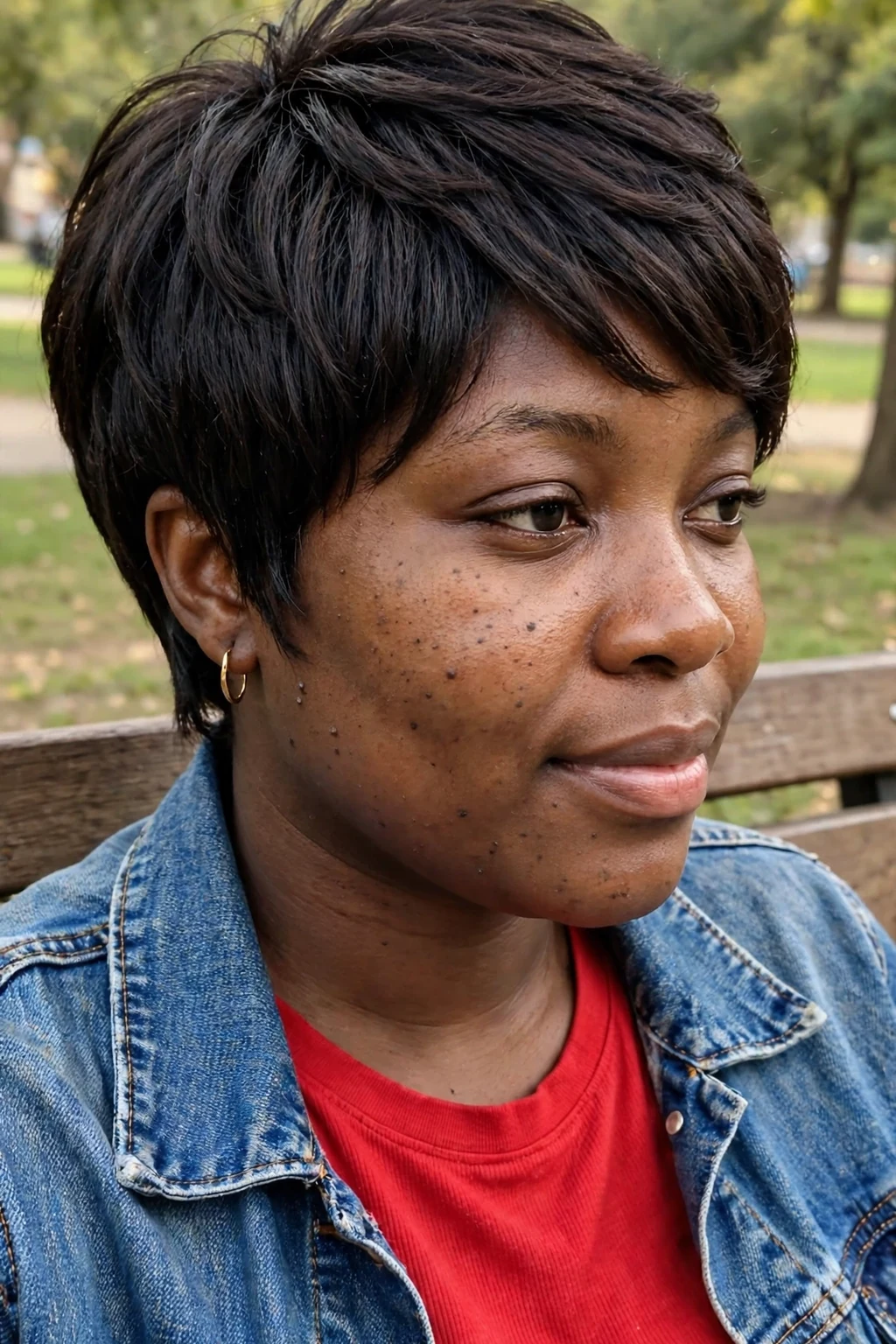
31. Shag with a Deep Side Part
A deep side part transforms an ordinary shag into something instantly glamorous, sweeping the majority of the hair across the forehead and creating dramatic, asymmetric volume that a centre part simply cannot deliver. The layers are cut to fall heavier on one side, with shorter face-framing pieces that blend into a long, swooping fringe and longer layers on the fuller side that cascade past the cheekbones. This styling choice flatters round, square, and heart-shaped faces especially well, since the diagonal line across the face breaks up symmetry, softens a strong jaw, and draws attention to the eyes and cheekbones. It works on straight, wavy, and curly hair alike, and it is a wonderful option for women with fine hair because flipping the part over instantly doubles the apparent volume at the roots. The deep side part also gives the shag a slightly retro, old-Hollywood polish while keeping all of its modern, undone texture.
Styling a deep side-part shag starts with parting soaking-wet hair far to one side, then blow-drying the roots in the opposite direction first to build lift before flipping everything back into place. A volumizing mousse at the roots and a round brush through the longer side create the sweeping shape, while a light-hold hairspray keeps the heavy side from collapsing by midday. A texturizing spray through the ends preserves the shag's piecey character so the style never looks too set or formal. Trims every six to eight weeks keep the face-framing layers at the right length, since grown-out pieces can fall into the eyes and lose the sweep. The part itself is flexible, too: on lazy days you can wear it softer and closer to centre, then flip it deep again whenever you want instant drama and volume. On humid days, a humidity-resistant finishing spray is worth its weight, since the heavy side is the first section to drop when moisture hits, and a quick midday flip of the part instantly revives the volume.
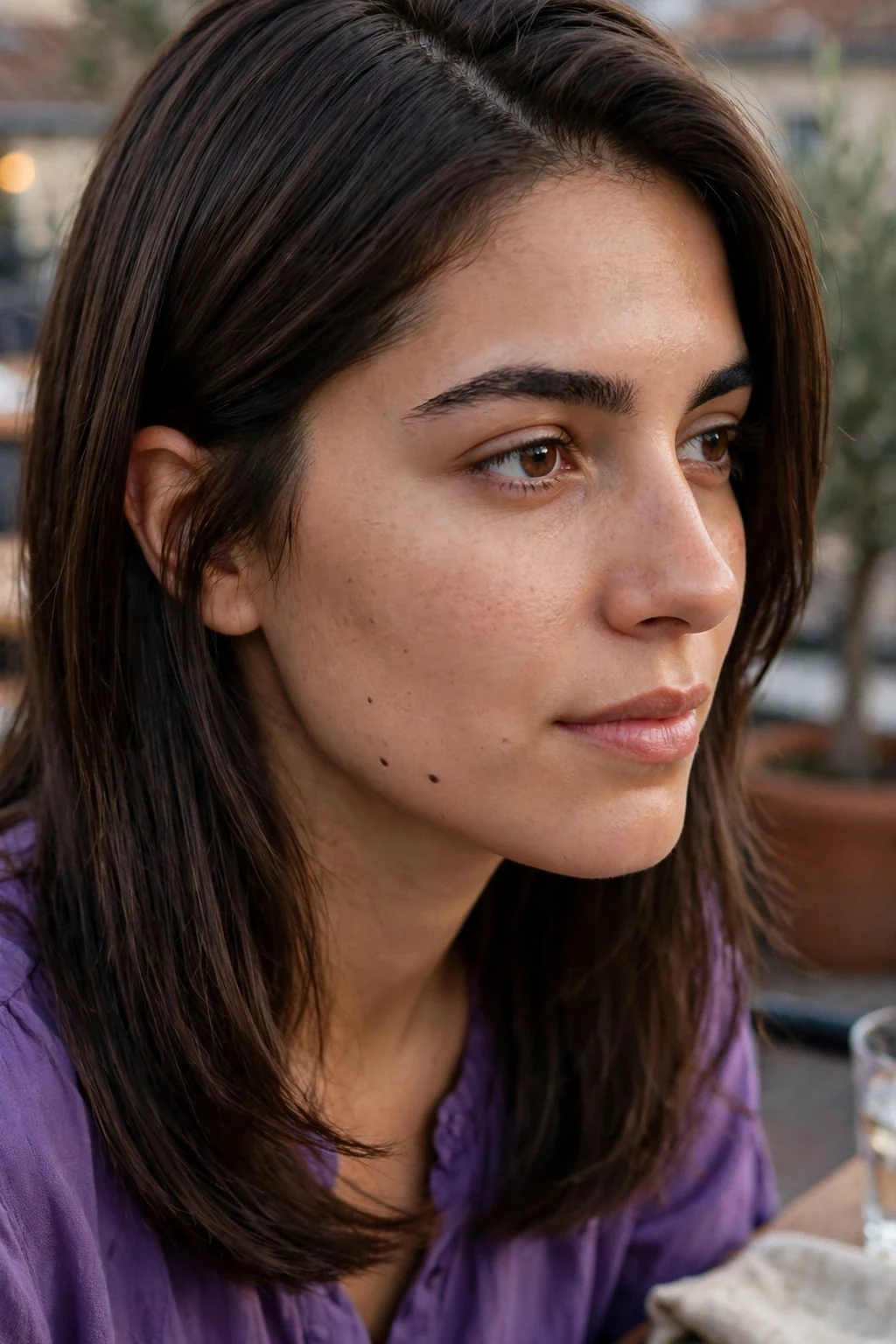
32. Shag for Round Faces
The shag for round faces is carefully engineered to elongate, using height at the crown, layers that start below the chin, and face-framing pieces that fall vertically rather than curling outward at cheek level. The golden rule is avoiding width at the widest point of the face, so the layers are kept longer around the cheeks and the volume is concentrated on top, creating a longer, more oval visual impression. A longer shag, falling past the shoulders, is particularly flattering, but a well-cut medium shag works too as long as the shortest layers stay beneath the jawline. This cut suits straight, wavy, and curly hair, and it is especially kind to women who have avoided short layers for fear of adding fullness, because the right layering actually slims the face instead. The shag's natural texture also stops the style from looking severe, giving round faces a cool, lived-in shape with plenty of movement.
Styling this shag is about protecting the vertical lines your stylist created. Blow-dry with a round brush lifting the crown for height, and smooth the face-framing layers downward rather than flicking them outward, which would add width exactly where you do not want it. A root-lifting spray or mousse gives lasting crown volume, while a light texturizing cream through the ends keeps the layers separated and airy. Avoid curling the cheek-level pieces outward or adding heavy volume at the sides, and keep the part slightly off-centre to break up the face's symmetry. Trims every seven to nine weeks maintain the layer placement, since grown-out layers can drift upward and start widening the silhouette. With the right cut and a few styling habits, round faces get all the shag's effortless attitude plus a beautifully lengthening shape. If you colour your hair, soft face-framing highlights placed below the chin rather than at the cheeks will reinforce the lengthening effect, drawing the eye downward along the layers.
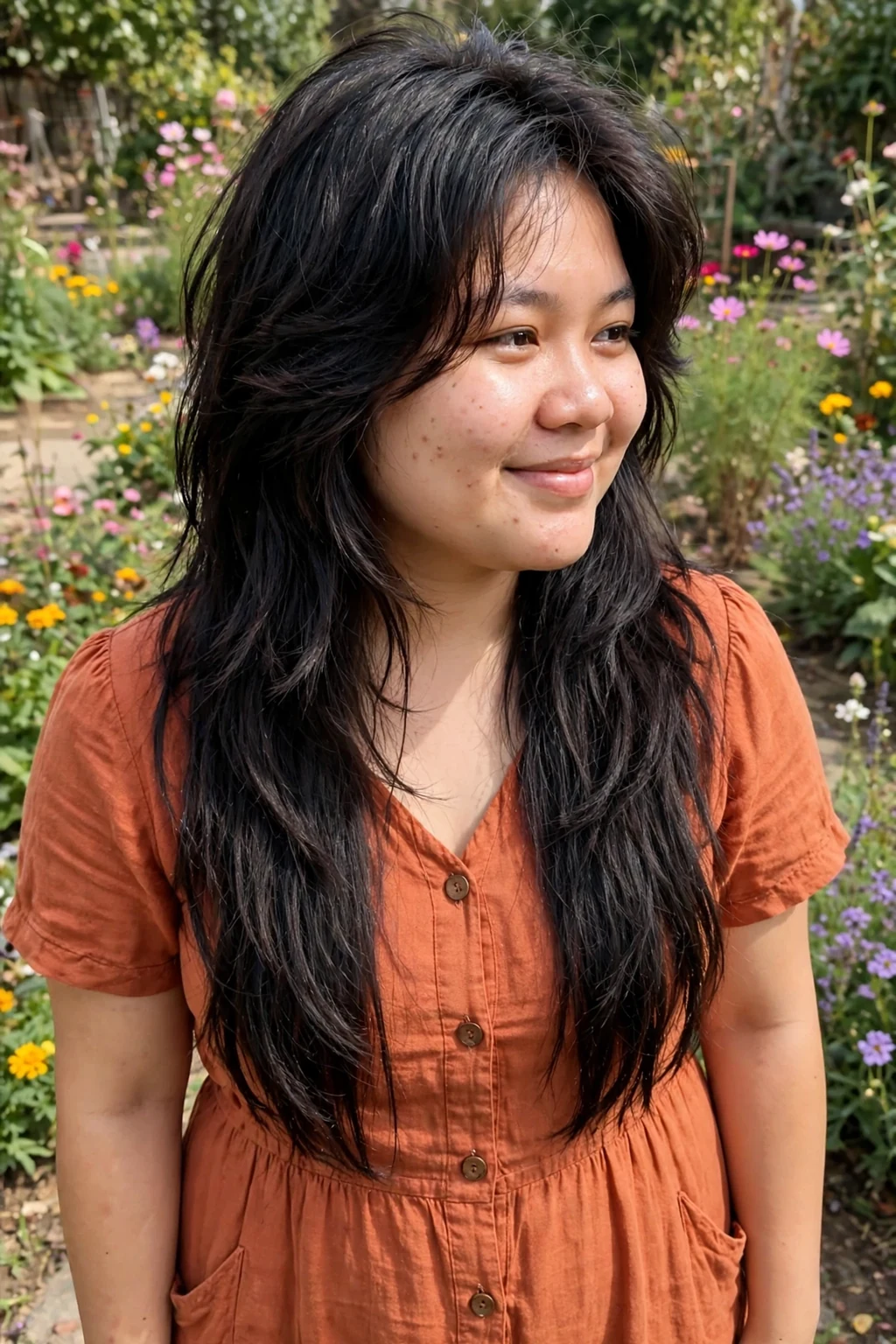
33. Shag for Oval Faces
Oval faces are famously versatile, and the shag for oval faces takes full advantage of that balance by layering evenly around the whole head without needing to correct any single feature. Because an oval face is already proportioned, the stylist can focus purely on texture and movement: choppy layers through the crown, face-framing pieces that highlight the cheekbones, and a fringe of any style, from curtain to wispy to full, since all of them sit beautifully on this face shape. The cut works at every length, from a shaggy pixie to a long, tousled shag, and suits every hair type, from fine and straight to thick and curly. It is the rare cut where the goal is not to fix anything but to celebrate, letting the shag's natural energy frame a face that can carry almost any version of it. Women with oval faces often find this the easiest shag to wear, because the proportions simply fall into place.
Styling an oval-face shag is wonderfully flexible, since you are not fighting the cut to flatter a specific feature. Scrunch in a texturizing cream and air-dry for an undone, beachy finish, or blow-dry with a round brush for a smoother, more polished version with the same layers. A salt spray adds grit and separation on straight hair, while a curl cream defines waves and curls without weighing them down. Because the shape is so balanced, you can change the part, add a headband, or tuck one side behind the ear without unbalancing the style. Trims every six to eight weeks keep the layers fresh and the ends healthy, and the grow-out is among the most forgiving of any shag, softening gracefully into long layers. If you have an oval face and have been waiting for a sign to try a shag, this is it. Colour also plays beautifully here: balayage placed through the mid-lengths and ends adds dimension that makes the even layering look even more three-dimensional in photographs.
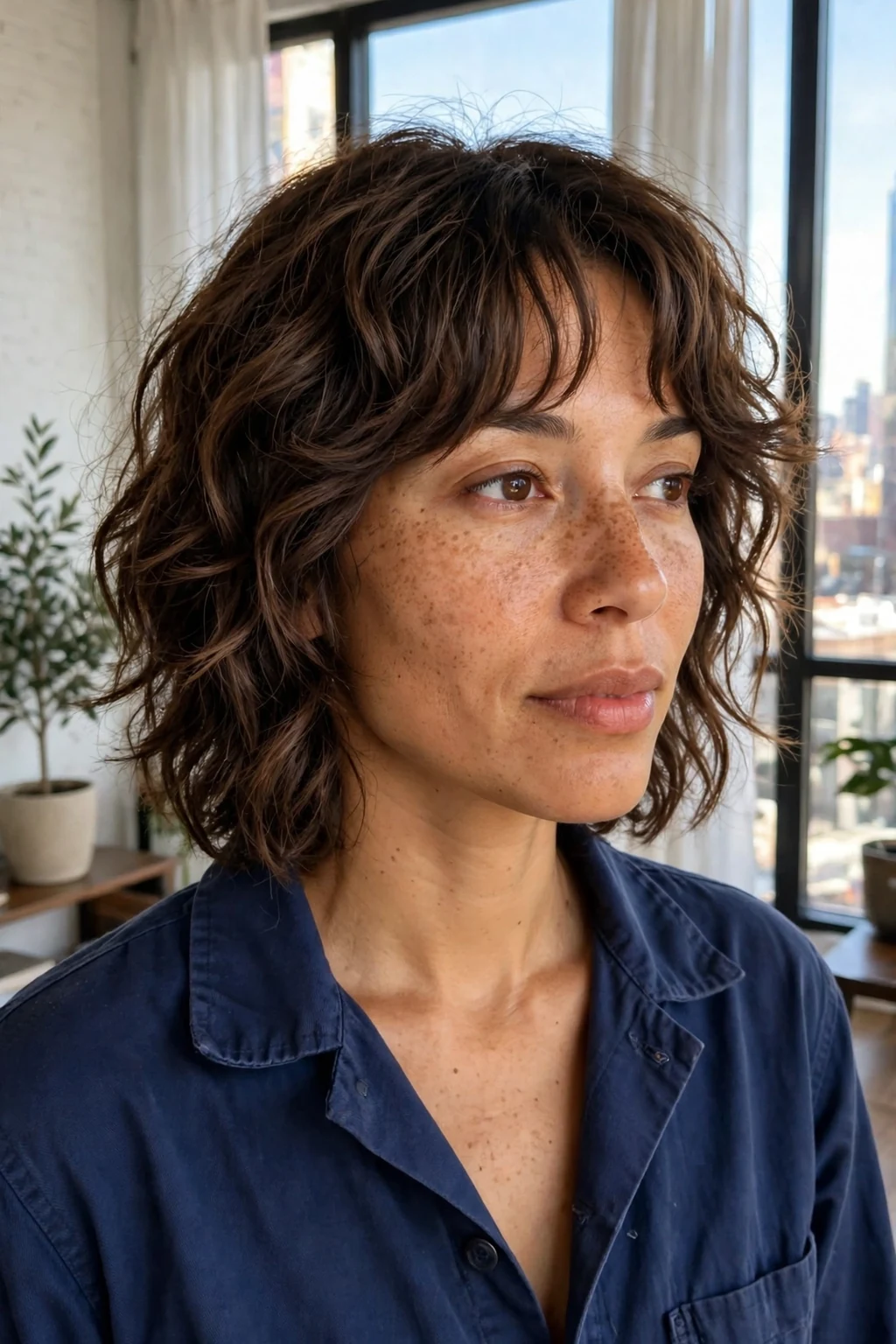
34. Shag with Choppy Fringe
The shag with a choppy fringe leans into the cut's rebellious side, pairing a jagged, uneven fringe that skims the brows with layers that are deliberately piecey and imperfect throughout. Unlike a neat, blunt fringe, the choppy version is point-cut to create varied lengths that fall slightly differently every day, giving the face a lively, rock-and-roll frame that never looks overdone. The fringe draws immediate attention to the eyes, while the surrounding layers add volume at the crown and texture through the lengths, making this a superb choice for straight and wavy hair that needs visual interest. It flatters oval, heart-shaped, and long faces best, since the fringe shortens the forehead and balances longer proportions, and it gives fine hair an instant injection of attitude. This is the shag for women who love a bit of edge and do not want their haircut to look like everyone else's. The fringe also pairs wonderfully with textured waves and second-day hair, since the jagged edge looks even better slightly undone than freshly styled, which makes it a forgiving choice for busy mornings.
Styling a choppy fringe shag is about embracing imperfection rather than fighting it. Apply a texturizing spray or light pomade to damp hair, rough-dry with your fingers, and pinch the fringe pieces apart so they stay separated instead of forming a solid curtain. A flat iron can be used sparingly to flick individual pieces in different directions, which enhances the jagged effect, but avoid over-smoothing, since a too-neat finish defeats the purpose. The fringe needs trimming every four to six weeks to stay at brow level, and it is worth asking your stylist to point-cut it dry so the texture is visible during the cut itself. Grow-out is easy: the fringe gradually becomes a wispy, face-framing layer that blends into the rest of the shag. Effortless, edgy, and full of character, this shag never has a boring hair day. A tinted dry shampoo is a handy trick for fringe wearers, absorbing oil at the hairline without a full wash and keeping the jagged pieces separated and matte between shampoos.
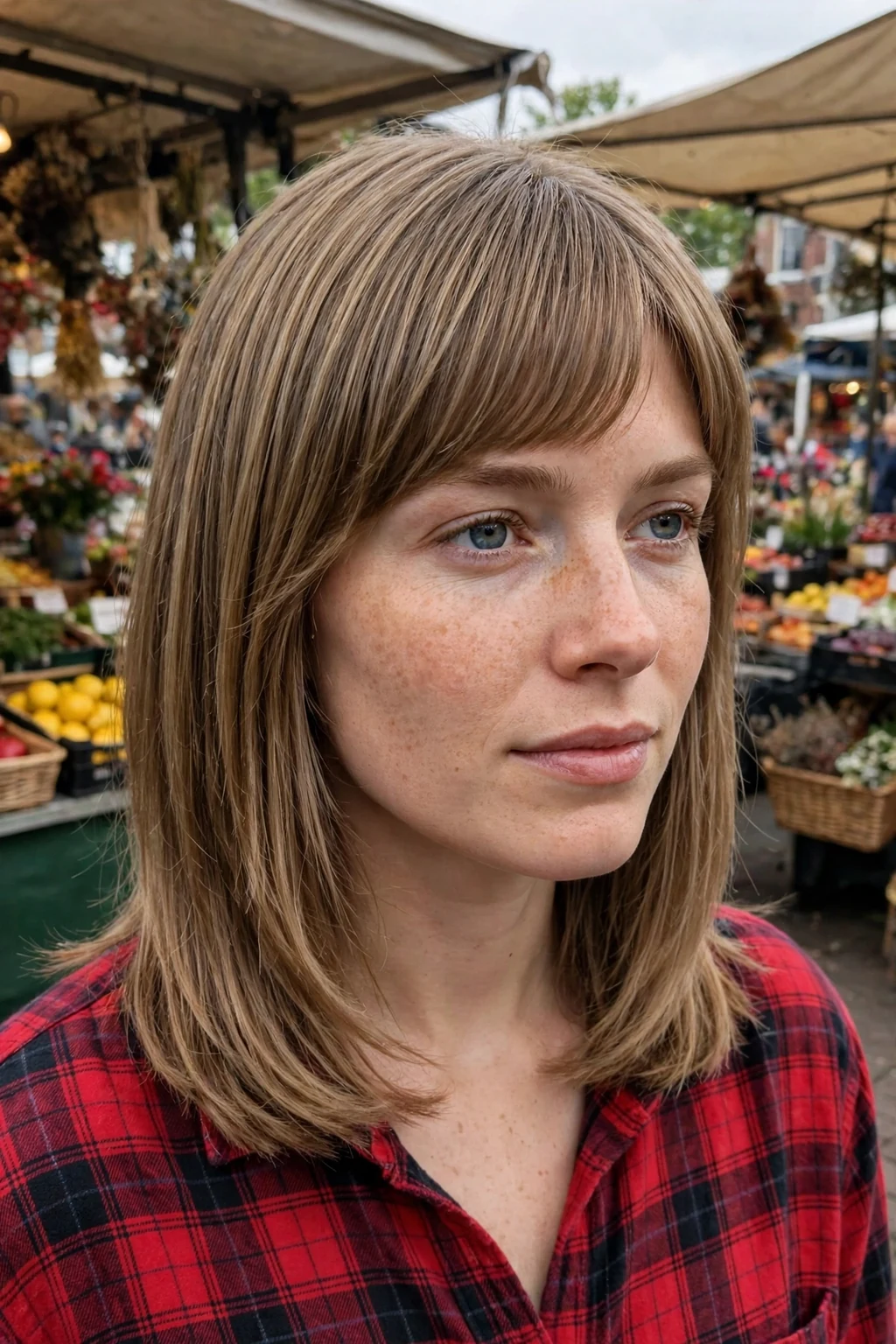
35. Shag with Full Bangs
A shag with full bangs combines a thick, straight-across fringe with the shag's signature layered texture, creating a striking contrast between the graphic, solid fringe and the soft, piecey lengths below. The fringe is cut densely enough to read as a real statement, sitting just at or slightly above the brows, while the layers through the crown and sides are carved to add volume and movement that keeps the overall shape from feeling heavy. This pairing flatters long, oval, and heart-shaped faces beautifully, because the full fringe shortens the forehead and brings the focus to the eyes, and it works best on straight to slightly wavy hair, where the fringe can hold a smooth line. Thick hair carries the density effortlessly, while fine hair benefits from the fringe's visual weight at the front, balanced by airy layers behind. It is a bold, fashion-editorial take on the shag that feels both retro and completely current.
Styling a full-bang shag requires a little daily attention to the fringe, but the payoff is a look that always appears intentional. Blow-dry the fringe first with a small round brush or a flat brush, rolling it slightly under, and smooth it with a quick pass of a flat iron on low heat if needed. The rest of the hair can be left more undone: scrunch in texturizing cream, rough-dry, and let the layers fall naturally for contrast with the polished fringe. A light-hold hairspray keeps the fringe in place without stiffness, and dry shampoo at the roots refreshes it between washes, since fringes show oil faster than the rest of the hair. Trims every four to five weeks keep the fringe at the perfect length, and regular fringe-only appointments between full cuts are a smart, inexpensive habit. The result is a shag with drama, structure, and endless style. If your fringe tends to separate into sections, a tiny amount of pomade smoothed across the fringe with your fingertips will reunite it into a solid line without making it look stiff or greasy.
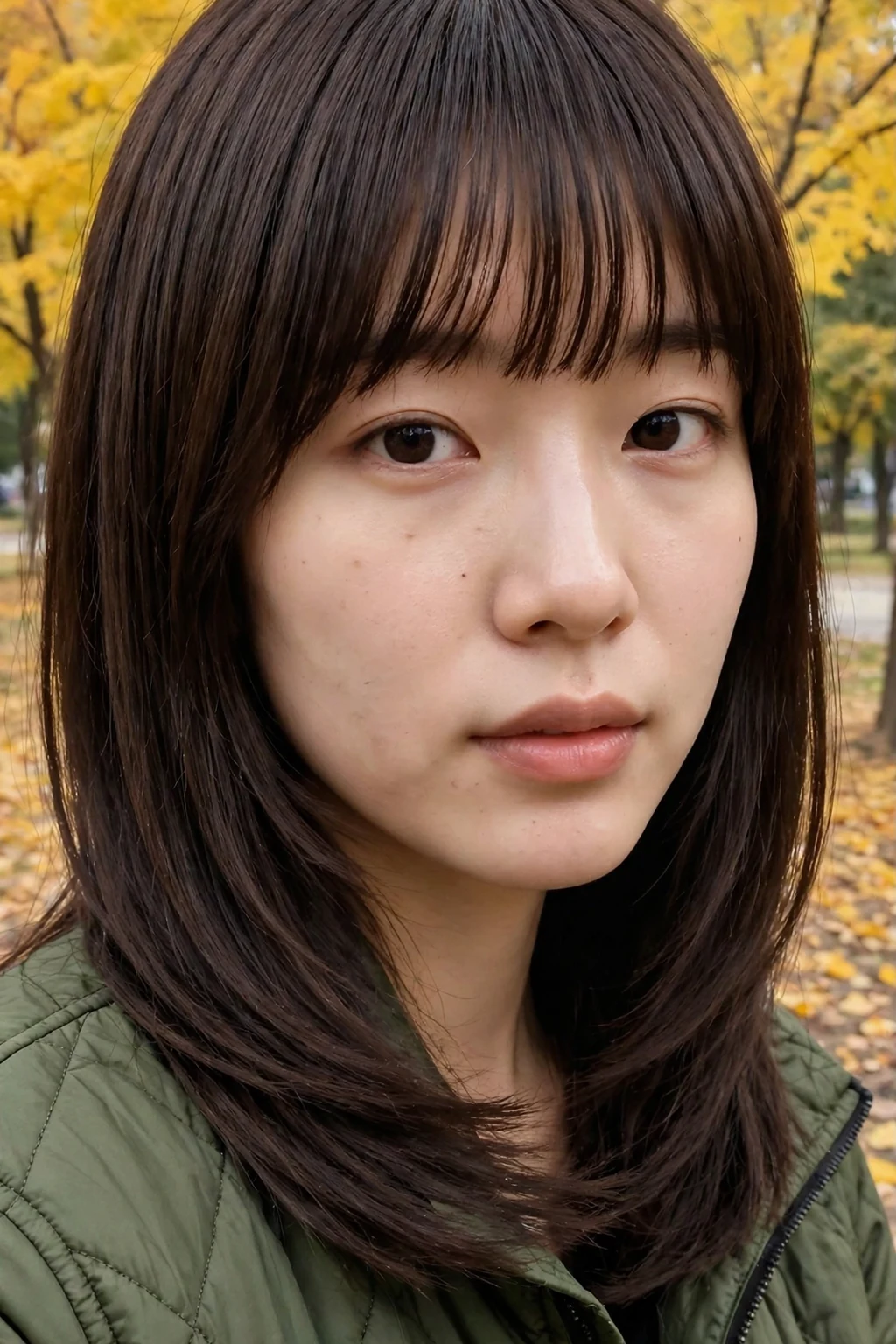
36. Shag with an Undercut
The shag with an undercut is the boldest version of the cut, hiding a closely clipped nape or side section beneath long, textured top layers that fall over it like a curtain. When the hair is down, the undercut peeks out only in glimpses, adding edge and removing a surprising amount of weight and bulk; when the hair is tied up, it becomes a full statement. This makes it a brilliant choice for women with very thick or heavy hair who want the shag's movement without the weight, and for anyone who loves an element of surprise in their style. The longer top layers keep the look feminine and versatile, framing the face with classic shag texture, while the undercut adds a modern, rebellious contrast. It suits oval, round, and square faces, since the exposed nape and sides elongate the neck and the top layers soften the features, and it is especially popular with women in their twenties and thirties who want a cut that feels personal and daring.
Styling an undercut shag is surprisingly easy, because the clipped sections need no styling at all and the top layers behave like any other shag. Scrunch texturizing cream through the lengths, rough-dry for lift, and let the top fall naturally over the undercut for everyday wear, or pin one side back to show it off when you want the edge visible. The undercut itself needs clipper maintenance every three to four weeks to stay sharp, though letting it grow out softly is also an option if you prefer a subtler effect. Grow-out is the main commitment: the clipped section takes months to catch up with the top layers, so this cut suits women who are happy to maintain it or who enjoy the evolving, grown-out texture. For maximum impact with minimum daily effort, few shags beat the hidden drama of an undercut. Consider a subtle design or faded line shaved into the undercut if you want an extra personal touch, since many stylists can add a simple geometric detail that stays hidden until you tie your hair up.

37. Shag with Tapered Nape
A shag with a tapered nape refines the classic cut by gradually shortening the hair at the back of the neck, creating a clean, sculpted finish that contrasts beautifully with the voluminous, textured layers on top. The taper follows the natural curve of the nape, removing bulk and weight exactly where hair tends to bunch up, while the crown layers stay long and piecey to preserve the shag's signature lift and movement. This detail makes the cut especially flattering for women with thick hair or a strong neckline, since the tapered back elongates the neck and keeps the silhouette neat from every angle. It suits oval, heart-shaped, and square faces, and it works at short to medium lengths, from a shaggy bob to a collarbone-grazing shag. The result is a shag that looks polished and intentional from behind, never straggly, while staying loose, textured, and full of personality from the front.
Styling a tapered-nape shag focuses on the contrast between the neat back and the tousled top. Blow-dry the crown with a round brush for lift, scrunch texturizing spray through the mid-lengths for separation, and smooth the nape with a quick pass of a flat iron or a dab of pomade to keep the taper crisp. Because the nape is tapered rather than blunt, the cut grows out gracefully, gradually softening into a longer shag without an awkward shelf at the back. Trims every six to eight weeks refresh the taper and the layers together, and your stylist can adjust the taper's closeness to suit your comfort, from a soft graduation to a closer, more sculpted finish. It is a smart, low-maintenance refinement that makes a shag look considered and salon-fresh for weeks longer than a standard cut. For special occasions, the tapered nape also makes updos easier, since there is less bulk to pin away at the back, and the graduated shape helps buns and twists sit closer to the head.

38. Shag for Coily Hair
A shag for coily hair celebrates tight, springy texture by cutting the coils into a rounded, layered shape that builds volume exactly where it flatters most. The key difference from a straight-hair shag is that the layers must be cut to account for shrinkage, with each curl considered individually so the finished shape is balanced once the hair dries and springs up. The result is a gloriously full silhouette: shorter layers through the crown for height, longer coils framing the face, and a shape that moves and bounces with every turn of the head. This cut flatters round, oval, and heart-shaped faces, since the vertical volume elongates the face while the face-framing coils soften the features. It is a joyful, high-impact choice for women with coily hair who want a defined shape rather than an undefined mass, and it proves that the shag's layered philosophy translates beautifully to the tightest curl patterns.
Styling a coily shag starts with hydration, since well-moisturized coils clump into defined, frizz-free shapes. Apply a leave-in conditioner and a curl cream to soaking-wet hair, then scrunch and either diffuse on low heat or air-dry to preserve the coil pattern. A pick at the roots adds volume at the crown without disturbing the coil definition, and a light oil seals the ends and adds shine. Avoid brushing dry coily hair, which destroys the definition and creates frizz, and refresh between washes with a water-based mist and a little extra cream. Trims every eight to twelve weeks, ideally on dry, styled hair so the stylist can see the true shape, keep the layers balanced as the coils grow. With the right cut and routine, a coily shag is a show-stopping, wash-and-go style full of life. Protective styling between trims, such as loose twists or a satin-lined cap at night, helps preserve the shape and moisture, and regular deep-conditioning treatments keep the coils springy and defined.

39. Air-Dried Shag
The air-dried shag is cut specifically to look its best with zero heat styling, using layers that fall into soft, natural waves and texture as the hair dries on its own. Your stylist will cut the layers slightly longer and more blended than a heat-styled shag, since air-drying enhances natural bends and kinks rather than smoothing them away, and the shape is designed to look intentionally undone rather than unfinished. This makes it the ultimate low-maintenance shag for women with naturally wavy or slightly textured hair, and it flatters every face shape because the soft, irregular texture breaks up symmetry and adds gentle width exactly where each face needs it. Fine hair gains movement it would never achieve with a blunt cut, while medium hair gets an easy, beachy separation that looks like you spent far more time on it than you did. It is the shag for real life: school runs, beach days, and mornings when the snooze button wins.
Styling an air-dried shag could not be simpler, which is the entire point. After washing, scrunch a leave-in conditioner and a curl-enhancing cream or sea-salt spray through damp hair, gently twist a few face-framing pieces to encourage waves, and then leave it completely alone while it dries. Resist the urge to touch it while damp, since handling creates frizz, and once dry, shake out the roots and add a tiny amount of texturizing paste to any pieces that need definition. A silk pillowcase or a loose braid overnight preserves the texture for second-day hair with minimal refreshing. Trims every eight to ten weeks keep the layers from growing into a shapeless mass, and the cut's forgiving nature means even a slightly overdue appointment still looks good. Effortless in the truest sense, the air-dried shag is the wash-and-go hero of the shag family. A microfiber towel or an old cotton T-shirt for drying is a small change with a big payoff, since terry cloth roughs up the cuticle and creates exactly the frizz an air-dried style does not need.
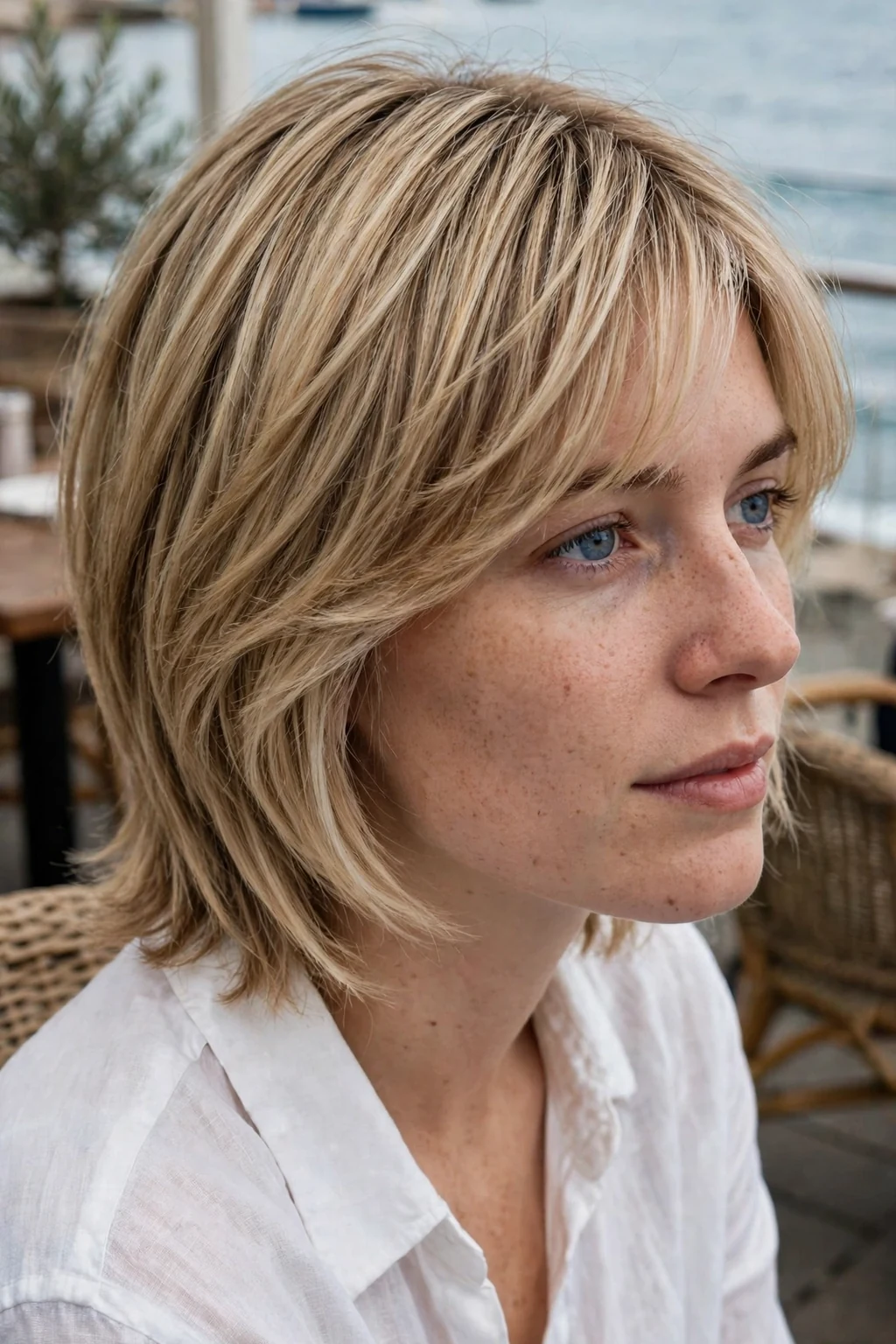
40. Shag with Piecey Ends
A shag with piecey ends is defined by its tips: instead of a solid, blunt hemline, the ends are point-cut and separated so each strand falls as an individual, feathered piece. This detail gives the whole cut a lighter, airier finish, with ends that flick, curl, and move independently rather than swinging as one heavy curtain. The layers above can be as soft or as choppy as you like, but the piecey ends guarantee the signature shag texture right down to the last inch, making this version especially flattering for fine to medium hair that can look thin when ends are over-thinned. It suits oval, round, and heart-shaped faces, since the separated ends around the face add softness without width, and it works at bob, lob, and long lengths. Women who love the idea of a shag but worry about losing the appearance of thickness will appreciate how piecey ends create movement while preserving the visual density of the perimeter.
Styling piecey ends is all about definition without weight. Work a pea-sized amount of texturizing paste or wax between your palms and pinch the ends into small separated pieces, working section by section until the whole perimeter looks deliberately piecey. A light texturizing spray adds grip and helps the separation last all day, while a flat iron can be used to flick individual ends outward for extra attitude. Avoid heavy oils and smoothing serums on the ends, which glue the pieces back together and erase the effect you are styling for. Trims every six to eight weeks keep the piecey tips fresh, since split ends ruin the deliberate separation and make the finish look accidental rather than intentional. The grow-out is gentle, softening into a lightly textured layered cut, which makes this shag an easy, low-commitment entry into the trend. A sea-salt spray misted lightly over the finished style adds extra grit and separation on days when the ends feel too soft, helping the piecey finish survive wind and humidity.
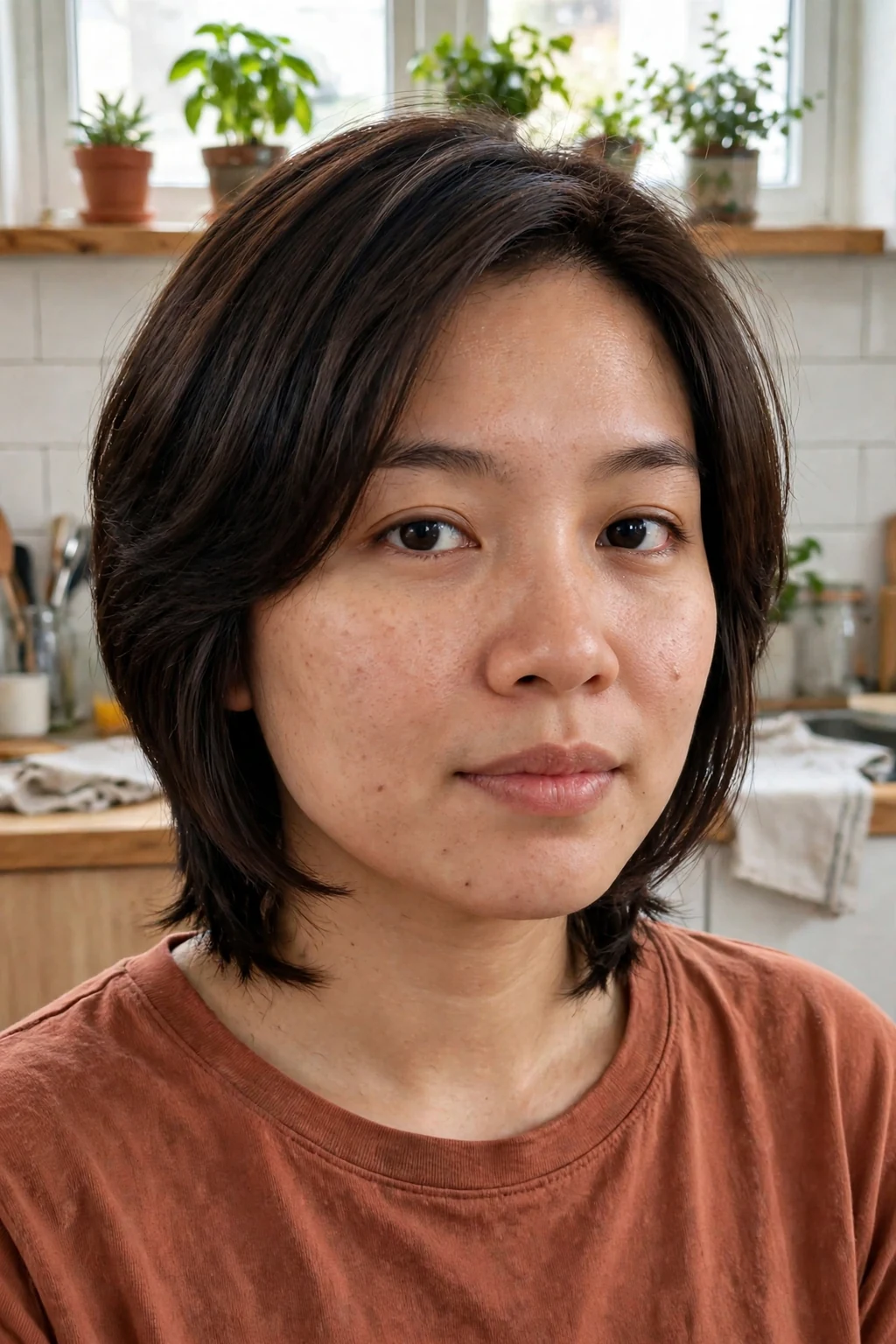
41. Shag with Swoopy Layers
A shag with swoopy layers trades jagged edges for soft, sweeping movement, with layers that curve gently inward and outward to create a flowing, featherlight silhouette. The layers are cut longer and more blended than a choppy shag, so each one swoops into the next, giving the hair a continuous, ribbon-like flow that catches the light as it moves. This gentler version flatters oval, long, and heart-shaped faces especially well, since the swooping lines soften angular features and add graceful width around the cheekbones without harsh angles. It works beautifully on straight and wavy hair, where the swoop holds its shape, and it gives fine hair an elegant fullness that never looks spiky or severe. Women who love the shag's layered philosophy but prefer a softer, more romantic finish will find the swoopy shag a perfect middle ground between a classic layered cut and a full-textured shag. The swoopy shag also transitions beautifully into occasion styling, since the blended layers curl into soft, romantic waves with a large-barrel iron, making it one of the most versatile shags for weddings and events.
Styling swoopy layers is about encouraging the curve rather than fighting it. Blow-dry with a large round brush, rolling the ends under and outward in alternating sections to build the swooping movement, and finish with a light-hold hairspray that keeps the shape flexible rather than stiff. A smoothing cream applied to damp hair tames flyaways without flattening the layers, while a texturizing spray used sparingly adds grip at the roots for lasting lift. Because the layers are blended, this shag grows out exceptionally gracefully, gradually becoming a long layered cut that still holds its swooping character for weeks past the ideal trim date. Trims every eight to ten weeks refresh the shape and remove split ends before they travel up the layers. Soft, flowing, and endlessly flattering, the swoopy shag is texture with a gentle touch. A boar-bristle brush used gently on dry hair can smooth the surface of the swoopy layers without destroying their curve, giving second-day hair a polished finish in under a minute.
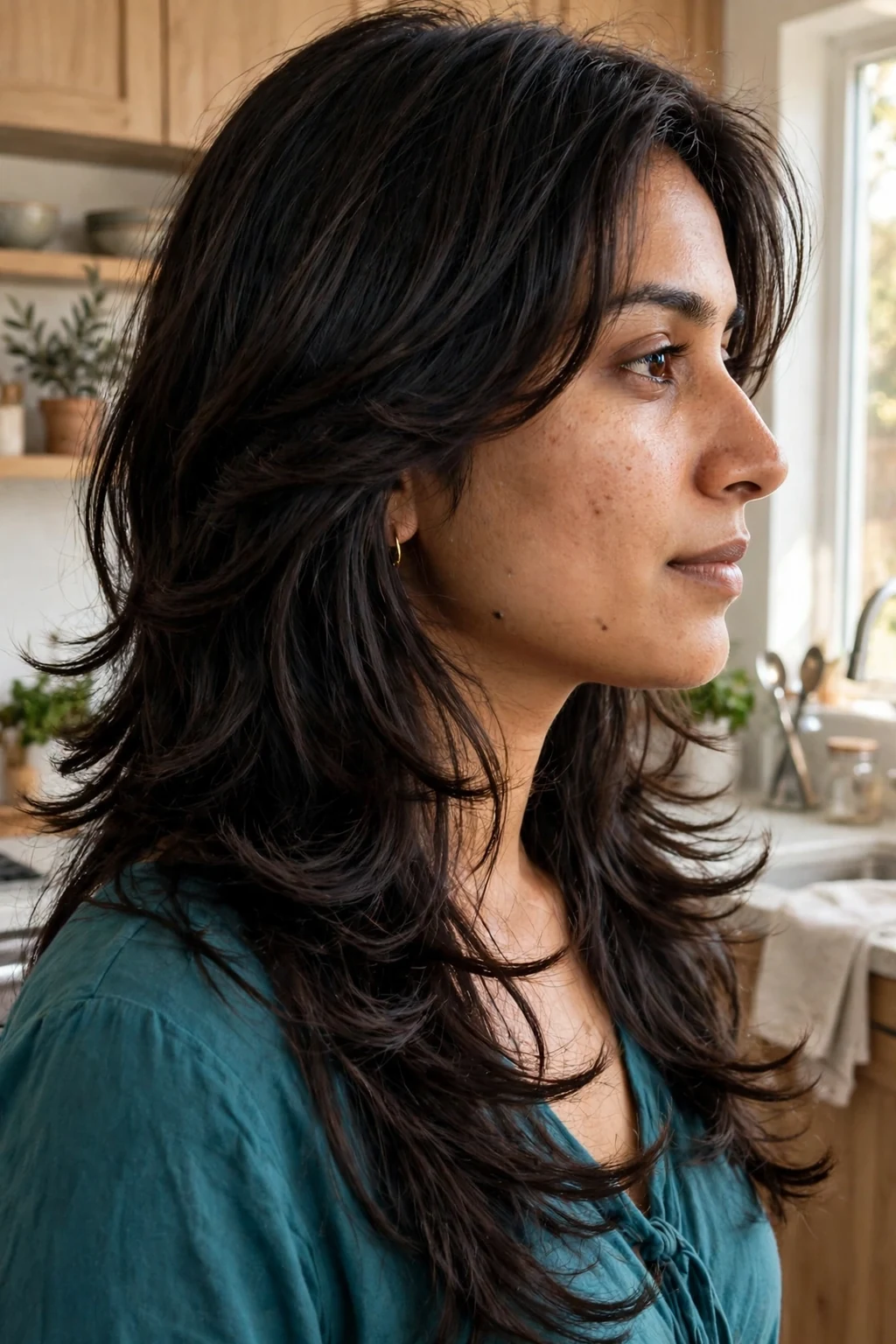
42. Shag with Disconnected Layers
Disconnected layers are the most dramatic expression of the shag, with each layer cut to a distinctly different length so the sections stand apart rather than blending into one another. The result is a cut full of visible contrast: short, punchy pieces at the crown, longer lengths below, and clear separation between them that creates an almost architectural silhouette. This bold layering flatters oval, heart-shaped, and square faces, since the strong horizontal lines and varied lengths break up the face's outline and draw the eye to the texture itself. It works best on straight to wavy hair, where the disconnection stays visible, and it is a fantastic choice for thick hair, because the separated sections remove weight while keeping the overall shape full and intentional. Women who want their haircut to be the centrepiece of their look, rather than a quiet background detail, will love how unmistakably deliberate a disconnected shag appears.
Styling disconnected layers means defining the separation your stylist built into the cut. Apply a texturizing cream or pomade to damp hair, then pinch and twist individual sections so each layer stays distinct as it dries. A diffuser on low heat enhances the separation on wavy hair, while straight hair benefits from a flat iron bent outward at the ends of the shorter pieces to emphasize the contrast. A strong texturizing spray locks the definition in place without stiffness, and a tiny amount of wax on the fingertips can rescue any sections that collapse during the day. Trims every six to eight weeks are important, since grown-out disconnected layers can lose their contrast and start looking simply uneven. When maintained, this shag is a confident, editorial style that turns an everyday outfit into a look. Colour can amplify the disconnection further: a slightly lighter shade on the shorter crown pieces makes the layer separation pop, while keeping the longer lengths darker adds depth and contrast.
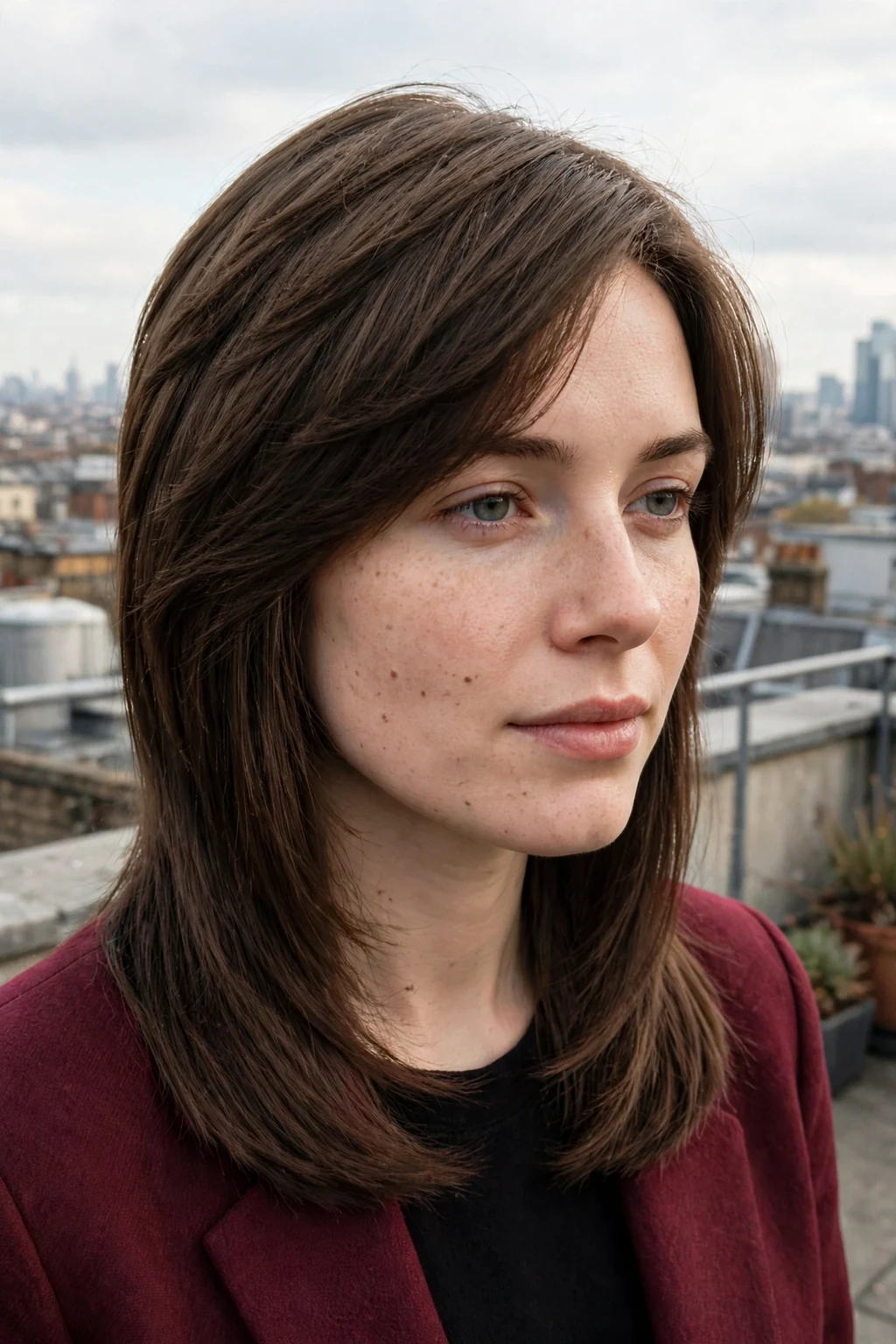
43. Shag with a Middle Part
A middle part gives the shag a clean, symmetrical frame, splitting the layers evenly so they fall like curtains on either side of the face. The symmetry is quietly flattering: it balances the features, highlights the cheekbones, and lets the shag's texture take centre stage without the distraction of an asymmetric sweep. Face-framing layers are cut to open outward from the part, starting at the cheekbones or jaw and lengthening down the sides, while the crown layers add lift so the top never falls flat. This version suits oval, heart-shaped, and long faces best, and it works on straight, wavy, and curly hair alike, since the part itself does the flattering work regardless of texture. It is also the most versatile shag for styling, because a middle part pairs effortlessly with everything from sleek blowouts to messy, second-day texture, and it gives the cut a timeless, almost seventies feel. The middle part also photographs beautifully, giving selfies and portraits a balanced, symmetrical frame that suits the shag's seventies heritage while feeling completely modern.
Styling a middle-part shag starts with a precise part made on wet hair, using the tail of a comb to draw a straight line from the forehead to the crown. Blow-dry the face-framing layers away from the face with a round brush to create the curtain effect, then scrunch texturizing spray through the lengths for separation. A centre part can expose a flat crown, so a root-lifting mousse or a quick blast of volumizing spray at the roots is worth the extra minute. The part can be softened on casual days by tousling it slightly off-centre, then redefined whenever you want the polished, symmetrical look again. Trims every six to eight weeks keep the face-framing layers at the ideal length, since overgrown pieces can drag the face downward. Classic, balanced, and endlessly wearable, the middle-part shag never goes out of style. If your hair naturally falls to one side, training a new middle part takes about a week of parting it wet and blow-drying the roots flat, after which the hair will begin to fall into place on its own.
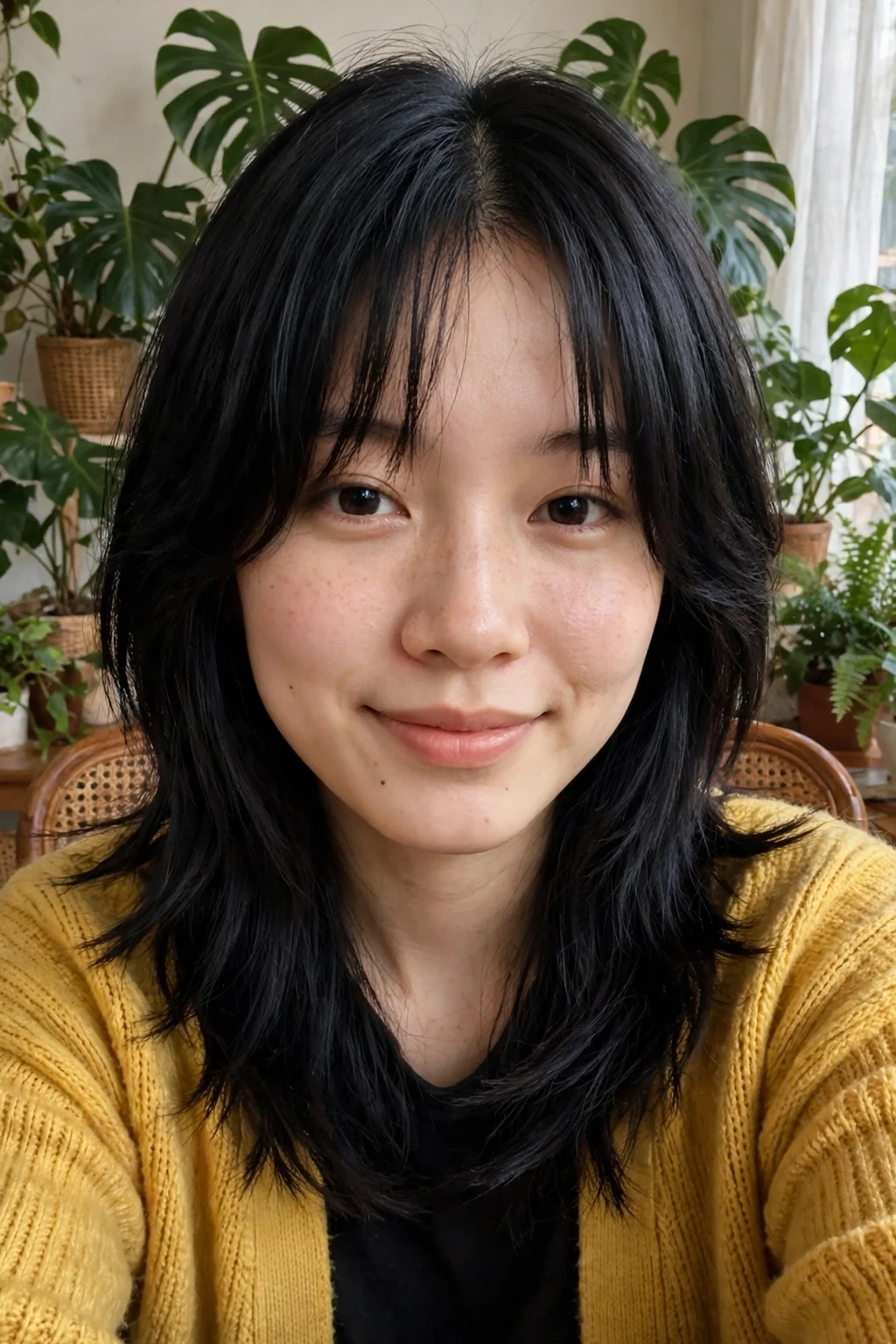
44. Shag with Butterfly Layers
Butterfly layers bring the viral butterfly cut into shag territory, combining short, bouncy face-framing layers that flutter around the cheeks with much longer lengths that flow down the back like wings. The shorter front layers create volume and movement around the face, while the long back layers preserve length and give the cut a dramatic, flowing silhouette when the hair moves. This makes it an ideal shag for women who want the texture and face-framing benefits of a shag without sacrificing long hair, and it flatters oval, round, and heart-shaped faces because the short front pieces open up the face while the long lengths elongate the overall shape. It works best on medium to thick hair, where the contrast between short and long layers stays visible, and wavy hair adds natural bounce that enhances the butterfly effect. The result is a cut that looks like two haircuts in one: a playful, voluminous shag from the front and a long, flowing style from behind.
Styling butterfly layers is about maximizing the contrast between the bouncy front and the flowing back. Blow-dry the front layers with a round brush, flicking them outward and away from the face for lift, then smooth the longer back layers so they fall sleekly and show off the length difference. A volumizing mousse at the roots gives the front layers lasting bounce, while a light serum on the long lengths adds shine without weighing them down. A large-barrel curling iron can be used to add soft waves to the front pieces for extra flutter on special occasions. Trims every eight to ten weeks keep the short layers from growing into the long ones and blurring the butterfly distinction. For women torn between a shag and long hair, butterfly layers offer the best of both worlds in a single cut. A claw clip is the butterfly shag's best friend for casual days, since it gathers the long back layers while leaving the short front pieces loose to frame the face, creating an effortless updo in seconds.

45. Shag with Bottleneck Bangs
Bottleneck bangs are named for their shape: narrow and close at the forehead, then opening wider as they reach the cheekbones, like the neck of a bottle flaring into its shoulders. Paired with a shag, this fringe creates a beautifully sculpted frame for the face, with the shorter centre pieces skimming the brows and the longer side pieces blending seamlessly into the shag's face-framing layers. The effect is softer and more flattering than a blunt fringe, since the graduated lengths follow the natural contours of the face, and it suits oval, round, and heart-shaped faces especially well. The fringe works on straight and wavy hair, where the shape holds cleanly, and it gives the shag a distinctly French, effortlessly chic character that feels both vintage and modern. Women who want a fringe with real structure but without the severity of a straight-across cut will find bottleneck bangs the perfect compromise.
Styling bottleneck bangs is straightforward once the shape is cut correctly. Blow-dry the fringe with a round brush, rolling the centre pieces slightly under and sweeping the longer sides outward so they merge with the face-framing layers. A small amount of texturizing spray keeps the fringe piecey rather than solid, and a flat iron can refine any stubborn pieces on humid days. Because the fringe is graduated, grow-out is more forgiving than a blunt fringe: the centre pieces gradually lengthen into curtain bangs that still frame the face beautifully. Trims every five to six weeks keep the bottleneck shape defined, and your stylist can adjust the narrowness of the centre to suit your forehead and features. Chic, sculpted, and surprisingly easy to live with, bottleneck bangs elevate any shag they accompany. Bottleneck bangs also grow out into one of the prettiest transitional fringes, gradually becoming long curtain bangs that blend into the shag's layers without an awkward in-between stage.

46. Shag with Octopus Layers
Octopus layers take the shag's love of contrast to its playful extreme, pairing a short, voluminous crown that puffs up like an octopus head with long, wispy, tentacle-like ends that trail down past the shoulders. The top layers are cut short and stacked to create maximum volume and roundness, while the lengths below are heavily textured so they separate into thin, flowing pieces rather than a solid curtain. This dramatic silhouette flatters oval and long faces best, since the crown volume adds width at the top and the wispy ends elongate the overall shape, and it works on straight and wavy hair where the separation between crown and ends stays clearly visible. It is a bold, trend-driven choice for women in their twenties and thirties who love experimental cuts and want a shag that is unmistakably of the moment. The octopus shag is not subtle, but that is exactly its charm: it is a haircut with a sense of humour and a lot of personality.
Styling octopus layers means celebrating the contrast between the full crown and the wispy ends. Apply volumizing mousse to the roots and blow-dry the crown with a round brush for maximum lift, then let the long ends air-dry or smooth them lightly so they stay separated and piecey. A texturizing spray through the ends enhances the tentacle effect, while a tiny amount of pomade defines individual wisps without gluing them together. Avoid heavy conditioners on the lengths, which can weigh the wispy ends down and blur the silhouette. Trims every six to eight weeks maintain the balance between the short crown and the long ends, since the crown growing out too far softens the octopus shape. Fun, voluminous, and impossible to ignore, this shag is a statement cut for women who love to stand out. Accessories shine with this cut: chunky earrings and bold hair clips draw attention to the voluminous crown, while the wispy ends keep the overall effect playful rather than overdone.
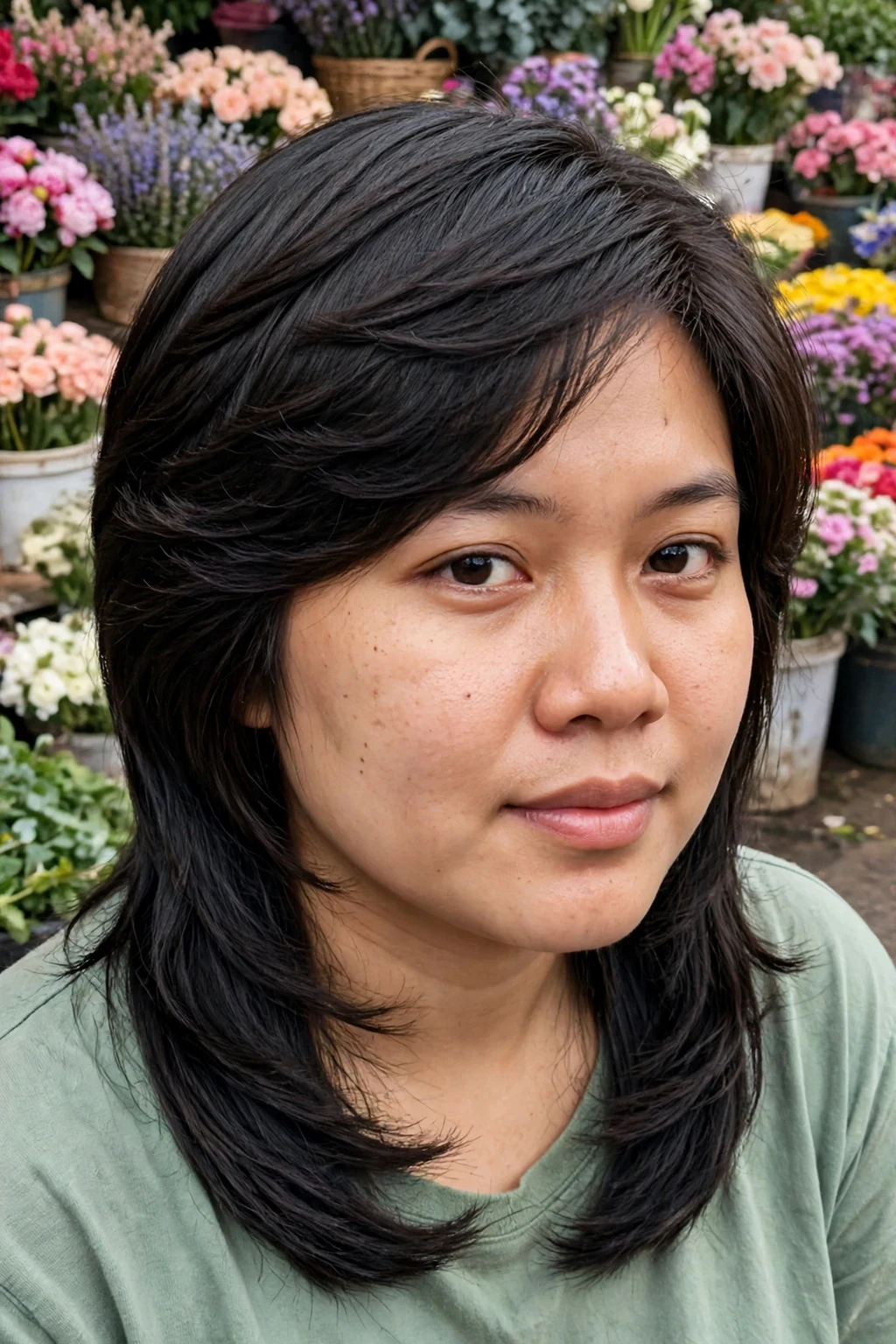
How to Choose the Right Shag Haircut
The most flattering shag haircut is the one that fits your hair texture, your face shape, and the amount of styling time you honestly want to spend each morning. Shags are wonderfully forgiving, so start with your natural texture rather than fighting it: wavy and curly hair needs fewer layers to look full, while straight hair benefits from choppier, more visible layering. Think about length too, since a shaggy bob frames the face very differently from a long, flowing shag, and bring reference photos to your stylist so you can agree on fringe length, layer placement, and how much volume you want at the crown before the first cut is made.
A great shag also depends on upkeep that matches your lifestyle. Most shags look their best with a trim every six to eight weeks to keep the layers intentional rather than overgrown, and a small stash of texture products goes a long way: a sea-salt spray or light mousse for air-drying, a pea-sized amount of pomade for piecey ends, and a dry shampoo for second-day volume. The beauty of the shag is that it rewards a light touch, so resist the urge to over-style it. Choose the version that makes you feel confident and a little bit rebellious, and your shag will do the rest.
Conclusion
From the classic shag to the wolf cut, the shaggy bob, and the tousled long shag, these 46 shag haircuts for women prove that texture, movement, and attitude never go out of style. Pick the length and fringe that suit your face and hair type, keep up with regular trims, and wear your shag with total confidence.