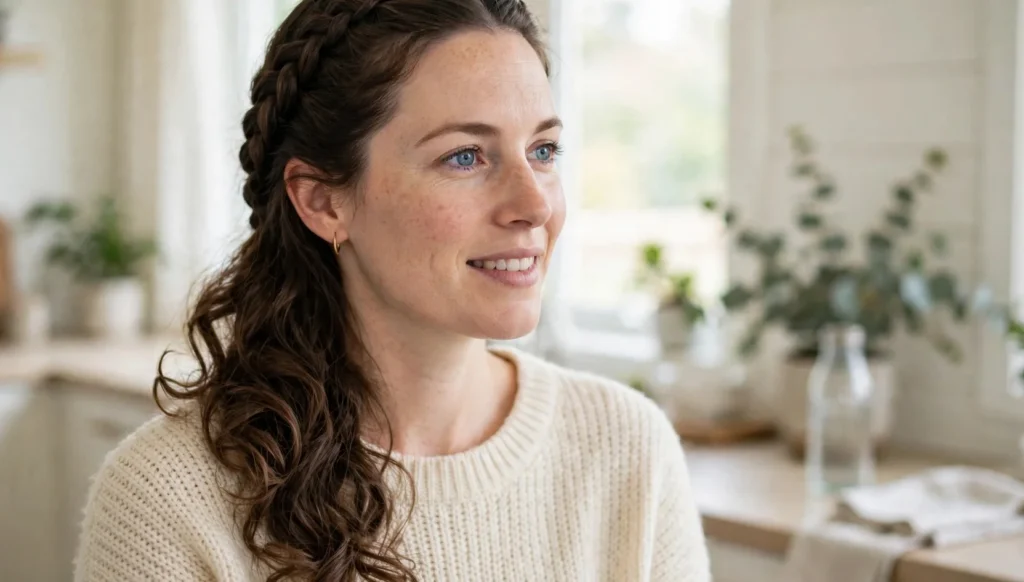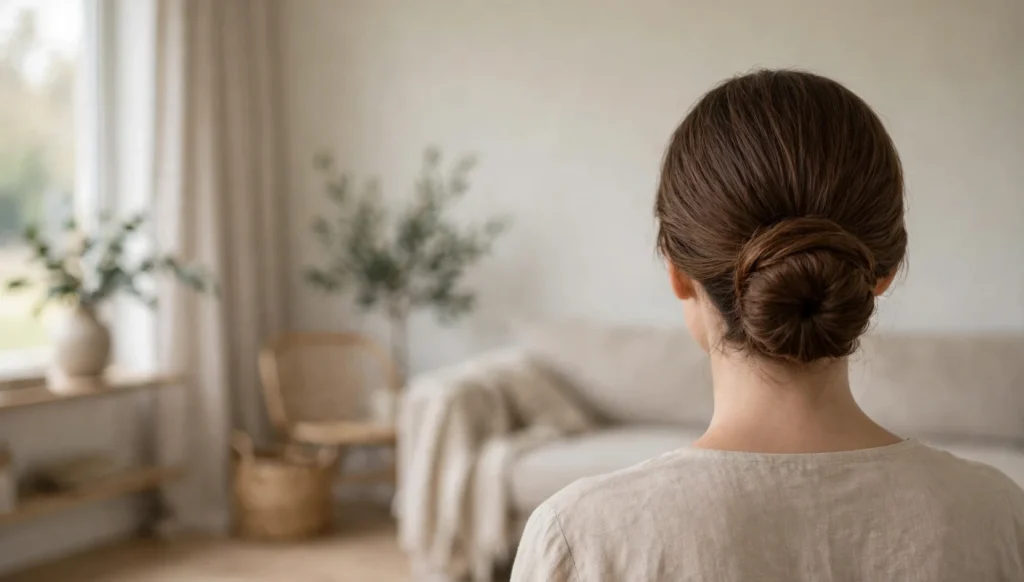
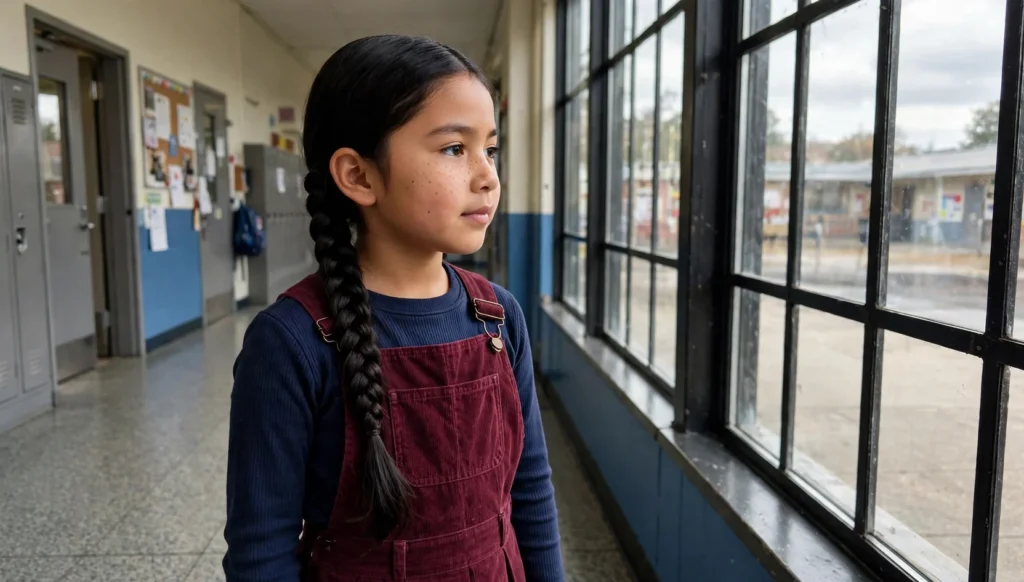
Kids school hairstyles need to be quick, comfortable and tough enough to survive a full day of lessons, playtime and PE. These 37 cute kids school hairstyles are neat, practical and full of personality, giving every child a style that looks great at morning assembly and still holds up at home time.
1. Classic Double French Braids
Classic double French braids are the school-day staple every parent knows by heart: two neat braids that start at the crown and travel down either side of the head, gathering hair evenly as they go so the finished style sits flat, tidy and completely secure. The braids frame the face symmetrically and keep every strand tucked away, which means no hair falls into the eyes during reading, writing or games at break time. From the front the style looks polished and sweet, and from the back it shows off the beautiful woven pattern of the plaits themselves. The finish is smooth and controlled, with a light sheen from a smoothing cream and ends secured with small snag-free elastics, so the braids hold their shape all day without frizzing or loosening. This style suits girls aged five to eleven with medium to long hair, and it works beautifully on straight, wavy and lightly curly textures, flattering round, oval and heart-shaped faces because the centre parting and even braids balance the features.
To style, part the hair down the middle, then French braid each side from the hairline to the nape, adding small sections as you go, and finish with a plain braid to the ends. A wide-tooth comb, a tail comb for the parting, a little detangling spray and two soft elastics are all you need, and the whole style takes about ten minutes once you have practised it a few times. Maintenance is wonderfully simple: the braids can stay in for a full school day and be taken out at bedtime, and a trim every eight to ten weeks keeps the ends neat enough to braid smoothly. Grow-out is never a problem, since longer hair only makes the braids fuller and easier to weave. Choose this style when you want a dependable, pretty look that survives the whole school day, from morning assembly to after-school play, without needing a single touch-up. Parents love styles like this because they survive the journey to school, a full morning of lessons, lunch in the playground and an afternoon of activities without needing rescue, which means fewer fraught mornings and a child who arrives home looking almost as neat as when they left.

2. High Ponytail with Ribbon
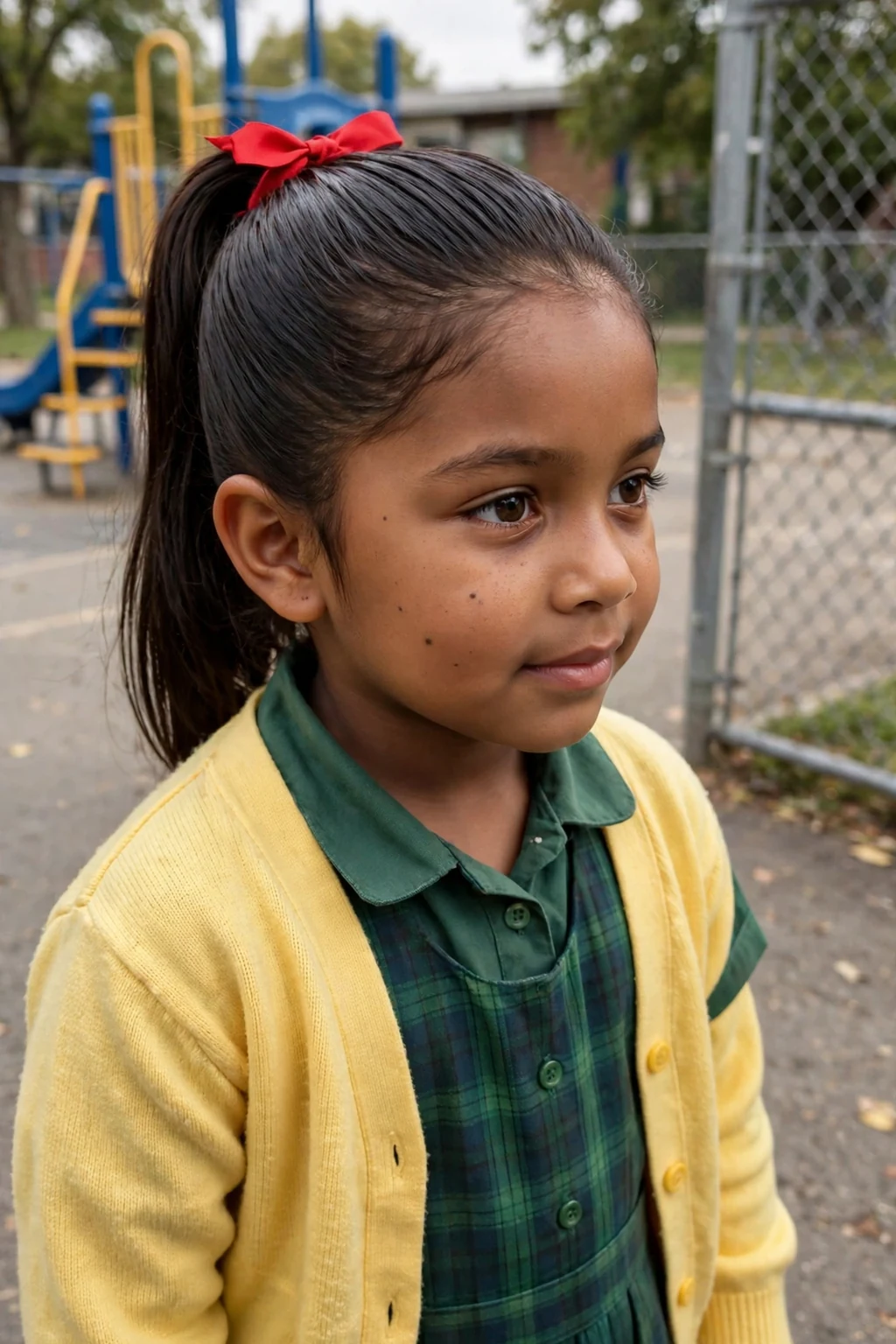
A high ponytail with a ribbon is instant school-morning cheer: all the hair is swept up to the crown and secured high on the head, so the ponytail swings playfully with every step while the face stays completely clear. The height gives the style energy and bounce, and a wide ribbon tied in a bow at the base turns a simple ponytail into something that looks specially chosen for the day. Soft face-framing wisps can be left loose at the front for a gentler, more relaxed finish. The finish is smooth at the crown with a soft, swinging tail, and the ribbon adds a pop of colour and a finished, put-together feeling that makes the whole outfit look intentional. This style suits girls aged five to ten with medium to long hair, and it works best on straight or gently wavy textures, flattering oval, heart and round faces because the height at the crown lengthens the face and draws the eye upward.
To style, brush the hair upward with a paddle brush, gather it at the crown and secure it with a strong, snag-free elastic, then smooth any bumps with a little water or smoothing cream. Wrap the ribbon around the base and tie it in a bow, then finish with a light mist of flexible-hold spray if the hair tends to slip. Maintenance is minimal: the ponytail comes out at the end of the day, and a trim every eight to twelve weeks keeps the ends healthy and the tail looking full. If the elastic leaves a dent, a quick brush-through the next morning sorts it out completely. Choose this style for picture days, assemblies and ordinary Tuesdays alike, because it is fast, cheerful and comfortable, and the ribbon makes an everyday ponytail feel like a celebration. Teachers appreciate a style that stays out of the way during lessons, and children appreciate one that feels comfortable hour after hour, with no pulling, no slipping and no constant fiddling, so the school day can be about learning and playing rather than hair.
3. Low Twisted Bun
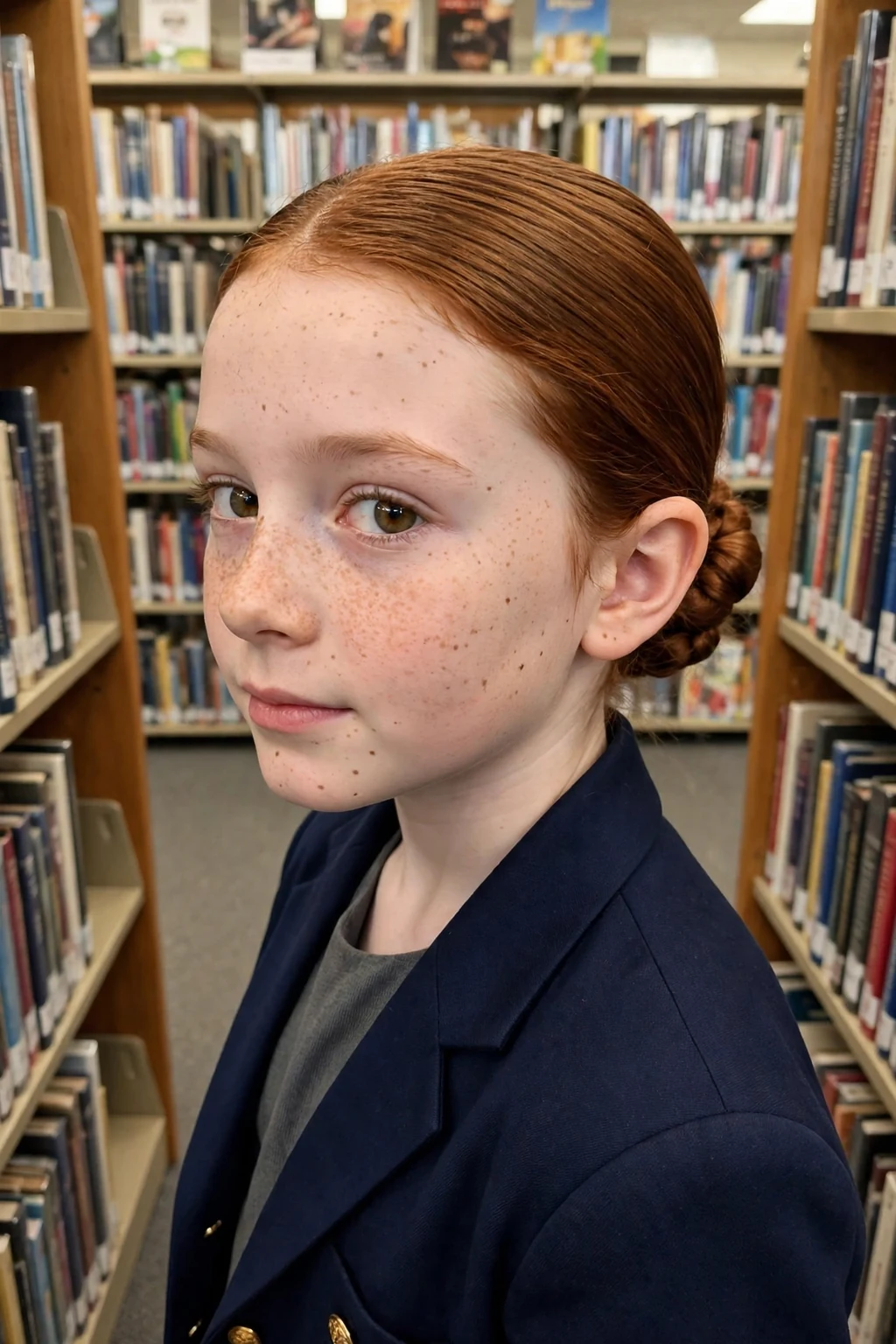
A low twisted bun is the calm, grown-up school style: the hair is gathered at the nape of the neck, twisted into a neat coil and pinned flat, giving a smooth, elegant shape that sits close to the head and never gets in the way. It looks tidy from every angle, with a clean hairline at the front and a compact, rounded bun at the back that suits formal school occasions as well as ordinary lessons. The style has a quiet confidence that older primary children especially love. The finish is sleek and controlled, with flyaways smoothed down using a little gel or cream and pins matched to the hair colour so the bun looks seamless and secure. This style suits girls aged eight to eleven with medium to long hair, and it works on straight, wavy and curly textures once the hair is brushed smooth, flattering oval, oblong and heart-shaped faces because the low placement keeps the proportions soft and balanced.
To style, brush the hair back into a low ponytail, twist the tail tightly, coil it around its own base and pin it with three or four bobby pins, then smooth the front with a boar-bristle brush. A little styling gel on the hairline and a light-hold spray will keep the bun neat through a long school day. Maintenance is easy: the bun can be worn all day and brushed out at night, and trims every ten weeks keep the ends tidy so the twist coils smoothly. Grow-out simply gives the bun more fullness over time. Choose this style for dance practice, school concerts and days when hair must stay perfectly in place, because it is comfortable, secure and beautifully neat from morning until home time. This is also a wonderful style to practise together at the weekend, when there is no rush, so that by Monday morning the routine feels familiar, the child knows exactly what to expect, and the whole process takes only a few calm minutes before breakfast.
4. Side Swept Pigtails
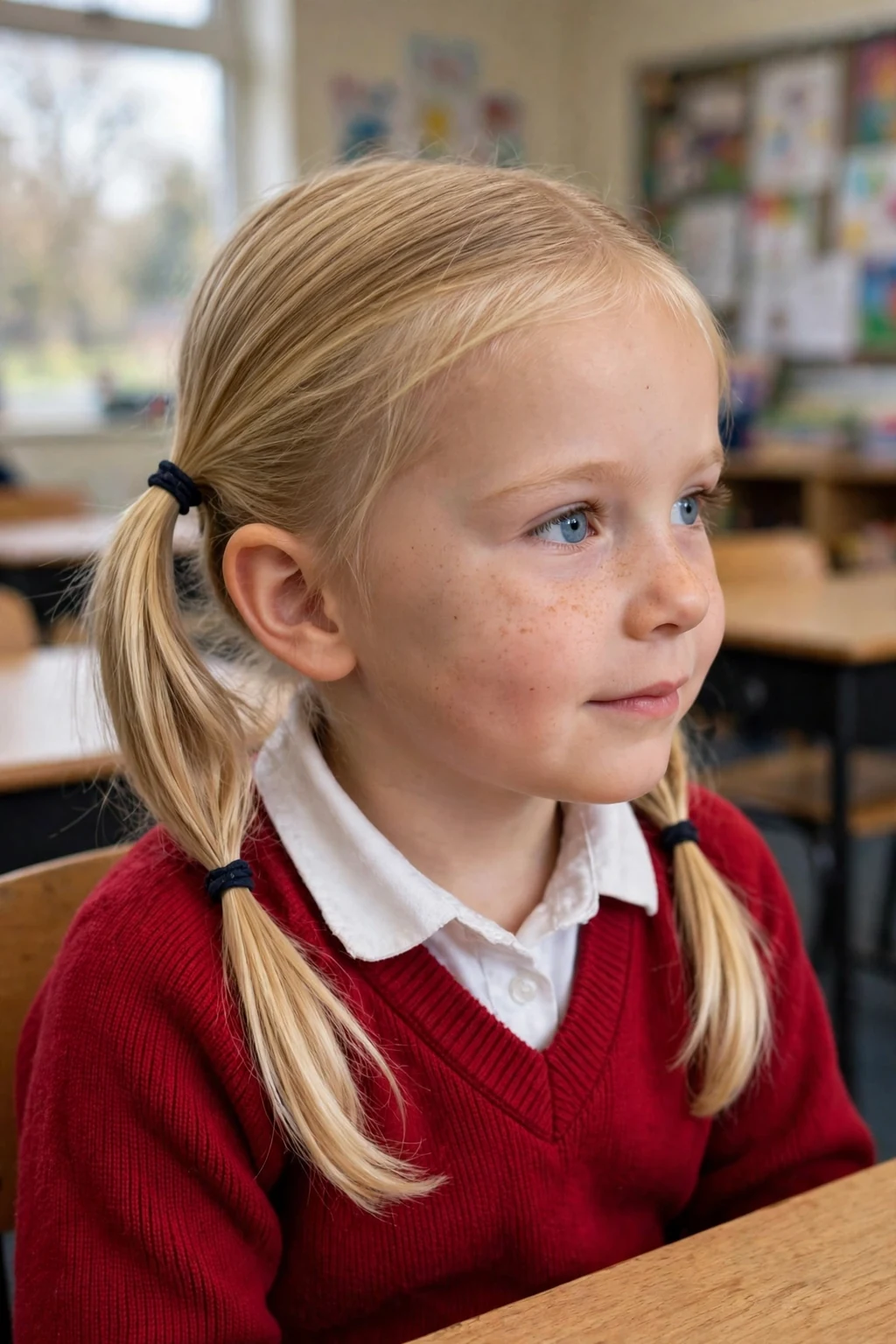
Side swept pigtails are pure playground charm: the hair is parted to one side and gathered into two low pigtails that sit just behind the ears, giving a soft, slightly grown-up twist on the classic pigtail look. The side parting adds gentle asymmetry that flatters the face, while the low placement keeps the style comfortable under hats and headphones. Loose ends can be left straight or given a slight curl for extra sweetness. The finish is soft and bouncy rather than stiff, with a natural shine and a little movement at the ends, so the style looks friendly and relaxed instead of overly formal. This style suits girls aged five to eight with short to medium hair, and it works beautifully on fine to medium straight or wavy textures, flattering round and square faces because the side parting breaks up the symmetry and softens the jawline. The overall effect is tidy, cheerful and perfectly suited to busy school mornings.
To style, create a deep side parting with a tail comb, divide the hair into two even sections and secure each one low behind the ear with a soft elastic. Smooth the top with a brush, add a tiny drop of serum to the ends for shine, and check from the front that both pigtails sit at matching heights. Maintenance is delightfully low: the pigtails come out at bedtime with no tangles if the hair was detangled first, and a trim every eight weeks keeps the ends even. Short hair grows out gracefully into longer pigtails. Choose this style when you want something quick, cute and comfortable for a busy school day, because it takes five minutes, survives playtime and still looks adorable at pick-up time. For busy families, the real test of a school hairstyle is whether it still looks presentable at pick-up time, and this one passes easily, holding its shape through wind, rain, hats and helmets while keeping the hair healthy and tangle-free underneath.
5. Bubble Braids
Bubble braids are the fun, modern school style children ask for by name: the hair is gathered into one or two ponytails, then divided into puffy bubble sections by elastics placed at even intervals down the length, with each section gently pulled out to create a rounded, balloon-like shape. The result is playful and eye-catching, with a rhythm of soft bubbles that looks impressive but is secretly very simple. It works as a single high bubble braid or as two matching bubble pigtails. The finish is bouncy and full, with each bubble softly rounded and the overall shape holding its volume all day, especially when a little texturising spray is used before styling. This style suits girls aged seven to eleven with medium to long hair, and it works on straight, wavy and curly textures, flattering oval, round and diamond faces because the vertical bubbles draw the eye down and balance the features.
To style, secure a ponytail with a strong elastic, then add further elastics every few centimetres down the tail and gently tug each section outward to form bubbles. A paddle brush, several small elastics and a light texturising spray are all you need, and the style takes under ten minutes. Maintenance is easy: the bubbles can be refreshed by re-tugging the sections at lunchtime, and the style comes out at night without tangling if the elastics are removed gently. Trims every ten weeks keep the ends neat. Choose bubble braids for fun Fridays, school discos and days when your child wants to stand out, because they look spectacular, hold beautifully and earn compliments all day long. Comfort matters just as much as looks for school hair, so always check that elastics are snug but never tight, that pins sit flat against the head, and that your child can run, jump and lie back on a reading cushion without feeling a single pull or pinch.

6. Half-Up Top Knot
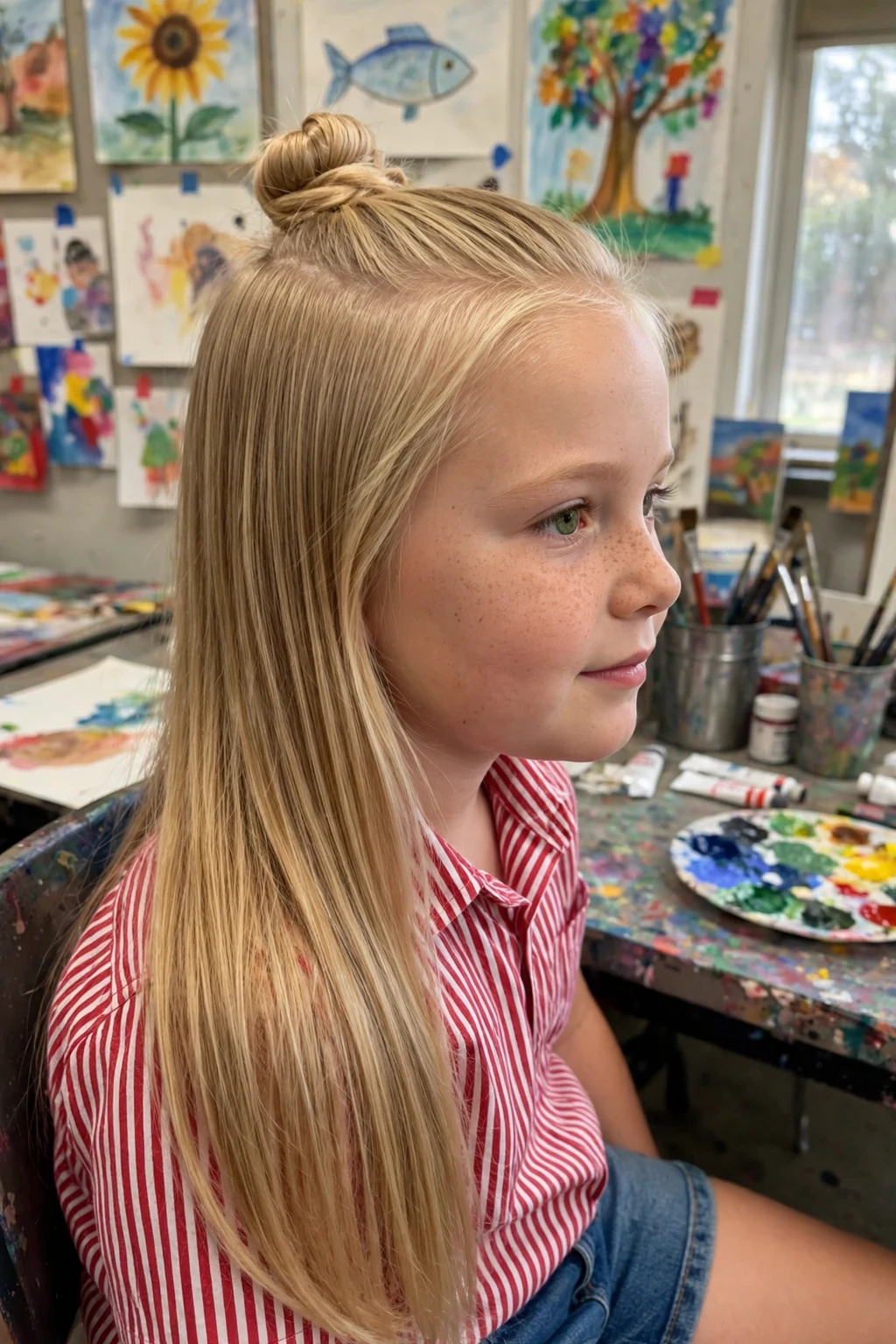
A half-up top knot is the perfect compromise for children who want their hair partly up and partly down: the top section is gathered into a small, neat knot on the crown while the rest of the hair falls freely around the shoulders. The knot keeps hair out of the eyes for lessons and art projects, while the loose lengths keep the style soft and pretty. It has a relaxed, creative feeling that suits school days full of drawing, reading and play. The finish is casual and soft, with the knot slightly textured rather than severe and the loose hair falling in natural waves or straight lengths with a healthy shine. This style suits girls aged six to ten with medium to long hair, and it works on straight, wavy and curly textures, flattering oval, heart and round faces because the height of the knot lifts the face while the loose hair frames it gently.
To style, section off the hair from temple to temple, twist it into a small bun on top of the head and pin it securely, then leave the rest of the hair loose. A few bobby pins, a small elastic and a little texturising cream are all you need, and the style takes about five minutes. Maintenance is minimal: the knot can be redone in seconds if it loosens, and the style brushes out completely at night. Trims every eight to ten weeks keep the loose lengths looking healthy. Choose this style for art days, reading sessions and any day your child wants the best of both worlds, because it is quick, comfortable and keeps hair out of the way without sacrificing length. A small morning kit kept by the mirror makes this style even easier: a brush, a few spare elastics, a couple of clips and a bottle of detangling spray mean that even a rushed morning ends with neat, happy hair and a child who feels ready for anything.
7. Sleek Low Ponytail
A sleek low ponytail is the smartest school style in the book: the hair is brushed smoothly back and secured at the nape, giving a clean, polished line from the forehead to the ponytail with not a bump or flyaway in sight. It looks neat, serious and put-together, which makes it ideal for assemblies, presentations and exam days when children want to feel focused and confident. A small section of hair wrapped around the elastic hides it completely for an extra-polished finish. The finish is glossy and smooth, with a mirror-like shine from a smoothing serum and a tail that hangs straight and even, giving the whole style a refined, almost professional quality. This style suits girls aged eight to eleven with medium to long hair, and it works best on straight or lightly wavy textures, flattering oval, oblong and heart-shaped faces because the sleek line elongates the neck and shows off the features.
To style, brush the hair back with a boar-bristle brush, secure it low at the nape with a strong elastic, then wrap a thin strand around the base and pin it underneath. A smoothing serum and a light-hold spray will keep the surface glassy all day long. Maintenance is simple: the ponytail brushes out at night, and trims every eight to ten weeks keep the tail blunt and healthy. Grow-out only adds length and drama to the style. Choose this style when the day calls for looking smart and feeling focused, because nothing says ready for school quite like a perfectly sleek low ponytail. Children who help choose their own school hairstyle are far more likely to sit happily while it is done and to wear it proudly all day, so offer this as one of two or three options and let them make the final call before the school week begins.
8. Dutch Braid Crown
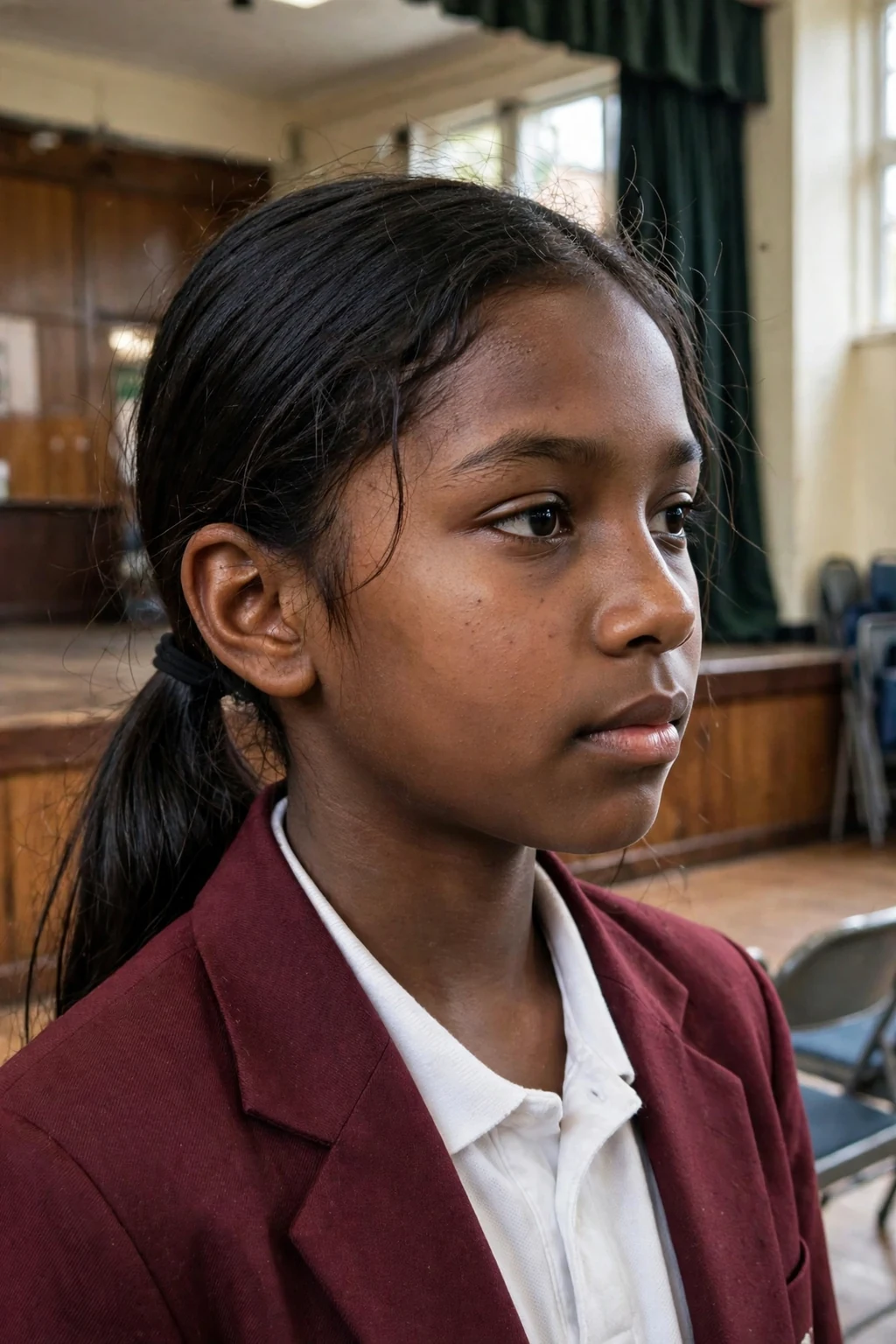
A Dutch braid crown is the closest thing to a fairytale at school: a single braid woven around the head like a halo, with the strands crossing under rather than over so the braid sits proudly on top of the hair. It looks magical from every angle, keeps every strand secured for the whole day and works beautifully for school plays, concerts and special occasions. The crown shape frames the face like a wreath and shows off long hair in the most charming way possible. The finish is neat and raised, with the braid standing out clearly against the smoothed hair beneath it, and a light shine that makes the woven pattern easy to admire. This style suits girls aged eight to eleven with long hair, and it works on straight, wavy and curly textures once brushed smooth, flattering heart, oval and round faces because the crown draws attention upward and frames the features beautifully.
To style, start a Dutch braid at one ear, work it around the hairline adding sections as you go, and pin the tail underneath where the braid began. A tail comb, smoothing cream and several bobby pins matched to the hair colour are essential, and the style takes about fifteen minutes with practice. Maintenance is straightforward: the crown stays put all day and can even be slept in if needed, and it brushes out with a little detangler at night. Trims every ten weeks keep the ends neat for braiding. Choose this style for special school days, performances and photographs, because it is unforgettable, stays secure for hours and makes any child feel like the star of the show. Because school days are long and unpredictable, the best styles are the forgiving ones, and this one can be tidied in seconds with a quick brush or a re-secured elastic, so a windy walk to school never has to mean a bad hair day.
9. Curly Puffs
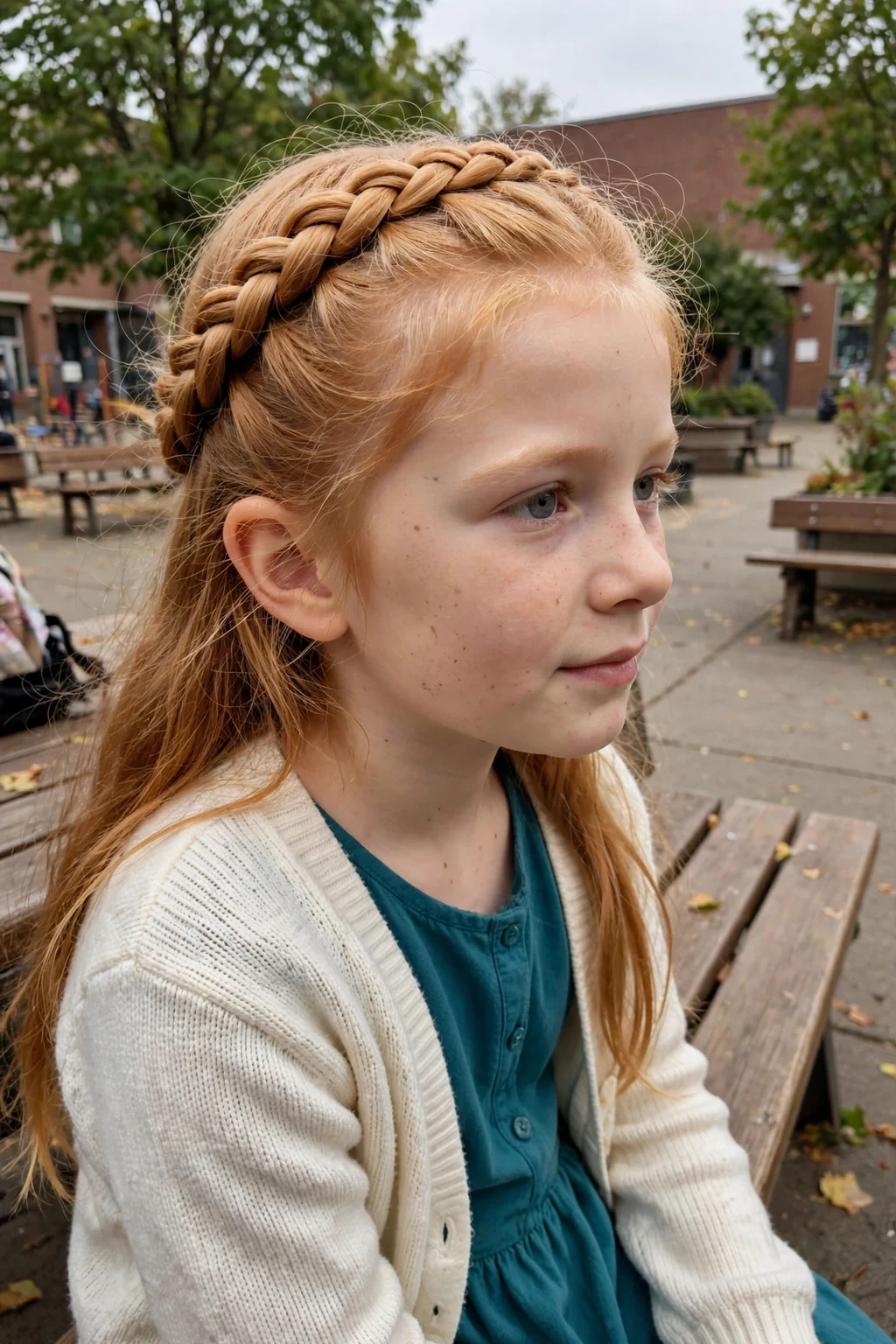
Curly puffs are joyful, bouncy and full of personality: the hair is parted down the middle and gathered into two round, cloud-like puffs on either side of the head, letting natural curls spring out in every direction. The shape is soft and generous, the curls form a beautiful halo around the face, and the style celebrates natural texture instead of fighting it. It is comfortable, practical and endlessly cheerful, which is why it is a favourite for younger school children. The finish is soft and springy, with defined curls, a light sheen from curl cream and puffs that hold their round shape without feeling tight or stiff. This style suits girls aged five to nine with naturally curly or coily hair, and it flatters round, oval and square faces because the balanced puffs frame the face symmetrically and soften the jawline. Altogether, it is a smart, cheerful look that works beautifully for school.
To style, moisturise the hair with leave-in conditioner, part it down the middle, then gather each side into a puff with a soft elastic or puff cuff, fluffing the curls gently with your fingers. Curl cream and a wide-tooth comb are the key tools, and the style takes about ten minutes on freshly washed hair. Maintenance is gentle: the puffs can be refreshed with a little water and curl cream the next morning, and trims every ten to twelve weeks keep the curls healthy and the shape even. Protective styling at night with a satin bonnet keeps the puffs fresh. Choose curly puffs when you want a style that celebrates natural curls, survives playtime and looks adorable all day, because few school styles are as happy, easy and full of character as this one. Parents love styles like this because they survive the journey to school, a full morning of lessons, lunch in the playground and an afternoon of activities without needing rescue, which means fewer fraught mornings and a child who arrives home looking almost as neat as when they left.
10. Fishtail Side Braid
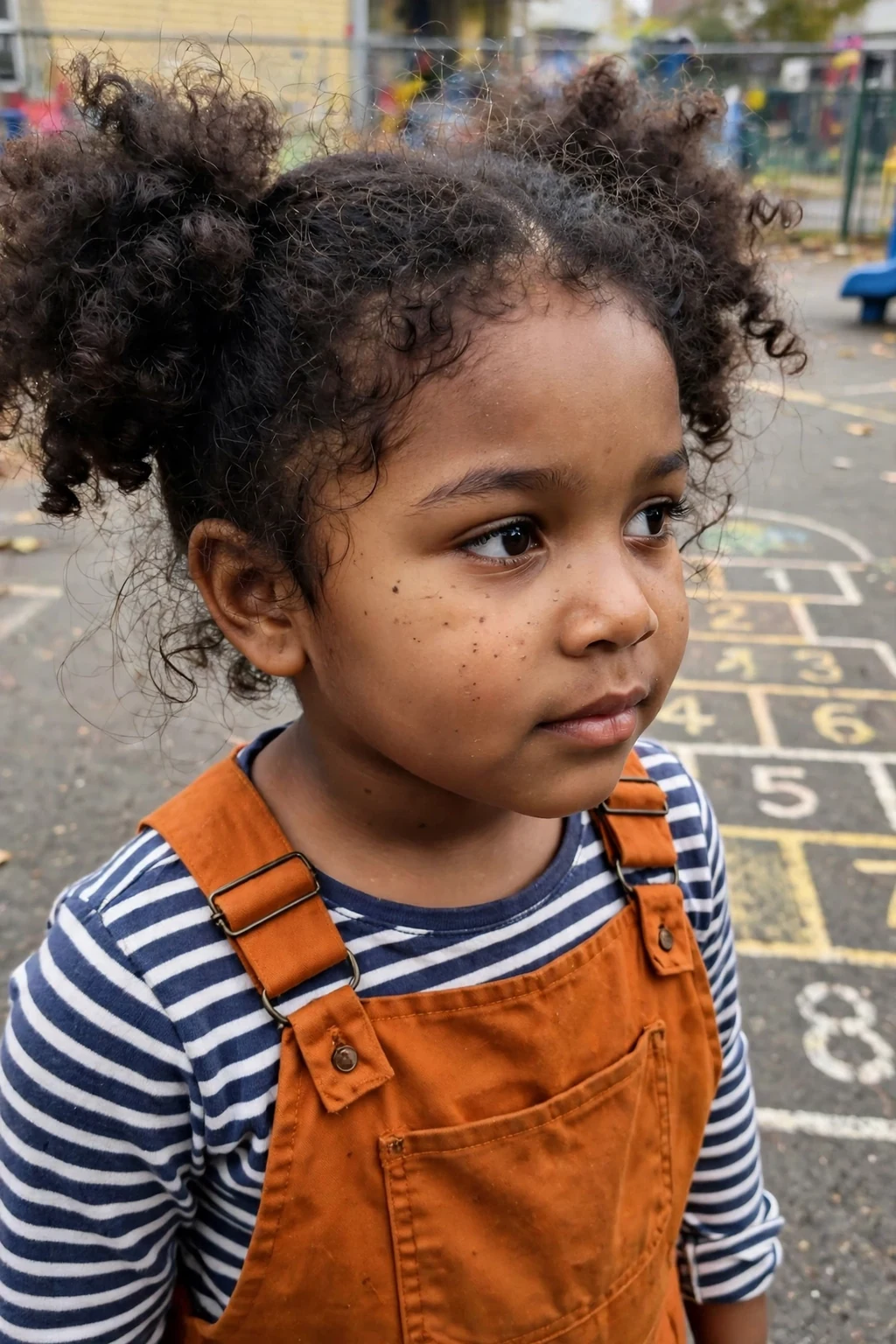
A fishtail side braid looks far more complicated than it is: the hair is swept over one shoulder and woven from just two sections, with small strands crossed over alternately to create the distinctive herringbone pattern. The braid sits softly over the shoulder, looks intricate and delicate from every angle and keeps long hair neatly contained while still showing off its length. It is the style older primary children choose when they want something a little more special than a normal plait. The finish is soft and slightly loose, with the braid gently pulled apart for fullness and a romantic, textured feeling that suits both straight and wavy hair. This style suits girls aged eight to eleven with medium to long hair, and it works best on straight or wavy textures, flattering oval, heart and oblong faces because the side placement creates a graceful diagonal line across the body. The overall effect is tidy, cheerful and perfectly suited to busy school mornings.
To style, sweep the hair to one side, divide it into two sections and alternately cross small outer strands from each side to the other, securing the end with a small elastic. A little texturising spray before braiding gives grip, and gently loosening the braid afterwards adds fullness. Maintenance is easy: the braid can be worn all day and brushed out at night, and trims every ten weeks keep the ends neat enough to weave cleanly. Grow-out simply makes the fishtail longer and more impressive. Choose a fishtail side braid for days when your child wants to look a little bit fancy without any fuss, because it is elegant, secure and always draws admiring comments from teachers and friends. Teachers appreciate a style that stays out of the way during lessons, and children appreciate one that feels comfortable hour after hour, with no pulling, no slipping and no constant fiddling, so the school day can be about learning and playing rather than hair.
11. Double Dutch Braids
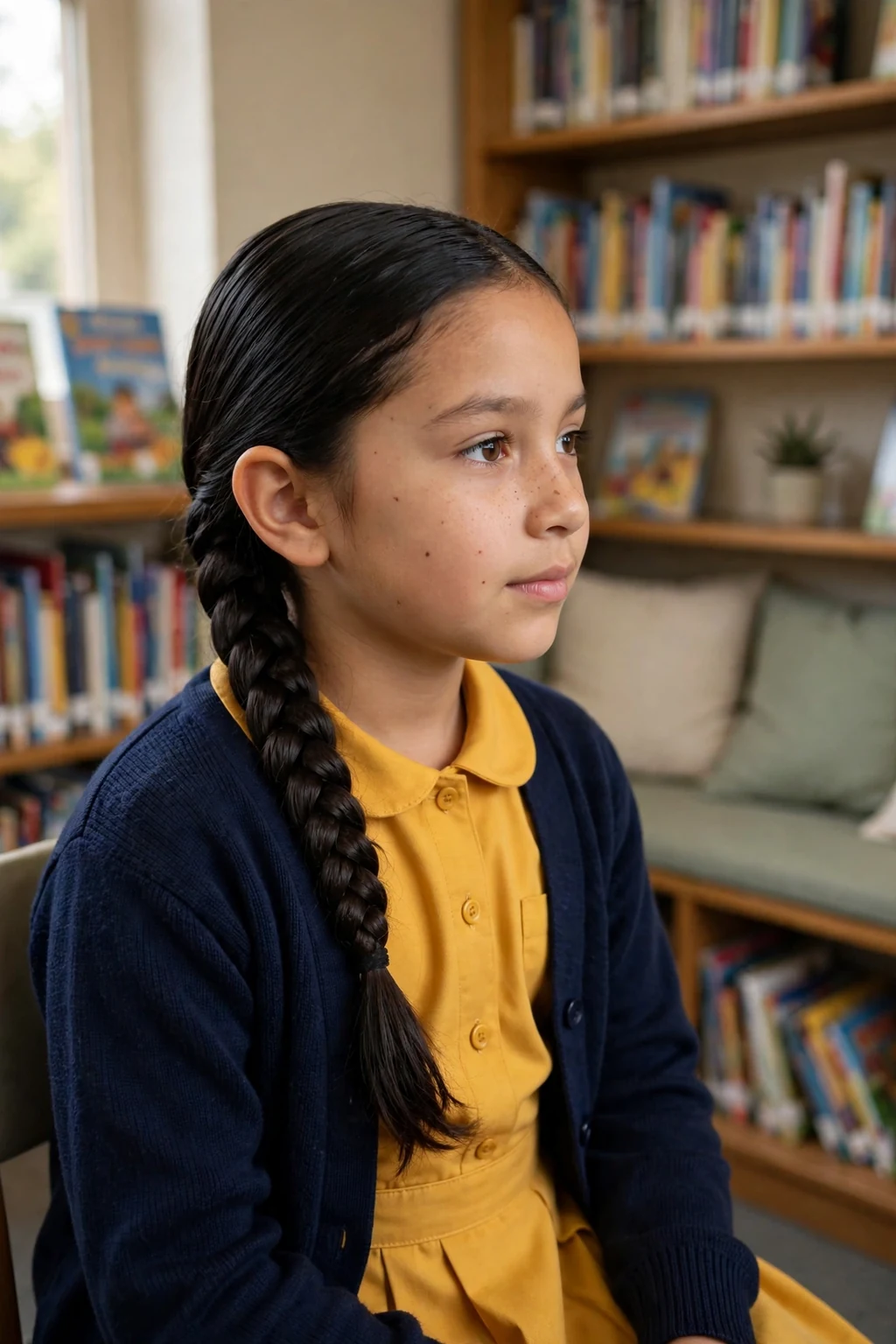
Double Dutch braids are the sporty school classic: two raised braids that run from the hairline to the nape, with the strands woven under so the braids stand out boldly against the head. They are the ultimate active-day style, staying perfectly secure through running, jumping and PE lessons, and they look neat and athletic from every angle. Because the braids sit close to the scalp, nothing falls into the face, which makes them a favourite for sporty children and busy school days alike. The finish is firm and raised, with a clean centre parting, smooth edges and a sporty, polished look that holds its shape from morning assembly to the final bell. This style suits girls aged six to eleven with medium to long hair, and it works on straight, wavy and curly textures, flattering square, round and oval faces because the raised braids add structure and the centre parting balances the features.
To style, part the hair down the middle, then Dutch braid each side from the front hairline to the nape, adding sections evenly as you go, and finish with a plain braid secured with a small elastic. A tail comb, edge gel and a little smoothing cream will give the cleanest result, and the style takes about fifteen minutes. Maintenance is excellent: Dutch braids can stay in for a full day or even two, and they come out with a little detangler and patience. Trims every eight to ten weeks keep the ends tidy for braiding. Choose double Dutch braids for PE days, sports fixtures and any day that needs hair to stay put no matter what, because they are secure, sporty and seriously cool. This is also a wonderful style to practise together at the weekend, when there is no rush, so that by Monday morning the routine feels familiar, the child knows exactly what to expect, and the whole process takes only a few calm minutes before breakfast.
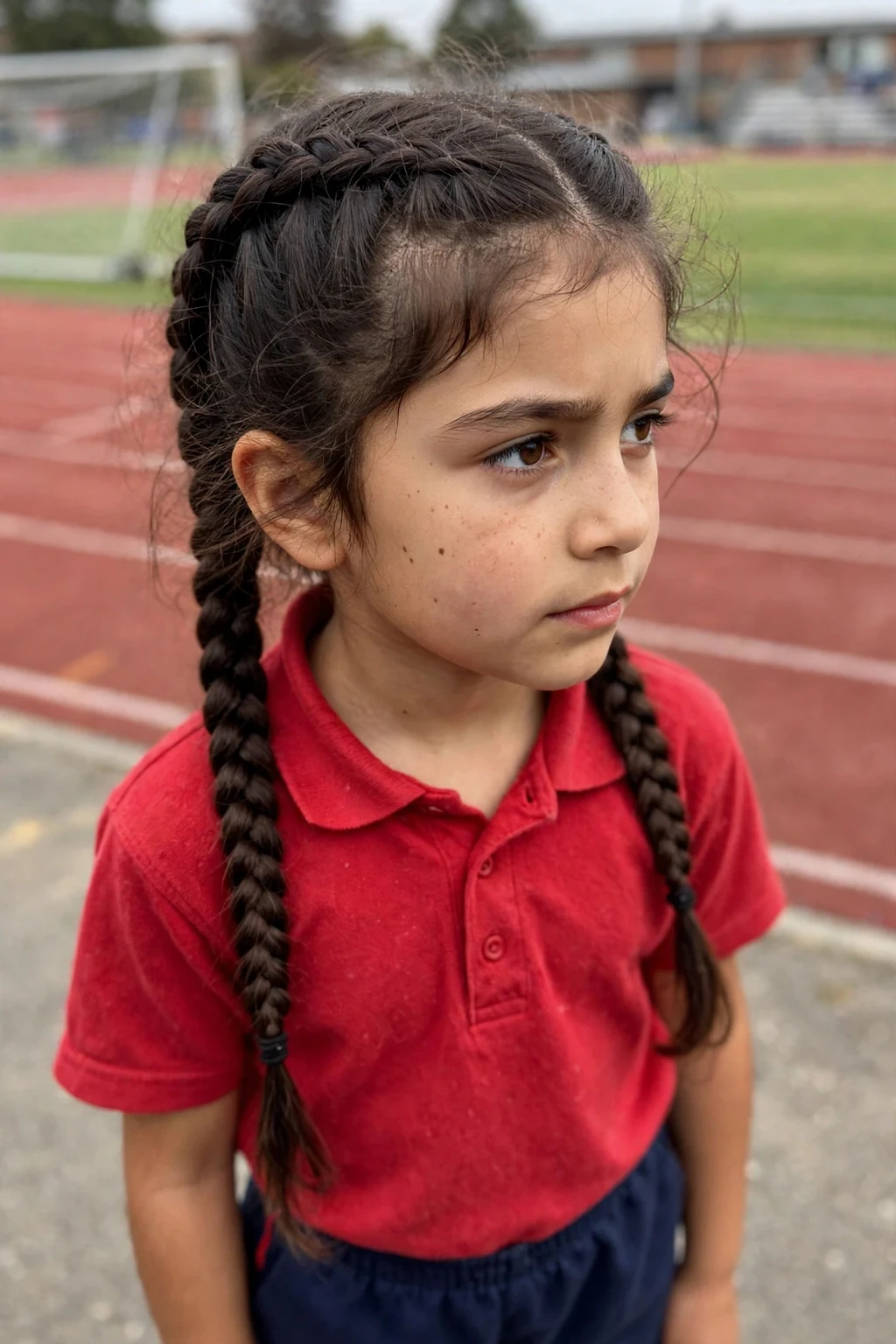
12. Messy Top Bun with Headband
A messy top bun with a headband is relaxed school style done right: the hair is piled into a soft, slightly tousled bun on top of the head, while a headband pushes back the front layers and adds a splash of colour. The bun looks effortless rather than perfect, with a few soft pieces escaping around the face, and the headband keeps everything tidy for lessons. It is the go-to style for children who want to look cute without spending ages in front of the mirror. The finish is soft and textured, with gentle volume at the bun, a few loose face-framing pieces and a headband that sits comfortably without slipping or pinching. This style suits girls aged seven to eleven with medium to long hair, and it works on straight, wavy and curly textures, flattering heart, oval and round faces because the height of the bun lifts the face while the headband frames it neatly.
To style, gather the hair high, twist it loosely into a bun and pin it, then slide on a comfortable headband and pull out a few soft pieces at the front. A texturising spray, a few bobby pins and a non-slip headband are all you need, and the style takes about five minutes. Maintenance is minimal: the bun can be redone in seconds, and the style brushes out completely at night. Trims every eight to ten weeks keep the ends healthy and the bun looking full. Choose this style for relaxed school days, music practice and homework sessions, because it is fast, comfortable and effortlessly pretty from every angle. For busy families, the real test of a school hairstyle is whether it still looks presentable at pick-up time, and this one passes easily, holding its shape through wind, rain, hats and helmets while keeping the hair healthy and tangle-free underneath.

13. Straight Bob with Side Part
A straight bob with a side part is the neat, classic school haircut: hair cut to chin or jaw length with a deep side parting that sweeps the longer side softly across the forehead. The bob swings gently when the child moves, frames the face beautifully and never needs elaborate styling, which makes mornings wonderfully simple. It looks smart, tidy and timeless, and it suits children who prefer short hair that still feels pretty and feminine. The finish is smooth and glossy, with blunt, even ends, a clean side parting and a polished shine that makes the bob look freshly cut even weeks after a trim. This style suits girls aged five to nine with straight or slightly wavy hair, and it flatters oval, round and heart-shaped faces because the side parting adds asymmetry that softens roundness and balances the features. The overall effect is tidy, cheerful and perfectly suited to busy school mornings.
To style, part the hair deeply to one side with a tail comb, brush it smooth and add a tiny drop of serum for shine. A paddle brush and a light smoothing cream are the only tools needed, and the style takes under two minutes on freshly brushed hair. Maintenance is straightforward: the bob needs a trim every six to eight weeks to keep its shape crisp, and it grows out gracefully into a longer bob. Daily brushing keeps it smooth and tangle-free. Choose this bob when you want the easiest school mornings imaginable, because it is wash-and-go, always looks tidy and suits almost every young face. Comfort matters just as much as looks for school hair, so always check that elastics are snug but never tight, that pins sit flat against the head, and that your child can run, jump and lie back on a reading cushion without feeling a single pull or pinch.
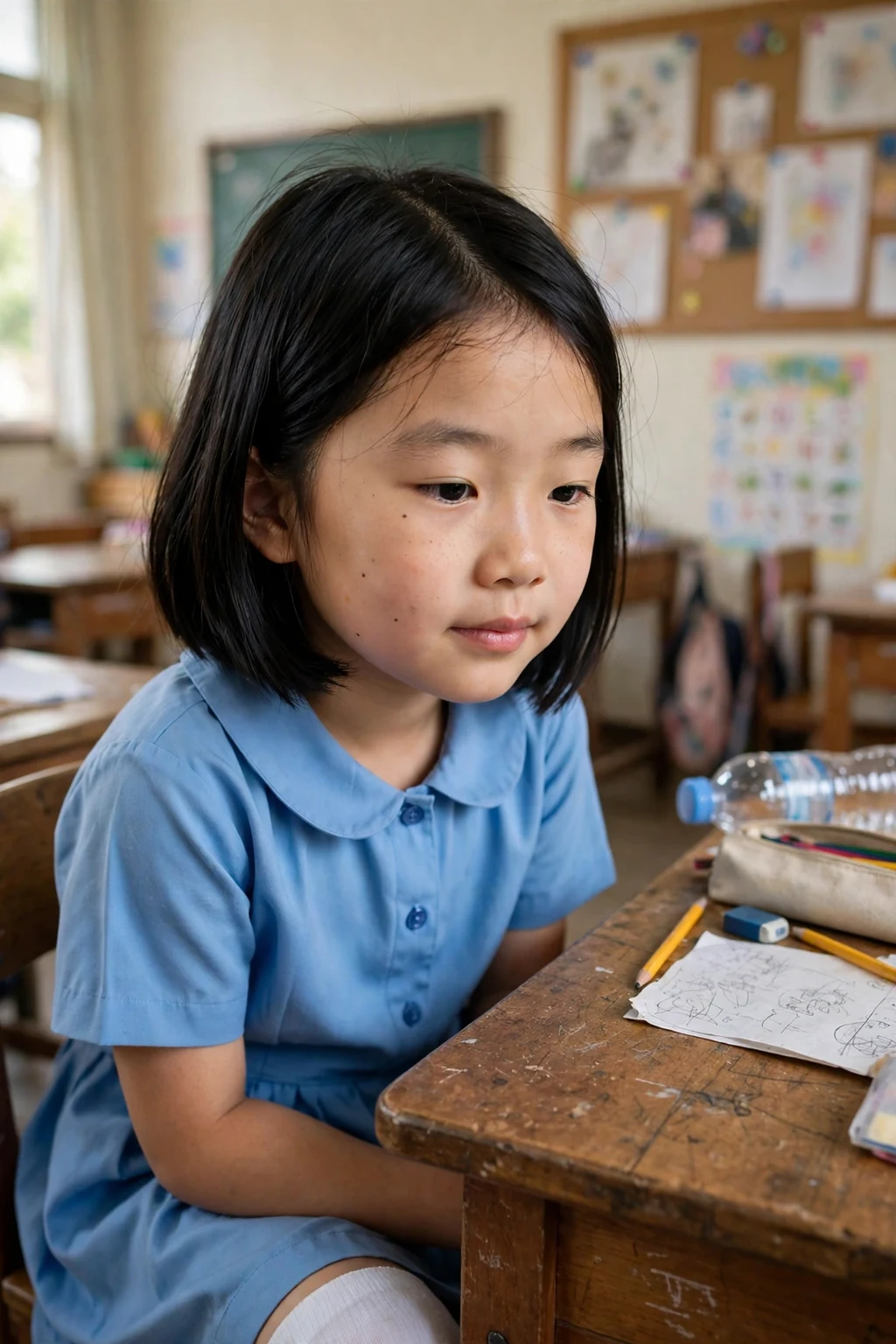
14. Twisted Pigtails
Twisted pigtails are the sweet, simple alternative to braids: each side of the hair is divided into two strands, twisted around each other all the way down and secured at the ends, creating a pretty rope-like effect. The twists look neat and intentional but are much quicker than proper braiding, which makes them perfect for busy mornings. They sit softly on either side of the head and keep hair completely out of the way for lessons and play. The finish is smooth and rope-like, with a gentle sheen and twists that hold their shape well, especially when a little styling cream is worked through the hair first. This style suits girls aged five to eight with medium to long hair, and it works on straight, wavy and curly textures, flattering round, oval and square faces because the even pigtails balance the face symmetrically. The result is neat, pretty and ready for anything the school day brings.
To style, part the hair down the middle, divide each side into two strands, twist them around each other to the ends and secure with small elastics. A detangling spray, a tail comb and four small elastics are all you need, and the style takes about eight minutes. Maintenance is easy: the twists come out at bedtime and can be refreshed the next day, and trims every eight to ten weeks keep the ends neat. The style also doubles as a heat-free way to create waves overnight. Choose twisted pigtails for quick mornings and younger children, because they are easy to learn, comfortable to wear and look far more polished than the effort they take. A small morning kit kept by the mirror makes this style even easier: a brush, a few spare elastics, a couple of clips and a bottle of detangling spray mean that even a rushed morning ends with neat, happy hair and a child who feels ready for anything.

15. Waterfall Braid
A waterfall braid is the prettiest way to wear long hair to school: a braid woven across the back of the head that drops strands as it goes, so loose lengths cascade down like water through the braid itself. The effect is romantic and eye-catching, with the braid acting like a headband while the rest of the hair flows freely behind it. It looks magical in photographs and is a favourite for school assemblies, concerts and special days. The finish is soft and flowing, with the braid neat at the front and the cascading strands falling in smooth, shiny lengths that move beautifully as the child walks. This style suits girls aged eight to eleven with long hair, and it works best on straight or gently wavy textures, flattering oval, heart and oblong faces because the horizontal braid frames the face while the loose hair softens the shoulders. Altogether, it is a smart, cheerful look that works beautifully for school.
To style, start a French braid at one temple, but drop the bottom strand at each step instead of weaving it in, picking up a new section from above each time, and pin the braid behind the opposite ear. A tail comb, smoothing serum and two bobby pins are essential, and the style takes about fifteen minutes with practice. Maintenance is simple: the braid holds for a full school day and brushes out at night, and trims every ten weeks keep the cascading lengths healthy and even. Choose a waterfall braid when the day deserves something beautiful, because it is romantic, impressive and makes long hair the star of the show. Children who help choose their own school hairstyle are far more likely to sit happily while it is done and to wear it proudly all day, so offer this as one of two or three options and let them make the final call before the school week begins.
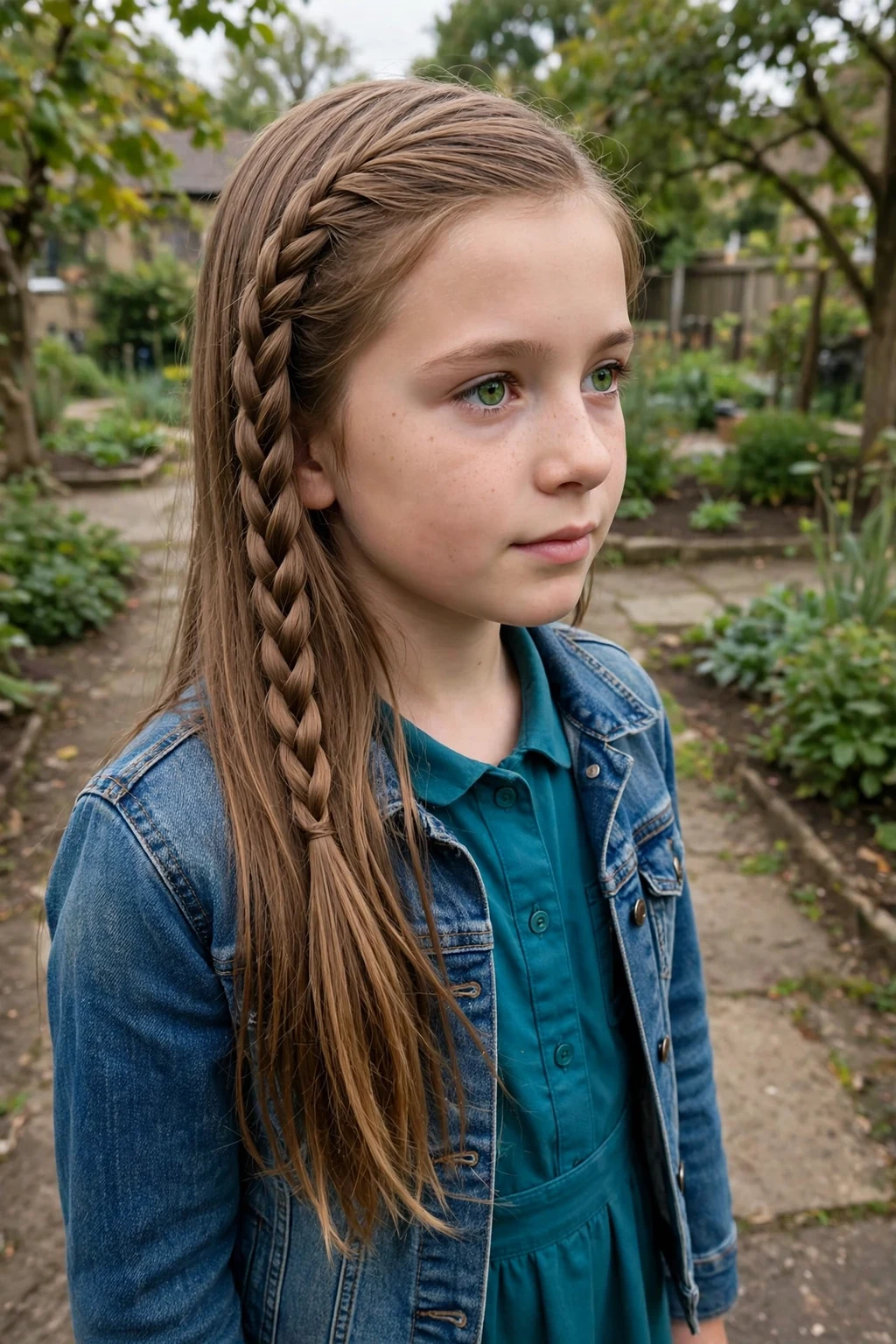
16. Space Buns
Space buns are the most fun hairstyle in the school playground: two round buns sitting high on either side of the head, like playful ears, giving instant energy and personality to any outfit. The buns can be neat and compact or slightly messy and voluminous, and they keep hair completely off the face and neck, which children love on warm days. They are bold, cheerful and impossible to ignore in the best possible way. The finish is bouncy and round, with the buns sitting symmetrically high on the head and a soft, full shape that holds all day with a few pins and a light mist of spray. This style suits girls aged six to eleven with medium to long hair, and it works on straight, wavy and curly textures, flattering round, oval and heart-shaped faces because the high buns draw the eye upward and balance the features. The overall effect is tidy, cheerful and perfectly suited to busy school mornings.
To style, part the hair down the middle, gather each side high on the head, twist it into a bun and pin it securely, then check from the front that both buns match. A paddle brush, several bobby pins and a light-hold spray are all you need, and the style takes about ten minutes. Maintenance is easy: the buns can be redone quickly if one loosens, and they brush out completely at night. Trims every eight to ten weeks keep the hair full enough for good buns. Choose space buns for fun days, school fairs and birthdays, because they are joyful, comfortable and guaranteed to make your child smile every time they catch their reflection. Because school days are long and unpredictable, the best styles are the forgiving ones, and this one can be tidied in seconds with a quick brush or a re-secured elastic, so a windy walk to school never has to mean a bad hair day.
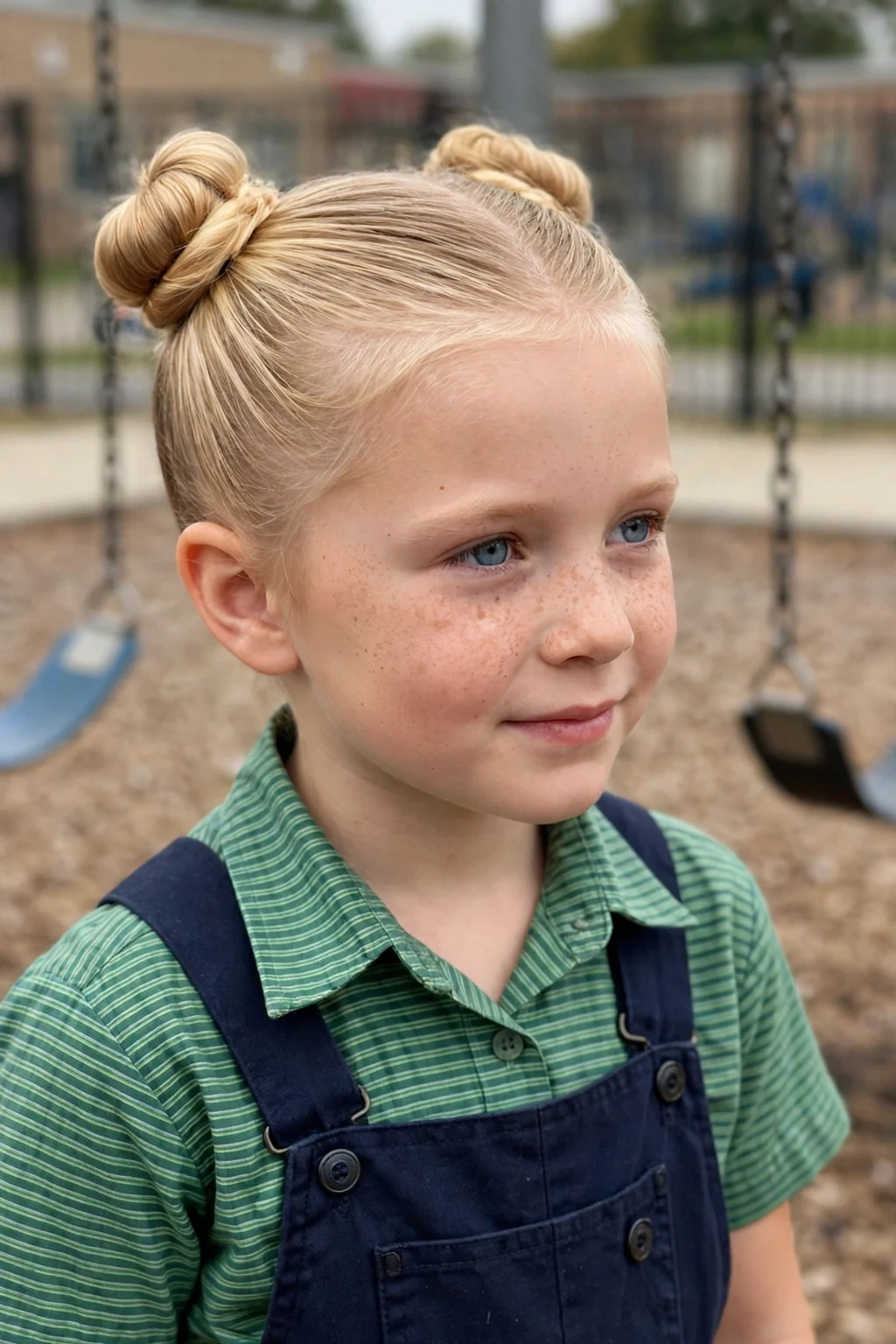
17. Braided Ponytail
A braided ponytail combines the best of two school favourites: the hair is first gathered into a high or mid ponytail, then braided all the way down its length, giving a long, sleek plait that swings neatly behind the shoulders. The style looks polished and sporty at once, keeps long hair completely controlled and shows off beautiful length without any loose strands getting in the way. It is ideal for active children with very long hair who need it secured for the whole day. The finish is smooth and even, with the braid tight enough to hold but not so tight that it pulls, and a tail that hangs straight with a neat, tapered end. This style suits girls aged seven to eleven with long hair, and it works on straight, wavy and lightly curly textures, flattering oblong, oval and heart-shaped faces because the high ponytail lifts the face while the braid adds graceful length.
To style, brush the hair into a ponytail and secure it firmly, then divide the tail into three sections and braid to the ends, securing with a small elastic. A paddle brush, a strong elastic and a little smoothing cream are all you need, and the style takes about eight minutes. Maintenance is minimal: the braid stays neat all day and brushes out at night, and trims every ten weeks keep the ends tidy for braiding. It also protects long hair from tangling during play. Choose a braided ponytail for sporty days, long school trips and any day with very long hair to manage, because it is secure, elegant and beautifully practical. Parents love styles like this because they survive the journey to school, a full morning of lessons, lunch in the playground and an afternoon of activities without needing rescue, which means fewer fraught mornings and a child who arrives home looking almost as neat as when they left.
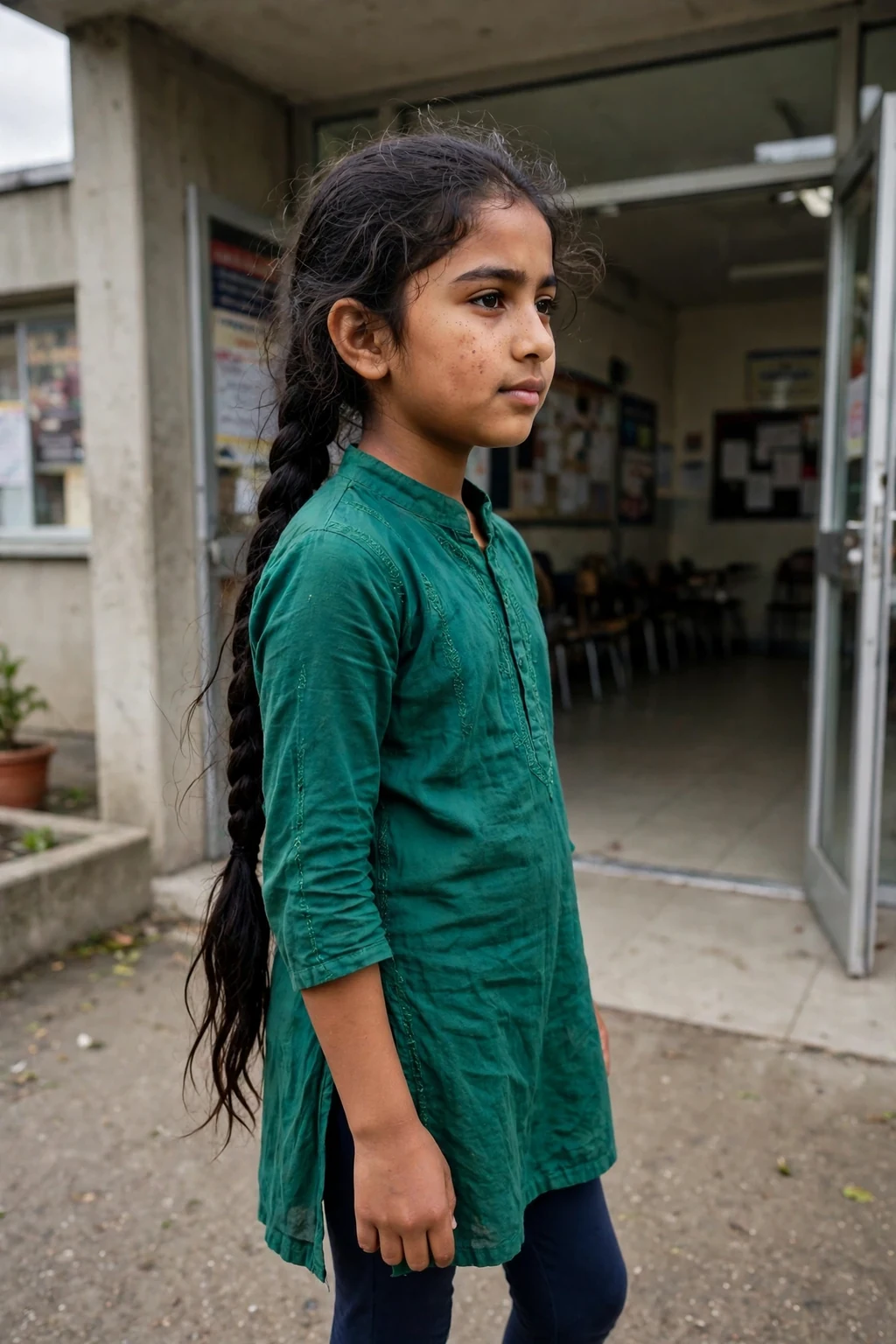
18. Loose Waves with Clips
Loose waves with clips are effortless school prettiness: the hair is worn down in its natural waves, with the front sections pinned back by two or three pretty clips so the face stays clear for lessons. The waves give softness and movement, the clips add colour and personality, and the whole style feels relaxed rather than overdone. It is the perfect choice for children who love wearing their hair down but need it kept out of their eyes. The finish is soft and touchable, with natural waves, a light shine and clips that sit neatly at the temples, giving a sweet, finished look without any stiffness. This style suits girls aged five to nine with medium to long hair, and it works best on naturally wavy or lightly curled textures, flattering heart, oval and round faces because the pinned-back front opens up the face while the waves frame it softly.
To style, brush the waves gently with a wide-tooth comb, enhance them with a little wave cream if needed, then pin the front sections back with snap clips or small barrettes. A wide-tooth comb, wave cream and two or three clips are all you need, and the style takes about five minutes. Maintenance is easy: the clips come out at night and the waves can be refreshed with water the next morning, and trims every eight to ten weeks keep the waves bouncy and the ends healthy. Choose loose waves with clips for gentle school days when hair down feels right, because it is quick, pretty and lets natural texture shine while keeping the face clear. Teachers appreciate a style that stays out of the way during lessons, and children appreciate one that feels comfortable hour after hour, with no pulling, no slipping and no constant fiddling, so the school day can be about learning and playing rather than hair.
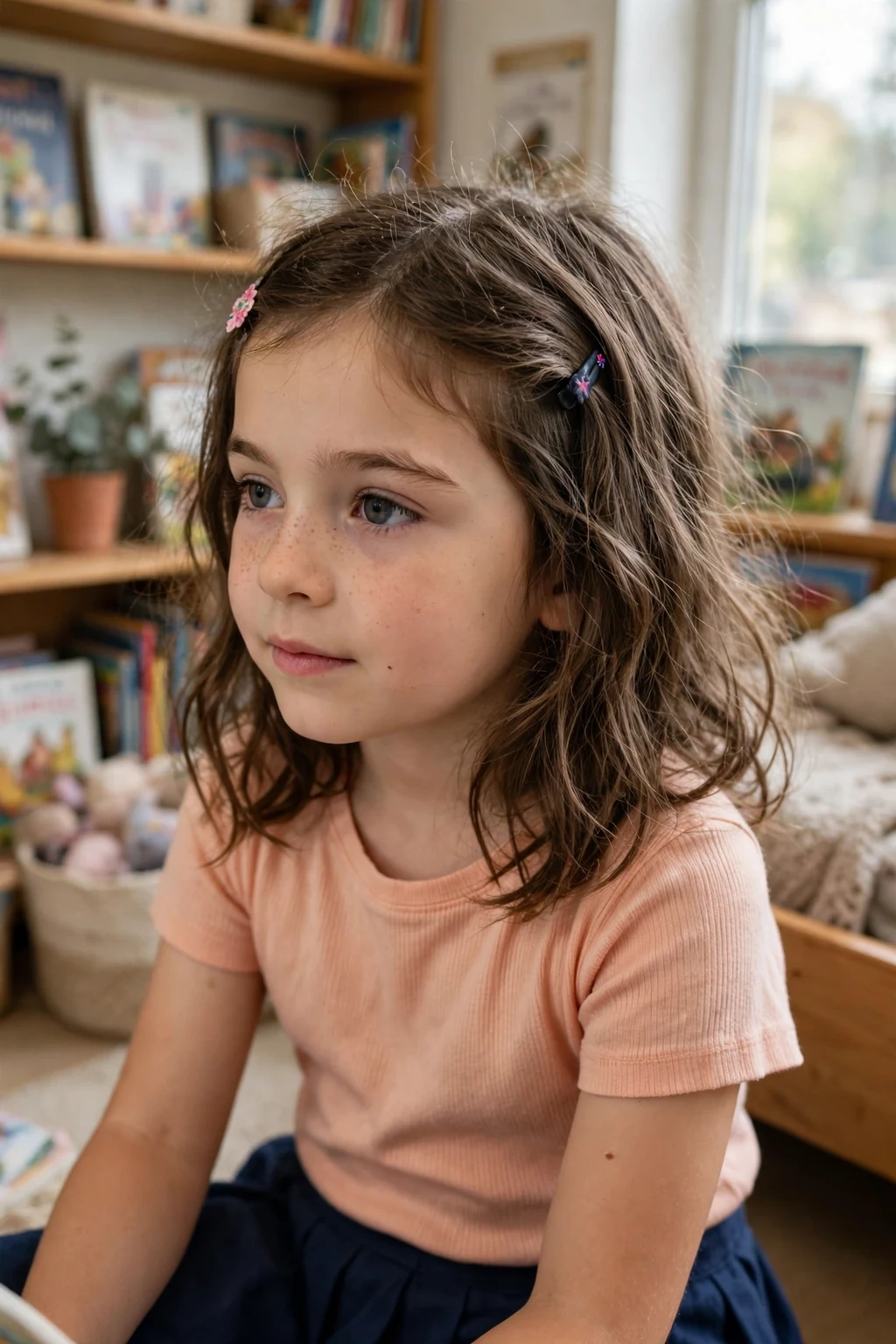
19. Cornrows with Beads
Cornrows with beads are a beautiful celebration of braiding tradition: neat, close-to-the-scalp rows woven from the hairline to the nape, finished with colourful beads that click softly as the child moves. The rows create a stunning geometric pattern across the head, the beads add colour and personality, and the style stays perfectly neat for days at a time, which makes school mornings wonderfully stress-free. It is protective, practical and absolutely gorgeous. The finish is crisp and patterned, with smooth, even rows, a clean hairline and beads that sit securely at the ends, giving a polished look that lasts far longer than most school styles. This style suits girls aged five to eleven with textured, curly or coily hair, and it flatters oval, round and square faces because the rows draw the eye along the head and frame the features with beautiful symmetry. The overall effect is tidy, cheerful and perfectly suited to busy school mornings.
To style, moisturise the hair thoroughly, part it into even sections and cornrow each section close to the scalp, adding beads to the ends and securing them with small elastics. A tail comb, edge control, moisturising cream and beads are essential, and the style is best done the evening before school. Maintenance is excellent: cornrows can last one to two weeks with a satin bonnet at night and a little scalp oil, and they should be taken out gently and the hair deep-conditioned afterwards. Trims are easy to schedule between braiding sessions. Choose cornrows with beads when you want a long-lasting, protective style that looks stunning every single day, because few school hairstyles combine beauty, culture and practicality quite so well. This is also a wonderful style to practise together at the weekend, when there is no rush, so that by Monday morning the routine feels familiar, the child knows exactly what to expect, and the whole process takes only a few calm minutes before breakfast.
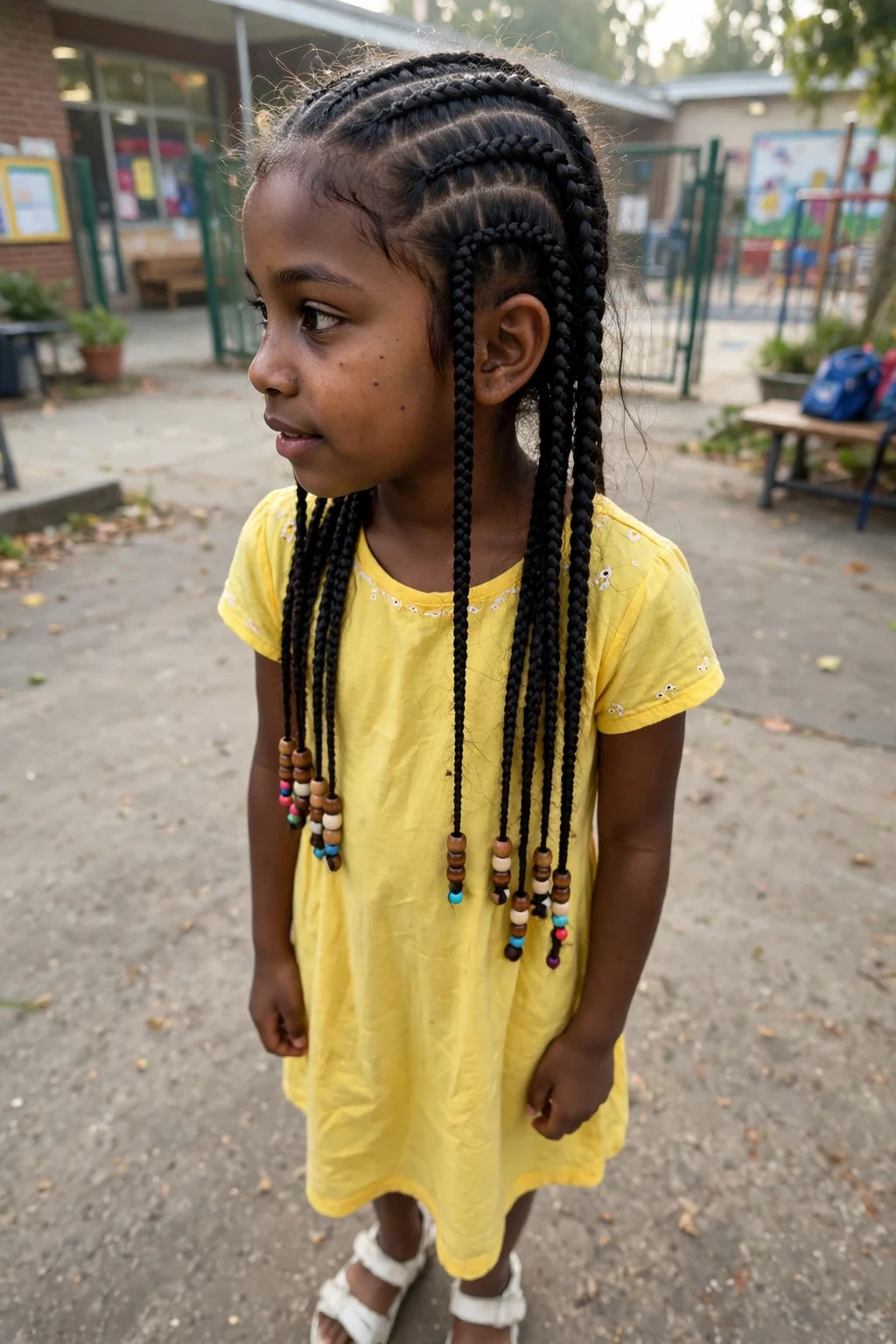
20. Low Side Bun
A low side bun is quietly elegant school style: the hair is swept to one side and coiled into a soft bun just behind the ear, giving an asymmetric shape that looks sophisticated without being fussy. The side placement adds gentle drama, the bun sits comfortably against the neck and the style suits older primary children who want to look a little more grown-up for concerts, presentations and special assemblies. Soft pieces left around the face keep it youthful rather than severe. The finish is smooth and soft, with the bun neatly coiled, a few gentle face-framing wisps and a polished shine that makes the style look carefully chosen. This style suits girls aged nine to eleven with medium to long hair, and it works on straight, wavy and curly textures once brushed smooth, flattering heart, oval and oblong faces because the side bun balances the features and draws the eye gracefully across.
To style, sweep the hair to one side, gather it low behind the ear, twist it into a bun and pin it securely, then loosen a few front pieces for softness. A boar-bristle brush, bobby pins and a light-hold spray are all you need, and the style takes about ten minutes. Maintenance is simple: the bun holds all day and brushes out at night, and trims every eight to ten weeks keep the ends neat for coiling. Grow-out only adds fullness to the bun. Choose a low side bun for concerts, awards assemblies and special school occasions, because it is elegant, comfortable and makes any outfit look instantly more polished. For busy families, the real test of a school hairstyle is whether it still looks presentable at pick-up time, and this one passes easily, holding its shape through wind, rain, hats and helmets while keeping the hair healthy and tangle-free underneath.
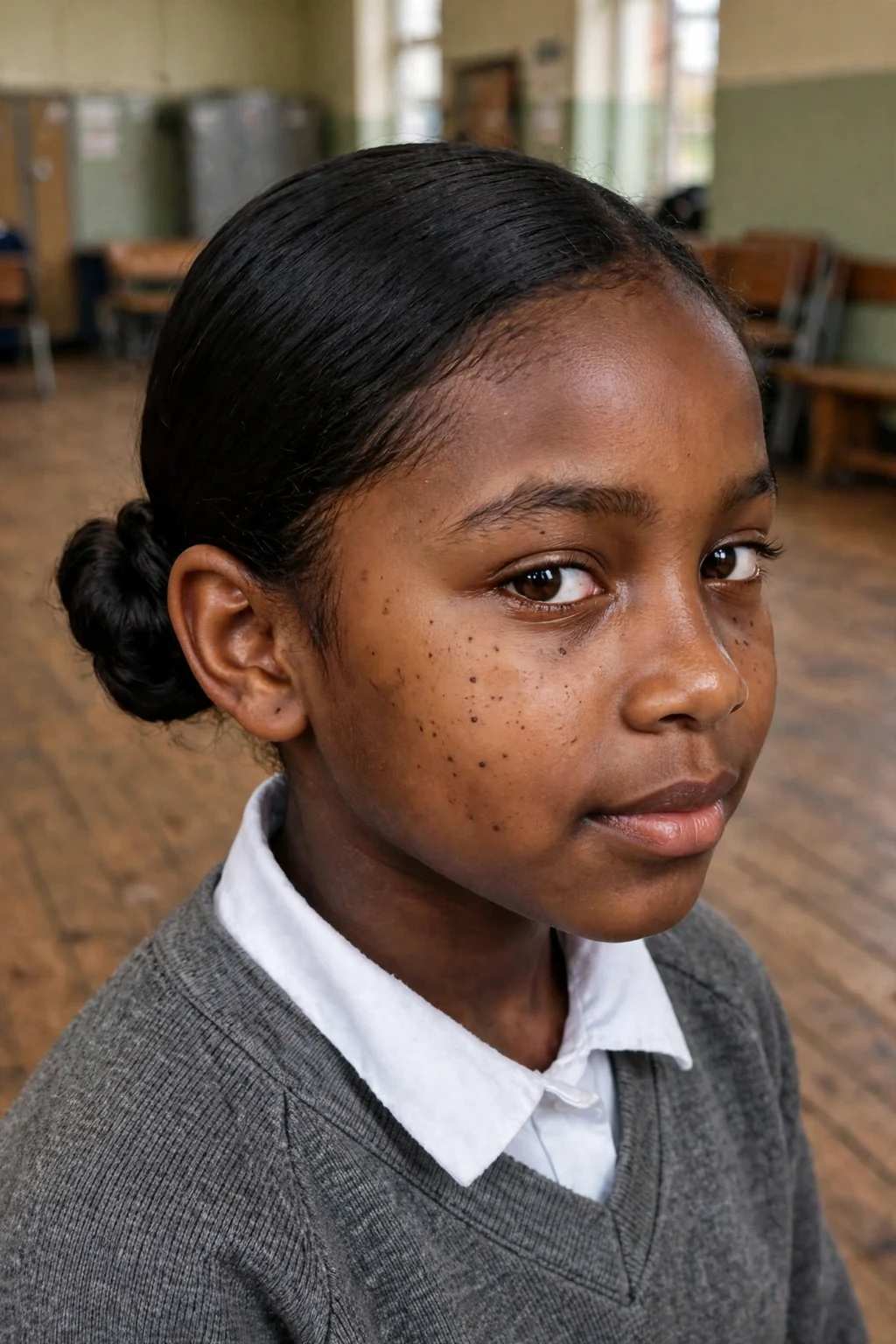
21. French Braid Ponytail
A French braid ponytail is the clever hybrid every active child needs: a French braid woven from the front hairline down to the crown, where it flows into a free-swinging ponytail at the back. The braid keeps the front completely secure and tidy, while the ponytail gives bounce and movement, making it perfect for PE, dance and long school days. It looks sporty and smart at once, and the combination of braid and tail is far more interesting than either style alone. The finish is neat at the front with a smooth, raised braid, and the ponytail hangs freely with a soft swing, giving a balanced look that is both controlled and playful. This style suits girls aged eight to eleven with medium to long hair, and it works on straight, wavy and lightly curly textures, flattering round, oval and heart-shaped faces because the braid pulls the front back cleanly while the tail adds length.
To style, French braid from the hairline to the crown, then gather all the hair into a ponytail and secure it firmly, smoothing the sides with a brush. A tail comb, a strong elastic and a little smoothing cream are all you need, and the style takes about ten minutes. Maintenance is easy: the braid and ponytail hold all day and brush out at night, and trims every eight to ten weeks keep the tail full and the braid neat. Choose this style for PE days, dance classes and busy school schedules, because it keeps the front perfectly tidy while letting the ponytail swing freely behind. Comfort matters just as much as looks for school hair, so always check that elastics are snug but never tight, that pins sit flat against the head, and that your child can run, jump and lie back on a reading cushion without feeling a single pull or pinch.
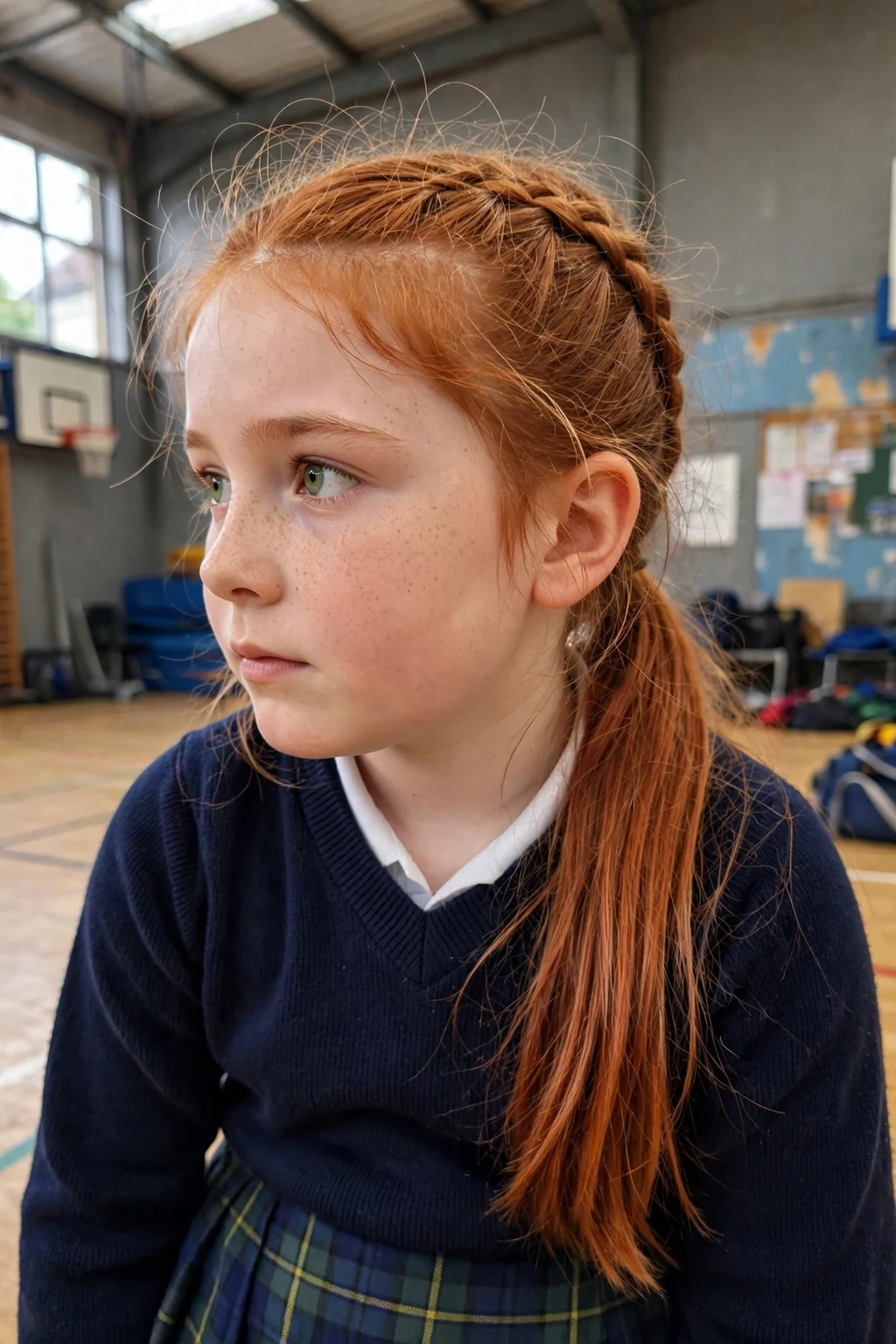
22. Curly Afro Puff
A curly afro puff is big, beautiful and full of joy: all the hair is gathered up high into one large, round puff that crowns the head like a cloud, letting natural curls spring out in a glorious halo. The shape is bold and generous, the curls create wonderful volume and texture, and the style celebrates natural hair in all its glory. It is comfortable, practical and makes a wonderful statement on any school day. The finish is soft and voluminous, with defined curls, a light sheen from curl cream and a puff that holds its round, cloud-like shape without feeling tight at the hairline. This style suits girls aged five to nine with naturally curly, coily or afro-textured hair, and it flatters round, oval and square faces because the high puff lifts the whole face and balances the features beautifully. The overall effect is tidy, cheerful and perfectly suited to busy school mornings.
To style, moisturise the hair with leave-in conditioner and curl cream, gather it high with a soft elastic or puff cuff, then fluff the curls gently with your fingers to shape the puff. A wide-tooth comb, curl cream and a gentle elastic are the key tools, and the style takes about ten minutes. Maintenance is gentle: the puff can be refreshed with water and cream the next morning, and a satin bonnet at night keeps the curls defined. Trims every ten to twelve weeks keep the shape even and the curls healthy. Choose a curly afro puff when you want a style that is proud, joyful and completely natural, because it celebrates curls, survives playtime and looks magnificent all day long. A small morning kit kept by the mirror makes this style even easier: a brush, a few spare elastics, a couple of clips and a bottle of detangling spray mean that even a rushed morning ends with neat, happy hair and a child who feels ready for anything.
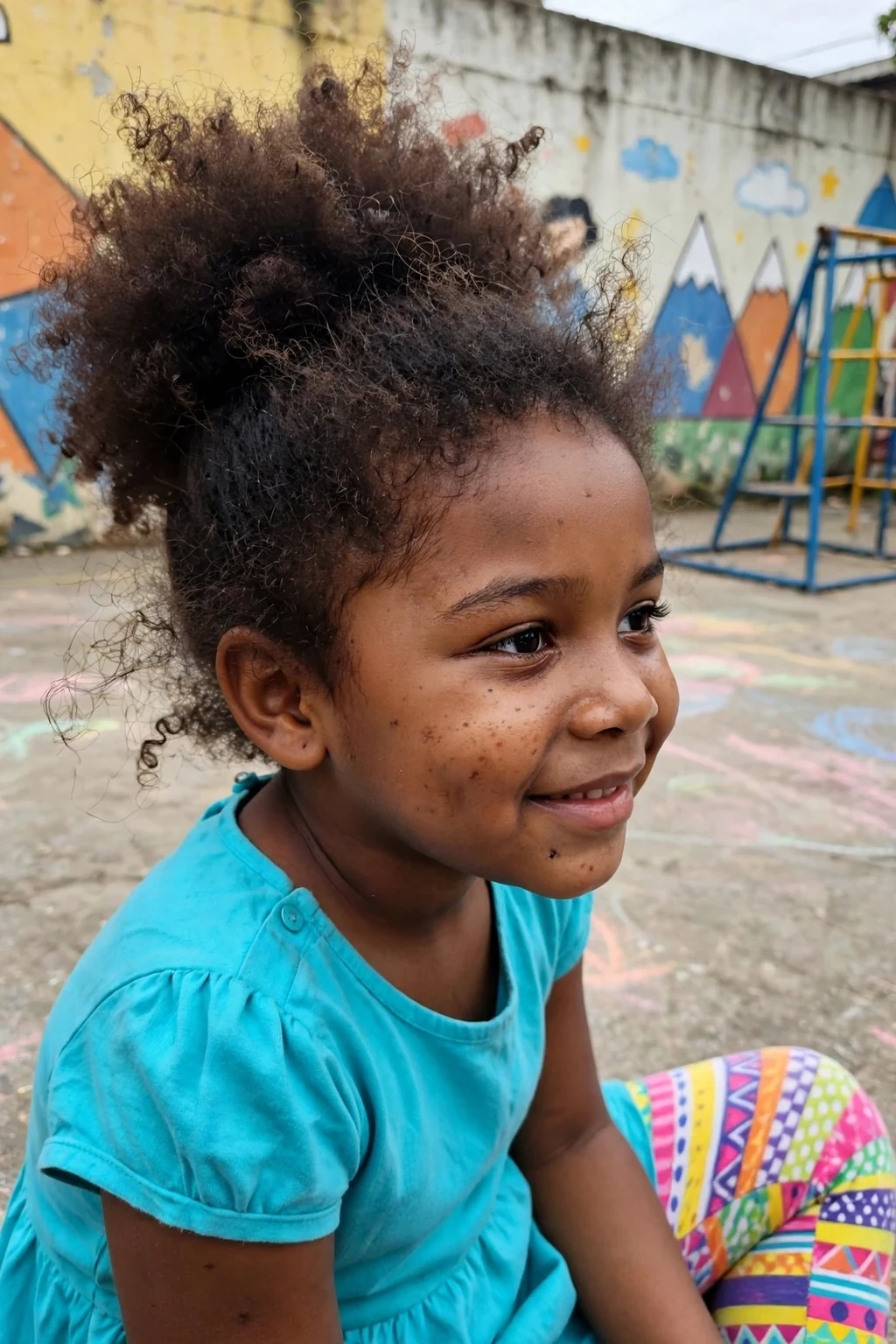
23. Twisted Crown Braid
A twisted crown braid is a softer cousin of the braided crown: two rope twists started at either side of the head and wrapped around to meet at the back, forming a gentle halo that keeps hair completely off the face. The twists look elegant and intricate, yet they are much quicker than a full braid crown, which makes them practical for school mornings. The style suits formal occasions and ordinary days alike, and it frames the face like a delicate wreath. The finish is smooth and rope-like, with the twists sitting neatly against the head, a soft shine and a halo shape that holds securely with pins all day. This style suits girls aged seven to eleven with medium to long hair, and it works on straight, wavy and curly textures once brushed smooth, flattering oval, heart and round faces because the halo draws attention upward and frames the features gently.
To style, part the hair down the middle, twist each side from the temple back toward the nape, cross the twists at the back and pin them securely. A tail comb, styling cream and several bobby pins are all you need, and the style takes about twelve minutes. Maintenance is simple: the crown holds all day and brushes out at night, and trims every eight to ten weeks keep the ends neat for twisting. Grow-out only makes the twists longer and easier. Choose a twisted crown braid for assemblies, school photographs and days that deserve something special, because it is elegant, secure and far easier than it looks. Children who help choose their own school hairstyle are far more likely to sit happily while it is done and to wear it proudly all day, so offer this as one of two or three options and let them make the final call before the school week begins.
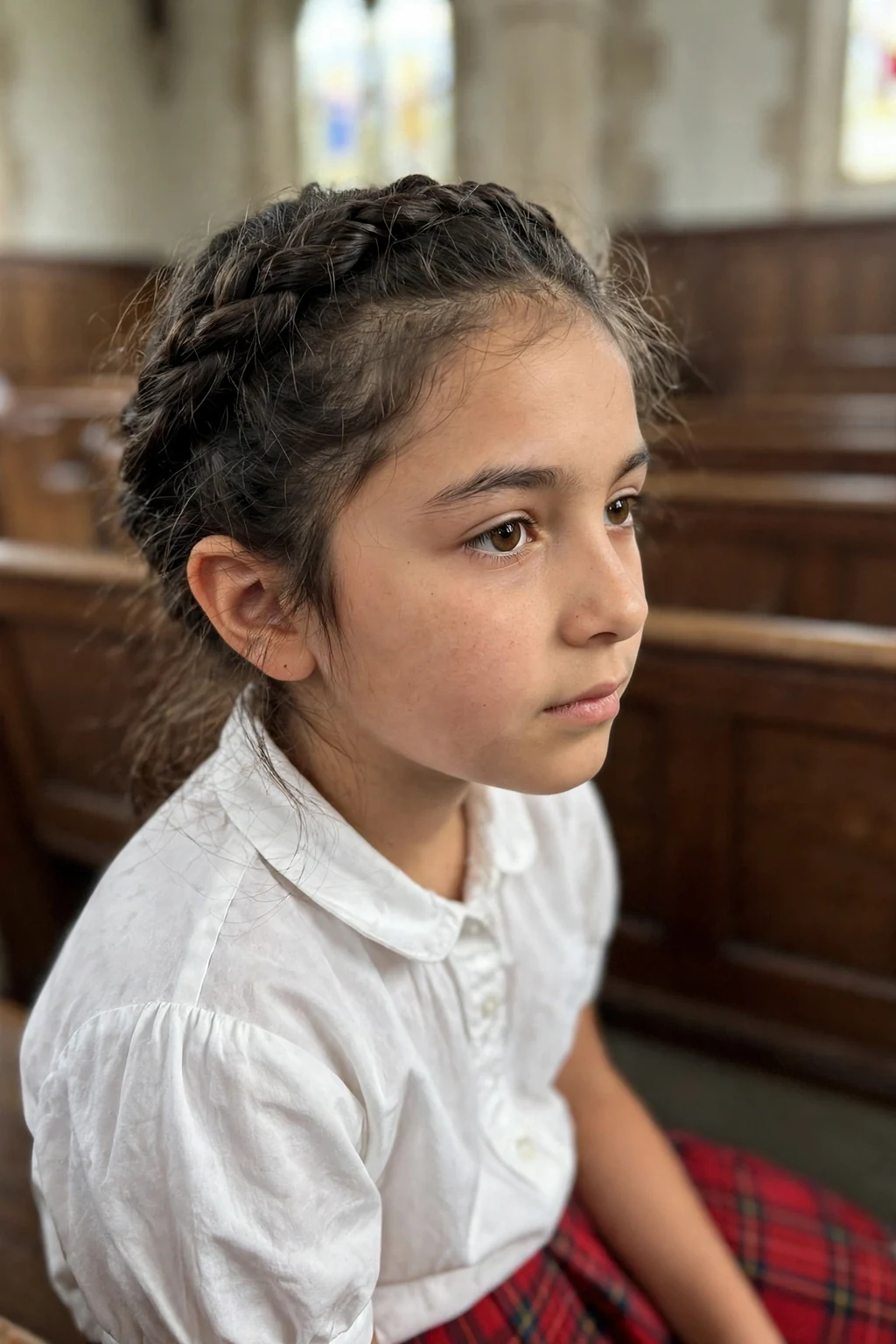
24. Short Pixie with Side Sweep
A short pixie with a side sweep is confident, cool school style: hair cut short at the back and sides with a longer sweeping fringe across the forehead, giving a modern shape that is easy to wear and full of personality. The sweep softens the short cut, the shape frames the eyes beautifully and the style needs almost no morning effort, which children and parents both love. It is the perfect choice for active children who want short hair that still looks stylish. The finish is soft and piecey, with gentle texture on top, a smooth side sweep and a light, natural shine that makes the pixie look fresh and modern rather than severe. This style suits girls aged six to eleven with straight or wavy hair, and it flatters oval, heart and diamond faces because the side sweep adds asymmetry that balances the features and draws attention to the eyes.
To style, brush the fringe to one side, add a tiny amount of light styling cream for texture and let the rest fall naturally. A small brush and a pea-sized amount of cream are all you need, and the style takes under two minutes. Maintenance is regular: the pixie needs a trim every five to six weeks to keep its shape, but daily styling is almost effortless. Grow-out transitions gracefully into a short bob. Choose this pixie for active children who love short hair, because it is wash-and-go, full of character and always looks smart with zero morning fuss, and because short hair dries quickly after swimming lessons and never gets caught in zips, backpack straps or playground equipment. Because school days are long and unpredictable, the best styles are the forgiving ones, and this one can be tidied in seconds with a quick brush or a re-secured elastic, so a windy walk to school never has to mean a bad hair day.
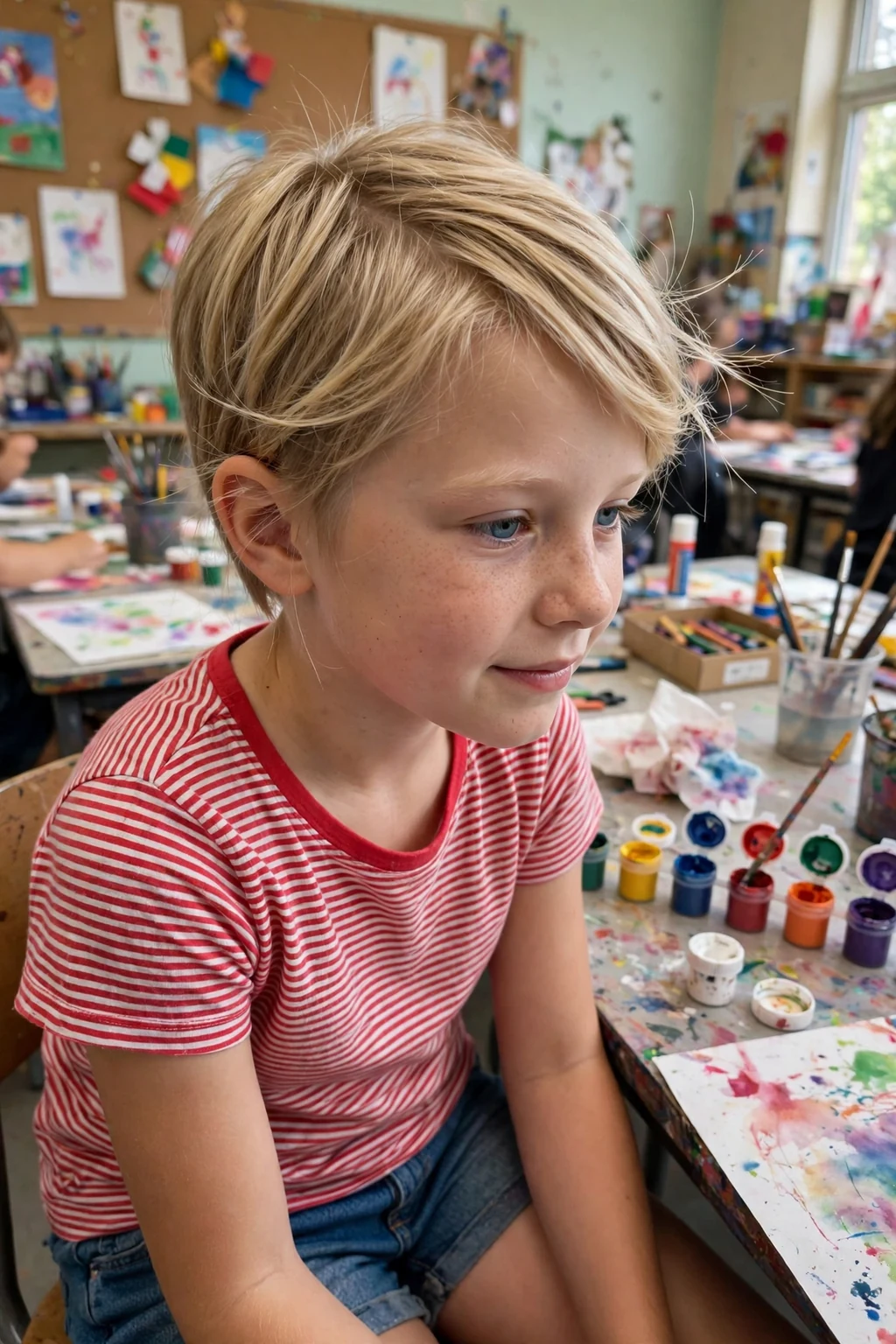
25. Long Layers with Headband
Long layers with a headband are the classic long-hair school look: hair cut in soft, flowing layers that fall past the shoulders, held back from the face by a comfortable headband that adds colour and keeps the front tidy for lessons. The layers give movement and lightness so long hair never looks heavy, while the headband provides the practical control school days demand. It is pretty, practical and timeless, and it suits children who love their long hair exactly as it is. The finish is smooth and flowing, with the layers falling in soft steps, a healthy shine and a headband that sits neatly without slipping, giving a polished yet relaxed overall look. This style suits girls aged eight to eleven with long hair, and it works on straight, wavy and lightly curly textures, flattering heart, oval and oblong faces because the layers frame the face while the headband opens it up.
To style, brush the layers smooth, add a little leave-in conditioner for shine and slide on a comfortable headband, adjusting it so it sits just behind the hairline. A paddle brush, leave-in conditioner and a non-slip headband are all you need, and the style takes about three minutes. Maintenance is easy: the layers need a trim every ten to twelve weeks to keep their shape, and the style brushes out completely at night. The headband can be swapped daily to match different outfits. Choose long layers with a headband when your child loves long hair but needs it managed for school, because it is the simplest way to keep long hair beautiful, tidy and out of the way. Parents love styles like this because they survive the journey to school, a full morning of lessons, lunch in the playground and an afternoon of activities without needing rescue, which means fewer fraught mornings and a child who arrives home looking almost as neat as when they left.
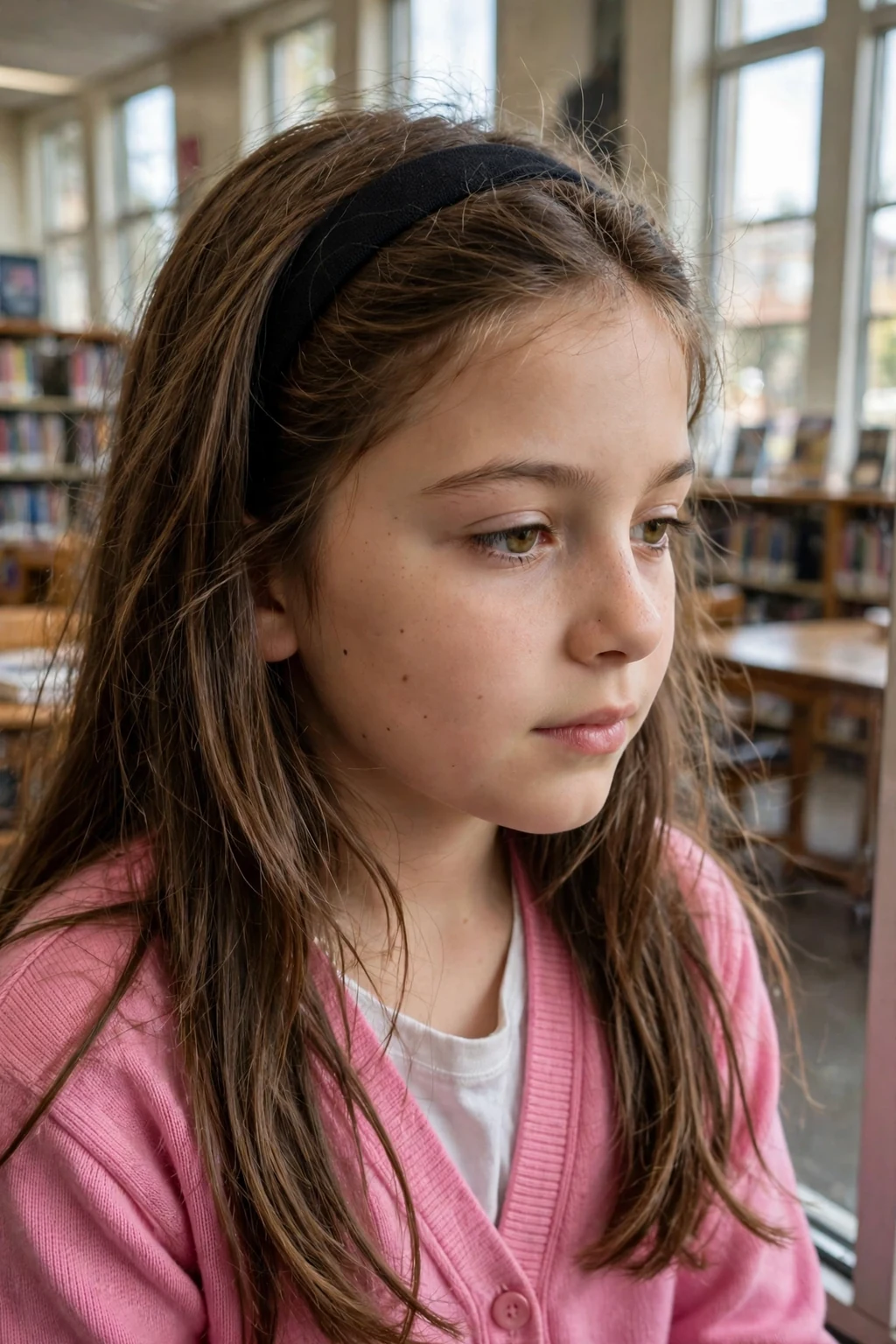
26. Side French Braid into Low Bun
A side French braid into a low bun is one of the smartest school hairstyles a child can wear, combining the security of a braid with the polish of a bun in a single neat finish. The braid begins above one ear and travels diagonally across the back of the head, gathering hair evenly as it goes, before the remaining length is coiled into a low bun at the nape of the neck. The result is a smooth, symmetrical silhouette with no loose strands falling into the face, which makes it ideal for long school days, assemblies and physical education alike. It looks tidy from every angle, photographs beautifully on picture day, and keeps hair completely out of the way during reading, writing and sport. For a softer finish, a few face-framing wisps can be left loose around the temples, or the bun can be dressed with a small scrunchie or a plain clip in school colours for non-uniform days. The diagonal line of the braid also adds gentle volume at the crown, which suits children with finer hair because it makes the style look fuller without any backcombing or heat styling.
This style suits oval, round and heart-shaped faces particularly well, and it works best on medium to long hair that is straight, wavy or lightly textured, for children aged around six to twelve. To style it, start with damp, detangled hair and a little smoothing cream, braid loosely enough to stay comfortable all day, then twist the tail into a bun and secure it with pins and a snag-free elastic. A light mist of flexible hairspray keeps flyaways in check without stiffness. The bun can be redone each morning in under ten minutes with practice, and a trim every ten to twelve weeks keeps the ends neat so the braid lies flat and the bun stays compact. Parents often find this style becomes quicker with practice, and older children can learn to braid the side section themselves before an adult finishes the bun. Because the hair is fully secured, there is no need for midday fixes, and at bedtime the bun can simply be released and the hair loosely plaited overnight, which reduces tangles and keeps the next morning's styling much easier.
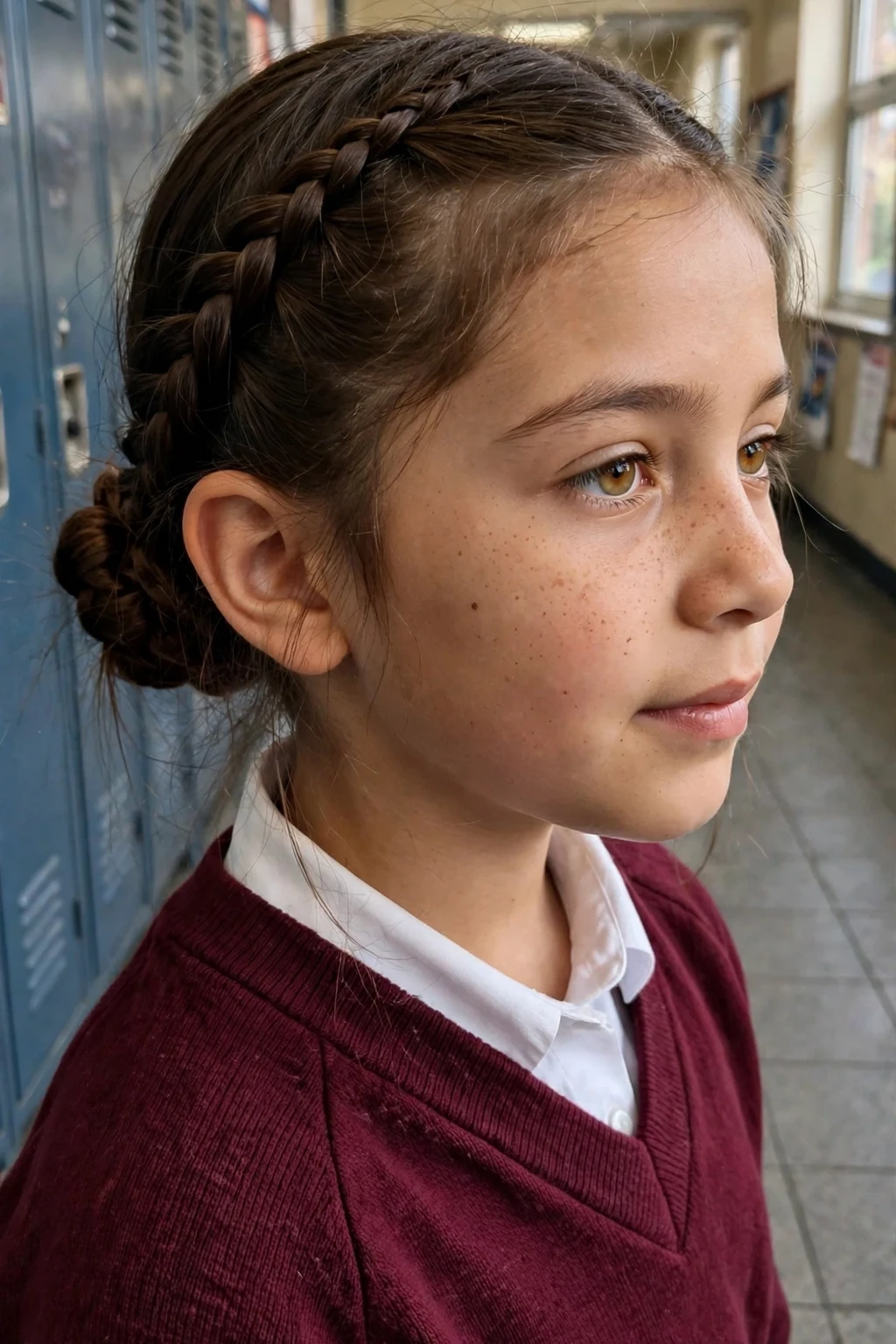
27. Double Rope Twist Ponytails
Double rope twist ponytails are a playful twist on classic pigtails, with each side twisted into a neat rope that holds its shape far better than loose hair. Each ponytail is divided into two sections that are twisted in the same direction and then wound around each other, creating a rope effect with a clean, spiralled texture that looks intricate but is surprisingly simple to achieve. The style sits high enough to keep hair off the neck and shoulders, yet the twists stop the ends from tangling during play, making it a practical choice for active children who still want a style with personality. Small elastics at the ends and a centre or side parting complete a balanced, cheerful look. The ropes can be finished with small scrunchies, beads or ribbon ties for birthdays and school events, or left completely plain for a tidy everyday look that still stands out. Because each twist is self-contained, the style also works well under hats and hoods in colder months, springing back into shape when the hat comes off instead of flattening like loose hair often does.
This hairstyle flatters round, oval and square face shapes and works beautifully on straight, wavy and curly hair of medium length or longer, for children aged about five to eleven. To create it, part the hair down the middle, secure each side into a ponytail, then twist and wind each section, finishing with a small elastic and a drop of smoothing serum to tame frizz. The twists can be refreshed in minutes each morning and they tend to survive the whole school day better than unbraided pigtails. A trim every eight to ten weeks prevents split ends from unravelling the rope effect, and sleeping with the twists loosely braided helps them last overnight. To keep the twists smooth, a tiny amount of serum on the palms before winding helps control frizz without weighing young hair down. If one twist loosens during the day, it can be re-wound in under a minute, and the style is gentle enough for daily wear because it uses no heat and distributes tension evenly across the two ponytails rather than pulling at one point.
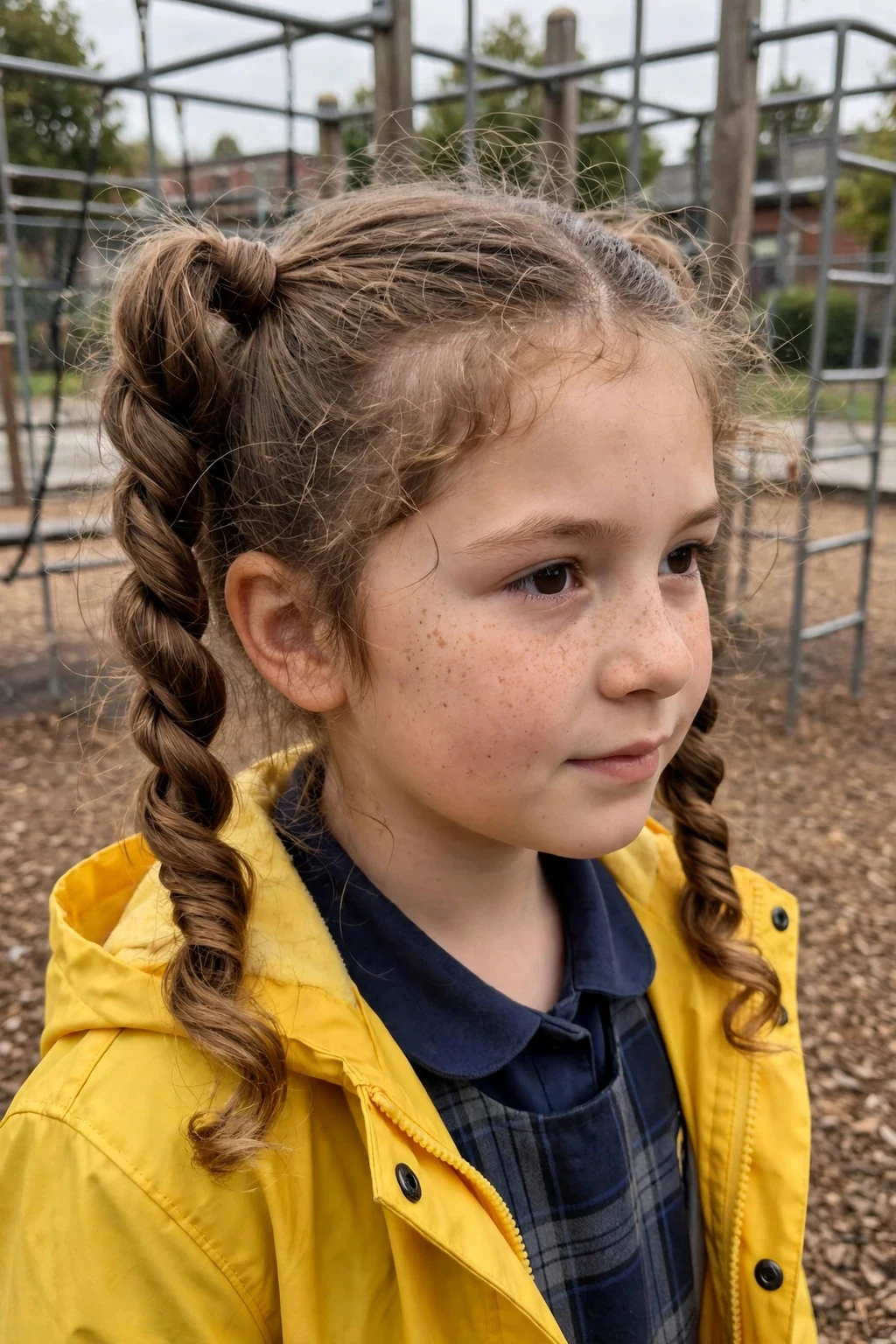
28. Criss-Cross Front Braids
Criss-cross front braids add a touch of detail to the front of the hair while keeping the rest of the style simple and school-ready. Two small braids are worked from either side of the front hairline and crossed over each other at the crown, like laces, before being gathered into a ponytail, bun or loose length at the back. The crossed pattern draws the eye and looks far more complicated than it really is, giving an everyday ponytail a polished, put-together finish that still meets school dress codes. Because the front sections are secured away from the face, nothing falls forward during lessons, and the style stays neat through lunch, playtime and after-school clubs. The crossed braids can be made chunkier for a bolder effect or kept slim and delicate for a subtler finish, and they pair equally well with a high ponytail, a low bun or hair worn loose. This flexibility makes the style a useful bridge between casual and smart looks, so the same technique can carry a child from an ordinary Monday to a school concert with only a change of finishing accessory.
This look suits most face shapes, especially oval and heart-shaped faces, and it works on straight, wavy and lightly curly hair from chin length upwards, for children aged around five to twelve. To style it, part the hair, braid two slim front sections with a little styling cream for grip, cross them at the crown and pin them in place before finishing the back as desired. It takes only a few extra minutes on top of a normal ponytail and holds well with a light hairspray. Maintenance is minimal: a trim every ten to twelve weeks keeps the front sections even, and the braids can be redone daily without stressing the hair. Because only the front sections are braided, the style is comfortable for children who dislike having all their hair pulled back tightly. The braids also protect the delicate front hairline from breakage caused by repeated brushing, and they can be practised on a doll or a willing adult first, which helps younger children feel confident about sitting still while the style is created.

29. Low Chignon with Braided Wrap
A low chignon with a braided wrap is a graceful, grown-up style that still feels completely right for school, offering a neat alternative to a plain bun. The hair is gathered low at the nape and coiled into a smooth chignon, and a slim braid taken from one side is wrapped around its base, hiding the elastic and adding a delicate, hand-finished detail. The finished shape is compact, elegant and extremely secure, so it will not loosen during a busy day of lessons, choir practice or dance class. It also pairs beautifully with school uniforms and formal occasions such as assemblies, concerts and prize-giving days, when a child wants to look especially smart. A ribbon or a slim velvet band can be wrapped alongside the braid for special occasions, while the plain version is smart enough for the strictest uniform policies. The low position of the chignon also means it sits comfortably against chair backs and headrests on school trips, unlike high buns that can press awkwardly when a child leans back during a coach journey or a long assembly.
This style is most flattering on oval, round and long face shapes and works best on medium to long hair that is straight or wavy, for children aged around seven to twelve. To create it, smooth damp hair back with a light cream, form the chignon with pins, then braid a small side section and wrap it around the base, tucking the end underneath. A flexible-hold spray keeps the surface smooth without making it stiff. The chignon can be styled fresh each morning in about ten minutes, and a trim every ten to twelve weeks keeps the wrap braid even and the chignon tidy as the hair grows out. For children new to updos, practising the chignon at the weekend makes weekday mornings far less rushed, and a small mirror helps them check the back themselves. The style is kind to young hair because it avoids tight pulling at the hairline, and releasing it at the end of the day leaves gentle waves that can be brushed out or worn loose the following morning.
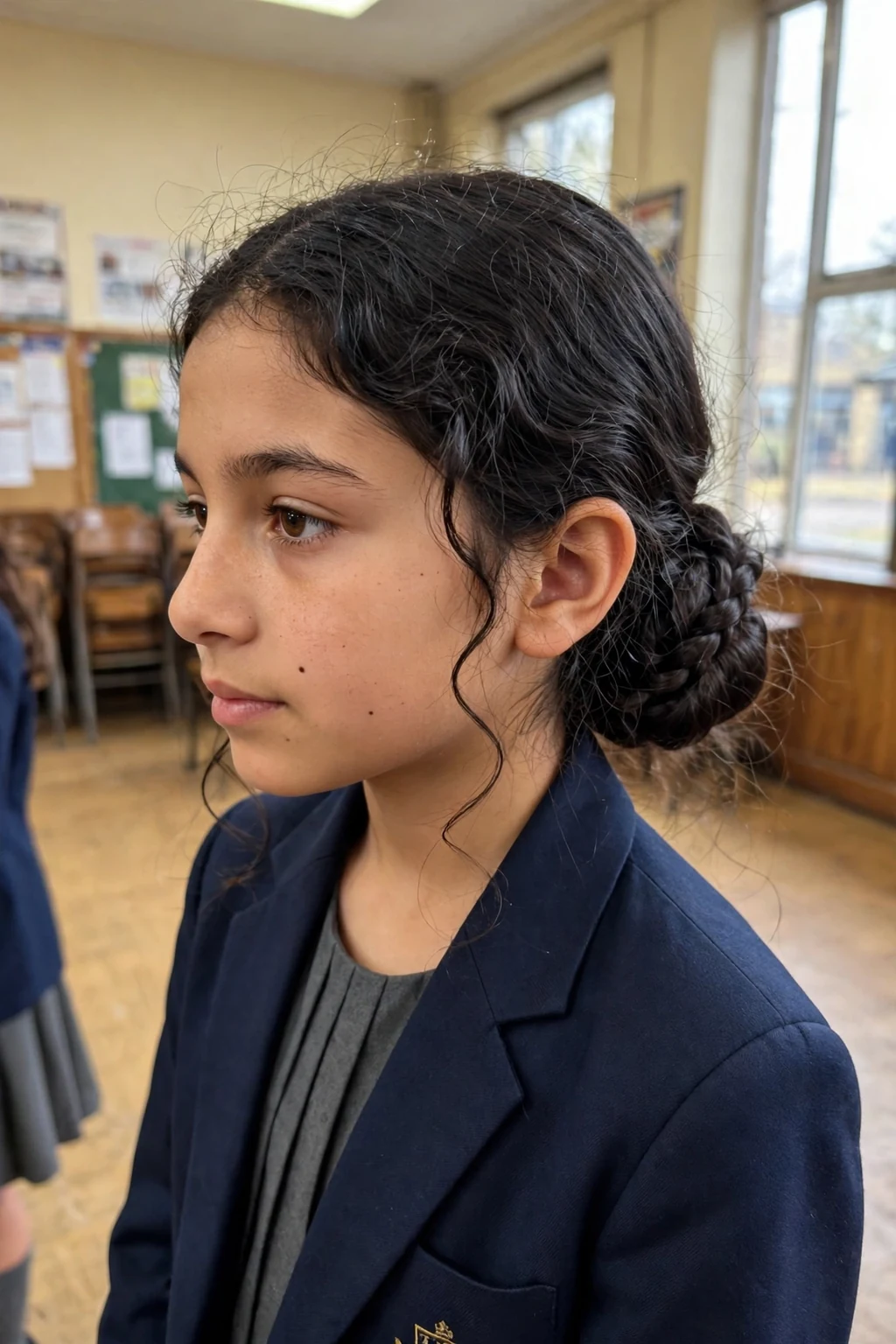
30. Half-Up Double Mini Buns
Half-up double mini buns are a fun, youthful style that keeps the front hair neatly out of the face while leaving the rest of the length free to move. Two small sections from the top of the head are twisted or coiled into tiny buns on either side of the crown, creating a playful, symmetrical shape that instantly lifts an otherwise simple loose style. The buns hold the fringe and face-framing layers back during lessons, so children can read, draw and play without constantly pushing hair aside, while the loose hair underneath keeps the look soft and relaxed rather than severe. It is cheerful, quick to style and a firm favourite for both ordinary school days and dress-down Fridays. The mini buns can be positioned higher for a playful look or slightly lower for a calmer finish, and they look charming with small clips, star pins or a thin headband on dress-down days. Because the buns use only the top layer, the style also works well on hair that is still growing out, giving shorter layers a purpose instead of letting them fall forward over the eyes during class.
This hairstyle suits round, oval and heart-shaped faces and works on straight, wavy and curly hair of shoulder length or longer, for children aged about five to eleven. To style it, part the top section down the middle, twist each side into a small bun and secure with mini elastics and pins, leaving the lower hair loose and lightly brushed. A little detangling spray keeps the loose length smooth, and the buns can be repositioned in seconds if they loosen. Trims every eight to twelve weeks keep the layers tidy, and because the buns use only the top hair, the style is gentle on young hair and easy to vary with clips or ribbons. This is an ideal first updo for younger children because it is quick, painless and easy to adjust if a bun feels uneven. The loose lower hair can be brushed through at lunchtime without disturbing the buns, and at night the style comes out with a simple shake, leaving soft bends that make the next day's loose waves look naturally styled rather than flat.
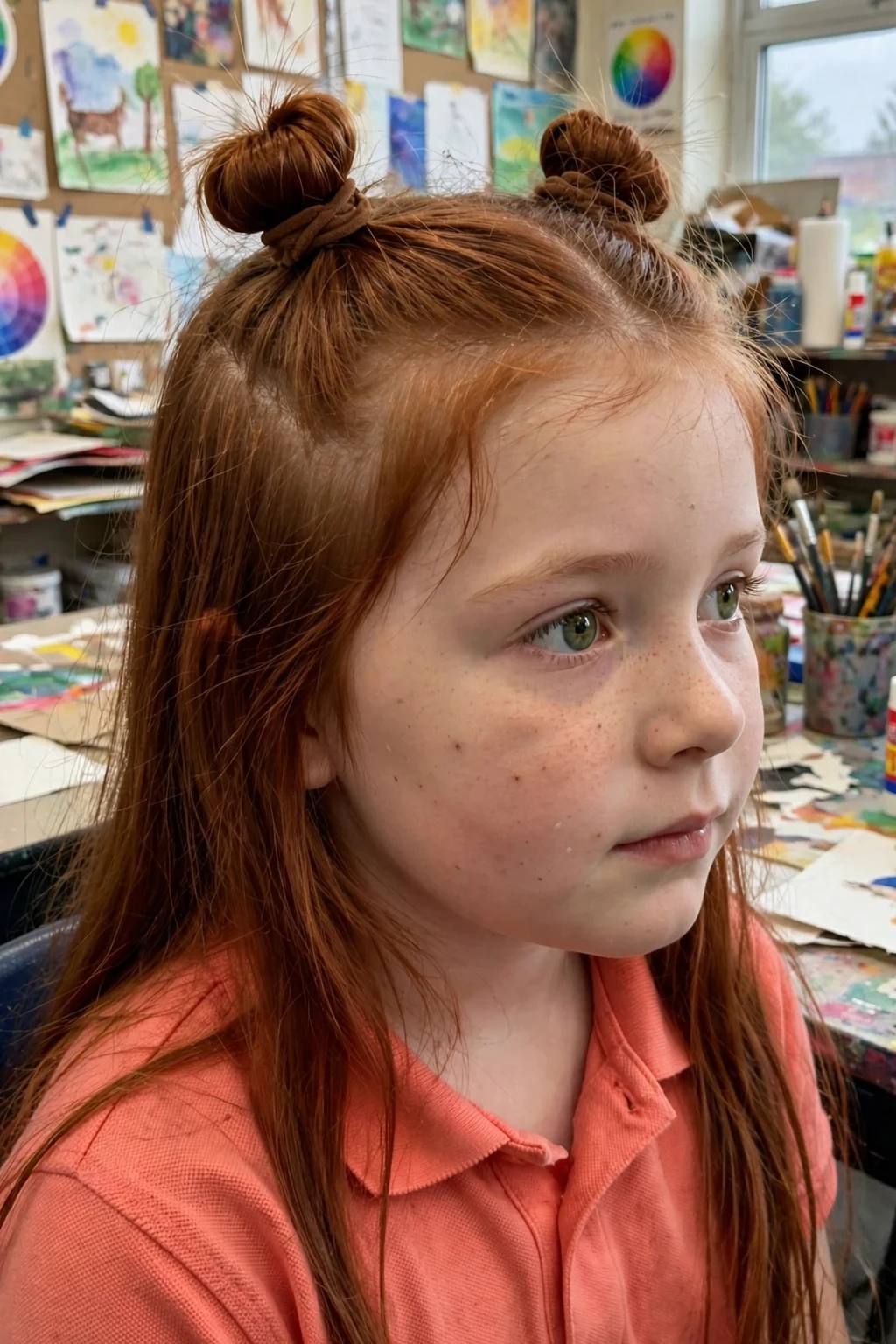
31. Sleek Middle-Part Low Pigtails
Sleek middle-part low pigtails are the tidy, understated cousin of high pigtails, offering a calm, symmetrical look that suits stricter school dress codes. The hair is parted precisely down the centre and gathered into two low ponytails that sit just behind the ears, with the lengths smoothed flat so the finish is glossy and controlled rather than bouncy. The style frames the face evenly, keeps hair completely clear of the shoulders and collar, and stays put through lessons, lunch and quiet reading time. It is also one of the fastest neat styles a parent can create on a busy morning, making it a reliable everyday option for children who prefer a simple, classic look. For a slightly softer version, the very ends can be curled gently with fingers or left to flick out naturally, while a plain headband can be added on days when the fringe needs extra control. The low, balanced shape also works well beneath school hats and caps, and it keeps long hair from catching on backpack straps, coat zips and chair backs, which is a frequent cause of tangles on busy school mornings.
This style flatters oval, round and heart-shaped faces and works best on straight or lightly wavy hair of medium length or longer, for children aged around five to twelve. To achieve the sleek finish, brush damp hair with a smoothing serum, create a sharp centre part with a comb, and secure each side low with snag-free elastics, smoothing any bumps with a soft brush. A light hairspray controls flyaways without stiffness. The pigtails take only a few minutes each morning, and a trim every eight to ten weeks keeps the ends blunt and even so the sleek silhouette stays sharp as the hair grows. A wide-tooth comb used on wet hair before brushing helps achieve the smooth finish without pulling, and a pea-sized amount of serum is usually enough for the whole head. Because the style is symmetrical and simple, children can learn to part and secure one side themselves, building independence, and the low ponytails are easy to redo after physical education without a full restyle.
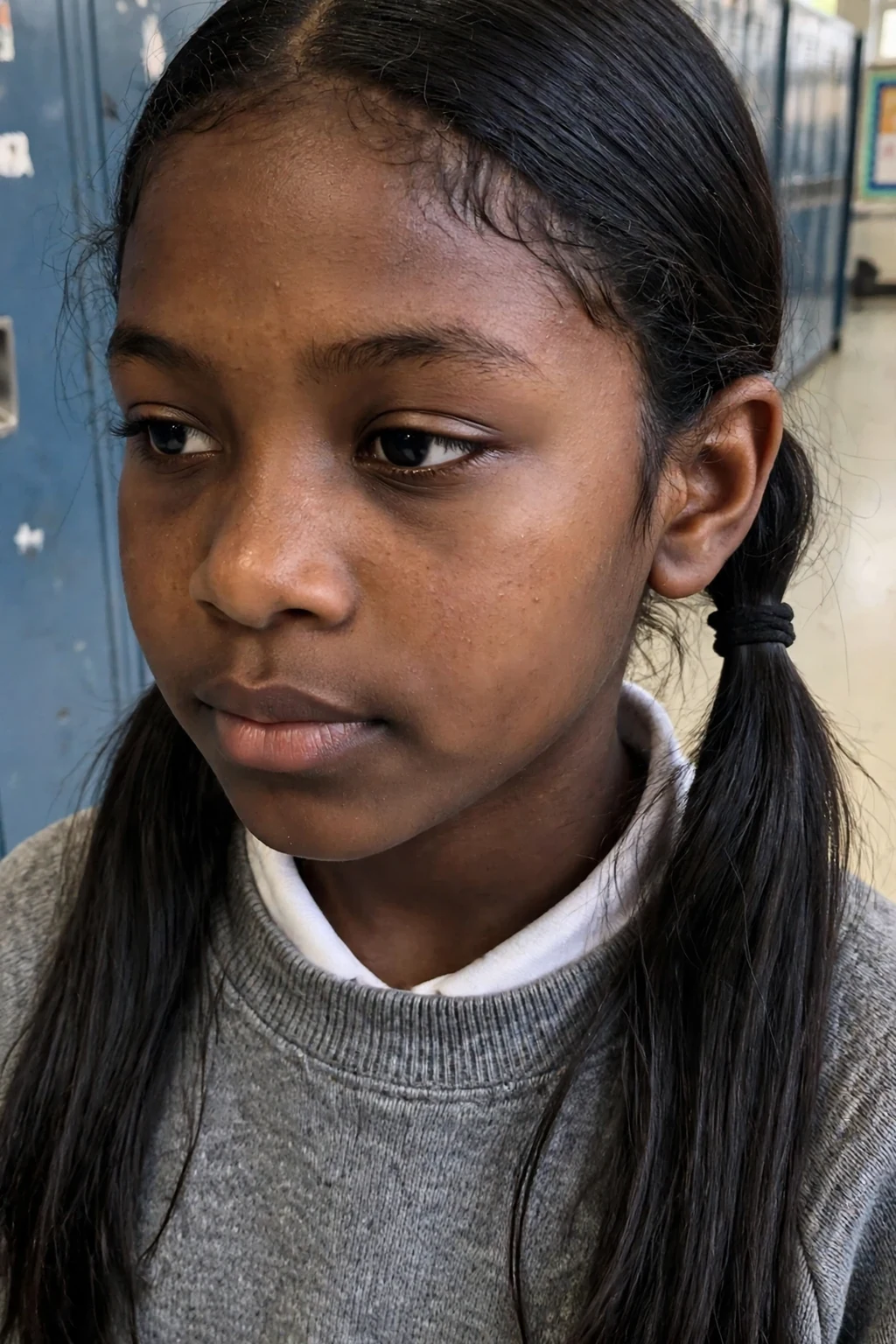
32. Braided Headband with Flowing Hair
A braided headband with flowing hair is a pretty, practical way to wear hair down at school without it falling into the face. A single braid is worked across the front of the head, from one ear to the other, acting as a natural headband that holds back the fringe and front layers, while the remaining hair falls freely down the back in soft waves or straight lengths. The effect is romantic and polished, yet the style is sturdy enough for a full school day because the braid anchors the front hair securely. It works beautifully for assemblies, school photographs and ordinary classroom days alike, and it needs no accessories to look complete. The flowing length can be worn straight for a sleek finish, lightly waved for extra movement, or gathered into a loose low ponytail at the end of the day when the braid alone is no longer enough. A few small flowers or a plain clip can be added to the braid for school plays and photographs, although the braid itself is decorative enough that the style never looks unfinished on an ordinary day.
This hairstyle suits oval, round and square face shapes and works on straight, wavy and lightly curly hair of shoulder length or longer, for children aged around six to twelve. To style it, take a section from behind one ear, braid it across the hairline and pin it behind the opposite ear, then brush the remaining hair smooth and add a little shine serum. The braid takes only a few minutes once practised and holds well with a light spray. A trim every ten to twelve weeks keeps the flowing length healthy, and the braid can be redone each morning without heat, making it a gentle, low-maintenance choice for young hair. This style is particularly helpful for children growing out a fringe, because the braid sweeps the shorter layers safely back while they grow. It also avoids the headaches some tight headbands can cause, since the braid distributes pressure evenly, and the whole look can be created without any heat tools, which keeps young hair healthier over the course of a school term.
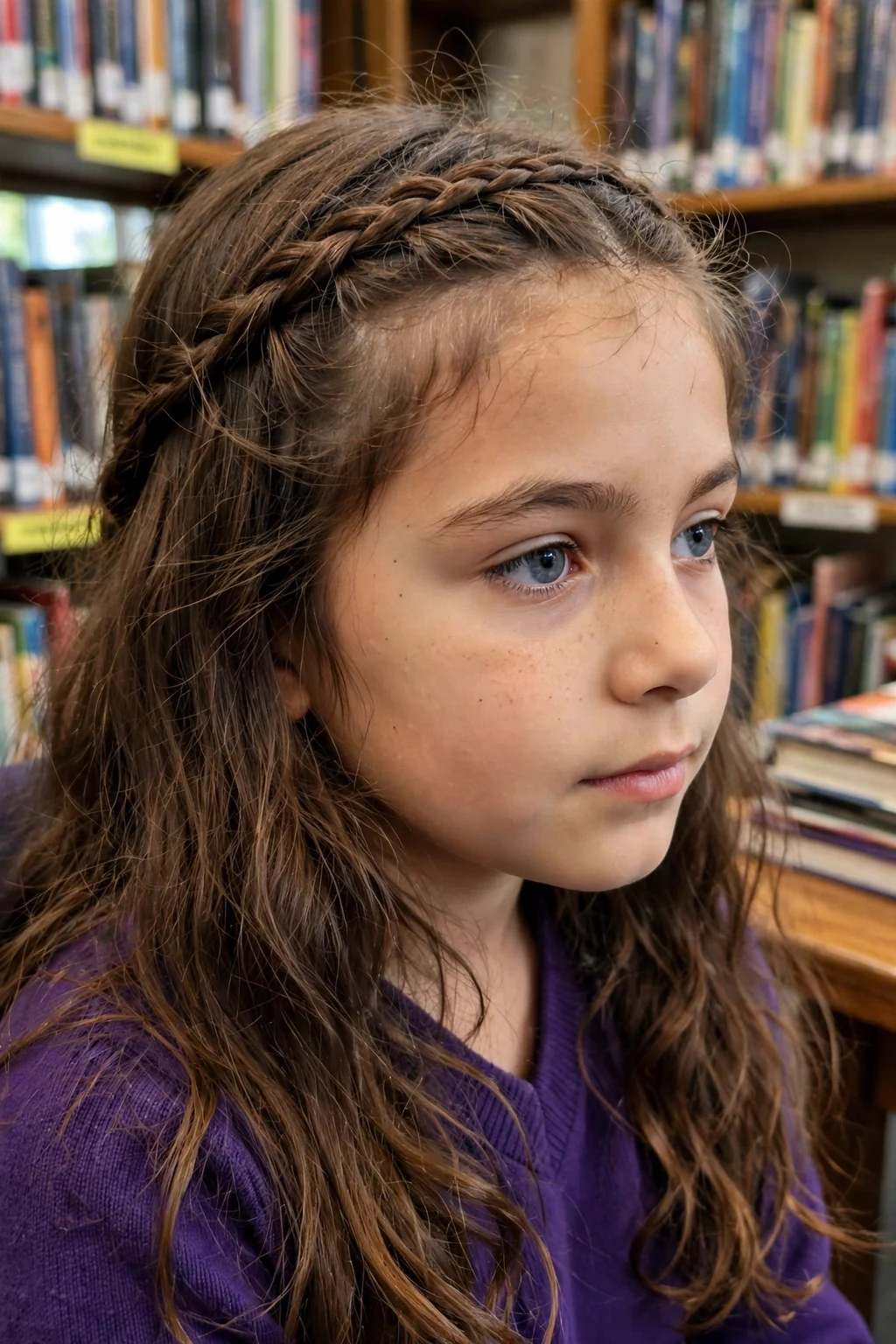
33. Box Braids with Colorful Clips
Box braids with colorful clips are a joyful, protective school style that combines neat, long-lasting braiding with a splash of personality. The hair is parted into small square sections and braided from root to tip, creating uniform, tidy plaits that fall evenly around the shoulders and stay in place for weeks. Bright clips, beads or bands added near the front or along a few braids let each child personalise the look in school colours or favourite shades, while the braids themselves keep natural hair protected from daily brushing, tangling and playground friction. It is a confident, low-effort style for busy school weeks when mornings need to be as simple as possible. Clips can be rotated through the week so the style feels fresh without rebraiding, and school-coloured beads or bands let children show team spirit on sports days. The braids can also be gathered into a high ponytail, a bun or two side ponytails for physical education, giving one protective style several different looks across the weeks it is worn, which children appreciate.
This style suits all face shapes and is designed for textured, coily and curly hair, working beautifully for children aged around five to twelve. Braiding is best done on clean, moisturised hair with a little braid cream, and the scalp should never feel tight, so braids should be installed with comfortable, gentle tension. Once in place, the braids need only a light scalp oil and a satin scarf or bonnet at night, and they can last two to four weeks with care. When the braids are removed, a deep conditioning treatment and a trim every few months keep the natural hair healthy, strong and ready for the next protective style. Parents should check that the braids feel comfortable at the hairline and that the child can move their eyebrows freely, since comfortable tension is essential for healthy hair. A silk or satin pillowcase, or a bonnet at night, reduces frizz and helps the braids last longer, and washing can be done gently with diluted shampoo while the braids are still in place.
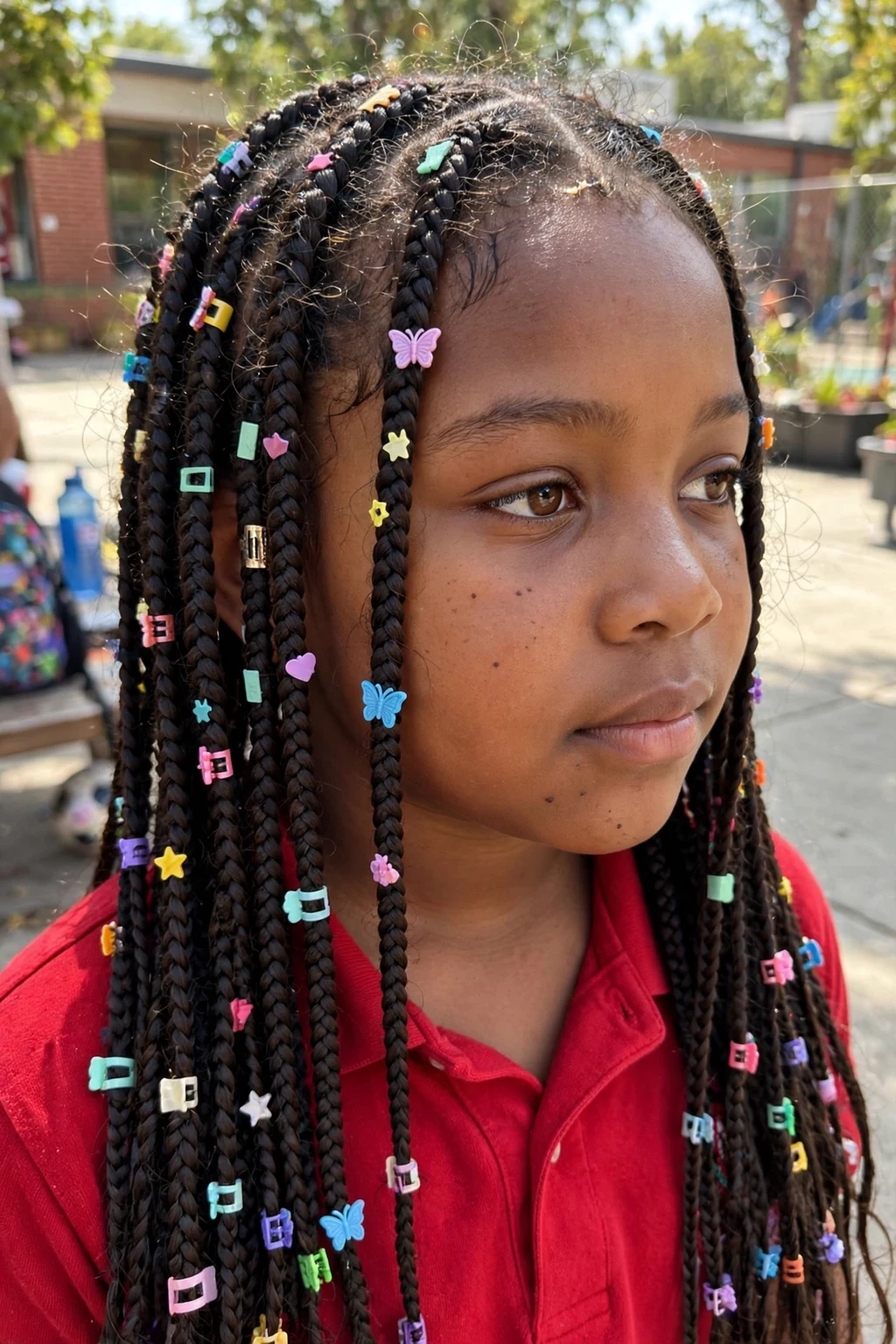
34. Twisted Side Ponytail
A twisted side ponytail is a soft, elegant variation on the everyday ponytail, with a gentle twist that sweeps the hair gracefully over one shoulder. One side of the hair is twisted back from the temple and blended into a low ponytail worn to the side, creating a smooth, diagonal line across the back of the head and a length that falls neatly in front of the shoulder. The twist adds just enough detail to make the style feel special for school events and photographs, while the ponytail itself keeps hair secure and comfortable all day. It is a lovely choice for children who like wearing their hair down but need it controlled for lessons and play. The ponytail can be worn over either shoulder, and the twist can be made looser for a relaxed weekend feel or tighter for a sleeker school finish. Small decorative elastics or a scrunchie at the base add colour without bulk, and the side position means the length does not catch under backpack straps, which helps the style stay smooth from morning assembly through to home time.
This look flatters oval, round and heart-shaped faces and works on straight, wavy and lightly curly hair of medium length or longer, for children aged around six to twelve. To style it, part the hair to one side, twist the larger section back towards the opposite ear, gather everything into a side ponytail and secure with a snag-free elastic, smoothing the twist with a little cream. The style takes about five minutes and can be refreshed at lunchtime if needed. A trim every ten to twelve weeks keeps the ends tidy so the twist lies flat, and the gentle tension makes it a comfortable, hair-friendly option for daily wear. Children who find centre-parted styles uncomfortable often prefer this side-swept version because it feels more natural and less severe. The twist also gives fine hair a little extra grip and volume at the front, and because the style takes only minutes, it is a practical backup option for mornings when a planned braid or bun runs out of time.
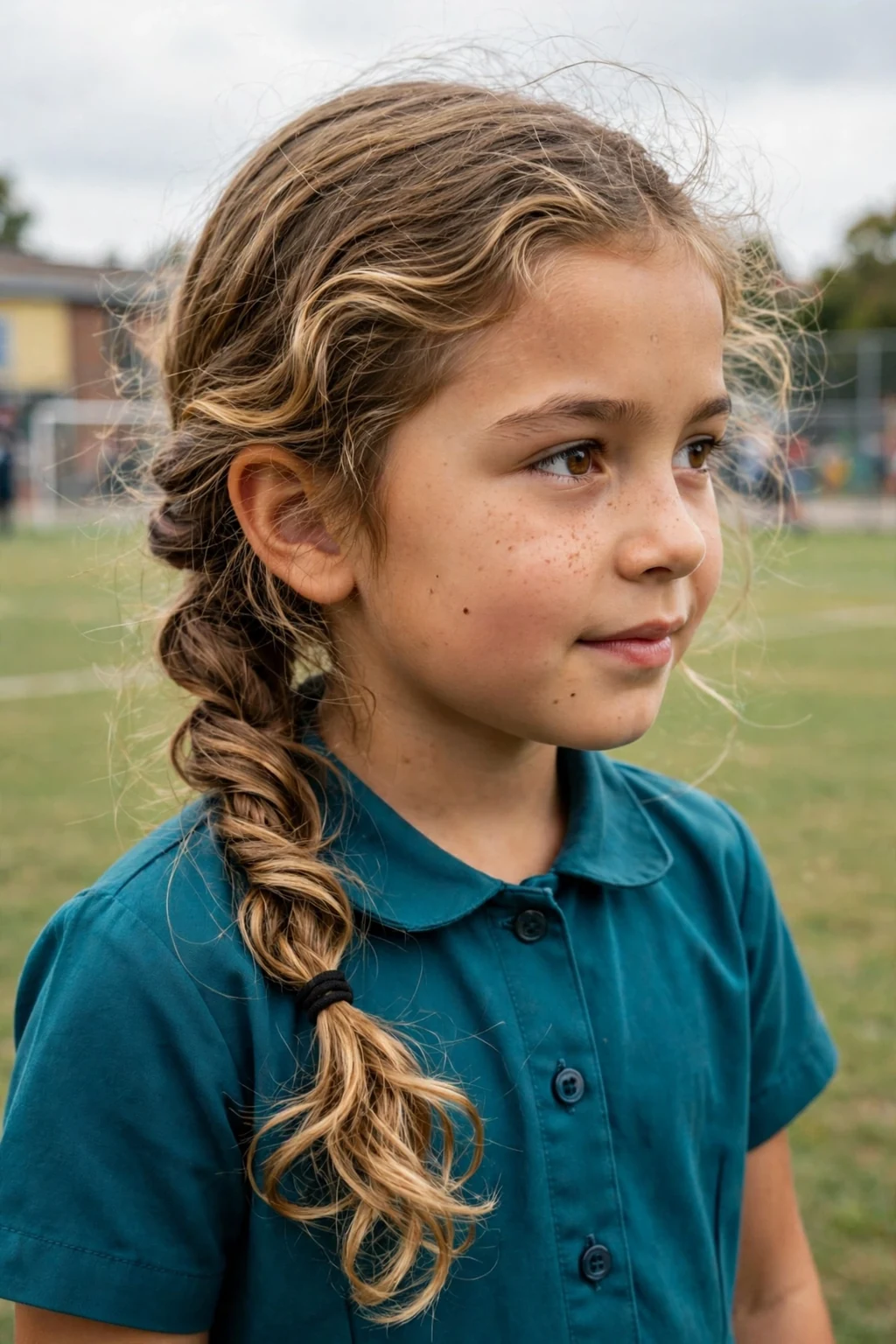
35. Zigzag Part Pigtails
Zigzag part pigtails turn an everyday style into something playful with a single clever detail: a zigzag parting that runs down the centre of the head. Instead of a straight line, the parting zigzags from the forehead to the crown, creating a fun, geometric pattern that shows between the two pigtails and instantly makes the style feel special. The pigtails themselves can be worn high, low or mid-height, and they keep hair neatly divided and off the face all day, which is exactly what busy school mornings need. It is a small change with a big visual payoff, and children love choosing it for birthdays, school fairs and ordinary days alike. The zigzag parting looks especially striking when the pigtails are tied with contrasting scrunchies, and it can be combined with small braids or twists in each pigtail for party days. Teachers and classmates often notice the detail, which makes it a confidence-boosting choice for children who enjoy standing out a little, while the pigtails themselves remain firmly within school rules.
This style suits round, oval and square face shapes and works on straight, wavy and curly hair of shoulder length or longer, for children aged about five to eleven. To create the zigzag, use the tail of a comb on damp, detangled hair, working from front to back in short diagonal strokes, then secure each side with elastics or scrunchies. A little styling cream helps the parting stay crisp, and the pigtails hold well through playtime. Maintenance is easy: a trim every eight to twelve weeks keeps the lengths even, and the parting can be redrawn each morning in a couple of minutes once parents and children have practised it together. Drawing the zigzag is easier on slightly damp hair, and a tail comb gives the cleanest lines, although a parent's finger can work for a softer version. The parting also helps distribute the hair evenly between the two sides, so neither pigtail feels heavier, and the style can be refreshed after swimming or physical education by simply re-tying the elastics without redrawing the part.
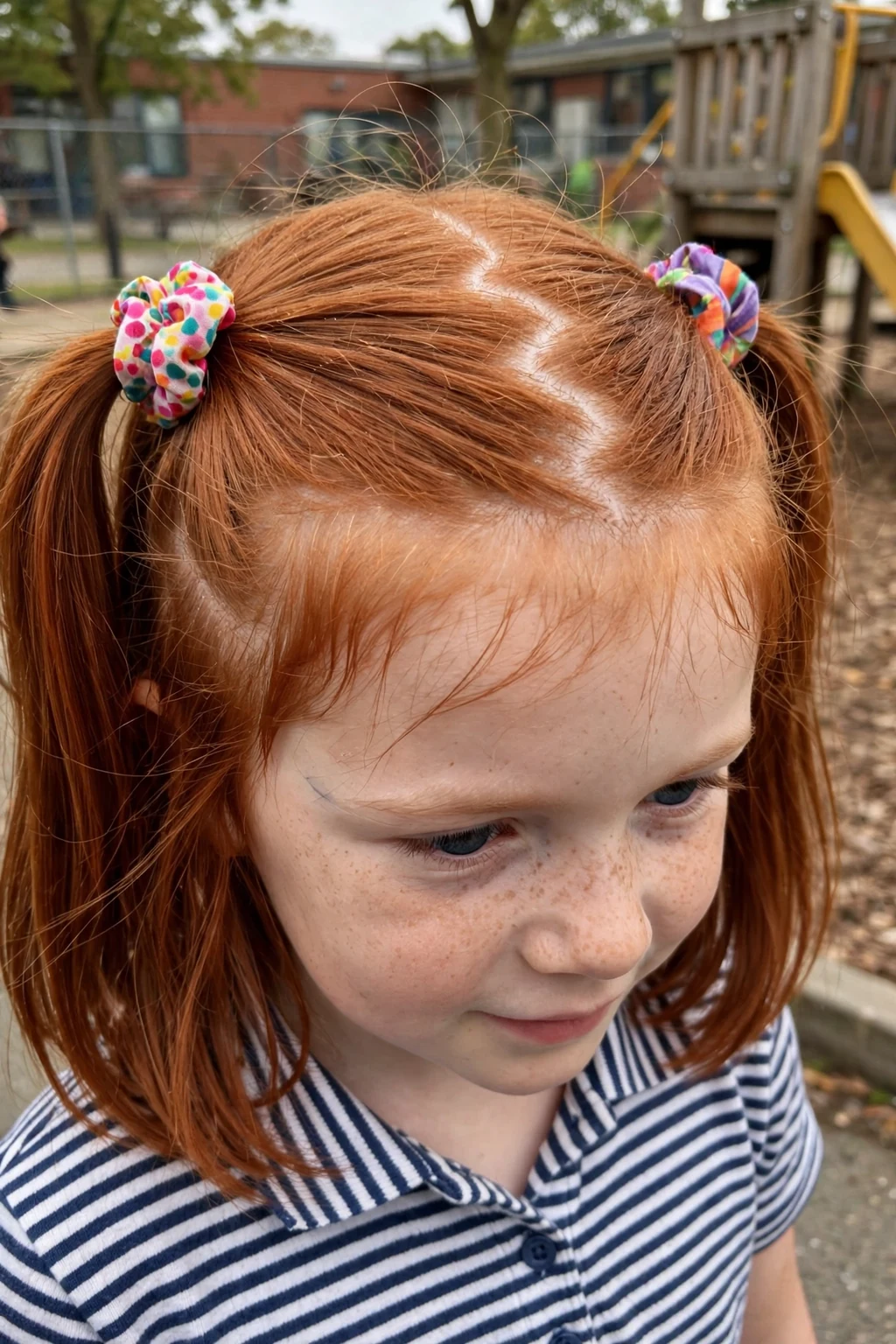
36. Curly Bob with Bangs
A curly bob with bangs is a bouncy, characterful school haircut that lets natural curls do the talking while keeping the length short and manageable. The bob sits around chin or jaw length, with layers shaped to encourage each curl to spring into place, and soft, curly bangs that frame the forehead without falling into the eyes. The result is a lively, rounded silhouette that looks neat without needing straightening or heavy styling, and it is light enough to stay comfortable through warm classrooms and active playtimes. It is a wonderful choice for children with natural curls who want a cut that celebrates their texture rather than fighting it. The bob can be worn with a side part for a different feel, or with a thin headband on days when the curls need extra control during sport. Because the cut is short, it dries quickly after swimming lessons and morning washes, which is a genuine advantage on rushed school mornings, and the rounded shape frames the face beautifully in school photographs without any additional styling products.
This haircut flatters round, oval and heart-shaped faces and is made for naturally curly, coily and wavy hair, for children aged around five to twelve. Styling is simple: wash, apply a curl cream or leave-in conditioner, scrunch gently and let the hair air-dry or diffuse on low heat, then shake the curls into place. The bangs should be trimmed carefully while dry so they sit at the right length once the curls spring up. A curly cut every eight to ten weeks keeps the shape rounded and the bangs out of the eyes, and regular conditioning keeps the curls soft, defined and free from tangles between cuts. Curly bobs thrive with a gentle, sulfate-free shampoo and a regular conditioner, and brushing should be done on wet, conditioned hair to avoid frizz. Parents should look for a stylist experienced with cutting curls dry or in their natural state, since this preserves the spring of each curl, and the child should be shown how to scrunch and shake the curls themselves so the style stays easy between salon visits.
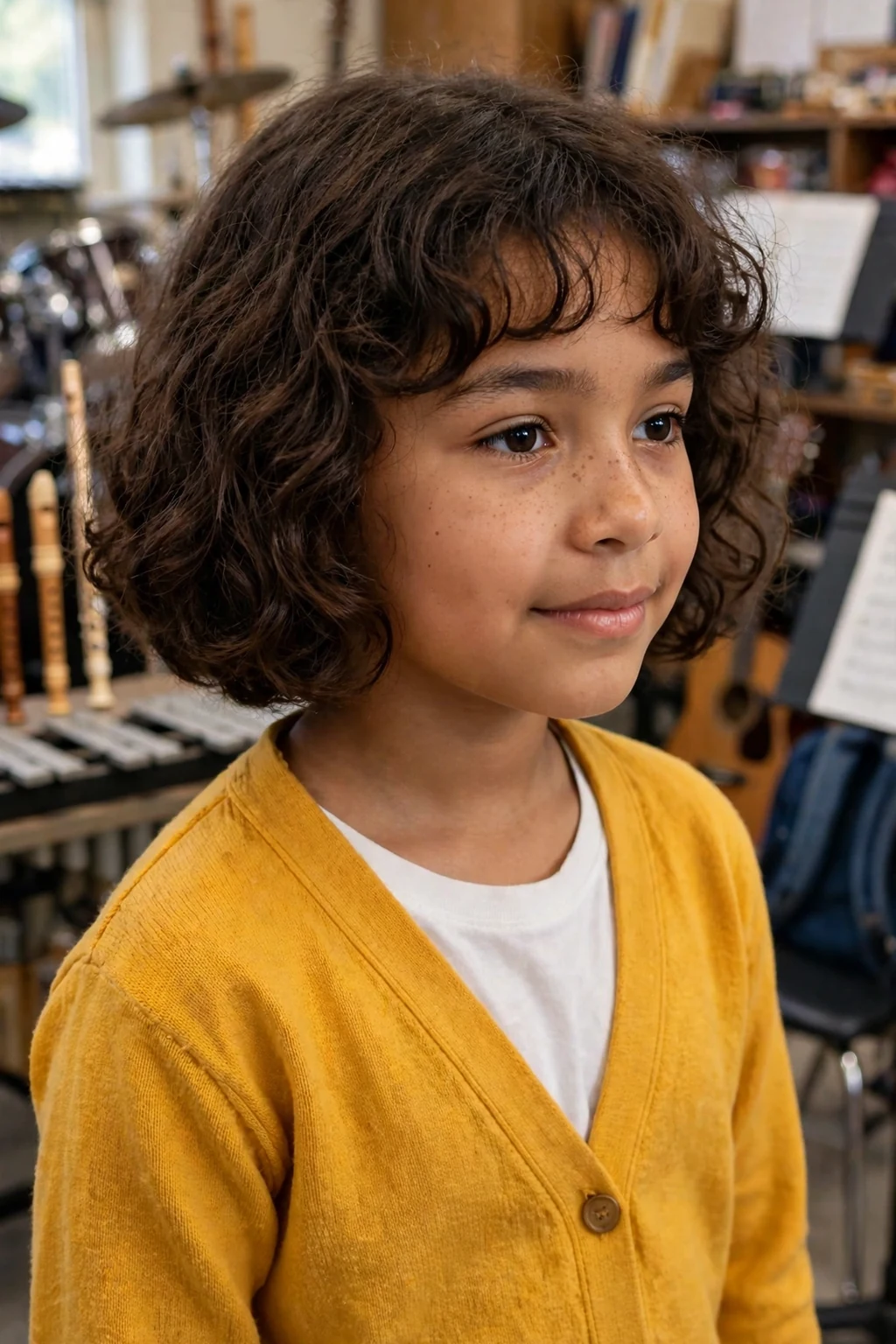
37. Mini French Twist
A mini French twist is a scaled-down, school-friendly version of the classic French twist, giving older primary children a smart, elegant updo that feels special without being fussy. The hair is swept up from the nape, folded inwards and pinned vertically along the back of the head, creating a smooth, rolled shape that sits close to the head and keeps every strand tucked away. The finish is neat, refined and remarkably secure, so it survives assemblies, performances and long school days without loosening. It is an excellent choice for formal school occasions such as concerts, prize days and photographs, when a child wants a polished style that still looks age-appropriate. A small decorative pin or a slim clip can secure the top of the twist for performances, while the plain version is discreet enough for everyday uniform rules. The vertical shape also elongates the neck and suits children who like a tidy, classic appearance, and it pairs naturally with collared blouses and school blazers, giving the whole uniform a more finished, put-together impression.
This style suits oval, long and heart-shaped faces and works best on medium to long hair that is straight or lightly wavy, for children aged around eight to twelve. To create it, brush the hair smooth with a light cream, gather it low, twist it upwards and pin it firmly along the fold, finishing with a flexible hairspray. It takes a little practice but becomes a ten-minute style with experience, and it can be dressed with a small clip for special days. A trim every ten to twelve weeks keeps the ends even so the twist rolls cleanly, and because the style uses no heat, it is a gentle option for young hair. Because the twist holds the hair close to the head, it is comfortable under school hats and does not interfere with headphones or ear defenders used in music and computing lessons. Younger children may need an adult's help at first, but by the upper primary years many can manage the rolling motion themselves, making it a satisfying step towards styling independence.
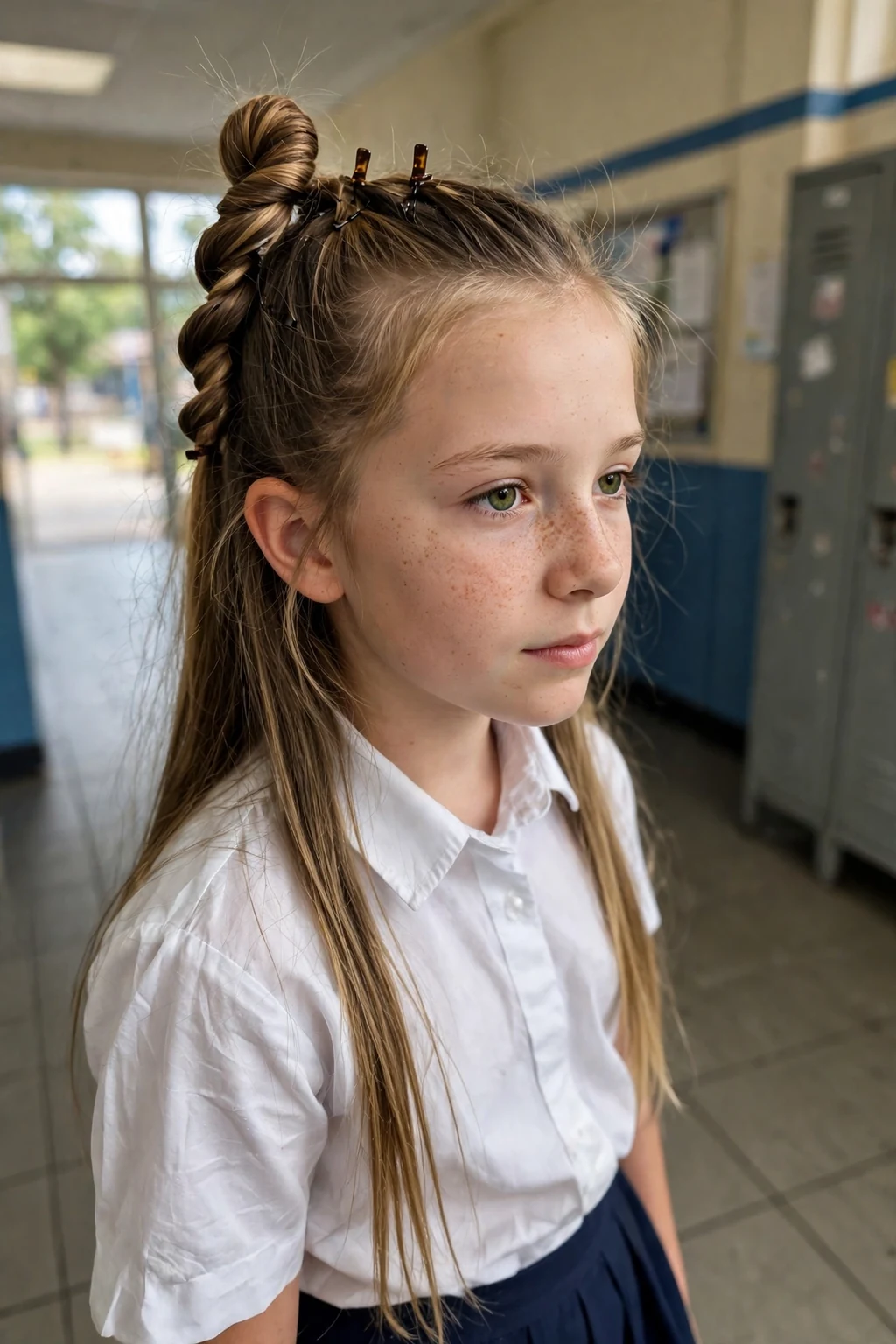
How to Choose the Right School Hairstyle
The best school hairstyle is one your child actually enjoys wearing, because a style they love is a style they will sit still for in the morning. Think about hair texture first, then length, then how active the school day will be: braids and buns suit PE days, while loose waves and layers are perfect for quieter classroom days. Let your child pick between two or three options you know will work, and the morning routine becomes much easier for everyone.
Keep school mornings simple by practising new styles at the weekend, keeping a small kit of snag-free elastics, clips and a detangling spray by the mirror, and choosing styles that can be refreshed quickly at lunchtime if needed. A trim every eight to twelve weeks keeps most school styles looking neat, and styles that protect the hair, like braids and buns, help it stay healthy through the term. Choose the style that makes your child feel confident, and school mornings will run a little more smoothly.
Conclusion
From classic French braids to playful space buns, these 37 cute kids school hairstyles prove that school hair can be neat, practical and full of fun. Choose the style that suits your child's hair and routine, keep up with regular trims, and let them head to school feeling confident every single day.